
How to Clean a Skateboard Deck: The 4-Step Sequence
This post contains affiliate links. As an Amazon Associate, we earn from qualifying purchases.
To clean a skateboard deck, you need to match the method to the component: a soft brush on dry grip tape, a damp rag on the wood, and a solvent soak for bearings. The wrong tool or too much water warps wood and kills bearings.
The process isn’t complicated, but it is specific. Sources disagree on the best tool: some recommend a soft-bristle brush, while others recommend a brass bristle brush (not steel). Use about a water-bottle lid’s worth of moisture on a small area, not a soaked cloth. Let everything dry completely before you put it back together. That last step is where most people rush and end up with a slow, soggy board. Knowing how to clean a skateboard deck properly prevents this.
What follows is a breakdown of each part, grip tape, deck, wheels, bearings, with the tool arguments, the timing, and the one mistake that shortens your board’s life by months when you ignore how to clean a skateboard deck.
Key Takeaways
- Clean grip tape with a brass bristle brush and a tiny amount of water, then finish with a product like Grip Gum or a belt sander cleaner.
- Never soak the wooden deck; a damp cloth with mild soap is enough. Let it dry fully to prevent warping.
- For bearings, clean with a grease-cutting solvent like mineral spirits by swirling for about five minutes, then letting stand for 10 more minutes, dry thoroughly, and lubricate with 2-3 drops of a skate-specific oil like Bones Speed Cream.
- Avoid window cleaner on perforated grip tape; it can seep underneath and break down the adhesive.
- A quick regular wipe-down prevents grit buildup better than one major overhaul per year.
The 4-Step Grip Tape Cleaning Sequence
Grip tape is sandpaper glued to your deck. You can’t scrub it like a countertop. The goal is to lift dirt out of the grit, not grind it in deeper.
The brass version is more aggressive, which is fine for tough grime, but go gentle, you’re cleaning, not sanding.
If dry brushing isn’t enough, add a tiny bit of moisture. Here’s where sources disagree on volume. One manufacturer advises using “about the volume of a water bottle lid on a small area.” Another says to use a damp cloth. The lid method is safer; it limits how much water can seep into the deck’s edge or under the tape. Pour a little water on the dirty spot, gently brush with your brush, then let the wet area dry completely before using a product like Grip Gum.
Common mistake: Soaking the grip tape. A soaked board takes hours to dry internally, and that moisture softens the wood glue between the plies. You might not see warping for a month, but the deck will lose its pop.
Once the area is dry, use a rubber cleaning block. Grip Gum or a belt sander cleaner works the same way: dab it over the dirty spot for about ten seconds. The rubber grabs the embedded dirt and lifts it out. The tape won’t look brand new, it’ll still be faded, but it will regain its tooth.
How to Clean the Deck’s Wood (Without Warping It)
The deck’s wood is vulnerable to water. A seven-ply maple board can handle a damp wipe, not a bath.
Mix mild dish soap with warm water. Dampen a rag, don’t soak it, and wipe down the top of the deck around the grip tape and the entire underside. This removes road film, dirt, and sweat. Pay attention to the edges where the plies are exposed; that’s where water soaks in fastest.
Dry it immediately with a separate towel. Then let the board sit in a well-ventilated area to dry thoroughly. Airflow matters more than heat; a fan is better than a heater. If you reassemble the board while the wood is even slightly damp, the trapped moisture invites mold and weakens the glue bonds.
For composite decks like carbon fiber, the rules change. Evolve Skateboards recommends wiping carbon surfaces with a slightly damp rag only. For small scratches, they’ve had good results with car polishes like ScratchX. Don’t use abrasive brushes or harsh chemicals on these finishes.
Wheel and Bearing Maintenance That Actually Works
Wheels are simple. Use hot, soapy water and an old toothbrush. Scrub the urethane to remove dirt and black skid marks, rinse, and let them air dry. Avoid solvents, which can break down the polyurethane over time.
Bearings are where people overcomplicate things. You don’t need an elaborate cleaning ritual every month. Clean them when they sound gritty or slow down noticeably.
First, pop off the bearing shields with a push pin or small flathead screwdriver. Set the shields aside. Place the bearings in a sealable container with a grease-cutting solvent. Mineral spirits or a citrus-based cleaner work; do not use WD-40. Swirl the container for about five minutes, then let the bearings stand in the solvent for 10 more minutes. This dissolves the old lubricant and grime.
Remove the bearings and place them on a paper towel to dry completely. You can use compressed air to speed this up. Once dry, lubricate each bearing with two or three drops of a skate-specific lubricant like Bones Speed Cream. Spin the bearing to distribute the oil, then snap the shield back on. Over-lubricating attracts more dirt, so 2-3 drops is sufficient.
| Component | Tool/Method | Risk If Skipped |
|---|---|---|
| Grip Tape | Brass brush + tiny water + Grip Gum | Dirt reduces shoe grip; water soaks deck |
| Deck Wood | Damp rag + mild soap | Warping, delamination over weeks |
| Wheels | Hot soapy water + toothbrush | Grit grinds down urethane faster |
| Bearings | Mineral spirits + Bones Speed Cream | Seizure, slow roll, failed spins |
The Window Cleaner Debate and Why It’s Risky
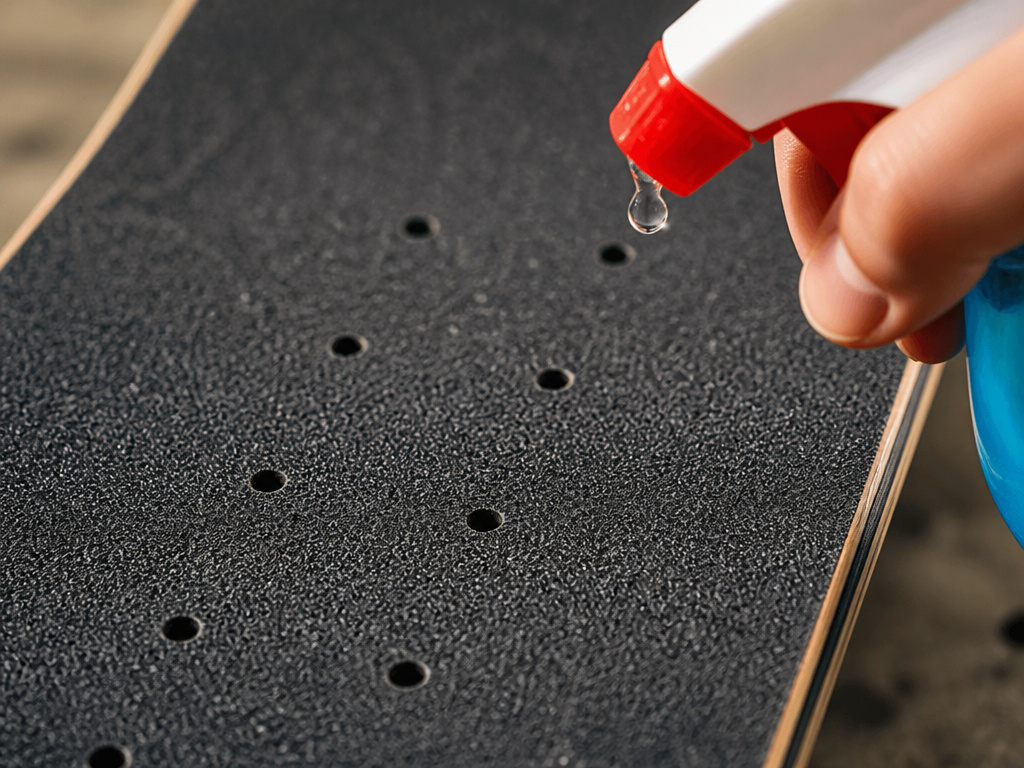
The online skateboarding community is split on using window cleaner. Some say it’s fine and evaporates quickly. Others warn it makes the deck wood soft.
The bigger issue is perforated grip tape. If your tape has small holes (common for ventilation), the liquid can seep underneath and deteriorate the adhesive. That shortens the grip tape’s life and can delaminate it from the deck. Manufacturer Pump Skate, citing skate media Rat Vision, explicitly advises against it for this reason.
If you decide to try it, use it sparingly, a quick spray on a cloth, not directly on the board. And never on a deck with perforated tape. The consensus from manufacturer blogs leans toward avoiding it altogether; water and a brush, used correctly, are safer.
When to Use a Pressure Washer (And When to Never)
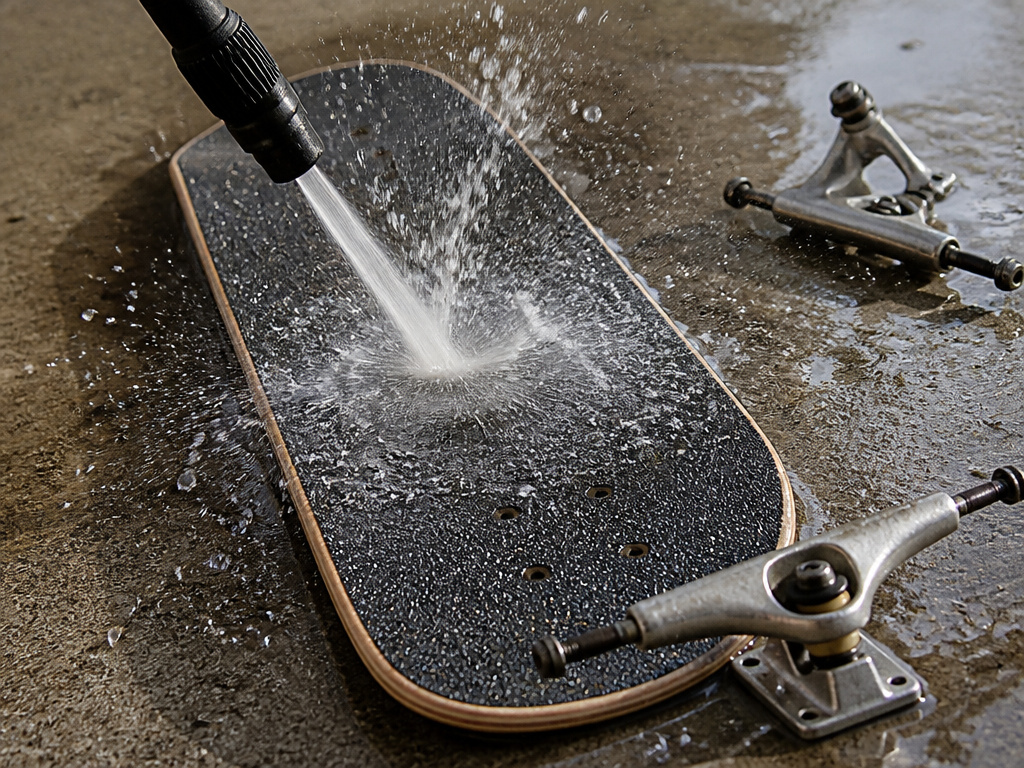
For extreme cases, some riders pressure wash their decks. Evolve Skateboards outlines this method but stresses you must disassemble the board entirely, remove trucks, wheels, all hardware. You only want the deck to clean.
This is a high-risk move. The force can drive water into screw holes and between the plies if you’re not careful. It’s only viable for sealed composite decks, not traditional wood. For 99% of skaters, it’s overkill. A brush and rag get the job done without the risk of waterlogging your deck’s core.
How to Remove Old Grip Tape for a Re-Grip
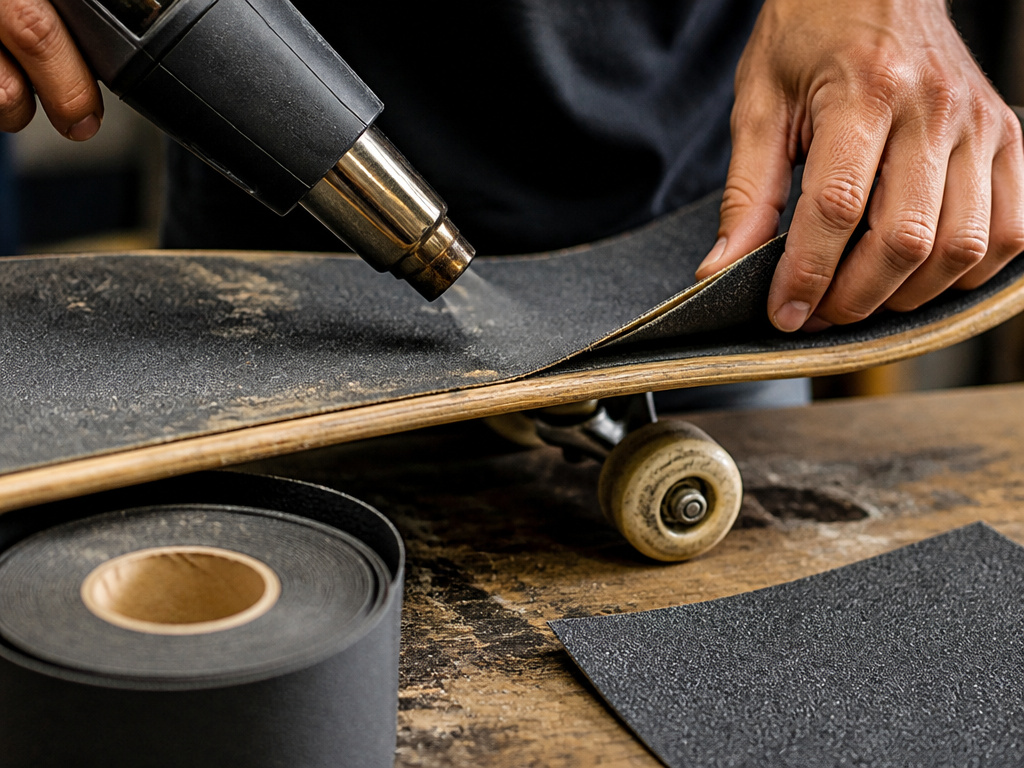
Sometimes cleaning isn’t enough, and you need fresh tape. Removing the old grip is the messy part.
Heat is generally safer for the wood. Use a hairdryer on high, heating a small section at a time. Slowly peel back the tape, reheating as you go. If residue remains, a small amount of adhesive remover on a rag can clean it off. Sand the deck lightly with fine-grit sandpaper to create a smooth surface for the new tape.
Where this goes sideways: Yanking cold grip tape off. You’ll pull up wood fibers from the top ply, creating a rough surface that new tape won’t stick to evenly.
A Realistic Cleaning Schedule That Beats the Annual Overhaul
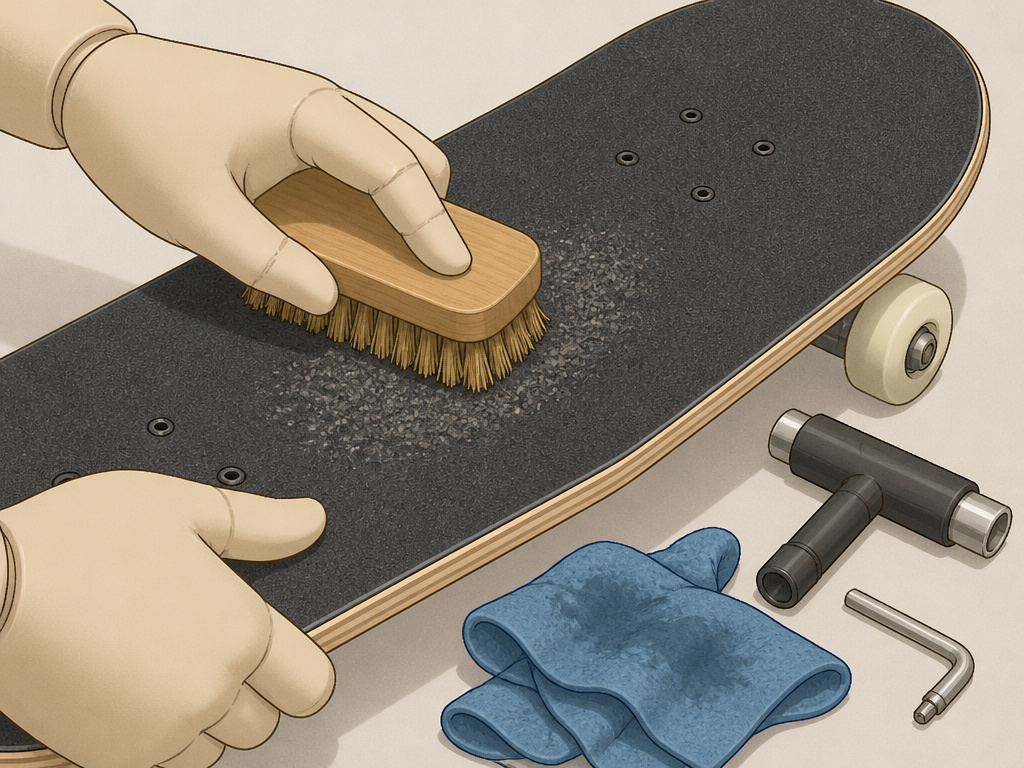
You don’t need a deep clean every week, but knowing how to clean a skateboard deck helps. A regular quick wipe-down keeps major grime at bay.
My own routine shifted after I noticed my board felt sluggish regularly. Grit built up around the kingpin and truck baseplate. A stiff brush on the grip, a damp rag on the trucks and underside, and a quick hardware check now happens regularly. That beats the one giant, frustrating teardown I used to do once a year.
For bearings, clean them when they sound or feel rough. If you skate in wet conditions, check them sooner. Otherwise, lubricating bearings when they are cleaned keeps them functioning well. Expensive bearings aren’t worth it for beginners; a basic clean and lube on affordable bearings works fine.
| Frequency | Task | Time Needed |
|---|---|---|
| After every wet session | Dry deck & trucks with towel; check bearings | 2 minutes |
| Every 3-4 weeks | Brush grip tape; wipe down deck & hardware | 10 minutes |
| When bearings feel gritty | Full bearing clean & lubricate | 30 minutes |
| Every 6-12 months | Inspect deck for cracks; consider re-grip | 15 minutes |
Frequently Asked Questions
Can I use water to clean my skateboard grip tape?
Yes, but use a tiny amount, think a water bottle cap’s worth on a small area. The goal is dampness, not soaking. Always dry the area thoroughly with a cloth immediately after brushing, and let the board air dry completely before riding.
What’s the best thing to clean skateboard bearings?
Use a grease-cutting solvent like mineral spirits or a citrus-based cleaner. Soak the bearings (with shields removed) for 5-10 minutes, then let them dry completely. Lubricate with 2-3 drops of skate-specific oil like Bones Speed Cream. Never use WD-40; it’s a solvent, not a lubricant, and will dry out the bearings.
Is it okay to use Windex or window cleaner on my skateboard?
It’s risky, especially if your grip tape is perforated. The cleaner can seep under the tape and break down the adhesive, shortening the life of your grip and potentially damaging the deck wood. Most manufacturer guides recommend avoiding it in favor of water and a brush.
How do I clean a carbon fiber skateboard deck?
Wipe it with a slightly damp rag only. Avoid brushes and harsh chemicals. For small scratches, a car polish like ScratchX can reduce their visibility. Follow the specific care instructions from the deck manufacturer, as composite materials differ from traditional maple.
How often should I clean my skateboard?
Quick wipe-down of the deck and grip tape every few weeks prevents major buildup. Clean your bearings whenever they start to sound or feel gritty. A full disassembly and deep clean might only be necessary once or twice a year if you maintain it regularly.
Will cleaning my skateboard make it last longer?
Yes, regular cleaning removes abrasive dirt that wears down grip tape, bearings, and wheels. Keeping the deck dry prevents warping and delamination. Simple, consistent maintenance is the most effective way to extend your skateboard’s life.
Before You Go
One rule cuts through all the advice: let it dry. A damp deck warps. Wet bearings rust. Reassembling a board before it’s fully dry undoes all your cleaning work. Make space for the board to air out after a wipe-down.
If your grip tape is too far gone, cleaning grip tape might not be enough. It’s faster to re-grip. For everyday grime, a brass brush and a rubber block will restore enough traction for your next session.
Store your board somewhere dry, and give the wheels a spin every so often. That’s it. A clean board rolls smoother, grips better, and lets you focus on the ride, not the maintenance.
