
Skate Shorts vs Pants: How to Choose
This post contains affiliate links. As an Amazon Associate, we earn from qualifying purchases.
Skate shorts are loose-fitting, abrasion-resistant shorts with inseams from 7 to 11 inches, made for maximum mobility in hot weather. Skate pants are durable, often reinforced trousers designed for cooler conditions and added slide protection. For most skaters, the choice comes down to temperature, session type, and personal comfort, shorts for park and heat, pants for street and scrapes.
That 7-inch to 11-inch range defines the difference between a cut that stops above the knee for full extension and one that drapes over it for a classic look. The material underneath, heavy-duty nylon or ripstop cotton, decides how many concrete kisses your gear survives before it gives out.
What follows: a side-by-side breakdown of materials and fits, the real protection math on pants versus padded shorts, and the one style rule the skate community can’t agree on in the skate shorts vs pants debate. By the end, you’ll know exactly when to reach for shorts and when to stick with pants.
Key Takeaways
- Choose shorts for park sessions and hot days; the freedom of movement trumps minor scrapes, and an 11-inch inseam like the Limpies Original offers a classic look.
- Choose pants for street skating and cooler weather; the layer of fabric provides real confidence against ledges and concrete, with models like the Dickies Skateboarding 874 offering durable twill.
- Padded shorts are a secret weapon for beginners and ramp skaters; the high-density EVA foam in models like the Powerslide Standard protects hips and tailbones on hard falls.
- Material dictates durability; look for 100% nylon (SoleFly) or ripstop fabric (Nike SB Kearny) for abrasion resistance, not just cotton.
- Fit is personal, not prescribed; Polar Skate Co. States there is “no necessarily the right model for you,” so prioritize range of motion over perceived style rules.
The Core Choice: Mobility vs. Armor
This choice concerns how your legs move when you crouch for an ollie and what happens when the board slips out in the skate shorts vs pants equation. Shorts give your knees more freedom. Pants add a layer between your skin and the grip tape.
The debate gets heated online. Some skaters on forums swear pants offer significant confidence and protection, making them feel safer. Others argue, based on similar discussions, that pants offer very little protection anyway, so the difference is barely noticeable, and shorts are preferred for comfort and maneuverability. Both sides have a point, and the right answer lives in your specific session.
Where this goes sideways: Choosing based only on looks. A tight, restrictive pant might look sharp but will limit your knee bend and make popping tricks harder. A short with no stretch or reinforcement will tear on the first board slide.
When Shorts Make Sense
Shorts win in three specific scenarios: high heat, technical park skating, and any session where sweat becomes a problem. The feeling is undeniable, less fabric means less weight and drag. I learned this trying to skate a bowl in jeans on an 85-degree day. After a while, the denim was soaked and heavy, clinging to my knees every time I pumped. Switching to a simple athletic short changed the entire session; I could move freely and focus on the transition, not my soggy pants.
For park and ramp skating, where falls are often onto smoother surfaces, that freedom is worth the occasional shinner. Many impact short brands design their shorts to be breathable and with moisture-absorbing qualities, which is a lifesaver during long sessions. If you’re filming lines, consider the visual. Some skaters, as noted in online discussions, feel shorts look ‘doofy to film in’ and prefer pants for confidence, while others advocate for shorts for comfort and individual expression. But if you’re just there to skate, who cares?
When Pants Are the Better Tool
Street skating is a war of attrition against concrete, ledges, and curbs. Here, pants are your armor. That thin layer of fabric won’t stop a fracture, but it dramatically reduces road rash and saves your skin from the grating texture of a failed slide. The confidence boost is real. You commit differently when you know a bail won’t mean losing a layer of epidermis.
For cooler weather and extended sessions, pants also provide warmth and let you layer underneath. A model like the Dickies Skateboarding Pants (874 variant) with its 65% polyester, 35% cotton twill fabric is built for this. It’s durable enough for scrapes but has become a favorite for being “plausibly nice enough to wear out or to work,” bridging skate functionality with casual wear.
Material Showdown: Nylon, Ripstop, and Twill

What your shorts or pants are made of determines their lifespan. This is where product specs matter more than marketing.
| Material | Best For | Feels Like | Key Product Example |
|---|---|---|---|
| 100% Nylon | Abrasion resistance, board slides | Smooth, slightly stiff, lightweight | SoleFly Skate Shorts |
| Ripstop Cotton/Spandex Blend | Durability with stretch | Tough, gridded texture, flexible | Nike SB Kearny Cargo Shorts (97% cotton/3% spandex) |
| Polyester (Dri-FIT) | Sweat-wicking, hot weather | Soft, stretchy, athletic | Nike SB Dri-FIT Skate Shorts (100% polyester) |
| Cotton Twill | Everyday durability, broken-in feel | Sturdy, classic canvas weight | Dickies Skateboarding 874 Pants |
| CORDURA® Reinforced Blend | Maximum impact zone protection | Rugged, noticeably tough at knees/seat | ROCKIN’ Urban Pants |
The SoleFly Skate Shorts use a heavy-duty 100% nylon shell specifically because nylon slides better on concrete and resists tearing. You’ll feel the difference on a fast tailslide, the nylon glides where cotton might grab and flip you.
Conversely, the Nike SB Kearny Cargo Shorts use a ripstop fabric (body: 97% cotton/3% spandex). The ripstop weave prevents small tears from spreading, which is why it’s common in workwear and gear. It’s a balanced choice for someone who wants the durability of pants with the breezier feel of shorts.
Technical Snapshot: The Nike SB Dri-FIT Skate Shorts (style HJ2967-010) utilize a two-way stretch jacquard knit made of 100% polyester. This construction wicks sweat away from the skin and provides exceptional multidirectional stretch, making them ideal for high-mobility tricks in warm conditions.
Don’t overlook blended fabrics for specific jobs. The ROCKIN’ Urban Pants use a main material of 97% cotton, 3% elastane but add CORDURA® Fabric reinforcements at the knees and bottom. This targeted toughness is perfect for skaters who frequently knee-slide or scrape their cuffs on grip tape.
The 7-Inch vs 11-Inch Inseam Decision

Inseam length changes the entire silhouette and function of your skate bottoms. It’s a simple measurement with complex effects.
The 7-inch inseam, used on the SoleFly Skate Shorts, sits well above the knee. This is a performance cut. It completely eliminates any chance of the fabric catching behind your knee during a deep squat or full extension. You get uninhibited movement, but you also expose more leg to the elements, and to the board.
The 11-inch inseam, featured on the Limpies ‘The Original Limpies Skate Short‘, is a classic skate look. It drapes over the knee, creating that signature baggy silhouette that moves with you. It offers a bit more coverage for slides down the thigh, but it can sometimes bunch behind the knee during strenuous activity. It’s a trade-off between timeless style and absolute range of motion.
Which one is right? Watch your own skating. If you’re a tall skater or someone who does a lot of full-extension tricks like boneless ones or long carves, the shorter inseam might prevent binding. If you prefer a looser, flowing look and mostly skate street or low-impact park, the longer inseam will serve you fine. There is “no necessarily the right model for you,” as Polar Skate Co. Puts it, it’s about matching the cut to your own proportions and style.
Padded Shorts: The Hidden Third Option
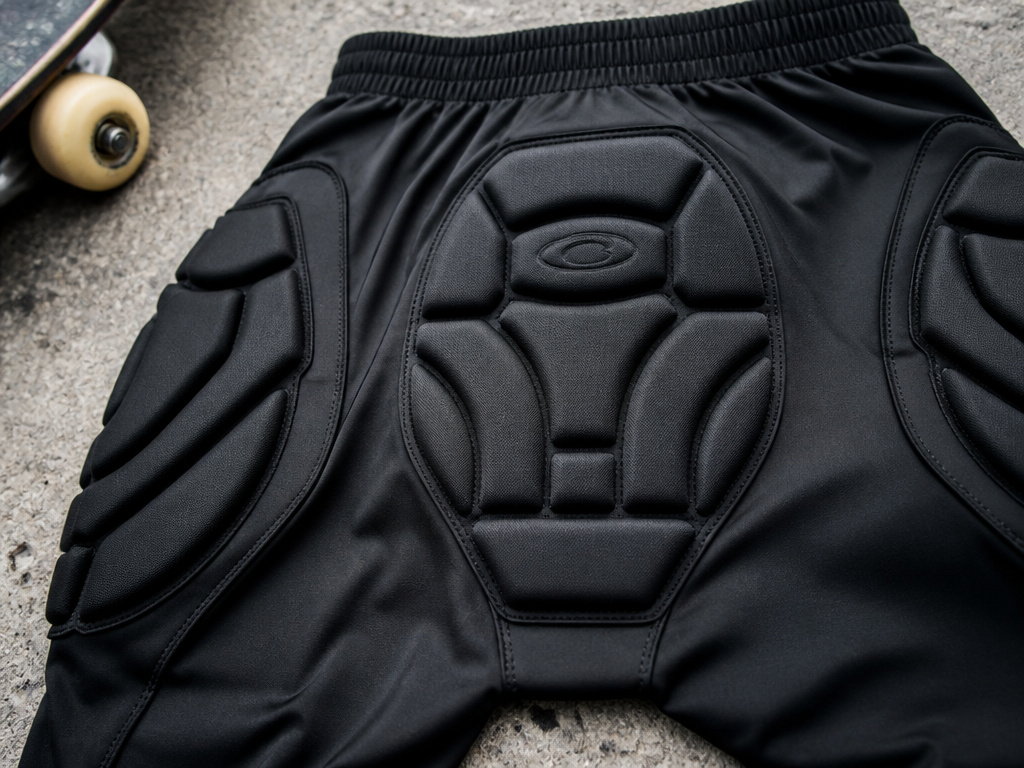
Forget shorts versus pants for a second. There’s a third category that solves a specific problem: impact protection.
Padded shorts, like the Powerslide Standard Protective Shorts, are designed to be worn underneath your regular shorts or pants. They contain padding made of high-density EVA foam at the hips, tailbone, and thighs. This padding is designed to soften the blunt force of a slam.
Expert Tip: I won’t recommend padded shorts for every skater, but for beginners or anyone focusing on transition, they’re a game-changer. That first week of trying drop-ins is less intimidating when you know your hips have a cushion.
The data backs this up. Retailers like SkatePro note that wearing impact pants is particularly recommended for beginner skaters but is also useful for any type of riding where you’re likely to land on your hip or butt, such as ramp skating. The protection spectrum is clear: harder, stiffer pads contain durable EVA foam for optimal protection against hard impacts. Thinner pads will provide more flexibility but not as much protection.
These shorts are versatile. The Powerslide Standard can be used for inline skating, skateboarding, snowboarding, or BMX riding.
Skate Shorts vs Pants: A Direct Comparison
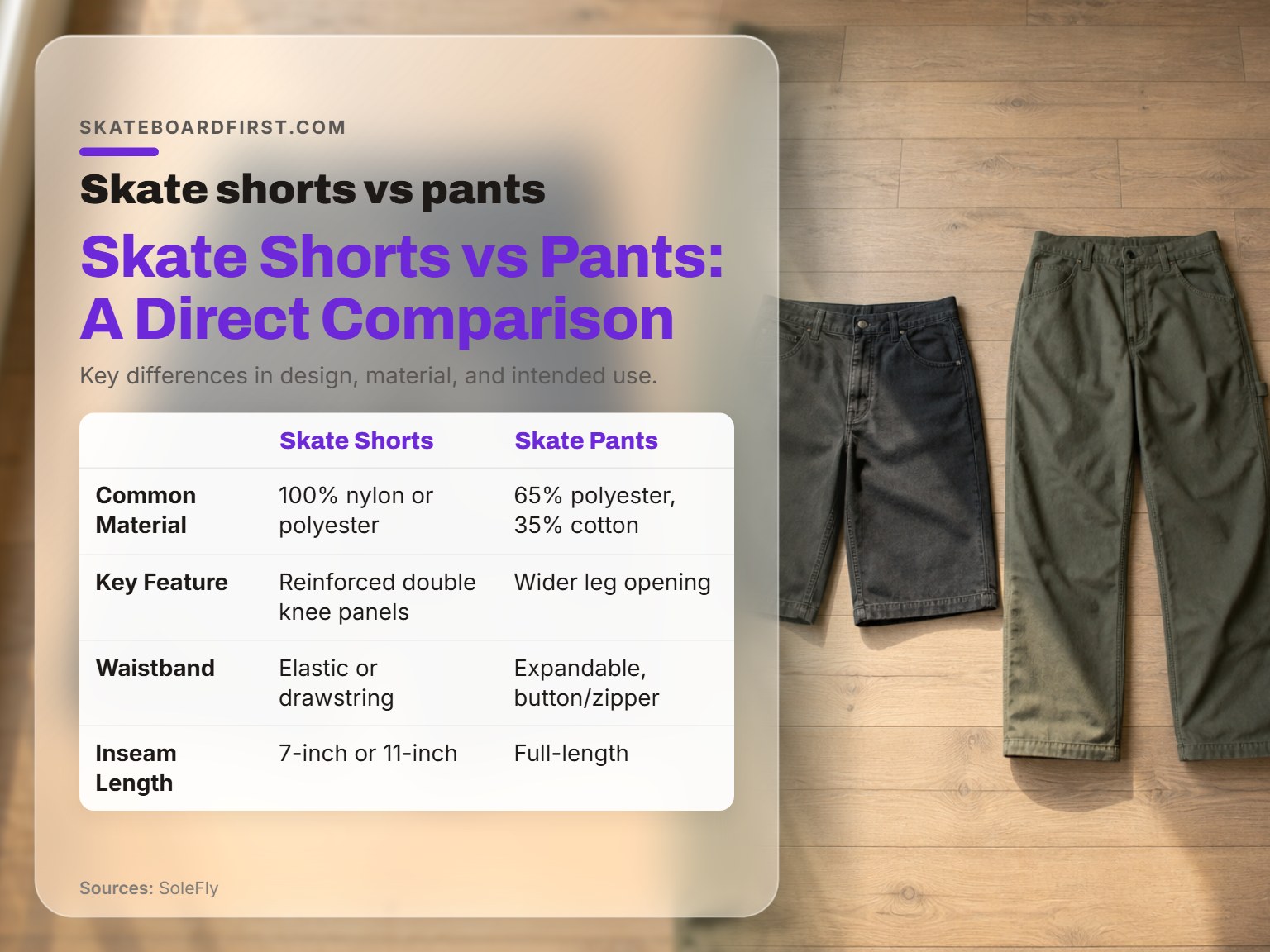
Here is a direct comparison. This table isn’t about declaring a winner; it’s about matching the gear to the day’s plan.
| Feature | Skate Shorts | Skate Pants |
|---|---|---|
| Best Climate | Hot, humid weather | Cool, cold, or variable weather |
| Primary Advantage | Unmatched mobility & breathability | Added abrasion resistance & coverage |
| Ideal Session | Park, ramp, bowl skating | Street, ledge, and curb skating |
| Key Limitation | Minimal protection for slides and falls | Can be restrictive and hot during intense activity |
| Style Vibe | Athletic, functional, modern | Classic, layered, streetwear |
| Sample Pick | Nike SB Dri-FIT Skate Shorts | Dickies Skateboarding 874 Pants |
Shorts excel when your main enemy is the sun. Pants win when your main enemy is the ground. There’s a hybrid path, too: some skate pants are designed to fit over knee pads for full protective setups, while convertible options like the ROCKIN’ Urban Pants with zip-off legs try to offer the best of both worlds.
How to Choose for Your Next Session
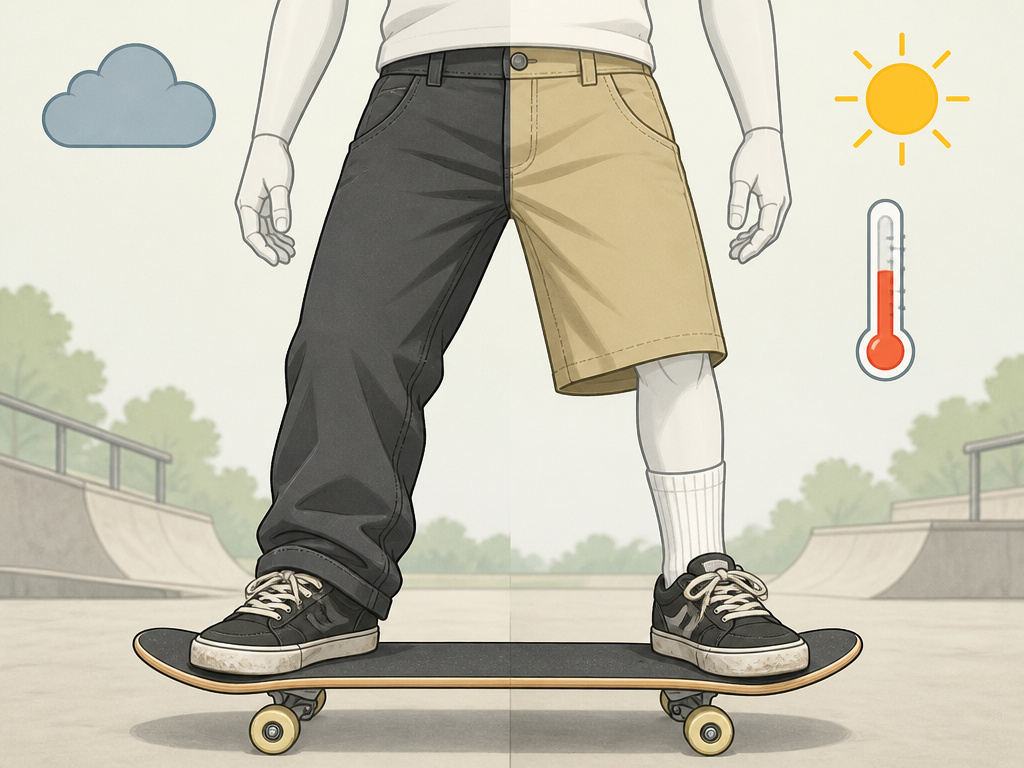
Stop overthinking it. Your decision tree is simpler than you think.
- Check the temperature. On hot, sunny days? Lean towards shorts. On cool days? Pants are your friend. In between? Let your activity level decide.
- Define the session. Heading to the smooth concrete of a skatepark? Shorts will keep you cooler. Hitting rough street spots with ledges? Pants provide that crucial layer.
- Honestly assess your tolerance. Are you okay with some scraped shins for greater freedom? Or does the thought of road rash make you hesitant? Your comfort dictates your commitment.
- Consider the extras. Will you be wearing knee pads? If so, you might want the coverage of pants. Planning a long session? Moisture-wicking fabrics in shorts or lightweight pants are key.
- Ignore the noise. As one Reddit skater put it: “Any cunt that calls you a poser for wearing shorts is a poser.” Skateboarding is about individual expression. Wear what helps you skate your best.
Frequently Asked Questions
Are skate shorts just regular shorts?
No. Skate shorts are specifically designed with durable, abrasion-resistant materials (like 100% nylon), reinforced panels (like double knees), and a loose, functional fit that allows for a full range of motion. Regular athletic shorts are often made from lighter, less durable fabrics and may have a tighter cut.
Do pants really protect you when skating?
Yes, but within limits. Pants won’t prevent bruises or breaks from high-impact slams. Their primary protection is against abrasions and road rash. That layer of fabric can turn a skin-shredding slide across concrete into a mere scuff on the pant leg, which is a significant confidence booster for street skaters.
What are the best skate shorts for beginners?
The Nike SB Dri-FIT Skate Shorts offer great stretch and sweat-wicking for active sessions. For more protection-focused beginners, starting with a padded short underneath regular shorts can build confidence for learning falls.
Can I wear skate pants in the summer?
You can, but you’ll likely be uncomfortable. If you must wear pants in heat, look for pants made of 100% polyester with Dri-FIT technology. The Nike SB Dri-FIT line also includes pants made of 100% polyester with Dri-FIT technology, which are far more breathable than cotton denim or twill.
Why are skate pants so baggy?
The baggy fit, rooted in 1990s skate culture as documented in a 1993 Los Angeles Times skate fashion report, serves a functional purpose. It allows for unrestricted movement for tricks and provides extra fabric that can slide over obstacles rather than catch. It also accommodates knee pads underneath more easily.
The Bottom Line
Your gear should get out of the way. If you’re thinking about your clothing mid-session, you’re wearing the wrong thing.
For most people, owning one solid pair of shorts and one solid pair of pants covers 95% of skating conditions. Grab shorts like the SoleFly or Nike SB Dri-FIT for the park and scorching days. Keep a pair of Dickies or durable cotton pants ready for street missions and cooler weather. And if you’re just starting out or have a transition phase ahead, don’t sleep on padded shorts, they’re the secret cheat code for learning to fall safely.
The only wrong choice is letting someone else’s style rule stop you from skating. Pull on what works, and go push.
