
How to Share a Skatepark With Scooters: What the Law Says
This post contains affiliate links. As an Amazon Associate, we earn from qualifying purchases.
To share a skatepark with scooters, follow the same park etiquette as with skateboards, but account for their different lines and speeds. Kick scooters are a standard part of the mix, but electric scooters often face specific municipal speed and power restrictions. The key is clear communication, taking turns, and respecting the park’s flow.
The distinction between a kick scooter and an electric scooter is a legal line that changes where you can ride and how fast. A city’s park rules decide that line, and ignoring it can get you fined or kicked out. The etiquette, however, is universal: watch, wait, and call your drops. Knowing how to share a skatepark with scooters is part of that essential etiquette.
What follows: the five essential rules for avoiding collisions, a breakdown of what different cities actually allow, strategies for crowded weekend sessions, and the simple phrases that keep the peace when the park gets packed.
Key Takeaways
- Watch for 15 minutes before joining a session to understand the flow and unspoken turn order.
- Always call “dropping in” or “coming through” before entering a bowl or ramp; verbal warnings cut collisions dramatically.
- Portland Administrative Rule PRK-1.23 defines a ‘motor vehicle’ as a device with a power output of 1,000 watts or greater, which is typically banned from park pathways and skateparks.
- Yield to pedestrians and reduce speed to 5 mph when approaching others, as required by codes like Portland’s PRK-1.23.
- Scooter riders should never sit on ledges or coping; it blocks the feature for skateboarders and BMX riders.
The 5 Rules That Prevent Collisions
I skipped the watch-and-learn step once at a busy bowl. I rolled in mid-run, cutting off a regular. No shout, just a long, cold look that made me feel invisible for the next ten minutes. That look taught me more about park flow than any rule sign.
Collisions happen when assumptions break down. You assume the scooter rider saw you. They assume you’re done with your run. The bowl’s wide open, so you both drop in. It’s a messy, painful lesson. These five rules are the antidote.
Before you start: A collision between a scooter and a skateboarder puts both at risk of serious injury. Skatepark concrete is unforgiving. Always wear a helmet, and assume every other rider is about to change direction unexpectedly.
Rule 1: Watch the park’s flow before you roll in. Spend at least 15 minutes observing. You’ll see the natural turn order, which direction riders are circling a bowl, and where beginners are practicing. This applies whether you’re on a board or a scooter. The Tony Hawk Foundation notes that in an average skatepark, 70% of users are skateboarders and 30% are a mix of BMX and scooters. Knowing that mix helps you anticipate different lines.
Rule 2: Call your drops and passes. A simple “Dropping!” or “Coming through left!” is a universal heads-up. I started doing this every single time, and my near-misses dropped from a few per month to almost none. Eye contact is the backup; if you can’t catch someone’s eye, assume they haven’t seen you and wait.
Rule 3: Take clear turns. Don’t snake someone’s run. If you’re waiting for a feature, make it obvious you’re next. A nod or a pointed finger works. During crowded weekend sessions, informal turn systems can break down. That’s when proposing a zone split, like “rails for five minutes, then bowl”, can reset the order.
Rule 4: Know your vehicle’s blind spots. Scooters have a deck that blocks the rider’s view of the ground directly behind the front wheel. Skateboarders can’t see directly behind their tail. This is why cutting across another rider’s path is so dangerous. Ask the person next to you, “You going for the bank or the rail?” before you both go.
Rule 5: Get out of the way when you’re done. Stand clear of the landing zones, the coping, and the common run-ups. Never sit on a ledge. Reddit users in the scooter community explicitly advise against it, and for good reason, it turns a skate feature into a bench and blocks everyone else.
What the Law Actually Says: Kick vs. Electric Scooters
Not all scooters are treated the same. Your local municipal code draws a hard line, usually based on one thing: a motor.
Anything at or above that threshold is classified as a “motor vehicle” and is typically banned from park pathways and skateparks.
This isn’t theoretical. Cities are writing these rules to manage real safety concerns. Here’s how different places handle it:
| City / Authority | Rule for Kick Scooters | Rule for Electric Scooters | Key Restriction |
|---|---|---|---|
| Tony Hawk Foundation | Included in the 30% non-skateboard user mix. | Policy focuses on non-motorized equipment. | Advocates for inclusion, citing no significant data to support widespread bans. |
| Los Angeles | Allowed in designated “all-wheel parks” per Ordinance 187218. | Los Angeles Ordinance No. 187218 allows the riding of non-motorized bicycles, scooters, in-line skates, roller skates, or wheelchairs in designated all-wheel parks. | Motorized scooters are not permitted under this amendment. |
| Portland, OR | Permitted, but prohibited on sports surfaces, fountains, or for grinding on amenities (Code 20.12.170). | Allowed on pathways if under 1,000 watts, with a 12 mph speed limit (5 mph when approaching others). | Rental scooters cannot be deployed or end a session inside a park. |
| Hillsboro, OR | Likely permitted (rule focuses on motorized). | Municipal Code 9.32.120 prohibits “motorized vehicles” in skateparks. | A simple, broad ban on anything with a motor. |
The takeaway? Kick scooters are included in the Tony Hawk Foundation’s recommended user mix and in design standards like Edmonton’s COE-IM-GUIDE-0016, but local rules may impose restrictions. Your high-power electric scooter probably isn’t. Always check your city’s official park equipment regulations before bringing a motorized device. The Portland City Code 20.12.170 is a clear example of how these laws are structured.
Scooter Park Etiquette: A Step-by-Step Guide for New Riders
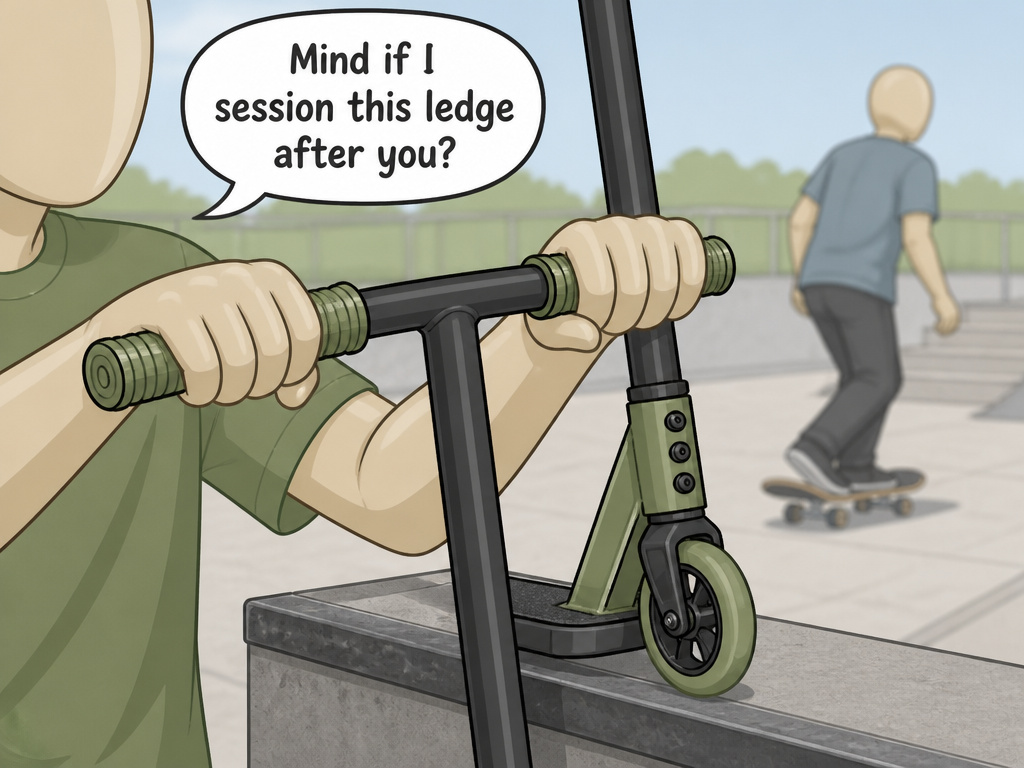
If you’re new to a scooter and nervous about the skatepark, you’re not alone. The fear of being “that scooter kid” is real, but it evaporates with good etiquette. Here’s exactly what to do.
Step 1: Gear up and scout. Wear your helmet. Then, don’t just charge in. Sit for a few minutes and watch. Identify the flow pattern in the bowl. See where the more experienced riders are.
Step 2: Start on the periphery. Practice basic kicks and turns on the flat ground away from the main features. Get comfortable with your scooter’s feel before approaching a ramp.
Step 3: Wait for a clear opening. When you want to try a bank or a small ramp, wait until there’s no one in the middle of a line. Making eye contact with a rider who just finished is a way to ask “Can I go?”
Step 4: Call your drop. As you prepare to roll in, say “Dropping!” loud enough for anyone in or near the feature to hear. This single habit makes you a respected park citizen overnight.
Step 5: Clear the landing immediately. After your attempt, whether you make the trick or bail, move out of the way quickly. Go back to your waiting spot. This shows respect for the next person’s turn.
Step 6: Be humble and ask. If you see someone waxing a ledge, ask if it’s okay for you to try it too. A simple “Mind if I session this ledge after you?” is all it takes. Reddit users in the scooter community stress this: asking about waxing and taking turns is the golden rule.
Skipping these steps is how you become the oblivious rider that frustrates everyone, ignoring the basics of how to share a skatepark with scooters. Following them is how you make friends who skate, BMX, and blade.
Managing Crowds and Peak Hours
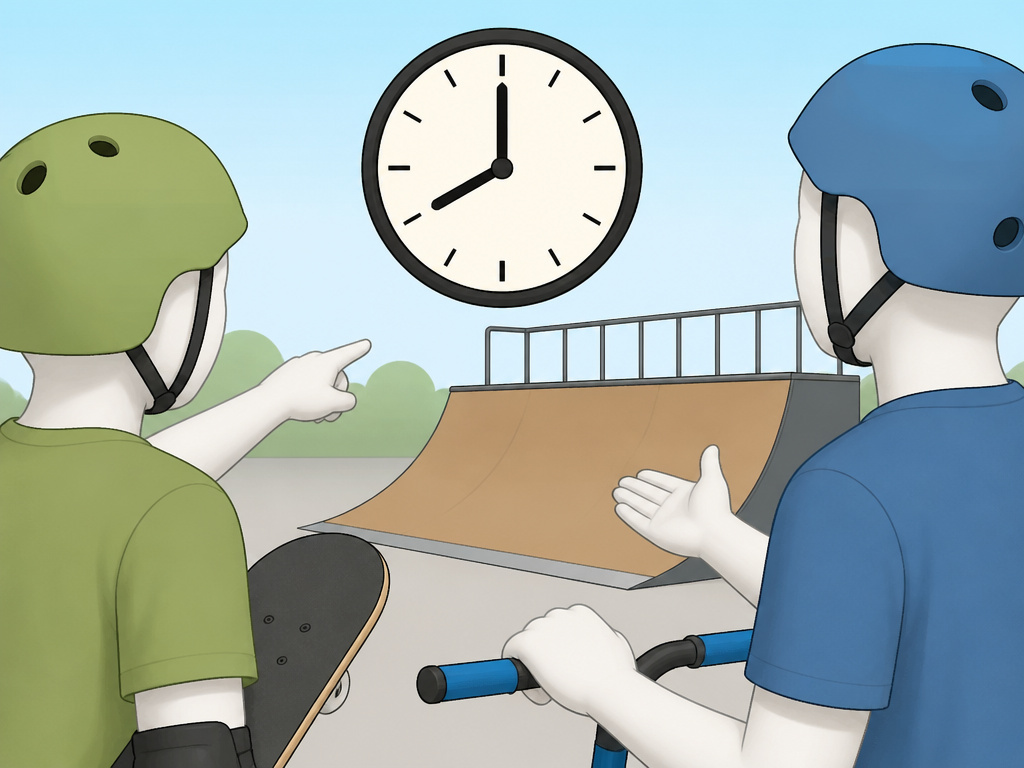
The math is simple: more people, more problems. Overcrowding can be a sign of a popular facility, but for the user, a packed park is frustrating and dangerous.
When to go: The single best piece of crowd advice from experienced users is to go in the AM. Arrive at the park when it opens, before school lets out. You’ll have an hour or two of clear space to practice. After 2 PM, especially on weekends, parks can become much more crowded; anecdotal reports from some users describe a high ratio of scooters to skateboards.
Strategies for a packed park:
- Create micro-sessions. Propose a time limit on a specific feature. “We each take three tries on this quarter, then switch?” This formalizes turns when the natural flow is gone.
- Split the park. If the bowl is a scrum, go session the flat bars or a less popular bank for 15 minutes. Let the crowd density shift.
- Know when to leave. If the park is at true capacity, with toddlers wandering unpredictably and zero gaps between runs, your session is over. Continuing is how collisions happen. Pack up and come back earlier next time.
This is also where supervising kids becomes critical. Parents should keep young children in designated beginner areas and teach them the basics of waiting and watching before they enter a crowded main bowl.
Communication Is Your Best Safety Feature
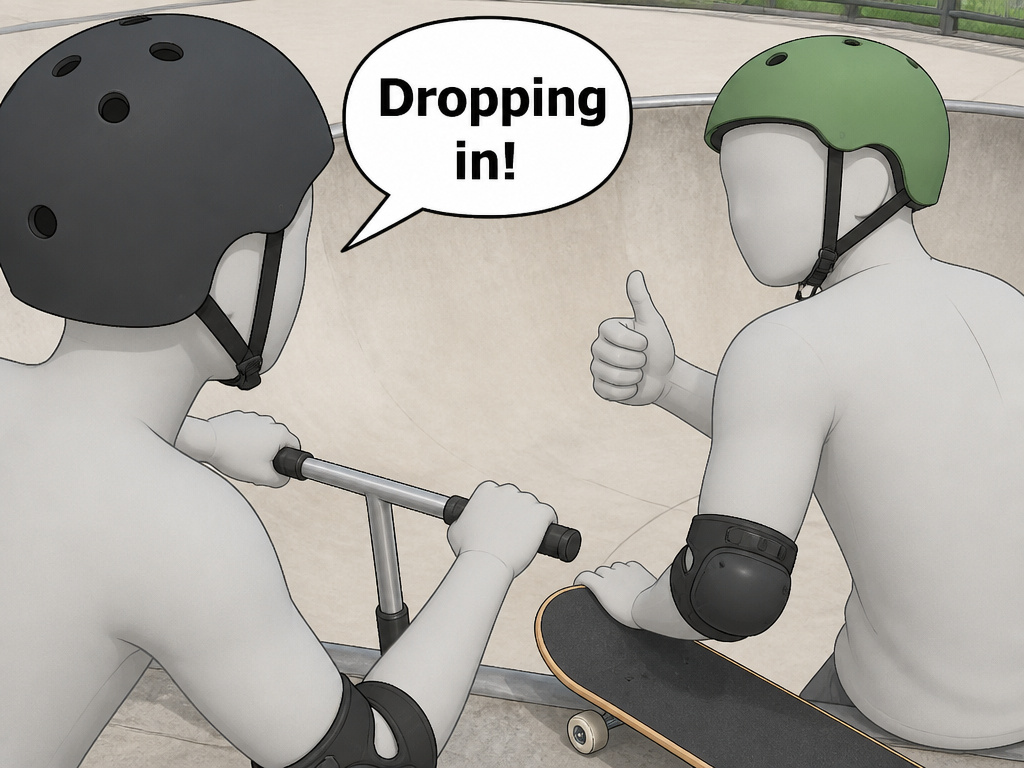
Your voice is a more effective collision-avoidance tool than any helmet. The law acknowledges this. Portland’s rule PRK-1.23 requires electric scooter operators to provide an audible signal before passing a pedestrian.
The same principle applies in the skatepark. Standardize these calls:
- “Dropping in!” or “Dropping!”: When you’re about to enter a bowl or ramp from the coping.
- “Coming through!” or “On your left/right!”: When you’re moving through a shared space or passing someone.
- “You good?”: A quick check if someone takes a hard fall and isn’t getting up immediately.
These are clear, projected statements. They replace the guesswork that leads to two people launching into the same space. Mastering this verbal layer is as important as learning to pump.
Frequently Asked Questions
Can you use a scooter at a skatepark?
Yes, in the vast majority of public skateparks. Kick scooters are considered standard wheeled sports equipment. Groups like the Tony Hawk Foundation strongly recommend inclusive policies. However, electric scooters are subject to local power and speed regulations, and many parks prohibit them if they are motorized.
Why do some skate parks not allow scooters?
The primary reason is usually related to motorized scooters, not kick scooters. Parks ban them due to higher speeds, greater mass, and potential for more severe collisions. Some skateboarders also cite wear-and-tear concerns, like BMX pegs chipping concrete coping, though the Tony Hawk Foundation states there is no significant data to support a widespread ban.
What is the most important skatepark etiquette rule?
Taking turns and not “snaking” someone else’s run. This is universal for all wheeled devices. It’s closely followed by the rule of calling out your movements (“Dropping!”) to alert others.
Are scooter parks a thing?
Dedicated scooter parks are rare. Most scooters use public skateparks designed for multiple wheeled sports. Some larger action sports facilities might have specific scooter areas, but the standard is shared use. Edmonton’s municipal design standard, COE-IM-GUIDE-0016, explicitly includes non-motorized scooters in its scope for wheeled sport facilities.
The Bottom Line
Sharing a skatepark successfully involves following a set of observable, mechanical rules that keep everyone safe. Watch the flow, call your drops, and take clear turns. The law is clear on electric scooters: check your local wattage and speed limits.
If the park is crowded to the point of danger, your best move is to leave. Come back early tomorrow morning. The concrete isn’t going anywhere, and a peaceful, productive session is always worth the wait.
Your last step before you roll in? Scan for the park’s posted rules. Then, find a spot to watch for five minutes. You’ll see the rhythm, spot the regulars, and find your opening. Now you’re not just sharing space, you’re part of the session.
