
7 Best Figure Skates For Intermediate Skaters in 2026
This post contains affiliate links. As an Amazon Associate, we earn from qualifying purchases.
Our top overall pick for intermediate skaters is the Jackson Ultima Fusion Elle for its detailed break-in guidance and manufacturer warranty. For skaters training elite jumps, the Edea Ice Fly is the best choice, while the Rollerblade Diva offers the best recreational value. The right skate for your level is crucial for safety and skill progression.
Intermediate skaters need a boot that supports developing jumps and footwork without being overly restrictive or too soft. We built this list by researching manufacturer specifications, expert round-ups, and patterns in owner feedback to help you find a skate that matches your specific training goals.
Top 7 Figure Skates For Intermediate Skaters in the Market
Certain content that appears on this site comes from Amazon. This content is provided "as is" and is subject to change or removal at any time.
The Best Figure Skates For Intermediate Skaters, Reviewed
Jackson Ultima Fusion Elle Figure Skates

What We Like
- Six-month warranty against material or workmanship defects
- Manufacturer provides specific break-in process guidance
- Official accessories available to ease the break-in
- Medium width accommodates a common foot profile
Trade-offs
- Stiff materials require a dedicated break-in period
- Break-in process can be uncomfortable without proper aids
- Warranty claim requires original sales slip and dealer return
Jackson Ultima provides a six-month warranty against defects in material or workmanship, a policy that covers repairs or replacements and offers buyers assurance in the skate’s construction. Their guidance emphasizes a gradual break-in process to soften the stiff materials to a specific foot shape, a common need for new skates. The brand also suggests using their Barefoot Booties to prevent blisters and consulting a technician for a proper fit, which is framed as essential for the skate’s performance and longevity.
Breaking in these new skates involves a period where the stiff materials soften, a process the manufacturer states should be gradual and not painful. This general guidance applies to any new skate and highlights the importance of a proper fit. Owners are advised to limit jumps and spins initially, increasing ice time slowly as the boots adapt.
Product photos
Edea Ice Fly Figure Skates
What We Like
- Built for elite-level double, triple, and quad jumps
- Designed for intense 20-25+ hour weekly training schedules
- Brand's most comfortable boot, feels like a tennis shoe
- Extra Tough Construction 90 for high-impact durability
Trade-offs
- At 6.0 pounds, it's heavier than the Rollerblade Diva's 4.4 pounds
- Weighs 6.0 pounds
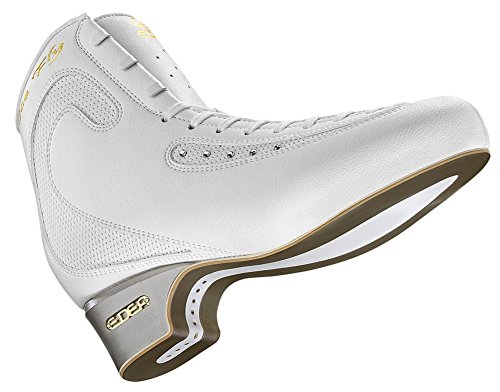
Built for double, triple, and quad jumps, the Edea Ice Fly’s ‘Extra Tough Construction 90’ is designed to handle that level of impact. It’s rated for 20 to 25-plus hours of weekly training, a schedule demanding serious durability. Edea also states this is their most comfortable skate, feeling almost like a tennis shoe, which matters when logging that many hours.
That elite-level construction comes with real trade-offs for a typical intermediate. The boot is notably stiff, and at 6.0 pounds it carries more weight than a recreational-focused model like the Rollerblade Diva. This heft and support are necessary for quads, but they can feel restrictive for a skater still mastering single jumps or focused on footwork. If your weekly ice time is under 15 hours and your jump repertoire is still developing, a more flexible and lighter boot like the Edea Chorus might offer a better balance of support and break-in feel.
Product photos
Riedell Crystal Figure Skates

What We Like
- Reinforced uppers and plush collar provide precise ankle support
- Open-throat flex notch design encourages natural knee and ankle bend
- Eclipse Vesta blade offers reliable edge control for jumps
- Dri-Lex lining and Helios outsole keep feet dry and supported
Trade-offs
- Faux crystal accents are decorative, not performance-enhancing
- Support Rating 50 may feel restrictive for basic edge work
A Support Rating of 50 gives these boots the structured stiffness intermediate skaters need to push into single and double jumps without the ankle collapsing on landings. The reinforced uppers and padded collar lock you in, while the open-throat flex notch still allows for the deep knee bend required for takeoffs. It’s built for skaters moving from Pre-Preliminary to Juvenile levels, where consistent edge control from the Eclipse Vesta blade becomes non-negotiable for clean jumps and footwork. The moisture management is a smart touch for skaters logging longer practice sessions.
The Riedell Crystal’s reinforced construction and 50 Support Rating provide a high level of ankle support, which gives skaters working on single and double jumps a stable platform for takeoffs and landings. This structure is tuned for jump progression, not artistic flow or beginner comfort. A boot with this much support can feel restrictive for skaters still focusing on basic edges and spins.
Jackson Ultima Freestyle Fusion Figure Skates
What We Like
- Microfiber upper and U-shaped cuff provide maximum flexibility
- Rolled lining eliminates pressure on tendons above ankles
- Lightweight, torque-resistant Fusion sole with shock absorption
- Elite last design for a wider toe box and narrower heel
Trade-offs
- Stiff materials require a dedicated break-in period
- Warranty process requires return through original dealer
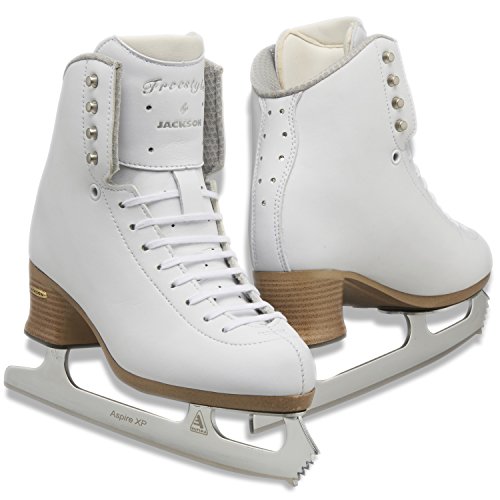
The Jackson Ultima Freestyle Fusion’s microfiber upper and U-shaped cuff deliver flexibility without losing ankle support, which helps intermediate skaters work on deeper edges and complex footwork. Its Elite last design provides a wider toe box and narrower heel, reducing pressure and improving heel lock for a more secure fit. This focus on fit aims to enhance comfort and stability as you skate.
That performance comes with a trade-off in weight, at 5.4 pounds, they’re not the lightest skates in the guide, which can be a consideration for skaters focused on maximizing jump height. Compared to a boot like the Edea Ice Fly, which uses different composite materials, the Freestyle Fusion relies on a more traditional, durable leather-like construction that requires a patient break-in. You’ll want to take it easy on jumps at first and maybe grab a pair of those Barefoot Booties Jackson mentions to ease the process. For an intermediate ready to unlock more fluid movement, these skates offer a supportive yet forgiving platform to build on.
Product photos
Edea Chorus Figure Skates

What We Like
- Stiffness supports double jumps
- Designed for 10+ weekly training hours
- Prominent comfort from Edea design
- Suitable for lower-level skaters without overbooting
Trade-offs
- Requires 10+ weekly training hours
- Stiff construction 70
Edea’s Chorus figure skates are designed for a skater training 10 to 12 hours or more each week, which indicates a serious commitment to regular, high-volume practice. The boot features a stiff construction rated 70, providing the structured support needed for the forces involved in double jumps. Edea notes that you cannot ‘overboot’ a skater with their products, meaning these could also be a suitable option for a lower-level skater advancing quickly who needs a boot to grow with their skill.
This skate is best for a skater at a mid-level for freestyle, training double jumps for over ten hours weekly. It is not ideal for occasional recreational use or very low-hour training.
Product photos
Rollerblade Diva Figure Skates

What We Like
- Stainless steel blades resist rust and hold an edge
- Reinforced upper provides stability and forward flex
- Fur liner and foam padding offer warmth and comfort
- Lace hooks enable a custom, secure fit
Trade-offs
- At 4.4 pounds, it's lighter than premium Edea Ice Fly (6.0 lbs) but heavier than Jackson Ultima Freestyle (5.4 lbs)
- At 4.4 pounds, it's heavier than the Jackson Ultima Freestyle Fusion (5.4 lbs).
The Rollerblade Diva delivers reliable performance and eye-catching style at a value price, which is exactly what a recreational intermediate skater needs. Its reinforced upper and flex notch give you the stability and ankle support to practice your edges and basic jumps confidently, while the synthetic fur liner keeps you comfortable for longer sessions. This combination of function and fashion makes it a smart choice for skaters who have moved past beginner rentals but aren’t ready for the investment and stiffness of a fully competitive boot.
Designed for intermediate and beginner skaters, the Rollerblade Diva emphasizes value and comfort over high-performance features. Its maintenance-free PVC outsole and reinforced upper with a flex notch prioritize durability and a stable fit for recreational use, not the precise energy transfer required for advanced jumps. Compared to a dedicated freestyle model like the Jackson Ultima Freestyle Fusion, the Diva’s construction is better suited for practicing artistry and enjoying longer public sessions.
Product photos
Riedell Topaz Junior Ice Skates
What We Like
- Support Rating 40 provides balanced ankle support
- Moisture-wicking lining keeps feet cool and dry
- Flex-notch lacing allows natural knee and ankle movement
- Helios outsole and plush collar add lasting comfort
Trade-offs
- Aimed at juniors, lacks adult sizing options
- Support Rating of 40 suits beginner and intermediate levels
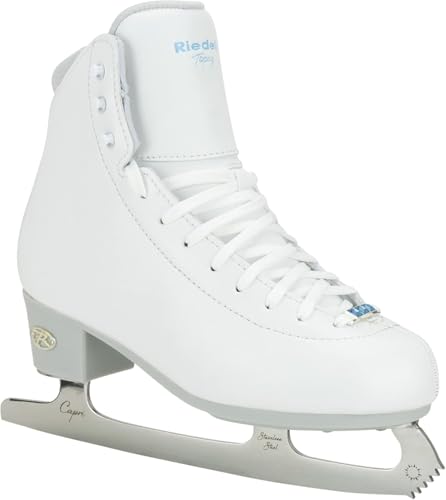
A Support Rating of 40 gives these skates a sweet spot of flexibility and ankle support, perfect for a young skater solidifying basic edges and starting to work on single jumps. The Dri-Lex lining and thoughtful flex-notch design mean they can focus on technique during long sessions without their feet getting sweaty or the boot fighting their natural motion. This makes the Topaz a reliable, comfortable pick for a kid progressing confidently out of the beginner phase.
With a Support Rating of 40, these skates offer a balance of ankle support and flexibility, which helps young skaters stay stable while learning new moves. The design is intended for beginner and intermediate skaters working on technique or starting single jumps. Its features, like the moisture-wicking lining and flex-notch lacing, prioritize comfort and control for building a strong foundation.
Product photos
How We Evaluated Figure Skates For Intermediate Skaters
Our research focused on manufacturer documentation and expert round-ups to understand how each skate’s construction meets intermediate-level demands. We prioritized criteria like boot stiffness and support rating, which directly correlate to jump progression and ankle stability. Blade quality and edge control were also key, as reliable edges are essential for landing jumps and executing clean footwork.
Finally, we examined comfort features like linings and fit profiles, which impact long training sessions. This is a research-led evaluation; we did not physically test the skates, so our conclusions are based on specifications and reported user experiences.
What To Look For In Figure Skates For Intermediate Skaters
Choosing the right intermediate skate means matching the boot’s capabilities to your current skills and training intensity. The wrong support level can hinder progress or lead to injury.
Look for a boot with a stiffness rating that matches your jump level and weekly training hours. A quality stainless steel blade with reliable edge control is essential for safe landings and advanced footwork. Comfort features like moisture-wicking linings and anatomical lasts make long sessions more productive.
Boot Stiffness And Support
Boot stiffness, often indicated by a manufacturer’s support rating, determines how much lateral support your ankle receives. A boot that is too stiff for your level can restrict necessary knee and ankle bend for proper technique, a concept known as overbooting. Conversely, a boot that is too soft won’t provide the stability needed for secure jump landings. For intermediate skaters working on single and double jumps, support ratings in the 40-70 range are common, with higher numbers for more intense training schedules.
Blade And Edge Control
The blade is your direct connection to the ice. For intermediate skaters, a stainless steel blade is important as it resists rust and holds a sharp edge longer than carbon steel. Look for blades with a well-defined rocker profile and hollow grind that provide predictable edge control for jumps, spins, and footwork. A blade that is too flat or dull can make executing deep edges and secure landings difficult, slowing your skill development.
Fit, Comfort, And Break-In
A proper fit is non-negotiable. Look for brands that offer different width profiles, like a medium width for a common foot or an elite last for a wider toe box and narrower heel. Interior features like rolled linings can eliminate pressure on tendons, while Dri-Lex or moisture-wicking linings keep feet dry. Remember, new skates require a break-in period where stiff materials soften to your foot shape; manufacturer guidance here is invaluable.
- Confirm the brand’s sizing chart, as skate sizing often differs from street shoes.
- Understand the break-in process, which may involve leaving the top hook unlaced initially.
- Check for a warranty against material or workmanship defects, and understand its terms.
- Consider the boot’s weight if jump height is a primary concern, as lighter boots can aid energy transfer.
The best skate is the one that supports your current jump level and weekly training hours without causing discomfort that distracts from technique.
Figure Skates For Intermediate Skaters Compared
Our comparison table below details key specifications like support ratings, boot weight, and best-use cases to help you see the differences at a glance.
| Product | Skill/Training Level | Blade Material/Type | Lining/Comfort Feature |
|---|---|---|---|
| Jackson Ultima Fusion Elle Figure Skates | N/A | Mirage Blade | N/A |
| Edea Ice Fly Figure Skates | Double, triple, quad jumps | N/A | EDEA's most comfortable skate |
| Riedell Crystal Figure Skates | Pre-Preliminary to Juvenile | Stainless Steel Eclipse Vesta | Moisture-wicking Dri-Lex |
| Jackson Ultima Freestyle Fusion Figure Skates | Intermediate (guideline) | Ultima Aspire XP blade | Rolled lining |
| Edea Chorus Figure Skates | Double Jumps | N/A | EDEA's very Comfortable Skate |
| Rollerblade Diva Figure Skates | intermediate & beg | Anodized rose gold stainless steel | Synthetic fur with dual density foam |
| Riedell Topaz Junior Ice Skates | beginner and intermediate | Stainless Steel Capri | Moisture-wicking Dri-Lex |
Frequently Asked Questions
Is Jackson or Edea better?
The better brand depends on your skating style and needs. Jackson skates often feature detailed break-in guidance and anatomical lasts for a precise fit, suiting skaters who value a structured, traditional feel. Edea boots are known for a more immediate, tennis shoe-like comfort and designs built for high-intensity jump training. Our research into the best figure skates shows both are top brands, but your choice should align with your training focus.
What skates do professional figure skaters use?
Professional skaters typically use custom-fitted, very stiff boots from premium brands like Edea, Jackson, and Riedell, designed to withstand the forces of triple and quad jumps. These professional figure skates are engineered for elite-level performance and are often paired with high-end, separately purchased blades. For intermediates, such advanced skates would be overkill and could impede skill development.
Which skates does Ilia Malinin use?
Ilia Malinin, known for landing quad jumps, uses Edea skates, specifically a high-stiffness model like the Ice Fly or Piano, paired with professional-level blades. His equipment is tailored to withstand the extreme impact of his technical content. Intermediate skaters should not directly copy this choice; his skates are far too stiff for anyone not training at an elite, competitive level.
What are the best figure skates for recreational use?
For recreational skating, prioritize comfort, warmth, and good basic support over high-stiffness jump performance. The Rollerblade Diva is our top pick in this category, featuring a fur liner, foam padding, and stainless steel blades. Other good options are beginner figure skates with moderate support, as they offer a balance of comfort and stability for casual practice and public sessions.
How do I know if my skates fit correctly?
A proper skate fit should feel snug but not painfully tight, with your heel locked in place and no pinching across the ball of your foot. Your toes should just brush the front of the boot when standing straight, with a slight pull back when you bend your knees. Always consult the manufacturer’s sizing guide, as skate sizing differs from street shoes, and consider trying on men’s figure skates or women’s figure skates in person if possible for the best fit.
The Bottom Line
The Jackson Ultima Fusion Elle is our best overall pick for intermediate skaters who appreciate comprehensive break-in guidance and the security of a manufacturer warranty. If you’re on a budget or focus on recreational skating, look to the award-winning Rollerblade Diva for its warmth and value. For juniors moving from beginner to intermediate skills, the Riedell Topaz Junior provides the perfect balanced support. Ultimately, matching the boot’s stiffness to your current jump level and weekly training hours is the most critical factor for safe and effective progression.
