
How to Find Skateboarding Buddies as an Adult: 5 Steps
This post contains affiliate links. As an Amazon Associate, we earn from qualifying purchases.
To find skateboarding buddies as an adult, you have five proven paths: visit your local skate park and skate shop, use location-based apps like Hobbimate or Skate Your City, join dedicated groups on platforms like Meetup.com, seek out discipline-specific communities, and consistently show up. The key for adults is matching skill level and session intent, not just geography.
That last part changes everything. A public park is full of skaters, but if you’re a 35-year-old beginner practicing pushes, rolling up to a crew of teenagers nailing kickflips can feel like walking into the wrong movie. The connection fails not for lack of people, but for a mismatch in goals. This is precisely why you need to know how to find skateboarding buddies as an adult.
What follows is a breakdown of those five paths, with a clear map of which apps work where and how to filter for the exact kind of skate session you want, casual, competitive, or skill-building, when you compare a how to find skateboarding buddies as an adult. You’ll also get the one rule that makes approaching strangers at the park less awkward.
Key Takeaways
- Your local skate shop is a great connector; staff know the regulars and can point you to the right park or session for your level.
- For precise matching, use apps like Hobbimate (Australia) or Skate Your City (global) to filter by skill level (Beginner, Intermediate, Advanced) and session type (Casual, Competitive, Training).
- The largest dedicated online group is Ghostskate New York City on Meetup.com with 2,769 members, showing the scale possible in big cities.
- Niche disciplines like surfskate or longboard dancing have their own curated meetup directories, like Concrete Waves, because general skatepark crowds won’t cover them.
- Consistency beats courage. Showing up to the same spot at the same time each week builds familiarity naturally, turning nods into conversations.
The 5-Step Playbook for Adult Skate Friendships
Forget the vague “just go to the park” advice. As an adult, your time is limited and your tolerance for social dead-ends is low. This playbook prioritizes efficiency and fit.
The national governing body Skateboard GB advises two direct methods: visit your local skate park, or visit your closest skateboard store. Shop staff will introduce you to others who skate or direct you to the main skate spot in town. This official guidance underscores that physical, local hubs remain the most reliable starting points.
Start with the shop, not the park. Walk into a real skate shop, not a sporting goods chain. The person behind the counter skates. They’ve seen everyone from the local legend to the guy who bought his first board last week. Tell them you’re looking for people to skate with. It’s their job to know. They might point you to the mellower park across town, or mention the weekly beginner session that never gets posted online. This is your single highest-probability move.
Use apps built for the search. If the shop draws a blank, or you want to screen for compatibility before leaving the house, dedicated platforms are your next stop. Their entire function is this problem.
| Platform | Best For | Key Filter | Primary Region |
|---|---|---|---|
| Hobbimate | Finding partners for specific session types (Casual, Competitive, Training) | Skill Level (Beginner, Intermediate, Advanced) & Session Style | Australia (Sydney, Melbourne, Brisbane, etc.) |
| Skate Your City | Real-time check-ins at spots/meetups and hosting new sessions | Activity Type (Skateboarding, Longboarding, Inline) | Global |
| Meetup.com | Joining large, organized recurring groups | Group Size & Location | Global (8,377 members in US skate groups) |
| Concrete Waves | Niche disciplines like surfskate, longboard dance, LDP | Curated meetup directory | North America |
Hobbimate is designed for intentional matching. You don’t just find “a skater.” You find a skater who self-identifies as a Beginner looking for a “Casual” session to build confidence. That’s a different conversation from an Advanced skater seeking “Competitive” lines. It removes the guesswork and intimidation.
Join the big digital groups. For sheer volume, platforms like Meetup.com host established communities. On Meetup.com in the USA alone, there are 31 Skateboarding groups with 8,377 members. The largest Skateboarding group on Meetup.com in the USA is Ghostskate New York City with 2,769 members. These groups schedule events, from street skates to park meetups, and the schedule does the planning for you. You sign up, show up, and skate with a dozen people immediately. It’s efficient.
Seek your tribe, not just skaters. If you ride a surfskate or a longboard for dance, your crowd isn’t at the street plaza. They’re at specific pump tracks or smooth parking garages, often organized through niche sites like the Concrete Waves meetup directory. General advice fails here. You need the specific community.
Be the regular. This is the slow-burn, zero-tech method. Pick a park or a spot. Go at the same time every Tuesday evening or Sunday morning. You’ll see the same faces. Week one, you nod. Week three, you comment on a trick. Week five, you’re asking about local street spots. It works because it builds familiarity without pressure. It’s how I met the crew I skate with now, by being the consistent, slightly awkward guy working on slappies in the same corner every week.
Match Your Skill and Style, Not Just Location
Finding another adult with a board is step one in the how to find skateboarding buddies as an adult process. Finding one who wants the same thing out of a session is where real friendships form. Mismatched expectations kill budding skate partnerships faster than rain.
Common mistake: Only searching by location. A park two miles away is useless if everyone there is practicing for a contest and you’re-learning how to kickturn.
Hobbimate’s platform forces this clarity upfront. You must choose:
- Session Style: Casual (relaxed social skate), Competitive (challenge yourself with harder tricks), or Training (practice tricks and build your skills).
- Skill Level: Beginner (learning basics, building confidence), Intermediate (know the ramps, ready to sharpen tricks), or Advanced (technical lines, bigger features).
This isn’t elitism. It’s practicality. A beginner in a Training mindset might want to drill ollies for an hour. An Advanced skater in a Casual mood might just want to cruise and chat. Putting them together frustrates both. The apps that filter for these preferences exist because the generic “skate buddy” search fails adults constantly.
Your first move on any platform should be setting these filters. It turns a list of 50 nearby skaters into a list of 3 who actually want the same thing you do. That’s a list you can work with.
Where to Look: A Geographic Guide to Platforms
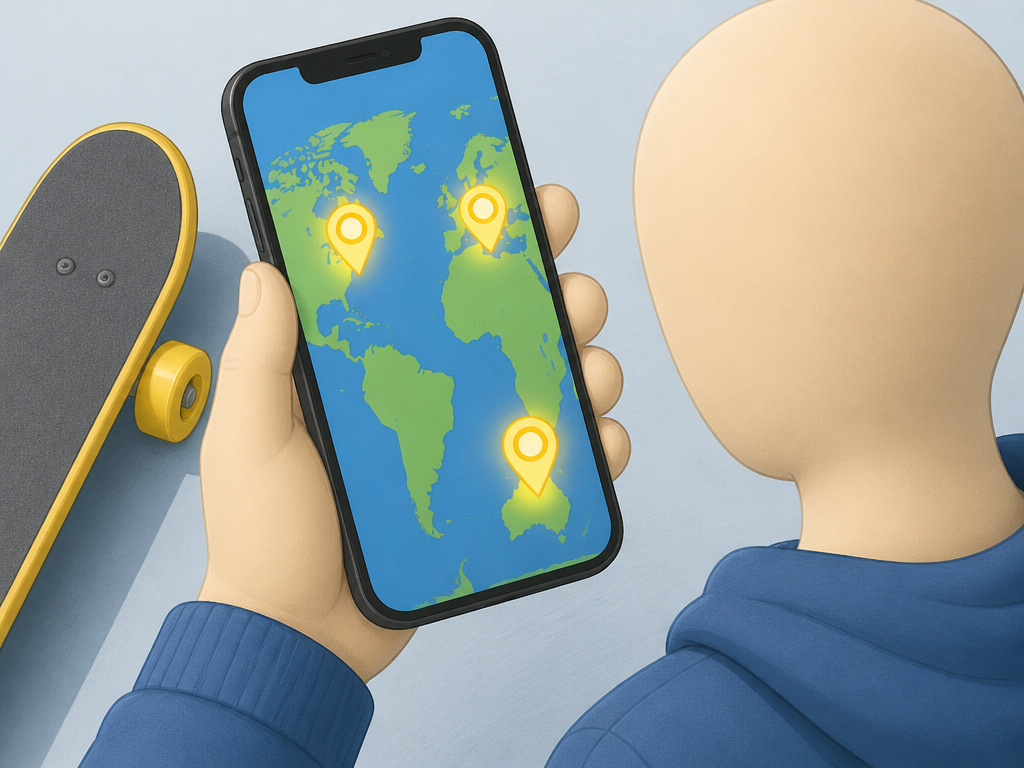
Your city determines your best tools. A platform that’s active in Melbourne might not have users in Montreal.
- In Australia, you can use Hobbimate, which is active in Sydney, Melbourne, Brisbane, Perth, Adelaide, and Canberra.
- In the UK, start with the advice from Skateboard GB: local shops and parks. Then check for UK-specific groups on Meetup or Facebook.
- In North America, explore Meetup.com for large groups like Ghostskate NYC, and Skate Your City for real-time check-ins. For niche disciplines like surfskate in North America, the Concrete Waves directory is a primary source, while Hobbimate serves Australian cities and Skateboard GB is UK-focused.
- Globally, Skate Your City and Meetup.com are your broadest nets, but user density varies wildly by city.
This matters because downloading an app with no users in your area is a dead end. Check the active cities list on a platform’s site before you invest time in a profile.
How to Approach Skaters at the Park (Without the Awkwardness)

The park is the classic method, and it works if you handle the approach right. The goal isn’t to walk up and give a speech. It’s to become part of the scenery, then interact naturally.
Don’t lead with a question. Don’t walk up to someone mid-run and say, “Can you teach me that?” It puts them on the spot. Instead, skate. Do your thing. If you see someone land something cool, a simple, loud “Yew!” or “Nice!” is enough. It’s positive, it’s accepted park etiquette, and it opens a door. They’ll likely nod or say thanks. That’s contact.
Ask for a tip, not a tutorial. Once you’ve exchanged a few of those positive nods over a session, you can ask a specific, small question. “Hey, I’m working on getting my ollies to level out, any tip on the foot drag?” This is better than “Can you teach me to ollie?” It’s a focused ask that respects their time. Most skaters will give a thirty-second tip. Some might offer to watch your attempt. That’s a conversation.
Use the mini-ramp or a shared obstacle. These are natural social hubs. You take a turn, they take a turn. You fall, they might offer a “You almost had it!” The shared activity does the talking for you. I met one of my regular skate buddies because we were the only two adults repeatedly failing frontside grinds on the same ledge for forty minutes. Shared frustration is a powerful bond.
The underlying principle is shared activity first, conversation second. You’re both there to skate. Let that be the reason you’re in the same space, and let the interaction grow from the skating itself.
When to Start Your Own Group or Meetup

Sometimes the community you need doesn’t exist yet. If you’ve tapped the shops, apps, and parks and still can’t find your people, especially if you’re in an underserved niche or skill bracket, it’s time to build it.
Platforms like Skate Your City are designed for this. You can host a meetup, label it “Beginner Adult Session – Casual Skate & Chat” or “Sunday Morning Surfskate Cruise,” and see who checks in. The barrier is low. Some sources, like Rollerblade USA, explicitly encourage this: don’t just find, host.
Is it more work? Yes. But it also positions you as the hub. You set the time, the pace, the vibe. For adult beginners, this can be very effective because you’re creating the exact, low-pressure environment you wanted to find. It’s how many local skate clubs get their start, one person deciding to make the event they wish existed.
Frequently Asked Questions
What’s the best app to find skateboard friends?
For users in Australia, Hobbimate is the best dedicated app, as it allows you to filter by skill level and desired session type. Globally, Skate Your City is excellent for finding and hosting real-time meetups, while Meetup.com hosts the largest organized groups, like Ghostskate New York City with over 2,700 members.
I’m a beginner in my 30s. Where do I start?
Start offline. Visit your local skate shop and ask. Staff can direct you to the most beginner-friendly parks and times. Then, on apps like Hobbimate or Meetup, use the “Beginner” filter explicitly. Look for sessions labeled “Casual” or “Training” rather than “Competitive.” This guide for adult skateboarding beginners covers the first steps on the board itself.
How do I find longboard or surfskate buddies?
General skate parks are hit-or-miss for these niches. Seek out discipline-specific communities. The Concrete Waves skate meetup directory is a curated resource focusing on surfskate, longboard dance, and long-distance pumping (LDP) events, primarily in North America.
Is it weird to skate alone to meet people?
Not at all. Skating alone but consistently at the same spot is one of the most reliable ways to build a local crew. You become a familiar face, and interactions grow naturally from shared time at the park or spot. It’s how many adult skaters, myself included, found their first friends.
What if there’s no skate shop or community near me?
This is when creating a group becomes your best option. Use a platform like Skate Your City to host a weekly “Remote Area Skate Session” at a local parking lot or smooth pathway. Others in your area may also be looking for a group. It’s a direct path to forming a skate group.
The Bottom Line
Finding skateboarding buddies as an adult isn’t about being the most outgoing person at the park. It’s about using the right tool for your location and being specific about what you want. Start with the human infrastructure, the skate shop. Then, let apps handle the precise matching of skill and intent. Your local park is for turning those digital connections into real ones.
If one tactic feels awkward, try another. The 40-year-old who finds a weekly cruise through Hobbimate gets the same result as the 30-year-old who becomes a park regular. The only wrong move is skating alone in a corner, convinced no one else is looking for the same thing. They are. You just have to be on the same map.
