
How to Fit a Skateboard Helmet: Step-by-Step
This post contains affiliate links. As an Amazon Associate, we earn from qualifying purchases.
To fit a skateboard helmet correctly, match three things: a snug, even fit with no gaps, a level position with the front rim aligned with your eyebrows, and a tight chin strap that allows no more than one or two fingers underneath. Side straps must form a ‘V’ under and slightly in front of your ears.
That alignment is not just for looks. The Oregon Department of Transportation states a properly fitted helmet can reduce the risk of head injury by 85%. A helmet that sits too high leaves your forehead exposed, and one that’s too loose can come off upon impact, as noted by the CPSC. Knowing how to fit a skateboard helmet is therefore critical for safety.
What follows: how to navigate conflicting sizing advice from manufacturers, the simple 2V1 Rule for a final check, and what to do when your helmet feels wrong even when the numbers say it’s right, which is a key part of how to fit a skateboard helmet.
Key Takeaways
- Measure your head at its widest point (TSG) or one finger’s width above the eyebrows (Powerslide) and always consult the brand’s specific sizing chart.
- A proper fit is snug with no gaps, not painfully tight; test by gently shaking your head with the strap undone, the helmet shouldn’t move.
- Use the 2V1 Rule for a final check: two fingers above eyebrows, a ‘V’ under each ear, one finger under the chin strap.
- Replace the helmet immediately after any severe impact, and plan to replace it every 3-5 years under normal use, or after 8 years from its manufacture date.
- Never modify the helmet or use solvents to clean it; use a soft damp cloth with mild soap and cold water only.
Step 1: Measure Your Head (The Right Way)
Brands disagree on where to place the tape. This is why you must check the sizing chart inside the helmet you’re buying, sizes vary from brand to brand.
Use a soft tape measure, keep it level from front to back, and record the number in centimeters. If you don’t have a tape measure, use a string and measure it against a ruler.
That number is your starting point, not your final answer. A Pro-Tec size medium might be a Triple Eight size large. This is the most common reason a helmet feels wrong in the store, you grabbed a size based on a generic chart online instead of learning how to fit a skateboard helmet. Always try the helmet on with the hairstyle you’ll skate in. The CDC explicitly warns that a long-haired skater who gets a short cut will need to readjust the fit.
Step 2: Achieve the Snug, Level Fit
A helmet that rocks side-to-side on your head is too big. One that gives you a headache within a minute is too small. The goal is a snug, even pressure all around your skull. The TSG manual describes it as “firm, even, but comfortable pressure.”
Put the helmet on straight. The front rim should align with your eyebrows. This is essential. The CPSC states the helmet should be level with the head, not tilted back. If you can see the sky when you look up, it’s too far back. If it’s covering your vision, it’s too far forward.
Here’s a physical test from the Powerslide manual: with the chin strap undone, gently shake your head. The helmet should not move on your head. If it slides, you need thicker comfort pads (most helmets include a set) or a smaller size. This “shake test” checks the shell fit before you even touch the straps.
Step 3: Adjust the Straps and Buckle
This is where most people get the sequence wrong, and it leads to a lopsided, uncomfortable fit.
You can try either method: the Oregon DOT method (adjust side sliders first) or the TSG method (tighten chin strap first).
- Center the left buckle under your chin.
- Adjust the slider on each side strap so they form a clear “V” shape under, and slightly in front of, your ears. The CDC and Oregon DOT agree on this placement.
- Buckle up and tighten the chin strap. Hold the buckle and pull the strap tight.
Common mistake: Leaving the chin strap too loose. A helmet can come off upon impact if it’s too loose, according to the CPSC. The strap’s job is to keep the helmet seated during a crash, not just to keep it from falling off when you bend over.
Now, perform the “big yawn” test endorsed by the CDC and Oregon DOT. Open your mouth wide. The helmet should pull down on your head. If it doesn’t, the chin strap needs to be tighter.
The 2V1 Rule: A Simple Fit Checklist
Once everything feels adjusted, run through this mnemonic from the Saskatchewan Prevention Institute. It’s called the 2V1 Rule and it catches the fit issues you might have missed.
| Rule | What to Check | Pass Condition |
|---|---|---|
| 2 | Fingers above eyebrows | Look up. The helmet should not slide back; the CDC says the front rim should align with your eyebrows, while the Oregon DOT uses a two-fingers-above-eyebrows test. |
| V | Side strap shape | Each side strap forms a ‘V’ shape under, and slightly in front of, your ears. |
| 1 | Finger under chin strap | Buckled up, you can fit one finger (maybe two) between your chin and the strap, but no more. |
If any of these checks fail, go back and adjust. The “two fingers above eyebrows” test (Oregon DOT) or the “align with eyebrows” check (CDC) can catch a helmet that’s sitting too high. The “one finger under the chin” ensures you haven’t over-tightened to the point of discomfort.
How to Know If Your Helmet Fits Correctly
You’ve followed the steps. How does it actually feel? A correct fit has a specific sensory reality.
First, sound. When you tap the helmet with a knuckle, it should feel solidly coupled to your head, no hollow thunk that suggests an air gap. Second, feel. When you turn your head sharply left and right, the skin on your forehead and temples should move with the helmet, not slide under it. You’ll feel a slight, even pressure, not a pinch.
Where this goes sideways: Confusing “snug” with “tight.” A snug fit means no independent movement between the helmet and your head. A tight fit causes a headache behind your eyes within ten minutes. If you get the latter, the shell is too small.
Finally, do the dynamic tests from the Oregon DOT guide. Look down, touching your chin to your chest. The helmet should not rock forward into your eyes. If it does, unbuckle and move the slider on each side back toward your ear to shorten the back strap, then retest.
What to Do If You’re Between Sizes
This is the classic dilemma. The sizing chart says you’re a 57cm, right between a brand’s Medium (55-57cm) and Large (58-60cm). Do you size up or down?
Always size down if you have to choose. It’s easier to add space with thinner aftermarket comfort pads than it is to shrink a shell that’s too large. A helmet that’s slightly tight can be gently broken in; a helmet that’s too large will never be safe, no matter how much you crank the straps.
Most quality helmets from brands like Triple Eight, Bern, and Pro-Tec come with multiple pad thicknesses. Start with the thickest pads. If the fit is too tight, swap them out for the thinner set. This micro-adjustment is what the “Dial-Fit” systems on higher-end models are trying to emulate.
Skateboard Helmet Care and Replacement
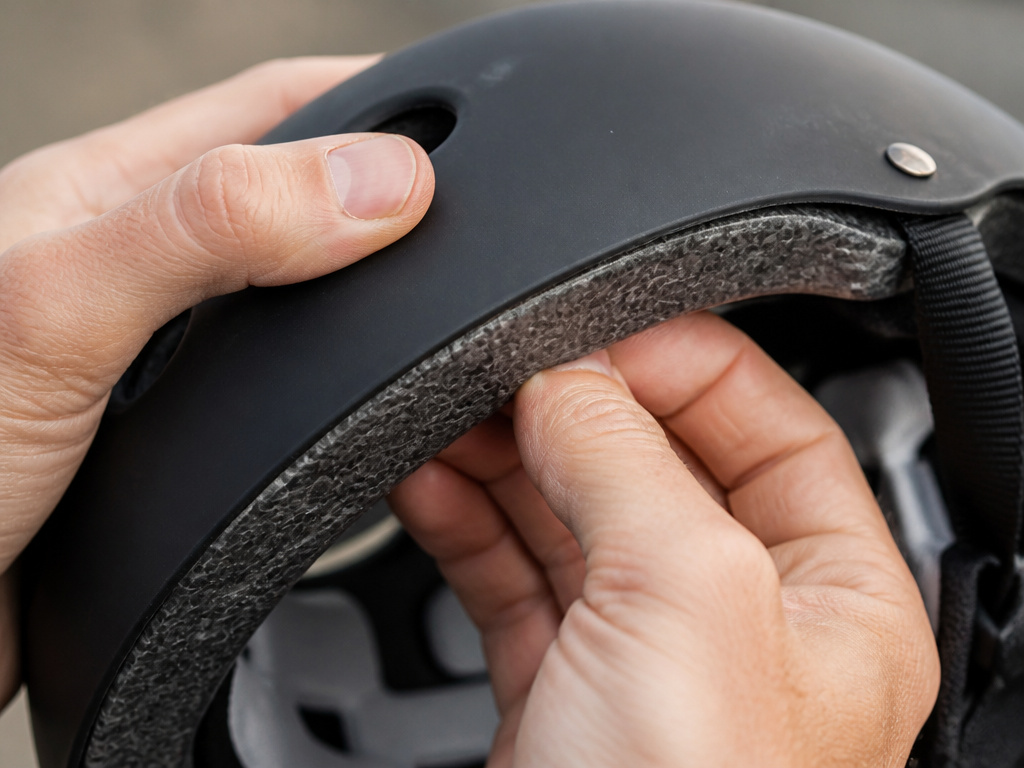
Fitting isn’t a one-time event. Your helmet’s fit and integrity change over time.
Cleaning: Never use solvents, paints, or harsh cleaners. The TSG manual is clear: this can damage the materials invisibly. Wipe the shell with a soft damp cloth and mild soap in cold water. Remove the comfort pads and hand-wash them, letting them air dry completely.
Storage: The CDC warns against leaving your helmet in a car. Temperature extremes, especially heat above 65°C as noted by TSG, can warp the shell and degrade the foam. Store it in a cool, dry place.
Replacement: Here sources offer a range. The TSG manual says replace every 3-5 years under normal use, or after 8 years from the date of manufacture. The Oregon DOT says if your helmet is more than 3-5 years old or damaged, it’s time for a new one. Replacement timelines vary: TSG recommends replacement every 3-5 years under normal use (max 8 years from manufacture), while the Oregon DOT suggests replacement if the helmet is more than 3-5 years old or damaged. After any severe impact, destroy and replace the helmet, even if it looks fine. The foam inside compresses to absorb energy, and that damage is not visible.
What do helmet safety certifications mean?

Look for a label inside the helmet that shows it meets a recognized safety standard like CPSC or ASTM. Health Canada recommends looking for labels like CPSC, ASTM, or Snell. These certifications mean the helmet has passed specific impact tests. For skateboarding, you need a helmet designed for that activity. A skateboard helmet is built differently than a bike helmet; it covers more of the back of your head and is made to handle the types of falls common in skating. Never use a helmet for an activity it’s not certified for, unless the instructions say you can. The certification is your guarantee that the basic design has been proven to protect you.
Frequently Asked Questions
How is a skateboard helmet supposed to fit?
Skateboard helmet should fit snugly all around with no gaps between the padding and your head. It should sit level, with the front rim aligned with your eyebrows, and should not move independently when you shake your head. The chin strap, when fastened, should allow no more than one or two fingers underneath.
What is the 2 2 2 rule for helmets?
The 2V1 Rule (often remembered as 2-2-1) is a fit-check mnemonic. It stands for: Two fingers’ width above the eyebrows (helmet shouldn’t slide back further), a ‘V’ shape under each ear from the side straps, and one (or two) fingers under the fastened chin strap.
How do you know your skateboard helmet size?
You know your skateboard helmet size by measuring your head circumference with a soft tape measure. However, you must consult the specific brand’s sizing chart, as a “Medium” varies between manufacturers. Always try the helmet on with your intended skating hairstyle before finalizing the purchase.
Can I use my bike helmet for skateboarding?
You should not use a standard bicycle helmet for skateboarding unless it is dual-certified. Skateboard helmets are designed for multiple low-impact falls and cover more of the back of the head. Bicycle helmets are designed for a single high-impact crash. Look for a label certifying it to ASTM F1492 or CPSC for skateboarding.
How tight should a skateboard helmet be?
Skateboard helmet should be tight enough that it doesn’t move on your head when you shake it with the chin strap undone. It should not be so tight that it causes a headache or pressure points. The sensation is of firm, even pressure, not a squeezing or pinching feeling.
Before You Go
The one action to take this week: put your current helmet on and run the 2V1 Rule check. If it fails any of the three tests, two fingers above the brow, the ‘V’ under your ears, one finger under the chin, spend five minutes re-adjusting it. That adjustment is the difference between a helmet that’s just a hat and one that’s actually anchored to protect you.
All the advice here assumes a certified, undamaged helmet. If your helmet is older, has been dropped hard, or just never felt right, the calculus changes. In that case, the only safe move is to replace it. A new, certified helmet is a known quantity; start fresh with the sizing chart and these steps, and you’ll have a fit that actually works.
