
How to Make a Skateboard Ride Smoother: Step-by-Step
This post contains affiliate links. As an Amazon Associate, we earn from qualifying purchases.
A smoother skateboard ride comes from matching three things: softer or larger wheels, well-maintained bearings, and properly tuned trucks. The CPSC notes that longer boards and wider truck hangers also increase stability, which reduces speed wobble and the jarring feeling on rough ground.
That stability piece is the part most quick-fix guides skip. They tell you to buy soft wheels and call it a day, which works until you hit a crack at speed and the board still throws you. Smoothness isn’t just about cushion; it’s about control that doesn’t fight you, which is the real answer to how to make a skateboard ride smoother.
What follows: a four-step diagnostic to find your specific problem, the exact measurements for bolt length if you add riser pads, and the one bushing trick that stops the squeak without ruining your turn.
Key Takeaways
- Softer wheels absorb vibration, but going too large may require riser pads to prevent wheel bite.
- Clean or replace bearings if they spin poorly; water causes rust that seizes them within days.
- Tune trucks a quarter-turn at a time and ride between changes; overtightening for stability can make turning impossible.
- Before every session, check for loose bolts, wobbly wheels, and deck cracks, a five-second check prevents a rough ride.
- A slow setup is often the urethane formula of the wheels, not the bearings; don’t waste money on high-ABEC ratings.
The 4-Step Diagnostic Checklist
Start here. Most rough rides have one primary culprit, but trying to fix everything at once leaves you guessing. Follow this order.
First, lift the board and spin each wheel. It should coast for a few seconds. If one stops immediately, the axle nut is too tight, loosen it a quarter turn. If all spin sluggishly with a gritty sound, the bearings need cleaning or replacement. The iFixit wiki confirms water causes rust that severely hinders the bearing’s ability to spin.
Next, stand on the board stationary and rock side-to-side. Listen for squeaks from the trucks and feel for how far you lean before the wheels lift. Excessive lean with little effort means your trucks are too loose for your weight, which feels twitchy and unstable at speed. If the board barely turns, they’re too tight, transmitting every bump directly into your feet.
Then, look at your wheels. Cone-shaped wear or flat spots will thump rhythmically as you roll. The Skate Labs guide says to replace wheels with flat spots that make the ride thump. Check the durometer rating printed on the wheel, if it’s above 90a, you’re on a hard wheel meant for smooth skatepark concrete, not rough pavement.
Finally, inspect the deck around the truck mounts. A cracked deck flexes unpredictably. Press down on the tail; a dead, soggy pop is a sign the wood is fatigued. This isn’t just uncomfortable; a cracked deck can snap.
Where this goes sideways: Changing your wheels and trucks in the same session. You won’t know which adjustment fixed the problem or created a new one. Do one, ride it, then decide.
Wheel Upgrades: Size, Hardness, and Shape
Your wheels are the first point of contact with the ground. Their size and hardness determine how much vibration gets to your feet. The Concrete Waves handbook maps it out: medium-large wheels (65–75mm) suit longboards, while large wheels (75mm+) are for long-distance or electric skateboarding.
Durometer, the ‘a’ rating, measures hardness. A lower number means a softer wheel. According to iFixit, a softer wheel will have a lower ‘a-rating’ that will be in the 60-70 range, while a harder wheel will be in the 90-100 range. Softer urethane grips better and absorbs cracks, but wears faster. Harder wheels slide easier and last longer, but chatter on rough terrain.
| Wheel Durometer (a-scale) | Best For | Trade-off |
|---|---|---|
| 78a – 86a (Extra Soft – Medium Soft) | Rough roads, cruising, vibration dampening | Wears faster, can feel sluggish for tricks |
| 90a – 95a (Medium Hard – Hard) | Smooth skateparks, street skating, sliding | Harsh ride on rough ground, longer lifespan |
| 97a+ (Very Hard) | Technical street skating, precise board feel | Transfers all vibration, unforgiving on bumps |
The shape matters, too. Centerset wheels can be flipped to extend life. Offset or sideset wheels, with a larger lip on one side, are better for deep carving. If you’re just cruising, a simple centerset wheel is the most straightforward.
I learned this after riding very hard wheels (101a) as a beginner because they looked pro. My local sidewalks felt like riding over a pile of loose bricks. Switching to a medium-hard wheel (93a) was a revelation, the board still popped for tricks, but it rolled over pebbles instead of stopping on them.
Common mistake: Buying the largest, softest wheels without checking clearance. Wheels larger than 60mm on a standard setup often cause wheel bite, the wheel contacts the deck during a turn, throwing you off. IFixit notes that standard prevention (tightening trucks) can be insufficient here, requiring riser pads.
Bearing Maintenance: Cleaning vs. Replacing

Bearings let wheels spin freely. When they’re dirty or dry, they create drag. The myth is that a slow board means you need expensive, high-ABEC bearings. The Concrete Waves handbook calls this out, stating ABEC rating wasn’t made with skateboarding in mind and a higher rating does not mean faster bearings, though marketing often presents higher ABEC ratings as better.
Concrete Waves states that most of the time, a slow setup is due to the urethane formula of the wheels, though many beginners assume it’s the bearings. But if your bearings are the issue, you have two paths: clean or replace.
Cleaning extends the life of serviceable bearings. You’ll need a bearing removal tool, isopropyl alcohol (90%+), and a light lubricant. Pop the shields, soak the bearings in alcohol, let them dry completely, then add a drop of lubricant. Reassemble. The Skate Labs guide warns that some bearing shields don’t come off, so check the manufacturer’s info first.
Replace bearings if they’re rusty or still gritty after cleaning. For most skaters, a basic sealed bearing is perfect. They’re inexpensive, reliable, and you won’t cry if you ruin them riding through a puddle.
Here’s a quick decision table:
| Symptom | Likely Cause | Action |
|---|---|---|
| Wheel spins slowly, gritty noise | Dirt/debris inside bearing | Clean and re-lubricate |
| Wheel wobbles side-to-side | Bent axle or worn bearing races | Replace bearing (and check truck) |
| Wheel seizes or doesn’t spin | Rust from water exposure | Replace bearing; store board dry |
| One wheel is slower than others | Uneven axle nut tightness | Loosen nut a quarter-turn and retest |
Store your board in a dry place. Moisture damages bearings and the deck, and heat can weaken your grip tape.
Truck Tuning and Bushing Basics

Trucks connect your wheels to the deck and allow you to turn. Their tightness and bushing quality dictate stability and smoothness of carve. The CPSC advises keeping trucks, wheels, nuts, and mounting screws tightened properly to improve stability at higher speeds.
The kingpin nut adjusts tightness. Tighten it, and the board turns less but feels more stable, good for speed. Loosen it, and carving gets easier, but speed wobble risk increases. The universal rule from Skate Labs: Go a quarter turn at a time and ride between changes. Never loosen the nut so far that it barely threads on; it can vibrate off while riding.
Bushings are the urethane rings around the kingpin. They compress as you turn. Softer bushings (lower durometer) turn easier; harder bushings (higher durometer) are more stable. The Concrete Waves handbook explains the shapes: cones offer less resistance and rebound, barrels provide more resistance and rebound. A barrel/cone combo is common.
Expert tip: For high-speed stability, some riders (like rideevolve.com) tighten the rear truck slightly more than the front, while the CPSC advises keeping all trucks, wheels, nuts, and mounting screws tightened properly. Start with both trucks equal, then experiment.
There’s a sharp disagreement on bushing lubrication. Concrete Waves suggests wax, petroleum jelly, or white lithium grease to stop noises, while Skate Labs and iFixit imply standard practice is to avoid lubricating bushings as it attracts dirt and can alter performance unpredictably.
If your bushings are cracked, squashed flat, or won’t hold a setting, replace them. Don’t mix vastly different durometers in the same truck.
Riser Pads and Bolt Length: The Fit Check

Larger, softer wheels are a top recommendation for a smooth ride. But if they’re too large, they’ll bite the deck. Riser pads, plastic or rubber spacers, solve this by increasing the deck-to-wheel distance.
Adding a riser means you need longer bolts. The Concrete Waves handbook provides a clear table. For a standard 7-ply deck (1/2″ thick), here’s what you need:
| Riser Pad Thickness | Required Bolt Length |
|---|---|
| No Riser | 7/8″ |
| 1/8″ Riser | 1 1/8″ |
| 1/4″ Riser | 1 1/4″ |
| 1/2″ Riser | 1 1/2″ |
For an 8-ply deck, add 1/4″ to each length. These measurements account for the deck (1/2″), truck baseplate (1/8″), and nut (1/4″). Always measure your specific setup, but this table gets you 95% of the way there.
Installing them is simple: remove the truck, place the riser pad over the mounting holes on the deck, align the truck, and thread in the new, longer bolts. Snug them down with a skate tool. This five-minute mod prevents the wheel-bite that can pitch you forward without warning.
Grip Tape and Deck Health

A smooth ride isn’t just about rolling, it’s about confident footing. Worn grip tape is slippery, making you tense your feet, which amplifies every bump. The iFixit wiki is direct: It is not advised to use your skateboard without any grip tape.
Grip tape grit works like sandpaper: a lower number (like 80) is coarser and grippier; a higher number (like 100) is finer and smoother. Most street skaters use coarse grip for lock-ins. Cruisers might prefer a slightly finer grit for comfort during long pushes. If your tape is worn smooth under your front foot or peeling at the edges, replace it.
Check the deck itself before you regrip. Look for stress cracks around the truck mounts and listen for creaks when you flex it. A deck with a soft or dead pop, deep chips, or a tail worn thin is a hazard. It will flex unpredictably under load, making the board feel nervous and unstable.
How to choose smoother terrain
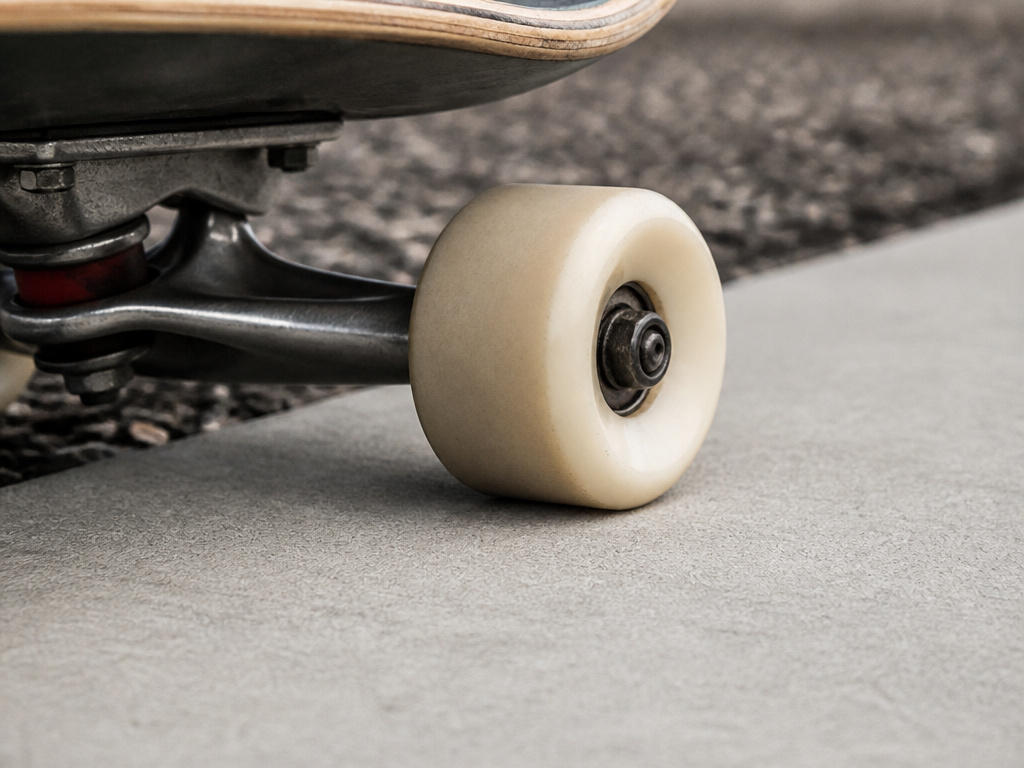
Your board’s setup plays a big role, but the surface you ride on is just as important when you compare a how to make a skateboard ride smoother checklist. Look for fresh, smooth pavement or concrete without large cracks or debris. Avoid surfaces with loose gravel or sand, as these can cause wheels to slide and create a bumpy, unstable ride. Keeping your board in a dry place out of direct sunlight when not in use also helps prevent moisture damage to the deck and bearings, which can make any terrain feel rougher.
Frequently Asked Questions
How do I get more comfortable riding a skateboard?
Comfort comes from a stable, predictable setup and practice. Ensure your trucks aren’t too loose, your wheels are appropriate for the terrain, and your bearings spin freely. Then, spend time just pushing, turning, and stopping. Practice on a smooth, empty parking lot before tackling rougher roads.
Are harder wheels (99a) too hard for street skating?
It depends on your street surface. On smooth skatepark-style concrete, 99a is standard for technical tricks. On typical weathered asphalt or brick sidewalks, 99a will be extremely harsh and slow. For street skating that includes travel over rough patches, a medium-hard wheel (around 93a) offers a better balance.
Does skateboarding help with ADHD?
Many skaters report that the focused, physical activity of skating helps manage ADHD symptoms. The need for concentration, balance, and immediate feedback can be calming and centering. It’s not a treatment, but it can be a beneficial physical outlet.
My board is slow even with new bearings. Why?
As the Concrete Waves handbook states, the most common cause of a slow setup is the urethane formula of your wheels, not the bearings. Harder wheels or a sluggish urethane blend create more friction with the ground. Try a softer durometer wheel (like 78a-86a) before chasing bearing upgrades.
Before You Go
One test tells you more than any spec sheet. Take your board to a slight hill, get a gentle rolling start, and crouch low. Listen and feel. The rumble is your wheels. The chatter is your trucks. The drag is your bearings. Now you know what to fix first.
If you only change one thing this week, make it your wheel durometer. Match it to the ground you actually ride, not the pavement you wish you had. That single swap turns a board that fights you into one that works with you. Everything else follows from there.
