Mini Cruiser vs Skateboard: Key Differences Explained
This post contains affiliate links. As an Amazon Associate, we earn from qualifying purchases.
The difference between a mini cruiser and a skateboard comes down to three specific specs: deck shape, wheel hardness, and truck geometry. A mini cruiser has a shorter, often wider deck with a pronounced kicktail, soft wheels (around 78a durometer) for smooth rides over cracks, and wider, more stable trucks. A standard skateboard has a symmetrical popsicle shape, hard wheels (99a+) for technical tricks and slides, and narrower trucks designed for quick, precise turns.
That 78a wheel rating isn’t just a number. It’s the physical reason a mini cruiser glides over sidewalk seams while a skateboard’s hard wheels stop dead and send you flying. The deck shape, wheel hardness, and truck width are key differences that influence how each board is ridden, which is central to the mini cruiser vs skateboard comparison.
What follows: a breakdown of each component’s job, a direct comparison of who wins in common scenarios, and the one mistake that makes most beginners hate their first board. If you’re over 25 and thinking about skating again, pay special attention to the weight and portability section.
Key Takeaways
- Match the wheel to the ground. Soft wheels (78a) on a mini cruiser absorb sidewalk cracks and pebbles. Hard skateboard wheels (99a+) are for park concrete and controlled slides.
- The deck decides your stance. A mini cruiser’s wide, directional deck with a big kicktail is for pushing and carving. A skateboard’s symmetrical, concave popsicle shape is for flipping and spinning the board.
- Truck width affects stability. Wider trucks on a cruiser (like the Landyachtz Tugboat‘s 155mm Polar Bears) create a stable, predictable turn. Narrower skateboard trucks make the board quicker and more flickable for tricks.
- Weight and portability favor the mini. A complete like the Boosted Mini S weighs 15 lbs and can be carried vertically; a standard setup is lighter overall but harder to tuck under an arm on a bus.
- Pick one board for your first six months. Learning to push, turn, and stop is harder if you switch between a carvy cruiser and a twitchy skateboard weekly. Commit to the style you’ll actually do most.
The Core Differences: Deck, Wheels, Trucks
Look at the business end of each board. The deck shape, wheel feel, and truck setup aren’t just aesthetic choices, they’re a direct instruction manual for how the board wants to be ridden.
A standard skateboard typically uses a symmetrical popsicle deck, 52-54mm wheels at 99a+ durometer, and truck widths matched to the deck.
Deck shape is the most obvious split. A mini cruiser deck is directional, typically featuring a pronounced kicktail. Your feet have a natural placement: one near the front bolts, one on the kicktail. This shape is designed for pushing, carving, and using the tail to lift the front wheels over curbs. The Landyachtz Tugboat is a classic example.
A standard skateboard deck is a symmetrical popsicle shape. Both ends are identical kicktails, and the deck has a concave curve across its width. This symmetry is for tricks. It doesn’t matter which way you’re facing because you can spin the board 180 or 360 degrees and land in the same stance. The shape is a tool for ollies, kickflips, and board control in the air.
Wheel hardness decides what terrain you can skate. This is the single biggest sensory difference. Soft wheels, like the 78a Hawgs on a Tugboat or the 78A wheels on a Cal-7 Oceanic Mini Cruiser, are grippy and forgiving. They roll over sidewalk cracks, asphalt pebbles, and street debris with a dull, quiet rumble. You feel vibrations, but the board doesn’t stop.
Hard skateboard wheels (99a and up) are for smooth concrete. They slide predictably, which you need for powerslides, board slides on rails, and quick direction changes. On rough asphalt, they transmit every bump directly to your feet with a loud, chattery noise. A small pebble can lock a hard wheel and throw you off. It’s a different kind of riding that assumes a prepared surface like a skatepark.
Truck geometry changes how the board turns. Cruiser trucks are often wider to favor smooth, lean-initiated carves. The Landyachtz Tugboat’s Polar Bear 155mm trucks are designed for this. They feel stable at speed and through turns, which builds confidence when you’re commuting.
Skateboard trucks are narrower, which facilitates quick, sharp turns. It’s a trade-off.
Who Wins the Head-to-Head? (A Use Case Breakdown)
You don’t buy a hammer to screw in a lightbulb. Match the board to the job you’ll actually do most days, which is the core of the mini cruiser vs skateboard decision. Here’s where each type excels and where it falls short.
| Use Case | Mini Cruiser Winner | Standard Skateboard Winner |
|---|---|---|
| City Commuting | Smooth ride over cracks, portable, kicktail for curbs. | Less stable at speed, hard wheels chatter on rough asphalt. |
| Learning to Ride | Stable, wide platform, predictable trucks. | Twitchy, less forgiving for balance. |
| Skatepark Tricks | Can do mellow ollies, not ideal for flip tricks or grinds. | Designed for ollies, kickflips, grinds, and park lines. |
| Carving & Casual Riding | Wide trucks and soft wheels make carving intuitive. | Narrow trucks and hard wheels are less suited for deep carves. |
| Portability & Transport | Short length (22″-30″) allows vertical carry. | Longer, harder to tuck under an arm on a bus or train. |
Commuting & Getting Around Town
For running errands or a mile-long trip to a friend’s house, the mini cruiser is the tool. The soft wheels handle imperfect pavement. The kicktail allows you to lift the front wheels onto a curb without stopping. The shorter length, like the Boosted Mini’s 29.5 inches, contributes to its portability.
A standard skateboard can commute, but it’s a fight. You’ll be avoiding every crack and scanning the ground for pebbles. Your feet and ankles get tired from the constant vibration. It’s doable, but it’s not what the board was built for.
Learning to Ride & Building Confidence
If your goal is simply to roll around and feel comfortable on a board, start with a mini cruiser. The wider deck, like the Yocaher Complete Mini Cruiser‘s 8-inch width, can feel more stable. The wider trucks on many mini cruisers can contribute to stable turning.
Where this goes sideways: Buying a cheap plastic cruiser as a first board. Boards like the Pyle USA HCsk103 (21.65″ L x 5.71″ W) are extremely narrow and twitchy. They have a weight capacity of 220 lbs, but the ride feel is unforgiving and can turn a new rider off skating entirely. Invest in a quality maple mini cruiser instead.
Learning on a standard skateboard can be more challenging due to its narrower deck and hard wheels.
Doing Tricks & Skatepark Riding
This is the skateboard’s home turf. The symmetrical shape, hard wheels, and responsive trucks are a complete system for aerial tricks and park obstacles. You need the pop from the tail, the flick from the concave, and the slide from the wheels.
Can you do tricks on a mini cruiser? The Landyachtz Tugboat review on Concrete Waves says its kicktail gives “enough pop to throw some mellow ollies” and you can do flip tricks due to a “lowkey nose.” But the SkateboardersHQ review of the same board is blunt: “The Landyachtz Tugboat is not a trick board… Why not get a regular skateboard if you want to learn tricks?” Sources disagree on its suitability for flip tricks: Concrete Waves notes the Tugboat’s kicktail gives ‘enough pop to throw some mellow ollies’ and you can do flip tricks due to a ‘lowkey nose,’ while SkateboardersHQ states ‘The Landyachtz Tugboat is not a trick board…
Weight, Portability, and the “Carry Test”
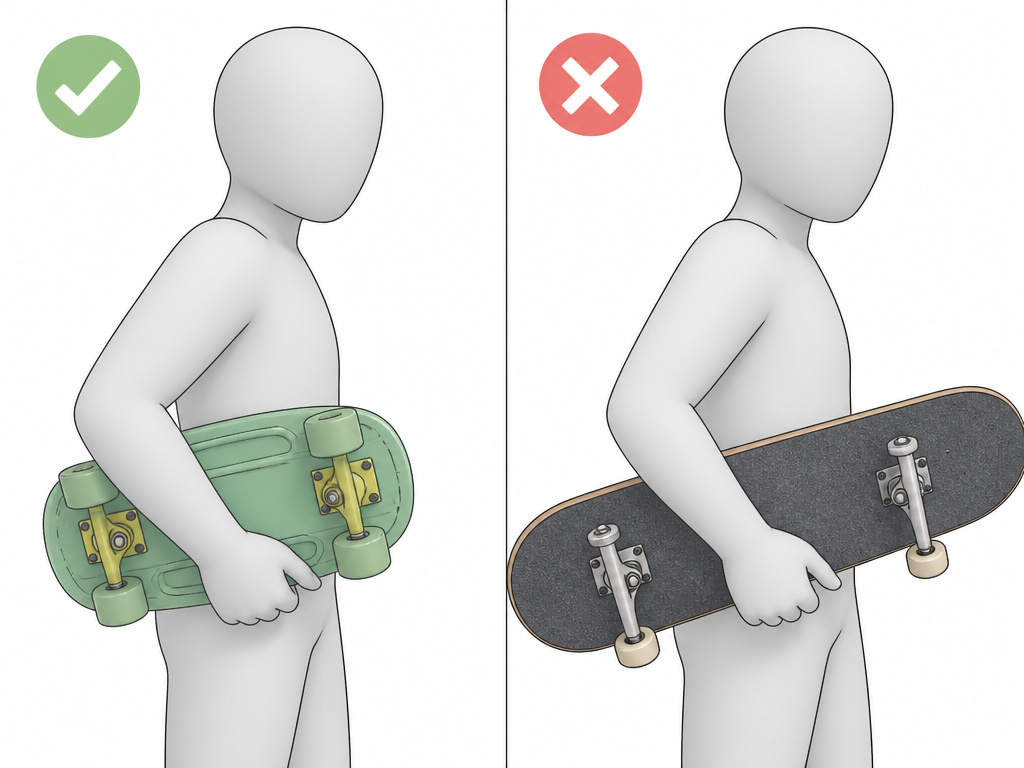
This is a practical factor most comparison articles miss. A mini cruiser is often easier to live with when you’re not riding it.
Electric models highlight the difference. The Boosted Mini S weighs 15 lbs. The Boosted Mini X weighs 16.8 lbs. Their 29.5-inch length contributes to their portability. This makes mixed-mode travel much easier: skate to the station, then carry it on the train.
A traditional wooden mini cruiser like the Landyachtz Tugboat has a short-form advantage for portability. You can stash it under a desk, in a locker, or beside you on a bus seat.
A standard skateboard’s longer, symmetrical shape can be less convenient to carry than a mini cruiser when you compare a mini cruiser vs skateboard. Tucking it under your arm, it sticks out front and back. It’s a small nuisance, but it adds up if you’re commuting daily.
Maintenance & Customization: What Can You Swap?
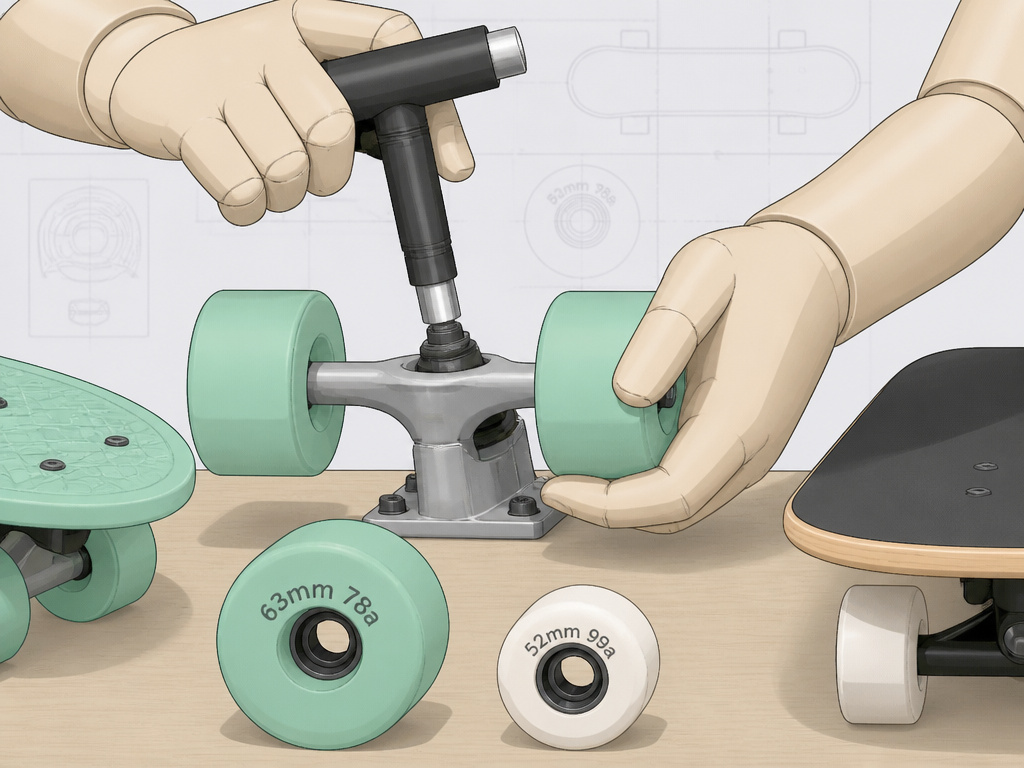
Both boards are built from the same basic parts: deck, trucks, wheels, bearings. But the ease and outcome of swapping those parts differ.
Wheels are the easiest and most impactful change. On a mini cruiser, you’re usually swapping for a different size or durometer within the soft wheel range. A reviewer noted that while the Landyachtz Tugboat comes with 60mm wheels, they preferred 63mm Fatty Hawgs for a wider 50mm contact patch to prevent sliding out while carving. On a skateboard, wheel sizes typically range from 52mm to 54mm.
Trucks are trickier on a cruiser. Because cruiser decks are wider, they often use truck sizes you won’t find on a standard skateboard shelf. The Landyachtz Tugboat uses 155mm Polar Bear trucks. If you want to change them, you may need to buy from brands that specialize in cruiser or longboard trucks.
Bearings and bushings are universal. A set of ABEC 7 bearings like those on the Cal-7 Oceanic will work in any board. Bushings are the same. This is where you can fine-tune the ride feel of either board without a major overhaul. Bushing durometer can be changed to adjust the turning feel of either board.
Which Board Should You Buy?
Stop thinking about which board is “better.” Start with this question: what will you do with it 90% of the time for the next six months?
Choose a mini cruiser if:
- You want a board for transportation on real city streets.
- Your goal is to have fun cruising, carving, and exploring, not landing kickflips.
- You’re an adult beginner or returning rider who values stability and a smoother ride.
- Portability matters, you plan to carry it on public transit or store it in a small space.
- You’re willing to spend on a complete like the Landyachtz Tugboat or a Yocaher maple cruiser, not a toy-store plastic board.
Choose a standard skateboard if:
- You want to learn skatepark tricks, street skating, ollies, and flip tricks.
- You’ll be skating primarily on smooth concrete at skateparks, basketball courts, or freshly paved areas.
- You enjoy the culture of technical skating and want to progress in that specific skill set.
- You’re okay with a less comfortable ride on rough surfaces as the trade-off for trick performance.
For most people asking this question, especially adults looking for fun, exercise, and a way to get around, the mini cruiser is the right first choice. It’s the lower-friction path to enjoying skateboarding. You can always buy a trick board later once your confidence and board control are solid; until then, check out the best cruiser skateboards. Doing it the other way around often leads to frustration and a board that collects dust.
Frequently Asked Questions
What are mini cruisers good for?
Mini cruisers are built for practical, fun riding over everyday ground. They’re perfect for short commutes, cruising around campus or neighborhoods, running errands, and casual carving. Their soft wheels handle sidewalk cracks and rough asphalt that would stop a standard skateboard. Think of them as a tool for getting from A to B with a smile, not for performing technical tricks.
Are cruisers easier to ride than skateboards?
Yes, for a complete beginner, a mini cruiser with a wider deck, softer larger wheels, and a stable truck setup is easier to learn on. The wider deck provides a more stable platform for your feet. The softer, larger wheels roll over bumps and debris instead of catching on them. The truck setup is generally more stable and predictable, which builds confidence when you’re learning to push, turn, and stop. A cheap, twitchy plastic cruiser, however, can be harder to ride than a skateboard.
What’s the difference between a cruiser and a mini cruiser?
The terms are often used loosely, but generally, a “cruiser” can refer to a wider range of boards, including longer, surf-style carvers. A “mini cruiser” specifically denotes a shorter board, typically between 22 and 30 inches long, designed for maximum portability. The Landyachtz Tugboat (30″) and the Cal-7 Oceanic (22″) are both mini cruisers, but the 22-inch board is significantly more compact.
Can you do skateboard tricks on a mini cruiser?
You can do basic tricks like ollies, bonelesses, and even some flip tricks if you’re skilled, but it’s not ideal. The deck shape, weight distribution, and wheel grip are optimized for cruising, not popping and flicking. As one reviewer put it, the Tugboat has “enough pop to throw some mellow ollies,” but learning advanced tricks on it will be much harder than on a standard skateboard. If tricks are your primary goal, get a trick board.
Which is better for an adult beginner?
For an adult just starting or returning to skating, a mini cruiser is almost always the better choice. Adults often prioritize stability, comfort, and a lower risk of falls from wheel-stopping cracks. The practical use case, casual riding for fun or transport, also aligns perfectly with what a cruiser does best. The portability is a major plus if you’re mixing skating with other forms of transit.
Before You Go
One rule most guides skip: your first board should match the riding you’ll actually do this month, not the riding you aspire to do someday. Buying a technical street skateboard because you dream of kickflips, when you’ll actually be skating on a bumpy sidewalk for the next three months, is how boards get abandoned in garages.
If you’re on the fence, go with the mini cruiser; our guide on how to choose a cruiser can help. The learning curve is gentler, the immediate fun factor is higher, and the skills you build, balance, pushing, carving, stopping, transfer directly if you later pick up a standard skateboard. The reverse isn’t always true. Start with a tool that works for the ground beneath your feet right now.
I speak from experience. I’ve watched too many people buy the wrong board for their real life and quit within weeks. Get rolling first. The tricks can come later.
