
Skate Pants vs Jeans: Key Differences Explained
This post contains affiliate links. As an Amazon Associate, we earn from qualifying purchases.
Skate pants are purpose-built for movement and durability, using stretch blends, reinforced stitching, and looser cuts, while many jeans are casual denim with a focus on style over function. For actual skateboarding, the engineered mobility and abrasion resistance of skate-specific pants win.
That’s the simple split. The real question is what happens when you wear the wrong one. A stiff, slim-cut jean doesn’t just look tight; it actively fights your knees when you crouch for an ollie, and the fabric gives up after a few pavement slides. It’s the core difference in skate pants vs jeans.
What follows: a breakdown of the fabrics, fits, and features in the skate pants vs jeans comparison that separate a marketing label from a real performance upgrade. We’ll look at specific brand specs, cover the care routines that keep your gear alive, and answer whether you need the skate-specific label if you’re just after the look.
Key Takeaways
- Skate-specific fabrics often blend cotton with nylon, polyester, or spandex for stretch and abrasion resistance, while many regular jeans are 100% cotton, a trade-off between mobility and a classic feel.
- Baggy or relaxed fits dominate skatewear for a reason: they prevent the cuff from catching on the skateboard truck during tricks, a real safety and performance hazard.
- Reinforced stitching at critical seams, like the double needle-stitching on the HUF Cromer Pant, is a key feature in pants built for skating; without it, a hard fall can split a seam on first impact.
- Follow the specific manufacturer’s wash instructions. For example, Polar Skate Co. Advises washing on the left side and not overloading the machine, while Makers & Riders warns against using the dryer.
- Non-skaters can absolutely wear the style, but know that true skate pants are optimized for movement, not just aesthetics.
The Fabric and Fit Showdown
The skate pants vs jeans difference starts with what the pants are made to do. A regular jean is designed to look good standing up. A skate pant is designed to survive sitting down, hard, and on concrete.
Skate-specific pants often incorporate technical fabrics like CORDURA® nylon or proprietary stretch blends. For example, the Nike SB Yuto Horigome Denim Skate Pants use a body fabric of 79% cotton and 21% nylon interwoven with CORDURA® thread for durability, a spec directly aimed at enduring skate sessions.
Here is the breakdown. Blended fabrics change the game. Dickies Skateboarding Regular Fit Utility Jeans use a 63% Cotton/35% Polyester/2% Spandex “Flex fabric designed to be 2x stronger than cotton.” That spandex is the secret. This allows the knee to bend freely and makes the fabric recover its shape rather than sag.
Volcom attacks this directly with its Stone Made Jeans and S GENE® fabric, engineered for “superior stretch” to combat “bagging knee” syndrome. The goal isn’t just comfort; it’s maintaining the pant’s shape through hundreds of deep knee bends.
Fit is the other half. Skate fits are roomy by design. Look at the HUF Cromer Pant: its base size 32 has a 16.5-inch leg opening. That’s a full inch wider than many slim jeans. This isn’t just a 90s revival trend. A baggy cuff floats over your skateboard truck. A tight cuff can snag the metal hanger during a flip trick, which can stop the board dead and send you over the front. It’s a small measurement with big consequences.
Where Sizing Gets Messy
Here’s where the sources don’t agree, and it matters when you order. Polar Skate Co. is blunt: due to natural variation in 100% cotton, “the same model in the same size fits slightly differently.” They don’t promise a perfect match. Contrast that with HUF, which provides precise, consistent measurements like a 34-inch waist and 32-inch inseam for their base size.
This conflict plays out in real fits. Makers & Riders suggests ordering one size up in their Traveler Stretch Jeans for a relaxed fit. A professional reviewer at Pack Hacker who tested them for nine months found that even following that advice, the pants had a “skin-tight look and feel” that was too tight for their preference. The moral? Know the brand’s reputation. Some engineer consistency; others celebrate variation.
Mobility vs. Durability: The Engineering Trade-Off
You want pants that move with you and don’t fall apart. Often, those are the same pair.
Mobility in skatewear isn’t a vague “comfort.” It’s measurable. It’s the ability to drop into a deep squat without feeling the back seam pull across your thighs. It’s the knee bending past 90 degrees without the fabric locking up. This is where the 2% spandex in the Dickies blend or the four-way stretch in the Makers & Riders Traveler Jeans earns its keep. That stretch is the difference between feeling restricted and feeling free to commit to a trick.
Durability is how the pants handle the consequences of that commitment. Reinforced stitching is the first sign. The HUF Cromer Pant uses reinforced double needle-stitching at critical seams. That means the stress points, the crotch, the seat, the knees, can handle a sudden, forceful impact better than a single line of thread. It’s a small construction detail with a massive payoff the first time you slide out.
| Feature | Skate Pant Priority | Regular Jean Priority | Consequence of Mismatch |
|---|---|---|---|
| Fabric Stretch | High (blends with spandex, like Dickies’ 2%) | Low to None (often 100% cotton) | Restricted knee drive, faster fatigue |
| Seam Reinforcement | Critical (double/triple stitching) | Aesthetic (single stitch common) | Blown-out seams on first hard fall |
| Fit Through Knee | Roomy, articulated | Slim, straight | Fabric binds, inhibits full crouch |
| Cuff Opening | Wider (e.g., HUF Cromer Pant: 16.5″) | Often narrower | Catches on truck, disrupts board flip |
Common mistake: Choosing pants based on style alone. A slim-fit jean might look great off the board, but that same cut actively works against the biomechanics of skating. The restriction isn’t just annoying; it changes how you distribute your weight.
The trade-off isn’t perfect. Some of the most durable, heavy-duty fabrics (like thick, rigid 100% cotton) offer the least stretch. Some ultra-stretchy blends can feel thin and less protective in a slide. The best options, like the Dickies Skateboarding Flex fabric, try to bridge the gap by promising both increased strength and flexibility.
The Care and Maintenance Gap
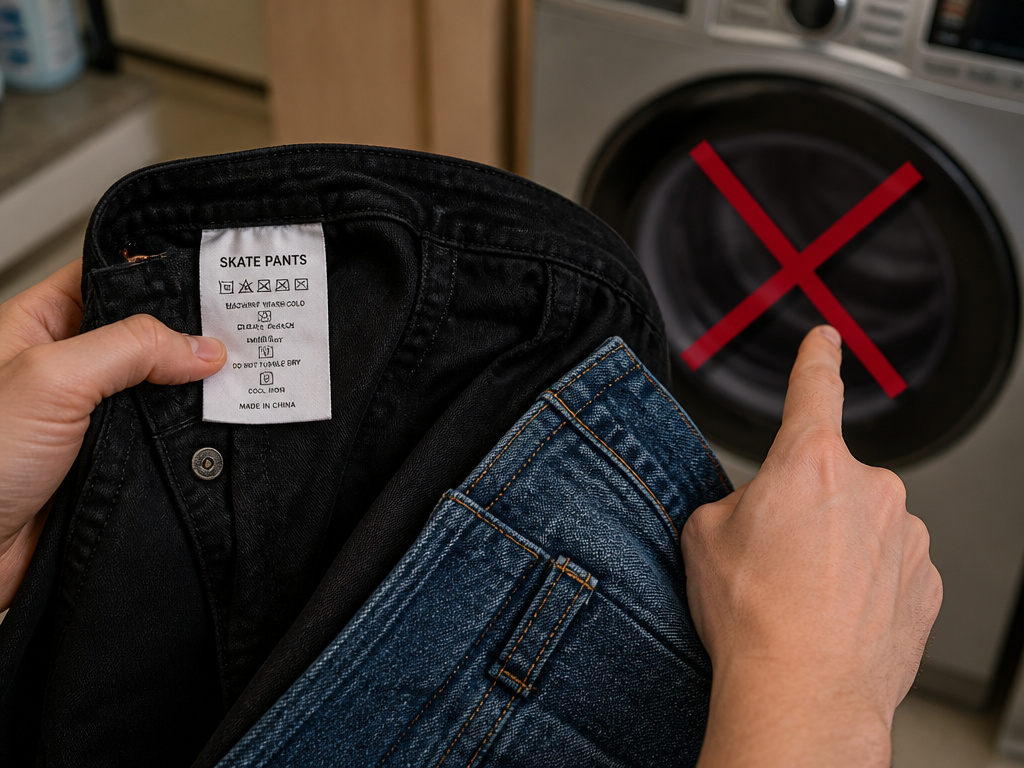
Skate pants get dirty, sweaty, and torn. How you wash them determines how long they last, and the manuals contain specific rules most people miss.
Polar Skate Co. gives specific care advice: “Always wash the products on the left side and don’t overload the washing machine.” Their advice is: “Always wash the products on the left side and don’t overload the washing machine.” They also note: “Putting jeans in the freezer is for raw selvage denim. Not ours.”
Other brands are just as specific. Makers & Riders is emphatic about their Traveler Stretch Jeans: “not under any circumstances put the Travelers in the dryer!” They also say to avoid dry cleaning and ironing. This isn’t fussiness; it’s chemistry. The heat of a dryer can degrade the elastic fibers (spandex) that give the pants their stretch, permanently altering the fit and recovery.
Follow the specific care instructions from the manufacturer. For example, Polar Skate Co. Advises washing on the left side and not overloading the machine, while Makers & Riders warns against using the dryer.
Skipping these steps doesn’t just make pants look old. It breaks them down from the inside. That “bagging knee” Volcom’s S GENE® fights? Heat-drying a stretch blend is a fast track to getting it.
Safety, Style, and the Cultural Bag
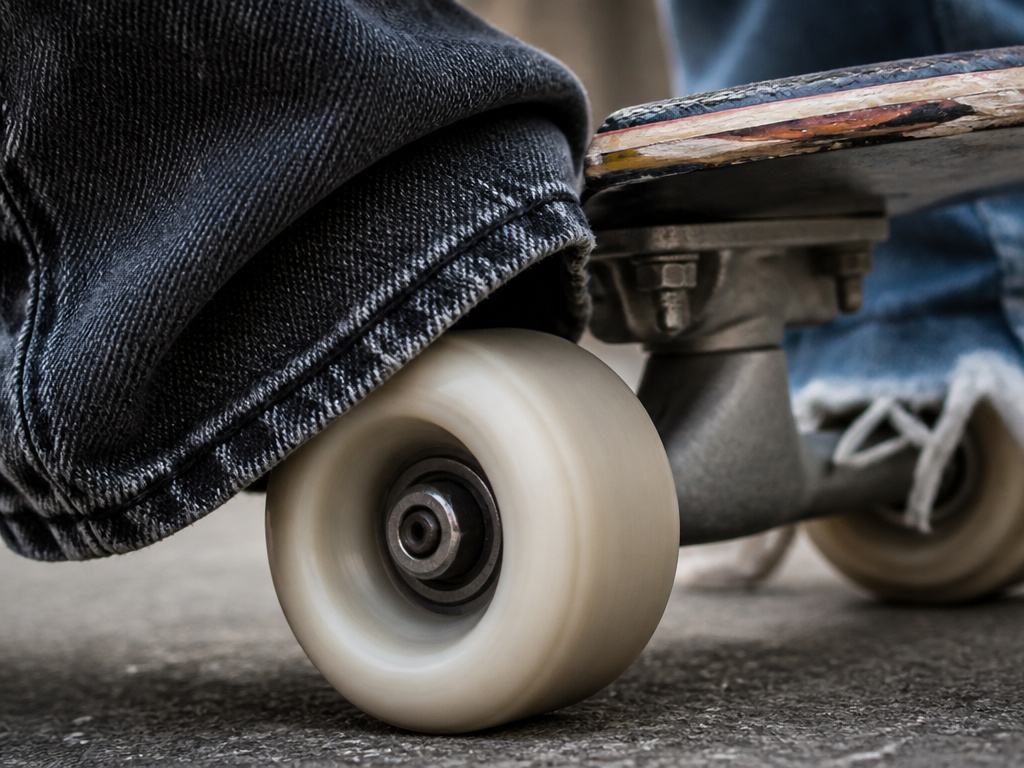
The baggy silhouette isn’t an accident. It’s a solution.
Safety first: A loose fit, particularly around the ankle, keeps the fabric away from the wheels and trucks. A caught pant leg can jerk your foot off the board or twist your ankle. It’s a tangible risk that the baggy style mitigates. Some skate pants also use heavier denim for durability; for example, the Dickies Skateboarding Wingville Loose Fit Jeans are 12.5 oz.
Style and culture: The baggy look directly references 90s skate and hip-hop culture, a time when skaters like Javonte Turner and Henry Sanchez wore oversized clothing that emphasized movement. Pontus Alv, founder of Polar Skate Co., watched those old clips and noted, “It really makes the style flow when you see the fabric moving.” For a new generation, rejecting the skinny jeans of the 2010s is as much about reclaiming that expressive, functional silhouette as it is about fashion.
Can Non-Skaters Wear Skate Clothes?
Absolutely. The lines have blurred. A HUF Cromer Pant or a pair of Nike SB trousers works as streetwear because the aesthetics of durability and comfort translate off the board. The key is intent. If you’re buying for the look, you have more flexibility, you might prioritize a pure cotton jean from Polar for its wash over a technical stretch blend. If you’re buying for function, the skate-specific features are essential.
Where this goes sideways: A non-skater buying a slim-fit “fashion jean” with a skate brand logo and expecting it to hold up to actual skating. The branding doesn’t magically confer durability; the construction does.
Frequently Asked Questions
Why are skate pants baggy?
Skate pants are baggy primarily for function, not just fashion. The extra room allows for a full range of motion when crouching, jumping, and kicking. A wider leg opening also prevents the cuff from catching on the skateboard’s trucks during flip tricks, which is a safety hazard and can ruin the trick. The style is rooted in 90s skate culture, where the flowing fabric emphasized the skater’s movement.
Can non-skaters wear skate clothes?
Yes, non-skaters can absolutely wear skate-style clothing. The durable fabrics and comfortable, relaxed fits translate well to casual streetwear. If you’re not skating, you can choose based purely on aesthetics and comfort. Just know that paying a premium for technical features like advanced stretch blends or reinforced seams might be unnecessary if you’ll never test them.
What are skate pants?
Skate pants are trousers specifically designed for skateboarding. They are characterized by durable, often blended fabrics (mixing cotton with nylon, polyester, or spandex), reinforced stitching at stress points, and relaxed or baggy fits that facilitate movement. Brands like Nike SB, Dickies Skateboarding, HUF, and Polar Skate Co. Make pants where these features are engineering priorities, not just style choices.
Is the higher cost of skate pants justified?
It depends on use. For a skater, the cost is justified by the enhanced durability, mobility, and safety features that prevent blow-outs and restrictions. The investment in pants that last multiple seasons through abrasion and stress can outweigh buying multiple pairs of cheaper jeans. For a non-skater, the value is more in the specific brand aesthetic and general quality of construction.
The Bottom Line
For skating, the choice is clear. The engineered fabrics, reinforced construction, and mobility-focused cuts of dedicated skate pants or skate jeans provide a tangible performance and safety advantage that regular denim can’t match. Start your search with proven options like the Dickies Skateboarding Regular Fit Utility Jeans for their balance of flex and strength, or the HUF Cromer Pant for its classic baggy silhouette and reinforced seams.
If you just love the look, you have more freedom. But understand what you’re buying: a label doesn’t make a pant skate-ready; the specs do. Check the fabric blend, look for double stitching, and respect the wash instructions. Your knees, and your wallet, will thank you after the first session.
