
Skate Shoes for Wide Feet Guide
This post contains affiliate links. As an Amazon Associate, we earn from qualifying purchases.
Skate shoes for wide feet come down to one brand that sells a true wide (2E) width and a handful of others that offer wider-fitting models. New Balance Numeric sells five skate shoe models in a true Wide (2E) width: the 272, 440v2, 440v2 High, 480, and Andrew Reynolds 933. Vans and Converse sell wide versions of their classic lifestyle shoes, but not their dedicated skate lines. For everyone else, you’re looking for specific models known for a roomier fit or a “broad” silhouette, like the éS Accel OG.
That’s the short answer. The long one involves millimeter measurements, brand quirks, and a community of skaters who have been figuring this out through trial and error for years. A shoe labeled “wide” at the ball of the foot doesn’t guarantee room for your toes, and a brand’s skate-specific shoe might come in one width while its casual cousin gets the wide treatment.
What follows is a map of the landscape. The article details the only skate line sold in multiple widths, the wider-fitting classics, the lab data that shows where ‘wide’ labels fall short, and a handful of community-driven workarounds for when nothing off the shelf fits.
Key Takeaways
- Only New Balance Numeric sells dedicated skate shoes in a true Wide (2E) width across five different models.
- Vans and Converse Wide classics (Old Skool, Chuck Taylor) are lifestyle shoes not marketed for skating, but skaters with wide feet often use them successfully.
- A shoe’s widest point measurement doesn’t predict toe room; the DC Court Graffik has a 99.3mm ball width but only a 67.5mm big toe width.
- For a roomy fit without a wide width, target specific models like the éS Accel OG, Accel Penny, and Creager, which are built on a “broad” silhouette.
- Suede uppers can stretch a few millimeters with wear, while canvas and synthetics provide minimal give, making material choice as important as width label.
The Only Skate Line Sold in a True Wide (2E)
If you want a skate shoe designed for skating and available in a verified wide width, you have one option: New Balance Numeric. The brand sells five skate shoe models in a true Wide (2E) width.
New Balance Numeric sells five skate shoe models in a true Wide (2E) width: the 272, 440v2, 440v2 High, 480, and Andrew Reynolds 933. Each is available in both Standard (D) and Wide (2E).
This is a concrete, measurable difference. You are not hoping a model runs roomy; you are selecting “2E” from a dropdown menu on New Balance’s website. The practical effect is more space across the forefoot and ball of the foot, which is exactly where most wide-footed skaters feel the pinch.
Two details matter when shopping. First, Numeric shoes are unisex and built on the men’s width scale. New Balance lists the standard width as a women’s Wide (D) and the 2E as a women’s X-Wide. So if you’re a woman with slightly wide feet, the standard Numeric might already be a wide fit. Second, New Balance does not sell its kids’ Numeric shoes in a wide width. For growing feet, you buy for width first and check the fit often.
The community experience here is mixed. Many skaters report the 440s and 480s are their go-to, with one Reddit user noting the 440 V2 Highs fit better than the regular 440 V2s. However, another Reddit user tried eight different New Balance models and found them all “narrow as fuck” for their feet. This shows the first rule of wide feet: your mileage will vary. Ordering two sizes to try and return is a smart, if slightly annoying, strategy.
Decoding Width: What D, 2E, and ‘Wide’ Actually Mean
The skate shoe industry mostly operates on a one-width-fits-most model. When brands do offer width options, they borrow terms from the athletic and dress shoe world, which can be confusing.
| Width Label | Common Name | Typical Fit | Who It’s For |
|---|---|---|---|
| D | Standard / Medium | The default width for most shoes. | Average-width feet. |
| 2E | Wide | 3/16″ wider than D at the ball of the foot. | People who feel consistent pinch in standard shoes. |
In skateboarding, you’ll mostly see D and 2E. The jump to 2E is significant, providing a structured, wider last. This is why New Balance’s offering is unique; they’ve committed to building that wider last for skating.
Vans and Converse use the term “Wide” differently. Vans Wide Classics have a bottom width 5mm wider and a ball girth 10mm longer than their regular versions. They don’t map this to a 2E or 4E standard, which can be frustrating if you know your foot needs a specific measurement. It’s a proprietary “Wide,” not an industry-standard width.
Where this goes sideways: Assuming a “wide” label means room everywhere. Lab data shows a shoe’s widest point (the ball) doesn’t correlate to toe box space. The DC Court Graffik has a 99.3mm widest point but a narrow 67.5mm big toe width.
RunRepeat Lab data shows a shoe’s widest point doesn’t correlate to toe box space, a key point clarified in any thorough skate shoes for wide feet guide, while general marketing implies a ‘wide’ label means overall roominess. This disconnect is why trying shoes on, or at least buying from a place with a good return policy, is essential.
Wide Classics vs. Dedicated Skate Shoes: The Brand Split
Here’s the oddest quirk in the wide-foot skate shoe world. Two of the biggest names offer wide widths, but not for the shoes they design for skating.
Vans sells Wide versions of the Old Skool, Sk8-Hi, Authentic, and Classic Slip-On. These are the iconic, vulcanized lifestyle shoes. Meanwhile, Vans’s Skate line, the shoes built with Duracap rubber, impact-absorbing foam, and reinforced ollie areas, comes in one width only. The same split happens at Converse. You can get a wide Chuck Taylor All Star or Chuck 70, but the CONS skate line (One Star Pro, AS-1 Pro) is one-width-only.
| Brand | Wide Width Offered In | Skate Line (One Width Only) |
|---|---|---|
| Vans | Old Skool, Sk8-Hi, Authentic, Slip-On (Classics) | Skate Old Skool, Skate Sk8-Hi, Half Cab, etc. |
| Converse | Chuck Taylor All Star, Chuck 70 | CONS line (One Star Pro, Louie Lopez Pro 2, AS-1 Pro) |
This creates a community workaround. Vans and Converse offer wide widths only for lifestyle classics, not for dedicated skate lines, but the Podiatrist Tested article and forum posts note skaters with wide feet often use these classic wide versions for skating, a common topic in any skate shoes for wide feet guide, despite the brands not designing or marketing them for that purpose. The suede or canvas uppers, vulcanized soles, and flat profiles work. You sacrifice some of the dedicated skate features like targeted padding or reinforced zones, but you gain essential width.
A Reddit user confirmed this, saying Vans customs wide width slip-ons fit their 2E feet perfectly. They also noted a practical hurdle: Vans stores do not carry Wide versions in store, so you’re ordering online.
The 3-Step Fit Test for Wide Feet (Before You Skate)
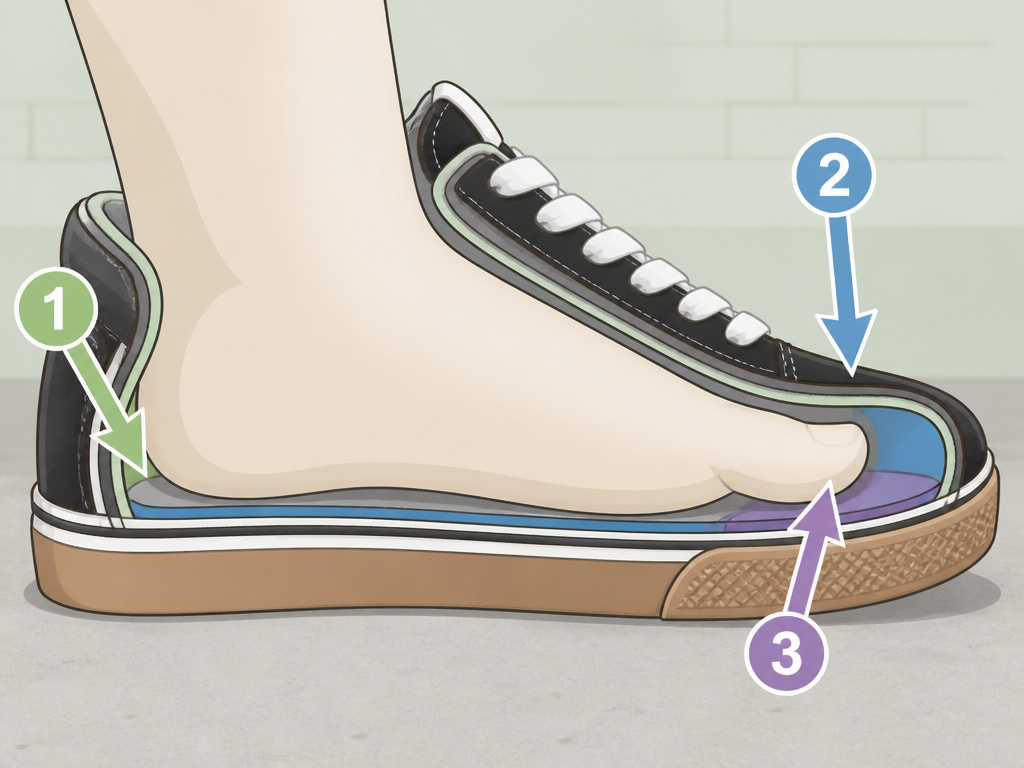
Finding the right size in a wide width or roomy model is half the battle. The other half is making sure the shoe works on a board. Here’s a quick pre-session check.
- Walk and Crouch. Heel slip is your enemy. If your heel lifts when you walk or drops into a skating crouch, the shoe is too long or the volume is wrong. A secure heel keeps your foot connected to the board.
- Flex the Toe Box. Press down on the front of the shoe. Your toes should not jam against the end. There should be adequate space between your longest toe and the shoe’s tip. This space prevents impact bruises when you stop or land.
- Check the Pinky Toe. This is the hot spot. The shoe shouldn’t press inward on your smallest toe. A rounded toe box, like on the éS Accel, gives the pinky room to breathe.
If a shoe passes these tests off the board, it has a fighting chance on it. If it fails in store, it will fail harder during a session.
Models Known for a Roomy Fit (When No Wide Width Exists)
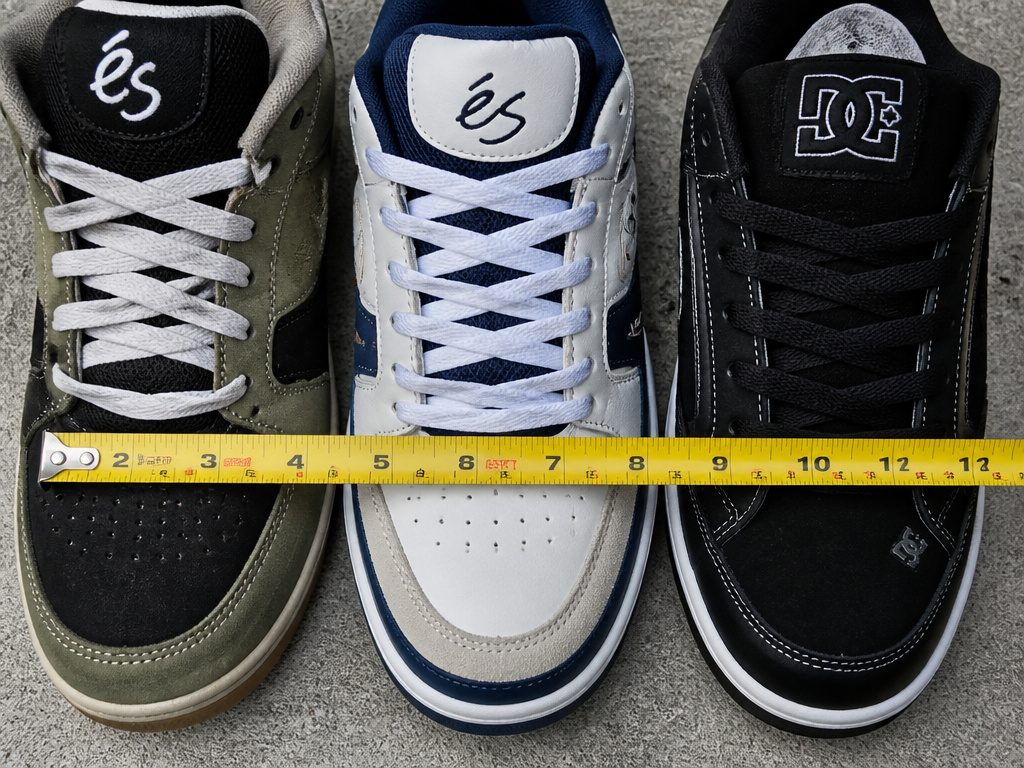
Most skate shoe brands don’t offer multiple widths. Instead, they design specific models with a naturally roomier “broad” or “full” silhouette. Your job is to know which models those are.
éS is the most transparent about this. Their size guide explicitly names the Accel OG, Accel Penny, and Creager models as having a “broad” silhouette for wide feet. The Accel OG is built on a “broad” silhouette for wide feet. Reddit feedback backs this up, with users calling éS Accels “wide, comfy, and padded.”
DC’s Court Graffik, according to RunRepeat Lab, has the widest measured point (99.3mm) of the shoes they tested, though remember that doesn’t guarantee toe room.
Break-In Strategies and Material Matters for Wide Feet
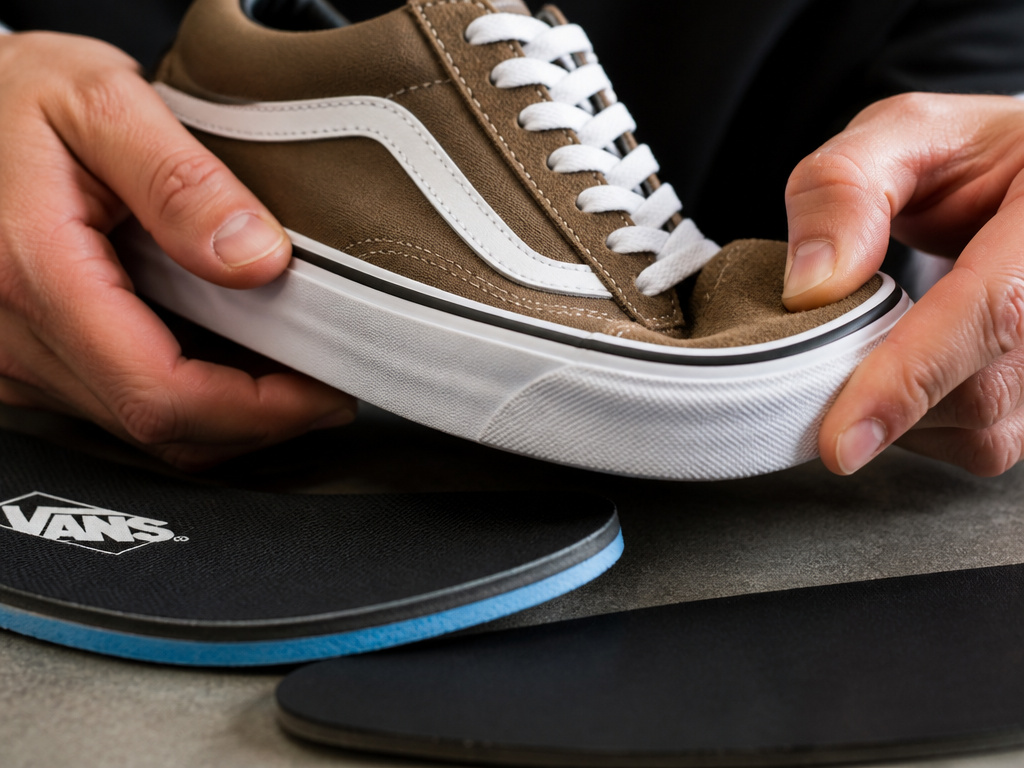
You can’t stretch a shoe a full width size, but you can influence a few millimeters. Material choice is your lever here.
Suede is your friend. The Podiatrist Tested article confirms suede uppers can stretch a few millimeters with wear or the use of a shoe stretcher. Canvas and synthetic materials provide minimal stretch. So, a suede standard-width shoe might eventually accommodate a slightly wide foot where a canvas one never will.
éS gives the best break-in advice: wear new shoes around the house for a day or two before your first skate session. Let the tongue, toe box, and insole soften naturally. Short sessions first, don’t force it. This gentle break-in is especially important for wide feet, where pressure points can turn into blisters quickly.
Another inside move: swap the insole. The Vans Half Cab‘s removable insole is 11.5mm thick. Replacing it with a thinner aftermarket insole can create significant extra depth for high-volume feet or for fitting orthotics. It changes the internal volume without changing the shoe’s external width.
Where to Actually Buy Wide-Width Skate Shoes

Knowing what to buy is pointless if you can’t find it. Here’s the retail reality.
- New Balance Numeric (2E Widths): Your best bet is the New Balance website directly. Their filter lets you select “Wide (2E).” Some larger online skate shops might carry the wide sizes, but selection is sporadic.
- Vans/Converse Wide Classics: Sold on the brands’ main sites. As noted, they are rarely stocked in physical stores in wide versions. You’re ordering online.
- Roomier Models (éS, etc.): Check core skate shops like Tactics, Skatewarehouse, or the brand’s own site. These models are more commonly stocked since they are standard sizes.
Official brand offerings like New Balance provide dedicated skate shoes in Wide widths, while a Reddit user recommends barefoot-style shoes from Splay for their naturally wide toe box. Be wary of sizing advice: a Reddit user reports Splay advises to size down if you’re between sizes, but their personal experience was to size up.
Frequently Asked Questions
What skate shoes are best for wide feet?
The best skate shoes for wide feet are the New Balance Numeric models sold in a 2E width (272, 440v2, 480, etc.), as they are the only dedicated skate shoes with a true wide option. For a roomier fit in a standard width, target the éS Accel OG, Accel Penny, or Creager models.
Is 2E considered wide or extra wide?
2E is the standard designation for Wide. 4E is Extra Wide. In skate shoes, 2E is the widest commonly available option, and it’s only consistently offered by New Balance Numeric.
Can I just size up for width?
Sizing up is a bad long-term fix. It adds length, which can cause heel slip and a sloppy board feel, without adding proportional width at the ball of the foot where you need it. It’s better to find a shoe designed for width.
Do cupsole or vulcanized shoes fit wider?
The sole construction doesn’t dictate width. A vulcanized shoe can be narrow (like many slim silhouettes) and a cupsole can be roomy (like the New Balance 440v2). Focus on the model’s specific last shape, not the sole type.
How do I make my skate shoes wider?
You can gain a few millimeters by professionally stretching suede uppers or using a shoe stretcher at home. Swapping to a thinner insole can create more internal volume. Canvas and synthetic uppers won’t stretch meaningfully.
Before You Go
The search for skate shoes for wide feet is frustratingly narrow, but it’s not hopeless. You have a verified path with New Balance Numeric’s 2E models and a well-trodden workaround with the wide classics from Vans and Converse. Beyond that, your toolkit includes targeting specific roomy models, prioritizing suede for its stretch, and knowing that a “wide” label on the box doesn’t always mean wide where your toes live.
My final tip is borrowed from the éS size guide: when you get a new pair, don’t just lace up and head to the park. Wear them around the house. Crouch in them while watching TV. Let them mold to your feet without the pressure of a session. That extra patience is the difference between a shoe that fits and a shoe that works. Now go find your pair.
