
Skateboard Safety Gear for Kids: What They Need and Why
This post contains affiliate links. As an Amazon Associate, we earn from qualifying purchases.
Skateboard safety gear for kids consists of a certified helmet, wrist guards, knee pads, elbow pads, and flat-soled shoes. The helmet must meet either the ASTM F1492 or CPSC standard, and fit so and no more than two fingers fit under the chin strap. Wrist guards are critical for preventing fractures, especially in the first week of learning, when one-third of all skateboarding injuries occur.
That certification label isn’t just a marketing sticker. It’s the result of a helmet being dropped onto steel anvils of specific shapes at set heights, and a promise that the foam inside will absorb enough impact to keep a young skull safe. A bike helmet might look similar, but its design and testing protocol are different; ASTM F1492-22 requires testing on flat, cylindrical hazard, and triangular hazard anvils.
What follows is a breakdown of each piece of gear, why it works, and how to tell a piece built to a safety standard from a toy-store imitation. We will explain the required safety standards, a realistic timeline for when gear gets worn out, and the one conversation that gets a reluctant kid into pads without an argument.
Key Takeaways
- A skateboard helmet needs a specific ASTM F1492 or CPSC certification label; a bike helmet alone won’t cut it for repeated impacts.
- Wrist guards prevent the most common fractures; the CDC and CPSC single them out as especially important for reducing break risk.
- One-third of injuries happen in the first week, making proper gear non-optional from the very first push.
- Helmet fit changes with hairstyle; a long-haired skater who cuts their hair needs to readjust the pads and straps.
- After a serious impact, replace the helmet even if it looks fine, the foam is compromised and won’t protect again.
The Essential Gear Checklist
Forget the toy aisle. Real skateboard safety gear for kids is built to a standard, literally. The difference is in the testing, the materials, and the intent. A character helmet from a big-box store might meet a toy safety standard, but it won’t meet the impact-absorption requirements of ASTM F1492 or the CPSC’s bicycle helmet standard, which is the baseline the American Academy of Orthopaedic Surgeons points to.
Here’s what your kid actually needs, in priority order.
The Non-Negotiable: A Certified Skateboard Helmet
The single most important piece of gear. The goal is to prevent head injuries, which a study in the British Journal of Sports Medicine noted comprised up to 75% of all skateboarding injuries. Yet helmet use was less than 35%.
A multi-use helmet must have an ASTM label certifying it for skateboarding to be used for that activity. A bike helmet is not automatically suitable. . CDC Skateboard Helmet Fact Sheet
Look inside the helmet for a permanent label. It should say it meets ASTM F1492 (the dedicated skate standard) or the CPSC bicycle helmet standard (16 CFR Part 1203). Look for helmets that are certified to meet ASTM F1492 or CPSC standards. The shell is hard, and the foam inside crushes to absorb energy, which is why you must replace the helmet after a solid hit., which is why you must replace it after a solid hit.
Fit is everything. The CDC’s fit guide is precise: the front rim aligns with the eyebrows, the side straps make a “V” under and slightly in front of the ears, and A helmet that rocks when you shake your head is a decoration, not protection.
Wrist Guards: The Fracture-Stoppers
If your kid puts their hands out when they fall, and they will, wrist guards are your best defense. The CPSC fact sheet calls them “especially important for reducing the risk of fractures.” They work by transferring the impact force from the small bones of the wrist to a longer splint, distributing the load.
A wrist guard must have a hard plastic splint on the palm side, secured with sturdy straps. The fit should be snug but not cut off circulation. Sizing is usually by age or wrist circumference. Don’t borrow a bigger sibling’s pair; a guard that slides around is useless.
Knee and Elbow Pads: For Slides, Not Just Scrapes
Knee and elbow pads do more than prevent “gravel burn.” In skateboarding, a well-designed pad allows a skater to slide out of a fall on the hard plastic cap, which is far safer than sticking and tumbling. Choose a pad with a hard, smooth cap (not soft foam) and a sleeve or strap system that keeps the pad centered over the joint.
The American Academy of Orthopaedic Surgeons includes them in its essential gear list to reduce the severity of cuts and scrapes. For beginners, bulkier, padded caps are fine. As skills progress, lower-profile pads with harder caps become more practical.
The Right Shoes: Grip Matters
Flip-flops or sandals are a hard no. The American Academy of Orthopaedic Surgeons explicitly says not to wear sandals or Crocs. Closed-toe shoes with flat, slip-resistant soles are the requirement. Skate shoes are designed for this; look for closed-toe shoes with flat, slip-resistant soles., their flat, grippy soles provide board control and help prevent slips during pushes.
Common mistake: Letting a kid skate in running shoes. The rounded, cushioned heel promotes instability on the board, and the tread can grip the grip-tape too hard during foot adjustments.
How to Get Your Kid to Wear Safety Gear (Without the Fight)
The forum threads are full of it: a parent knows gear is right, a kid thinks it’s uncool. The resistance is real, but it’s not a dead end. The trick isn’t to mandate skateboard safety gear for kids, but to integrate it.
First, involve them in the selection. Take them to a local skate shop and let them pick the helmet color or pad design. Ownership builds buy-in. Second, normalize it. If you’re at the skatepark, point out the older, skilled riders who are fully geared up, they’re the best advertisers. Third, connect it to goals. “You want to try dropping in on that ramp? The pads will let you slide out if you fall, so you can try it more confidently.”
My own early mistake was treating gear as a punishment for being new. I’d say “until you’re better, you have to wear this.” It framed safety as a barrier to fun, not an enabler. I watched a friend’s 10-year-old finally embrace his pads after he took a knee slide across the concrete and stood up laughing, pants torn but skin intact. The gear had worked. That’s the story to sell: gear lets you try harder things with less fear.
Skate-Specific vs. Multi-Sport Gear: What’s the Difference?
You might see a helmet labeled for “skate, bike, and scooter.” Is it okay? According to the CDC skateboard helmet fact sheet, a multi-use helmet is only suitable for skateboarding if it has an ASTM label certifying it for skateboarding. The testing is different.
| Gear Type | Skate-Specific Design | Multi-Sport / Bike Design | Best For |
|---|---|---|---|
| Helmet | Hard outer shell, smooth profile, tested for multiple impacts on specific anvil shapes (ASTM F1492). | Often more ventilated, designed for one major impact on flat surface (CPSC bike standard). | Skateboarding only. Multi-use only if ASTM F1492 label is present. |
| Knee Pads | Hard, smooth plastic cap for sliding; often lower profile. | Softer, rounded cap for cushioning a direct hit; bulkier. | Skatepark ramps and bowls where slides are possible. |
| Wrist Guards | Splint often extends further up the forearm; may have a removable splint for washing. | Shorter splint, focus on palm protection. | Both work, but skate-specific may offer more forearm protection for high-impact falls. |
The core difference is the helmet standard. A bike helmet meets a different test protocol. For pads, the “slideability” of a hard cap is a skate-specific advantage. If your child only casually cruises on smooth paths, multi-sport pads might suffice. The moment they go to a park or try tricks, skate-specific is the better choice.
Decoding Safety Standards and Certifications
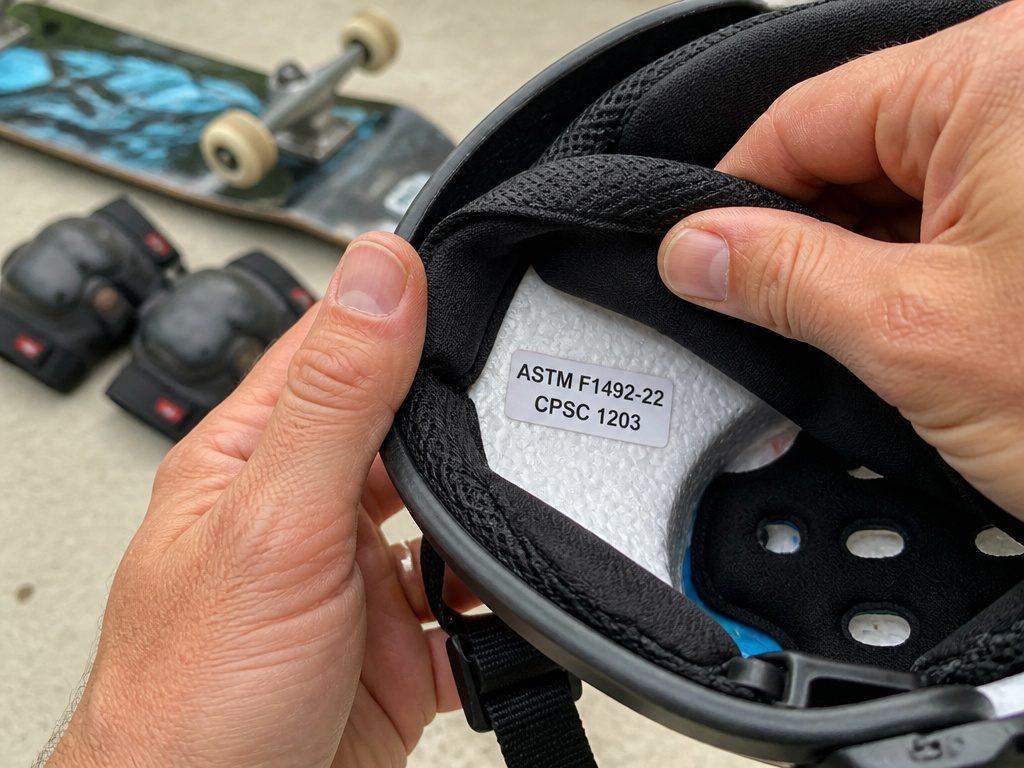
The labels inside a helmet are a contract. Here’s what they mean and who says they matter.
- ASTM F1492-22: This is the dedicated standard for skateboarding and trick roller skating helmets. The ASTM publication states it requires testing on flat, cylindrical hazard, and triangular hazard anvils. It also prohibits partial compliance, a helmet passes all tests or fails the standard entirely.
- CPSC 16 CFR Part 1203: This is the U.S. Consumer Product Safety Commission’s bicycle helmet standard. The American Academy of Orthopaedic Surgeons recommends helmets that “meet or exceed” CPSC standards. Many skate helmets are dual-certified to both ASTM F1492 and CPSC.
- It’s common in multi-sport helmets.
Where this goes sideways: Buying a helmet based only on looks. That “skate-style” helmet from a discount store likely has no certification at all, rendering it a plastic shell with foam that fails at the moment of impact.
The takeaway? Ignore the graphic on the outside. Check for the permanent label on the inside polystyrene liner. If it doesn’t have ASTM F1492 or CPSC, it’s not safety gear.
Gear Maintenance and Replacement: When to Retire a Helmet
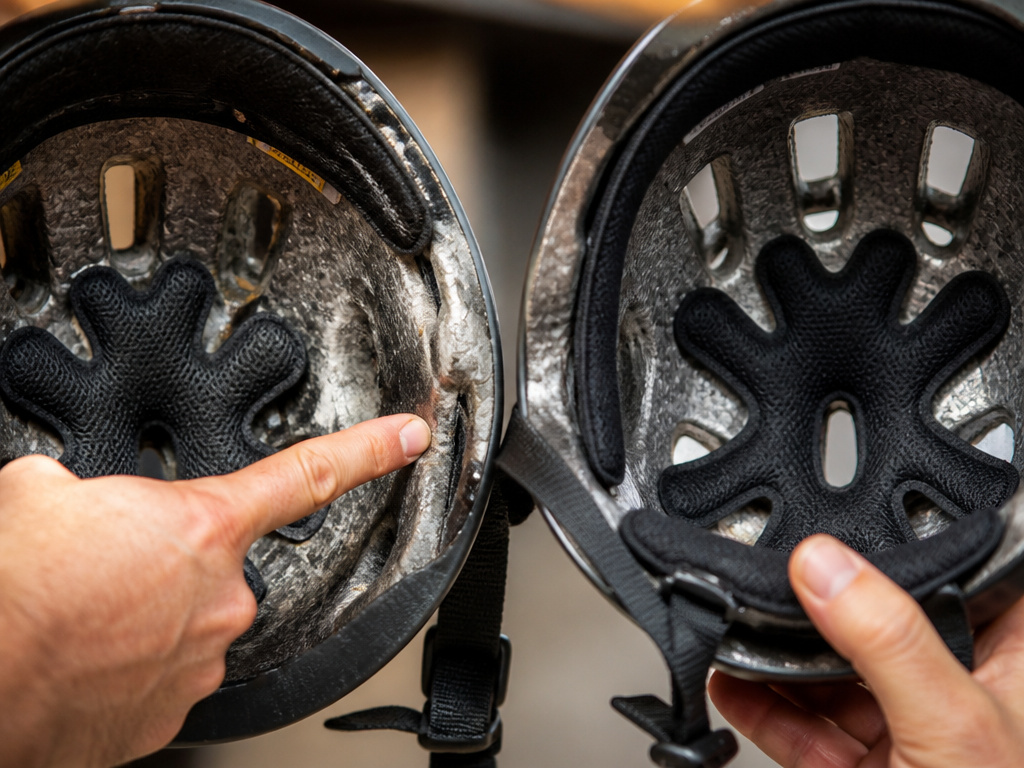
Safety gear wears out, and not just from obvious cracks. The foam degrades, straps fray, and plastic loses integrity.
Helmets have a finite lifespan. Helmets have a finite lifespan and should be replaced if the materials degrade, or after any serious impact. This is a guideline, not a hard rule based on a specific study in our sources. However, the British Journal of Sports Medicine study provided a concrete, sourced reason for immediate replacement: “All helmets showed degraded impact performance on a second impact.” One serious hit compromises the foam. If the helmet takes a major impact, retire it even if it looks intact.
Pads and guards need replacing when:
- The plastic shell is cracked or deeply gouged.
- The straps lose their elasticity or the buckles break.
- The interior foam padding breaks down and no longer cushions.
Clean gear with mild soap and water. Don’t soak it or use harsh chemicals that can break down plastics and fabrics. Let it air dry completely before the next use to prevent mildew.
Age Guidelines and Supervision Rules
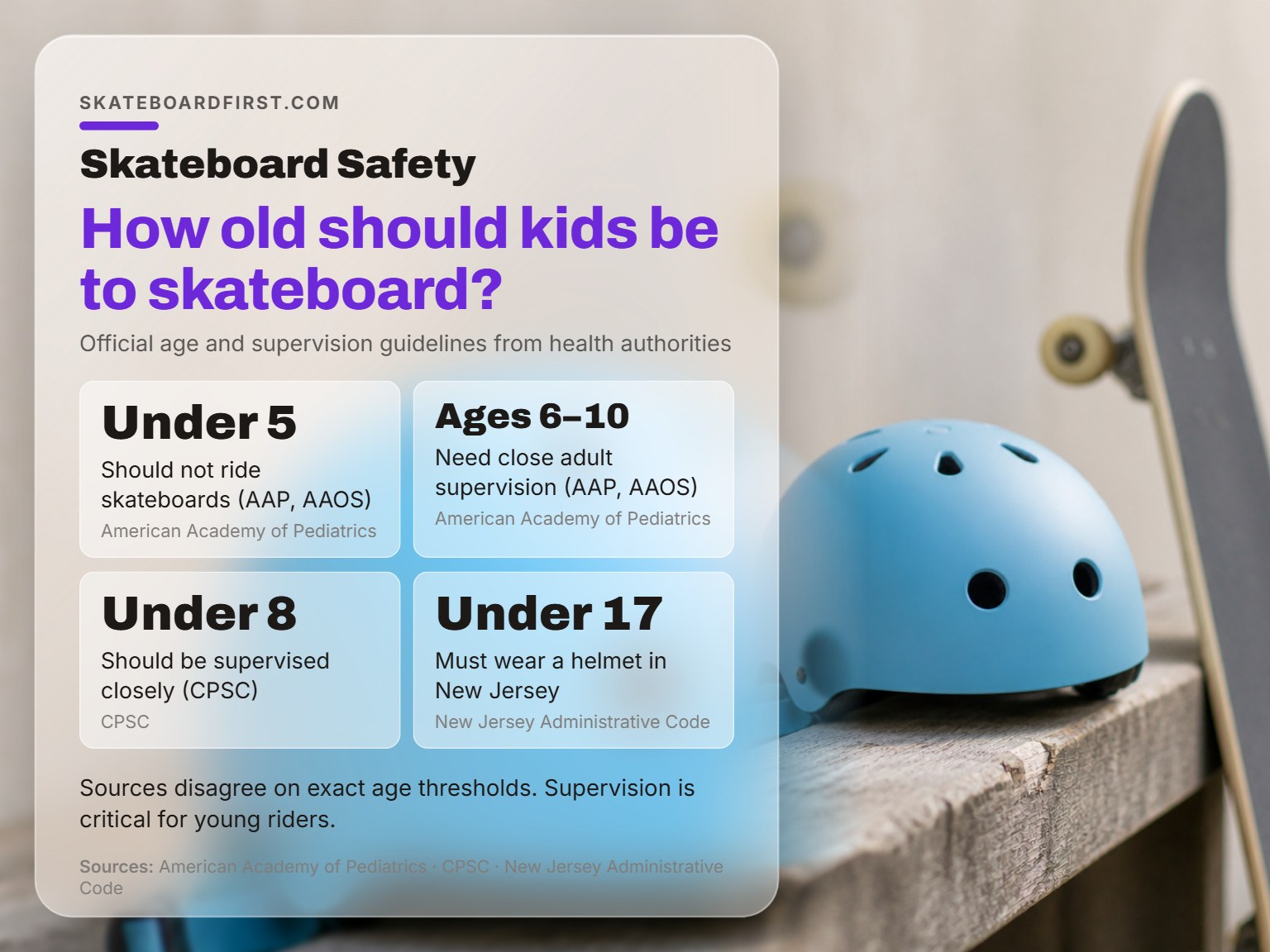
Sources don’t fully agree on age limits, which tells you the line is fuzzy and requires judgment. Here’s the landscape:
- Under 5 years old: Both the American Academy of Pediatrics and the American Academy of Orthopaedic Surgeons say children this young should not ride skateboards. Their balance and coordination aren’t developed enough, and they lack the judgment to avoid hazards.
- Ages 6–10: The AAP and AAOS agree this group needs close adult supervision. The CPSC fact sheet uses a different threshold, stating “children under 8 years old should be supervised closely.” The practical takeaway: Sources disagree on the age threshold for close supervision: the CPSC says children under 8 should be supervised closely, while the AAP and AAOS say children aged 6 to 10 need close adult supervision., not just being in the vicinity.
- Over 10: Supervision shifts from constant watching to ensuring they are in a safe environment (e.g., a designated skatepark, not a street with traffic) and that they are using their gear.
New Jersey state law adds another layer: anyone under 17 must wear a helmet while skateboarding, unless a local municipal ordinance exempts the requirement. Know your local laws.
What are the best skateboard helmets for kids?
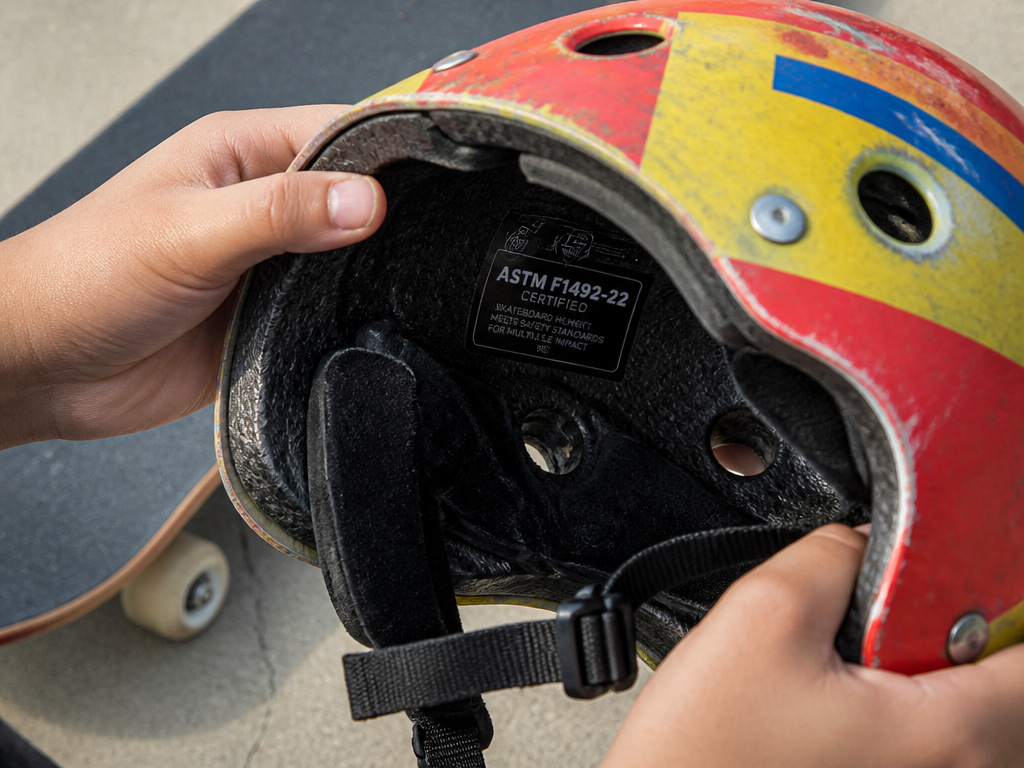
When looking for a helmet, the most important feature is a label certifying it meets the ASTM F1492-22 standard for skateboarding and trick roller skating. This is the specific standard required for this activity. A multi-use helmet must have this ASTM label to be used for skateboarding. Do not rely on a helmet that only meets a bicycle standard. The label is your guarantee that the helmet has been tested for the types of impacts common in skateboarding. Since helmet sizes vary from brand to brand, always bring your child to try it on. A certified skateboard helmet should have a hard shell with a foam interior.
Where can I buy skateboard safety gear for my child?
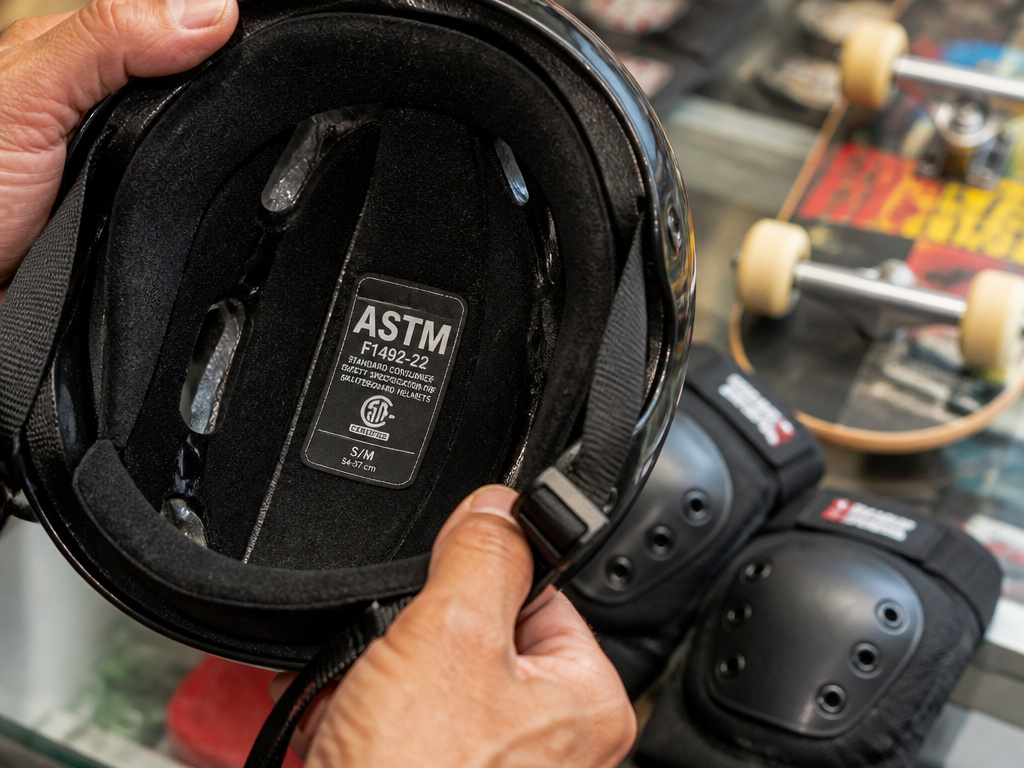
You can find proper safety gear at sporting goods stores, dedicated skate shops, and through various online retailers. The key is to look past the toy aisle and seek out gear built to a safety standard. When shopping, physically check for the ASTM F1492-22 certification label inside any helmet you consider. Bring your child with you when buying a helmet to ensure the front rim aligns with their eyebrows and the chin strap fits snugly, as sizes vary between brands. A certified skateboard helmet should fit snugly all around with no gaps. Retail staff at specialty skate shops can often provide valuable fitting guidance and product knowledge.
Frequently Asked Questions
What is the most important piece of safety gear for a beginner?
The helmet is essential, but wrist guards are a very close second. Since a third of injuries happen in the first week and most falls involve putting hands out, wrist guards prevent the most common serious injury, a broken wrist.
My child’s helmet fits now, but will it fit next year?
Probably not. You should check the fit at the start of each skating season. Use the CDC’s method: wrap a soft tape measure just above the eyebrows and ears. If they’ve grown out of it, get a new one. A helmet that’s too small is as dangerous as none at all.
Are expensive brands like Triple Eight worth it?
They can be, but not for the logo. Brands like Triple Eight and Pro-Tec consistently build to the ASTM F1492 and CPSC standards. You’re paying for verified safety engineering. A no-name brand might not. The value is in the certification, not the marketing.
Can my child use their bike helmet for skateboarding?
Only if the helmet has a label inside certifying it to the ASTM F1492 standard for skateboarding. Most bike helmets are certified only to the CPSC bike standard. The CDC is clear: a multi-use helmet needs that specific ASTM label for skateboarding use.
How tight should skateboard pads be?
They should be snug enough not to shift during a fall. You should be able to fit a finger between the strap and your child’s limb, but the pad itself should not rotate freely around their knee or elbow. If it slides when they move, tighten it.
Before You Go
The one threshold that changes everything is impact. The moment that helmet hits the ground with your kid’s head inside it, its job is done. The foam has compressed. It will not protect to the same standard again, even if the shell looks perfect. That’s the hidden timer on safety gear, not the calendar, but the hits it takes.
So start with a certified helmet from a real skate brand, not a toy aisle. Add wrist guards before they even think about an ollie. And have the conversation about gear as a tool for bigger adventures, not a limit on small ones. The first week’s bruises fade. The habit of putting on pads sticks around for every session after.
