
Skateboard Wrist Fracture Recovery Guide
This post contains affiliate links. As an Amazon Associate, we earn from qualifying purchases.
Healing a wrist fracture from a skateboard fall often takes 6 to 12 weeks for the main bone repair, but full strength and confidence take longer, and some fractures with surgery can take about 3 months to heal completely. The timeline hinges on the specific bone broken, the treatment path, and how well you manage swelling and follow your rehab plan.
That 6–12 week window from official sources like the NHS and Orthopaedic Trauma Association is the reality check most skaters need. It’s not just about the bone knitting; it’s about the surrounding soft tissue healing, rebuilding muscle, and retraining your brain to trust that joint again. This process is the core of any skateboard wrist fracture recovery guide. Pushing it before it’s ready is how a simple fracture turns into a chronic problem.
What follows breaks down that timeline by fracture type, explains why certain pain meds can backfire, details the step-by-step path from cast to board, and gives you the skate-specific drills to test your readiness. By the end of this skateboard wrist fracture recovery guide, you’ll know exactly what phase you’re in and what to do next.
Key Takeaways
- Most wrist fracture healing happens between 6 to 12 weeks, but a distal radius fracture with surgery can take about 3 months to heal completely.
- Anti-inflammatory medication like Ibuprofen can delay bone healing; consult your doctor for pain management that supports recovery.
- Sources offer different guidance: the NHS advises you can start gentle exercises as guided by your healthcare professional, while the Orthopaedic Trauma Association states you should not lift, push, or pull anything until it heals.
- For a suspected scaphoid fracture with a negative X-ray, an MRI or CT scan should be done within 3 to 5 days for an accurate diagnosis.
- Returning to skateboarding requires a phased approach, starting with balance and pushing drills long before you attempt tricks or deal with impact.
Why Your Wrist Is a Skateboarder’s Weakest Link
The wrist is the most frequently injured body part in action sports like inline skating, making up 37 percent of all injuries, and two thirds of those wrist injuries are fractures. When you fall, your instinct is to put your hands out. All that force travels straight up through the small bones of your wrist. Young people, as the Orthopaedic Trauma Association notes, often get hurt from accidents like falling off a skateboard. It’s a simple equation: high-impact force meets a complex, delicate joint.
The wrist is the most frequently injured body part, making up 37 percent of all [inline skating] injuries, and two thirds of wrist injuries are fractures.
This isn’t just bad luck. It’s biomechanics. Your wrist isn’t built to absorb the energy from a full-body slam. Understanding this is the first step in respecting the injury and the recovery it demands, a key principle in any skateboard wrist fracture recovery guide.
The 6–12 Week Healing Timeline (and Why It’s Not a Straight Line)
“Six to twelve weeks” is the broad answer you’ll get. But what does that actually mean? The NHS states most of the healing happens in that window. It’s not a countdown to being 100%, it’s the period where the bone reconnects itself. You’ll be in a cast or splint for much of it.
The feeling inside the cast is its own weird journey. The first week, the itch is maddening. Then it fades into a background numbness, punctuated by sharp, aching twinges if you bump it. That’s the bone starting its repair work. Swelling is your biggest enemy here. A puffy, angry wrist inside a cast slows everything down because it impedes blood flow, the very thing the fracture needs to heal.
Common mistake: Assuming no pain means it’s healed. The bone may be knitting, but the ligaments and tendons are still vulnerable. Coming out of the cast at 6 weeks doesn’t mean you can catch yourself in a fall.
Here’s the rough breakdown skaters should expect:
| Phase | Timeline | What’s Happening | What You Can Do |
|---|---|---|---|
| Acute Healing | Weeks 1-6 | Bone ends start to knit together (callus formation). Swelling and bruising peak then subside. | Strict immobilization. Elevate the hand above the heart. Move fingers regularly to prevent stiffness. |
| Consolidation | Weeks 6-12 | The new bone tissue strengthens and remodels. The fracture line on an X-ray becomes faint. | Cast/splint likely comes off. Start gentle, guided exercises. No load-bearing. |
| Maturation | Months 3-6+ | Bone reaches near-normal strength. Soft tissues (ligaments, tendons) regain flexibility and strength. | Progressive loading begins. Sport-specific rehab (like return to skateboarding) under guidance. |
If your wrist function hasn’t improved within 6 weeks of following professional advice, talk to a healthcare professional again.
Scaphoid vs. Distal Radius: The Healing Speed Difference
Not all wrist fractures are the same. The bone you break dictates your recovery. The two most common from a skate fall are the distal radius (the larger forearm bone at the wrist) and the scaphoid (a small boat-shaped bone in the wrist itself).
A distal radius fracture is what most people picture, a broken wrist. It has a good blood supply. According to a clinical protocol, a distal radius fracture with surgery takes about 3 months to heal completely. Non-surgical cases fall into that 6–12 week NHS window.
A scaphoid fracture is trickier. Its blood supply is poor, especially in the proximal (upper) part. Healing is slower and the risk of the bone not healing (non-union) is higher. A 2020 clinical guideline gives specific timelines:
- Non-displaced scaphoid waist fracture: union at ~6 weeks.
- Distal scaphoid fractures: heal after four to six weeks of immobilization.
- Moderately displaced scaphoid waist: requires eight to ten weeks in a cast.
Where this goes sideways: Missing a scaphoid fracture. If you have deep wrist pain after a fall but an X-ray is clear, a 2020 guideline recommends an MRI or CT scan within three to five days. Waiting weeks means a simple fracture can displace, turning a casting job into a surgery.
This is why “How long will it take?” has no single answer. Your doctor’s diagnosis, confirmed with the right imaging, sets the real clock.
Casts, Splints, and Surgery: Your Treatment Path
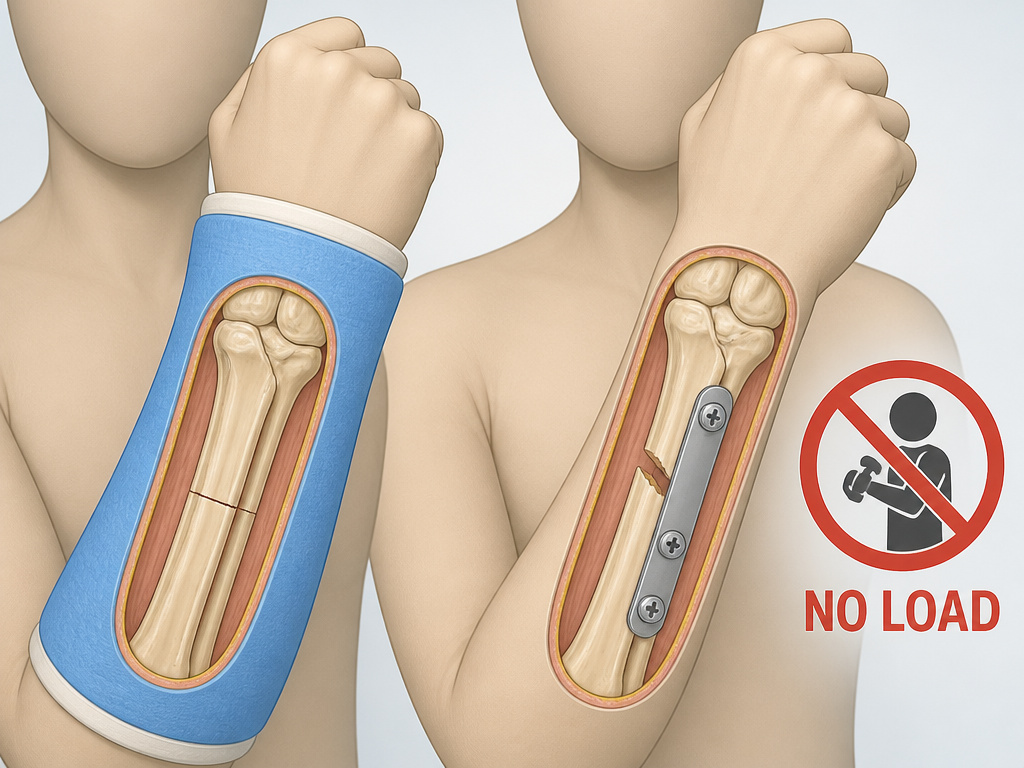
Your treatment depends on how the bone broke and if it moved. The goal is always the same: hold the pieces together so they can heal straight.
Casting or Splinting is for non-displaced or minimally displaced fractures. A cast is rigid; a splint is often removable. The NHS advises contacting your fracture clinic if the splint is no longer fitting well. A loose splint allows the bone to move; one that is too tight restricts blood flow. Neither helps.
Surgery (internal fixation) uses plates and screws to hold the bone together. It’s for displaced fractures, open fractures (bone pokes through skin), or scaphoid fractures with poor prognosis. The OTA notes after surgery you can move your fingers but should not lift, push, or pull anything.
Easy to miss: The metal is a scaffold, not a replacement. A post-op protocol warns: If too much activity is done too early the metal plate can break before bone is healed. Surgery might get you moving faster, but it doesn’t shorten the healing time the bone itself needs.
Here’s a quick comparison of the two main paths:
| Aspect | Non-Surgical (Cast/Splint) | Surgical (Internal Fixation) |
|---|---|---|
| Typical For | Non-displaced, stable fractures. | Displaced, unstable, or open fractures. |
| Immobilization | Cast for ~6 weeks, then possibly a splint. | May have a splint briefly, then early protected motion. |
| Load-Bearing | No lifting/pushing for 6-12 weeks. | No lifting/pushing for ~6 weeks, but earlier finger/hand therapy. |
| Key Risk | Stiffness, muscle atrophy from prolonged immobilization. | Hardware irritation, infection, rare plate failure if overused. |
The best path is the one your orthopaedic surgeon recommends for your specific break. Your job is to follow it to the letter.
What You Can Control: Pain, Swelling, and Lifestyle

Healing isn’t passive. What you do (and don’t do) during those weeks has a massive impact.
Pain Management: This is the first hurdle. The NHS delivers a crucial, non-commodity insight: Anti-inflammatory medication, like Ibuprofen or Naproxen, has been shown to delay healing. It’s a common over-the-counter go-to, but it can interfere with the inflammation that’s essential for bone repair. Talk to your doctor about painkillers that don’t carry this risk. Talk to your doctor or a healthcare professional about pain management that supports recovery.
Swelling Control is essential. The NHS says it’s important that swelling is managed well to help your recovery. Keep your hand raised above your heart as much as you can, particularly in the first 72 hours. Think pillows, not just resting it on your stomach. Ice packs around the cast (never directly on skin) can help. Swelling equals pressure, and pressure equals pain and slowed healing.
Lifestyle Factors: The NHS plainly advises that stopping smoking as your fracture heals will help to ensure the best recovery. Smoking constricts blood vessels, starving the fracture site of oxygen and nutrients. Eating a healthy diet and keeping yourself active (within limits) will also help your recovery. Your body is building new bone; it needs protein, calcium, Vitamin D, and fuel.
From Cast-Off to Kickflip: Your Rehab Progression

When the cast comes off, the real work begins. Your wrist will look smaller, feel stiff, and be weak. This is normal. The Orthopaedic Trauma Association states when your cast or splint is taken off, you may need therapy to help you move your fingers, hand, and wrist.
Phase 1: Regaining Motion (Weeks 1-3 Post-Cast)
Forget strength. Focus on gently reclaiming your range of motion. A physical or occupational therapist will give you exercises like:
- Wrist flexion/extension: Gently bending your wrist forward and back.
- Radial/ulnar deviation: Tilting your hand side to side.
- Finger tendon glides: Making a fist, then straightening fingers fully. Do these within a pain-free range. No forcing. Discomfort is okay; sharp pain is a stop sign.
Phase 2: Introducing Load (Weeks 4-8 Post-Cast)
Once motion improves, you can start lightly loading the wrist.
- Putty squeezes for grip strength.
- Wrist curls with a very light weight (like a soup can).
- Weight-bearing through the hand in a quadruped (on all fours) position, progressing to a plank as tolerated. This is where you must be patient. The bone is still maturing. A study on sports wrist injury review emphasizes the need for graded exposure to load.
Phase 3: Sport-Specific Prep (Weeks 8+)
This is the gap no other guide fills: the skate-specific return. Before you even step on the board, you need to pass tests.
- No Pain: Full range of motion without any aching.
- Strength Balance: Grip strength in the injured hand is at least 85% of the other side.
-
Impact Test: Can you do a gentle push-up off your palms without pain? If yes, your progression back to skating looks like this:
-
Week 1: Just stand on the stationary board. Shift weight. Get comfortable again.
- Week 2: Push around on smooth, flat ground. No tricks. Practice how to fall on a skateboard safely at slow speed.
- Week 3: Gentle carves on a mellow incline. Focus on balance, not speed.
- Week 4+: Gradually re-introduce ollies and basic tricks, landing with knees bent to absorb shock. Always wear your wrist guards.
Rushing this phase is how people re-injure themselves. A return to play guidelines article stresses that clearance for an athlete isn’t just about healing, it’s about readiness for the demands of the sport.
Wrist Guards: Your Best Defense for the Next Fall

Once you’ve felt a broken wrist, the anxiety of falling again is real. This is where proper gear is essential. Some skaters recommend wrist guards with dual splints to limit hyperextension. The logic is solid: a dual splint prevents the hyperextension that causes many fractures.
Look for guards that limit the range of motion at the wrist. Several brands manufacture wrist guards designed for skateboarding. The debate over wrist guard pros and cons often misses this point: after an injury, the goal isn’t just padding; it’s creating a mechanical block against re-injury. A good guard should feel restrictive when you try to bend your wrist back too far. That restriction is what protects you.
When to Worry: Red Flags and Complications

Most fractures heal without issue if managed correctly. But you need to know the warning signs that something is wrong.
See a doctor immediately if you have:
- Numbness or tingling that gets worse (sign of nerve compression).
- Fingers that turn white, blue, or feel cold (sign of circulatory problems).
- Increasing pain not relieved by elevation and medication.
- Fever, redness, or foul odor from the cast (sign of infection).
Potential long-term complications include:
- Non-union: The bone doesn’t heal. More common in scaphoid fractures. Requires further surgery.
- Avascular Necrosis: The bone tissue dies due to lost blood supply. A dreaded scaphoid complication.
- Post-traumatic Arthritis: The cartilage in the wrist joint wears down prematurely, causing chronic stiffness and pain. The OTA notes your wrist may be stiffer or weaker than before.
If you experience persistent pain or stiffness, it’s part of the common injuries landscape, but it warrants a follow-up. Don’t just write it off as “part of the deal.”
Frequently Asked Questions
Can a wrist fracture heal in 2 weeks?
No. While initial pain may lessen, the bone itself is only just beginning to heal at 2 weeks. The NHS states most healing occurs between 6 to 12 weeks. At 2 weeks, the fracture is still fragile and requires continued immobilization.
What are the top 3 worst bones to break in the wrist?
Scaphoid fractures, especially in the proximal pole, are known for poor healing due to limited blood supply. For skaters, the scaphoid is the most notorious.
How long should you rest with a fractured wrist?
You should avoid lifting, pushing, or pulling for the entire initial healing period (6-12 weeks as per the OTA). “Rest” doesn’t mean total inactivity, moving your fingers and, later, guided wrist exercises are crucial, but it does mean protecting the wrist from load and impact.
What is the hardest bone to heal in the wrist?
The proximal pole of the scaphoid. Its unique blood supply comes from the distal end, so a fracture at the proximal end can sever its blood flow, leading to a high risk of non-union or avascular necrosis. A 2020 guideline states proximal scaphoid fractures should generally be treated with internal fixation.
Before You Go
One rule cuts through all the complexity: if your pain increases with an activity, stop. That’s your body’s only way to say the bone or soft tissue isn’t ready. The timeline on paper is a guide, not a guarantee. Your wrist will tell you the real schedule.
The board will wait for you.
