
Skateboarding in the 1980s: Key Events and Changes
This post contains affiliate links. As an Amazon Associate, we earn from qualifying purchases.
Skateboarding in the 1980s was defined by a paradox: explosive cultural growth fueled by vert ramp heroes and iconic brands, shadowed by a severe injury crisis that triggered government bans and a nationwide safety panic.
That 38% drop in injuries didn’t end the debate. It reframed it. The conversation shifted from raw numbers to a fundamental question: was skateboarding a legitimate sport requiring regulation and protective gear, or a dangerous toy that should be removed from the streets? This tension between counterculture expression and public safety shaped every aspect of the 80s scene.
What follows is a walk through that high-stakes era. The legendary teams and graphics that defined its look, the hard data behind the injury scare, the unique case of a country that outlawed it entirely, and the pivotal technological shift from vert ramps to street skating that saved the sport’s soul.
Key Takeaways
- The ollie, invented in the late 70s and adapted to flat ground in the 80s, is widely considered the foundational trick for modern street skating.
- Iconic brands built their legacy on artist-driven deck graphics and team videos that are still revered today.
Iconic Brands and the Bones Brigade
If you walked into a skate shop in 1985, you weren’t just buying a board. You were picking a side. The walls were a gallery of screaming skulls, neon skeletons, and surreal landscapes, the artwork of Vernon Courtlandt Johnson for Powell-Peralta or Jim Phillips for Santa Cruz. These weren’t logos; they were badges of honor. The brands were the culture.
The team was everything. Powell-Peralta’s Bones Brigade wasn’t just a roster; it was a dynasty. Tony Hawk, Steve Caballero, Rodney Mullen, Mike McGill, Lance Mountain. Each name represented a different style, a different path to progression. Hawk owned the vert ramp. Caballero invented the Caballerial. Mullen, the freestyle genius, was quietly inventing the flat-ground tricks, the kickflip, the impossible, that would become the grammar of street skating a decade later. You didn’t just watch their videos, like The Search for Animal Chin; you studied them. The flickering VHS tape was your textbook, the only way to see how a trick was supposed to look before you ate concrete trying it yourself.
I saved up for months for my first pro model, a Mike McGill skull and snake. The moment I gripped it, that coarse black sheet tearing under the razor, felt like initiation. The board was a tank: a wide, directional shape with a tiny nose, built for power in a bowl, utterly useless for the kickflips I desperately wanted to learn. I was learning on the wrong tool for the future, and I didn’t even know it.
This era of skateboarding in the 1980s was the last gasp of the single-kick, vert-oriented deck. They were wide, heavy, and shaped like surfboards. You can trace the entire evolution of skateboard decks from this point, the need for a twin-tailed, symmetric “popsicle” shape came directly from street skaters’ demands for a board that could flip and spin equally well in either direction. The decks from the early 80s were perfect for the halfpipes that were about to vanish.
The 1980s Skateboarding Injury Panic
The cultural explosion of skateboarding in the 1980s had a dark, statistical underbelly. In 1977, an estimated 140,000 skateboard-related injuries were treated in U.S. Hospital emergency rooms. The U.S. Consumer Product Safety Commission (CPSC) noted that by 1978, that number had fallen to 87,000, a 38% decrease. Officials pointed to the rising popularity of skateparks, which often mandated pads and helmets, and a natural dip in the sport’s trendiness.
But the reprieve was temporary. A peer-reviewed study analyzing CPSC data identified a “second wave” of injuries: 19,182 in 1984, ballooning to 37,180 in 1985. The demographics were telling. Children aged 10 to 14 years old were injured most frequently. The study’s authors recommended warnings against skateboard use by children younger than 5 years.
The government’s official stance was one of cautious monitoring, not outright prohibition. The Commission argued that a ban might drive kids to build more dangerous homemade boards, and that safety was better served through education and park development. This federal-level decision stands in stark contrast to what happened overseas.
| Key Age Group | Not Specified | Not Specified | 10-14 years old | 10-14 years old | Most frequently injured cohort |
|---|---|---|---|---|---|
| Government Action | Petition to Ban Filed | — | — | — | Ban denied in June 1979 |
Norway’s National Skateboard Ban (1978-1989)
While America debated safety, Norway took definitive action. On March 15, 1978, the Norwegian government enacted a provisional prohibition on skateboarding. By September 7, 1978, it was made permanent. This wasn’t a local ordinance; it was a sweeping national ban under the Product Control Act, a law originally designed for environmental hazards.
The ban lasted from 1978 to 1989. For an entire generation of Norwegian kids, skateboarding was literally illegal. This extreme measure stemmed from a critical ambiguity: was a skateboard a “toy” or “sports equipment”? The authorities categorized it as a toy, which placed it under stricter safety scrutiny, while skateboarders saw it as a targeted regulation of their burgeoning counterculture and sport. The ban created a black market for decks and wheels, and forced the dedicated to practice in hidden spots, deep in forests or secluded industrial yards.
Where this goes sideways: Treating a skateboard as a toy instead of a sport. The Norwegian policy frame ignored the athletic skill involved, focusing solely on injury risk, which led to a blanket prohibition that stifled a generation of skaters.
This case is the ultimate edge case in skateboarding’s legal history. It shows how cultural perception, a simple categorization, can have concrete, long-lasting consequences. It also highlights the resilience of the culture; the ban didn’t kill the desire to skate, it just pushed it underground.
Vert’s Decline and the Street Skating Revolution
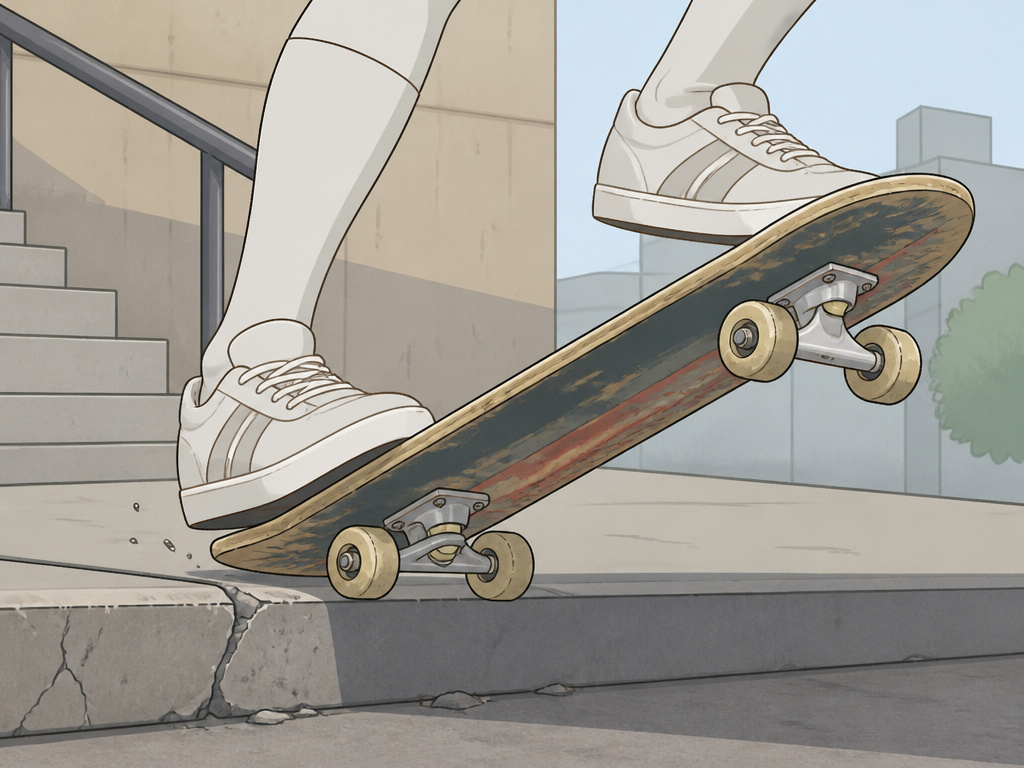
By the mid-80s, the vert ramp’s reign was ending. The reason was brutally practical: liability insurance. The concrete parks and wooden halfpipes that bred the Bones Brigade were expensive to build and even more expensive to insure. As parks closed, vert skaters were left with nowhere to practice their high-flying aerials. The sport needed a new home. It found it on the streets.
This wasn’t just a change of location; it was a philosophical shift. Street skating embraced the existing urban landscape: curbs, stairs, handrails, benches, and empty swimming pools. The equipment had to change. You couldn’t power-slide a 60mm soft wheel on rough asphalt, and you couldn’t flip a 10-inch wide tank of a board. Deck widths began to shrink. Wheels got smaller and harder for faster slides and longer travel on concrete.
The technical catalyst was the ollie. Invented by Alan “Ollie” Gelfand in the late 1970s for vert, it was Rodney Mullen and other street pioneers who discovered its flat-ground potential. The ollie is the act of snapping the tail to make the board leap into the air without the use of hands. It is the fundamental trick from which almost every modern street trick is built, the kickflip, heelflip, 360 flip, all of it. The 1980s were the incubation period where this move escaped the ramp and hit the pavement.
| Era | Primary Domain | Typical Deck | Key Trick | Cultural Vibe |
|---|---|---|---|---|
| Early-Mid 80s | Vert Ramps & Pools | 9.5″ – 10.5″ wide, directional | Aerials (McTwist, 540) | Punk, Rebellious, Team-Centric |
| Late 80s / Early 90s | Street Skating | 7.5″ – 8.25″ wide, twin-tail | The Ollie & its variations (Kickflip) | DIY, Hip-Hop, Individualistic |
This transition set the stage for skateboarding in the 1990s. The street boom was built on the technical foundation laid in the late 80s. The cultural torch was passed from the branded, team-focused vert world to a more grassroots, video-driven street scene.
Helmets, Safety, and Lasting Lessons
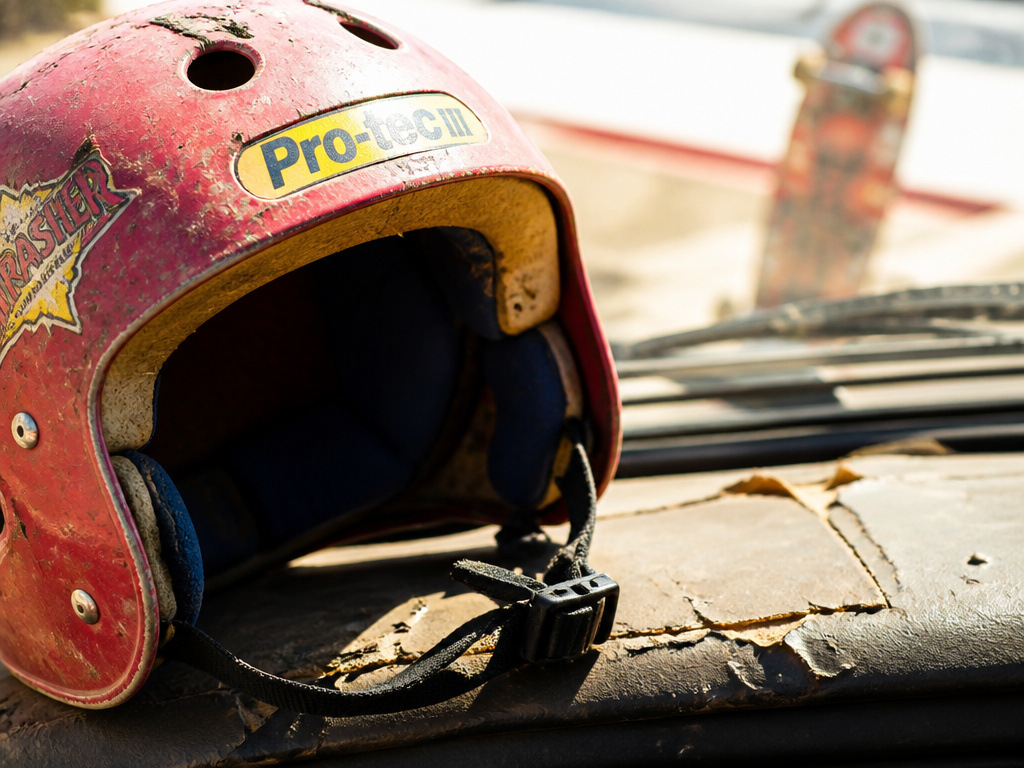
The injury data from the 80s created a legacy of safety advocacy, but one that skaters themselves have often resisted. The CDC’s skateboard helmet fact sheet is clear: a helmet should be certified to MEETS NOCSAE Standard®, fit snugly, and have a chin strap tight enough that only one or two fingers fit underneath. They also advise against storing a helmet in a car, as temperature extremes degrade the foam, though many skaters transport helmets in vehicles for convenience.
The reality on the ground has always been different.
This is a crucial, often-missed detail. A helmet isn’t a permanent shield; it’s a single-use safety device for a serious impact. The cultural aversion to helmets, the feeling that they’re uncool or restrictive, persists, directly contradicting decades of medical evidence.
Common mistake: Storing a helmet in a hot car. The foam liner compresses and weakens over time, so the helmet that looks fine on the outside might not protect you during a real impact.
The 1980s established the blueprint for the modern safety debate: authoritative recommendations on one side, ingrained cultural habits on the other. The data from that era’s “second wave” of injuries proved the need for protection. The subsequent decades have been a slow, ongoing negotiation between skaters and that need.
What did skateboarders wear in the 1980s?
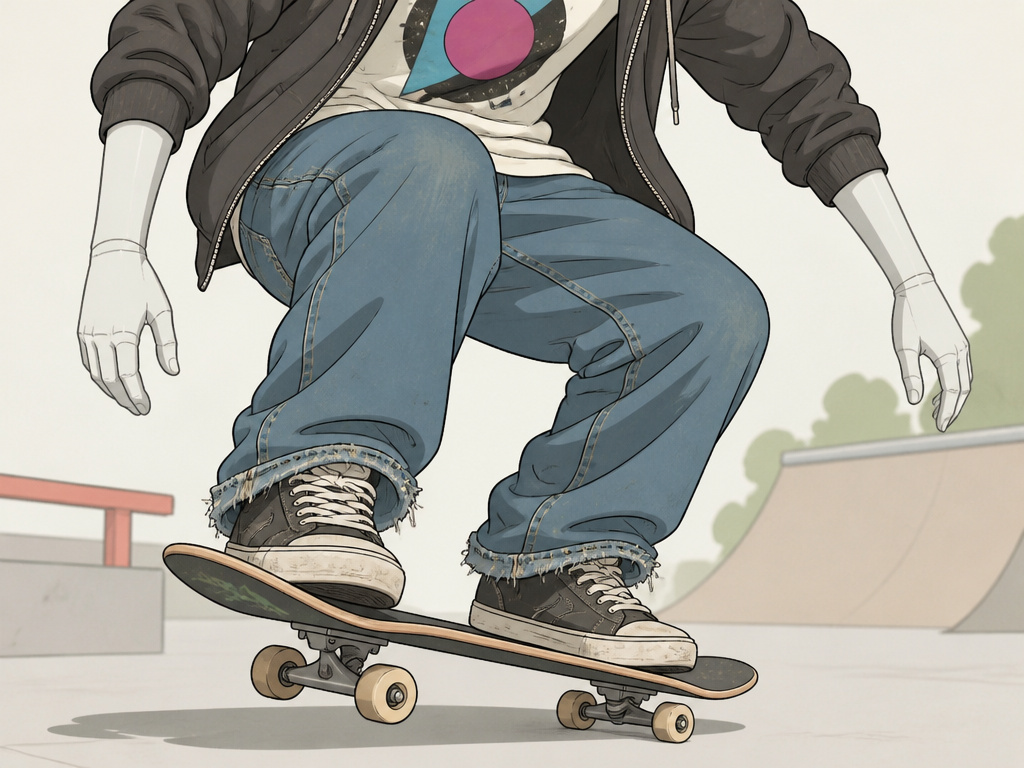
Skateboarding fashion in the 80s was pure function meeting rebellion. It was about durability for concrete slams and freedom for movement. Look for baggy jeans or shorts that could take a scrape, sturdy sneakers with flat soles for board feel, and simple tees often featuring bold, iconic graphics from the board brands themselves. This wasn’t high fashion; it was uniform for a subculture. While safety gear like helmets was recommended by studies, its use was rare outside of mandated competitions, further cementing the look of raw, unencumbered skating. The style was a direct reflection of the attitude: practical, defiant, and entirely its own.
Frequently Asked Questions
What was skateboarding like in the 1980s?
It was a decade of extremes. Visually, it was dominated by wide, artistically designed decks from brands like Powell-Peralta and Santa Cruz, ridden by legendary teams like the Bones Brigade in concrete skateparks. Culturally, it was a rebellious, punk-influenced scene documented on VHS. Beneath the vibrant surface, a serious injury crisis led to widespread safety panics and even national bans in places like Norway.
Was skating popular in the 80s?
Yes, but in a cyclical way. It experienced a massive boom in the early 80s fueled by vert skating and media coverage, then a significant decline in the mid-80s as parks closed due to high insurance costs. Street skating took root in the late 80s.
Who were some famous skateboarders in the 1980s?
The most iconic names came from the Bones Brigade: Tony Hawk (vert), Steve Caballero (vert/street), Rodney Mullen (freestyle/street), Mike McGill (vert), and Lance Mountain (all-around). Other era-defining skaters included Christian Hosoi (style vert) and Natas Kaupas (pioneering street).
Why did skateparks close in the 80s?
The primary reason was financial liability. Concrete parks were expensive to build and maintain, and many were forced to shut down. Many parks couldn’t afford the coverage and were forced to shut down, which inadvertently pushed skaters into the streets and fueled the next evolution of the sport.
What is the most important trick invented in the 80s?
The ollie. While invented for vert in the late 70s, its adaptation to flat ground by street skaters in the 1980s allowed skaters to generate air without a ramp. It allowed skaters to generate their own air without a ramp, opening up the entire urban landscape.
The Bottom Line
The 1980s weren’t just a chapter in skateboarding history; they were the pressure cooker that forged modern skating. The decade gave us the icons, the art, and the videos we still quote. It also gave us the hard numbers, the 140,000 injuries, the 38% drop, the “second wave”, that framed a public safety battle still being fought today in parking lots and skateparks every time a parent hands a kid a helmet.
The real legacy is in the pivot. When the vert ramps vanished, skating didn’t die. It moved to the streets. It shrunk its boards, hardened its wheels, and placed its faith in a single trick, the ollie, to rebuild itself from the pavement up. That adaptability, born from necessity in the late 80s, is the sport’s enduring truth. The culture absorbed a ban in Norway and a panic in America and kept rolling. Every era since, from the 2000s video game boom to today’s Olympic stage, rests on the foundation laid in that tumultuous, colorful, and defiant decade.
