
Vulcanized vs Cupsole Skate Shoes: Which Should You Buy?
This post contains affiliate links. As an Amazon Associate, we earn from qualifying purchases.
Vulcanized skate shoes are built with a thin sole heat-fused to the upper for maximum board feel and flexibility. Cupsole skate shoes use a single, molded rubber unit stitched around the shoe’s base for superior cushioning and impact protection. For most beginners and street skaters, vulcanized shoes are the better buy; for skaters hitting stairs, gaps, or dealing with foot pain, cupsole construction wins.
That gap between board feel and impact protection is where your whole skating experience lives. One gives you a direct line to your deck’s pop and flick; the other shields your heels and knees from concrete punishment. The choice often comes down to vulcanized vs cupsole skate shoes.
What follows is a breakdown of three specs, two common durability timelines, and the one visual cue that instantly tells you where a shoe falls in the vulcanized vs cupsole skate shoes spectrum. By the end, you’ll be able to match any shoe to your actual skating style without relying on marketing hype.
Key Takeaways
- Vulcanized soles offer superior board feel and break in faster, making them the default for street and technical skating.
- Cupsole construction provides better impact absorption and generally lasts longer, especially on rough terrain like asphalt.
- Under regular skating, suede uppers last 1.5 to 3 times longer than canvas, regardless of sole type.
- For beginners, vulcanized shoes are easier to learn in because they don’t fight your foot’s movement during the learning phase.
- Rotating between two pairs of skate shoes can nearly double the lifespan of each pair.
Vulcanized vs Cupsole: The Core Difference
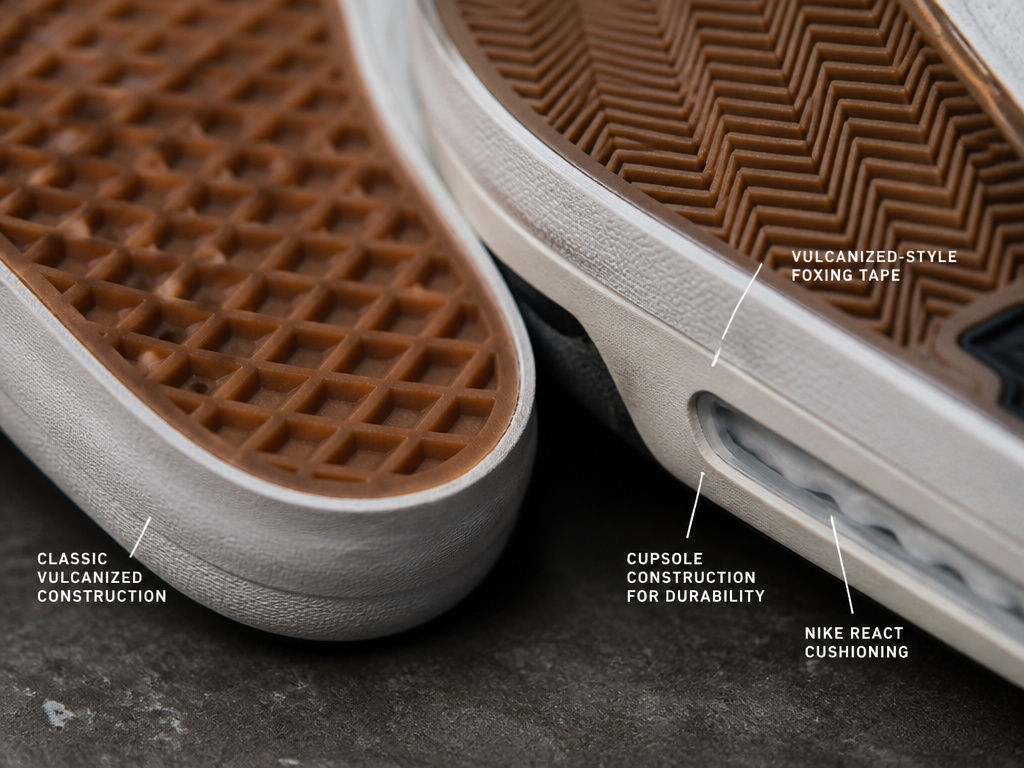
Look at the side of any skate shoe. If you see a thin strip of rubber, the foxing tape, running along where the sole meets the upper, you’re holding a vulcanized shoe. If the sole is one thick, molded piece that visibly wraps up the sides, it’s a cupsole.
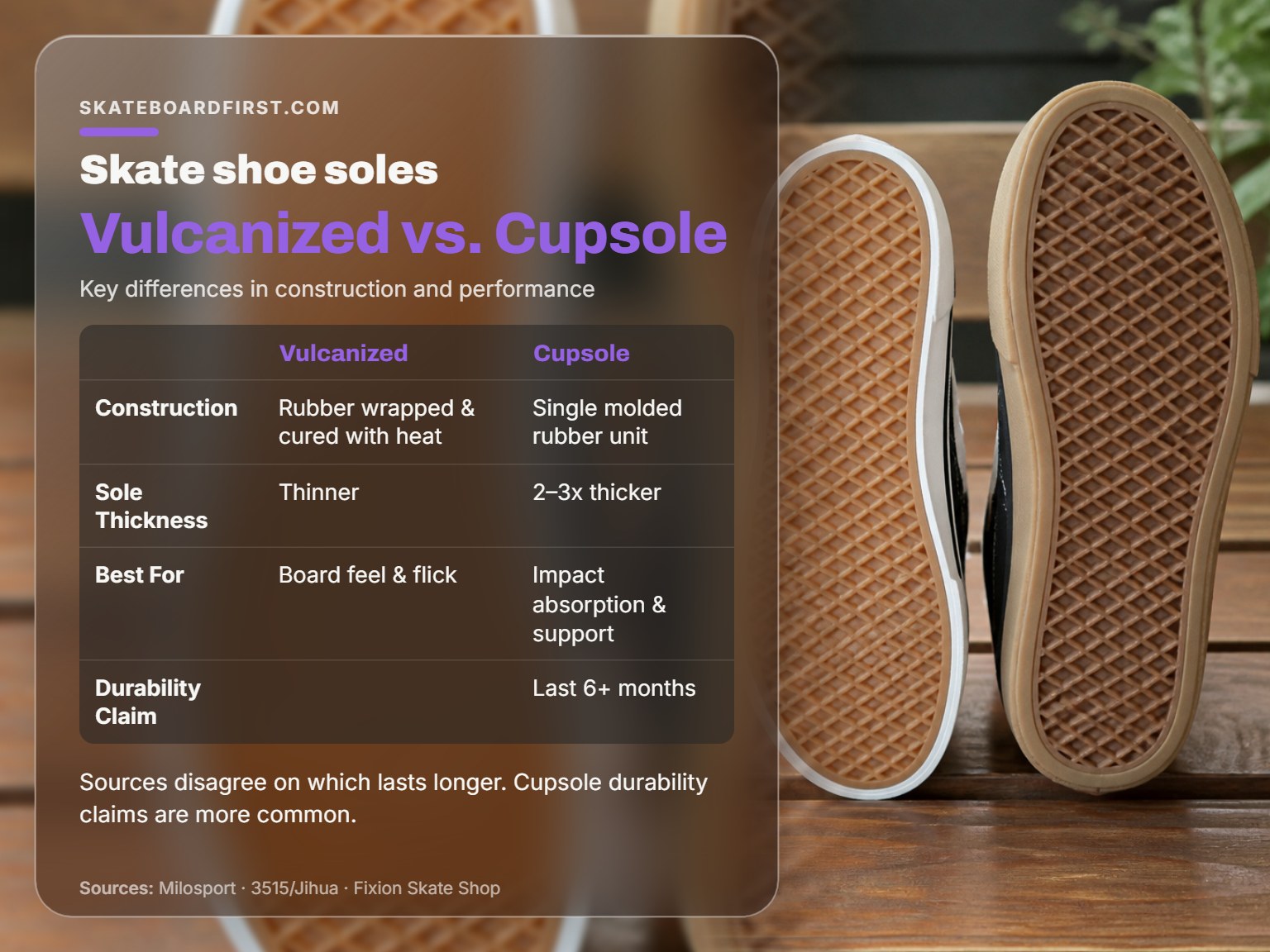
A cupsole is a single, molded rubber unit that wraps up around the sides of the upper, to which it is stitched or cemented. Vulcanized construction uses a thin rubber outsole heat-bonded directly to the upper, with a foxing tape applied over the seam for reinforcement.
This isn’t just a visual trick. The construction method dictates everything from how the shoe feels on your foot to how long it survives a session. A vulcanized sole is thin and flexible by design, putting your foot closer to the board. You feel every grain of the grip tape, every subtle shift in weight during a flip trick. That’s why technical street skaters gravitate toward models like the Vans Old Skool Pro or the Converse CONS CTAS Pro.
A cupsole, like the one on the Emerica Pillar Mid, is a different beast. That molded rubber cup acts like a shock absorber. It’s why brands like Emerica explicitly say cupsoles are “better for impact absorption” and suited for “big drops and gaps.” The trade-off is immediate: you lose some of that direct board connection. Some skaters say breaking in a new pair of cupsoles feels like breaking in a pair of work boots, stiff and unyielding for the first few hours.
How to Tell Them Apart Instantly
You don’t need to be a shoe engineer. Run your finger along the side of the sole.
Vulcanized shoes have a distinct ridge or seam where the foxing tape meets the upper. The sole itself is thin and flexible. The bottom of the shoe will look flat and uniform.
Cupsole shoes lack that taped seam. Instead, the sole is one continuous piece that rises up the side of the shoe, creating a “cup” that the upper sits inside. The sole is noticeably thicker and stiffer.
This visual check works on any shoe, in any store. It’s the fastest way to cut through marketing claims and know exactly what you’re buying.
The Durability Debate: Which Lasts Longer?
Here’s where sources get noisy. Most agree cupsole construction is more robust, but the real-world numbers tell a more nuanced story.
| Source | Claim | Timeline / Context |
|---|---|---|
| Rippedlaces | “Vulc shoes wear faster than cupsoles.” | General observation; durability depends on brand and rubber amount. |
| The Sole Provider | “Cupsoles generally outlast vulcanized soles.” | Cites thicker rubber and more robust construction. |
| 3515/Jihua | “Cupsoles outlast vulcanized soles by months on rough asphalt.” | Vulcanized: replace every 2–4 months. Cupsole: lasts 6+ months. |
| Footonboot.com | “Vulcanized shoes are ‘Generally more durable.'” | Contradicts most other sources in a comparison table. |
Common mistake: Choosing a shoe based solely on claimed durability. A cupsole might outlast a vulcanized shoe, but if it’s made with cheap canvas instead of suede, the upper will blow out long before the sole wears down.
The sole is only part of the equation. The upper material matters more for daily wear. According to Fixion Skate Shop, suede uppers last 1.5 to 3 times as long as canvas under comparable skating conditions. A cupsole shoe with a canvas upper might feel protective, but the toe will shred faster than a suede vulcanized shoe.
The Sole Provider states a casual skater skating once or twice a week might get several months from a pair. The Sole Provider notes that a daily skater practicing kickflips and ollies may go through shoes in four to six weeks.
Board Feel vs. Impact Protection: The Trade-Off You Can’t Avoid

This is the unavoidable choice. You cannot have a shoe that feels like a slipper and cushions like a running shoe. The physics won’t allow it.
Vulcanized shoes win on board feel. The thin, flexible sole transmits every vibration from your deck to your foot. This hyper-awareness is why they’re the tool of choice for street skating, flatground tricks, and any situation where precise foot placement is everything. The break-in period is short.
Cupsole shoes win on impact protection. The thicker, molded sole acts as a buffer. Brands build in extra tech here, like the Emerica Pillar Mid‘s ‘Dunkin’ Foam’ midsole and ‘G6 Footbed’ or the Nike SB Dunk Low Pro‘s Zoom Air unit in the heel. This is why they’re recommended for skating stairs, gaps, transition, and for skaters prone to heel bruises. The trade-off is a longer, sometimes uncomfortable break-in and a noticeable reduction in tactile feedback.
Where this goes sideways: Assuming you need maximum protection as a beginner. Vulcanized shoes are generally easier to learn in because they don’t fight your feet. You need to feel the board more than you need padded landings when you’re just learning to ollie.
Reddit threads are full of older skaters (the “OldSkaters” crew) debating this exact trade-off. Many swear by vulcanized shoes paired with premium insoles like Footprint Gamechangers for a “best of both worlds” setup. Others, feeling the years in their knees, reluctantly switch to cupsoles despite the loss of feel.
Matching Construction to Your Skating Style
Your local spot and favorite tricks should pick the shoe for you. This isn’t about brand loyalty; it’s about matching the tool to the job.
For Street & Technical Skating (Flatground, Ledges, Rails)
- Priority: Board feel, flick, and lightweight flexibility.
- Winner: Vulcanized construction.
- Why: You need to feel the board to control it. The thin sole helps you flip the deck faster and catch tricks more cleanly. A cupsole here feels like a boat anchor on your foot.
- Example Shoe: Nike SB Ishod Wair. It uses a vulcanized cupsole hybrid construction, blending a vulcanized-style feel with a bit more cushioning.
For Park, Transition, & High-Impact Skating (Stairs, Gaps, Vert)
- Priority: Ankle support, heel cushioning, and shock absorption.
- Winner: Cupsole construction.
- Why: Repeated drops from height punish your joints. The structured support of a cupsole stabilizes your foot and disperses impact. As one Reddit user put it, “The older I get, the more I have to wear cupsoles to be able to keep skating.”
- Example Shoe: Emerica Pillar Mid. It’s a classic cupsole built specifically for impact-heavy sessions.
For Beginners & All-Around Skaters
- Priority: A balanced introduction that doesn’t hinder learning.
- Winner: Vulcanized construction.
- Why: You need to develop board feel above all else. A stiff cupsole can make the board feel disconnected and unresponsive, slowing your progress. Start vulcanized; you can always switch to cupsole later if you start tackling bigger drops.
- Pro Tip: Invest in a suede upper. It will outlast canvas while you’re learning, saving you money on replacements as you wear through the ollie area.
Modern Hybrids and Pro Picks
The line between vulc and cupsole isn’t as hard as it used to be. Hybrid designs aim to bridge the gap.
The Nike SB Ishod Wair is the poster child for this. Nike calls it a “vulcanized cupsole.” It uses a vulcanized construction method for flexibility but incorporates React cushioning in the insole for impact protection. It’s a clever workaround that offers great boardfeel and decent cushioning in one sole.
Another frequently mentioned model is the Adidas 3ST. Reviews highlight its surprising flexibility for a cupsole and its extreme durability, one source notes that if treated right, you can skate it between 150 and 180 hours. The toe area uses high-quality suede that resists grip tape wear.
These hybrids are worth a look if you skate varied terrain and want a middle ground in the vulcanized vs cupsole skate shoes choice. They represent the industry’s attempt to solve the board-feel-versus-protection puzzle.
Extending the Life of Any Skate Shoe

Durability isn’t just about what you buy; it’s about how you treat it. Two habits make a bigger difference than the sole type.
First, rotate between two pairs of shoes. Letting a pair fully dry out and recover between sessions prevents moisture from breaking down the glue and materials. The Sole Provider states that rotating pairs can nearly double the lifespan of each shoe.
Second, preemptively apply Shoe Goo. Before you even see a hole, put a thin layer of this rubber adhesive on the ollie area and the side of the toe where your flick makes contact. It creates a sacrificial layer that grip tape grinds through instead of your expensive suede. This is the most underrated three-dollar trick in skateboarding.
Finally, know when to retire them. A worn-out sole isn’t just about holes. Once the tread is completely smooth, you lose crucial grip for both board control and safe pushing. That’s your cue for a new pair.
Are cupsole skate shoes heavier?

Yes, cupsole skate shoes are generally heavier than vulcanized models. This difference comes from their fundamental construction. A cupsole is a single, molded rubber unit that wraps up around the sides of the upper, and it is typically much thicker than a vulcanized sole. This extra material provides the structure for better impact absorption and support, especially for skating stairs, gaps, or longer sessions, but it adds noticeable weight to the shoe. The thicker build contributes to a more substantial feel underfoot, which some skaters prefer for stability, while others might find it less agile compared to the lighter, more flexible profile of a vulcanized shoe.
Frequently Asked Questions
Are cupsoles more durable than vulcanized?
Sources disagree: Rippedlaces, Durability Matters, The Sole Provider, and 3515/Jihua claim cupsoles last longer, while Footonboot.com states vulcanized shoes are ‘Generally more durable.’ Cupsole construction uses thicker, molded rubber that resists abrasion better, especially on rough surfaces like asphalt. However, overall shoe lifespan depends just as much on the upper material (suede vs. Canvas) and your skating frequency. A suede vulcanized shoe can outlast a canvas cupsole shoe.
How to tell if a shoe is vulcanized or cupsole?
Look for the foxing tape. Vulcanized shoes have a distinct, often contrasting, strip of rubber (the foxing tape) covering the seam where the sole meets the upper. Cupsole shoes have no tape; their sole is one thick, continuous piece that wraps up the sides of the shoe to form a “cup.”
What does cupsole mean in shoes?
In skateboarding, “cupsole” refers to a construction method where the sole is a single, molded rubber unit. This cup-shaped sole is then stitched or cemented to the upper of the shoe. This differs from vulcanized construction, where a thin rubber outsole is directly heat-bonded to the upper.
What are considered the best skate shoes?
The “best” skate shoe is the one that fits your foot and matches your primary skating style. For street skating, vulcanized shoes like the Vans Skate Half Cab or Nike SB Janoski are top picks. For impact-heavy skating, cupsole models like the Emerica Pillar Mid or Nike SB Dunk Low Pro are highly regarded. Always prioritize suede uppers over canvas for durability.
The Bottom Line
Stop worrying about which type is objectively “better.” The real question is which one is better for your skating right now.
If your sessions are mostly flatground, ledges, and park lines where feel is king, buy vulcanized. If you’re hucking yourself down stairs, skating big transition, or your heels ache after every session, buy cupsole. Most beginners should start with vulcanized for the direct feedback.
One rule most guides skip: if you’re skating rough asphalt regularly, lean cupsole, the thicker sole will buy you extra weeks. But no sole construction will save a cheap canvas upper. Your money is always better spent on suede and decent construction than on marketing claims about space-age cushioning.
Try one. See how it feels. Your feet will tell you if you chose right long before the sole wears thin.
