
What Is a Line in Skateboarding: Flow, Variety, and Style
This post contains affiliate links. As an Amazon Associate, we earn from qualifying purchases.
In skateboarding, a line is often understood as a planned, continuous sequence of two or more tricks performed while riding through a skate spot or park, linking them together without stopping, though some in the community argue anything can be a line if you’re having fun. It’s the difference between landing a single kickflip and flowing a kickflip into a boardslide, then pivoting out and rolling away.
The concept turns skating from a trick checklist into a performance. That shift matters because a line is how you tell a story on your board, not just prove you can do moves. It’s where style, speed, and planning all meet. This is essentially what is a line in skateboarding.
What follows: the simple definition every skater uses, what separates a forgetable line from a memorable one, how to plan your first line, and the difference between the lines you skate and the ones you play in a game.
Key Takeaways
- A line requires at least two tricks linked without stopping, a single trick is just a trick.
- Good lines prioritize flow and creativity over difficulty; a simple, smooth line beats a sloppy, hard one.
- Plan your path first, not your tricks, by finding a natural route through ledges, banks, or flat ground.
- The term means the same in real skating and video games, but real lines are unedited and much harder.
- Watch famous video parts like Shane O’Neill’s in Run and Gun or Mike Carroll’s in Modus Operandi to see master-level line construction.
The Core Definition of a Skateboarding Line
Forget the jargon. A line is just multiple tricks done in a row while you keep moving. If you push once, ollie a crack, then kickturn at the end of the block, that’s a rudimentary line. The moment you link multiple tricks in succession, you’re building one.
A skateboarding line is a continuous run through a skate spot or park where the skater performs a planned sequence of tricks without stopping or putting a foot down between maneuvers. It is the primary unit of a video part or competition run.
This idea comes straight from how skateboarding is filmed and judged. In a video part, a skater’s section is often a collection of lines filmed at different spots.
The community agrees on the basics. On Reddit, when a new skater posted a clip of a boards tall into a body varial, the response was clear: “boardstall > body varial > fakie revert. Yup multiple tricks done in succession; that’s a line.” Another user added, “Anything can be considered a line! Especially if you’re having fun while doing it.”
That last part is key. A line is the natural result of getting comfortable on your board and starting to play with linking moves, not a gatekept concept for experts.
Line vs. Trick: Why the Distinction Matters
Calling something a line shifts the goal. Landing a single kickflip is an achievement. Stringing that kickflip into a boardslide, then adding a pivot out, is a different challenge entirely. It tests your board control, recovery, and ability to think ahead.
It also changes how you see a skate spot. Instead of eyeing one ledge for one trick, you start looking for a path. That curb could be for a slappy, then you could kickturn and ollie the crack three feet away. That’s how to find your line in a skatepark, you stop looking at obstacles in isolation.
What Makes a Line “Good”? Flow, Variety, and Style
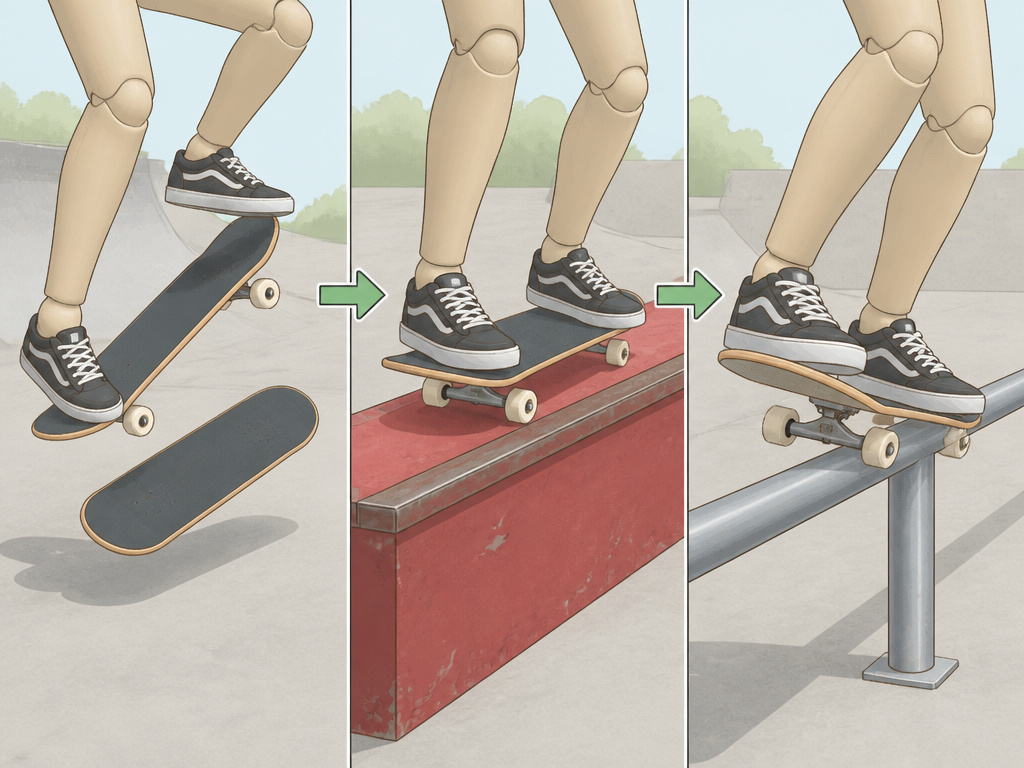
A line with rhythm feels inevitable, not forced. The tricks connect in a way that feels inevitable, not forced. The skater maintains speed and uses the terrain’s natural flow. A great line also mixes up the types of tricks, maybe a flip trick into a slide, then a grind, to show versatility.
Here’s what the community and the pros value:
| Element | What It Means | A Weak Line | A Strong Line |
|---|---|---|---|
| Flow | Maintaining momentum and smooth transitions between tricks. | Stopping to reposition between each trick. | Tricks feed into each other; one landing sets up the next takeoff. |
| Variety | Using different trick families (flips, slides, grinds, rotations). | Doing three flip tricks in a row on flat ground. | A kickflip into a boardslide, then a 180 out. |
| Terrain Use | Utilizing multiple features of a spot or park. | Doing all tricks on one ledge. | Using a bank, a ledge, and a flat area in one continuous path. |
| Style | Personal flair, clean execution, and confident body language. | Sloppy landings, frantic foot adjustments. | Controlled, clean landings with a relaxed posture. |
Style is the invisible ingredient. It’s why two skaters can do the same line, and one will look effortless while the other looks labored. It’s in the shoulders, the arm placement, the little pause before the pop. You can’t teach it directly, but you know it when you see it.
Famous examples are study material. Mike Carroll’s opening line in Modus Operandi is a masterclass in using an entire street block. Shane O’Neill’s Run and Gun part is essentially one relentless, technical line. Watching these doesn’t just show hard tricks; it shows how a master reads a spot and constructs a narrative.
Common mistake: Planning the hardest tricks first. A line built on three tricks you barely land will always fail. Build it on three tricks you can do consistently, then focus on linking them smoothly.
You hear the consistent roll-roll-roll of urethane on concrete, punctuated by the crisp snap of a clean pop and the scrape of a slide. There are no long silences of a foot dragging or a skater running after a runaway board.
How to Plan and Skate Your First Line
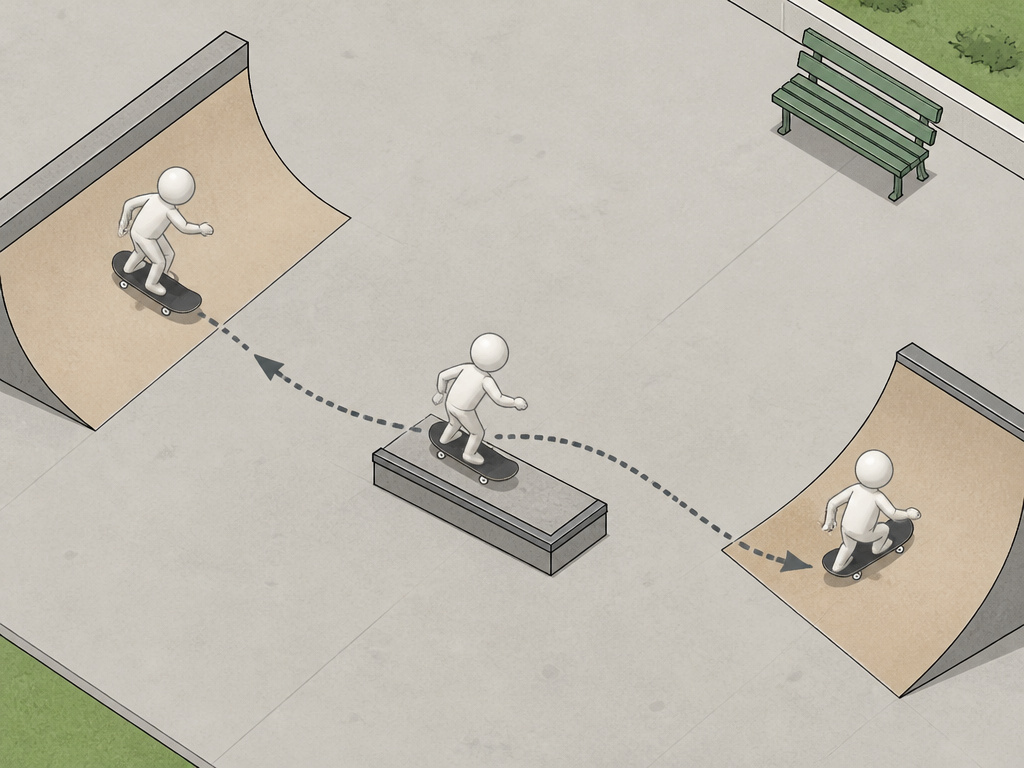
Start small. Your first line shouldn’t be a mega-ramp to street gap combo. It should be in a place you know well, like your local park or a quiet parking lot.
- Pick a short, easy path. Look for two or three features close together. A bank into a flat ledge, or two small hips next to each other. The goal is distance you can cover in four or five pushes.
- Choose tricks you’ve mastered. This is not the time to try your new, shaky trick. Pick moves you can land eight times out of ten. Simple, mastered maneuvers like an ollie or a kickturn.
- Walk it first. Literally walk the path you want to skate. Feel the incline, spot any cracks or pebbles. Notice where you’ll need to turn or slow down.
- Practice the links individually. Can you ollie onto the ledge and immediately get into stall position? Drill that transition alone before adding the next move.
- Commit to the run. Once you start, don’t stop. If you mess up the first trick, roll away and try the link again. The commitment to keep moving is what makes it a line.
A Reddit user learning to skate transitions gave perfect beginner advice: “Start working on pumping those transitions in that line. Bend your knees as you go over that bank, then press the board into ground as you transfer… Also, when riding through the flats maybe work on carving the board back and forth some. It will help you get used to board control.” That’s the essence of early line-building: controlling your speed and direction between features.
Where this goes sideways for beginners is picking a path that’s too long or complex. You get tired, lose focus, and the last trick fails. A short, successful line is a better learning tool than a long, failed one.
Skateboarding Lines in Video Games vs. Real Life
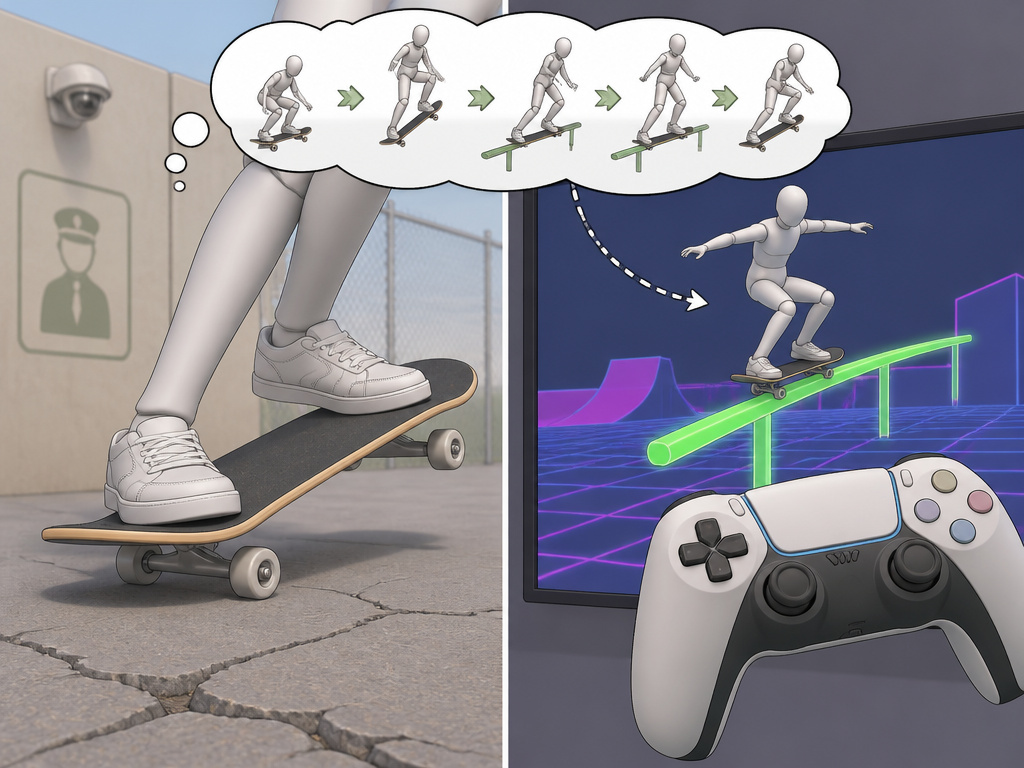
The term “line” means the same thing in games like Skate 4 or the Tony Hawk series: a sequence of tricks, answering what is a line in skateboarding. But the experience of creating one is worlds apart.
| Aspect | Real-World Line | Video Game Line |
|---|---|---|
| Physical Risk | High. A fall from a failed link can mean bruises, sprains, or breaks. | None. You reset and try again instantly. |
| Physics & Recovery | Governed by real-world physics, balance, and momentum. Recovery from a sketchy landing is a skill. | Governed by game engine code. Recovery is often a button press or automatic. |
| Planning & Setup | Requires scouting a real spot, dealing with security, weather, and surface conditions. | Done from a couch, with unlimited tries and perfect conditions. |
| Creativity Constraint | Limited by your own skill, physical fitness, and the spot’s layout. | Limited only by the game’s trick library and level design. |
| Satisfaction | Comes from tangible physical effort, risk, and accomplishment. | Comes from high scores, unlockables, and digital mastery. |
This distinction is important because new skaters often come from games. The muscle memory doesn’t transfer, but the conceptual planning does. Knowing you want to grind a rail, then manual, then flip out is a creative plan. Executing it is where the real work, and the real reward, begins.
Games are fantastic for exploring types of skateboard tricks and seeing how they might link. But they can’t teach you the feel of a sketchy landing, how to pump a transition for speed, or the fear you push through to commit. Those are the elements that make a real line meaningful.
Safety and Control: The Unspoken Rules of Lines
Skating a line, especially in a park with others, has its own etiquette and safety rules. It’s not just about your performance; it’s about not becoming a hazard.
The CPSC skateboarding safety fact sheet has universal advice that applies directly to lining up tricks: “Don’t ride faster than you can handle. You can lose control at any speed.” When you’re focused on a sequence, it’s easy to push for more speed than you can manage, leading to a nasty slam.
A few non-negotiable rules:
- Look before you drop in. Make sure your path is clear of other skaters, especially little kids on scooters.
- Communicate. A simple “I’m going!” tells others you’re starting a run.
- Know your bail-out zone. If a trick goes wrong, know where you can safely run off your board without colliding into someone.
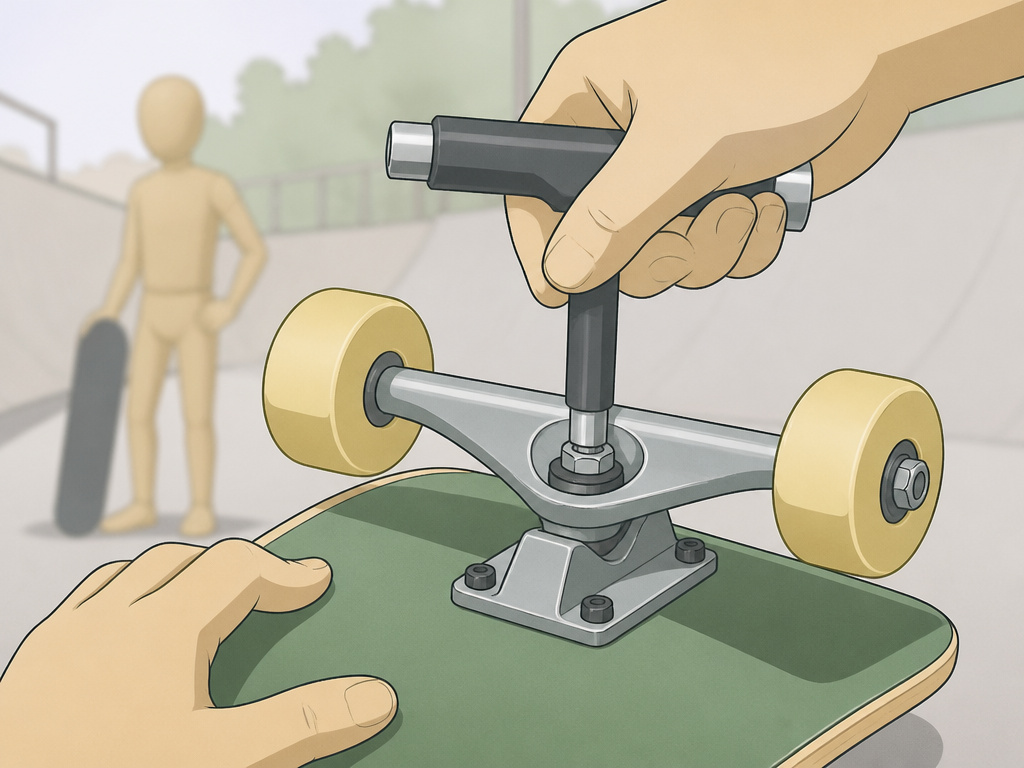
- Tighten your hardware. The CPSC also advises keeping “trucks, wheels, nuts, and mounting screws tightened properly to improve stability at higher speeds.” A wobble from a loose truck can ruin a line and a day.
Protective gear is a personal choice, but the standard for helmets, ASTM F1492-22, exists for a reason. When you’re attempting a line, you’re more likely to fall from speed or an awkward, off-balance landing. That’s when a certified helmet does its job.
Famous Lines That Define the Culture
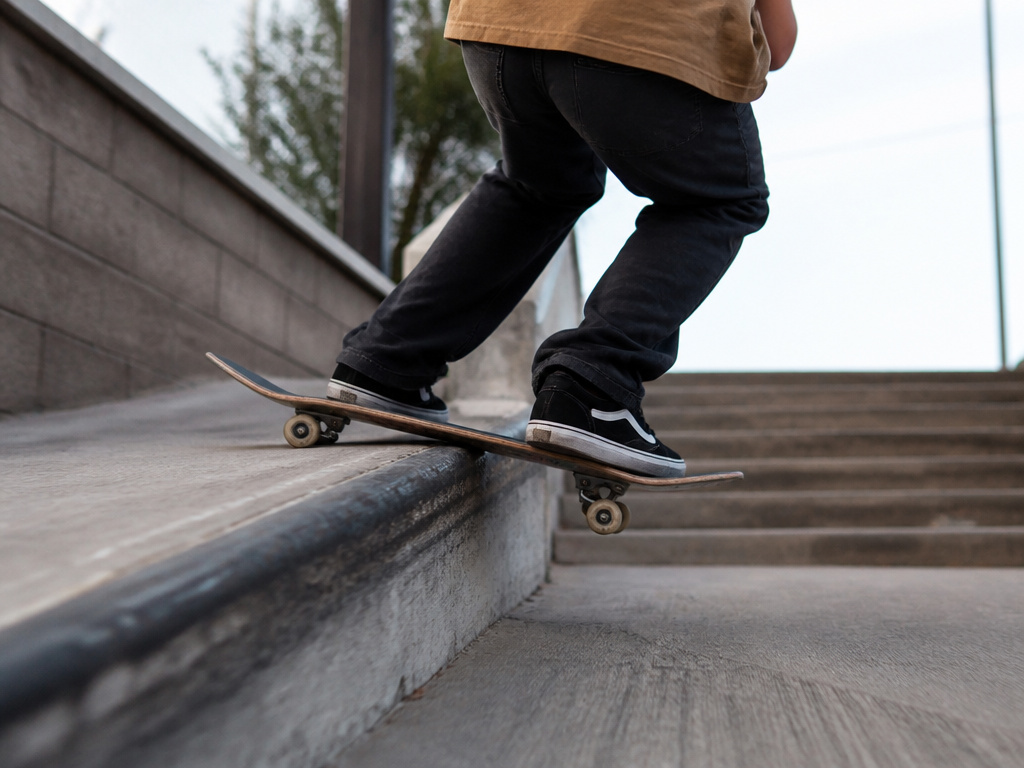
You learn what a line can be by watching the masters. These aren’t just random clips; they’re studied, rehearsed, and iconic for how they use a spot.
- Mike Carroll in Modus Operandi (Opening Line): A fluid journey down a city block, mixing technical flip tricks with effortless grinds and slides. It showed street skating as continuous art.
- Shane O’Neill in Run and Gun: Essentially one relentless, technically perfect line that redefined what was possible in a single continuous take. It’s a barrage of switch and regular tricks with no breathing room.
- Bryan Herman’s Picnic Table Lines in Stay Gold: Multiple lines using the same iconic picnic table spot, demonstrating how a single obstacle can be hit from countless angles in one session.
- Tom Penny in 411 Video Magazine: His legendary line launched him to fame, blending huge pop with a nonchalant style that made the impossible look easy.
Watching these is about seeing how these skaters use space, manage speed, and inject their personality into a sequence, not about copying tricks. It shows you the ceiling of what a line can be.
Frequently Asked Questions
Can a line be just one trick?
No. By definition, a line requires a sequence of two or more tricks or maneuvers linked together. A single trick, no matter how impressive, is just a trick.
Can a line be trickless?
This is a community debate. A Reddit user asked if lines can be trickless, while another stated anything can be a line if you’re having fun. Some skaters expect at least one ollie, slide, or grind for it to feel like a true line.
How long is a typical skateboarding line?
There’s no set length. It can be a few tricks across a small park corner, or a longer contest run down an entire course. For beginners, a short line linking two features is a perfect starting point.
What’s the difference between a line and a combo?
In practice, they are often used interchangeably. Purists might say a “combo” refers more specifically to two tricks done in immediate succession (like a kickflip to boardslide), while a “line” implies a longer path using more of the terrain. For most skaters, it’s semantics.
Do I need special gear to skate lines?
No. Your regular setup is fine. The key is that your board is tuned for control, trucks not too loose, wheels appropriate for the terrain. Learning on your everyday board is best.
Before You Go
A line is skateboarding’s basic sentence. It’s how you form thoughts and express yourself on the board. Don’t get hung up on making it grammatically perfect from day one.
Start with a simple subject and verb. Ollie a crack, then kickturn. That’s a complete thought. Next time, add an object. Ollie the crack, slappy the curb, roll away. You’re writing.
The most common error is trying to write a novel before you know the alphabet. Your first line will be clumsy. The board might shoot out. You might bail. That’s fine. The goal is to feel what it’s like to link two moves together with intention, not to film a video part today.
So find a quiet spot with two features. Plan a three-step path. Then go push.
