
What to Put in a Skateboarding First AID Kit?
This post contains affiliate links. As an Amazon Associate, we earn from qualifying purchases.
A skateboarding first aid kit should include items like adhesive bandages, sterile gauze, adhesive tape, gloves, scissors, biohazard bags, a breathing barrier, hand sanitizer, instant cold packs, soap and water wipes, a roller bandage, and a list of emergency contacts. It must live in a water-resistant case. The exact contents shift based on who’s using it, a solo skater’s fanny pack holds less than an event organizer’s tackle box.
That gap between a basic adhesive strip and a full trauma kit is where most skaters get stuck. You can buy a pre-made kit, but it often lacks the right quantities or includes items you’ll never use for a skatepark scrape. Knowing what to put in a skateboarding first aid kit is key.
What follows is a breakdown of the must-haves, grounded in guidelines from the American Red Cross, university safety offices, and skateboarding injury data. We’ll cover the core dozen, explain why each item earns its spot, and show you how to scale the kit up for a group session or down for your back pocket.
Key Takeaways
- A recommended quantity for a kit is 16 adhesive bandages in assorted sizes.
- Include non-latex gloves and biohazard bags; bloodborne pathogens are a real risk when helping others, and safe cleanup is essential.
- A kit is useless without emergency contact numbers physically inside it; panic blanks memory, so print the list.
- Match the kit’s complexity to your training level. Adding a tourniquet you don’t know how to use is more dangerous than not having one.
- Check first aid kits regularly for expiration dates and replace any used or out-of-date contents. Adhesive tape dries out, cold packs expire, and bandages lose their stick in heat.
Why a Skate-Specific Kit Isn’t Optional
Skateboarding injuries have a predictable pattern. You see high-impact falls, abrasive road rash, wrist and ankle sprains, and the occasional head knock. A generic “first aid kit” from a drugstore is built for household cuts and burns. It might have two tiny gauze pads and a single small bandage.
That doesn’t cut it when you’re looking at a knee that just met concrete and is weeping through its first layer.
The CPSC Skateboarding Safety fact sheet is blunt: wearing a helmet can mean the difference between life and death. But it also notes wrist guards are especially important. The focus is on prevention, but the implication is clear, the impacts are high-energy. Your kit needs to handle abrasion and bleeding first, sprains second.
Before you start: Bloodborne pathogens are a real risk when assisting others. Always don gloves before touching any wound, and seal used gauze or bandages in a biohazard bag for safe disposal. Skipping gloves because a cut “doesn’t look that bad” exposes you to hepatitis or HIV from invisible blood contact.
I learned this the hard way helping a younger skater at a DIY spot. He’d taken a slam and had a gash on his forearm. I had a bandage but no gloves. I applied pressure with a clean t-shirt, but the blood soaked through onto my hands. The adrenaline of the moment made it seem fine. The nagging “what if” anxiety for the next month was not fine. Now my kit has multiple pairs of gloves right on top.
The Core 12-Item Skateboarder’s Kit
Build this list first. These items address 95% of skateboarding mishaps, from rolled ankles to shredded elbows. The quantities below are drawn from the University of Wisconsin’s guide for groups of 10-18, which is a solid baseline for a crew heading to the park.
| Item | Minimum Quantity | Why It’s Here |
|---|---|---|
| Adhesive Bandages (assorted sizes) | 16 | Road rash and scrapes need different shapes; finger strips, knuckle pads, and standard patches get used first. |
| Sterile Gauze Pads (3” x 3” & 5” x 9”) | 4 small, 2 large | For applying direct pressure to bleeding wounds; the larger pad is for knees or forearms. |
| Adhesive Tape Roll (3/8” x 2.5 yds) | 1 roll | Secures gauze without sticking to hair or skin; also works for temporary ankle support. |
| Single-Use Non-Latex Gloves (size M/L) | 4 pairs | Infection barrier for you and the injured person; non-latex avoids allergy issues. |
| Scissors | 1 pair | Cuts tape, gauze, and clothing away from a wound; bandage scissors with a blunt tip are safest. |
| Biohazard Waste Bags | 2 bags | Seals used, bloodied supplies; keeps your car or bag clean and meets basic safety standards. |
| Breathing Barrier | 1 unit | For CPR; even untrained helpers can use it to protect themselves during rescue breaths. |
| Hand Sanitizer | 1 bottle | Cleans hands before gloving up if soap/water isn’t nearby; also good for cleaning small tools. |
| Instant Cold Packs | 2 packs | Reduces swelling for sprains and bruises; activate and wrap in a cloth to avoid frostbite. |
| Soap and Water Wipes | 1 package | Cleans dirt and grit out of a scrape before bandaging; more effective and less sting than pure alcohol. |
| Roller Bandage (2” x 4 yds) | 1 roll | Holds dressings in place on limbs or can be used for light compression on a sprain. |
| Emergency Contact List | 1 card | Local hospital address, non-emergency police, and a trusted contact number. |
The adhesive tape is your workhorse. It’s not for immobilizing a fracture, that’s a splint’s job. It’s for keeping a gauze pad sealed over a weeping scrape while you drive to get stitches. The 3/8-inch width is specific. Wider tape is harder to tear and can restrict circulation if wrapped too tightly on a skateboarding ankle injury.
Gauze pads are not cotton balls. Cotton balls leave fibers in a wound, which can impede healing and increase infection risk. Sterile gauze is woven to be low-lint. The University of Wisconsin guide specifically calls for 4 pads at 3×3 inches and 2 pads at 5×9 inches. That larger size is what you want for a knee or elbow after a slide.
Personal Kit vs. Event-Level Kit: A Critical Split
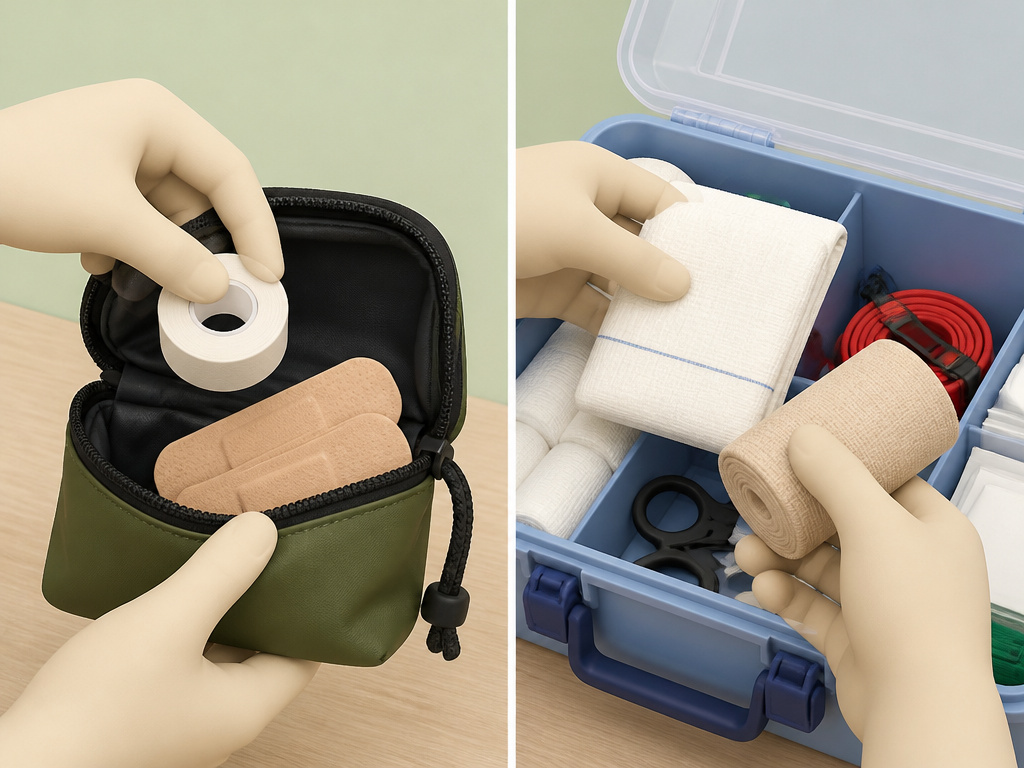
Your needs change dramatically depending on whether you’re packing for yourself or organizing a session for a group. This is the single biggest mistake in kit planning, using a one-size-fits-all list for the what to put in a skateboarding first aid kit.
The Personal/Fanny Pack Kit
This is for you and maybe a friend. It fits in a small waterproof pouch clipped to your backpack or in your car’s glove box.
- Focus: Stop bleeding, clean abrasions, support sprains temporarily, and manage pain until you can get proper care.
- Key Adds: A few extra large bandages, a small tube of antibiotic ointment (single-use packets are better for sterility), and an elastic bandage for ankle support.
- What to Skip: Advanced airway equipment, multiple tourniquets, or surgical tools. If you’re not trained to use them, they become hazardous clutter.
The American Red Cross recommends a family kit have 25 adhesive bandages and 2 absorbent compress dressings. The compress dressing is that 5×9 inch gauze pad we already listed, it’s for heavier bleeding.
The Event-Level/Tackle Box Kit
This is for a skate camp, competition, or a regular crew that skates together. The International Skating Union Medical Guide sets a standard for ice skating events: for official practices, you need at least two emergency-trained medical personnel at rinkside, one being a physician. For competitions, that jumps to four personnel. However, guidelines for general skateboarding settings differ in scope.
The ISU guide states an ambulance must be on-site for all Short Track Speed Skating events. While that’s for ice, the principle transfers: if you’re running an event with high-impact potential, your first aid kit is merely the stopgap before professional EMS arrives.
The OSHA workplace first aid program guide emphasizes that kit contents should match the staff’s level of training. Throwing a tourniquet into a kit for untrained teenagers is irresponsible. For a sanctioned event with a certified athletic trainer on site, it’s essential.
Matching Contents to Your Actual Skills
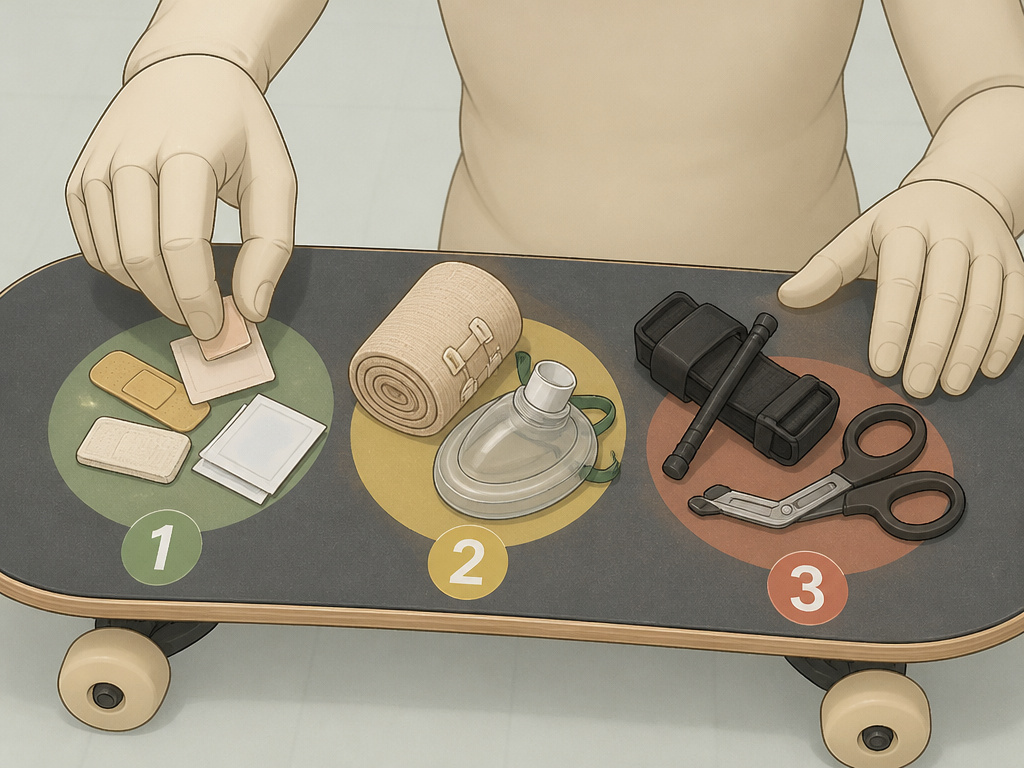
This is the part nobody talks about. A well-intentioned but poorly chosen item can do harm. The University of Wisconsin resource guide puts it clearly: “Contents of the first aid kit should match staff level of training/knowledge.”
Here is a practical approach. You have three levels:
Level 1: No Formal Training (Most Skaters)
Stick to the Core 12. Your job is to clean, cover, compress, and call. You can wash a wound with soap and water wipes, apply a bandage or gauze with tape, use a cold pack for swelling, and call for help. Do not attempt to set a bone, pop a dislocation back in, or apply a tourniquet. Your most advanced move might be wrapping an ankle for support, but you should still seek medical evaluation for a bad sprain. Knowing when to call is your primary skill.
Level 2: Basic First Aid/CPR Certified
You can add a few items. You’re trained to use that breathing barrier for CPR. You can use an elastic wrap bandage more effectively for compression. You understand how to check for circulation after wrapping an injury. This is the right level for a trip leader or someone who skates with beginners often.
Level 3: Advanced (WFR, EMT, Athletic Trainer)
You build the event-level kit. You know the indications for a tourniquet (life-threatening limb bleeding not controlled by direct pressure). You can maintain an airway with adjuncts. Your kit is a small medical bag, not a pouch.
Where this goes sideways: Adding aspirin for a potential heart attack. The Mayo Clinic notes aspirin can be life-saving for an adult with chest pain, but it also carries a major warning: don’t take it if you’re allergic, have bleeding problems, or are on other blood thinners. Unless you’re certain of the person’s medical history and have called 911, this is a drug administration issue beyond basic first aid.
The Non-Negotiables: Waterproof Case and Documentation
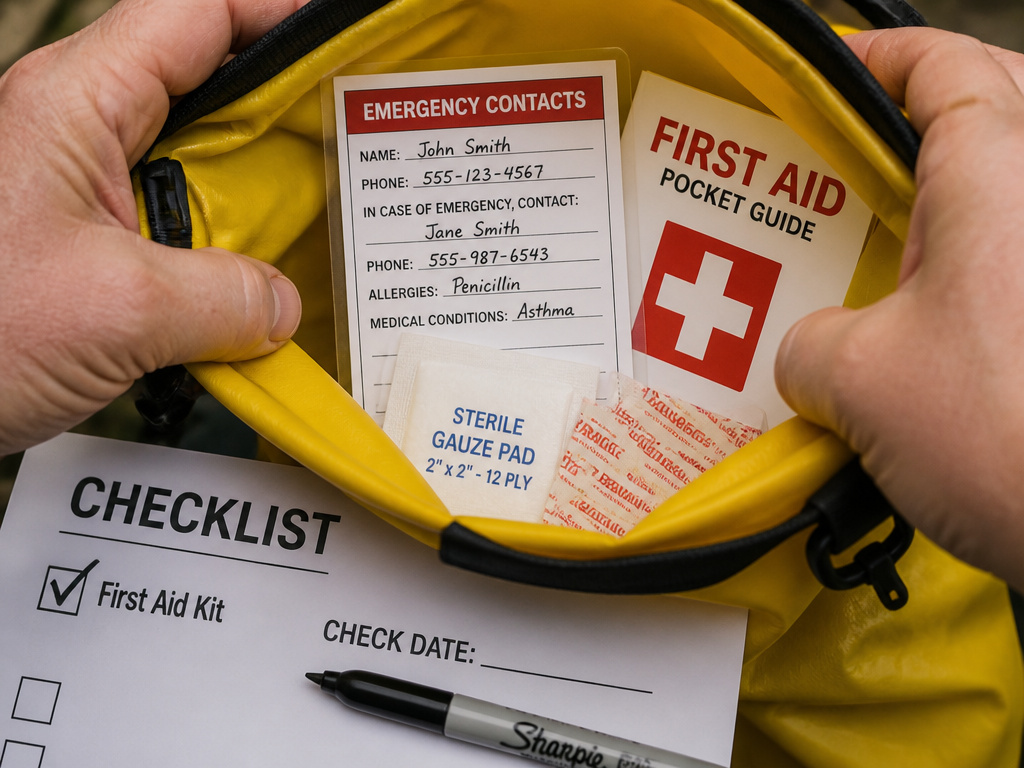
Your supplies for the what to put in a skateboarding first aid kit are only as good as their container. Two rules from the sources are mandatory.
1. The case must be water-resistant. The University of Wisconsin guide states it plainly. A sweaty backpack, a sudden rain shower, or a spilled drink will ruin adhesive bandages and gauze. A simple dry bag or a hard plastic case with a rubber gasket works.
2. You must include a first aid guide/manual and emergency contact numbers. Again, this is directly from the guide. When stress hits, people forget simple steps. A printed card with “1. Put on gloves. 2. Apply pressure with gauze. 3. Call [local emergency number]” is invaluable. Also print the address of the nearest urgent care or hospital with an ER.
Mark the kit with the date you last checked it. The Mayo Clinic and Red Cross both say to check kits regularly for expired items. Adhesive tape dries out. Cold packs can crystallize and fail to activate. Hand sanitizer evaporates. Do a quick inventory every season.
When a Kit Isn’t Enough: Tetanus and Dental Injuries
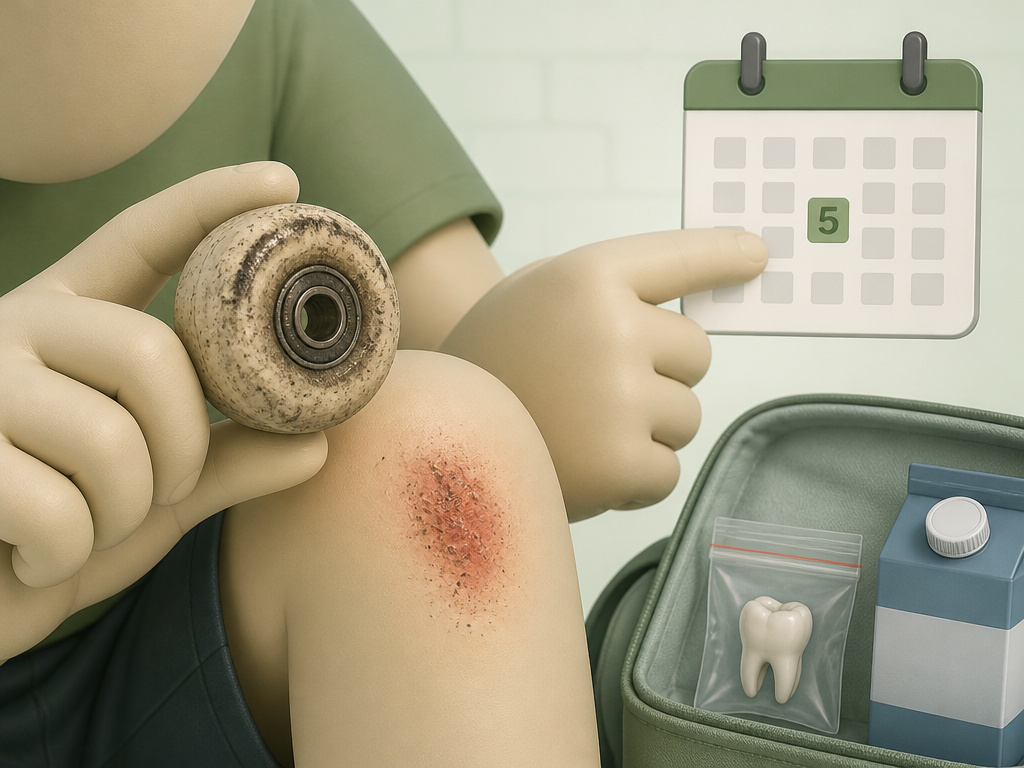
A first aid kit manages the immediate aftermath. Some injuries require follow-up you can’t provide from a bag.
Tetanus Boosters
The National Athletic Trainers’ Association position statement is specific. For a clean minor wound, a tetanus booster is recommended when the time since the last booster exceeds 10 years. For a contaminated wound, like one with concrete grit or dirt, a booster is recommended if it’s been over 5 years. If the injured person’s vaccination history is incomplete, they may need tetanus immune globulin. This isn’t first aid; it’s a next-day doctor visit.
Dental Injuries
A knocked-out tooth is a true emergency. The NATA sport dental injury guide details the management. Your first aid kit won’t have a tooth preservation system. Your role is to find the tooth, handle it by the crown (not the root), rinse it gently without scrubbing, and try to reinsert it into the socket or place it in milk. Then you get to a dentist immediately. This is why mouthguards are preventive gear.
For less severe oral cuts, your gauze pads can be used to apply pressure inside the cheek or on the gums. But any blow to the face hard enough to damage teeth also carries a concussion risk. The NATA guide advises a rapid neurologic screening after any traumatic dental injury. This is another checkpoint: after stabilizing bleeding, ask about headache, dizziness, or nausea.
Building Your Kit: Buy vs. Assemble
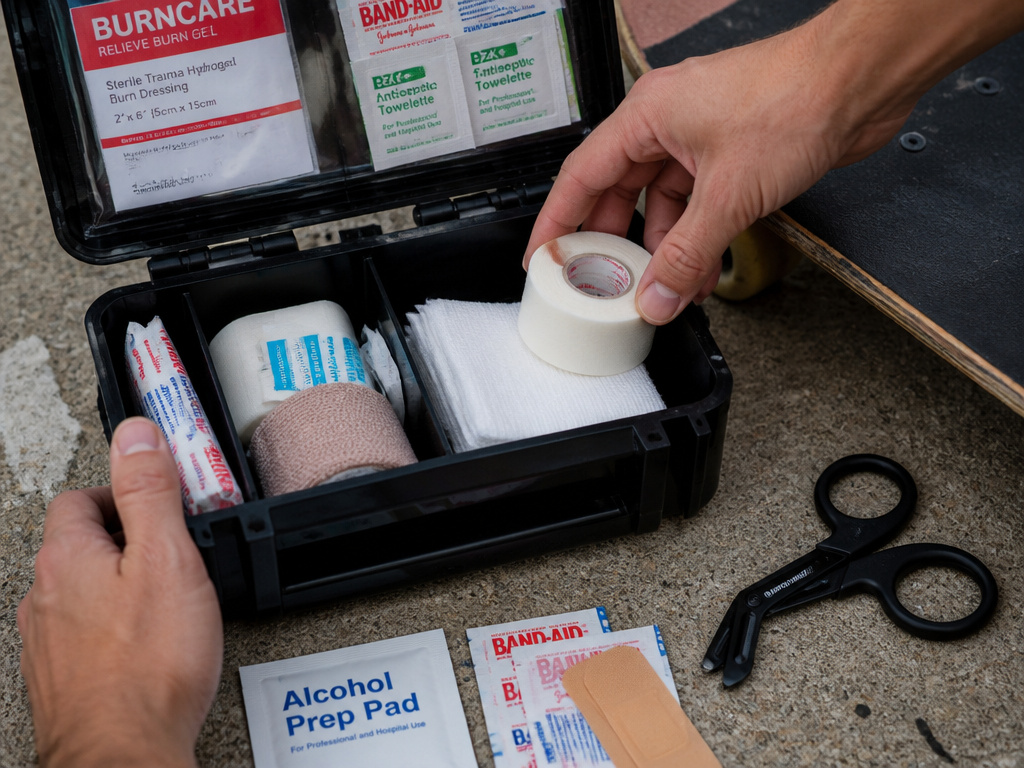
You have two paths: buy a pre-made kit and modify it, or build from scratch.
Buying Pre-Made
Look for kits labeled for “sports” or “outdoors.” Avoid tiny “10-piece” kits, they’re symbolic. Check that the case is actually sturdy and waterproof. The University of Wisconsin guide notes that a physician approved specific Grainger brand first aid kits (Item #794KG4, #794KG6, #794KG7) for their programs. These are commercial-grade. For most individuals, a kit from a brand like Adventure Medical Kits or Coleman, then upgraded with extra skate-specific items, is the sweet spot.
Building from Scratch
This gives you total control. Start with a water-resistant case like a Pelican micro case or a heavy-duty zip pouch. Buy the Core 12 items in bulk from a medical supply website. You’ll get better quality for the same price as a drugstore kit. Assemble, add your contact card and guide, and label it clearly.
My recommendation? Buy a pre-made sports kit as a base. Then immediately add a second package of gauze pads, a second roll of adhesive tape, and a dozen extra assorted bandages. That one move will cover the skate-specific volume of use that generic kits don’t anticipate.
Frequently Asked Questions
What’s the most important item in a skateboarding first aid kit?
Non-latex gloves. Everything else assumes you can safely touch the injury. Without gloves, you risk infection and exposure. Put multiple pairs right on top so they’re impossible to miss.
How often should I check and restock my kit?
Replace any used items immediately.
Should I keep one in my car?
Yes. The Mayo Clinic recommends keeping at least one first-aid kit in your home and one in your car. Your car kit can be a larger, more complete version of your personal pack.
What about pain medication like ibuprofen or aspirin?
This is a gray area. Basic first aid says don’t administer medication unless you’re certain of the person’s allergies and medical history. For a personal kit for your own use, it’s fine. For a group kit, it’s safer to omit them. The potential liability and risk of an allergic reaction outweigh the benefit.
Is a tourniquet necessary for skateboarding?
For the vast majority of personal and group kits, no. Life-threatening arterial bleeding from a skateboard fall is extremely rare. If you are trained in their use (as part of a Stop the Bleed course, for instance) and are responsible for a large, remote event, then one may be justified. Untrained use can cause severe tissue damage.
The Bottom Line
A skateboarding first aid kit isn’t about having a magic box that fixes everything. It’s about having the right twelve tools to buy time and prevent a bad situation from becoming worse. Start with the Core 12 list, put it in a case that won’t fail, and add your emergency numbers. That alone puts you ahead of 90% of skaters at the park.
Then be honest about your skills. Stock only what you’re trained to use. The best kit is the one you can actually use effectively under pressure. Keep it stocked, keep it close, and hope you never need it past a bandage for a scraped elbow. But if you do, you’ll be ready.
