
How to Remove Rust From Skateboard Bearings: Step-by-Step
This post contains affiliate links. As an Amazon Associate, we earn from qualifying purchases.
You remove rust from skateboard bearings by cleaning them with a solvent like isopropyl alcohol or acetone, scrubbing with a soft brush, drying thoroughly with compressed air, and re-lubricating with a skate-specific oil. Surface rust might come off, but pitted or crunchy bearings rarely regain their original glide and should be replaced.
That “might” is the whole game. Rust doesn’t just sit on the surface; it etches into the steel balls and races. The clearance inside a Bones Bearing is smaller than one-thousandth of an inch, so even a thin layer of corrosion changes the fit. You can clean off the orange flakes, but the pitting underneath stays. This is why learning how to remove rust from skateboard bearings is only a partial fix.
What follows is a straight walkthrough of the solvents that work, the one-step process that actually gets the gunk out, and a clear line for when to stop trying to save a bearing and just buy new ones, all central to the how to remove rust from skateboard bearings process. By the end, you’ll know whether your set is worth the effort and exactly how to do it without making things worse.
Key Takeaways
- Surface rust is salvageable, pitting is not. If the bearing feels gritty or crunchy when spun by hand after cleaning, it’s done.
- Use isopropyl alcohol or acetone as your cleaner. Bones Bearings and Element Brand warn that citrus cleaners and vinegar can leave a residue, though some sources like a Reddit user recommend citrus degreasers.
- Dry bearings completely with compressed air. Any leftover solvent or moisture will cause new rust faster than you’d believe.
- Re-lubricate with a dedicated skate oil. Sources disagree on quantity: Bones Bearings recommends two drops for steel bearings and one for their Swiss Ceramic Bearings, while Impala Skate recommends two drops, and Decathlon suggests one to two drops.
- Store your board in a dry place. This is the single best way to prevent rust from coming back.
Why Rust is a Death Sentence for Precision
Skateboard bearings are a lesson in tight tolerances. According to Bones Bearings, the clearance inside their bearings is “considerably smaller than 1/1000th of an inch.” Rust isn’t just dirt; it’s a corrosive that physically changes the metal surface. It creates microscopic pits and bumps where there should be a glass-smooth raceway.
The ABEC rating system does not account for shock resistance, proper lubrication, ball guidance and quality, or ball play. This means a high-rated bearing can be taken out just as fast by rust as a cheap one. The rating is about precision manufacturing, not corrosion resistance.
When rust forms, it does two things. First, it acts as an abrasive. Every spin grinds the corroded surfaces together, wearing them down faster. Second, it swells. That ultra-fine clearance gets eaten up, creating drag. You’ll hear it as a gritty hiss, feel it as a dead spin. After a solvent bath and re-lube, they’d spin okay in my fingers. The rust was gone from the surface, but the damage to the metal was permanent.
The Realistic Salvage Test: Should You Even Try?
Before you gather solvents and tools, answer this: is this bearing worth saving? The Decathlon support guide puts it bluntly: “Rusted bearings may not necessarily regain their original glide quality.” Here’s how to decide.
Spin the bearing in your fingers. Listen and feel.
- A gritty grinding means the rust is on the rolling surfaces. This is a bad sign.
- A smooth but noisy spin might just be dirt in the lubricant. This is salvageable.
- Visible pitting or flaking on the inner or outer race (the metal rings) means the bearing is toast. No amount of cleaning will restore that surface.
If the rust is just a light orange film on the outer shield or non-critical surfaces, you have a shot. If the balls themselves are discolored or the bearing seizes up mid-spin, recycling is your next step, not cleaning.
| Bearing Condition | Salvage Chance | Realistic Outcome |
|---|---|---|
| Light surface film on shields | High | Will likely clean up and run fine |
| Gritty feel when spun, no noise | Medium | May improve with cleaning, but performance may be reduced |
| Crunchy sound, visible pitting on races | Low | Replace. Cleaning is a temporary fix at best. |
| Seized or completely discolored balls | None | The bearing is dead. |
Your Toolkit: Solvents, Brushes, and What to Avoid
You don’t need a fancy kit. Here are the options, straight from the manufacturer guides.
The Recommended Cleaners:
- Isopropyl Alcohol (90%+): A top choice from Bones Bearings, Red Bull, and Element Brand. It evaporates quickly and leaves no residue.
- Acetone: Recommended by Bones Bearings, Decathlon, and Element Brand. It’s a stronger solvent that cuts through old grease effectively.
- Commercial Degreasers: Gumout carburetor cleaner (per Bones) or automotive degreasers are powerful.
The Controversial Ones:
- Citrus Degreasers: A Reddit user recommended this as a preferred cleaner. However, Bones Bearings and Element Brand warn that citrus cleaners can leave a thin trace or residue on the bearings.
- White Vinegar: Sometimes suggested for rust removal. If you use it, Element Brand says to use clear white vinegar, not balsamic or apple cider, and be prepared for a potential residue.
- WD-40: This is a critical one. Element Brand states plainly: “Do not use WD-40 as this is designed to dry moisture which is not what we want for skateboarding.” A Reddit user states WD-40 Specialist Silicone is not ideal for high friction applications like skateboarding.
What You’ll Need:
- Solvent (isopropyl alcohol or acetone)
- A small, sealable jar (polyethylene or metal – Bones advises against glass)
- Soft-bristled toothbrush
- Can of compressed air
- Lint-free cloth or paper towels
- Skate tool for bearing removal
- Safety glasses & rubber gloves (acetone can irritate skin and eyes)
Common mistake: Using water to clean or rinse bearings. Both Impala Skate and Decathlon explicitly warn against this, as water will cause rust. Even a small amount left behind undoes all your work.
The 5-Step Rust Removal Process
The goal is to remove the rust without damaging the bearing further. Follow these steps in order.
1. Remove and Expose.
Use your skate tool to take the wheels off. Pop the bearings out. Next, remove the rubber shields. Gently pry them up with a push pin or the tip of a utility knife. According to Bones Bearings, if you have labyrinth shields (which look identical on both sides), remove both. Do not use solvents on the rubber shields. Wipe them separately with warm, soapy water and a lint-free cloth.
2. Soak and Agitate.
Place the bare bearings in your jar. Pour in enough of your chosen solvent to cover them. Seal the lid. Shake the jar vigorously for a few minutes. This sloshes the solvent through the bearing, dissolving old grease and loosening rust particles. Let them soak. A Reddit user suggested 15 minutes is fine and 30 minutes is overkill.
3. Scrub the Trouble Spots.
Remove the bearings. Use the dry toothbrush to scrub the exposed races and balls. Focus on any visible orange spots. The Decathlon guide specifically suggests this: “scrub the spot where rust has settled with a soft brush (e.g., a toothbrush) after cleaning.” This mechanical action can dislodge surface rust that solvents alone won’t touch.
4. Dry Like Your Spin Depends On It.
This is the most critical step. Any remaining moisture equals instant new rust. Use the can of compressed air to blast through the bearing from all angles. The iFixit guide recommends this to blow cleaning solution out. Follow up by blotting with a lint-free cloth. Let the bearings sit on a dry cloth in a warm, airy spot to ensure they are completely dry.
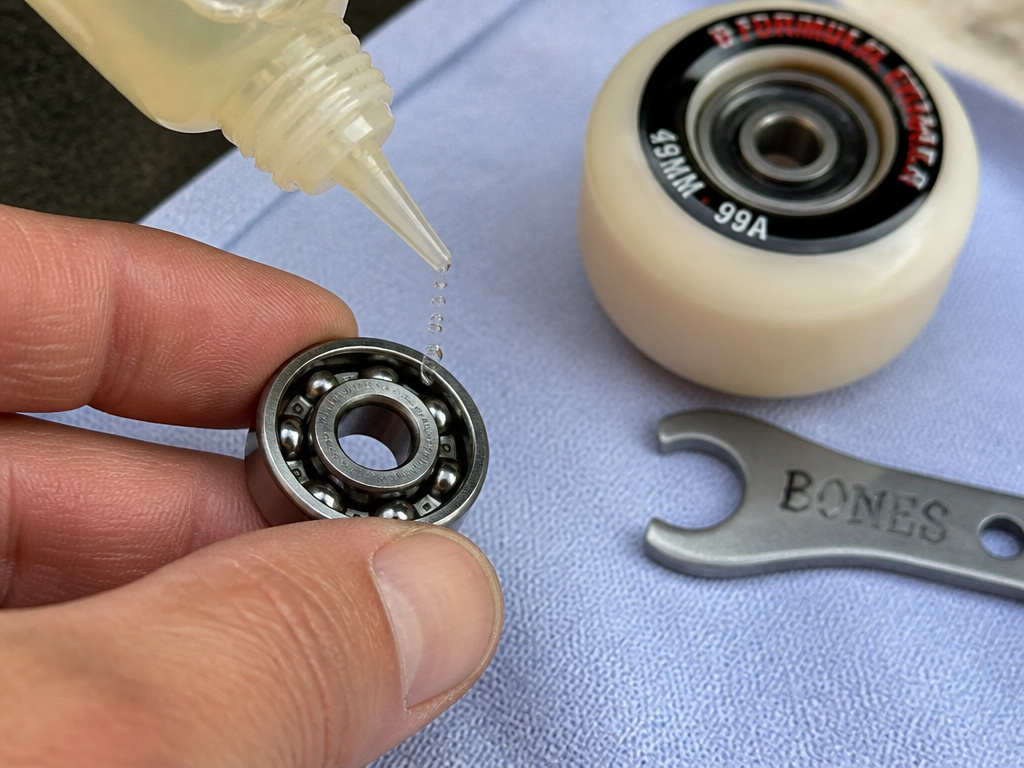
5. Re-lubricate and Reassemble.
Now for the bearing lubrication. The amounts vary:
- For standard steel bearings, Bones Bearings and Impala Skate recommend two drops of lubricant (like Bones Speed Cream) per bearing.
- For Bones Swiss Ceramic Bearings, only one drop is needed. Spin the bearing in your fingers a few revolutions to spread the oil. Press the clean, dry shields back on. You’re ready to install your bearings.
Aftercare: Making Sure the Rust Doesn’t Return
You’ve cleaned them. They spin quietly. How do you keep them that way? Prevention is simpler than the cure.
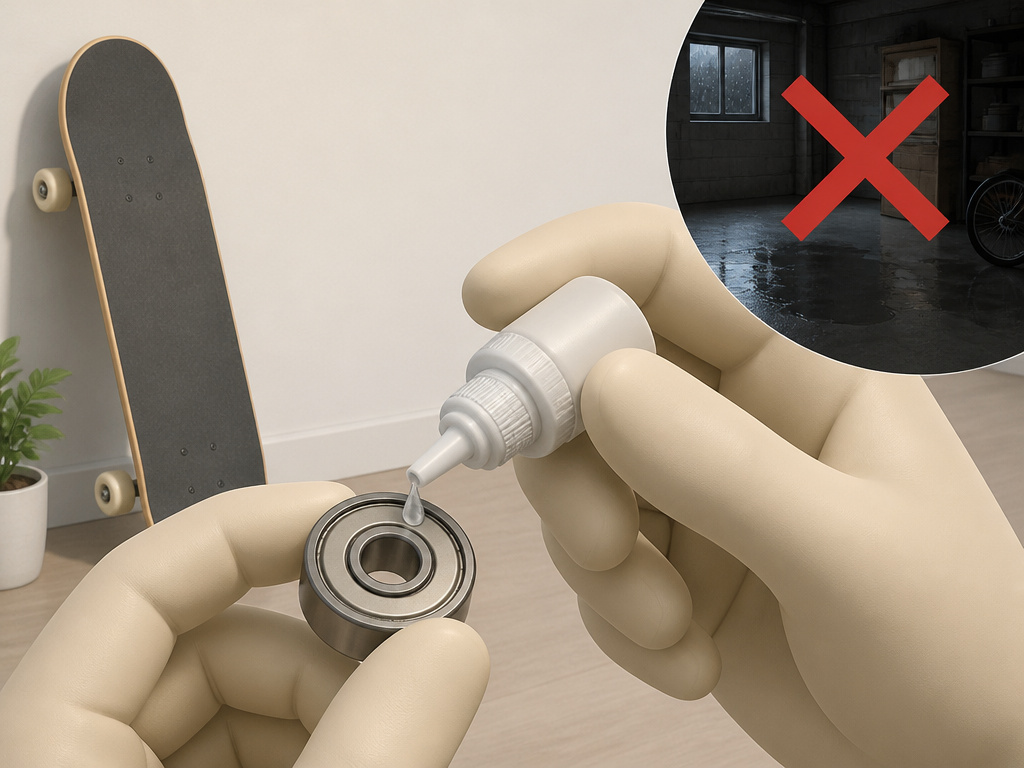
First, store your board properly. The Decathlon guide sums it up: “Store your skateboard between sessions in a dry, cool place and avoid puddles while riding.” Don’t leave it in a damp basement, trunk, or garage. A simple wall mount or a dry corner of a closet works.
Second, listen to your board. A sudden squeak or grinding noise is a warning. It might not be the bearings—it could be a dry pivot cup or a wheel rubbing. But check the bearings first.
Finally, know when to walk away. If you follow the process above and the bearing still feels gritty, you’ve reached the limit. This is when you decide to replace your bearings.
Where this goes sideways: Re-lubricating with the wrong product or quantity. Over-lubing attracts dirt; under-lubing lets metal grind. Stick to the manufacturer’s drop count with a skate-specific oil.
Can I use household items like vinegar or alcohol to clean my bearings?
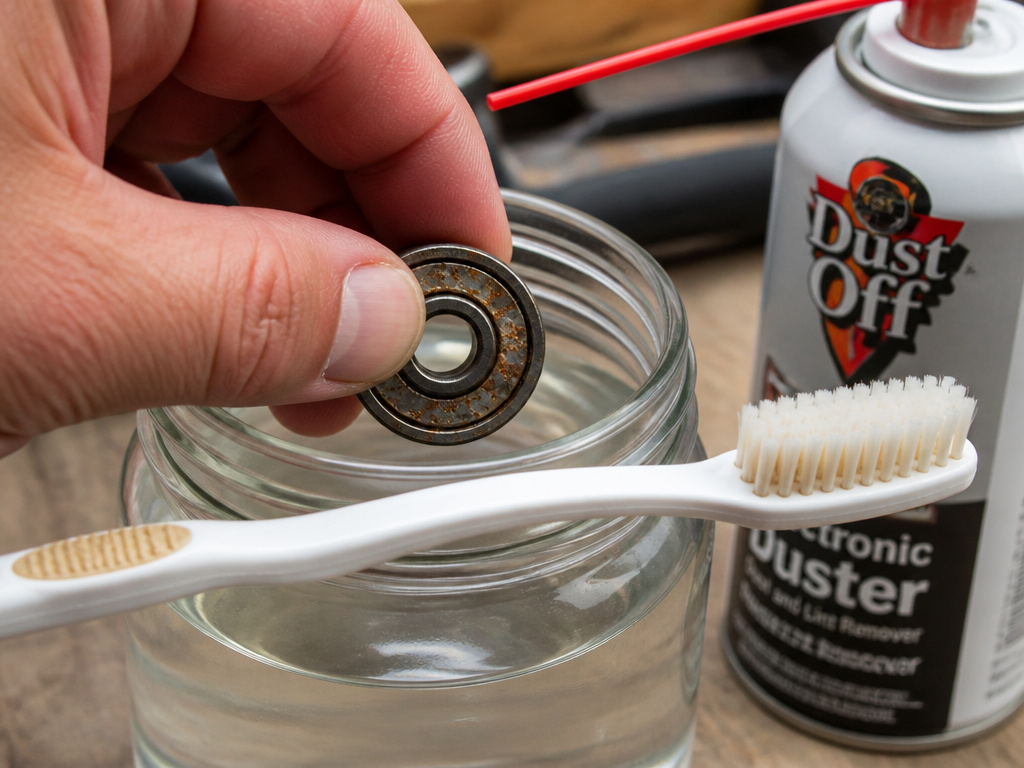
You can, but you need to know the trade-offs. Isopropyl alcohol is a widely recommended solvent that evaporates cleanly. White vinegar is sometimes suggested for rust removal. However, Element Brand and Bones Bearings warn that vinegar and citrus-based cleaners can leave a residue. This residue can affect performance. If you use vinegar while figuring out how to remove rust from skateboard bearings, opt for clear white vinegar. Regardless of your choice, after soaking, scrub any visible rust spots with a soft brush. Finish by drying the bearings thoroughly with compressed air and a lint-free cloth before applying lubricant. Remember, rusted bearings may never roll like new again.
Frequently Asked Questions
Does WD-40 really remove rust?
WD-40 can displace moisture and loosen light surface rust, but it is not a proper lubricant for skateboarding. Element Brand explicitly advises against it, stating it’s designed to dry moisture, which is not what bearings need.
Can you use 70% isopropyl alcohol to clean bearings?
Yes, 70% isopropyl alcohol will work, but 90% or higher is better. The higher the alcohol percentage, the less water it contains. Since water causes rust, using a purer solvent reduces the risk of leaving moisture behind during the drying process.
How do I dry bearings after cleaning without compressed air?
Compressed air is the best method to force moisture out of the tiny bearing crevices. If you don’t have it, you can spin the bearing vigorously by hand and blot repeatedly with a lint-free cloth, then let it sit in a warm, dry place for several hours.
Is it worth removing rust from cheap bearings?
Usually, no. For cheap bearings, replacement is almost always the more economical and effective choice.
How can I prevent my bearings from rusting in the first place?
Avoid skating in wet conditions or through puddles. If your board gets wet, dry it thoroughly as soon as possible, removing the wheels to air out the bearings. Store your board indoors in a climate-controlled environment. Regular maintenance with a proper lubricant like Bones Speed Cream also creates a protective film that inhibits rust.
The Bottom Line
If the rust has eaten into the ball tracks or the steel balls themselves, you’re polishing a brick. You’ll know within five minutes of the first spin test after cleaning.
The real win isn’t saving the most ruined bearings; it’s catching the light rust early and stopping it from ever getting to that point. Keep your board dry, listen for new noises, and don’t be sentimental about hardware.
