What Is a Skate Demo? Key Takeaways and Event Guide
This post contains affiliate links. As an Amazon Associate, we earn from qualifying purchases.
A skate demo is either a high-energy, brand-sponsored event where professional skateboarders or inline skaters perform tricks and interact with fans, or a downloadable preview of a skateboarding video game released before the full version. The physical event is a core part of skate culture for promotion and community, while the digital demo is a marketing tool for gamers. The two meanings share a name but are entirely different in format, purpose, and experience.
That split is where most of the confusion online comes from. You’ll see threads full of nostalgia for the Skate video game demo from 2007 right next to event listings for the Adidas team rolling through a local park. Both are valid, but mixing them up means you might show up to a skatepark expecting to play a game or download something expecting to meet a pro. To clarify, what is a skate demo? This guide walks through both, starting with the one that involves concrete, sweat, and the smell of grip tape.
What follows is a breakdown of the two worlds that answer what is a skate demo: the logistics of a real-world demo, its evolution from parking lots to sponsored tours, and the specific features, and limitations, of a video game demo. By the end, you’ll know exactly what people are talking about and how to get involved in either scene.
Key Takeaways
- A real-world skate demo is a promotional event featuring pro athletes, product giveaways, and a meet-and-greet, distinct from a casual skate sesh.
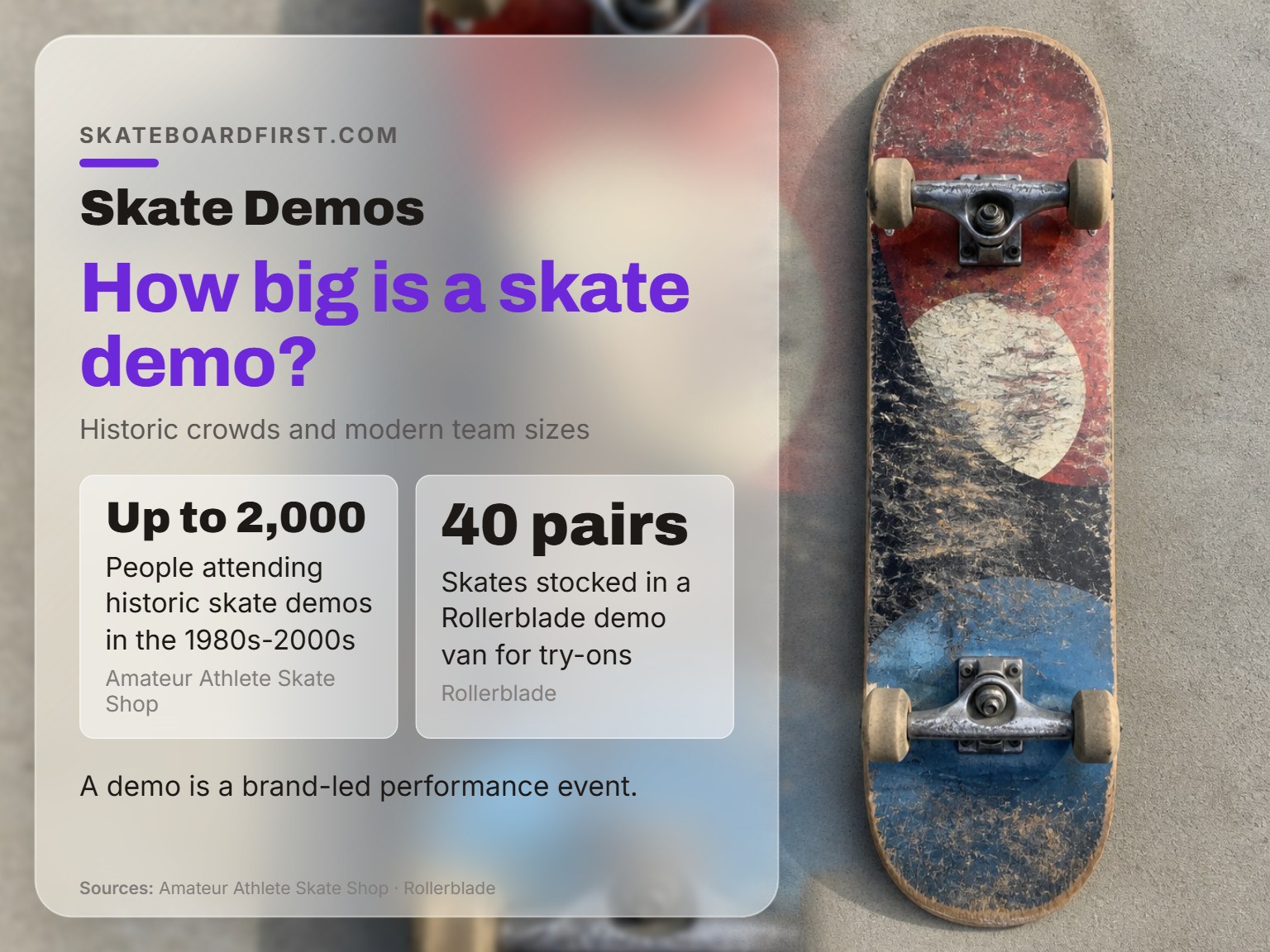
- Historical demos in the 1980s-2000s drew crowds of up to 2,000 people in parking lots, but modern versions are often tighter, brand-focused tours.
- A video game “skate demo” is a limited, often free preview of a game (like Skate Story or Virtual Skate Demo) used for marketing and feedback before release.
- Brands use demos to build direct community connections and showcase products, as seen with the Rollerblade demo van stocked with 40 pairs of skates.
- Safety recalls, like the Future Motion footpad recall for the Onewheel GT, highlight that demoed products are still subject to standard consumer protections.
The Two Meanings of a Skate Demo
The term “skate demo” now lives a double life, which is the core of what is a skate demo. In one world, it’s the thump of a bass-heavy speaker at a skatepark, the scrape of trucks on coping, and a pro skater handing a kid a fresh deck. In the other, it’s a download progress bar, a limited-level game map, and forum debates about physics engines. They aren’t two sides of the same coin, they’re different currencies entirely.
The physical event definition comes from decades of skateboarding and inline skating culture. A brand, think Santa Cruz, Independent Trucks, or Vans, sends its team of sponsored pros to a skate shop or public park. They set up a temporary zone, perform for an hour or two, toss out free product (hats, stickers, sometimes decks), and stick around to talk. It’s marketing, but it’s marketing that feels like a gift. The digital definition is a product of the gaming industry. Since the mid-2000s, publishers have released stripped-down, time-limited, or feature-capped versions of upcoming skateboarding games as free downloads. They’re teasers, meant to build hype and gather player feedback. The shared name is a linguistic collision, not a planned overlap.
Where this goes sideways: Assuming a “demo” listing is for an event when it’s actually for a game (or vice versa). You’ll waste a trip or a download. Always check the context, event listings name locations and times; game demos list platforms like Steam or PlayStation.
The Physical Skate Demo: A Brand’s Handshake
This is the original meaning. A skate demo is a brand’s most direct line to its community. It’s not a skate contest with judges and prizes; the competition is against the obstacles, not each other. The goal is visibility and goodwill.
The logistics are straightforward but specific. A team manager loads a van with gear, the Rollerblade demo van, for example, carries 40 pairs of skates, plus protective gear and swag. They’ll set up a small sound system, maybe a portable ramp or rail, and the pros will session the spot for an hour or two.
The Video Game Skate Demo: A Digital Test Drive
The video game skate demo is a much newer creature, born from the era of digital distribution. It’s a slice of a full game, released early and for free, to let players try before they buy. The buzz around the Skate 1 demo in 2007 is legendary, players downloaded it on Xbox 360 and played the same 20-minute slice for months, using glitches to explore beyond the map’s boundaries.
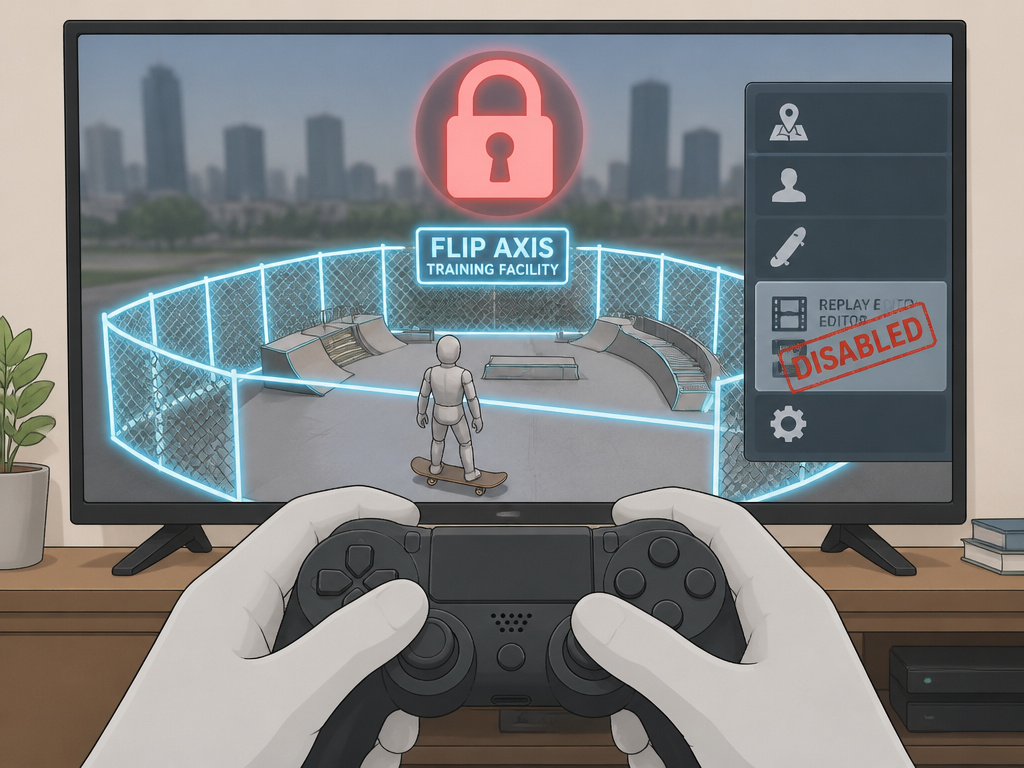
Modern examples are plentiful. The Virtual Skate Demo on Steam includes the “Flip Axis Training Facility” map but disables replays and full skater customization. Skate Style, a solo-developed project, offers a demo to showcase its animation editor and physics. These demos have clear limitations baked in: restricted levels, disabled multiplayer (or multiplayer only during events like Steam Next Fest), and often a time limit. They exist to generate word-of-mouth, gather bug reports, and secure wishlists, a crucial metric for game developers.
The connection between the two meanings is in the word “demonstration.” Both show off a product’s capabilities. One demonstrates athletic skill and brand identity in real space; the demonstrates code, graphics, and gameplay in virtual space.
What Happens at a Real-World Skate Demo?
You show up, and the vibe is immediately different from a normal day at the park. There’s a branded banner, a cluster of people who look slightly more official, and a pile of product boxes. The session starts casually, with pros warming up on the local features. Then, someone lands a big trick, and the focus tightens.
The part nobody mentions: The pros are working. It looks like a jam, but it’s a scheduled, physically demanding performance. They’re there to represent their sponsor and engage fans, even when they’re tired or the setup isn’t ideal.
The Evolution: From Parking Lots to Sponsored Tours
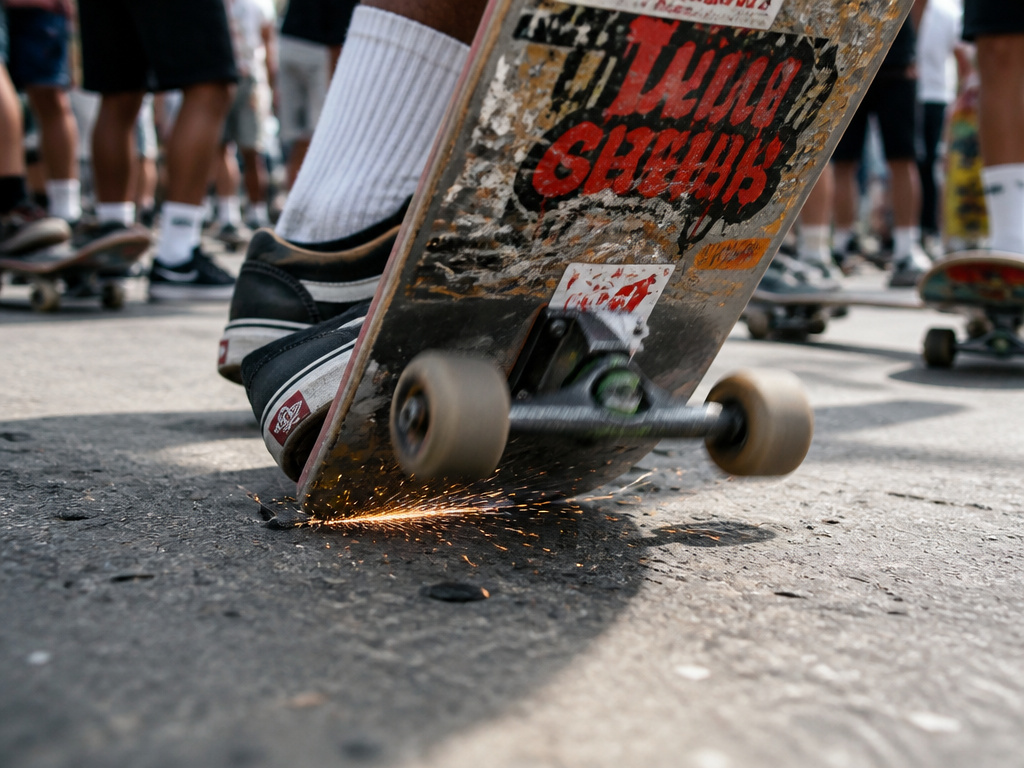
The skate demo isn’t a static concept. Its scale and production have shifted with the industry. Talking to shop owners who ran events in the 80s and 90s reveals a different beast.
Back then, a demo was often a massive, almost chaotic, gathering. The Amateur Athlete Skate Shop blog recounts organizing events that regularly drew crowds of up to 2,000 people into parking lots. It was less about a single brand’s polished image and more about the sheer, explosive energy of skateboarding itself. Multiple brands might be involved, local shops provided the infrastructure, and it felt like a grassroots festival.
Why Brands Still Host Demos (And Who’s On the Team)
How to Find and Attend a Skate Demo
The Video Game Skate Demo: Features and Limitations
For gamers, a “skate demo” is a specific product with predictable boundaries. Understanding these limits sets the right expectations so you don’t get frustrated by what’s missing.
First, the map or level access is always restricted. The Virtual Skate Demo gives you the “Flip Axis Training Facility” and nothing else. The classic Skate 1 demo had one small park area. You’re not getting the open world.
Second, key features are often disabled. The Virtual Skate Demo explicitly disables replays and full skater customization. Multiplayer might be absent entirely, or, as with the Virtual Skate Demo, available only during special events like Steam Next Fest.
Common mistake: Judging a full game solely by its demo. Demos are marketing tools that often represent an older, less-polished build. The final game’s physics, graphics, or content can differ significantly.
Skate Demo vs. Contest, Jam, or Session
The terminology can blur, but each term has a distinct focus. Keeping them straight helps you know what you’re walking into.
A skate demo is a brand-led performance and promotion. The pros are the main actors, and the goal is to showcase the brand and its team.
A skate contest is a competition with rules, judges, and prizes. Skaters of various levels compete against each other, often in timed runs or best-trick formats. The brand presence is secondary to the contest structure.
A skate jam is a collaborative, often informal, gathering focused on skating a specific spot or obstacle together. It’s more communal and less structured than either a demo or contest. You might organize a skate jam with your local skate crew.
A skate sesh is any casual period of skating, usually with friends. There’s no audience, no schedule, and no promotional agenda.
| Event Type | Primary Focus | Structure | Audience Role |
|---|---|---|---|
| Demo | Brand promotion & fan engagement | Scheduled performance by pros | Spectator, then participant in meet-and-greet |
| Contest | Competition & winning | Timed runs, judged scores | Spectator, often separated from skaters |
| Jam | Collaborative skating & community | Informal, often focused on one spot/obstacle | Participant |
| Session | Personal/group practice & fun | None | Skater only |
Safety, Recalls, and the Reality of Demoed Gear
A demo is a showcase, not a warranty. The gear handed out or used in demos is the same retail product you can buy, and it’s subject to the same safety standards and potential defects. The CPSC electric skateboard recall alert for the Future Motion Onewheel GT is a stark reminder.
In that August 2022 recall, approximately 20,500 front footpads were flagged because they could fail to disengage after a rider dismounted, causing the board to keep moving and posing a bystander hazard. Future Motion received 813 reports of the issue, leading to 11 injuries like bruises and friction burns. The recall process, stopping use and contacting the manufacturer for a free replacement, applies whether you bought the product or got it at a demo.
Frequently Asked Questions
The Bottom Line
A skate demo is a word that does two completely different jobs. One is rooted in the physical world of sports marketing, a temporary, thrilling convergence of skill, commerce, and community. The other is a digital product sampler from the video game industry. Both are demonstrations in the purest sense: one of athleticism and brand identity, the other of code and player experience.
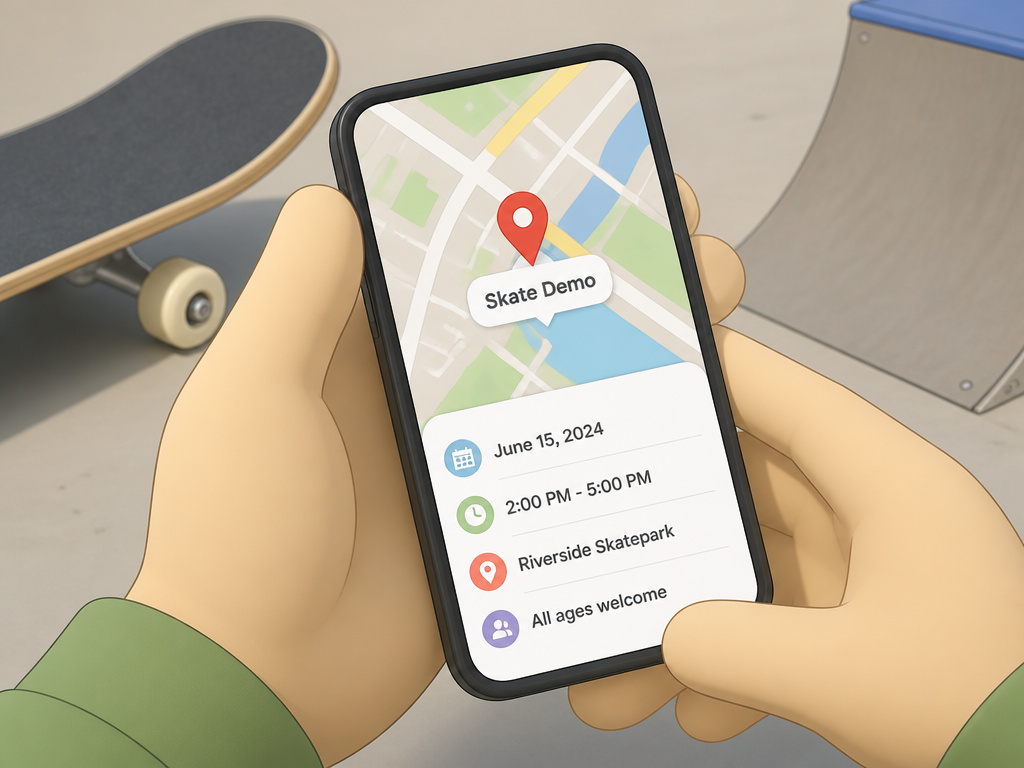
If you’re looking for the event, start with your local skate shop’s Instagram and the social feeds of brands you like. If you’re looking for the game preview, check Steam, PlayStation Store, or Xbox Marketplace for “demo” tags. Just know which one you’re clicking on. And if you do get to a real demo, soak it in, the sound of the board hitting the concrete, the crowd’s reaction, the feel of a free sticker in your hand. That’s the part that doesn’t download.
