
How to Start a Skate Club: Step-by-Step (Without Burnout)
This post contains affiliate links. As an Amazon Associate, we earn from qualifying purchases.
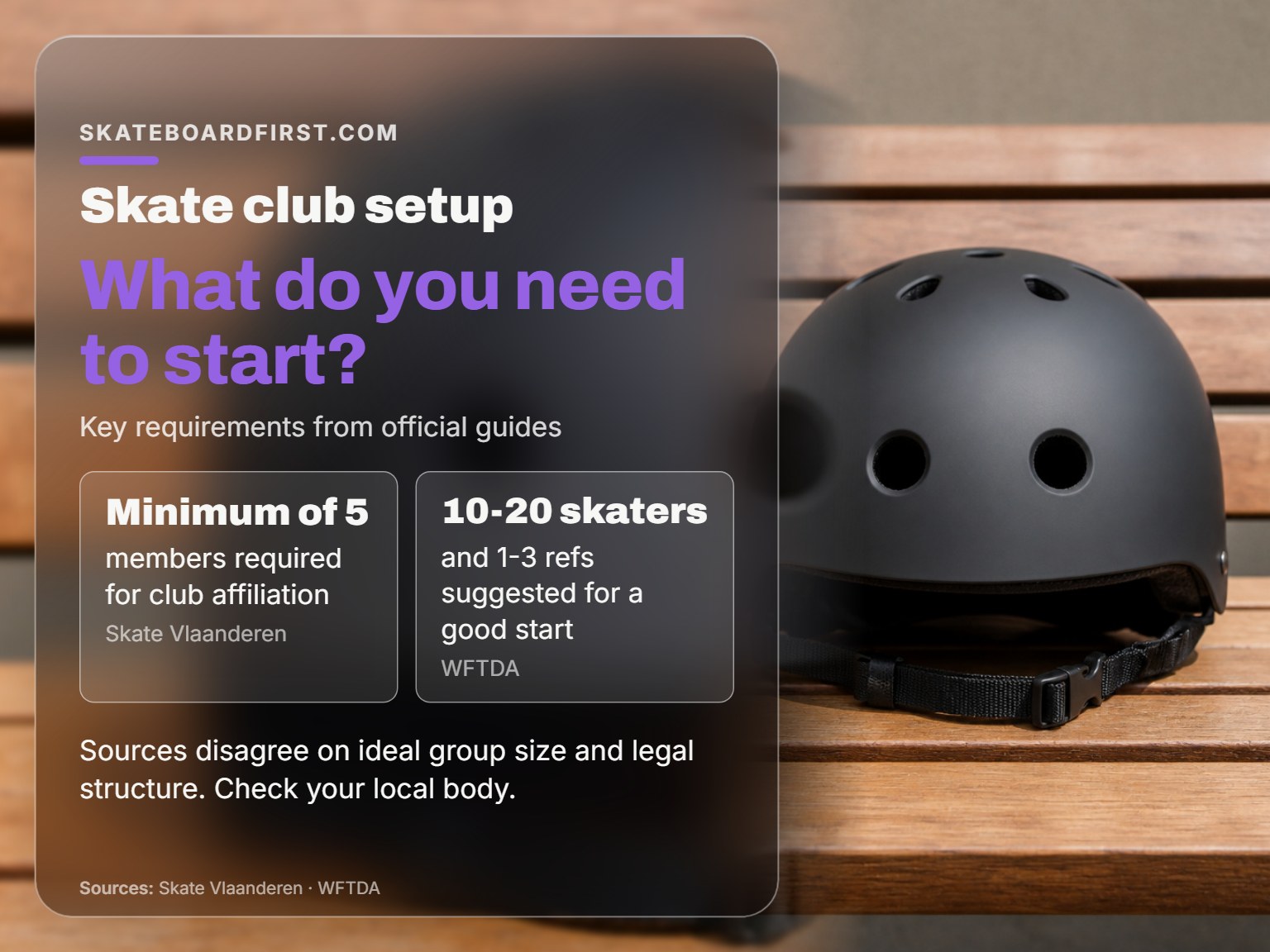
To start a skate club, you need a core group of skaters (minimum 5 per Skate Vlaanderen, 10-20 per WFTDA), a clear safety and liability plan, and a simple legal structure, usually an incorporated association or non-profit. The club exists to add what a public park can’t: organized coaching, insured events, and a single voice when dealing with land managers.
That legal and insurance piece is the hinge. A scene works fine without it. A club, by definition, takes on a duty of care the moment it charges for a coached session or runs a competition. You are building an organization around a culture that is famously suspicious of committees, which means your first job is translating skatepark trust into paperwork a city council or insurance provider will recognize. This is a core part of how to start a skate club.
What follows is a map of that translation. We’ll walk through the numbers from official governing bodies, the safety rules that actually matter, and the funding paths that don’t require selling access to a free public park, all central to how to start a skate club. By the end, you’ll have a one-page plan that covers your liability, your budget, and your first event.
Key Takeaways
- Start with the riders already there rather than drafting a perfect constitution. Find the informal leaders at your local park first.
- Public liability insurance is the essential reason most crews incorporate; Skate Vlaanderen’s voluntary insurance costs €40/year, with a €20 rebate if a club rep attends their general assembly.
- Run your first competition as a jam format, it’s faster, more inclusive, and mirrors how skaters actually share a park.
- Your minimum safety kit is a written helmet policy, a stocked first aid kit with a named first aider present, and signed consent forms for every rider under 18.
- Initial funding comes from program fees, comp income, and grants; stop trying to sell park access and start selling what genuinely costs money to provide.
The 5-Step Checklist Before You Print a Flyer
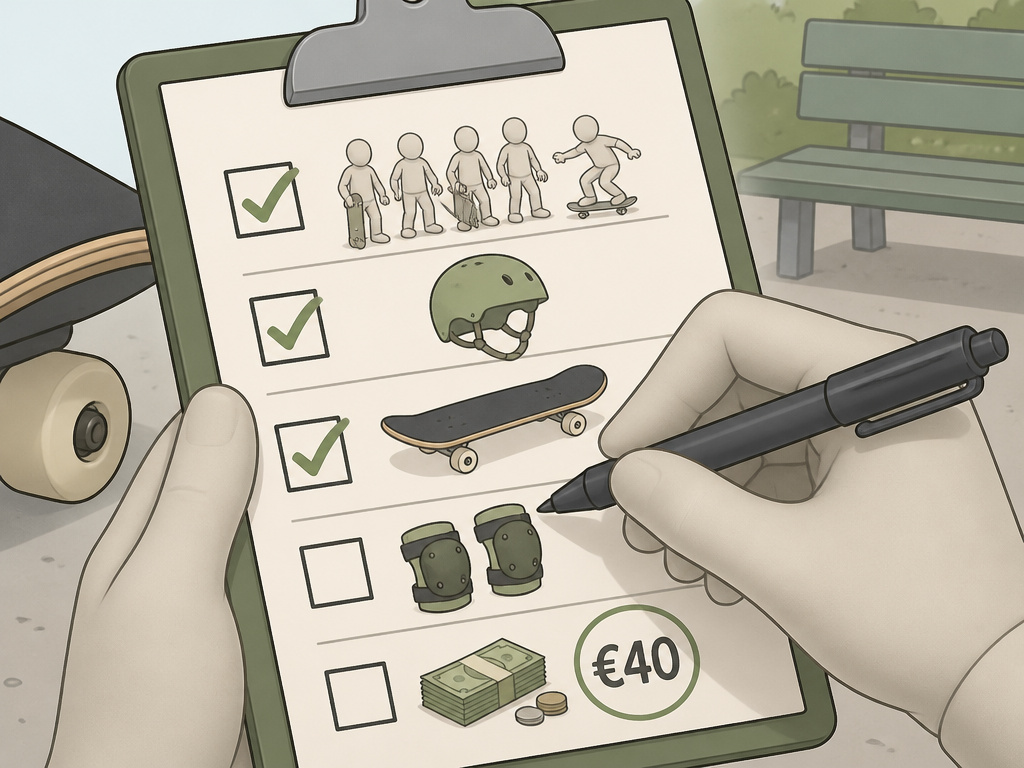
Ever wondered why so many school club posts on Reddit start with “I’m panicking”? They usually skip the ground truth. The club already exists at the park. Your job isn’t to invent it, but to formalize the parts that need it.
First, count who’s already there. Go to your local spot at 4:30 on a weekday. That’s your founding membership, whether they know it or not. ClubHelix puts it bluntly: start with the riders already there rather than a constitution. Talk to the people others listen to. This isn’t about titles; it’s about identifying who has the trust of the scene.
Second, name your one problem. Is it that younger skaters have nowhere to learn basics safely? Does the city see the park as a nuisance? Your club’s entire first-year mission should solve that single problem. A club born from “they want more of this” runs a completely different calendar than one born from “they might tear it down.”
Common mistake: Leading with a membership fee for park access. You’re asking people to pay for something they do for free twenty metres away. Pitch a flat season fee and you’ll sign up eleven people, nine of them related to the committee.
Third, pick your governing body and learn their numbers. This is where most guides get vague. Real ones have specific thresholds.
| Governing Body | Minimum Members | Key Requirement |
|---|---|---|
| Skate Vlaanderen | 5 | Affiliation & voluntary insurance (€40/year) |
| WFTDA (Roller Derby) | 10-20 skaters, 1-3 refs | Functional starting point for a league |
| Speed Skating Canada | Not specified | Focus on community interest & interim executive |
Skate Vlaanderen sets a hard minimum of 5 members for affiliation. The WFTDA suggests a functional roller derby league starts with 10-20 skaters. Your first practical decision in how to start a skate club is which set of rules you’ll build under, as sources like Skate Vlaanderen and the WFTDA have different minimum member requirements and advice on legal structure.
Fourth, write down your three essential safety rules. Not a ten-page manual. Three rules. ClubHelix’s baseline is the cleanest I’ve seen:
- A written helmet policy that applies to every organized club session.
- A first aid kit and a named first aider on the deck.
- A signed consent and medical form for every rider under 18, and an incident report filed the same day any accident happens.
Fifth, sketch a one-page budget. I’m not talking about a spreadsheet. List every thing that will cost money in your first six months: insurance (€40 if you follow Skate Vlaanderen), a basic first aid kit, maybe a fee for a park permit if you’re running an event. On the other side, list one income source: a coached beginner session, a small jam entry fee, a grant from a local youth fund. If the costs outweigh the income, you’re trying to do too much too soon. Simplify.
The Legal Labyrinth: vzw, Non-Profit, or Something Else?
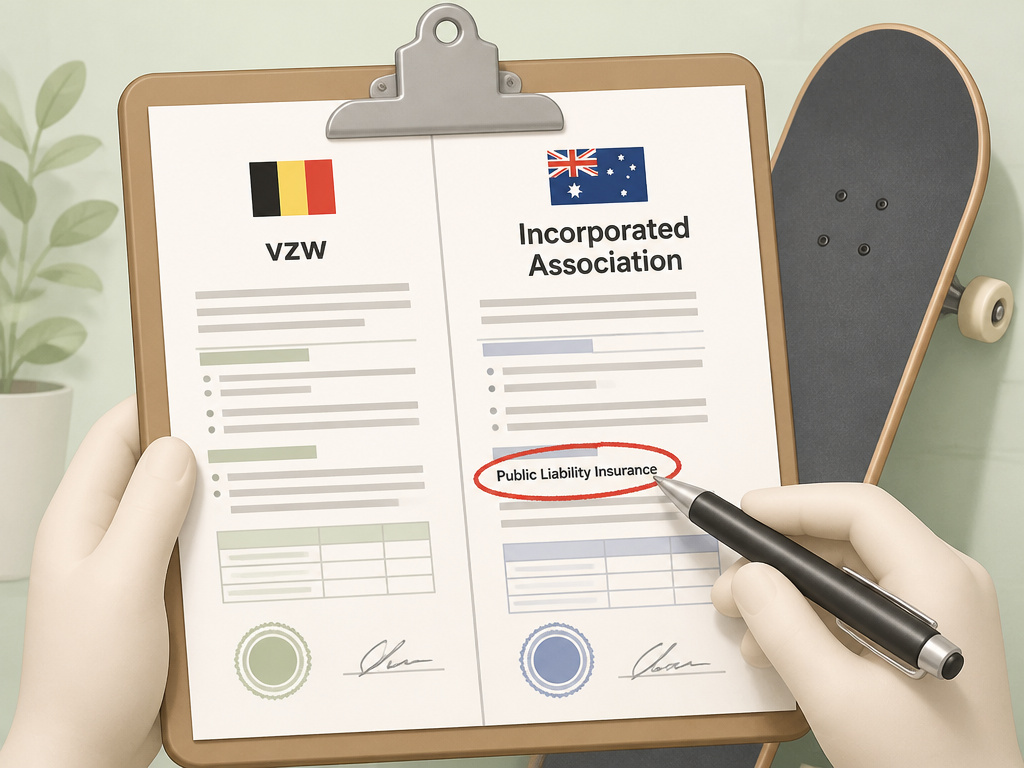
Here’s where the official advice splits. And you need to know the split, because picking the wrong structure locks you out of insurance or grants.
Skate Vlaanderen strongly advises making your club a vzw, a non-profit association under Belgian law. Their entire support system assumes this structure. Meanwhile, the WFTDA says many roller derby leagues form non-profit corporations, but you’ll need to do some research to find what structure works best for you. ClubHelix reports most Australian skate clubs incorporate as an incorporated association under state legislation.
So who’s right? They all are, for their context. Your job is to match the structure to your location’s regulations and your club’s goals.
A vzw, an incorporated association, and a non-profit corporation all do the same core job: they create a legal entity that can hold insurance, open a bank account, and apply for grants. The name changes with the country.
Start with your local skateboarding governing body. Affiliate with them. That affiliation is usually the only route to their group insurance rates and coach accreditation programs. Public liability cover is the practical reason most skate crews finally incorporate, you cannot run a coached session or a comp on public land without it.
If you’re starting from absolute zero, work through the steps in a generic guide to starting a sports club before planning your first session. But remember, a skate club isn’t a tennis club. You don’t own the courts. Your legal structure exists to protect your volunteers and participants, not to control access.
Insurance: More Than Just a Certificate
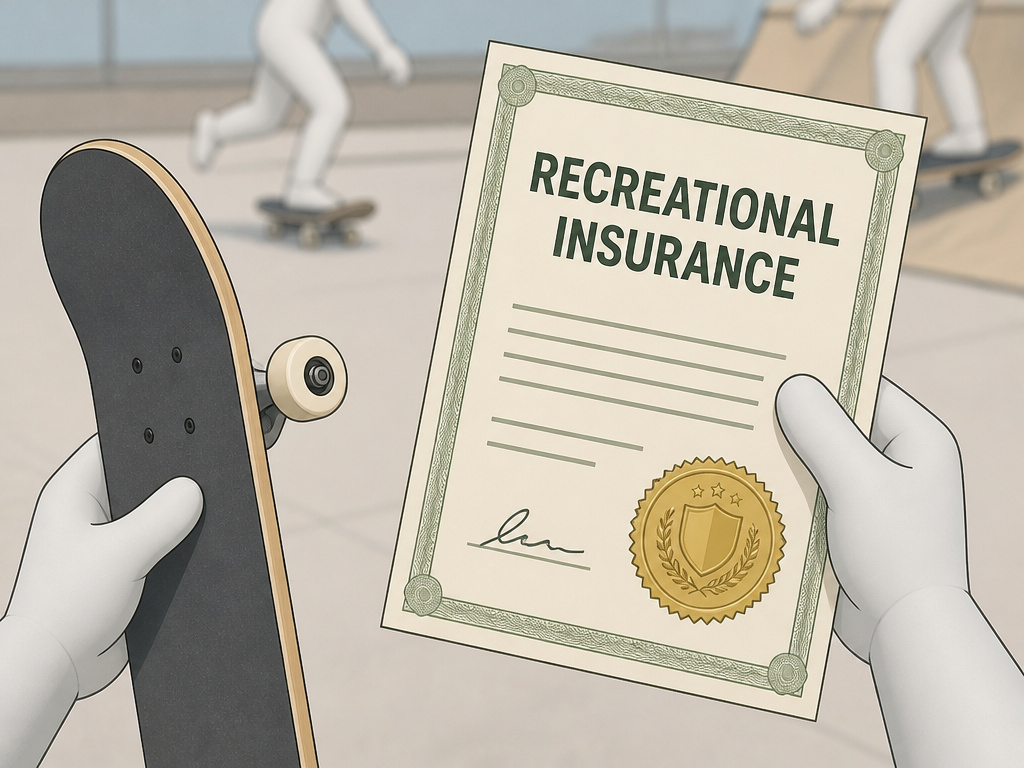
Talk of insurance makes most skaters glaze over. Until someone gets hurt. Then it’s the only thing that matters.
The type of insurance you need depends entirely on what your club does. Skate Vlaanderen breaks it down clearly:
- Recreational insurance is sufficient for most skateboarders.
- Competitive license is required if a skater participates in international competitions.
- 24/24h insurance is an optional add-on that covers skating outside training hours, worldwide.
For most new clubs, recreational insurance is sufficient for skateboarders. The critical, often-missed piece is volunteer insurance. Skate Vlaanderen offers a voluntary insurance policy for clubs. It costs €40 per year, but they offer a €20 rebate if a club representative attends their general assembly. That’s a smart nudge to stay involved with the governing body.
When you’re filling out that US Figure Skating club formation guide, you’ll see their parallel requirement: an annual Facility Usage Form. Different name, same purpose, it certifies where you operate and under what rules. These forms are how governing bodies map liability.
The moment you take money for a coached session, your duty of care changes. A parent trusts you with their kid. Your insurance needs to match that trust. Don’t guess. Call your governing body and ask: “If we run a two-hour beginner clinic, what specific coverage do we need?” Get the answer in writing.
Funding Your First Year (Without Selling What’s Free)
The awkward math is real. A tennis club sells court time. A skate club is asking people to pay for something they can already do for nothing. The fix is to stop selling access and start selling what genuinely costs money.
ClubHelix lists the main funding sources: council community grants, state government sport and recreation infrastructure rounds, and youth-specific funds. Your first grant application shouldn’t be for a new skatepark. It should be for a specific program, such as a beginner skateboarding series or a community skate jam.
| Income Source | Best For | Risk If Skipped |
|---|---|---|
| Program Fees (Coaching) | Recurring revenue, builds skill | Underpricing burns out coaches; overpricing excludes kids |
| Competition Entry | One-day cash influx | Poor planning leads to prize table drama or permit issues |
| Local Shop Sponsorship | Product for prizes, community ties | Vague asks get ignored; be specific—“donate 3 decks for winners” |
| Government Grants | Larger projects, facility improvements | Missing deadlines or misaligned criteria wastes months of work |
The most reliable cash flow is program fees. Coaching is where a skate club stops being a scene and starts being an organization. Charge a fair rate that covers your insured coach’s time. This isn’t a casual tip session anymore. It’s a service.
For events, run a jam. ClubHelix advises running a jam format rather than heats and finals. An age or ability group skates together in a timed block, taking turns. Judges score the best moments, not a single run. It’s faster, more fun to watch, doesn’t punish a rider for one slam, and feels more like a real session. It’s also easier to staff and insure.
If you want to organize a skate jam, sell entries online in advance. Cap each division. Ask local shops for product for the prize table, not cash, it’s easier for them to say yes.
Safety & Operations: The Day-to-Day Reality
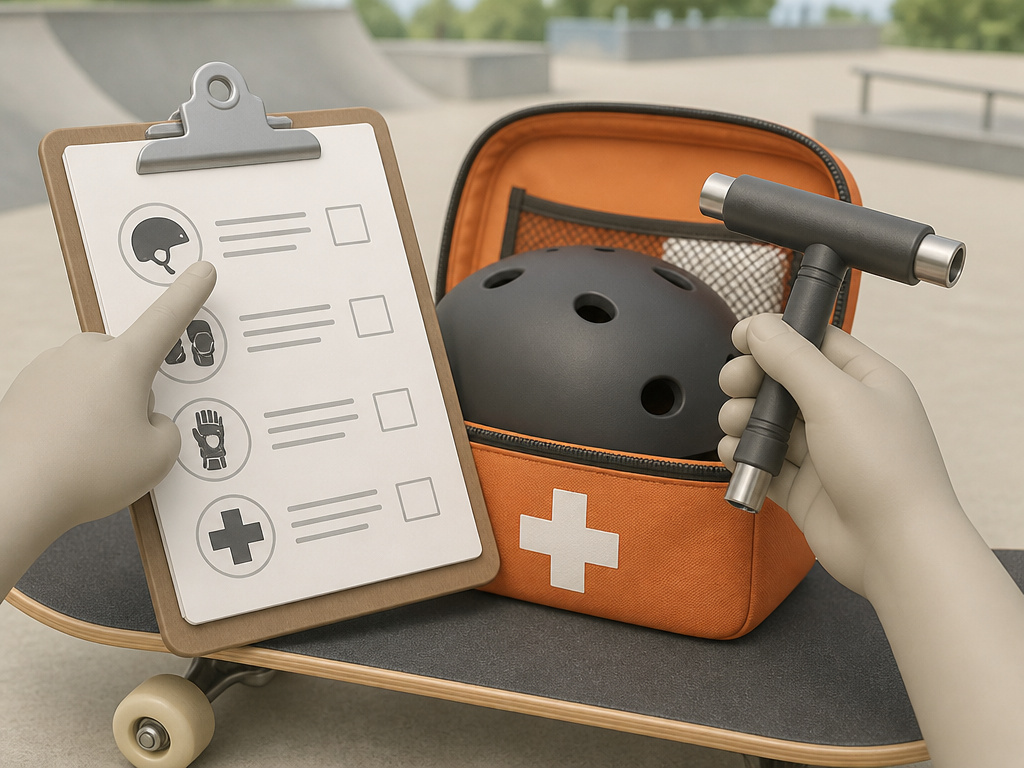
Your safety plan lives on the deck, not in a binder. Now, get tactile.
The written helmet rule is your first line of defense.
Your first aid kit shouldn’t be buried in a car. Keep it in a bright, recognizable bag at the edge of the skating area. The named first aider needs to be present on the deck. This isn’t a medical degree. It’s the willingness to call 911 and follow instructions.
For riders under 18, the signed consent and medical form is mandatory. It’s also your legal shield. File it digitally if you can. An incident report gets written the same day, while details are fresh. What happened, where, what time, what was done, who witnessed it. Three sentences. Done.
Where this goes sideways: Mixing advanced skaters with day-one beginners in an unstructured “open skate.” The intimidation is palpable, the risk of collision is high, and the beginner leaves feeling worse, not better. Skill-based grouping isn’t elitism, it’s safety.
Your communication tool is whatever your riders already use. Your communication tool is whatever your riders already use.
How to get partnerships with parks, schools, or shops
Look at the spaces your riders already use. A governing body advises not ruling out parking lots, recreation centers, parks, or other underutilized spaces. Your first partnership is often with the owner of that space. Approach them with a clear plan for regular, supervised sessions. These relationships build legitimacy and can provide access to community grants from councils or youth-specific funds.
How to create club bylaws and governance
Start with the riders already there rather than a full constitution. For legal structure, research what works best for you. Many clubs incorporate as a non-profit or an incorporated association, often because public liability insurance requires it. Affiliating with a state or national skating body can provide this coverage and coach accreditation.
Frequently Asked Questions
What’s the difference between a skate crew and a skate club?
Skate crew is a social group, friends who skate together, with no formal structure. A skate club is an organization with a defined membership, safety policies, and usually a legal structure for insurance and funding. You can learn more about what a skate crew is and how it differs from a club.
Do we need a permit to skate at a public park as a club?
For casual meetups, usually not. The moment you organize an event, charge entry, or use amplified sound, you almost certainly need a permit. Check your local council’s website or read our guide on how to get a skateboarding permit for the specifics.
How do we handle a huge mix of skill levels?
Split your sessions by ability. “Beginner Basics” from 10-11am, “All Levels Jam” from 11-1pm, “Advanced Session” from 1-3pm. This gives everyone a space to progress without pressure. It’s also safer.
Can adults start a skate club, or is it just for kids?
Absolutely. Adult skateboarding is booming. The process is the same, though your funding sources might shift from youth grants to community development funds.
What’s the first thing we should spend money on?
Public liability insurance. Nothing else matters if you’re not covered. After that, a first aid kit.
Before You Go
Their answer is your club’s first mission. Everything else is just the how.
