
Skateboarding Flexibility Exercises
This post contains affiliate links. As an Amazon Associate, we earn from qualifying purchases.
Skateboarding flexibility exercises are about active mobility, not just static stretching. The goal is to increase your joints’ usable range of motion under load, like your hips in a carve or your ankles on a landing, to improve trick execution and prevent injuries like anterior ankle impingement. A 2022 study found an 18-session program improved split amplitude and strength in young skaters, proving structured flexibility work pays off.
That 18-session number is a target. It tells you this isn’t a one-and-done stretch before you roll out. It’s a commitment to making your body more resilient to the specific demands of skating, where pushing alone hyperextends your Achilles tendon in a way even sprinting doesn’t.
What follows: the difference between mobility and flexibility, a pre-skate dynamic routine grounded in skateboarding’s unique biomechanics, post-session recovery stretches, and how to build a long-term mobility plan that actually improves your skating instead of just checking a box.
Key Takeaways
- Use dynamic mobility exercises before skating, like leg swings and hip circles, to prepare muscles and joints for movement without reducing power.
- Target hip internal and external rotation specifically; a 2021 study linked a smaller ankle inversion angle in pros to better joint control, which starts at the hips.
- Address anterior ankle impingement (“hot pockets”) with mobility, not just rest; it’s the most common skateboarding overuse injury according to Skateboard Strength.
- Commit to a long-term mobility plan; a 2022 study showed significant gains in flexibility and strength after 18 structured sessions.
- Pair your flexibility work with strength training; a 2025 study found Autoregulatory Progressive Resistance Exercise (APRE) improved power, balance, and ollie performance in just 6 weeks.
Dynamic vs. Static Stretching: When and Why They Matter
You don’t just need to be bendy. You need to be bendy while moving. That’s the gap between flexibility and mobility. Flexibility is your passive range, how far you can pull your heel to your butt while sitting. Mobility is your active, usable range, how much of that motion you can control while rolling into a carve or setting up for a trick. Skating runs on mobility.
Before you start: Never force a static stretch into pain, especially when cold. A sharp pinch at the front of the ankle could be anterior impingement; pushing it can damage the joint capsule. Warm up with movement first.
Dynamic skateboarding flexibility exercises before a session prep your nervous system and muscles for action. They raise your core temperature and lubricate your joints without the power loss associated with long, static holds. Research dating back nearly two decades shows held stretches can diminish muscle contractile power for hours. That’s why the pre-skate routine is all about motion.
Static skateboarding flexibility exercises have their place, after your session. When your muscles are warm and pliable, holding a gentle stretch for 30-60 seconds can help maintain flexibility and aid recovery. It’s maintenance, not preparation. Mixing them up is how you get hurt or skate weaker.
The Essential Pre-Skate Dynamic Mobility Routine
Your warm-up should mirror what you’re about to do. For skating, that means prioritizing the ankles, hips, and thoracic spine (your upper back). These are the areas that take the most punishment and require the most nuanced control.
A 2021 study published in Healthcare noted that professional skateboarders have a significantly smaller ankle inversion angle compared to amateurs, suggesting better joint control. You can’t change your ankle bones, but you can improve the strength and coordination around them. Start there.
Here’s a five-minute routine to do right before you step on your board. No equipment needed.
- Ankle Circles (30 seconds each direction, per foot): This isn’t just spinning your foot. Push your ankle through its full range, point your toes, flex your foot, roll inward and outward. The goal is to remind the joint it needs to move in all planes. Pushing a skateboard hyperextends the Achilles tendon uniquely; this wakes up those tissues.
- Leg Swings (20 swings forward/back, 20 swings side-to-side, per leg): Hold onto a wall or your board. Swing your leg like a pendulum, gradually increasing the range. This dynamically stretches your hamstrings, quads, and hip flexors while promoting blood flow. The side-to-side swings are crucial for hip abduction and adduction, think of setting up for a heelside carve.
- Hip Circles (10 circles forward, 10 backward, each side): Hands on hips, feet shoulder-width apart. Make slow, deliberate circles with your pelvis. This mobilizes your entire hip socket, a joint that’s central to every push, turn, and trick.
- World’s Greatest Stretch (3 reps per side): Step into a lunge, place the opposite hand on the floor inside your front foot, then rotate your torso and reach your other hand toward the ceiling. This single move combines hip flexor stretching, thoracic rotation, and hamstring engagement. It’s a full-body mobilizer.
- Bodyweight Squats (10-15 reps): Go as deep as your mobility comfortably allows, keeping your heels down. This primes your glutes, quads, and the kinetic chain you’ll use for popping an ollie. Don’t rush it.
This routine is essential to start with. It directly supports the kind of injury prevention that keeps you skating consistently. Skipping it means starting cold, and that’s asking for a tweak or a pull.
Post-Skate Static Stretches for Recovery and Maintenance
Once you’re done, your muscles are warm, fatigued, and shortened from repetitive contractions. This is the time for static stretching. The goal is to gently encourage them back to their resting length, which can improve circulation, reduce next-day soreness, and over time, maintain your flexibility gains.
Focus on the areas that get tight: calves, hamstrings, hips, and lower back. Hold each stretch, breathing deeply. You should feel a gentle pull, not sharp pain.
| Stretch | Target Area | Key Technique Tip | Common Mistake |
|---|---|---|---|
| Standing Calf Stretch | Gastrocnemius & Achilles | Keep back leg straight, heel firmly down. | Bouncing or letting the heel come up. |
| Bent-Knee Calf Stretch | Soleus (deep calf) | Bend the back knee while keeping heel down. | Confusing it with the straight-leg stretch. |
| Seated Hamstring Stretch | Hamstrings | Sit tall, hinge at hips, not round your lower back. | Rounding the spine to reach farther. |
| Figure-Four (Pigeon) Stretch | Hip Rotators & Glutes | Keep hips square; don’t let one hike up. | Collapsing into the lower back. |
| Knees-to-Chest | Lower Back & Glutes | Pull gently, relax your neck and shoulders. | Using momentum to yank the knees. |
I got this wrong for years. I’d skate for two hours, pack up, and drive home. By the next morning, my calves felt like wooden planks. Adding just five minutes of these static holds post-session changed my recovery speed completely. The tightness faded faster, and I felt looser stepping on the board the next day.
This recovery work is a form of off-board training that pays dividends in board feel and longevity. It’s not glamorous, but neither is sitting out with a preventable strain.
Addressing Common Skateboarding Injuries with Targeted Mobility
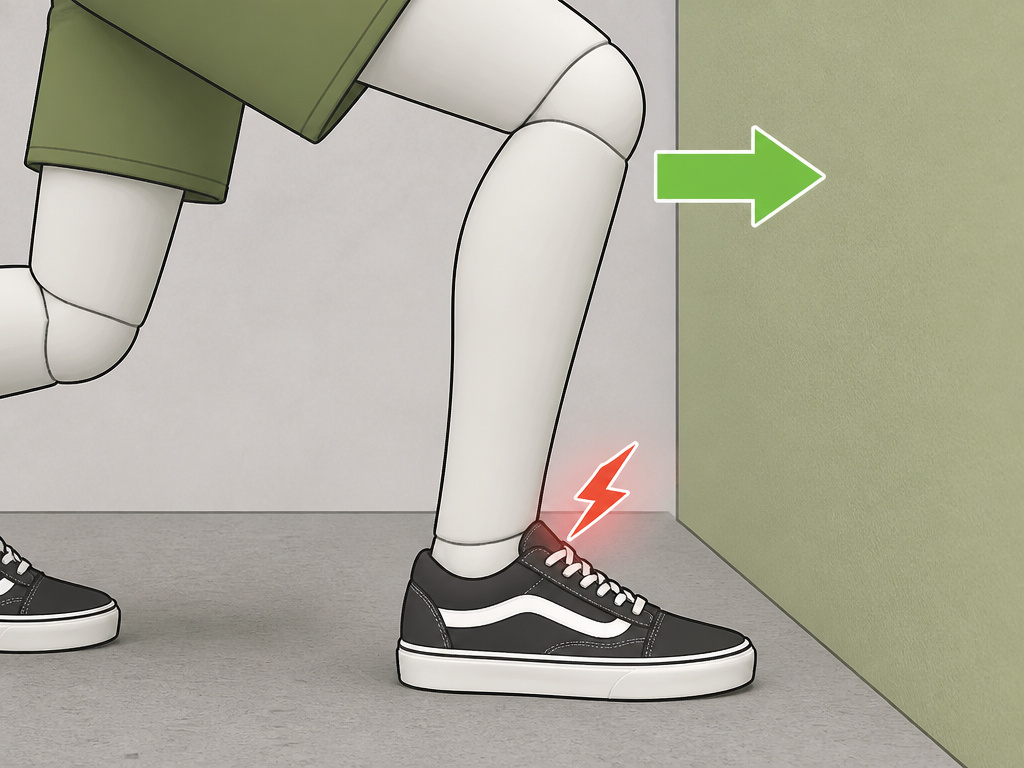
Skating creates specific, repetitive stresses. Two overuse injuries dominate the conversation: anterior ankle impingement (“hot pockets”) and Achilles tendonitis. The Skateboard Strength guide identifies these as the top two overuse issues. Generic stretching often misses the mark; you need targeted mobility work.
Anterior Ankle Impingement feels like a pinching at the front of your ankle, especially when you dorsiflex your foot (toes toward shin). It’s often caused by a lack of control or bad landing mechanics, leading to bony changes. Mobility work focuses on improving dorsiflexion range with strength.
- Ankle Dorsiflexion Mobilization: Face a wall, place one foot back with the knee bent and toes pointing forward. Keep your heel glued to the floor and gently drive your knee toward the wall. Hold for 2-3 seconds, release. Do 10 reps per side.
- Why it works: It strengthens the tibialis anterior while mobilizing the joint in the exact direction it’s restricted.
Achilles Tendonitis is that sharp or aching pain in the back of your heel or along the tendon. It’s an overuse injury from the constant push-pop-land cycle. Research presents a nuanced view here. A 2020 PMC study on skaters’ Achilles tendinitis found both eccentric (lengthening under load) and isometric (static hold) exercises significantly improved the condition, but there was insufficient evidence to declare one superior to the other. This contrasts with the general sports medicine literature which often strongly favors eccentric loading protocols for Achilles tendinopathy.
The takeaway? If you’re dealing with Achilles pain, both methods are valid. Isometrics (like a heel raise hold at the top) may be less irritating to start with. The key is consistent, pain-managed loading to rebuild tendon resilience, not just stretching.
Building robust ankle strength is your best long-term defense against both these issues. Mobility without strength is an unstable foundation.
The 18-Session Didactic Proposal: A Case for Structured Flexibility
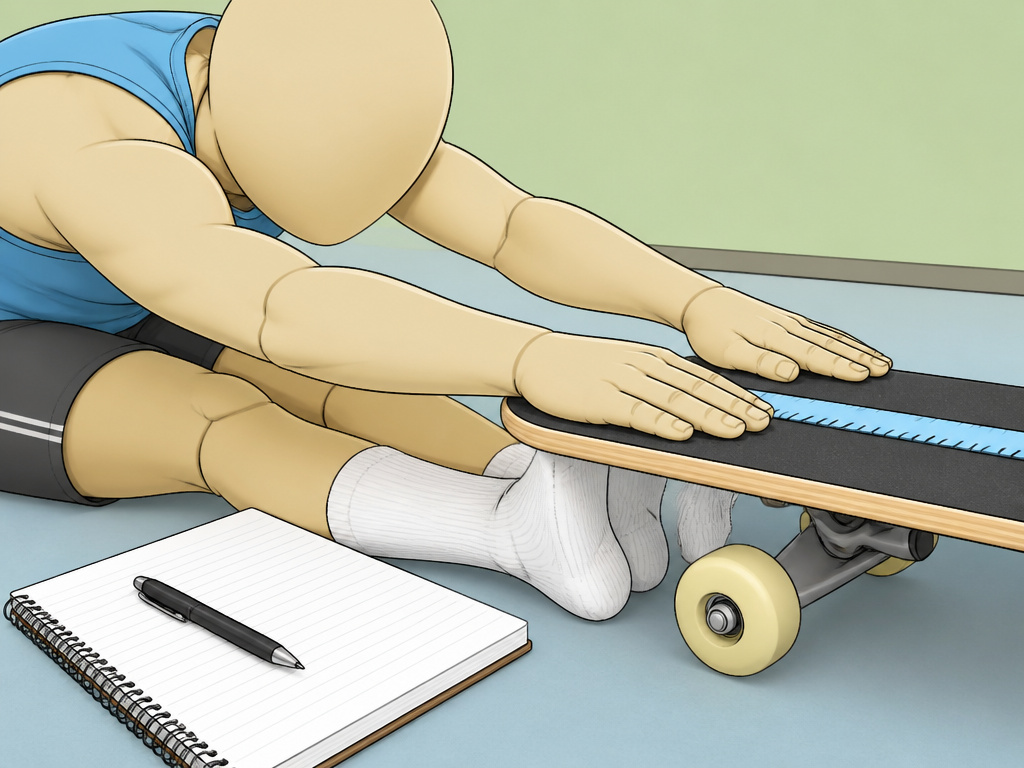
Sometimes anecdote isn’t enough. A 2022 study published in the Journal of Physical Education and Sport provides hard data. Researchers implemented an 18-session didactic proposal with young skateboarders, focusing on strength and flexibility. The experimental group showed greater improvements in the frontal split test (spagatta) and the Sit and Reach test compared to the control group.
The program wasn’t magic. It was consistent, structured work over time, exactly what most skaters skip. We chase tricks, not flexibility sessions. But this study shows the payoff: improved amplitude in a skill (the split) that translates to better board control and a lower risk of groin or hamstring strains.
You don’t need a lab to apply this. Commit to two or three short mobility sessions per week for six to nine weeks. Track a simple metric, like how far you can reach past your toes in a sit-and-reach or how deep you can comfortably squat. Progress beats perfection.
Integrating Flexibility into a Full Skateboarding Fitness Regimen
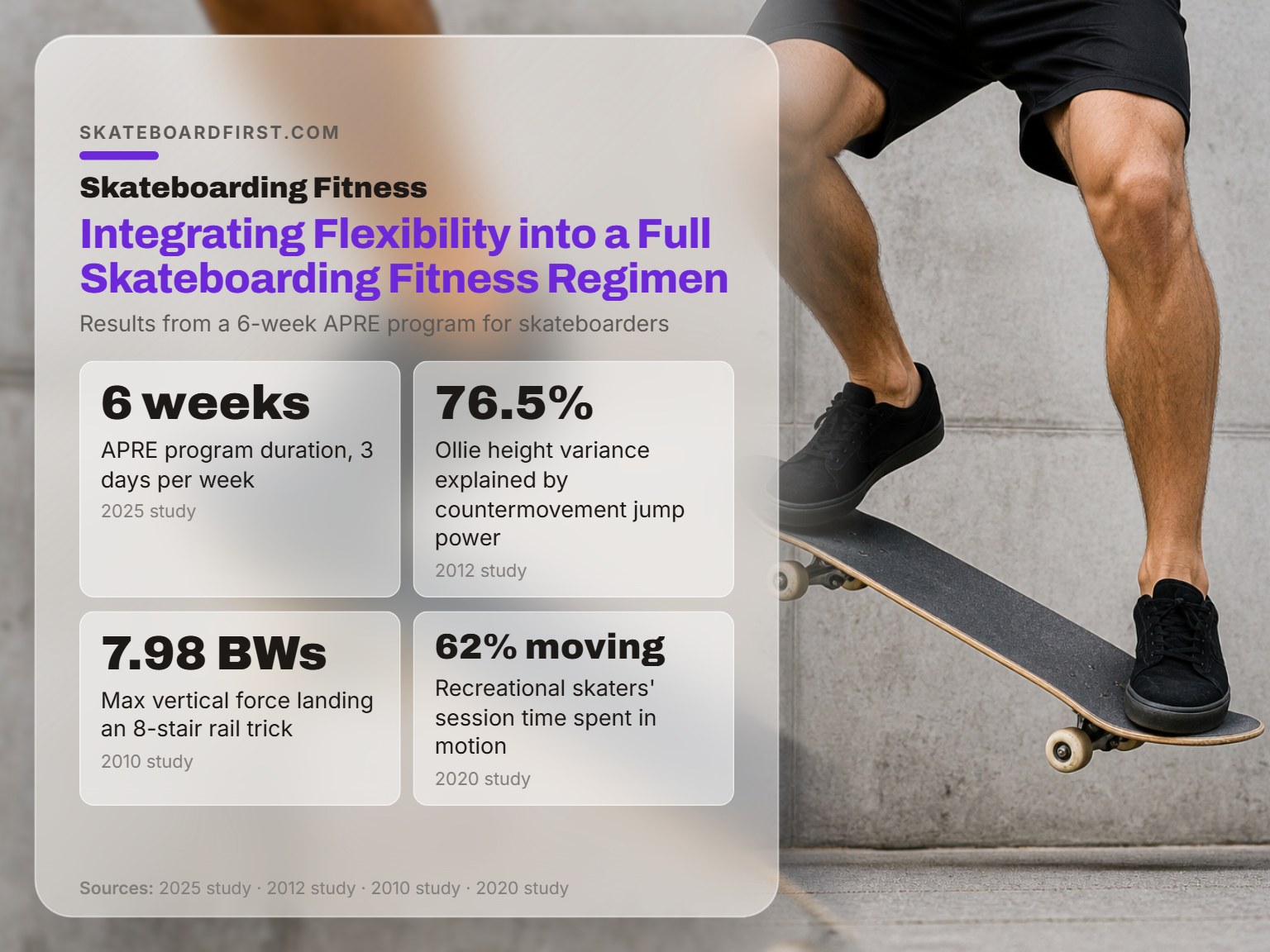
Flexibility alone is a piece of the puzzle. It needs to be woven into a regimen that includes strength, power, and balance training. They’re interdependent.
A 2025 study in Scientific Temper examined Autoregulatory Progressive Resistance Exercise (APRE) for skateboarders. Participants followed the program for 6 weeks, 3 days per week. The results showed significant improvements in the vertical jump test (power), the star excursion balance test, and ollie maneuver evaluations. This is a powerful example of how targeted off-board training directly translates to on-board performance.
Your weekly plan might look like this:
- Skate Days (3-4x/week): Dynamic mobility warm-up → Skate session → Static stretching cool-down.
- Off-Board Training Day (1-2x/week): Focus on strength and power. Include exercises like squats, lunges, and core exercises. Follow this workout with your dedicated, longer mobility and flexibility session (20-30 minutes).
- Rest Day (1-2x/week): Light activity (walk, swim) or complete rest. Maybe some gentle, restorative yoga or foam rolling.
This integration is where you go from preventing injury to enhancing performance. The PMC scoping review of skateboarding demands underscores that competitive skating places complex physiological, biomechanical, and technical demands on the body. A siloed approach won’t cut it.
Why Stretching Isn’t Enough for Skateboarders
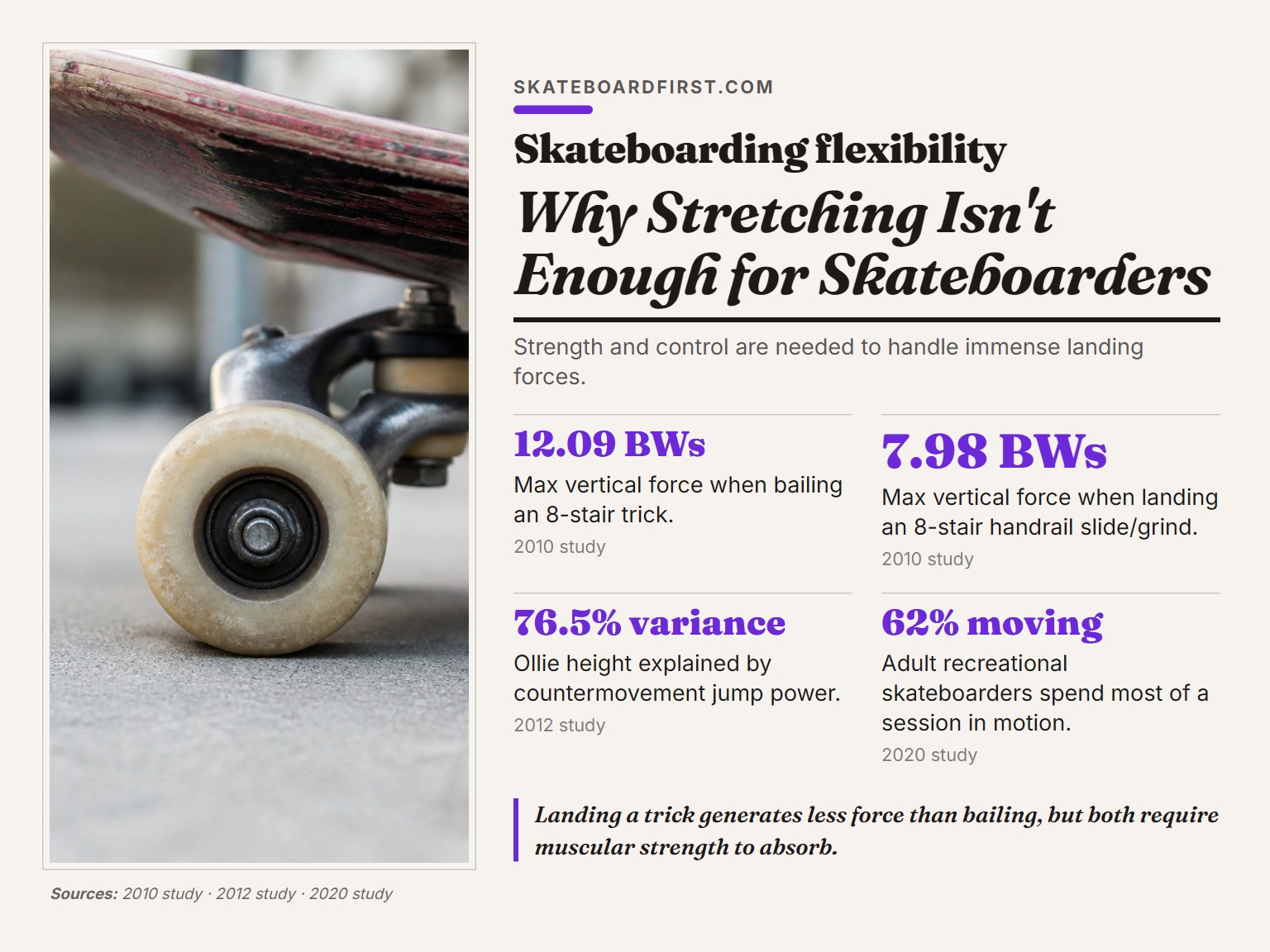
A flexible muscle without the strength to control that range is a liability on a board. Research shows that a program combining flexibility and strength work significantly improved performance measures like ollie height and balance in skateboarders. Landing forces can be immense, and your joints need muscular support to absorb that impact. Focusing solely on static stretching neglects the power and stability required to control your body mid-trick or during a bail. To build real skateboarding mobility, you must pair your stretching with exercises that build strength through your full range of motion.
Frequently Asked Questions
What’s the best stretch for skateboarding?
There isn’t one “best” stretch. The most important concept is using dynamic mobility exercises (like leg swings and hip circles) before you skate to prepare your body, and saving static stretches (like hamstring holds) for after your session to aid recovery and maintain flexibility.
How often should I do flexibility exercises for skateboarding?
Aim for consistency over duration. Incorporate 5-10 minutes of dynamic mobility before every skate session. Then, 2-3 times per week, dedicate 15-20 minutes to a more focused flexibility and mobility routine on your off-board training or rest days. A 2022 study showed significant gains after 18 structured sessions.
Can flexibility exercises prevent skateboarding injuries?
Yes, when done correctly. Improving active mobility around key joints like the ankles and hips can enhance your control during tricks and landings, reducing the risk of sprains and strains. Targeted mobility work can also address the root causes of overuse injuries like anterior ankle impingement. It’s a critical part of a holistic injury prevention strategy.
I’m not flexible at all. Can I still skateboard?
Absolutely. You don’t need to be a contortionist to start skating. Basic board control and pushing require minimal flexibility. However, as you progress to more advanced tricks, improving your mobility will make learning them easier and safer. Start with the basic dynamic warm-up and build from there.
What’s the difference between mobility and flexibility?
Flexibility is the passive range of motion of a muscle (how far it can stretch). Mobility is the active, usable range of motion of a joint under control and load. Skating depends heavily on mobility, think of the controlled, forceful motion of your hips during a carve or your ankles on a landing. You need both, but you train them differently.
The Bottom Line
Skateboarding flexibility isn’t about touching your toes. It’s about building a body that can handle the unique and punishing forces of the sport, from the 40 mph peak velocities cited in research to the 7.98 body weights of force when landing an 8-stair rail.
Forget the static stretches you learned in gym class. Your new priorities are dynamic mobility before you skate, targeted work for your ankles and hips, and a commitment to consistency. The studies are clear: structured programs like the 18-session didactic proposal and the 6-week APRE protocol deliver measurable results in flexibility, strength, and on-board performance.
Start this week. Replace your old pre-skate routine with the dynamic mobility exercises listed here. Then, pick one off-day to do a session focusing on your tightest area. That single change moves you from passive participant to active architect of your skating longevity. Your board, your tricks, and your joints will thank you.
