
How to Tighten Skateboard Trucks: Step-by-Step
This post contains affiliate links. As an Amazon Associate, we earn from qualifying purchases.
To tighten skateboard trucks, turn the kingpin nut clockwise using a skate tool or adjustable wrench. Adjust in quarter-turn increments, ride between changes, and set both trucks to the same tightness to start. Over-tightening bends the washer, cracks the bushings, and makes the board impossible to turn. This is the basic method for how to tighten skateboard trucks.
That quarter-turn rule is the difference between dialed-in control and a board that fights you on every carve. Most guides say “tighten for stability,” but they skip the part where you lose all agility if you go past a specific mechanical limit in the how to tighten skateboard trucks process. The washer under the kingpin nut tells you when you’ve crossed it.
What follows is the full walkthrough for the how to tighten skateboard trucks question: the right tool, the exact steps, the visual and physical cues that tell you it’s working, and the one field-tested trick for getting both trucks perfectly even. We’ll also cover when tightening isn’t the fix and you need to look at bushings, risers, or wheel size.
Key Takeaways
- Tighten the kingpin nut clockwise a quarter-turn at a time, riding between adjustments to feel the change.
- Use a skate tool or adjustable wrench; never loosen the nut so far that it’s barely threaded on the kingpin.
- Match both trucks to the same tightness initially to avoid instability and speed wobbles.
- If the washer bends or the bushing flattens, you’ve over-tightened and need harder bushings, not more force.
- For high-speed stability and to reduce wheel bite, tighter trucks help, but riser pads or smaller wheels are better long-term fixes.
Gear Up: The Right Tool for the Job
You need one tool: a skate tool. The T-shaped kind with a socket for the kingpin nut is the standard. It’s the all-in-one solution the SkatePro guide recommends you carry. If you don’t have one, an adjustable wrench works in a pinch. I’ve used a wrench from my garage toolbox more times than I’d like to admit when my skate tool went missing. The process is the same, just slightly more awkward.
The kingpin is the big bolt sticking up (or down) through the center of your truck. The nut you’ll turn sits on top of it. Before you touch it, give your board a quick shake. Listen for any rattle in the hardware and look for obvious looseness. The CPSC says checking for “excessive play” before you ride is a basic safety step. It takes ten seconds and spots problems before they become spills.
Before you start: Never loosen the kingpin nut so far that it barely hangs on. The Skate Labs guide is clear: keep the nut fully threaded onto the kingpin. A nut that works its way off while you ride is a guaranteed crash. Also, wear a helmet. The CPSC fact sheet isn’t joking about that.
The Quarter-Turn Rule (and What Happens If You Skip It)
Here’s the core move, straight from the Skate Labs field guide: go a quarter turn at a time and ride between changes. This isn’t a suggestion. It’s the only way to feel what the adjustment actually does to your turning and stability.
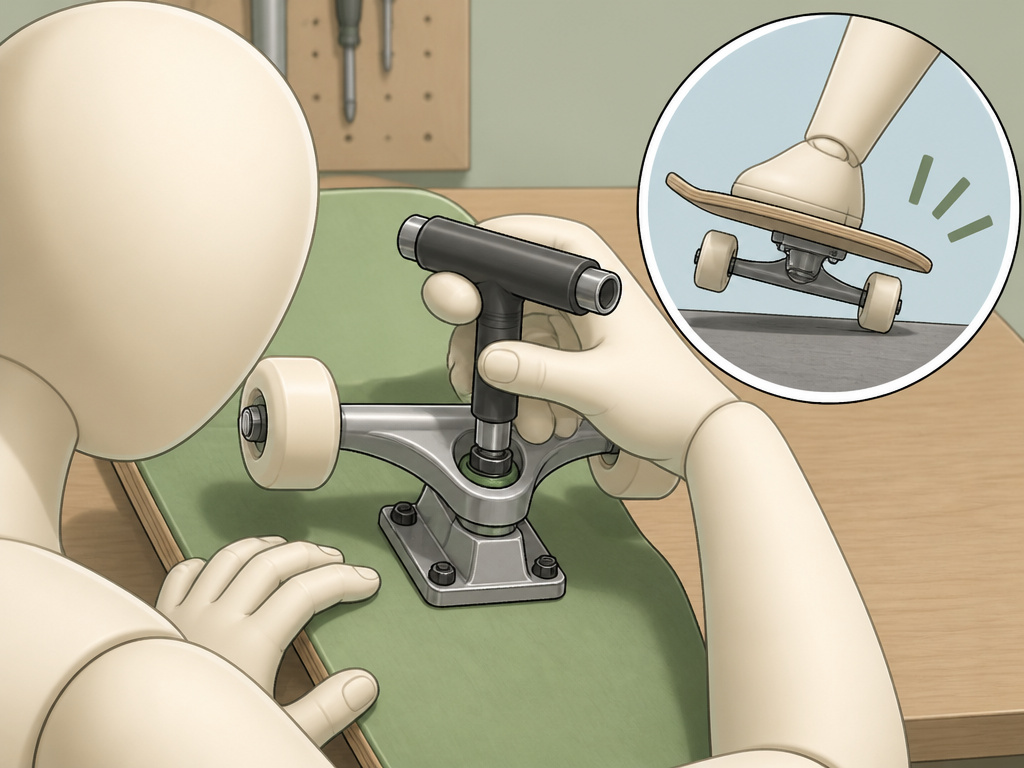
Stand your board on its tail so the truck you’re adjusting is in the air. Fit your skate tool socket onto the kingpin nut. Turn it clockwise to tighten. Do one quarter-turn—imagine the face of a clock, moving from 12 to 3. That’s it. Don’t crank it. Snap the cover back on if your tool has one, then go skate for five minutes.
What happens if you skip the ride-test? You’ll over-tighten. You’ll think you need more stability, so you’ll give it another half-turn. Then your board won’t turn unless you lift the wheels. I did this for a year. I’d crank my trucks down because loose felt scary, and I ate pavement about a dozen times figuring out that tight was the actual problem. A board that can’t turn is a board that throws you off when you lean.
| Turn Direction | Effect on Board | Risk If Skipped |
|---|---|---|
| Clockwise | Increases stability, reduces turn angle, can help with pop consistency. | Washer bends, bushings crack, turning becomes impossible. |
| Counter-Clockwise | Increases agility, sharpens turns, makes carving easier. | Speed wobble at high speed, kingpin nut can loosen and fall off. |
Getting Both Trucks Even: Three Schools of Thought
Sources disagree on the best method. You have three proven paths, each with a trade-off.
Skate Labs advises setting both trucks to the same tightness to start. Warehouse Skateboards recommends completely unscrewing both kingpins and counting rotations as you tighten. An anecdotal Reddit method suggests standing on your board and leaning toward your toes until you get wheelbite on one truck, then adjusting until they wheelbite at the same time.
My take? Start with the Skate Labs rule. If your board still feels uneven after a few sessions, use the Reddit lean-test. The counting method is best for a fresh build with new, matched parts.
Why-Layer: What Tightening Actually Does to Your Trucks
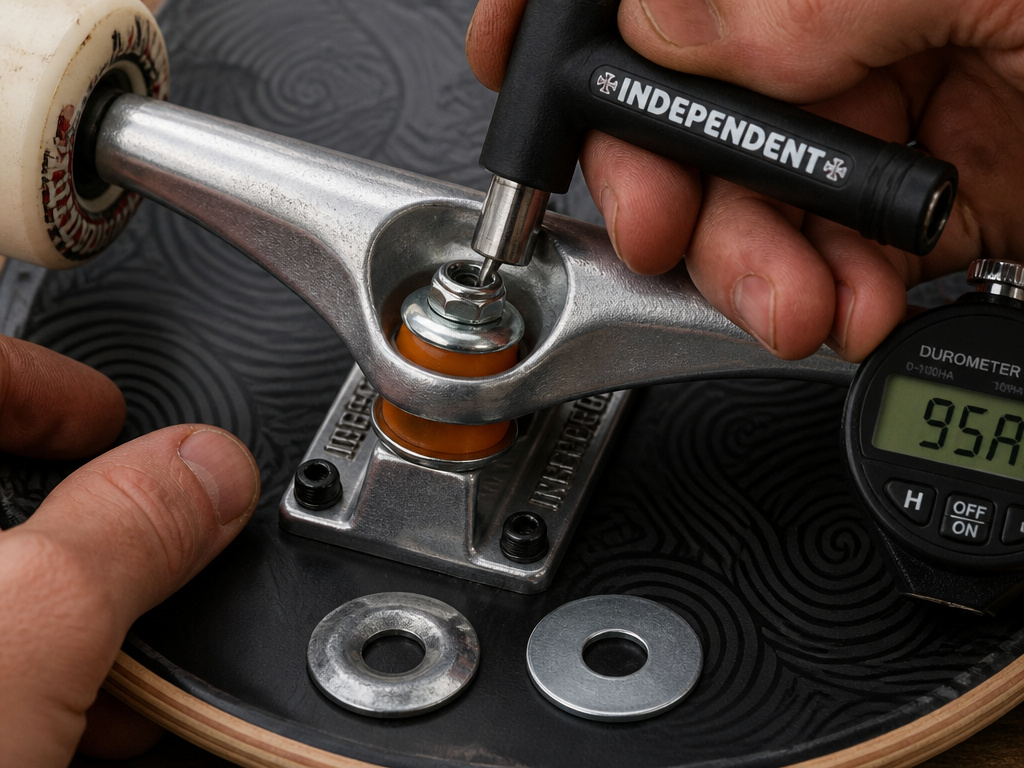
Tightening the kingpin nut compresses the urethane bushings around the kingpin. This compression is what restricts the hanger’s side-to-side tilt. Think of the bushings as springs: squashing a spring makes it harder to compress further. That’s why a quarter-turn changes the force needed to initiate a turn.
The SkatePro guide notes that bushing hardness, measured on the durometer scale, influences sensitivity. A soft bushing compresses easily, so you can tighten the nut quite a bit before it restricts movement. A hard bushing is already stiff, so a little tightening goes a long way. This is why a 130-pound skater might crank down on soft stock bushings, while a 210-pound skater with hard aftermarket bushings might keep the nut fairly loose.
The mechanical failure point is visual. If you’ve had to tighten the kingpin nut so much that the washer starts to bend into a concave shape, you’ve passed the bushing’s load capacity. At this point, switching to harder bushings adds the stability you’re chasing without the damage. More tightening just wrecks the hardware.
When Tightening Isn’t the Answer
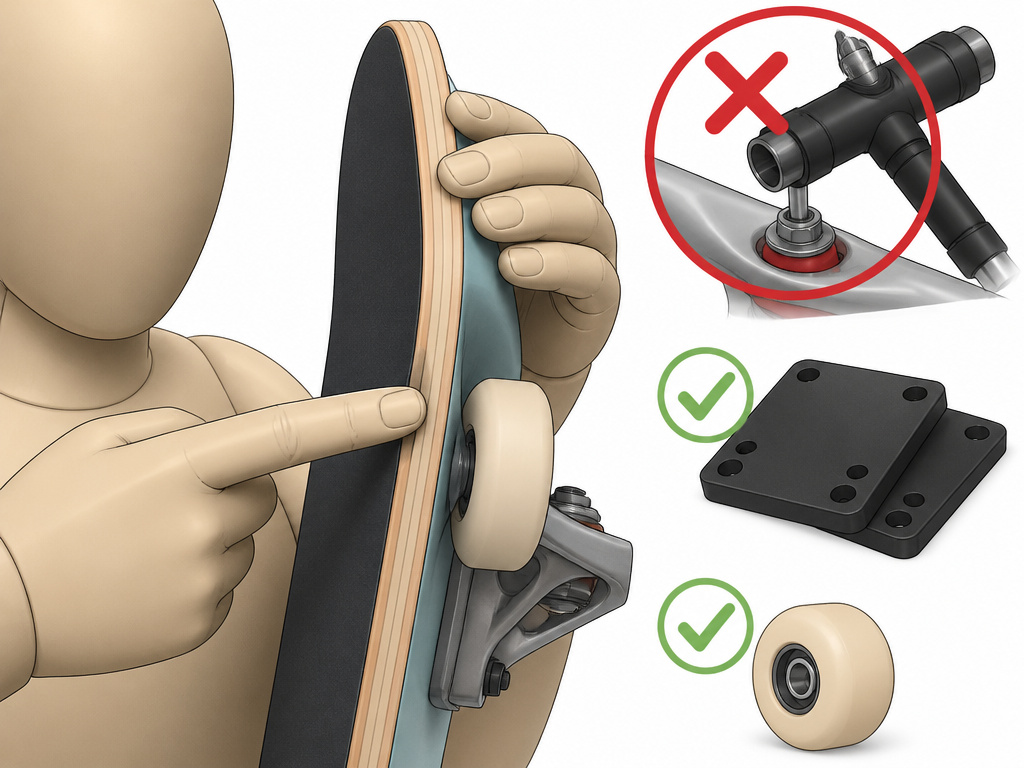
You can only tighten a truck so far before physics says no. Here are the signs you need a different solution.
Wheel bite is the classic. If your wheels are grinding the deck on hard turns, tightening the trucks can reduce the turn angle and help. But if you don’t want to sacrifice agility, the SkatePro guide suggests riser pads or smaller wheels. Risers change the board’s geometry, creating a steeper pop angle that requires more effort—something to note if you have shorter legs.
If you’re struggling with speed wobble, tighter trucks can help stabilize the board. The CPSC fact sheet agrees, stating that keeping trucks “tightened properly” improves stability at higher speeds. But they also recommend crouching and riding forward to manage wobble. Sometimes the fix is in your stance, not your tools.
Finally, if your board feels dead and unresponsive, tightening won’t bring back the pop. SkatePro points out that an old, worn deck naturally feels less snappy. You’re tuning the trucks, not resurrecting the wood.
Tightness for Beginners vs. Experienced Skaters
A common forum question is whether beginners should start tight or loose. The data shows a split.
Younger, lighter skaters may need tighter trucks initially because they can’t always apply enough pressure to turn looser ones properly. But a beginner with trucks cranked down won’t learn to carve or control speed with lean. They learn to lift the front wheels instead.
My strong opinion? A true beginner should start with both trucks set to a medium, even tightness per the Skate Labs rule. This provides a stable platform for learning to push and ride straight. The “front looser than back” preference some experienced skaters mention is for specific styles, like downhill or bowl carving. A Reddit user put it bluntly: “a noob should always be skating with even trucks because if they put the looser one in back without realizing they will speed wobble like a mf if they get going too fast.”
What most people get wrong: Thinking tight trucks are inherently safer for beginners. Trucks so tight the wheels lift off the ground during a turn (a Reddit-reported threshold) are more dangerous. You lean, the board doesn’t turn, and you fall.
The 10-Minute Pre-Ride Check
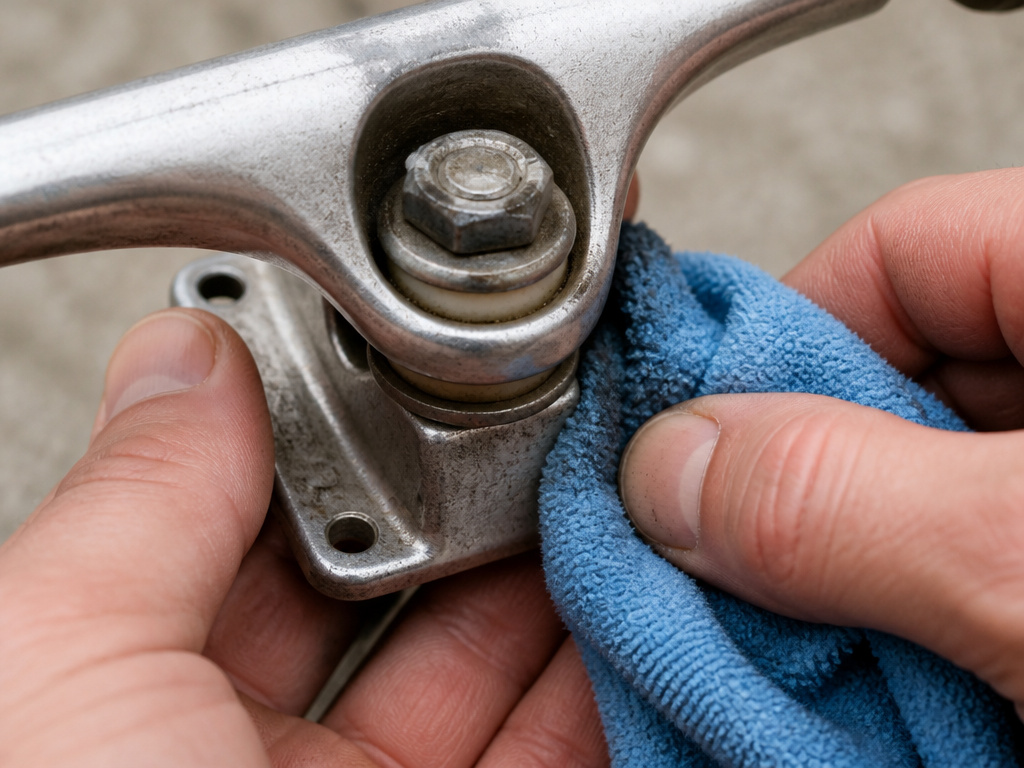
Truck tuning isn’t a set-it-and-forget-it deal. Grit builds up around the kingpin and baseplate. I incorporate a quick wipe-down every few weeks: a stiff brush on the grip, a damp rag on the trucks and underside, a quick look at the hardware. My old board got one giant teardown a year and always felt gritty by month four. Catch it then and a rag does the job. Wait until it’s caked and you need a screwdriver tip.
This quick check is also when you verify your hardware tightness. Give each wheel nut a check—tighten it all the way, then back it off a touch so the wheel spins freely with almost no side-to-side play, as the Skate Labs guide instructs. Loose hardware is a quick fix that prevents bigger problems.
Frequently Asked Questions
Can I tighten my trucks without a skate tool?
Yes. An adjustable wrench fits the kingpin nut. It’s less convenient than a skate tool but works in a pinch. The SkatePro guide explicitly lists this as an option.
How do I know if my trucks are too tight?
If you can’t make a turn without your wheels coming off the ground, they’re too tight. A board that barely turns when you lean is unstable in a different way. Another sign is if the washer under the kingpin nut is bending.
Should my front and rear trucks be equally tight?
Sources disagree. Skate Labs advises setting both trucks to the same tightness to start, while some Reddit users suggest your front truck will usually be looser than your back truck, and others argue a beginner should always skate with even trucks to avoid speed wobbles.
Why do my trucks still feel loose after tightening?
You likely have soft bushings that are fully compressed. Further tightening will only damage the washer. The solution is to replace them with harder bushings matched to your weight.
How often should I check my truck tightness?
Incorporate it into a quick pre-ride visual check. If you skate regularly, a conscious tune-up every few weeks is plenty. Changes in temperature can also affect urethane bushings, so a seasonal check is wise.
Before You Go
Tightening trucks is a tuning exercise, not a muscle test. The goal is to find the spot where you have control without losing the ability to turn. If you take one thing away, let it be the quarter-turn rule. Adjust, ride, repeat. Your body will tell you what’s right faster than any guide.
If you’re constantly adjusting and never satisfied, the issue might not be the nut. Look at your bushings. Switching to a weight-matched set of harder bushings can change the feel more than any wrench turn. Sometimes the answer isn’t more force, but the right part.
