
10 Best 3 Wheel Scooters in 2026
This post contains affiliate links. As an Amazon Associate, we earn from qualifying purchases.
Our best overall three-wheel scooter is the Micro Kickboard Mini 3-Wheel Toddler Scooter for its durable, development-focused lean-to-steer design. For older kids needing a performance ride, the Micro Kickboard Maxi LED excels, while the Gotrax KS1 Kids 3-Wheel Kick Scooter is our top budget pick.
Choosing a three-wheel scooter means balancing a child’s need for stability with their growing coordination and skill. The wrong scooter can be too wobbly for a beginner or too basic for an experienced rider. Our research is based on specifications, manufacturer data, expert round-ups, and patterns in owner feedback.
We’ve compared ten models to help you find the right fit for your child’s age, size, and confidence level.
Top 10 Three-Wheel Scooters in the Market
Certain content that appears on this site comes from Amazon. This content is provided "as is" and is subject to change or removal at any time.
The Best Three-Wheel Scooters, Reviewed
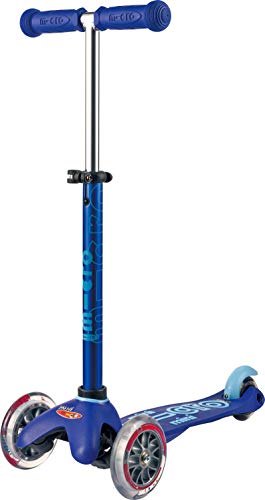
Micro Kickboard Mini 3-Wheel Toddler Scooter
What We Like
- Lean-to-steer design builds balance and coordination
- Adjustable T-bar grows through multiple growth stages
- Lightweight yet supports up to 110 lbs
- Slip-resistant footplate and PU wheels for stable rides
Trade-offs
- Lean-to-steer requires more balance than a traditional turning handlebar
- No integrated lights or seat option
Designed as an ideal first scooter for toddlers and young children ages 2-5, the Micro Kickboard Mini uses a three-wheel lean-to-steer design for added stability. This approach helps kids naturally develop balance and steering control as they ride by shifting their weight. The adjustable T-bar grows with your child, and the scooter is strong enough to support riders up to 110 lbs, making it a dependable choice through multiple growth stages.
This intuitive steering does have a slight learning curve compared to scooters with a traditional turning handlebar, like the Razor Jr. Lil’ Kick. Beginners might need a moment to get the hang of it. Expert round-ups note that once they do, the handling is smoother and more rewarding. While it’s a more premium investment without flashy extras like light-up wheels, the consensus from owners and experts is clear: for unmatched build quality and a design that genuinely grows with your child, the Micro Kickboard Mini is the benchmark.
Micro Kickboard Maxi LED 3-Wheel Kids Scooter

What We Like
- Lean-to-steer design builds balance and confidence.
- Adjustable T-bar grows with your child for years.
- Motion-activated LED wheels add visibility and fun.
- Durable, Swiss-engineered construction with a 2-year warranty.
Trade-offs
- Lean-to-steer requires more coordination than simple handlebar turning.
- No battery or charger included; motion-activated lights only.
With a 110-pound weight capacity and an adjustable T-bar, this scooter is built to last through the rough-and-tumble years of an older kid. It’s designed for ages 5 to 12 who are ready for more speed and control, using a lean-to-steer system that develops coordination while providing stable, carvable rides. The motion-activated LED wheels are a clever, battery-free touch for evening visibility. This is a scooter you buy once, trusting its Swiss engineering and two-year warranty to handle daily pavement duty.
The Micro Kickboard Maxi is a premium choice because its Swiss-engineered durability and sophisticated handling command a higher price than many other scooters. Research mentions note that Micro Kickboard models are the most expensive scooters on their list. Its three-wheel setup uses a lean-to-steer mechanism for enhanced stability, which allows natural carving. This helps develop balance and coordination for kids ages 5-12 who are ready for more speed and control. However, reviewers note that more experienced riders who prioritize raw stability at higher speeds might prefer the wider-set front wheels of a model like the Besrey Turbo+, which feels more planted but less maneuverable at slower speeds.
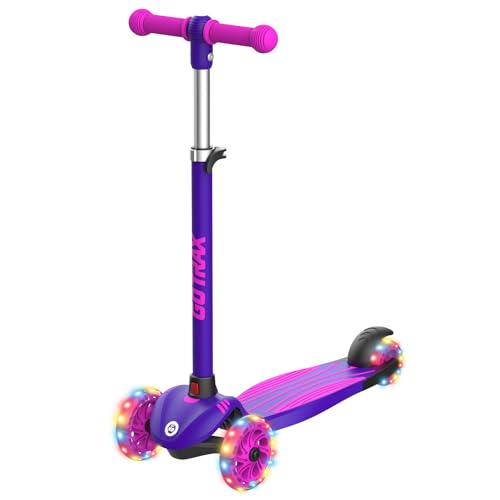
Gotrax KS1 Kids 3-Wheel Kick Scooter
What We Like
- Lean-to-steer design builds balance and coordination
- Very wide handlebar height range grows with a child
- Light-up wheels increase visibility in low light
- One-button disassembly for easy transport and storage
Trade-offs
- Lean-to-steer mechanism is less refined than higher-end models
- Non-foldable seat compared to the Gotrax KS3 model
With a handlebar that adjusts from just under 30 inches to nearly 34 inches, the Gotrax KS1 can accommodate a kid from their first wobbly pushes well into elementary school. That long fit window, combined with its simple lean-to-steer operation and eye-catching light-up wheels, delivers serious play value without a premium price tag. It’s a straightforward, lightweight choice for parents looking for a durable first scooter that their child won’t outgrow in a single season.
Research comparisons note that while the Gotrax KS1 and KS3 offer solid value, their steering is not as finely tuned as on higher-end models. The KS3 model is essentially the same scooter but includes a foldable seat, adding a bit more weight. This provides a clear upgrade path if a seated riding option is desired later.
Gotrax KS3 Kick Scooter with Seat

What We Like
- Foldable, removable seat for sitting or standing
- LED light-up wheels for visibility and fun
- Lean-to-steer design builds balance and coordination
- Wide anti-slip deck for stable footing
Trade-offs
- Lean-to-steer may feel less precise than handlebar steering
The foldable, removable seat is the defining feature, letting a young rider switch between sitting for confidence and standing for fun as their skills grow. That versatility, paired with a 110-pound weight limit and an adjustable handlebar, makes this scooter a solid long-term companion for a preschooler. The LED light-up wheels are a major hit with kids and add a safety bonus for low-light play, while the simple one-button assembly means you’re riding quickly.
A removable seat and LED light-up wheels make the Gotrax KS3 a versatile first scooter that can switch between sitting and standing modes, keeping a child’s interest high. This model offers solid value at an affordable price, though its lean-to-steer mechanism is not as finely tuned as higher-end models. With an adjustable handlebar height from 31.3 to 34.8 inches, it accommodates a growing child for several years.
Razor Jr. Lil' Kick 3-Wheel Scooter

What We Like
- Extra-wide deck for beginner stability
- Slip-resistant deck surface
- Larger polymer wheels for smooth rolling
- Anti-tip stance design
Trade-offs
- No adjustable handlebar for growth
A 14.4-inch wide deck is the standout feature here, giving a toddler a solid, confidence-boosting platform for their first scooter experience. The slip-resistant surface and anti-tip stance work together to prevent slips and wobbles, making this Razor a perfect fit for a three-year-old just learning to balance and steer. It’s built for that pure, simple stage of kicking and going, without any complicated lean-to-steer mechanics to master.
The trade-off for that stability is a fixed, non-adjustable handlebar, so its useful life is tied to your child’s height. When they outgrow it, you’ll be shopping again. This Razor is ideal for a child who needs maximum stability right now. If you want a scooter that grows for several years, you’d look at something like the Micro Kickboard Mini with its adjustable T-bar.
Radio Flyer My 1st Scooter

What We Like
- Extra-wide base for superior balance
- Two front wheels create a secure ride
- Lightweight frame for easy handling
- Textured deck provides steady footing
Trade-offs
- Fixed-height handlebar lacks adjustability
A 12-inch wide deck and two front wheels deliver a platform so stable it practically eliminates the wobbles that can scare a first-time rider. That’s why the Radio Flyer My 1st Scooter is the clear pick for parents whose top priority is getting a toddler rolling with confidence. The design prioritizes a clear kick path and a simple foot brake, letting kids focus on the basic push-and-glide motion without complex steering mechanics getting in the way.
A fixed handlebar means this scooter doesn’t grow with your child. For the intended age group of two to five, however, its mission is singular: to provide the safest, most forgiving introduction to scooting possible. Its specifications are built precisely for that job.
Product photos
Jetson Jupiter Mini 3-Wheel Kick Scooter

What We Like
- Motion-activated LED lights for visibility and fun
- Adjustable handlebar for a grow-with-me fit
- Simple folding mechanism for easy storage and travel
- Stable three-wheel, lean-to-steer design for beginners
Trade-offs
- At 7.0 lb, it's heavier than the Micro Kickboard Mini (5.3 lb) and Radio Flyer (4.4 lb)
At 7.0 pounds, the Jetson Jupiter Mini is heavier than several popular three-wheel scooters, including the 5.3-pound Micro Kickboard Mini and the 4.4-pound Radio Flyer model. Its compact foldable design and simple folding mechanism, however, mean it can be stored or carried more easily than a rigid scooter. This combination of a stable three-wheel base and portable frame suits families looking for a beginner-friendly ride that doesn’t sacrifice all convenience for stability.
Compared to the lightest toddler scooters, the Jupiter Mini carries extra weight, like being over a pound heavier than the Micro Kickboard Mini. The trade-off brings motion-activated LED wheel lights and integrated stem lights for visibility, plus a wide anti-slip deck for secure footing. While not the lightest option, its adjustable handlebar height and folding mechanism aim for longer usability and easier storage.
Product photos
Yvolution Y Fliker A3 Drift Scooter

What We Like
- Highest weight capacity in the guide at 175 lbs
- Unique self-propelling, ground-free ride
- Folds down for easy transport and storage
- Quick-response hand brake for control
Trade-offs
- Heaviest scooter in the guide at 15.9 lbs
- Complex motion requires more coordination than a kick scooter
With a maximum weight capacity of 175 pounds, the Yvolution Y Fliker A3 accommodates older children and many adults, unlike other scooters in its category which often list lower limits. Its self-propelling design requires no kicking; riders build speed by shifting their weight side-to-side for a drifting and carving style of motion. This makes it suited for dynamic, trick-oriented use by active riders within its age and weight guidelines.
That distinctive riding style involves a steeper learning curve than kicking a standard scooter, requiring more coordination to master the weight-shift motion. At 15.9 pounds, it is heavier than many three-wheel scooters, so carrying it when folded demands more effort. The design prioritizes a sporty, engaging ride over straightforward simplicity or lightweight portability for young children.
Product photos
WV Wonder View 3-Wheel Scooter

What We Like
- High 154 lb capacity supports older kids
- Wide 5.3-inch deck and three wheels boost stability
- Light-up wheels add visibility and fun
Trade-offs
- At 35 inches long, it's bulkier than toddler-focused models
- No folding mechanism mentioned for transport
With a weight capacity up to 154 pounds, this scooter supports a wide range of riders within its stated 3 to 12-year age range. Its four adjustable height positions let the handlebar grow with a child, offering a longer usable life than single-size models. The three-wheel platform uses a lean-to-steer mechanism, and the 5.3-inch wide deck provides a stable base for beginners to learn balance. Light-up wheels add a fun visual element during rides.
The scooter’s 35-inch length gives it a larger footprint than some other models, like the 22.2-inch long Razor Jr. Lil’ Kick. This size may require more consideration for storage in tight spaces. For a family seeking one durable scooter to last through several years, however, its extended size and weight range can offset the need for more frequent upgrades.
Product photos
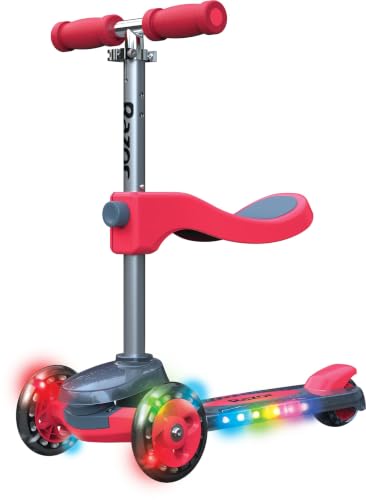
Razor Rollie DLX Scooter
What We Like
- 2-in-1 convertible seat and stand-up scooter
- Multi-color LED lights in wheels and deck
- Available in four color options
- Designed for toddlers as a first scooter
Trade-offs
- Age range tops out at 4 years old
- Heavier than the 5.2-pound Razor Jr. Lil' Kick
The 2-in-1 convertible design is the key feature here, letting a toddler start with a seated ride and transition to a standing kick scooter as their balance improves. That makes the Razor Rollie DLX a perfect first-wheeled ride for the youngest riders in the 30-month to 4-year-old range. Its light-up wheels and deck add a fun visual element that encourages use, and the whole package is built to be a confidence-boosting introduction to scootering.
This scooter’s focused age range and convertible versatility come with a bit of extra weight compared to simpler beginner models. It’s over a pound heavier than the Razor Jr. Lil’ Kick, which is something to note if portability is a frequent concern. Where it truly shines is as a developmental tool, smoothly guiding a child from sitting to standing on three wheels without needing to buy a second piece of equipment.
Product photos
How We Evaluated Three-Wheel Scooters
Our evaluation focused on comparing manufacturer specifications, documented expert recommendations, and consistent feedback from verified owners. We looked for patterns in what makes a scooter safe, durable, and appropriate for different age groups and skill levels. The key criteria were stability for beginners, adjustability for growth, and the developmental benefits of the steering mechanism.
We also considered specific features like integrated lights, seat options, and weight capacity for longevity. This research-based approach provides a detailed comparison, but it cannot replicate the experience of a child test-riding a scooter, which we always recommend when possible.
What To Look For In Three-Wheel Scooters
The right three-wheel scooter should build confidence and grow with your child. Focus on stability for beginners, an adjustable handlebar for longevity, and a design that matches your child’s current coordination.
Key factors are deck width for stability, handlebar adjustability for growth, steering type (lean-to-steer vs. Handlebar turn), and added features like lights or a seat for versatility and safety.
Stability & Deck Design
Stability is the primary reason to choose a three-wheel scooter over a two-wheel model. The extra wheel creates a self-stable platform that won’t tip over on its own, which is crucial for first-time riders. Look for a wide, slip-resistant deck; models like the Razor Jr. Lil’ Kick and Radio Flyer My 1st Scooter prioritize this with extra-wide bases. A wider deck allows a toddler to place their feet side-by-side, which can feel more secure than a staggered stance during the learning phase.
Steering Mechanism & Skill Development
Most three-wheel scooters use a lean-to-steer design, where the front wheels pivot based on the rider’s body lean, similar to a skateboard. This builds core balance and coordination in a way traditional handlebar steering does not. While intuitive for many kids, it requires more initial balance than a simple turning handlebar. For young toddlers taking their very first rides, a model with a fixed, non-leaning front axle, like the Radio Flyer, offers maximum stability but won’t develop the same advanced skills.
Adjustability & Weight Capacity
An adjustable handlebar is essential for a scooter to last through multiple growth spurts. Models like the Micro Kickboard Mini and Gotrax KS1 offer wide height ranges. You should also check the manufacturer’s stated weight capacity. This ensures the scooter can support your child now and in the near future. High-capacity models like the Yvolution Y Fliker A3 Drift Scooter (175 lbs) or the WV Wonder View 3-Wheel Scooter (154 lbs) are designed to support older kids and even teens, which offers a much longer useful life.
- Check the handlebar height range against your child’s current inseam.
- Verify the weight limit exceeds your child’s weight with room to grow.
- Consider if a foldable design, like the Jetson Jupiter Mini, is important for your storage or travel needs.
- For beginners, prioritize a low deck height to the ground for easy foot placement.
- Look for larger, polyurethane (PU) wheels for a smoother ride over cracks and bumps.
A scooter with an adjustable T-bar can provide several years of use, making a higher initial investment worthwhile.
Three-Wheel Scooters Compared
The comparison table below details the key specifications and features of our top picks side-by-side.
| Product | Recommended Age | Weight Capacity | Weight |
|---|---|---|---|
| Micro Kickboard Mini 3-Wheel Toddler Scooter | Ages 2-5 | Up to 110 lbs | 5.3 Pounds |
| Micro Kickboard Maxi LED 3-Wheel Kids Scooter | Ages 5-12 | Up to 110 lbs | 6.2 Pounds |
| Gotrax KS1 Kids 3-Wheel Kick Scooter | N/A | 110 lbs | 5.1 Pounds |
| Gotrax KS3 Kick Scooter with Seat | Age 2+ | 110 lbs | 6.0 pounds |
| Razor Jr. Lil' Kick 3-Wheel Scooter | Toddlers Age 3+ | N/A | 5.2 Pounds |
| Radio Flyer My 1st Scooter | 2-5 years old | N/A | 4.4 Pounds |
| Jetson Jupiter Mini 3-Wheel Kick Scooter | N/A | N/A | 7.0 pounds |
| Yvolution Y Fliker A3 Drift Scooter | Ages 7+ | 175 lbs | 15.9 lbs |
| WV Wonder View 3-Wheel Scooter | Ages 3-12 | 154 lb | N/A |
| Razor Rollie DLX Scooter | 30 months to 4 yrs | N/A | 6.6 pounds |
Frequently Asked Questions
What is the best 3-wheeled scooter?
The best model depends on the rider’s age and skill. For a development-focused first scooter that grows with a toddler, the Micro Kickboard Mini 3-Wheel Toddler Scooter is our best overall. For older kids ready for a performance ride, the Micro Kickboard Maxi LED is an excellent choice. Our guide on kids’ three-wheel scooters explores these options further.
What are the top three scooter brands?
Based on our research, Micro Kickboard is consistently highlighted for its durable, Swiss-engineered construction and refined lean-to-steer mechanism. Razor is a leading name for beginner-friendly, stable designs with wide decks. Gotrax offers strong value in the budget category with feature-packed models like the KS1 and KS3 that include light-up wheels and wide handlebar adjustments.
What is the best 3-wheel mobility scooter?
This guide focuses on kick scooters for children and adults. For motorized assistance, you’ll want to research dedicated three-wheel mobility scooters, which are designed for different needs involving stability and seated support over longer distances.
Which three-wheel electric scooter is the best?
Electric three-wheel scooters are a separate category, often intended for older teens and adults seeking motorized transportation. Our research for this guide did not cover electric models, but you can explore dedicated resources on electric three-wheel scooters.
What is a good first scooter for a 3-year-old?
For a 3-year-old, prioritize maximum stability and a low deck. The Radio Flyer My 1st Scooter or the Razor Jr. Lil’ Kick are excellent choices with extra-wide bases. If you want a scooter that will develop balance skills and last for years, the adjustable Micro Kickboard Mini is a premium option. You can find more focused recommendations in our guide to scooters for 3-year-olds.
The Bottom Line
The Micro Kickboard Mini 3-Wheel Toddler Scooter is the best overall choice for parents seeking a durable, development-focused first scooter. Its lean-to-steer design builds balance and coordination, and the adjustable T-bar ensures it grows with a child from ages 2 to 5.
If you’re on a budget, the Gotrax KS1 Kids 3-Wheel Kick Scooter delivers excellent value with light-up wheels and a wide height range. For toddlers who need the utmost stability to build initial confidence, the Radio Flyer My 1st Scooter with its extra-wide base is the ideal pick.
When choosing, match the scooter’s stability and steering mechanism to your child’s current skill level, this is the single most important factor for a safe and fun riding experience that encourages growth.
