
10 Best Scooters For 3 Year Old in 2026
This post contains affiliate links. As an Amazon Associate, we earn from qualifying purchases.
We recommend the Micro Kickboard Mini 3-Wheel Toddler Scooter as the best overall for its skill-building lean-to-steer design and durable, adjustable construction. For the most stable beginner, consider the Radio Flyer My 1st Scooter, and for a versatile option with a seat, the Retrospec Chipmunk Plus Kids Scooter is a great choice.
Choosing a first scooter for a three-year-old means balancing safety, stability, and fun to build their confidence. The right scooter encourages active play while developing essential motor skills.
Top 10 Scooters For 3 Year Olds in the Market
Certain content that appears on this site comes from Amazon. This content is provided "as is" and is subject to change or removal at any time.
The Best Scooters For 3 Year Olds, Reviewed
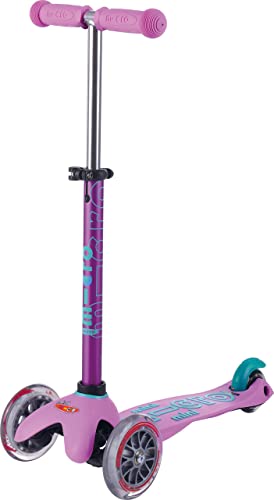
Micro Kickboard Mini 3-Wheel Toddler Scooter
What We Like
- Lean-to-steer design builds balance and coordination
- Adjustable T-bar grows through multiple growth stages
- Slip-resistant footplate and PU wheels for stable rides
- No assembly required beyond T-bar insertion
Trade-offs
- At 4.2 lb, it's among the lightest, but lacks built-in lights for low-light riding
- It is a premium model, costing more than most competitors like the Razor Scooter Jr.
With a 110-pound weight capacity and an adjustable T-bar, this scooter can support a child from age two through age five. Its three-wheel lean-to-steer design provides stability for toddlers while helping them naturally develop balance and coordination. For parents seeking a single, durable scooter for the preschool years, the Micro Kickboard Mini’s thoughtful construction makes it a dependable choice.
The trade-off is that you’re paying for longevity and engineering, not for flashy features. Unlike the Gotrax KS1 or Radio Flyer Flyer Glider Jr., this scooter foregoes light-up wheels to focus purely on ride quality and durability. Expert round-ups note that while Micro Kickboard models are the most expensive options, their reputation for unmatched quality and durability makes them worth the investment.
Radio Flyer My 1st Scooter

What We Like
- Extra-wide base provides maximum stability for beginners
- Two front wheels create a clear, safe kick path
- Specially designed turning radius for safe control
- Lightweight, sturdy frame for easy handling
Trade-offs
- No light-up wheels, unlike the Radio Flyer Flyer Glider Jr.
The 12-inch extra-wide base and two front wheels give this scooter a uniquely stable, tip-resistant stance that builds confidence for first-time riders. It’s built for the 2-5 year old who needs a secure platform to learn the fundamentals of balance and kicking. The controlled turning radius and simple foot brake mean parents can relax a bit while their child masters the basics on sidewalks and driveways. This is the scooter you get when safety and ease of use are the absolute top priorities.
Designed specifically for ages 2 to 5, the Radio Flyer My 1st Scooter prioritizes a stable first riding experience over long-term adaptability. Its construction omits certain features common on other scooters in its category. For instance, it lacks the adjustable-height T-bar found on the Micro Kickboard Mini, and it does not include illuminated wheels like those on the Radio Flyer Flyer Glider Jr. model. Parents seeking a scooter that can be adjusted as a child grows may prefer an alternative, but this scooter’s design is singularly focused on building immediate confidence for beginners.
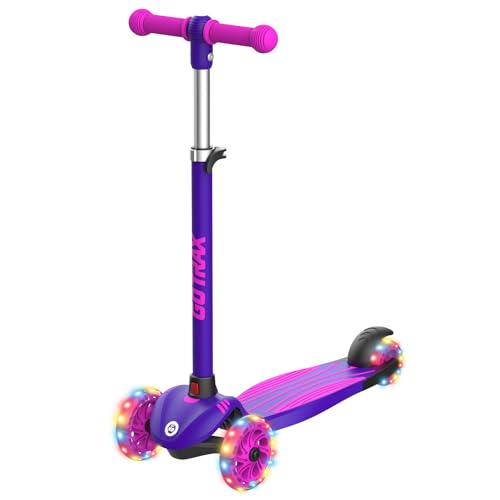
Gotrax KS1 Kids Kick Scooter
What We Like
- Lean-to-steer design builds balance naturally
- Very lightweight for easy carrying and storage
- Wide anti-slip deck enhances stability for beginners
- LED wheels add fun and low-light visibility
Trade-offs
- Non-folding design lacks the versatility of a seat option
A maximum load of 110 pounds and an adjustable handlebar that grows with your child make the Gotrax KS1 a scooter built to last through the preschool years. It’s our top budget pick because it delivers core features, like the balance-building lean-to-steer mechanism and safety-focused wide deck, without any frills that drive up cost. For parents seeking a straightforward, reliable first scooter that won’t break the bank, this model covers the essentials.
Research mentions note that while the Gotrax KS1 and KS3 deliver solid value, they are not as finely tuned as higher-end models. The KS1 lacks the foldable seat included on some other scooters like the Retrospec Chipmunk Plus. However, weighing only 5.1 pounds, it is lightweight enough for a parent to carry easily when needed.
Retrospec Chipmunk Plus Kids Scooter

What We Like
- Folding, removable seat for sit-and-scoot breaks
- Light-up PU wheels for visibility and fun
- Co-molded deck traction prevents slips
- Adjustable seat and handlebar grow with child
Trade-offs
- Seat folds but scooter is 8 pounds, heavier than some 3-wheelers
- Seat supports only 55 lbs, outgrown before handlebar height
The Retrospec Chipmunk Plus brings a unique folding seat to the three-wheel scooter category, letting a tired preschooler take a break without ending the ride. That flexibility makes it a standout for kids who are still building their stamina or for longer family outings. Its three light-up wheels and lean-to-steer design provide the stable, confidence-boosting platform beginners need, while the adjustable handlebar ensures it can stick around for a few growth spurts.
Its weight is a consideration. At eight pounds, it’s on the heavier side for this category, which matters if you’ll be the one carrying it home. If a seat isn’t a priority, the lighter Micro Kickboard Mini offers a more streamlined, proven lean-to-steer experience.
Razor Scooter Jr. Lil' Kick Scooter

What We Like
- Extra-wide deck for exceptional stability
- Slip-resistant deck surface for safety
- Larger polymer wheels for a smooth ride
- Anti-tip three-wheel design for beginners
Trade-offs
- At 5.2 lb, it's heavier than the 4.2 lb Micro Kickboard
The 14.4-inch extra-wide deck is the single most important feature here, giving a three-year-old a confident, stable platform to stand on while they learn to balance and kick. This Razor is built for that first-timer who needs all the help they can get staying upright. The slip-resistant surface and those larger polymer wheels add to that sense of secure footing, making it a straightforward, no-fuss choice for building fundamental scooter skills.
That generous stability does come with a trade-off in agility compared to a lean-to-steer model like the Micro Kickboard. It’s also a bit heftier than some rivals, which is worth noting if portability is a priority. For a parent whose top concern is getting a wobbly kid rolling with maximum confidence right out of the gate, this scooter’s wide base makes it a standout. It’s a simple, purpose-built tool for mastering the basics.
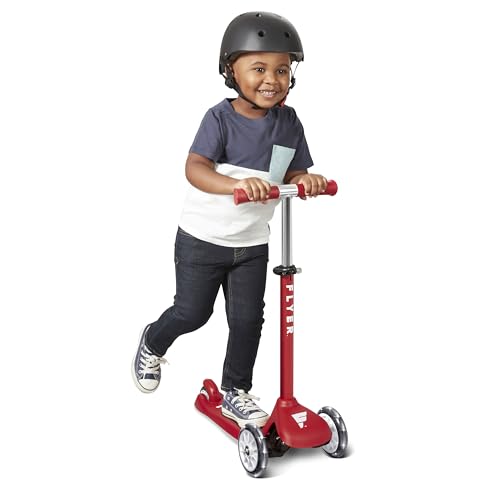
Radio Flyer Flyer Glider Jr. Scooter
What We Like
- Smooth-rolling light-up wheels for evening fun
- Adjustable handlebar grows with your child
- Rear footbrake for safe, quick stopping
- Premium construction built to last for years
Trade-offs
- At 5.1 lb, it's heavier than the 4.2 lb Micro Kickboard
- No lean-to-steer design like the Micro Kickboard Mini
- Wider 9.4-inch stance may feel less agile for some
Light-up wheels on the Radio Flyer Flyer Glider Jr. help toddlers focus on their balance, which can make evening rides or family walks more engaging. This scooter is a solid pick for parents who want a durable, straightforward ride from a trusted brand. Its adjustable handlebar means it can stick around for a few growth spurts, and the rear footbrake adds a reliable layer of safety for neighborhood adventures.
It uses a traditional handlebar turn instead of the intuitive lean-to-steer mechanism found on the Micro Kickboard Mini. That means it might take a bit more conscious effort for a three-year-old to navigate tight corners. You’re choosing a classic, stable platform with those brilliant wheels over the fluid, carving feel of a lean-steer design. It’s a great option if your priority is a tough, no-fuss scooter that makes every ride a little more magical.
Product photos
Huffy Disney Frozen 3-Wheel Scooter

What We Like
- Bright Frozen character graphics spark imaginative play
- Stable three-wheel design builds beginner confidence
- Wide, comfortable deck for easy standing
- Includes a fun handlebar basket for treasures
Trade-offs
- At 5.7 lb, it's heavier than the Micro Kickboard Mini (4.2 lb)
- No adjustable handlebar height for growth
- No light-up wheels like some competing models
The enchanting Elsa and Anna artwork turns every neighborhood glide into a story-filled adventure. This is perfect for sparking a three-year-old’s enthusiasm to get outside and scoot. The scooter suits beginners who need the secure feeling of a stable three-wheel design and a wide deck to build their balance. The included basket also gives them a spot for their favorite rocks or action figures. It’s a character-driven choice that makes learning to scoot feel like play.
You do trade some lightweight portability for that magical styling, as it weighs a bit more than simpler models. The handlebar height is fixed, so it won’t grow as much with your child as an adjustable option like the Micro Kickboard Mini. For a Frozen fan who’s just starting out, though, the fun graphics and steady ride are likely to be the deciding factors that get them rolling.
Product photos
Campior Mini 3 Wheel Scooter

What We Like
- Four height settings for extended growth range
- Motion-activated LED wheels for fun and visibility
- Wide anti-slip deck provides secure footing
- Lean-to-steer design builds balance intuitively
Trade-offs
- At 6.4 lb, it's heavier than the Micro Kickboard (4.2 lb)
- No quick-fold mechanism for storage or transport
The four-position adjustable handlebar is the real story here, letting a single scooter fit a kid from their second birthday well into their early grade school years. That’s a serious lifespan for a toddler toy. Combine that with the intuitive lean-to-steer system and the wide, grippy deck, and you have a scooter built to build confidence from a wobbly first push to a full-speed cruise. It’s a solid pick for parents who want one purchase to cover several growth spurts.
Weighing 6.4 pounds, the Campior Mini 3 Wheel Scooter is heavier than some competitors, which may be noticeable for a young child or a parent carrying it. The Micro Kickboard Mini, for example, is listed at 4.2 pounds. For a family that needs maximum portability, the lighter model exists, but the Campior’s adjustable handlebar accommodates growth up to 110 lbs.
Product photos
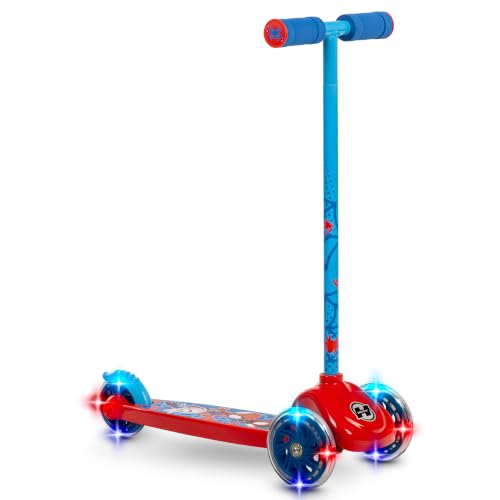
Huffy Marvel Spider-Man 3-Wheel Scooter
What We Like
- Stable 3-wheel design for preschool balance
- Multi-color LED wheels activate while riding
- Spider-Man graphics inspire imaginative play
- Non-slip deck and reliable foot brake
Trade-offs
- No lean-to-steer mechanism for natural turning
The light-up LED wheels are the standout feature, transforming every push into a colorful light show that adds visibility and a major fun factor for a three-year-old. This scooter suits a child who needs the confidence boost of a stable three-wheel design and is motivated by bold superhero styling. The easy steering system and rear foot brake are built specifically for a preschooler’s coordination, making it a solid tool for learning the basics of scooting.
The Huffy Marvel Spider-Man 3-Wheel Scooter is built for preschoolers, with a stable three-wheel design that helps young riders build confidence as they learn to steer and balance. Its bright graphics and light-up LED wheels are designed to inspire imaginative play and add excitement to every ride. For a parent whose main goal is to get a reluctant rider excited to go outside, these features are an incentive that simpler, more utilitarian scooters may not offer.
Product photos
Lifemaster Kids 3-Wheel Kick Scooter

What We Like
- Durable frame supports up to 110 lbs
- Lean-to-steer aids balance development
- LED lights increase visibility for evening use
Trade-offs
- Handlebar lowest setting is taller than some competitors
That extra height means a taller three-year-old won’t outgrow it as quickly, and the 110-pound weight limit gives it serious longevity for a preschool toy. Its lean-to-steer design is a smart choice for building coordination, letting a kid turn intuitively by shifting their weight rather than wrestling with a handlebar. This combination of a high growth ceiling and a focus on developmental riding makes it a standout for parents whose kids are already on the taller side.
You do pay a small penalty for that sturdiness and height in the scooter’s weight. At six pounds, it’s the heaviest option here, noticeably more than the 4.2-pound Micro Kickboard. That can make it a bit more of a chore for a small child to carry up stairs or for you to toss in the trunk. Compared to the lighter, more minimalist Micro, the Lifemaster trades some portability for extended usability and those fun flashing lights, which are a pure joy factor for any kid heading out for a dusk ride.
Product photos
How We Evaluated Scooters For 3 Year Olds
Our evaluation was based on manufacturer specifications, expert round-up recommendations, and patterns in owner feedback. We prioritized stability features like deck width and three-wheel designs, growth adjustability via handlebar height settings, and overall build quality for durability. We also considered fun elements like light-up wheels and character designs that motivate young riders. Since this is a research-led evaluation, we cannot comment on long-term durability beyond what the manufacturer documentation and owner reports indicate.
What To Look For In Scooters For 3 Year Olds
The right scooter for a three-year-old prioritizes stability and safety to build confidence, with enough adjustability to last through early growth spurts. Key features like deck design, steering mechanism, and wheel type all contribute to a successful first riding experience.
Focus on a wide, slip-resistant deck and a stable three-wheel base for safety. Look for adjustable handlebars to grow with your child and a steering design that matches their coordination level.
Stability and Safety
A wide deck gives a child a secure place to stand, reducing wobbles. Look for a deck with a textured or rubberized anti-slip surface to prevent feet from sliding, especially during kicking. A three-wheel design, particularly with two wheels in front, offers the most inherent stability for beginners, preventing tip-overs. A reliable foot brake on the rear fender is a common and effective safety feature for this age.
Growth Adjustability
Handlebar height is the primary way a scooter grows with your child. Many models offer multiple height settings; a lower minimum height suits a younger or shorter three-year-old, while a higher maximum extends usability. Some scooters for 2-year-olds start very low, while models for 4-year-olds might have taller starting points. Weight capacity is another longevity factor, with some durable frames supporting up to 110 lbs.
Steering and Ride Quality
The steering mechanism impacts how a child learns to turn. A lean-to-steer design, where the scooter turns by shifting body weight, helps develop natural balance and coordination. Traditional handlebar steering, where the front wheel pivots, can be simpler for some beginners to grasp initially. Wheel material also affects the ride; polyurethane (PU) wheels generally offer a smoother, quieter roll compared to harder plastic wheels.
Practical Checks
- Check the assembly requirements; some models require only handlebar insertion, while others need more steps.
- Consider the scooter’s weight; a lighter model is easier for a child to maneuver and for a parent to carry.
- Look at the deck’s kick path; a clear space behind the rear wheel makes kicking easier for beginners.
- Decide if fun features like LED light-up wheels or character graphics are important for your child’s engagement.
- Verify if a removable seat is desired for rest breaks during longer outings.
The best scooter for your three-year-old is the one they feel confident and excited to ride.
Scooters For 3 Year Olds Compared
The following table compares key specifications across our top picks to help you see the differences at a glance.
| Product | Age Range | Scooter Weight | Deck Width |
|---|---|---|---|
| Micro Kickboard Mini 3-Wheel Toddler Scooter | 2-5 years | 4.2 pounds | 4.5 inches |
| Radio Flyer My 1st Scooter | 2-5 years old | 4.4 Pounds | 12.0 inches |
| Gotrax KS1 Kids Kick Scooter | 2+ | 5.1 pounds | 5 inches |
| Retrospec Chipmunk Plus Kids Scooter | 3+ years | 8.0 pounds | 11.2 inches |
| Razor Scooter Jr. Lil' Kick Scooter | Toddlers Age 3+ | 5.2 pounds | 14.4 inches |
| Radio Flyer Flyer Glider Jr. Scooter | Ages 2-5 | 5.1 pounds | 9.4 inches |
| Huffy Disney Frozen 3-Wheel Scooter | Ages 3-5 | 5.7 pounds | 6.5 inches |
| Campior Mini 3 Wheel Scooter | Ages 2+ | 6.4 pounds | 11.0 inches |
| Huffy Marvel Spider-Man 3-Wheel Scooter | 3+ years old | 4.8 pounds | 13.6 inches |
| Lifemaster Kids 3-Wheel Kick Scooter | N/A | 6.0 pounds | 11.4 inches |
Frequently Asked Questions
What are some good scooters for a 3-year-old child?
Good scooters for this age focus on stability and safety. Our top picks include the Micro Kickboard Mini for its skill-building design. Another is the Radio Flyer My 1st Scooter for maximum beginner stability, and the Gotrax KS1 Kids Kick Scooter offers excellent value with light-up wheels. Look for wide decks, three wheels, and simple, reliable brakes.
What is a good 3 wheel scooter for a 3-year-old?
A good three-wheel scooter offers a stable platform. The Razor Scooter Jr. Lil’ Kick Scooter features an extra-wide deck for confidence, while the Campior Mini 3 Wheel Scooter provides extensive height adjustment for growth. For a classic, durable option with engaging lights, the Radio Flyer Flyer Glider Jr. Scooter is a strong contender.
Should I get my 3 year old a bike or scooter?
For a three-year-old, a scooter is often a better first choice than a pedal bike. Scooters, especially stable three-wheel models, help develop balance, coordination, and steering skills in a more intuitive way. They provide a fun, low-to-the-ground activity that builds confidence for future riding, whether on kick scooters or bikes.
What is the best toddler scooter?
The best toddler scooter depends on your child’s needs. For a premium, long-lasting option that builds balance, the Micro Kickboard Mini is our top pick. For the absolute easiest start, the Radio Flyer My 1st Scooter is ideal. If you want a seat for rest breaks, choose the Retrospec Chipmunk Plus. Our research into toddler scooters highlights these key models.
What features help a child learn to scooter?
Features that aid learning include a wide, slip-resistant deck for secure footing and a three-wheel design for inherent stability. A lean-to-steer mechanism encourages natural balance development, while a clear kick path makes propulsion easier. Adjustable handlebars set to the correct height, roughly waist-level, promote proper posture and control, which is a key consideration when selecting a scooter for a preschooler.
The Bottom Line
The Micro Kickboard Mini 3-Wheel Toddler Scooter is our best overall pick for parents seeking a durable, skill-building scooter that will grow with their child through the preschool years. Its lean-to-steer design uniquely fosters balance and coordination. If your priority is maximum stability for a cautious beginner, choose the Radio Flyer My 1st Scooter; for the best value with fun lights, select the Gotrax KS1 Kids Kick Scooter.
Ultimately, the right scooter for your three-year-old is one that feels stable underfoot and motivates them to play and practice, building the confidence that opens up a world of kids’ scooters and active fun.
