
10 Best Scooters For Preschooler in 2026
This post contains affiliate links. As an Amazon Associate, we earn from qualifying purchases.
Our top pick for most preschoolers is the Micro Kickboard Mini 3-Wheel Toddler Scooter for its intuitive lean-to-steer design that builds balance naturally. For an affordable option with fun lights, consider the Best Value Gotrax KS1 Kids Kick Scooter, while the Best For Beginners Radio Flyer My 1st Scooter offers maximum stability.
Choosing the right scooter for a preschooler means balancing safety, skill development, and fun. Our research compares specifications, manufacturer details, and patterns in owner feedback to help you find a model that fits your child’s age, size, and riding confidence.
Top 10 Scooters For Preschoolers in the Market
Certain content that appears on this site comes from Amazon. This content is provided "as is" and is subject to change or removal at any time.
The Best Scooters For Preschoolers, Reviewed
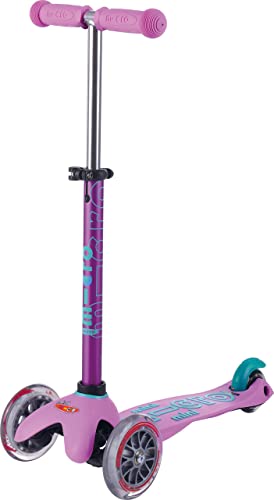
Micro Kickboard Mini 3-Wheel Toddler Scooter
What We Like
- Lean-to-steer design builds balance naturally
- Adjustable T-bar grows with your child
- Lightweight yet supports up to 110 lbs
- Slip-resistant footplate for steady footing
Trade-offs
- No integrated lights for low-light play
Designed for toddlers and young children ages 2-5, the Micro Kickboard Mini 3-Wheel Toddler Scooter provides a stable first ride that helps develop balance and coordination. Its three-wheel lean-to-steer design offers added stability while naturally teaching steering control. The scooter comes with a 2-year manufacturer’s warranty for long-term peace of mind and supports riders up to 110 lbs, with an adjustable T-bar that grows with your child through multiple growth stages.
The Micro Kickboard models are the most expensive scooters on comparison lists. It lacks features like LED light-up wheels found on models such as the Gotrax KS1 or Jetson Disney Princess Kick Scooter. Its focus is on core performance and safety, being designed and tested to meet ASTM standards, making it a straightforward and dependable first scooter.
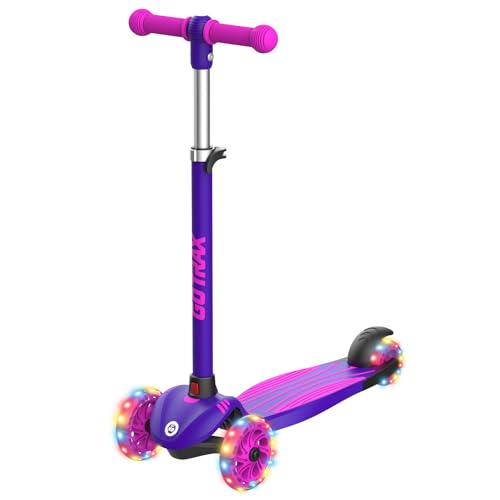
Gotrax KS1 Kids Kick Scooter
What We Like
- Very lightweight at just 5.1 pounds
- Lean-to-steer design builds balance
- Three-height adjustable handlebar grows with child
- LED light-up wheels add visibility and fun
Trade-offs
- No seat option like the Gotrax KS3 provides
A 110-pound weight limit and a handlebar adjustable across three heights allow this scooter to accommodate a child’s growth from age two and up. Its lean-to-steer technology helps develop balance and coordination from the start, while the LED light-up wheels add visibility and excitement for young riders. The Gotrax KS1 provides core features like a wide anti-slip deck and a rear brake in a lightweight, easy-to-carry package.
This simplicity does involve some compromises. You won’t find a convertible seat like on the Gotrax KS3 for when little legs get tired. Its 5-inch deck is anti-slip, but provides a different stance than the ultra-wide platform of a scooter like the Radio Flyer My 1st Scooter. That’s the nature of a value pick: you get reliable performance and fun lights in a lightweight frame, but you forgo extra play modes or the maximum beginner stability some other models include.
Radio Flyer My 1st Scooter

What We Like
- Extra-wide base for maximum stability
- Two front wheels create a clear kick path
- Lightweight frame for easy handling
- Specially designed safe turning radius
Trade-offs
- At 4.4 lb, it's heavier than the Micro Kickboard Mini.
A 12-inch wide deck and two front wheels give this scooter a uniquely stable, tip-resistant stance, which is exactly what a wobbly two-year-old needs to build confidence. The Radio Flyer My 1st Scooter is built for the absolute beginner who needs safety and simplicity above all else. Its design prioritizes a flat-footed, secure ride over agility, making it the perfect first step before graduating to a more dynamic scooter.
Designed for ages 2-5, this scooter prioritizes stability over advanced features to build a beginner’s confidence. Its extra-wide base and two front wheels create a secure platform, providing a clear kick path for new riders. The turning radius is specially designed for added safety without limiting mobility, while a rear foot brake allows for simple stopping.
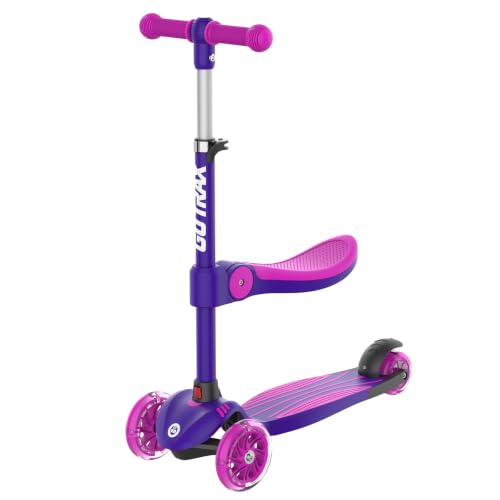
Gotrax KS3 Kick Scooter with Seat
What We Like
- Removable seat for sitting or standing riding
- LED light-up wheels for visibility
- Lean-to-steer design builds balance
- Wide anti-slip deck enhances stability
Trade-offs
- At 7.3 lb, it's heavier than the 4.2 lb Micro Kickboard
- The 5-inch deck is narrower than some beginner models
A 110 lb max load and adjustable handlebar mean this scooter can grow with a child from their first wobbly attempts to confident cruising. The removable seat is the key feature here, offering a perfect training-wheel-like transition for hesitant riders. It lets a preschooler start by sitting and scooting with their feet, building coordination before they graduate to the standing, lean-to-steer mode. That flexibility makes it a standout for parents whose top priority is easing their child into the activity.
The Gotrax KS3 includes a removable seat, which adds versatility but also weight. At 7.3 pounds, it is heavier than the 4.2-pound Micro Kickboard Mini, so it may be less convenient to carry for long periods. This scooter offers a Lean-to-Steer design and a seat that can be removed as a child’s confidence grows.
Retrospec Chipmunk Plus Kids Scooter

What We Like
- High 130-pound weight capacity for extended use
- Removable, folding seat for rest breaks
- Light-up wheels for visibility and fun
- Stable three-wheel, lean-to-steer design
Trade-offs
- At 8.0 pounds, it's heavier than the Micro Mini (4.2 lbs)
- Seat weight limit is 55 lbs, less than the deck capacity
- Deck is 11.2 inches wide, wider than some competitors
With a 130-pound weight limit, this scooter can support a child from preschool through early grade school, making it a durable long-term choice. Its three-wheeled, lean-to-steer design helps new riders learn balance without tipping over. Research notes that decks combining rubberized and hard plastic sections, like this one, were preferred for offering the best grip in wet and dry conditions. A removable seat also lets a tired child take a break and ride sitting down.
That durability and versatility come with a trade-off in portability. At eight pounds, it’s nearly twice the weight of the featherlight Micro Kickboard Mini, so carrying it home from the park feels more substantial. Compared to the simpler Radio Flyer My 1st Scooter, the Chipmunk Plus offers more features and adjustability, but its wider deck and added components make it a bulkier package overall. It’s a solid choice for families who prioritize a high-capacity, feature-rich scooter over ultimate lightness.
Scoot & Ride Highwaykick 1 Scooter

What We Like
- Unique 2-in-1 sit-on and stand-on design
- Fully adjustable seat and handlebar without tools
- Three-wheel layout for superior stability
Trade-offs
- Lacks the light-up wheels featured on many rivals
The Highwaykick 1’s convertible design, suitable for ages one to five, means it can start as a stable ride-on for a wobbly toddler and evolve into a proper kick scooter. That adaptability, paired with its tool-free adjustments, makes it a single purchase that grows through a child’s entire preschool phase. It’s built from durable materials to handle outdoor use, and the three-wheel layout provides the confidence a new rider needs.
The trade-off for that versatility is a bit of extra heft; at 6.6 pounds, it’s not the lightest scooter here, so a younger child might need help carrying it.
Product photos
Razor Scooter Jr. Lil' Kick Scooter

What We Like
- Extra-wide deck for stable, anti-tip stance
- Slip-resistant deck surface for secure footing
- Larger polymer wheels for smooth beginner rides
- Kick-powered design for simple, active fun
Trade-offs
- Fixed handlebar height does not adjust for growth
- At 5.2 lb, it's heavier than some 3-wheel models
- Lacks a dedicated rear brake system
An extra-wide 14.4-inch deck gives the Razor Lil’ Kick Scooter a planted, confident stance that new riders need. This scooter is built for the moment a preschooler first finds their balance, with a slip-resistant surface and three larger wheels that smooth out wobbly pushes. It’s a straightforward, manual kick scooter that suits parents looking for a durable first ride focused purely on fundamental skills. The classic Razor design prioritizes stability over flashy features, making it an affordable, no-fuss choice for building scooting confidence.
The Razor Scooter Jr. Lil’ Kick Scooter focuses on core stability for beginners, which means it omits features like an adjustable handlebar found on the Micro Kickboard Mini. Its fixed handlebar height cannot be raised as a child grows. At 5.2 pounds, it is lighter than several three-wheel scooters designed for toddlers, including the Retrospec Chipmunk Plus and the Jetson Disney Princess model, so a young child may find it easier to manage.
Product photos
Jetson Disney Princess Kick Scooter

What We Like
- Enchanting Disney Princess character design
- Glittery light-up wheels and multicolor LED frame
- Intuitive lean-to-steer system for beginners
- Lightweight, foldable frame for easy transport
Trade-offs
- At 7.0 lb, it's heavier than the 4.2 lb Micro Kickboard.
This scooter wins on pure magic for a preschooler, with its glittery light-up wheels and a frame sparkling with multicolor LEDs. The enchanting Disney Princess graphics transform a simple ride into a royal adventure, which is a huge motivator for kids just getting started. Its intuitive lean-to-steer system means a slight lean is all that’s needed to turn, making it genuinely easy for a three-year-old to control. Combine that with a height-adjustable handlebar, and you have a scooter designed to grow alongside a child’s confidence.
A scooter with this much visual flair does come with some extra weight. At seven pounds, it’s heavier than the lightest options in this category, like the Micro Kickboard Mini. A smaller three-year-old might need help carrying it up a curb occasionally. For a child captivated by the characters, though, that extra weight is a minor trade for the joy of riding a sparkling chariot. It folds down easily for car trips, so the real-world hassle is minimal for the payoff in ride enthusiasm.
Product photos
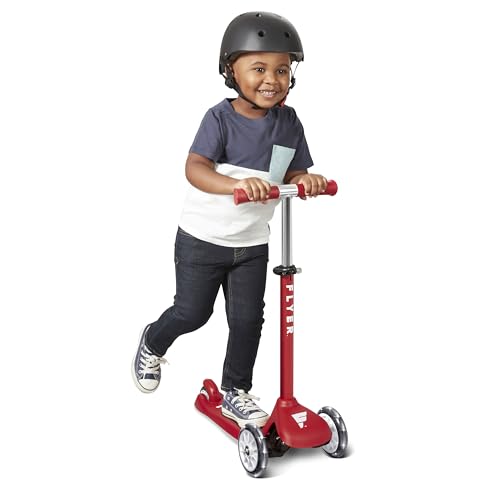
Radio Flyer Flyer Glider Jr Scooter
What We Like
- Light-up wheels for visibility and fun
- Rear footbrake for quick, simple stops
- Height-adjustable handlebar grows with child
- Award-winning design from trusted brand
Trade-offs
- Lower 60 lb weight capacity than some rivals
- Heavier than the Micro Kickboard Mini
- No lean-to-steer mechanism for intuitive turning
Awarded Best Toddler Scooter of 2025 by The Bump, the Radio Flyer Flyer Glider Jr Scooter is recognized for its ease of use and fun design. Its adjustable handlebar allows the scooter to grow with a child, and a 60 lb weight capacity accommodates many preschoolers. Light-up wheels add visibility for evening rides, while a rear footbrake helps children stop quickly for added control.
At 5.1 pounds, the scooter shares the same weight as the Gotrax KS1 and is lighter than several models like the Jetson Disney Princess scooter. Its compact form aids in storage or transport, according to the product specifications. The design uses a traditional handlebar for steering, unlike the lean-to-steer systems found on the Micro Kickboard Mini or Campior Mini.
Product photos
Campior Mini 3-Wheel Scooter

What We Like
- Motion-activated LED wheels for fun and low-light visibility
- Wide anti-slip deck provides a secure, stable footing
- Adjustable handlebar grows with a child from age 2
- Smooth-rolling PU wheels absorb shock for a steady ride
Trade-offs
- At 6.4 pounds, it is heavier than the 4.2-pound Micro Kickboard Mini
- No folding mechanism for compact storage
The lean-to-steer control is the key feature here, making it a natural choice for a toddler’s first scooter. It replaces tricky handlebar turns with simple body leans, which helps little ones build balance and coordination without the frustration. That intuitive design, combined with the wide anti-slip deck and three-wheel stability, creates a confident platform for a preschooler just starting out. The flashing LED wheels are a pure bonus, turning every push into a light show that makes kids want to ride more.
A sturdy, feature-packed build like this does add some weight. At 6.4 pounds, it’s heavier than the very lightest models, such as the Micro Kickboard Mini. A smaller two-year-old might need a bit more help maneuvering it at first. For most kids within its age and weight range, however, the smooth-rolling wheels and solid feel create a ride that seems secure and can handle rougher pavement or driveway cracks without a hiccup.
Product photos
How We Evaluated Scooters For Preschoolers
Our evaluation is based on a review of manufacturer specifications, design documentation, and expert round-ups from trusted sources. We also analyzed patterns in owner feedback to understand real-world durability and common issues. The key criteria were stability features like deck width and wheel configuration, growth adaptability through adjustable handlebars, and overall weight for a preschooler’s ability to maneuver and carry their scooter. Since this is a research-led guide, we cannot verify long-term durability claims or provide hands-on performance comparisons between models.
What To Look For In Scooters For Preschoolers
The ideal preschooler scooter provides a stable, confidence-boosting platform that can adapt as your child grows. Key factors include the steering mechanism, the scooter’s weight, and its overall dimensions.
Focus on stability first with a wide deck and three wheels, then ensure the handlebar adjusts for growth. A lighter scooter is easier for a small child to control and carry.
Steering & Stability
For beginners, a three-wheel configuration is crucial as it prevents tipping and provides a stable base. Many models for this age group use a lean-to-steer system, where the front wheels pivot based on the rider’s body lean, which is more intuitive than turning handlebars and helps develop core balance. A wider, slip-resistant deck also contributes significantly to a secure footing, especially for a child’s first attempts. Our research into toddler scooters confirms that these stable 3-wheel scooters are the standard starting point.
Weight & Portability
A scooter’s weight directly impacts how easy it is for a preschooler to maneuver, pick up, and carry. Lightweight models, some under 5 pounds, allow for greater control and less fatigue. Heavier scooters, while often more durable or feature-packed, can be cumbersome for a small child to handle independently, especially if they need to carry it up stairs or for a short distance. Consider your child’s strength and where the scooter will be used most often.
Adjustability & Growth
An adjustable handlebar is essential for a scooter to remain usable through multiple growth spurts during the preschool years. Check the minimum and maximum height range to ensure it fits your child now and has room to grow. Some models offer a tool-free adjustment mechanism, which is convenient for quick changes. Also, consider the weight capacity; a higher limit means the scooter can potentially last longer, accommodating a sturdy or fast-growing child. For age-specific guidance, you can explore our dedicated guides on scooters for 2-year-olds and scooters for 5-year-olds.
Check the deck surface for slip-resistant texture or patterns.
Confirm the handlebar adjusts to a height between your child’s waist and chest.
Ensure the steering mechanism feels smooth and not too stiff for little hands.
Look for a low minimum deck height if your child is taking their very first steps on a scooter.
Verify the assembly process; some models require tools while others are tool-free.
A good preschool scooter should feel stable underfoot and be light enough for your child to manage on their own.
Scooters For Preschoolers Compared
The table below compares key specifications across our top picks to help you see differences in weight, capacity, and features at a glance.
| Product | Recommended Age | Weight Limit | Scooter Weight |
|---|---|---|---|
| Micro Kickboard Mini 3-Wheel Toddler Scooter | 2-5 years | Up to 110 lbs | 4.2 pounds |
| Gotrax KS1 Kids Kick Scooter | Ages 2+ | 110 lbs | 5.1 pounds |
| Radio Flyer My 1st Scooter | 2-5 years old | N/A | 4.4 pounds |
| Gotrax KS3 Kick Scooter with Seat | Age 2+ | 110 lbs | 7.3 lb |
| Retrospec Chipmunk Plus Kids Scooter | 3+ years | 130 lbs | 8.0 pounds |
| Scoot & Ride Highwaykick 1 Scooter | 1 to 5 | N/A | 6.6 pounds |
| Razor Scooter Jr. Lil' Kick Scooter | Age 3+ | N/A | 5.2 pounds |
| Jetson Disney Princess Kick Scooter | Ages 3+ | N/A | 7.0 Pounds |
| Radio Flyer Flyer Glider Jr Scooter | Ages 2-5 | 60 lbs | 5.1 pounds |
| Campior Mini 3-Wheel Scooter | Ages 2+ | Up to 110 lbs | 6.4 pounds |
Frequently Asked Questions
What kind of scooter should I get my 5 year old?
A 5-year-old ready for more dynamic riding will do well on a standard three-wheel, lean-to-steer scooter with an adjustable handlebar for growth. Models like our Best Overall pick are designed for this age, building balance and coordination. If your child is just starting, prioritize a wide deck and stable three-wheel design, but they may quickly progress beyond the most basic beginner models.
Are scooters safe for 4 year olds?
Yes, with the right model. Scooters designed for preschoolers emphasize safety through features like a stable three-wheel base, a wide anti-slip deck, and a controlled steering radius. Always pair the scooter with a properly fitted helmet, and supervise play, especially near driveways or streets. Our guide to scooters for 4-year-olds details age-appropriate options.
Are there scooters for 3 year olds?
Absolutely. Many scooters are specifically designed for 3-year-olds, featuring extra-wide bases for stability, lower minimum handlebar heights, and very lightweight frames. Some even include removable seats to help tentative riders build confidence. The Best For Beginners pick in our list is an example of a scooter built for this exact age group.
Should a 2 year old be able to use a scooter?
Some 2-year-olds can begin with a scooter designed for their age, but it depends on their physical development and coordination. The safest options have an extremely stable, wide stance, a very low deck, and often a removable seat. It’s best to look for models marketed for ages 2+ and manage your expectations, as the focus should be on fun and introduction rather than skilled riding.
What is the difference between a 2-wheel and 3-wheel scooter for a preschooler?
A three-wheel scooter is self-stable and won’t tip over on its own, making it ideal for beginners to build confidence. A two-wheel scooter requires the rider to balance dynamically, which is a more advanced skill. Most preschoolers start with a three-wheel model; transitioning to a two-wheeler usually comes later, as covered in our look at the best 2-wheel scooters for kids.
The Bottom Line
The Micro Kickboard Mini 3-Wheel Toddler Scooter is the best overall choice for its skill-developing lean-to-steer design, lightweight build, and ability to grow with a child through the preschool years. Shoppers on a budget should look to the Best Value Gotrax KS1, while those seeking ultimate stability for a true beginner will appreciate the Radio Flyer My 1st Scooter.
When choosing a scooter for a preschooler, prioritize stability and adjustability above all else. A safe, confidence-inspiring start will lead to more fun and independent riding as their skills grow.
