Do You Need Insurance for Skateboarding? What the Law Says
This post contains affiliate links. As an Amazon Associate, we earn from qualifying purchases.
You need insurance for skateboarding if you own, operate, or maintain a skatepark facility, municipal guidelines require it. For individual skaters, insurance is not legally required to use a public park, but health and liability coverage is a critical safety net given the sport’s inherent risks. The type and amount of coverage needed depend entirely on your role: facility owner, event organizer, or participant.
That $5 million coverage limit from the MEL is the floor for a municipal park to even be considered insurable. For a skater, the gap between “not legally required” and “financially catastrophic” is one bad fall.
This guide walks the three distinct paths: the concrete insurance mandates for park operators, the complex landscape for event organizers and coaches, and the practical reality for the individual skater holding the board asking do you need insurance for skateboarding. By the end, you’ll know exactly which rules apply to you and what happens if you skip them.
Key Takeaways
- Park operators need proof of contractor insurance and must carry their own liability coverage, often in the millions of dollars, to meet municipal fund requirements.
- Event organizers and coaches require specialized commercial policies; standard personal or homeowner’s insurance explicitly excludes skate-related business activities.
- While not legally mandated for public park use, personal health insurance is a critical financial guardrail against potentially high injury costs.
- A signed waiver does not replace liability insurance for a facility; it’s a risk-transfer tool that works alongside a policy.
- Homeowner’s policies often exclude injuries from built-at-home ramps or rails, creating a major coverage gap for DIY enthusiasts.
For Skatepark Owners and Operators
If you’re asking “do I need insurance” about a skatepark you run, the answer is an unambiguous yes. This isn’t about being cautious; it’s about compliance. Municipal insurance funds and state laws frame the requirements.
Before you start: Operating a skate facility without proper insurance exposes your organization to unlimited personal liability. A single injury lawsuit can expose the operator to significant financial liability.
The Municipal Excess Liability (MEL) Joint Insurance Fund provides a clear blueprint. Their bulletin states coverage is contingent on the local member fund “adopting and implementing insurance and safety guidelines.” An ‘approved’ facility is one that has implemented those guidelines and been accepted for coverage. Unapproved facilities are excluded.
The MEL provides limits of $5,000,000 for member entity-owned and approved skateboard facilities. This number is the benchmark that reinsurers demand.
The Non-Negotiable Checklist
Getting that approval means checking every box. The MEL bulletin highlights two critical, non-delegable duties:
- Contractor Vetting: Items #1 and #2 require evidence of adequate insurance from the architect, engineer, and contractor. You need certificates for workers’ compensation, general liability, professional liability, and auto liability, with your municipality named as an additional insured.
- Safety & Loss Control: Items #3 and #7 require proper safety protocols and documented inspections. This is where day-to-day management meets the insurance fine print.
The Texas Municipal League (TML) loss control guidelines echo this, specifying that “certificates of insurance should be required from all third party individuals and reviewed annually.”
What “Approved Facility” Actually Means
This is the make-or-break definition. Per the MEL, a skateboard facility is “constructed specifically for the use of skateboarding and designed with special ramps. It is not a flat paved composite or wooden area.”
This distinction matters. A painted basketball court with a few skate obstacles likely won’t qualify for this high-level coverage. The design intent, specialized ramps for skating, is what triggers the specific guidelines and the $5 million coverage.
| Requirement | Source | Consequence If Skipped |
|---|---|---|
| Contractor Insurance Proof | MEL Bulletin 26-06 | Municipal project approval is halted; fund coverage is denied. |
| $5M Liability Coverage | MEL Bulletin 26-06 | Facility is uninsurable under the fund; operator assumes full, unlimited risk. |
| Monthly Documented Inspections | TML Loss Control Guidelines | Lapses in maintenance records void coverage for “foreseeable” hazards. |
| CPSC/ANSI Standards Compliance | TML Loss Control Guidelines | Opens operator to product liability claims if equipment fails. |
The short version: For a park operator, insurance is a condition of operation set by your municipal insurance fund. Your job is to prove you’ve met every precondition.
For Event Organizers, Camps, and Coaches
Turning skateboarding into a business, through lessons, camps, competitions, or even regular meet-ups, changes the insurance question completely. Your personal policy won’t touch it.
Where this goes sideways: Using a personal health or homeowner’s policy to cover a paid skateboarding clinic. The moment you charge for instruction, you’re a commercial operation. A standard policy will deny any claim stemming from that activity, leaving you personally liable for six-figure injury costs.
You need a commercial general liability policy. The specifics depend on your structure.
Lessons and Camp Operators
If you’re a solo coach, you’ll be looking at a business owner’s policy (BOP). This bundles general liability with property coverage. The key is the “general liability” part, it covers your legal responsibility for bodily injury or property damage arising from your business operations.
A common mistake is thinking a signed waiver from a student’s parent is enough. A waiver is a crucial risk-transfer tool, but it doesn’t pay for an ambulance ride or an attorney. Only insurance does that. The waiver supports the insurance by demonstrating the participant acknowledged the risks.
Organized Leagues and Tournaments
Larger organizations, like those governing roller derby, set the standard. This is the scale of coverage needed when you’re bringing together dozens or hundreds of participants, spectators, and vendors.
This means an event organizer can’t rely on participants’ personal WFTDA coverage; the event itself needs its own separate policy.
For Individual Skateboarders
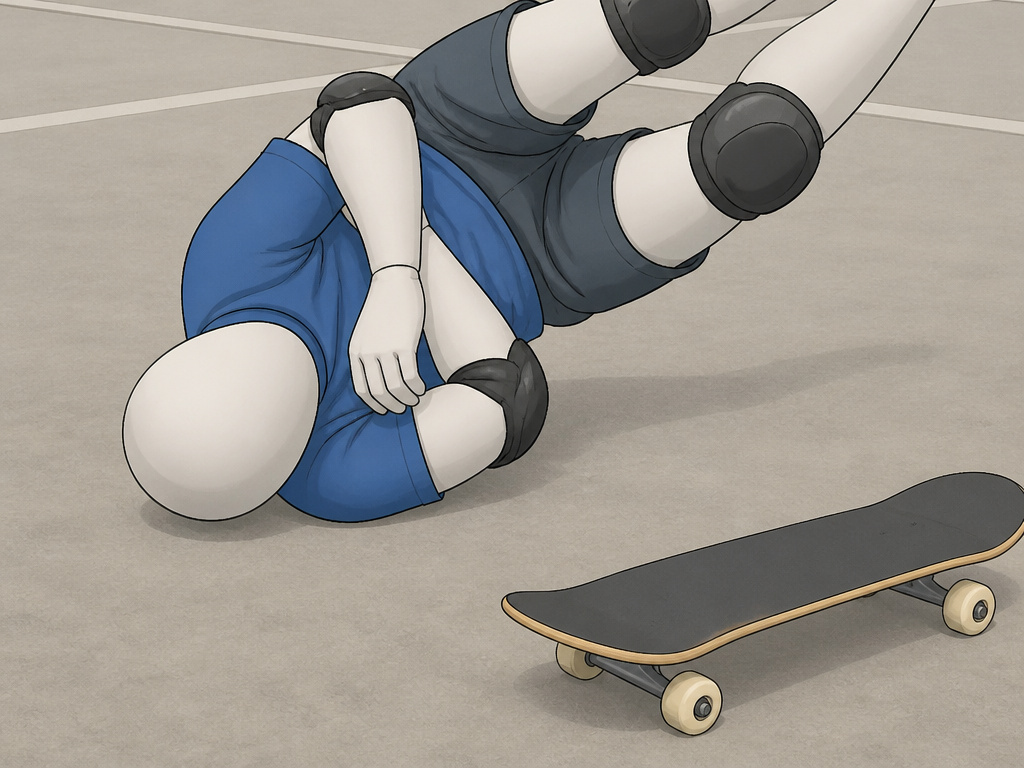
Here’s where the do you need insurance for skateboarding question gets personal. Legally, in most states, you don’t need insurance to skate at a public park. Practically, you’re one slip away from a financial crisis.
State laws like Texas’s Chapter 75 and North Carolina’s Chapter 99E are built on “assumption of risk.” They limit a municipality’s liability if you get hurt at a public, unsupervised facility. The law assumes you know skating can break bones. What the law doesn’t assume is that you have the funds to cover surgery.
Health Insurance: The Unspoken Prerequisite
This is the documented outcome. Health insurance is the difference between a reset cast and a lifetime of limited mobility because you couldn’t afford the specialist.
Liability Insurance: When You’re at Fault
Health insurance covers your medical bills. Liability insurance covers you if you’re sued because your board got away from you and hit a person or property.
For most recreational skaters, this is covered under a renter’s or homeowner’s policy’s personal liability clause. But there’s a catch.
The DIY Obstacle Exclusion
Building a quarter-pipe in your driveway? Your homeowner’s policy likely has an “attractive nuisance” exclusion or a blanket clause against injuries from “recreational structures” not permanently installed. If a friend snaps a wrist on your homemade rail, your insurer may deny the claim. That lawsuit then lands on you.
This is a massive, often ignored gap. The standard advice to “check your homeowner’s policy” isn’t enough, you need to call and ask specifically about coverage for skateboarding obstacles on your property.
Practical Steps for the Uninsured Skater
If you’re skating without coverage, your risk management is entirely behavioral.
- Master the fall. This is your first and cheapest form of insurance. Learn to roll and slide.
- Stick to controlled environments. A smooth, empty parking lot is objectively safer than a crowded street with curbs and traffic.
- Wear the gear. A helmet is a critical piece of protective gear that can help mitigate the risk of serious head injury. Our guide to the best protective gear for skateboarding breaks down what works.
- Know your local statutes. Understanding skateboarding laws and regulations can help you avoid fines and choose safer, legal spots to skate.
How Waivers and “Assumption of Risk” Interact with Insurance
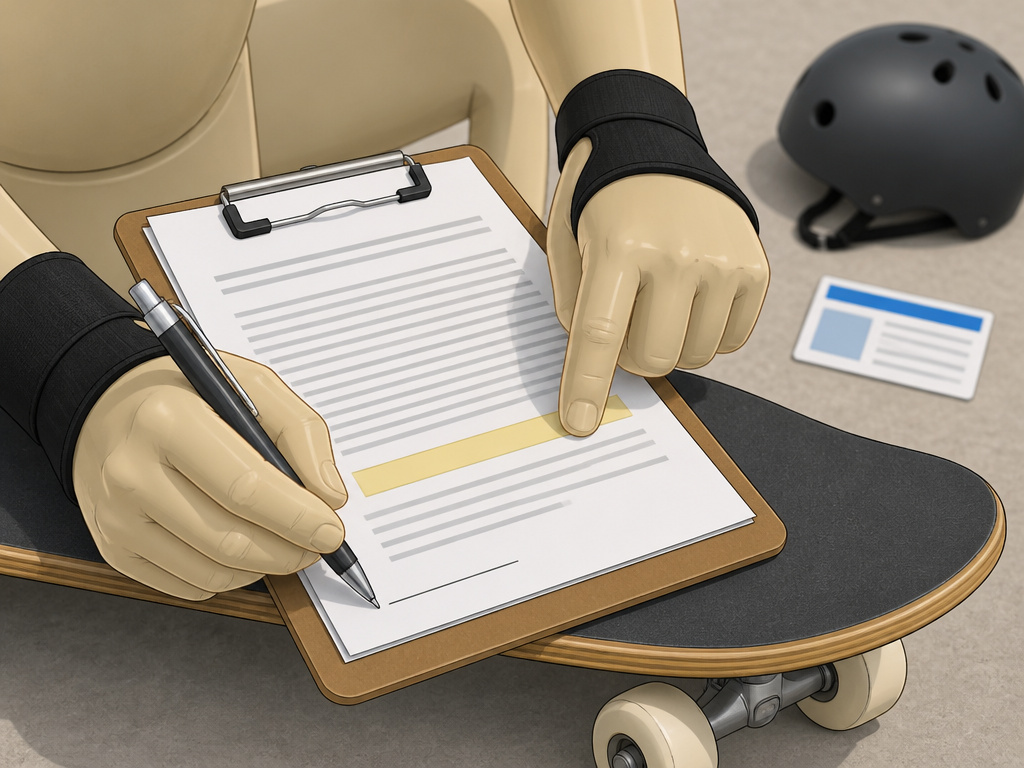
A waiver is a legal document that, when properly drafted, can transfer some risk from the facility operator to the participant. It says, “I know skating is dangerous, and I won’t sue you for the inherent risks.”
Insurance is the financial backstop that pays if a lawsuit happens anyway. Even with a signed waiver, someone can still sue. The waiver is your first line of defense in court; the insurance policy is what pays for your legal defense and any settlement.
For the skater signing a waiver, you’re giving up certain legal rights. In return, you get access to a maintained facility. You should still have your own health insurance, because that waiver doesn’t pay your hospital bill.
For the operator, a solid waiver strengthens your position under recreational immunity statutes like Texas’s Chapter 75, which limits liability for municipalities that operate skate facilities. But the TML guidelines are clear: this limitation applies “only to an owner, lessee, or occupant who has liability insurance coverage in effect.” The law protects you, but only if you’re also insured.
Frequently Asked Questions
Do skateparks require you to have insurance?
No public skatepark requires individual skaters to show proof of insurance to enter. However, the park itself is almost certainly required by its municipal fund or insurer to carry multi-million dollar liability coverage. The requirement is on the operator, not the visitor.
Can I use my health insurance if I get hurt skateboarding?
Yes, your health insurance should cover medically necessary treatment for skateboarding injuries, subject to your plan’s deductibles, copays, and network rules. It’s crucial to check if your plan has exclusions for “extreme sports” or requires a rider for such activities, some do.
What does liability insurance for a skatepark cover?
It covers the park operator’s legal liability for bodily injury or property damage occurring on the premises. For example, if a skater is injured due to a maintenance failure, the policy would cover legal defense costs and any settlement or judgment, up to the policy limit.
Does homeowner’s insurance cover skateboarding injuries at my house?
Maybe, with major caveats. The personal liability portion of a standard homeowner’s policy might cover a guest’s injury from a simple trip and fall on your property. However, injuries resulting from a skateboarding ramp, rail, or other “attractive nuisance” you built are frequently excluded. You must review your policy and speak with your agent.
Are there insurance companies that specialize in skateboarding?
Yes. Some insurers offer niche policies for skateparks, camps, and events. These are typically accessed through brokers who specialize in recreational or sports risk. General liability insurers can also write these policies, but they require detailed applications outlining safety protocols and inspection schedules.
The Bottom Line
The answer to “do you need insurance for skateboarding” splits three ways.
If you’re the skater, the law doesn’t force you to buy it, but your bank account will wish you had. Start with health coverage, it’s the single most important financial tool you can own for this sport. Check your personal liability coverage next, and get a definitive answer from your agent about DIY obstacles.
If you’re the park operator, insurance is the ticket to play. Follow the NJ MEL equipment liability guidelines to the letter: vet contractors, demand certificates, document inspections, and secure the mandated multi-million dollar coverage. There is no shortcut.
If you’re the event organizer or coach, you’re in a commercial space. A standard personal policy will abandon you the moment you take a payment. Invest in a commercial general liability policy tailored to instructional or event risks. It’s the cost of doing business responsibly.
For everyone, a waiver is a piece of paper. Insurance is the plan for when that paper isn’t enough. Know which one you have, and which one you need.
