
How Long Does Road Rash Take to Heal? Timelines and Stages
This post contains affiliate links. As an Amazon Associate, we earn from qualifying purchases.
Most road rash heals within 2 weeks if you keep the wound clean, moist, and covered. Sources offer different timelines for superficial road rash: Cleveland Clinic says a couple of days, Grady Health says most abrasions heal within 10 days, UW Health and WebMD say 2 weeks, and the National Athletic Trainers’ Association defines acute wounds as healing within 4 to 6 weeks.
That 2-week mark isn’t just a guess, it’s the clinical benchmark from sources like UW Health and WebMD for when a superficial abrasion should be closed. But here’s where it gets messy: your specific timeline hinges entirely on depth. A common question is, how long does road rash take to heal? The depth and severity of road rash can vary widely. This guide explains the healing stages, explains why “keep it moist” isn’t optional, and gives you the clear signs that tell you it’s time to call a doctor.
Key Takeaways
- Expect superficial road rash to heal within 2 weeks, but plan for a longer timeline for deeper, partial-thickness injuries.
- Keep the wound moist with ointment and covered with a non-stick dressing; letting it dry and scab slows healing and increases scarring.
- Sources recommend changing simple dressings once a day or when wet/dirty, though the National Athletic Trainers’ Association notes advanced dressings may remain longer than 7 days if no infection is present.
- Seek medical care if the wound shows no progress after 2 weeks, is larger than your hand, or shows signs of infection like increasing redness, pus, or fever.
- For road rash wounds with tissue loss creating a cavity, clinical protocols like the Vanderbilt Burn Center recommend specialized wet-to-dry dressings using saline-soaked Kerlix and an ABD pad.
The 2-Week Rule Most Guides Skip
Healing timelines in first-aid articles are always vague, often circling back to the how long does road rash take to heal question. “A few weeks” could mean anything. The clearest benchmark comes from UW Health: most road rash should heal within 2 weeks with good care. That’s your baseline for a superficial scrape, the kind that only removes the top layer of skin (epidermis).
Superficial road rash burns should heal within a couple of days. Deeper burns can take weeks or more to heal. . Cleveland Clinic prognosis for road rash injuries
But sources disagree on what “superficial” means. Grady Health says most abrasions heal within 10 days. The National Athletic Trainers’ Association defines any acute wound, including abrasions, as one that heals in an “orderly and timely manner, typically within 4 to 6 weeks.” That’s a huge range. The difference isn’t about who’s right; it’s about how deep your scrape goes.
| Injury Depth | Layers Affected | Typical Healing Timeline | When to See a Doctor |
|---|---|---|---|
| Superficial | Epidermis only | 2 weeks or less | If no healing after 2 weeks |
| Partial-Thickness | Into the dermis | 4 to 6 weeks | If larger than your hand |
| Full-Thickness | Into fat/muscle | 6+ weeks, may need surgery | Immediately |
Your job initially is to figure out which column you’re in, which directly answers how long does road rash take to heal. The appearance and sensation of the wound can help indicate its depth. If the wound is very deep or you cannot remove embedded debris, seek professional care.
A Step-by-Step Care Guide That Actually Works
The goal isn’t just to get a scab. It’s to grow new skin as fast as possible with minimal scarring. The old “let it air out” advice is how you get a thick, raised scar. Modern wound care is all about moist wound healing.
I learned this the hard way after a fall left a scrape on my forearm. I kept it dry, proud of the tough scab that formed. Two weeks later, it was still there, tight and itchy. When it finally peeled, the skin underneath was pink, raised, and shiny, a textbook hypertrophic scar. I now know that scab was a barrier my body had to work under, slowing everything down.
Here is the daily routine that aligns with clinical guidelines from UW Health, the Mayo Clinic, and athletic training protocols.
- Wash Your Hands. Every time. This seems obvious but it’s the step most people rush. Bacteria from your hands is the fastest route to an infection.
- Gently Clean the Wound. Use lukewarm water and a mild antibacterial soap. The National Athletic Trainers’ Association recommends a solution temperature between 98.6°F and 107.6°F (37°C to 42°C). Why? Cold water can drop the wound bed temperature, and it can take up to 40 minutes to warm back up, slowing cell reproduction. Don’t scrub. Rinse away any loose debris.
- Apply a Thin Layer of Ointment. Bacitracin is the go-to in clinical settings, like the Vanderbilt Burn Center’s protocol for friction burns. It keeps the wound moist and fights infection. Bacitracin is commonly recommended; plain petroleum jelly can also be used to keep the wound moist.
- Cover With a Non-Stick Dressing. This is the magic step. A non-stick pad or a hydrocolloid bandage maintains moisture, protects from bacteria, and prevents the bandage from sticking. Secure it with medical tape or a wrap.
- Change the Dressing Daily. Do this when it’s wet or dirty. If the dressing sticks, don’t rip it off. The Mayo Clinic recommends soaking it in a saltwater solution (1 teaspoon of salt per gallon of water) for a few minutes to loosen it.
Keeping a wound clean and protected is the core of first aid for road rash.
Why Moist Healing Beats a Scab Every Time
When you let a wound dry out, your body forms a scab, a hard plug of dried blood and plasma. New skin cells have to migrate underneath this barrier, which takes longer and often results in a wider, more noticeable scar. A moist environment, maintained by ointment and a dressing, allows skin cells to slide directly across the surface to close the gap. It’s faster and leads to less scarring.
This is why transparent film dressings are popular among athletes. They create a sealed, moist chamber over the wound. Some dressings can be left on for multiple days, reducing disruption to the healing tissue.
The peer-reviewed athletic trainers’ guidelines note that advanced dressings like hydrocolloids, foams, and films can often remain in place for more than 7 days if there’s no infection. The key is they keep the wound bed optimally moist.
Day-by-Day Healing: What to Expect
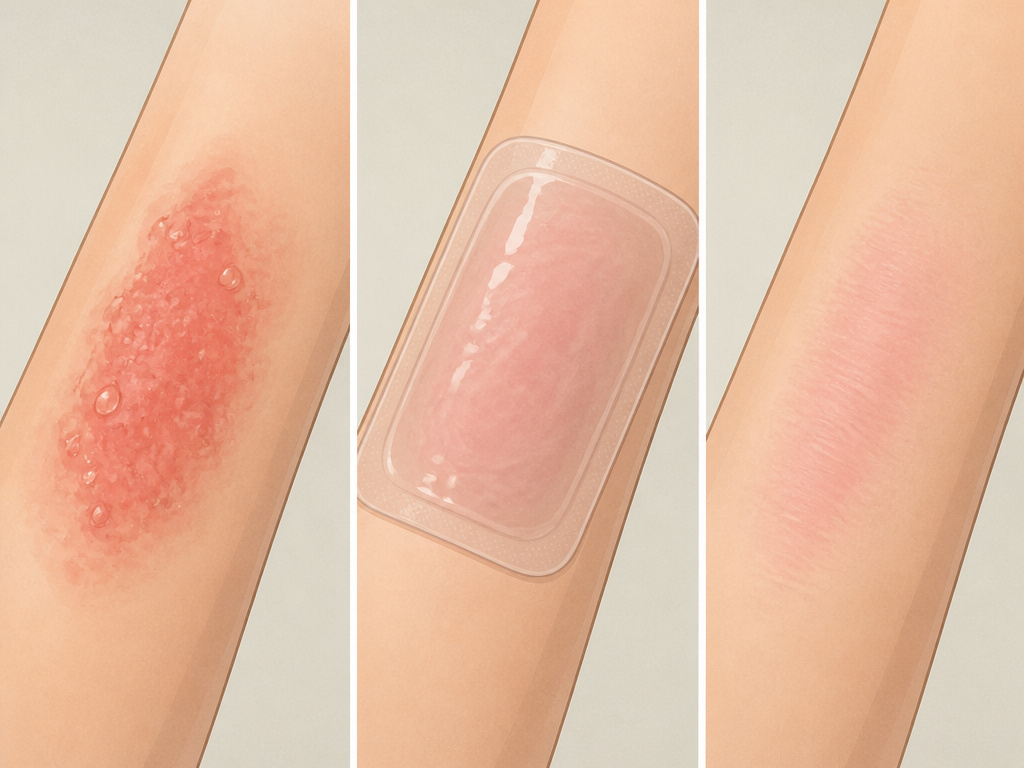
Knowing what normal looks like prevents panic and helps you spot real problems.
- Days 1-3 (Inflammatory Phase): The wound is red, swollen, and painful. It may ooze clear or slightly pink fluid. This is normal inflammation, your body sending blood and cells to clean the area. Pain and swelling are common in the initial inflammatory phase.
- Days 4-14 (Proliferative Phase): New, pinkish skin (granulation tissue) begins to form. The wound becomes less painful and stops weeping. Under a moist dressing, you might not see a scab at all, just a gradual filling in. This is the phase where that 2-week healing target is met for superficial wounds.
- Weeks 3-6+ (Maturation Phase): For deeper wounds, this is when the real work happens. The new skin remodels, strengthens, and may itch intensely. The pink color slowly fades. A scar, if it forms, will soften and flatten over the next several months.
This timeline is part of the broader recover from a fall process, where skin healing is just one component alongside rest and muscle recovery.
When to Stop Covering the Wound
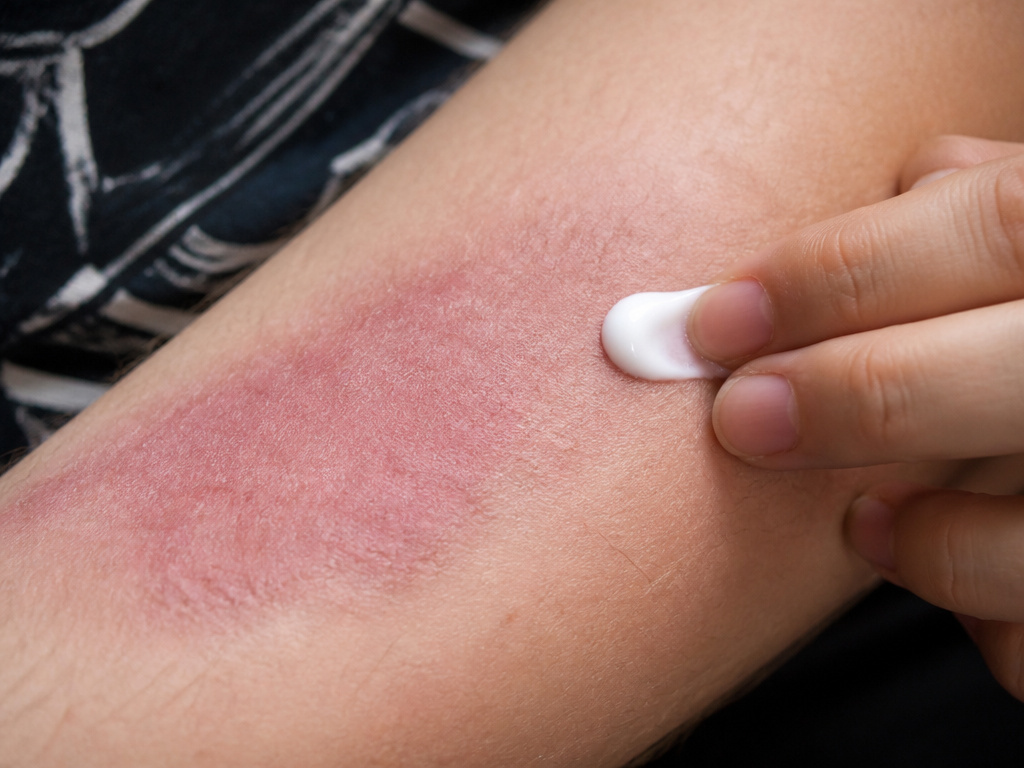
You don’t need a bandage forever. The skin is healed enough to leave uncovered when it is dull pink or red, not moist or weepy, and no longer stings to the touch. This is the guidance from UW Health. At this point, the barrier function of your skin has mostly returned.
Switch from antibiotic ointment to a fragrance-free moisturizing cream. The new skin is fragile and prone to drying and cracking; lotion keeps it supple. This aftercare is crucial to prevent the healed area from splitting open.
Signs of Infection and When to Seek Help
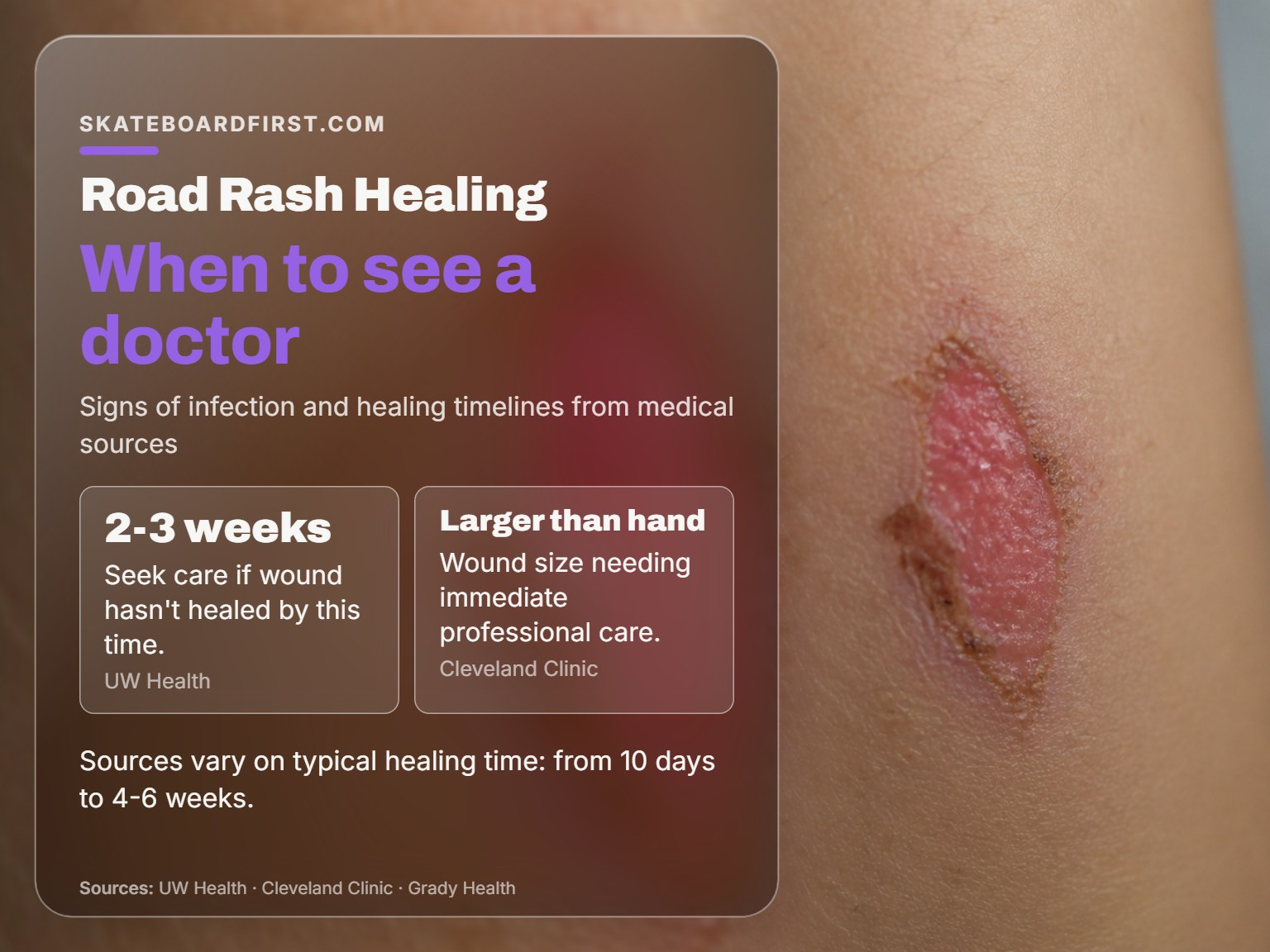
Most skateboarding injuries are minor, but infection is a real risk with road rash. The asphalt is dirty. Know the red flags.
Where this goes sideways: Ignoring early infection signs because the pain is “manageable.” An infection can significantly delay healing and lead to complications.
Watch for these signs, which align with warnings from the Cleveland Clinic and WebMD:
- Increasing redness and swelling that spreads beyond the original wound edges.
- Pus or cloudy, foul-smelling drainage.
- Increased pain after the initial pain should have started to subside.
- Fever, chills, or flu-like symptoms.
The consensus on when to seek medical care is clear: if a superficial wound shows no signs of healing after 2 weeks, or if any wound shows the above signs of infection, see a doctor. Also seek immediate care if the road rash is larger than the area you can cover with your hand, is on your face, hands, feet, or joints, or if you cannot remove embedded debris.
Special Case: Facial Road Rash
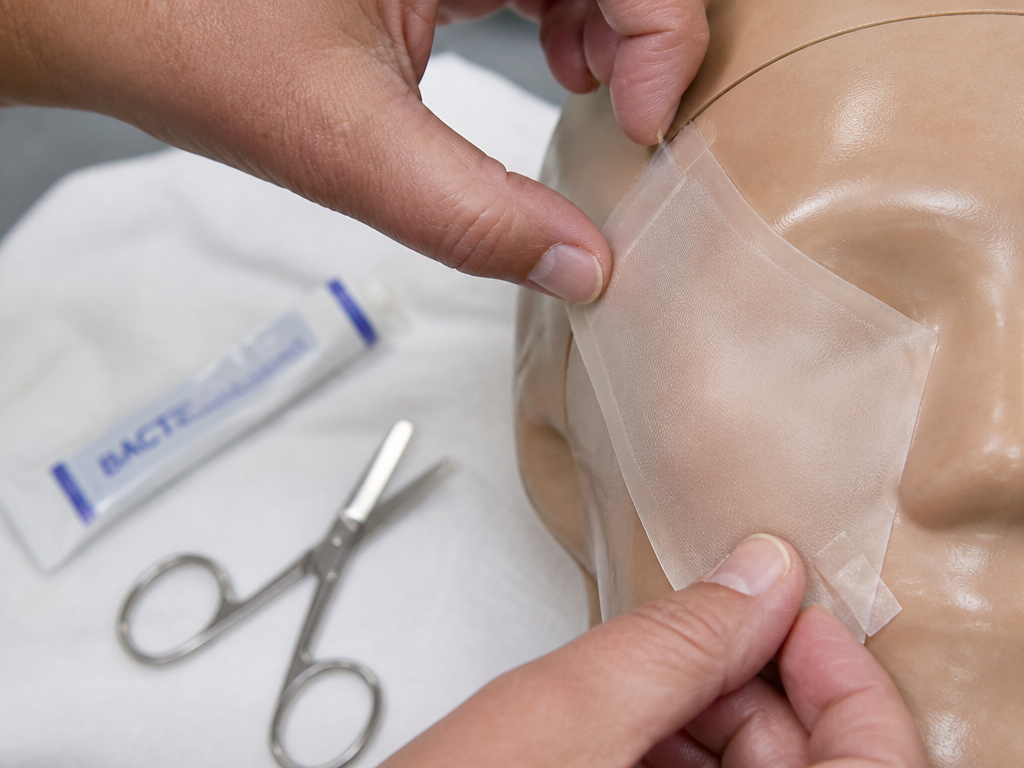
Road rash on the face is a different ballgame. The skin is thinner, more vascular, and scarring is more noticeable. The principles are the same, clean, moist, cover, but execution is trickier.
You may not be able to use a large adhesive dressing. Instead, after gentle cleaning, apply a thin layer of ointment and consider a non-adherent silicone sheet cut to size, held in place with medical tape. Be extra vigilant about sun exposure once healed; new skin burns easily and UV rays can darken scars.
Frequently Asked Questions
What is the fastest way to heal road rash?
The fastest way is consistent moist wound healing: clean gently once a day with lukewarm water, apply Bacitracin or petroleum jelly, and cover with a non-stick dressing like a hydrocolloid bandage. Avoid letting it dry out and scab. Protecting the area from further bumps or friction is also critical.
What are the stages of road rash healing?
The three main stages are: 1) Inflammatory (Days 1-3): Bleeding stops, swelling, redness, and pain as the body cleans the wound. 2) Proliferative (Days 4-14): New pink skin forms, pain decreases. 3) Maturation (Weeks 3-6+): The new skin strengthens and remodels, with itching and gradual fading of redness.
How long should I keep road rash covered?
Keep it covered until the skin is fully closed, no open, weepy, or sticky areas. As per UW Health, this is when it appears dull pink and doesn’t sting to the touch. This often takes the full 2 weeks for superficial rash. For deeper wounds, continue covering until a healthcare provider advises otherwise.
Can I shower with road rash?
Yes, you can and should shower. It’s an ideal way to gently clean the wound daily. Let lukewarm water run over it. Avoid direct, high-pressure spray. After showering, pat the area dry, reapply ointment, and put on a fresh dressing.
The Bottom Line
Road rash healing boils down to one rule: depth dictates timeline. A surface scrape is a 2-week project with diligent care. Anything deeper resets the clock to 4-6 weeks. Your single most important job is to fight the instinct to let it “dry out.” Moisture under a bandage is the accelerator.
If you take one thing from this, let it be the 2-week check-in. If your wound isn’t visibly improving, smaller, less angry, drying up, by day 14, that’s your cue to see a doctor. Don’t skate through that uncertainty. Healing cleanly now means less scar tissue to deal with later, and that’s what gets you back to practicing your safe falling techniques on the board sooner.
