
How to Recover From a Skateboarding Fall: Step-by-Step
This post contains affiliate links. As an Amazon Associate, we earn from qualifying purchases.
To recover from a skateboarding fall, start with the R.I.C.E. Method (Rest, Ice, Compression, Elevation) for the first 48 hours to control swelling and pain. Listen to your body’s pain signals to distinguish normal soreness from a serious injury, and don’t rush back. The mental game is just as important, acknowledge the fear, then take small, controlled steps to rebuild confidence on the board.
That 48-hour window is where most people make the call that decides their next two weeks. Push through the pain and skate the next day, and a simple sprain can turn into a chronic, nagging injury that sidelines you for a month. Knowing how to recover from a skateboarding fall is key. Rest smart, not just hard.
What follows is a street-level recovery guide. We’ll cover the immediate first aid you must not skip, how to spot the difference between a bad bruise and a broken bone, a timeline for common injuries, and the mental tricks to get your head back in the game. By the end, you’ll have a clear map from “ouch” back to rolling.
Key Takeaways
- Rest for at least 48 hours after a significant fall, the National Safety Council (citing Injury Facts) reports 295,067 skateboarding injuries treated in ERs in 2024, and pushing through pain worsens many of them.
- Use ice for short periods initially to reduce swelling; combine it with compression (a bandage or sleeve) and elevation above the heart.
- Seek medical attention for deformity, inability to bear weight, or pain that doesn’t improve in 3 days, these are red flags for fractures or serious sprains.
- Rebuild confidence gradually by revisiting foundational skills in a controlled environment before attempting tricks again.
- Replace damaged safety gear immediately; a cracked helmet or worn-out wrist guard won’t protect you in the next fall.
The Immediate First Aid Checklist (R.I.C.E.)
Your first moves in the minutes after a slam set the tone for your entire recovery. This isn’t about being tough; it’s about being smart with the biology of inflammation.
Stop, assess, and apply the R.I.C.E. Protocol (Rest, Ice, Compression, Elevation) immediately. Ignoring swelling in the first hour adds days to your recovery timeline and increases the risk of re-injury.
The goal is to limit the internal bleeding and fluid rush to the injured area. Think of it as containing a small fire before it spreads.
Rest: This means actual rest. Don’t “walk it off.” If you tweaked an ankle or wrist, stop skating for the day. The Parachute organization notes that broken bones and sprains are the most common skateboarding injuries, and continuing to skate on them is how a Grade I sprain becomes a Grade II. Find a bench, sit down, and let your adrenaline settle so you can accurately assess the pain.
Ice: Apply a cold pack or a bag of frozen peas wrapped in a thin towel to the injury. Do this for 15-20 minutes at a time, with at least a 45-minute break between sessions. Repeat this cycle for the first 48 hours. The cold constricts blood vessels, slowing down swelling and numbing the pain. You’ll feel the difference.
Compression: An elastic bandage (like an Ace bandage) or a compression sleeve provides gentle, even pressure. This further discourages swelling. Wrap it snugly, but not tight enough to cut off circulation, if your fingers or toes turn blue or feel numb, loosen it immediately.
Elevation: Get the injured part above the level of your heart. For an ankle or knee, prop it up on a backpack or a stack of pillows. For a wrist, use a sling or just rest it on your chest. Gravity helps drain excess fluid away from the injury site.
Here’s a quick-reference table for what to use and when in those first two days:
| Step | What to Use | How Long & How Often | What Happens If You Skip It |
|---|---|---|---|
| Rest | A bench, the ground, a car seat | Stop skating immediately; rest the limb entirely. | Inflammation spreads, turning a minor sprain into a major, weeks-long recovery. |
| Ice | Cold pack, bag of ice, frozen vegetables | 15-20 minutes on, 45+ minutes off. Repeat every 2 hours while awake. | Swelling increases pain and stiffness, dramatically slowing down the healing process. |
| Compression | Elastic bandage (Ace) or compression sleeve | Apply snugly after icing; can be worn for several hours at a time. | Swelling isn’t contained, leading to more pain and a longer period of immobility. |
| Elevation | Pillows, backpack, sling | As much as possible, especially for the first 24-48 hours. | Fluid pools in the injured joint, causing increased throbbing and delaying healing. |
A quick tip on road rash, the other universal skate injury: clean the scrape with mild soap and water as soon as you can to prevent infection. Cover it with a non-stick bandage. For a deeper guide on managing this specific injury, our article on treating road rash has you covered.
How to Tell If It’s Serious or Just Sore
Pain is your body’s alarm system. Learning to interpret it is the single most important skill in how to recover from a skateboarding fall without unnecessary doctor visits, or missing a serious injury that needs one.
Normal Soreness (You Can Skate Tomorrow):
- A dull, general ache in muscles (quads, calves, shoulders).
- Stiffness that loosens up after a few minutes of moving around.
- Localized tenderness from a direct impact (like a hip check) that doesn’t worsen with gentle movement.
- This is your body repairing micro-tears in muscle fiber. It’s part of getting stronger.
Warning Signs (Stop and Get Checked):
- Deformity: The limb or joint looks crooked, bent, or swollen in an odd way.
- Inability to Bear Weight: You cannot put any weight on an ankle or knee without severe, sharp pain.
- Instability: The joint feels loose, gives way, or “clunks” when you try to move it.
- Numbness or Tingling: This can indicate nerve involvement.
- Pain That Doesn’t Improve: If the pain is the same or worse after 3 days of diligent R.I.C.E.
Dr. Christopher Gee, a sports medicine specialist at University of Utah Health, emphasizes that wrist and ankle injuries are extremely common in skateboarding. If you feel a deep, sharp pain when you twist or put pressure on those joints, it’s time to pause.
Where this goes sideways: Assuming “no crack means no break.” Hairline fractures and small bone chips (avulsion fractures) often don’t make a sound. They just hurt, a lot, and won’t heal if you keep skating on them.
If you’re weighing a visit, our guide on when to get help breaks down the specific symptoms that mean you should see a doctor. When in doubt, get it checked out. A quick clinic visit for an X-ray is cheaper and faster than nursing a misdiagnosed fracture for six weeks.
Recovery Timelines for Common Skate Injuries
Skaters are planners. Knowing roughly how long you’ll be out helps manage frustration and set realistic goals for how to recover from a skateboarding fall. These timelines assume you’re following proper care and not re-injuring yourself.
Wrist Sprain (Grade I): 1-2 weeks. This is the “I caught myself” injury. You’ll need a wrist guard or brace for support when you return. For a more severe wrist fracture, recovery jumps to 6-8 weeks minimum.
Ankle Sprain (Grade I): 2-3 weeks. The classic rolled ankle. Stability comes back slowly. A detailed ankle sprain recovery guide walks through the rehab phases.
Knee Sprain (MCL/PCL): 3-6 weeks. Knee injuries are complex and often need professional guidance. Don’t rush this one.
Deep Bruise (Contusion): 1-2 weeks. The board hits your shin, you bail onto your hip. The bruise will blossom through ugly colors before fading.
Road Rash: 1-3 weeks. Depends on depth. Keep it clean and covered until new skin forms.
Concussion: This is a hard stop. Do not skate until medically cleared. Symptoms like headache, dizziness, and foggy thinking can last days to weeks. The UPMC notes that young skateboarders are at greater risk of severe injury. When in doubt, sit it out.
The U.S. Consumer Product Safety Commission (CPSC) emphasizes that many severe accidents happen when a rider loses control. Their government skateboarding safety publication is a sobering read on the consequences of not taking falls seriously. Your timeline is directly tied to how seriously you take the initial recovery.
The Mental Game: Getting Your Confidence Back

The physical healing often finishes before the mental one. Fear is a rational response to pain, and after a hard slam, your brain is just trying to protect you. The trick is to negotiate with that instinct, not fight it.
Many skaters in the Reddit thread agree: an initial fall usually releases tension, allowing you to skate better afterward. But a truly bad fall, the kind that leaves you dizzy or with a limb you can’t use, is different. It installs a new mental block.
Start by acknowledging the fear. Say it out loud. “I’m scared of dropping in because I broke my ankle last time.” That makes it a tangible problem you can solve, not a ghost haunting your sessions.
Then, rewind the tape. Go back to skills you’ve already mastered. Spend a session just pushing, carving, and doing kickturns. No tricks. The goal is to remind your body and brain that skating is fun and controllable. This is the core principle of a safe return to skateboarding.
Next, simulate the fall in a safe space. This is the most underrated confidence-builder. Put on your full pad set (helmet, wrist guards, knee pads) and practice bailing on grass. Practice falling techniques; sources offer different advice, such as the National Safety Council’s recommendation to roll rather than absorbing force with arms, while UPMC suggests using arms to absorb the force of a fall. Knowing you can hit the ground without getting hurt is powerful. Our dedicated guide on falling techniques drills into this.
I learned this the hard way: After a bad slam trying a boardslide, I was terrified of approaching any rail. I spent two weeks just skating transition, then started by sliding on a low, waxed curb with a friend spotting me. Small wins. They add up.
Finally, use a spotter or film yourself. Having a friend there for moral support (or to call an ambulance if it goes really wrong) cuts the perceived risk in half. Recording yourself shows that your attempts are nearer to success than they seem. The goal is to rebuild the neural pathway that says “skating = reward,” not “skating = pain.”
Gear That Actually Helps You Heal

Your regular skate gear prevents injury. Your recovery gear manages it. Having the right tools on hand turns a frustrating setback into a managed process.
For Wrists and Ankles: A lightweight, breathable wrist guard or ankle sleeve provides proprioceptive feedback, it reminds your joint where it is in space, which helps prevent re-injury. Some wrist guards and ankle sleeves are designed for mobility, not just immobilization.
For Knees and Elbows: Compression sleeves are better than bulky pads for recovery. They increase blood flow, reduce swelling, and keep the joint warm. Save the hard-shell pads for when you’re back attempting tricks.
For General Soreness: A foam roller and a massage gun (or even a lacrosse ball) are worth their weight in gold. They break up muscle knots and improve circulation. Pair them with a proper pre-skate warm-up routine to prevent future strains.
Your Helmet: Inspect it. If you hit your head, even lightly, replace the helmet. The foam inside compresses on impact to absorb energy, and it doesn’t “un-compress.” The UPMC states helmets should be replaced at least every five years or when damaged or outgrown. This isn’t a marketing ploy; it’s physics.
Assembling a first aid kit with these items, plus ice packs, bandages, and medical tape, means you’re never scrambling after a fall. You’re prepared.
How to Prevent the Next Big Fall

Recovery isn’t just about healing the last fall; it’s about building a body that’s more resilient for the next one. This is where cross-training and smart habits pay off.
Strength is your best pad. The American Academy of Orthopaedic Surgeons highlights the role of conditioning. Exercises that build stability in your ankles, knees, and core make you less likely to get hurt in the first place. Simple stuff like calf raises, single-leg balances, and planks can be done anywhere. We have a whole library of injury prevention exercises tailored for skaters.
Warm up. Every. Single. Time. Dr. Gee recommends 5 to 10 minutes of an active warm-up, light jogging, calisthenics, dynamic stretches, before stepping on your board. Cold muscles are stiff muscles, and stiff muscles tear.
Skate within your progression. The National Safety Council data shows a huge number of injuries happen to first-timers. Don’t try to gap a set of stairs before you can consistently ollie up a curb. The social pressure is real, but your health is yours alone.
Choose your battlefield. Parachute’s research found irregular riding surfaces cause over half of fall-related injuries. Skateparks, despite looking intimidating, are designed for this. The surfaces are smooth, and the transitions are predictable. Street skating is a minefield of cracks, pebbles, and curbs.
How does nutrition and sleep help healing?
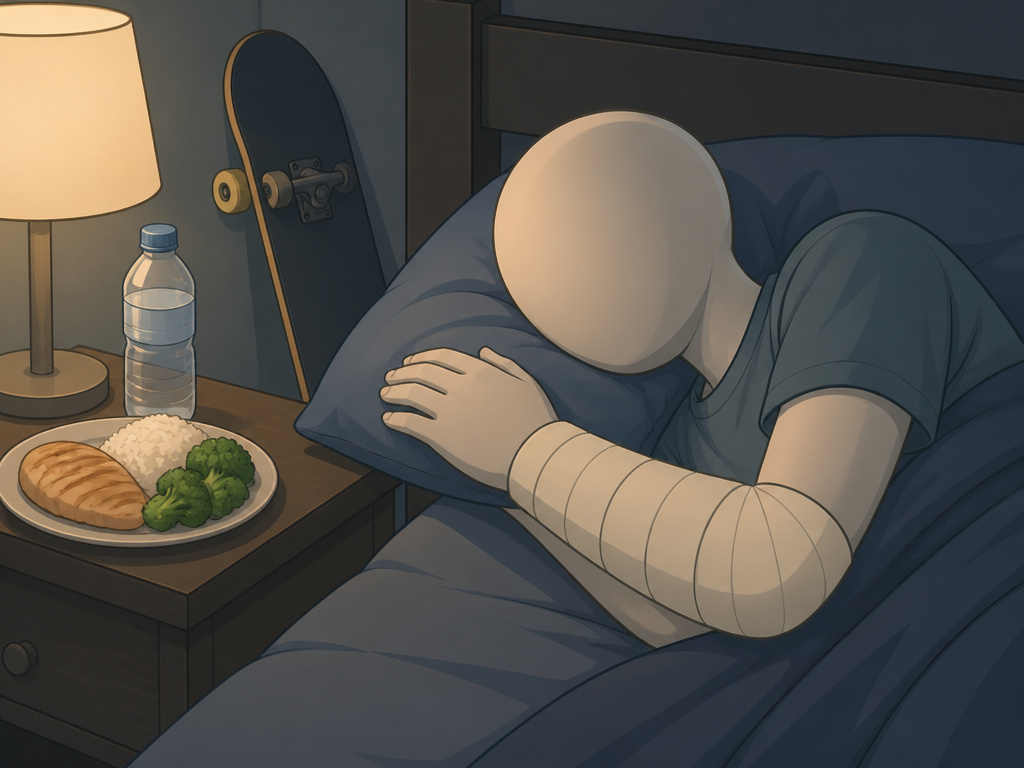
Your body needs fuel and rest to repair itself after a fall. Focus on eating balanced meals with plenty of protein to help rebuild muscle and other tissues. Stay hydrated by drinking water throughout the day. Sleep is when your body does its most intensive recovery work, so prioritize getting a full night’s rest. Avoid staying up late scrolling, as that can interfere with the healing process. Giving your body these basics is a practical step you can take while you’re off the board.
Should I foam roll or get a massage for sore muscles?
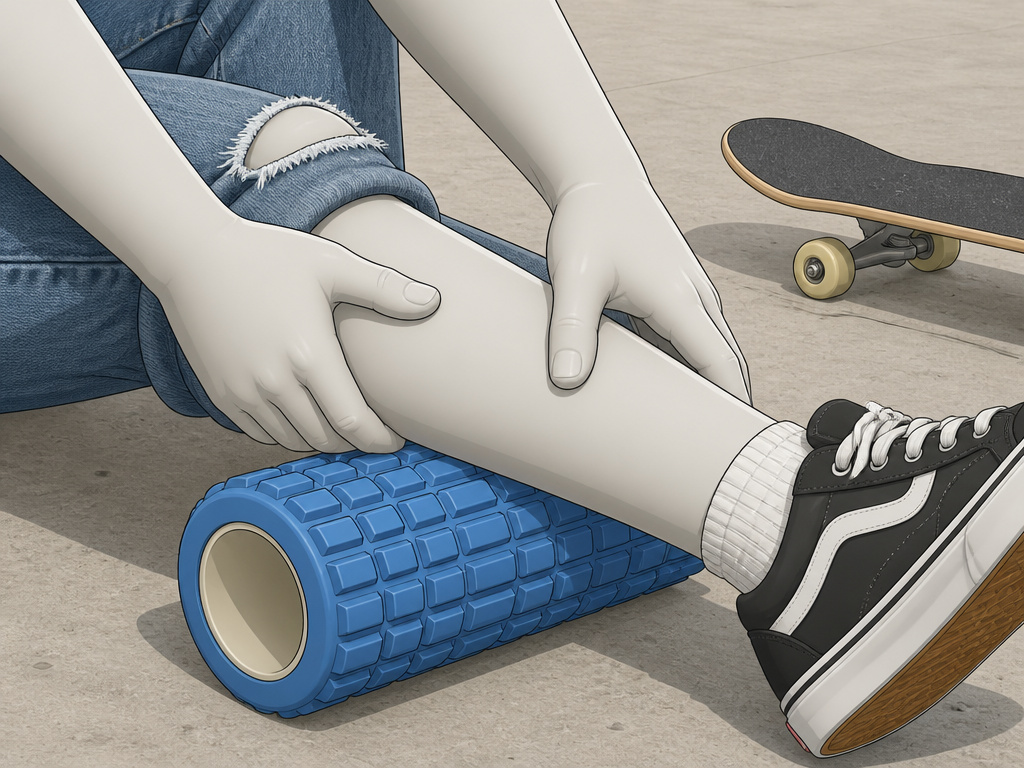
For the deep muscle aches that follow a hard fall, gentle self-massage or foam rolling can provide relief. Focus on the large, sore muscle groups like your thighs or calves. Apply slow, steady pressure and avoid rolling directly over any bruised skin or injured joints. This can help improve blood flow and ease stiffness as you recover. Listen to your body and stop if any movement causes sharp pain. It’s a simple way to manage soreness while you get back to full strength.
Frequently Asked Questions
What is the most common injury in skateboarding?
According to Parachute, the most common injuries are broken bones and sprains, particularly in the wrists and ankles. This is why wrist guards are so strongly recommended by safety organizations like the CPSC.
How long does shock last after a fall?
The initial adrenaline and shock fade after a short period. This is why it’s critical not to make decisions about continuing your session until that window has passed and you can accurately assess your pain.
What is the hardest injury to heal?
For skaters, severe knee ligament tears (like ACL) or complex ankle fractures are among the longest and most challenging recoveries, often requiring surgery and 6-12 months of rehabilitation before returning to full capability.
When should I start stretching after a fall?
Wait until the acute pain and swelling have significantly subsided before starting to stretch. Start with gentle, pain-free range-of-motion movements before moving into light stretching. Never stretch an acutely inflamed joint.
How can I overcome the fear of falling again?
The mental recovery is gradual. Start by overcoming fear through controlled exposure: pad up, practice falls on grass, and deliberately revisit the basic skill that led to the fall in a low-risk environment. Small, successful repetitions rebuild confidence.
Before You Go
One rule cuts through all the advice: if your pain is sharp, localized, and doesn’t improve with proper care, stop guessing and see a professional. A doctor’s visit for peace of mind is cheaper than a season lost to a mismanaged injury.
Your first session back should feel boring. Push around, practice kickturns, maybe ollie a crack. The goal isn’t to land the trick that hurt you; it’s to remind your brain that skating is still fun. The tricks will come back when the foundation is solid again.
Keep pushing, one step at a time.
