
How to Clean a Skateboard: Step-by-Step (Without Damage)
This post contains affiliate links. As an Amazon Associate, we earn from qualifying purchases.
Cleaning a skateboard involves a four-part process: wipe down the deck and trucks with a damp cloth, brush the grip tape with a grip tape eraser or belt sander cleaner, scrub the wheels with soapy water and a toothbrush, and service the bearings only if they are not sealed. For electric boards like Onewheels, avoid alcohol cleaners and compressed air to protect internal components.
The difference between a quick wipe-down and a deep clean comes down to what’s actually dirty. Grip tape holds grit, wheels pick up road grime, and bearings collect fine dust that turns into a grinding paste. Each part needs a different tool and a different level of attention, which is why it’s useful to know how to clean a skateboard properly.
What follows is a breakdown of the tools you need, a step-by-step process for each component, and a clear look at where the experts disagree on the how to clean a skateboard question.
Key Takeaways
- Use a damp cloth, never soaked, on the deck and trucks; wring out all excess water to prevent wood warping and bearing rust.
- Sources disagree on how to clean grip tape: Concrete Waves and Pump Skate recommend a belt sander cleaner or Grip Gum, while Skateboards.com recommends mild soap and water, and Future Motion Inc. Recommends a grip tape eraser or brush.
- Whether to service bearings depends on their type: some manuals state bearings are sealed and maintenance-free, while sources like Concrete Waves and Skate Labs provide detailed instructions for cleaning serviceable bearings.
- Avoid alcohol-based cleaners and compressed air cans on electric skateboards (Onewheels) per the manufacturer; these can damage sensitive electronics.
- A quick wipe-down every few weeks prevents the need for a major overhaul later in the season.
Tools and Safety First
You don’t need a workshop. A basic cleaning kit is compact. For a standard skateboard, gather a soft-bristle brush (brass, not steel), a clean rag, mild dish soap, an old toothbrush, and a skate tool. For bearing maintenance, you may need a solvent like isopropyl alcohol, citrus cleaner, or mineral spirits, a sealable container, paper towels, and a dedicated bearing lubricant like Bones Speed Cream.
Before you start: Work in a well-ventilated area, away from any open flame, because many cleaning solvents are flammable. Wear gloves when handling solvents to protect your skin. Never use household oils like WD-40 on bearings, they attract more dirt and gum up the mechanism.
If you’re cleaning an electric board like a Onewheel, the rules change. The manufacturer, Future Motion Inc., explicitly warns against using alcohol-based cleaners on the footpad, bumper, or fender, and prohibits condensed air cans on the motor hub. Their guidance focuses on surface cleaning removable parts with a damp cloth to avoid voiding the warranty.
The 4-Part Cleaning Process
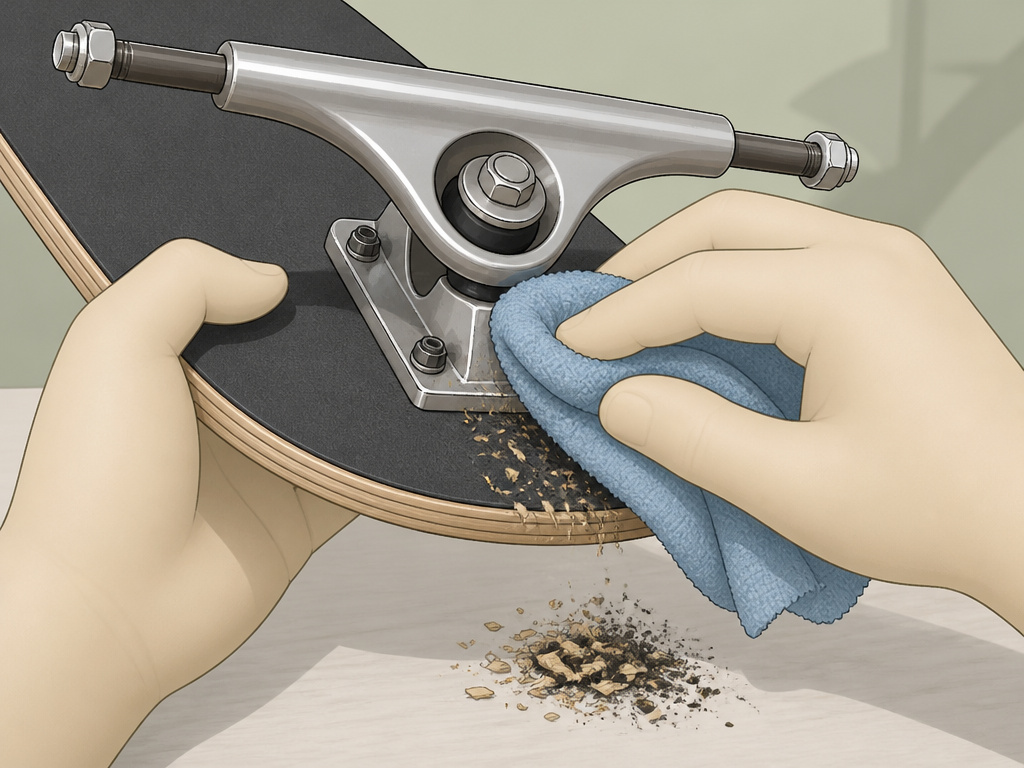
Tear-downs are optional. You can clean most of the board while it’s fully assembled, saving the full disassembly for when you need to rotate wheels or service bearings.
1. Deck and Trucks: The Damp Cloth Pass
Start with the foundation. Use a cloth dampened with water, damp, not soaked, as both Future Motion Inc. and Skateboards.com stress. Wring it out thoroughly. Wipe down the wooden deck’s underside and the metal trucks to remove loose dirt, dust, and dried mud. Pay attention to the kingpin area and baseplate, where grit loves to collect. If you let it build for a few weeks, it starts to feel like sandpaper against the hanger every time you turn.
Let everything air dry completely before you ride. This quick pass prevents grime from cementing itself on and is the single biggest factor in a board that looks cared for.
2. Grip Tape: The Great Debate
This is where cleaning guides diverge. The goal is to restore traction without damaging the adhesive or the wood beneath.
| Method | Recommended By | Best For | Risk If Skipped |
|---|---|---|---|
| Belt Sander Cleaner / Grip Gum | Concrete Waves, Pump Skate | Restoring grip, removing embedded dirt | Dirt reduces shoe traction, can affect board control. |
| Mild Soap & Water + Brush | Skateboards.com | General surface cleaning | Can spread dirt deeper if over-wetted; may seep under perforated tape. |
| Grip Tape Eraser or Brush | Future Motion Inc. (for Onewheel) | Light cleaning, OEM-safe method | Less effective on deeply embedded, caked-on grime. |
The community argument is real. Some Reddit users swear by a toothbrush and a tiny bit of water. Others warn that water just pushes dirt deeper and that a dedicated belt sander cleaner (sold as Grip Gum in skate shops) is the only reliable tool. Pump Skate, citing Rat Vision, adds a specific warning: using window cleaner on perforated grip tape can seep underneath and deteriorate the adhesive.
My take? For a traditional board, a belt sander cleaner block is one option when you compare a how to clean a skateboard guide; sources also recommend a grip tape eraser, brush, or mild soap and water. Rub it across the grip in firm, short strokes. The rubbery material pulls dirt and pebbles up and out of the grit. For an electric board with special grip, follow the OEM and use their recommended eraser or brush.
3. Wheels: Soap and Toothbrush Therapy
Wheels are simple. Pop them off with your skate tool. Use an old toothbrush and some hot, soapy water to scrub the urethane surface and the sides clean. The goal is to remove the black, ground-in road film that builds up on the contact edges.
Rinse them, dry them fully with a towel, and set them aside. Clean wheels aren’t just about looks, they give you a better read on your bearing performance because you’re not fighting rolling resistance from caked-on grime.
4. Bearings: To Service or Not to Service
This is the most technical step, and whether you should do it at all depends on your bearings. Many completes, like those from Clas Ohlson, come with sealed and maintenance-free bearings. The manual says not to touch them. The community, however, often ignores this. Skate Labs and Concrete Waves provide detailed instructions for prying off shields, cleaning, and re-lubrication.
Common mistake: Assuming all bearings need a deep clean. If your wheels spin freely for 8-10 seconds when flicked, they’re probably fine. Over-servicing cheap, sealed bearings can break the seals and let in more dirt.
If you have serviceable bearings and they’re gritty or loud, here’s the consensus process:
- Remove the shields. Use a push pin or small flathead screwdriver to gently pry them off. Skate Labs notes some bearing shields don’t come off, so check what the maker says.
- Clean the bearings. Soak them in a sealed jar of isopropyl alcohol or citrus cleaner and shake. Concrete Waves recommends mineral spirits. Repeat with fresh solvent until it stays clear.
- Dry them completely. Lay them on a paper towel and spin them until no liquid remains. Any leftover moisture leads to rust.
- Lubricate sparingly. Add two or three drops of a skate-specific lubricant like Bones Speed Cream to each bearing. Spin the bearing to distribute the oil. Never use WD-40; it’s a solvent that dries out the lubricant.
Reassemble your wheels and trucks, making sure all nuts are snug but not over-tightened.
How Often Should You Clean Your Skateboard?
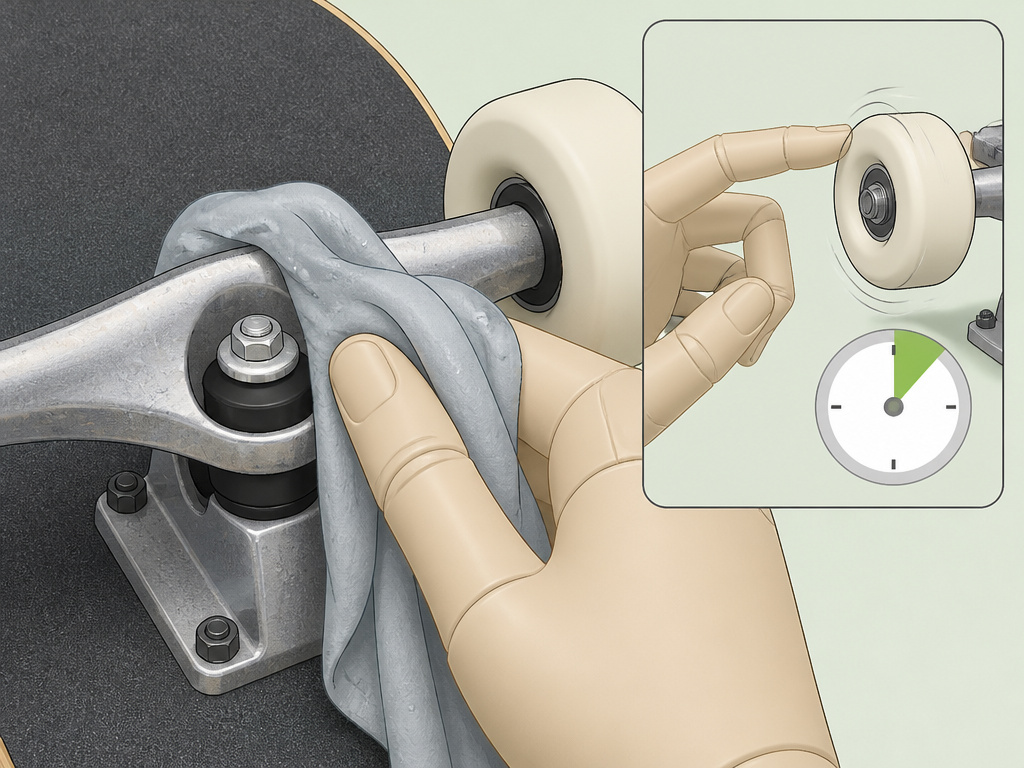
There’s no fixed schedule, but there are clear triggers. A ten-minute wipe-down every few weeks, a stiff brush on the grip, a damp rag on the trucks, beats one massive, frustrating teardown per year. I switched to this quick routine and my board always looks ride-ready.
For bearings, clean them only when performance drops. If a flicked wheel spins for less than 10 seconds, or you hear grinding, it’s time. Rotating your wheels about once a month, as cited by Skateboards.com from Reddit advice, helps them wear evenly and can alert you to bearing issues sooner.
Electric Skateboards and Onewheels: Special Rules
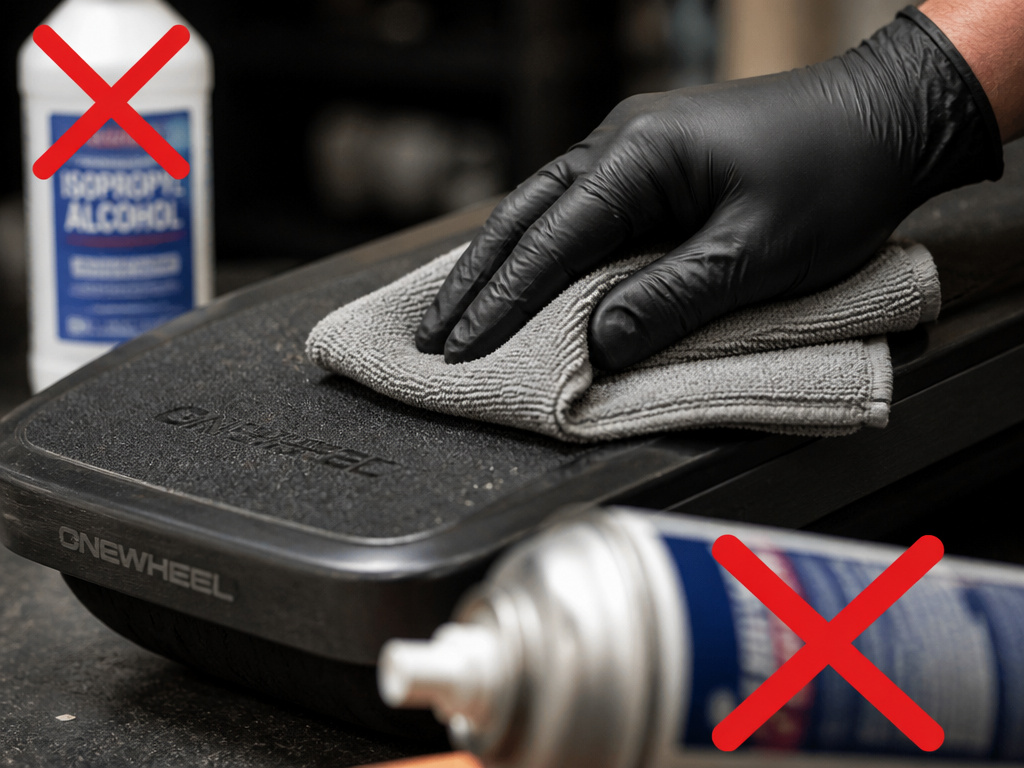
Cleaning an electric board is a different game. The priority is protecting sensitive electronics, not mechanical servicing. Future Motion Inc.‘s guide for Onewheels is the law here. They allow cleaning of swappable components like footpads and bumpers with a damp cloth, and the grip tape with an eraser or brush. They explicitly forbid:
- Alcohol-based cleaners on footpad/bumper/fender components.
- Condensed air cans on the motor hub (it can force debris inside).
- Opening the controller or battery modules, as this can void the warranty.
Frequently Asked Questions
Can I Use Water to Clean My Skateboard Grip Tape?
You can, but it’s debated. Some guides recommend a mix of mild soap and water with a soft brush. Many experienced skaters argue that water spreads dirt deeper into the grip tape’s abrasive surface and, if used on perforated tape, can seep underneath and weaken the adhesive. A dry method like a belt sander cleaner block (Grip Gum) is generally safer and more effective.
How Do I Clean Skateboard Bearings Without Taking Them Apart?
You can’t clean them thoroughly without removing the shields. If your bearings are sealed, they are considered maintenance-free. For serviceable bearings, the process requires popping off the shields, soaking in solvent (isopropyl alcohol, citrus cleaner, or mineral spirits), drying, and re-lubricating. Half-measures like spraying cleaner into a spinning wheel won’t reach the internal balls and races.
Is It Bad to Get Your Skateboard Wet?
Yes, prolonged exposure to water is bad. It can warp the wooden deck, rust the metal bearings and hardware, and degrade the adhesive under the grip tape. If your board gets wet, dry it off immediately with a towel, then let it air dry fully in a warm, dry place. Avoid riding through puddles or in the rain.
What Should I Use to Lubricate Skateboard Bearings?
Use a lubricant made specifically for skateboard bearings, such as Bones Speed Cream. These are light oils designed to penetrate without gumming up. Do not use household oils (vegetable, 3-in-1) or WD-40. WD-40 is a solvent and water-displacer that will dry out the bearing, leaving it unprotected and more prone to collecting dirt.
How Long Do Cleaned Bearings Last?
Properly cleaned and lubricated bearing’s lifespan depends on riding conditions. However, the lifespan depends on riding conditions. Skating in dusty, dirty, or wet environments will contaminate bearings much faster. The frequency of bearing service depends on riding conditions.
Before You Go
The one rule that reframes everything: cleaning is about preventing damage, not achieving showroom shine. A board that’s ridden will look used. The goal is to stop grit from acting as an abrasive on your trucks and bearings, and to keep your grip tape from becoming a slick, packed-down sheet.
If you take away one action, make it this: keep a stiff brush and a mostly-dry rag near your gear. After your next few sessions, give the grip a 30-second scrub and wipe the trucks down. That tiny habit alone will push your next major cleaning months into the future. Everything else, the bearing soaks, the wheel scrubs, is for when you hear the grind or feel the slip. Start with the basics, and the deep cleans become rare, straightforward events.
