
Skate Socks vs Regular Socks: How to Choose
This post contains affiliate links. As an Amazon Associate, we earn from qualifying purchases.
Skate socks are engineered with targeted cushioning, moisture-wicking synthetics, and flat seams for skating; regular socks are general-purpose and often cotton-based. The choice hinges on your skating discipline, your need for sensitivity versus impact protection, and how you prioritize blister prevention.
That split between targeted design and general purpose defines everything from the materials on the spec sheet to the feel in your boot after an hour. The difference between skate socks vs regular socks is a perfect example. For a technical sport, a generic tool often fails at the moment you need it most.
What follows breaks down the three specs that actually matter, the surprising disagreement among manufacturers and podiatrists on blister prevention, and a clear path to picking what’s right for your skates—whether you’re in hockey, figure skating, or aggressive inline.
Key Takeaways
- Skate socks use targeted cushioning systems (like Thorlos’ PADDING PLACEMENT SYSTEM or Bauer’s Strategic Cushioning) in high-impact zones, while regular socks offer uniform or minimal padding.
- The best materials for skating are synthetic blends (Nylon, Polyamide, Polyester, Spandex) for moisture-wicking; cotton-heavy regular socks retain sweat and increase blister risk.
- A proper snug fit without bunching is essential for control; skate socks achieve this with compression and arch support, features most regular socks lack.
- For figure skating and precision disciplines, ultra-thin socks like Edea’s (85% Polyamide, 15% Elastane) are the standard to maximize boot feel.
- Replace skate socks when they lose elasticity or cushioning; most can be machine washed in cold water, but avoid high-heat drying to preserve their technical features.
The Core Difference: How They’re Built
Look at the label. A skate sock‘s composition reads like a chemical recipe designed for a single outcome. Thorlos lists 70% Nylon, 20% Polyester, 7% Spandex, and 3% Rubber. Bauer calls out 74% Nylon, 21% Polyester, and 5% Spandex. Edea uses 85% Polyamide and 15% Elastane. These aren’t random blends. They’re formulas for moisture management, stretch recovery, and abrasion resistance.
A specialized skate sock is a piece of technical equipment, not apparel. Its material composition is specified to manage friction, wick sweat, and maintain a locked-in fit for the duration of a session, where a regular sock’s primary job is basic coverage and casual comfort.
Regular socks, in contrast, often lead with cotton. A typical athletic sock often contains a high percentage of cotton. Cotton feels soft, but it’s absorbent. It soaks up sweat and holds it against your skin. In a skate boot, that dampness is the primary ingredient for blisters. The synthetic dominance in skate socks isn’t a marketing gimmick; it’s a first line of defense.
The construction follows the material lead. Skate socks boast features you simply won’t find on a package of basics: Flat Toe Seams (Thorlos), Arch Support (Thorlos), Mesh Ventilation Zones (Bauer), and a Reinforced Heel and Toe (Edea). These are solutions to documented skating problems—rubbing at the toe box, heat buildup, wear points from constant foot flexion.
Material & Moisture Management: Why Cotton Loses
Your foot produces a surprising amount of sweat during activity. In a closed skate boot, that moisture has nowhere to go. A cotton sock acts like a sponge, becoming saturated. This saturation does two things. First, it softens the skin, making it more susceptible to abrasion. Second, it increases the coefficient of friction between your sock and your foot. The wet fabric grabs and tugs at the skin with every push-off.
The synthetic blends in skate socks work on a principle called capillary action. The fibers are engineered to pull moisture away from the skin and spread it across a larger surface area where it can evaporate more easily. This keeps the micro-climate inside your sock drier. A drier foot is a happier, more secure foot. It’s the difference between ending a session with damp, wrinkled skin and finishing with feet that are merely warm.
Padding & Protection: The Great Debate
Here is where the skate sock world splits into two distinct camps, and your choice depends entirely on what kind of skating you do.
On one side, you have the padding advocates. Thorlos builds its entire SKT sock around a “PADDING PLACEMENT SYSTEM” with Extra Padding in the heel, ball of the foot, and toe. Bauer promotes “Strategic Cushioning” in the heel, instep, and forefoot. The logic is direct: these areas take the most impact and friction, so adding material there absorbs shock and protects the skin.
This approach is championed for high-impact disciplines. An Aggressive Mall review of the USD Team Sock notes thicker padded socks are “designed to take the punishment of repeated impacts from gaps and grinds.” For a hockey player blocking shots or an inline skater landing big drops, that extra buffer makes sense.
On the other side, you have the thin-is-in purists. Edea markets its skating socks as “ultra-thin” for “maximum sensitivity and fit.” A review from The Skater’s Edge calls them “ideal for figure skaters who need to feel the ice and their boot for precise edge control.” For a discipline where millimeter adjustments in foot pressure translate directly to edge quality and spin centering, any padding is a barrier.
| Padding Philosophy | Best For | Example Sock | Key Trade-off |
|---|---|---|---|
| Targeted/Strategic Cushioning | Aggressive inline, Hockey, Impact-focused skating | Thorlos SKT, Bauer Performance | Added protection can slightly dampen boot feel and may affect fit volume. |
| Ultra-Thin / Minimal | Figure skating, Precision technical skating | Edea Skating Socks | Maximum sensitivity offers no impact protection; foot must tolerate direct pressure. |
| Moderate/Uniform Padding | Recreational fitness skating, Casual use | Many regular athletic socks | General comfort without sport-specific optimization for impact or sensitivity. |
Does Padding Actually Prevent Blisters?
This is the most contentious point in the skate socks vs regular socks debate, and the sources disagree directly. Manufacturers like Thorlos position their padding systems as clinically developed to manage friction and reduce blister risk, while a peer-reviewed article in the Journal of the American Podiatric Medical Association states that sock cushioning alone is not a primary factor in blister prevention. Some general skating advice echoes this, stating that cushioning absorbs impact that can lead to hot spots, while medical literature emphasizes moisture management and fit as more critical.
However, a peer-reviewed article in the Journal of the American Podiatric Medical Association presents a different view. It states that “sock cushioning alone is not a primary factor in blister prevention; moisture management and fit are more critical.”
Who’s right? Both are, in a way. The medical literature points to the root causes: moisture softens skin, and a loose fit creates shear forces. Padding doesn’t solve those primary issues. If your sock is cotton and baggy, thick padding might even make things worse by increasing heat and bunching. But for a skater who already has moisture-wicking materials and a snug fit, strategic cushioning can be the final layer that manages the residual friction in high-stress zones. It’s a secondary defender, not the goalie.
Fit, Feel, and How Your Skates Respond
The fit of your sock changes the fit of your skate. It’s that simple. A skate sock is engineered to disappear. Features like “Compression Fit” (Bauer) and “High Elastic Fit” (Edea) aim to hug the foot without adding bulk. The goal is zero slip, zero bunching. Any movement inside the boot steals energy from your push and creates points of friction.
A regular sock, even an athletic one, is cut for a shoe. Shoes have more volume and flexibility than a molded skate boot. That sock can have extra fabric in the arch or a looser ankle that, when crammed into a rigid skate, folds and wrinkles. You might not see it when you put it on, but after ten minutes of skating, that wrunder your arch becomes a burning pinpoint.
Where this goes sideways: Using a thick, non-compressive regular sock in skates that were fitted with thin socks or barefoot. The added volume lifts your heel out of the pocket, your arch floats off the footbed, and your toes jam into the toe box. Control vanishes, and blisters are almost guaranteed.
This is why many experienced skaters, even in hockey, gravitate towards very thin options. Reddit discussions in hockey forums are full of players using dress socks, ultra-thin wool socks, or specialized thin models like the Bauer Vapor. They’re chasing that locked-down, direct connection. One user noted that switching to thinner socks solved calluses on the ball of the foot caused by pushing off. The foot stayed in place, eliminating the micro-sliding that caused the abrasion.
The Thickness vs. Sensitivity Trade-off in a Table
Your sock thickness is a dial between protection and precision. Turn it one way for landing big tricks, the other way for nailing a triple jump.
| Sock Thickness | Feeling & Control | Impact Protection | Best Skate Boot Type |
|---|---|---|---|
| Ultra-Thin | Maximum sensitivity, direct boot feedback, precise pressure control. | Virtually none. Foot feels every pebble and seam. | High-performance, custom-molded boots (Figure skating, speed skating). |
| Thin | Excellent board/boot feel, good for technical footwork. | Minimal, but some dampening. | Well-fitted hockey, aggressive inline, and recreational skates. |
| Padded/Thick | Damped, muted connection. Boot feels more like a cushioned shoe. | Significant shock absorption for jumps, gaps, and blocks. | Roomier boots, or when impact is a bigger concern than minute edge adjustments. |
What About Skating Barefoot?
The conversation wouldn’t be complete without addressing the barefoot brigade. On hockey and skating forums, a vocal minority swears by it. The arguments are familiar: ultimate sensitivity, perfect fit with no intermediary, and for some, a reduction in hot spots once calluses form. One Reddit user admitted the superior feel but warned, “god help you if you ever take your skates to something like open skate for a date. The stank ass odor is overpowering.”
The downsides are significant. Sweat and bacteria go directly into the boot’s liner, accelerating wear and creating a hygiene challenge. Without a sock’s moisture-wicking, your foot sits in its own sweat, which can actually increase friction blisters for some people. Most skate manufacturers explicitly design their products to be used with socks, and going barefoot voids some warranties.
For the vast majority, the compromise is a very thin sock. It provides that critical moisture-management layer and protects the boot’s interior, while getting 95% of the way to the barefoot feel. It’s the best of both worlds without the smell.
Cost, Care, and Making Them Last

Consider the value. A pack of regular athletic socks is generally inexpensive. A single pair of specialized skate socks is typically more expensive. Is the difference worth the higher price?
If you skate once a month on a bike path, maybe not. A synthetic athletic sock will suffice. If you’re on the ice or pavement multiple times a week, the calculus changes. The technical features directly address the pains of the sport. They’re an investment in comfort and performance, not just apparel. Think of it as buying a tool, not a garment.
Care is straightforward but important. Most inline skate socks can be machine washed in cold water. Avoid high-heat drying, as it breaks down the elastic fibers (Spandex, Elastane) that give the sock its compression and recovery. Tumble dry low or air dry. The Fitprops.com blog advises replacing them when you notice considerable wear and tear or when they no longer maintain their elasticity and cushioning. A blown-out sock is just a rag with a logo.
Recommendations for specific skate sock brands

Your choice depends on the feel you want. Bauer Performance Skate Socks feature strategic cushioning in the heel, instep, and forefoot, a compression fit, and mesh ventilation zones. They are built for impact absorption and temperature regulation. Thorlos SKT socks take a different approach with their padding placement system, adding extra padding in the heel, ball of the foot, and toe, plus arch support and flat toe seams. For a completely opposite experience, Edea Skating Socks are ultra-thin with a reinforced heel and toe and a high elastic fit. They are designed for maximum sensitivity inside the boot. These brands illustrate the core trade-off: substantial cushioning versus a barely-there feel for control.
Use case differences for hockey and inline skating
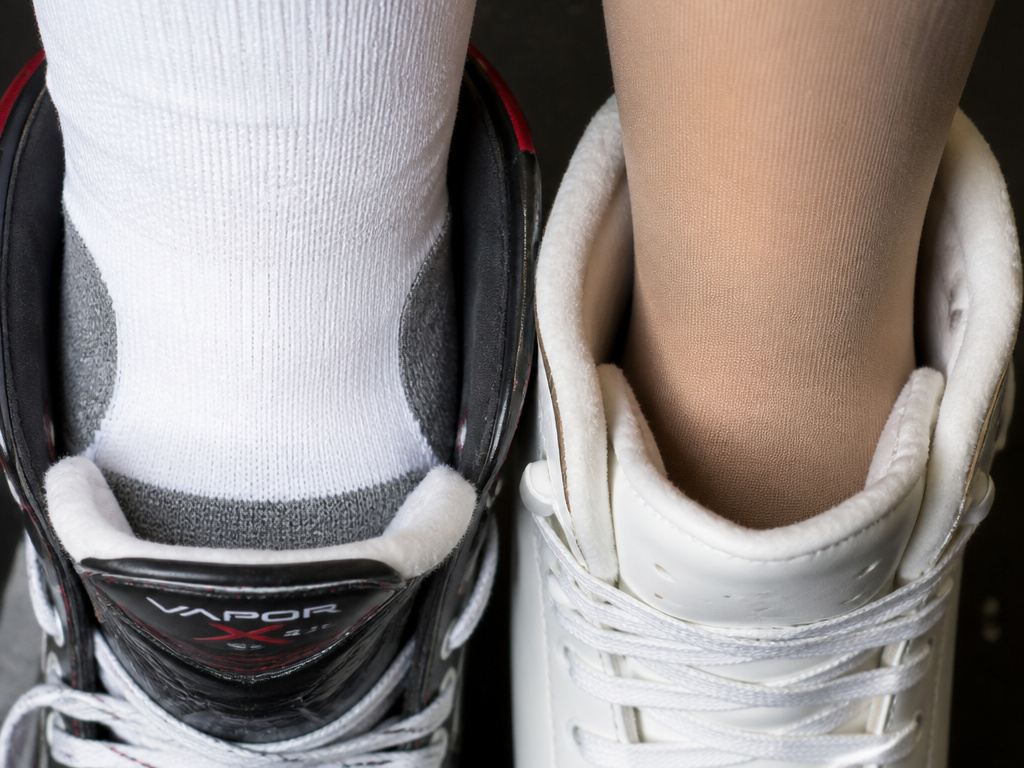
The demands of your skating style dictate the sock. For hockey and aggressive inline skating, where repeated impacts are common, thicker padded socks are often recommended for protection, though many experienced skaters prefer thin socks for better feel and fit. These socks often feature targeted cushioning on the heels and forefoot to absorb punishment. For figure skating or any discipline where precise edge control is paramount, ultra-thin socks are the standard. They allow you to feel the boot and the ice directly, prioritizing sensitivity over padding. Regardless of type, a snug fit without slipping is critical for stability, and reinforced heels and toes will extend the sock’s life against friction.
Frequently Asked Questions
Do NHL players wear socks in their skates?
Yes, the vast majority do. They almost universally choose very thin, moisture-wicking socks designed for skating. The priority is a precise fit and moisture management over bulk.
What socks should you wear with skates?
You should wear socks designed for skating. For figure skating, ultra-thin socks like Edea’s are the standard. For hockey or aggressive inline, thin to moderately padded socks with strategic cushioning, like Bauer Performance or Thorlos SKT, are common. Avoid cotton.
Are thin or thick socks better for skating?
It depends on your skating. Thin socks are better for technical control and precision (figure skating, advanced hockey). Thicker socks are better for impact absorption and comfort during repeated jumps or physical play (aggressive inline, recreational hockey). Start with a thin synthetic sock and only go thicker if you need the padding.
Do hockey socks go over skates?
No, this is a common point of confusion. The long, colorful “hockey socks” are part of the uniform and go over the shin guards and the top of the skate boot. The skate socks discussed here are the short, foot-specific socks worn inside the skate boot.
The Bottom Line
Your sock is the interface between you and your skate. A generic interface gives generic results.
If you’re starting out, buy one pair of a recognized thin skate sock—something like a Bauer Performance or a basic synthetic model. Use that as your baseline. If you find yourself bruised from impact or your feet sliding, then explore more padded options like the Thorlos SKT. If you crave more feel, try an ultra-thin option like the Edea socks.
The one rule that holds across all disciplines: ditch the cotton. Your feet and your performance will thank you by the third session. Everything else is tuning.
