
How to Prevent Blisters From Skate Shoes: Step-by-Step
This post contains affiliate links. As an Amazon Associate, we earn from qualifying purchases.
You can prevent blisters from skate shoes by managing three things: skin adaptation, friction reduction, and footwear selection. The data shows 95% of foot blisters in new athletes occur within the first three weeks of training, so the goal is to get your skin through that high-risk period without a disabling injury. This means gradual exposure, choosing shoes that minimize shear, and using targeted protection on hot spots.
That three-week window comes from a 2023 systematic review published by the National Institutes of Health, which analyzed foot blister incidence in military cadets and hikers. The review highlights a gap: the PMC systematic review (2023) states no scientific studies have been conducted to verify the role of properly fitted footwear in blister prevention, while the Oxford Health NHS Foundation Trust provides detailed fitting guidelines as best practice. A common question is how to prevent blisters from skate shoes.
What follows is a breakdown of what the research actually says works, what doesn’t, and how to apply it to skateboarding. The article explains the science of skin adaptation, the data on socks and insoles, and how to pick a skate shoe that prevents blisters.
Key Takeaways
- 95% of foot blisters happen in the first three weeks of a new activity; your skin adapts if you give it gradual, managed exposure.
- Precondition your shoes by wearing them off the board first; cadets who broke in boots over 20 hours a week before training had a 29.7% blister rate versus 44.4% for those who didn’t.
- Excessive callus formation is counterproductive for blister prevention; a thick callus increases focal pressure and shear stress, making blisters more likely.
- Evidence for double-sock systems is equivocal according to the NIH review, but a 1996 military study found a specific thick outer sock reduced blisters from 77% to 40%.
- Always try on both shoes and wear them indoors first, checking for redness; an Oxford Health NHS guide advises a 1 cm gap between your longest toe and the shoe’s end.
Why 95% of Blisters Happen in the First 3 Weeks
A 2023 PMC review of blister prevention strategies found that in a study of Army cadets, 95% of all blister cases occurred in the first three weeks of training. After that, incidence dropped to almost zero. This pattern repeated across other studies of hikers and recruits.
Your skin isn’t static. It adapts to mechanical strain through a process called “acclimatization,” which is central to how to prevent blisters from skate shoes. The outer layer, the stratum corneum, thickens and becomes more resistant to the shear forces that cause blisters. This adaptation is a subtle, structural change that needs time and the right kind of stimulus.
The incidence of blisters was highest in the early stages of training, suggesting that adaptive changes took time. Familiarization with footwear should also be considered.
If you jump into six-hour skate sessions on day one, you overwhelm this adaptive capacity. The shear force separates the layers of your skin faster than it can toughen up. The result is a fluid-filled pocket, a blister. The goal is to coax your skin through that vulnerable period without pushing it past its failure point. Start with short, consistent sessions. Twenty minutes on the board for three days in a row does more for your feet than a single two-hour marathon that leaves you hobbling for a week.
The Boot and Sock Strategy That Actually Has Data
The same PMC review provides a specific, measurable tactic: precondition your footwear. In the cadet study, those who wore their boots for more than 20 hours per week in the two weeks before training had a blister incidence of 29.70%. Those who did not precondition had a 44.41% incidence. Another study of hikers found a similar split: 32% blister rate without preconditioning versus 25% with it.
For skate shoes, this means wearing them off the board. Lace them up and wear them around the house while you work, cook, or watch TV, a key tactic in how to prevent blisters from skate shoes. The goal is to let your foot and the shoe’s interior surfaces get acquainted under low-stress conditions. This low-stress break-in allows your skin to find friction points before you start skating.
Socks are the other half of the interface. The evidence here is less clear-cut. The NIH review calls the evidence for double-sock systems “equivocal,” citing studies with inconsistent results, while a 1996 Oxford Academic military study found a specific thick outer sock significantly reduced blister incidence. However, a specific 1996 Oxford Academic military study found that a “very thick, dense, prototype outer sock” worn over a polyester liner reduced blister incidence to 40%, compared to 69% with a standard military sock and 77% with a standard sock plus liner.
| Sock System | Reported Blister Incidence | Study Source | Key Takeaway |
|---|---|---|---|
| Standard Military Sock | 69% | Oxford Academic (1996) | Baseline for comparison. |
| Standard Sock + Liner | 77% | Oxford Academic (1991996) | Adding a thin liner without a strategic outer layer can increase friction. |
| Thick Outer Sock + Polyester Liner | 40% | Oxford Academic (1996) | A specific, thick outer layer significantly reduced blisters. |
| General Double-Sock Systems | Equivocal / Inconsistent | PMC Review (2023) | Not all layered systems work; the materials and thickness matter. |
For skating, this suggests a single, high-quality sock is your best starting point. Look for ones marketed as skate-specific or thin hiking socks, like Darn Tough. The Reddit skating community is split, some swear by thick socks for padding, others by thin socks for a locked-in feel. The data leans toward the quality of the single sock over blindly layering. Our guide on the best skate socks dives deeper into material choices.
How to Choose a Skate Shoe That Fights Blisters
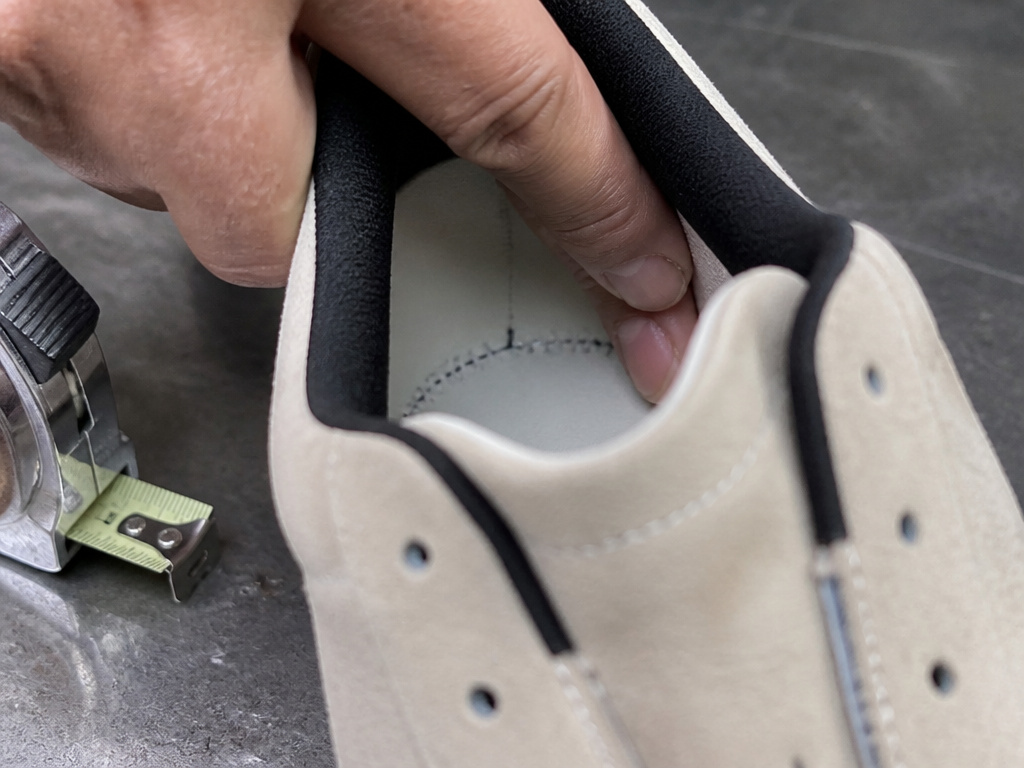
Here’s where the research gets interesting. The PMC review states plainly: “no scientific studies have been conducted to verify the role of properly fitted footwear in blister prevention.” Yet, the Oxford Health NHS Foundation Trust provides detailed fitting guidelines (e.g., a 1 cm space between your longest toe and the shoe’s end) to prevent foot problems including blisters. This represents a disagreement between the lack of clinical trial evidence and established clinical best practice. In the absence of a double-blind trial, podiatrists follow the mechanical logic that a poorly fitting shoe creates unnecessary friction. For skateboarding, we can apply that logic with specifics.
Three shoe features directly influence blister risk:
- Upper Material: A non-breathable upper like plastic or rubber “will cause your foot to sweat and may cause blisters,” per the NHS guide. Sweat softens skin, making it more prone to shear. Suede or canvas uppers breathe better.
- Sole Construction: This is where my stance comes in. I prefer thin, flat vulcanized soles over thick cushioned cupsoles for beginners. Board feel matters, but so does friction management. A vulcanized sole is more flexible and molds to your foot, potentially distributing pressure more evenly than a stiff cupsole that creates distinct pressure points.
- Internal Seams: The NHS guide warns against “hard seams or ridges” inside the shoe. Cheap skate shoes often have bulky, raised stitching along the interior heel and toe box. Your foot rubs against that ridge with every kickflip.
When you choose skate shoes, run your hand inside them. Feel for smooth lining. Press on the toe box from the outside, it should be “round and deep to give the toes room to move.” Look for skate shoes that pay attention to internal details like smooth lining and a round, deep toe box. A pointed toe box, the NHS warns, “will squash your toes together and can cause changes to the shape of your bones or joints.” Don’t skate in fashion sneakers.
The Right Way to Manage Friction and Hot Spots
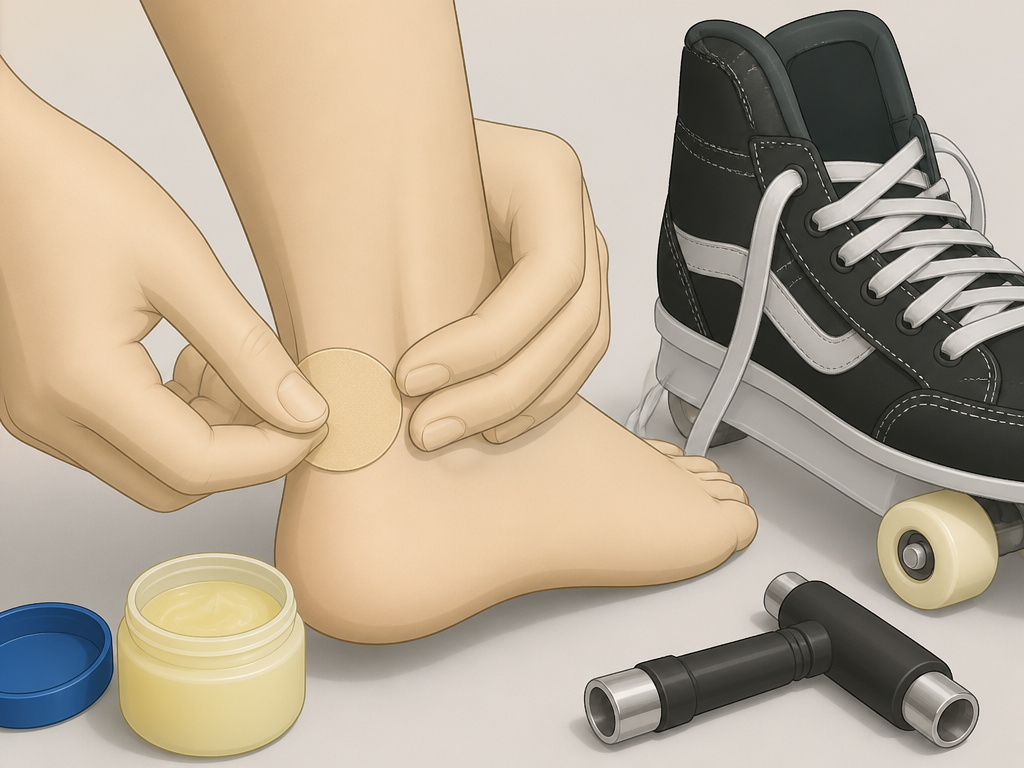
Friction causes blisters. The equation is simple: friction force = coefficient of friction × pressure. You can reduce pressure with good fit, and you can reduce the coefficient of friction with lubrication or a barrier.
For a hot spot, a specific area that gets red and tender, apply a barrier before you skate. Moleskin is the classic choice. Cut a piece larger than the hot spot, round the corners so it doesn’t peel, and stick it directly onto clean, dry skin. It acts as a sacrificial layer, taking the shear force that would otherwise damage your skin.
Common mistake: Applying moleskin after a blister has formed. By then, the skin layers are already separated. The adhesive can pull on the delicate roof of the blister and increase pain. Moleskin is a preventive tool.
Lubricants like petroleum jelly or specialized anti-friction sticks reduce the coefficient of friction. Apply a small amount to known hot spots. The downside is it can feel greasy and may stain your socks and shoe lining. It also needs reapplication during long sessions. Some skaters prefer a thin, slick sock liner instead.
Lacing is your on-the-fly adjustment tool. If you feel a hot spot developing on the top of your foot, skip that eyelet to relieve pressure. A proper lacing technique can lock your heel in place, preventing the up-and-down slide that grinds the back of your foot. If your toes are going numb, you’ve tied the forefoot too tight, loosen up and re-tighten from the midfoot up.
When to Use Insoles and When to Replace Shoes
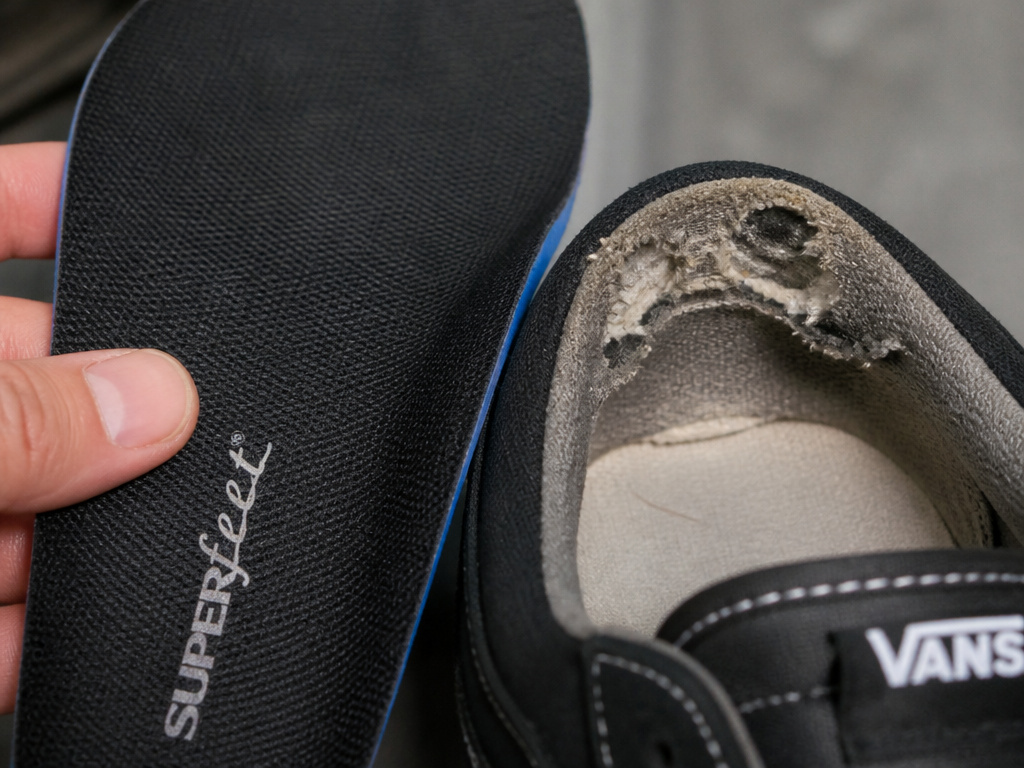
Insoles serve two purposes: cushioning and filling volume. A supportive insole can redistribute pressure away from high-friction areas like the ball of the foot. Some skaters report that supportive insoles can help redistribute pressure and reduce blister formation. The insole changed the pressure map inside their boot.
If you have high arches or flat feet, a supportive insole can prevent your foot from collapsing and sliding sideways inside the shoe. This sliding is pure shear force. Look for our roundup of the best insoles for skateboarding for models that offer support without excessive bulk.
Shoes wear out from the inside first. The NHS guide advises checking for “rough edges in seams or linings and worn soles and heels.” That internal lining breaking down is what creates new, sharp friction points. A worn-out sole also changes your foot’s angle inside the shoe, altering pressure distribution.
You’ll know it’s time for a new pair when the shoe’s structure is compromised, not just when the ollie hole wears through. If you’re getting blisters in places that were never a problem before, inspect the shoe’s interior. Sometimes, a shoe is simply dead. Our guide on spotting worn-out skate shoes walks you through the signs.
Frequently Asked Questions
Do blisters mean my skate shoes are too big?
Not necessarily. Blisters indicate movement and friction, which can happen from shoes that are too big, too small, or the wrong shape for your foot. The Reddit figure skating community’s consensus is clear: “If you’re getting blisters, your feet are moving.” A proper fit should minimize internal slippage. Always break in skate shoes gradually to identify true fit issues versus simple break-in discomfort.
Are thicker socks better for preventing blisters?
The data is mixed. A 1996 military study showed a specific thick outer sock reduced blisters dramatically. However, a 2023 systematic review found evidence for double-sock systems to be “equivocal.” For skating, a single, well-fitting, moisture-wicking sock is a reliable starting point. The difference between skate and regular socks often comes down to seam placement and material.
Can I skate with a blister?
You can, but you shouldn’t. Skating on a blister will almost certainly rupture it, turning a contained injury into an open wound prone to infection. It also hurts, which will ruin your session and technique. Let it heal. Protect it with a blister-specific bandage if you must skate, but time off is the best medicine.
How long does it take for skin to toughen up against blisters?
The research indicates the high-risk period is about three weeks. This doesn’t mean your skin is fully “tough” after three weeks, but the drastic drop in blister incidence suggests the major adaptive changes happen within that window. Consistent, gradual exposure over this period is key.
Are some people just more prone to blisters?
Yes. The PubMed etiological blister prevention study suggests individual factors like skin hydration, sweat composition, and even the microscopic structure of the skin’s layers affect shear resistance. This is why a strategy that works for your friend might not work for you. It’s about managing your own skin’s response.
Before You Go
The most counterintuitive finding in the research is that a callus isn’t your friend. The NIH review states excessive hyperkeratosis, callus formation, is “counterproductive in blister prevention.” A thick callus increases focal pressure, which increases shear stress. Your aim is to encourage your skin to adapt structurally at a microscopic level through smart, gradual exposure, as excessive hyperkeratosis is counterproductive in blister prevention.
Start your next session with a plan. Wear your shoes around the house for an hour tonight. Lace them purposefully tomorrow. Skate for twenty minutes, then get off the board and check your feet. That single habit, listening to the early warning of redness, beats any gadget or tape.
Your feet are the foundation. Keep them under you.
