
Skateboard Bearing Press Guide: Tools and Techniques
This post contains affiliate links. As an Amazon Associate, we earn from qualifying purchases.
To use a skateboard bearing press, you need the right axle for your bearing size (8mm for 608, 7mm for 627), a wheel within the tool’s size limits, and a smooth, controlled press until the bearing seats flush. A dedicated tool eliminates the struggle and prevents damage that hand methods can cause.
The hand method works, but the margin for error is thin. A slight angle or uneven pressure can dent the bearing shield or crack a wheel’s plastic hub. The press tool’s lever arm and aligned axle solve that, as detailed in our skateboard bearing press guide.
What follows: the exact specs for two real press tools, a head-to-head comparison of hand vs. Tool methods, a step-by-step press procedure, and the one warning every owner of a table-mounted press needs to hear.
Key Takeaways
- The Amphetamine Standard Bearing Press Tool handles skate/longboard wheels up to 70mm x 45mm and inline wheels with 8mm axles up to 82mm diameter.
- For 7mm quad wheel bearings (size 627), the Amphetamine tool can only press them in; it will not pull them out.
- Always press until the bearing is flush with the inside edge of the wheel, a seated bearing makes a distinct, solid click.
- If you table-mount your press, install all six mounting bolts firmly to prevent torque from cracking the aluminum base.
- For frequent bearing changes or aluminum-hub wheels, a dedicated bearing press is worth the investment over the hand method.
The Standard Bearing Press Tool Specs
The Amphetamine Standard Bearing Press Tool is a versatile option for many skaters. It’s made from aluminum and comes with two axles: an 8mm axle for standard size 608 bearings and a 7mm axle for pressing size 627 quad wheel bearings. This covers many skateboard, longboard, and quad setups, but not all inline systems.
The Amphetamine Standard Bearing Press Tool works on skateboard and longboard wheels up to 70mm in diameter and 45mm in width. For inline wheels, it only works on wheels that use an 8mm axle, up to 82mm in diameter, while the Bont press is designed for wheels up to 125mm. It does not work for inline wheels with 6mm axles and stepped spacers. The tool includes hardware for table mounting.
Its size limits are specific. For skate and longboard wheels, the cap is 70mm diameter by 45mm width. That fits most street and cruiser wheels. For inline skates, the limit is 82mm diameter, but only if your skates use a standard 8mm axle. The tool explicitly does not work for the less common 6mm axle systems with stepped spacers.
The 7mm axle inclusion is crucial for quad skaters. The tool presses 627 bearings into wheels, but it cannot remove them. That’s a hard limit from the manufacturer.
If you plan to bolt it to a workbench, the kit includes six bolts. The instruction is clear: install all six firmly. An uneven mount puts twisting force on the aluminum base, which can crack after repeated use. Hand-held use avoids this entirely.
Bont 125mm Inline Skate Bearing Press
For inline skaters running big wheels, the Bont 125mm Inline Skate Bearing Press is the specialist option. It’s built from 6061 aluminum and steel to handle the higher forces needed for stiff, aluminum-hub wheels.
| Spec | Bont 125mm Press | Amphetamine Standard Press |
|---|---|---|
| Max Wheel Diameter | 125mm | 82mm (inline) / 70mm (skate) |
| Max Wheel Width | 46mm | 45mm |
| Bearing Sizes | 608 and 688 bearings (8mm) | 608 (press/pull) and 627 (press only) |
| Primary Use Case | 100mm, 110mm, 125mm inline skate wheels | Skateboards, longboards, sub-82mm inline |
| Construction | 6061 aluminum and steel | Aluminum |
The Bont press is designed for 100mm, 110mm, and 125mm inline skate wheels, which are often a tight press into a metal hub. If your skating revolves around big-wheel inlines, this is the tool. For everything else, especially if you need to handle 7mm quad bearings, the Amphetamine tool is more versatile.
Hand Method vs. Dedicated Press: The Real Difference
Many beginner guides, including the iFixit manual and the Skate Labs PDF, recommend using your truck axle, while tool manufacturers like Amphetamine and Bont market dedicated presses as essential. You slide a bearing onto the axle, set the wheel over it, and push down. It’s free, and it works. So why would anyone buy a tool?
Where this goes sideways: Pushing a bearing in by hand on the axle often goes crooked. The bearing shield dents against the wheel hub, the inner race spins instead of seating, and you end up with a gritty, slow-rolling bearing that fails within a month.
The axle method relies on perfect alignment and even pressure, which is hard to guarantee according to the skateboard bearing press guide. Your hands wobble. The wheel tilts. The bearing binds.
A press tool eliminates that. The axle is fixed in the tool’s body, so it stays straight. The lever arm gives you mechanical advantage, so you use less force more effectively. For wheels with aluminum hubs, like many high-end inlines, a dedicated press is often recommended by manufacturers. That’s why Bont developed their press.
The disagreement in sources is real. The repair guides advocate for the free, on-truck method. The tool manufacturers market presses as essential. The truth sits in the middle: if you change bearings once a year, the axle method is fine if you’re careful. If you swap wheels seasonally, run a shop, or skate aluminum-hub inlines, a press saves your bearings and your patience.
Step-by-Step Bearing Press Procedure
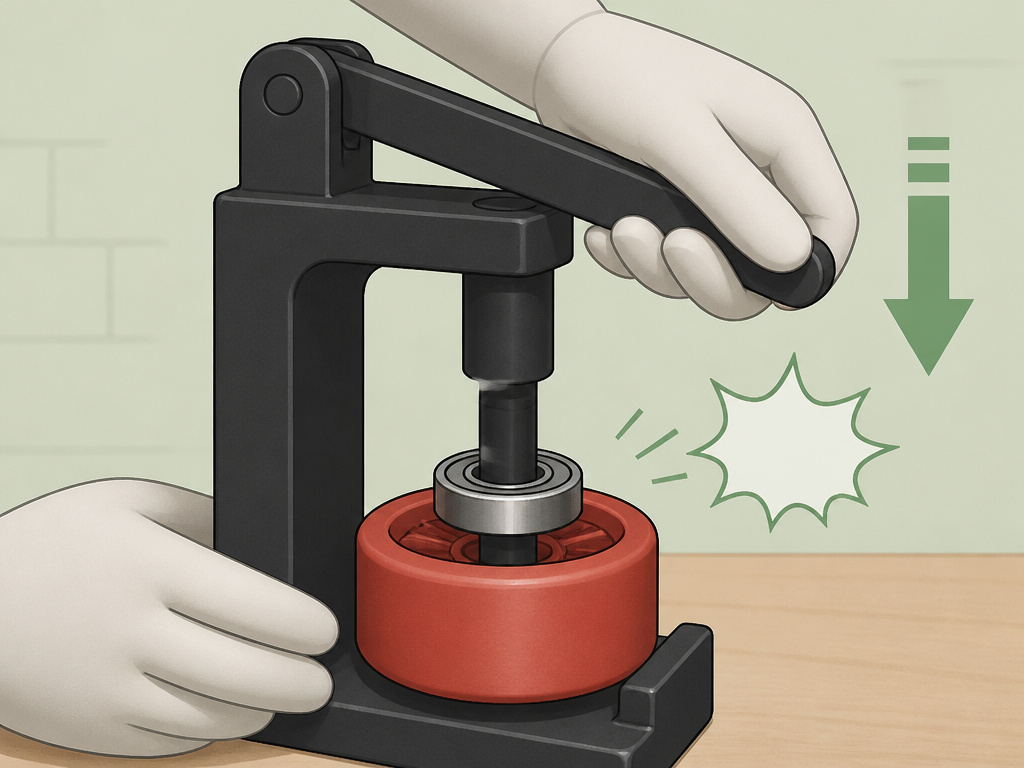
Using a press isn’t complicated, but sequence matters. Doing it out of order can jam the tool or damage a bearing.
- Identify your bearing and axle. Match the axle to the bearing’s inner diameter. Use the 8mm axle for 608 bearings (skateboards, longboards, most inlines). Use the 7mm axle for 627 bearings (quad skates). Install the correct axle into the press body.
- Set the wheel on the base. Place the wheel flat-side-down on the tool’s base plate. Make sure the bearing hole is centered over the axle hole.
- Drop the bearing onto the axle. Lower the bearing onto the axle, ensuring it sits square. Don’t force it.
- Operate the press. Slowly pull the lever arm down. You’ll feel resistance, then a distinct click or sudden give as the bearing seats. Stop immediately when it bottoms out. Over-pressing stresses the bearing.
- Flip and repeat. Turn the wheel over and press the second bearing into the other side.
A full-sized press with a lever gives clearer, more consistent results.
After both bearings are in, don’t forget the spacer before you slide the wheel onto your truck. A missing spacer can allow the bearings to pinch together under load, which creates drag.
What About Bearing Removal?
The Amphetamine tool works as a press and a puller for 8mm (608) bearings, as explained in the skateboard bearing press guide. You use the opposite end of the tool, often a collet or a fork, to grip the bearing’s outer race and extract it. This is where a tool can beat the hand method, which risks damaging the wheel if not done carefully.
For 7mm (627) quad bearings, the same tool will not pull them. The manufacturer states this clearly. You’ll need a separate bearing puller or to revert to the careful screwdriver method.
For big inline wheels, a dedicated press can be very helpful.
Wheel and Bearing Compatibility Check
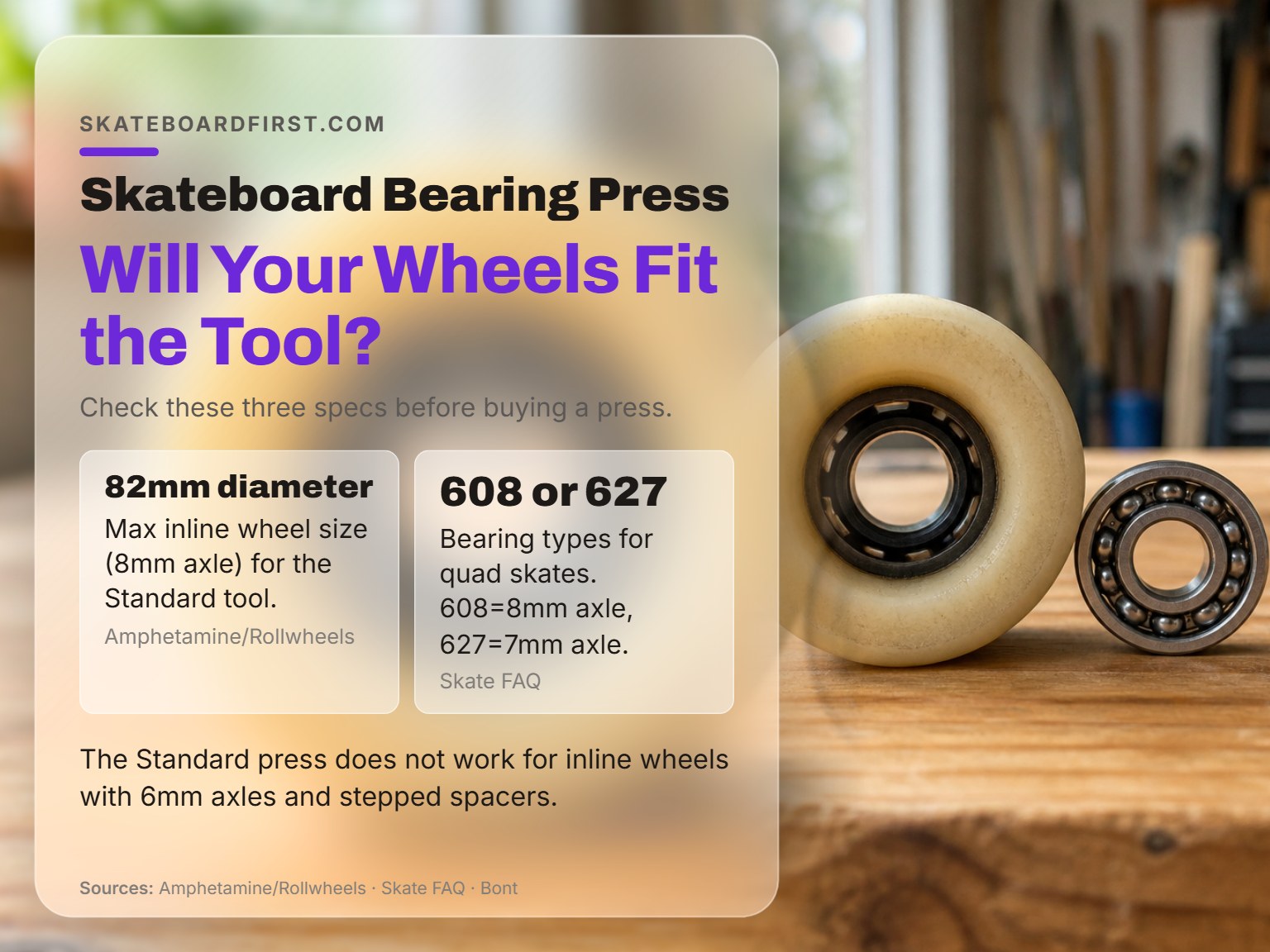
Before you buy a press or attempt a change, verify three things. Getting one wrong means the tool won’t work.
| Check | Why It Matters | How to Verify |
|---|---|---|
| Bearing Size (ID) | The axle must match the bearing’s inner hole. | Look for the number stamped on the bearing shield: 608 = 8mm, 627 = 7mm. |
| Wheel Diameter & Width | The press has physical limits. | Measure your wheel. The Amphetamine tool max is 70mm x 45mm for skate/quad, 82mm diameter for inline. |
| Inline Axle Size | Not all inline axles are 8mm. | Check your skate’s specs. If it uses 6mm axles with stepped spacers, the Amphetamine press will not work. |
This table is your pre-flight checklist. Some vintage inlines use a 6mm system, which is incompatible with the Amphetamine press. That’s a frustrating return.
Safety and Setup Warnings
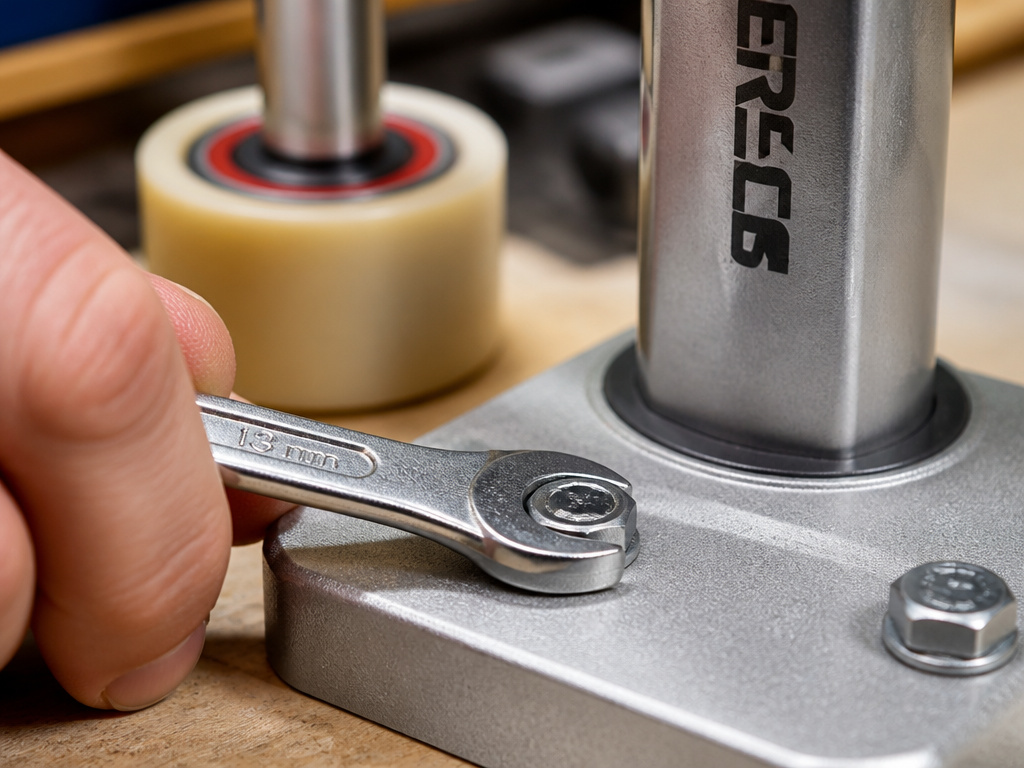
Before you start: A bearing press concentrates force. Never place your fingers near the pressing point. If table-mounting, ensure all six bolts are firmly installed to prevent the base from twisting under torque, which can crack the aluminum. Work on a stable, level surface.
The tool isn’t dangerous, but the mechanics are. A slipping wheel or a loose base can send parts flying. The six-bolt warning from Amphetamine is important to prevent unnecessary torque on the base.
For cleaning bearings you’ve just removed, remember the Skate Labs safety rule: work in fresh air, far from any flame, because isopropyl alcohol and citrus cleaners are flammable. Wear gloves, and skip household oils, which gum up.
Frequently Asked Questions
Can I use a bearing press for roller skates?
Yes, for quad skates. Use the 7mm axle for pressing 627 bearings into the wheel. Remember, the Amphetamine tool will not pull 627 bearings back out. For removal, you’ll need a different method.
What’s the difference between 608, 627, and 688 bearings?
608 bearings have an 8mm inner diameter and are the standard for skateboards, longboards, and most inline skates. 627 bearings have a 7mm inner diameter and are common in quad skates. 688 bearings are micro bearings used in some inline skate wheels with microhubs to reduce weight.
Do I need a press if I already have a skate tool?
Your skate tool handles nuts and bolts, not bearing installation. If you’re happy using the truck axle method, you don’t need a press. But if you want to eliminate misalignment and protect your bearings from damage during changes, a press is the right upgrade.
How many bearings do I need for a full setup?
You need two bearings per wheel. That’s eight bearings for a skateboard, sixteen bearings for a pair of quad skates, and six to eight bearings for inline skates (depending on whether you skate with three or four wheels per skate).
What does the ABEC rating mean?
The ABEC (Annular Bearing Engineering Council) scale (ABEC 1, 3, 5, 7, 9, 11) rates manufacturing precision, not necessarily speed or durability. For skateboarding, the difference between ABEC 1 and ABEC 7 is negligible at skating speeds. A higher ABEC rating doesn’t automatically mean a better skating bearing.
The Bottom Line
A bearing press isn’t a mandatory tool, but it’s a smart one for anyone who changes bearings more than once a year. The Amphetamine Standard Bearing Press Tool covers the broadest range of skate, longboard, and inline setups. If your world is big-wheel inlines, step up to the Bont 125mm press.
The real value isn’t in the time saved, it’s in the bearings you don’t ruin. A crooked press with a screwdriver costs you a set of bearings. The tool can be a worthwhile investment to protect your bearings. Do the math.
If you hear a cracking sound while pressing bearings, stop and check the wheel. That may indicate a problem with the wheel. Everything above assumes a wheel that’s still viable.
