
Skateboard Copers Explained: Is It Worth It?
This post contains affiliate links. As an Amazon Associate, we earn from qualifying purchases.
Skateboard copers are plastic or metal sleeves that snap onto the hanger of your skateboard trucks, creating a smooth, protective surface for grinding on curbs and ledges. They were popular in the 1980s and early 90s to protect expensive trucks from wear, but fell out of mainstream use as truck design improved and skaters embraced raw metal grinds.
If you’ve heard the term “coper” thrown around at the skatepark, you might be mixing it up with “coping”, the metal pipe on a ramp’s edge. They’re different. A coper is a piece of hardware you add to your setup, not part of the park itself. Understanding that distinction is the first step to knowing why someone would bother installing them, and that’s what skateboard copers explained really means.
What follows is a look at what copers actually did, the specific truck parts they interact with in a skateboard copers explained breakdown, and why you almost never see them on modern boards. We’ll also cover the real maintenance those truck parts need today, which is far more important than adding a cosmetic sleeve.
Key Takeaways
- Copers were plastic truck covers designed to protect the truck hanger from grind damage, popular before hardened truck alloys became standard.
- Installing them often required disassembling the truck, which involves specific nuts like the 17mm M10 self-locking nut on a Slide Surfskates front truck.
- They fell out of favor because they change the grind feel, can catch on ledges, and modern trucks are built to be ground down.
- Truck maintenance is more critical than adding copers; regularly check and replace worn nuts and lubricate moving parts per your board’s manual.
- DIY modifications like homemade PVC copers are not recommended by manufacturers and can create safety hazards.
What Are Skateboard Copers?
A skateboard coper is a third-party accessory, usually made of hard plastic or sometimes metal, that clips or snaps onto the central part of your truck, the hanger. Its job was simple: take the abrasion of a grind so the actual metal of your truck wouldn’t. In the 80s and early 90s, truck axles and hangers were softer. Grinding a concrete ledge could gouge them quickly, ruining an expensive part. A plastic coper was a sacrificial layer.
The feel was different. A plastic grind is quieter and slides differently than metal-on-concrete. Some skaters liked the buttery slide; others hated the lack of control. You can still find vintage Santa Cruz copers online, a testament to their era. They look like rounded, colored shells that encase the truck’s main pivot point.
I tried a set of these old Santa Cruz copers on a retro build. The plastic-on-concrete sound is a hollow scritch-scritch, nothing like the sharp zzzzzt of raw aluminum. They slid almost too easily, which is fun until you need to stop the slide predictably.
This connects directly to understanding your skatepark features in the context of a skateboard copers explained guide. Copers were for grinding street obstacles like curbs and ledges, not the smooth, metal coping of a ramp. Knowing what you’re grinding defines the gear you might use.
Coper vs. Coping: Clearing the Confusion
This is the mix-up that happens every time. Coping is the pipe. It’s part of the ramp. A coper is a piece of plastic. It’s part of your truck. One is a location; the other is equipment. Getting this right saves you a lot of confused looks at the shop.
Why Did Copers Disappear?
Truck technology changed everything. By the mid-90s, companies like Independent and Thunder were using harder, more durable aluminum alloys. These trucks could withstand countless grinds without failing. The metal would wear down, sure, but that wear became a badge of honor, a sign of a well-used board. The functional need for a protective cover vanished.
There were performance downsides too. A poorly fitted coper could catch on a ledge lip during a grind, causing a sudden stop. Not ideal. The added bulk also changed the truck’s geometry slightly, affecting how the board flipped for types of skateboard tricks like kickflips and heelflips. As street skating exploded, simplicity won. Skaters preferred the direct feel of metal and one less thing to worry about.
The final nail was fashion. A worn, raw metal truck looked core. A bright plastic coper started to look dated, like bell-bottoms or a mullet in the world of skateboarding.
The Hardware You’ll Actually Touch
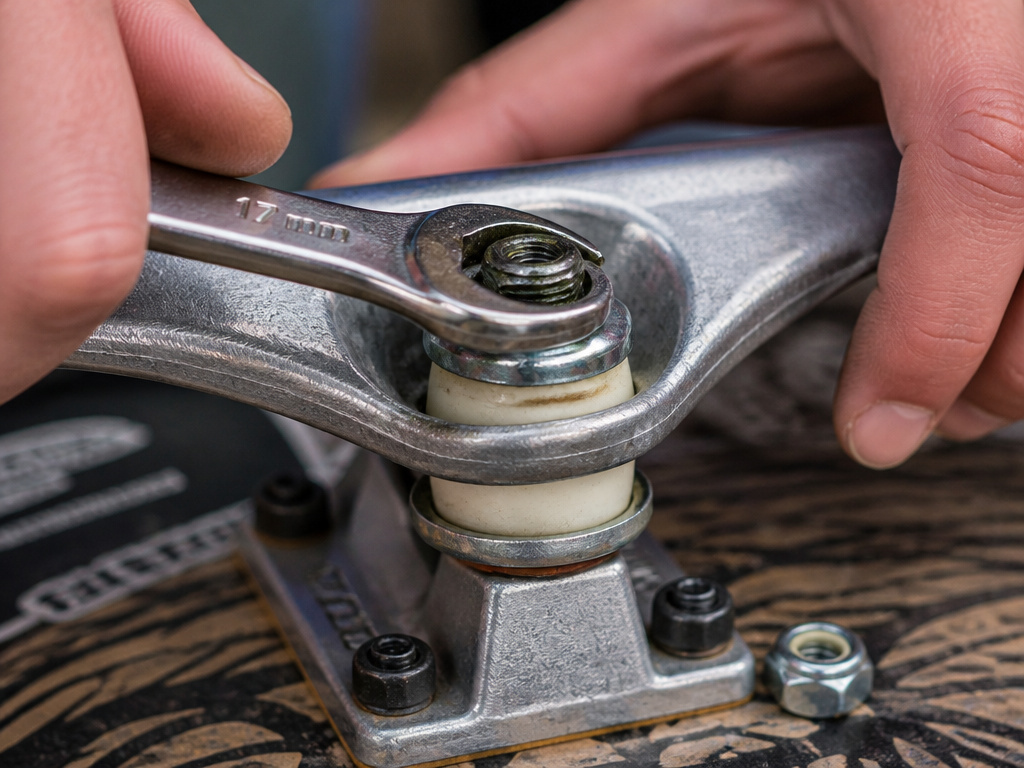
Talking about adding or removing copers means talking about taking your trucks apart. That’s where you meet the real hardware that matters for safety and performance, not the plastic shell. We will examine the actual parts, using a specific modern truck as a reference.
The Slide Surfskates 3.5 front truck gives us a perfect, documented example. Its exploded view shows a 17mm, M10 self-locking nut (Part A) securing the kingpin. The manual recommends: if you disassemble this truck, replace that nut with a new one. The inner locking core deforms after use and won’t re-lock properly. This is the difference between a tight truck and a wobbling hazard.
| Truck Part (Slide 3.5 Example) | Specific Hardware | Maintenance Rule |
|---|---|---|
| Front Kingpin Assembly | 17mm, M10 self-locking nut | Replace with new nut after any disassembly. |
| Spring Set | Standard skate axle nut (Part SS1) | Renew nut if disassembling spring set. |
| Rear Truck Bushings | Cone bushing (J1) top, Cylindrical (J2) bottom |
For regular skateboard trucks, the principles are similar. The kingpin nut is your adjustment point. Over-tightening it crushes the urethane bushings, killing your turn. The correct tightness allows the bushing to rebound instead of deforming.
Common mistake: Reusing a deformed self-locking nut. It feels tight when you wrench it down, but vibration from riding works it loose within a session. The truck starts to shimmy, and a wheel can catch.
This is where a setup with a skate tool and matched bushings shines. Understanding your truck’s anatomy allows for proper maintenance, a much better use of time than hunting for vintage copers.
The Modern “Coper”: Bushing and Bearing Care
Proper lubrication and avoiding environments that accelerate wear are the modern equivalents of protecting your investment. Slide Surfskates is blunt: do not use water to clean bearings, or any parts. However, iFixit states if bearings get wet from light rain, they can be dried in the sun. It recommends a light spray of oil on a regular basis for longevity and to avoid using your board on dusty or wet surfaces.
The Evolve Hadean electric skateboard manual echoes the need to avoid damaging environments: don’t leave your board in a hot car and prohibits storage where freezing temperatures may occur. These are the real protections for modern hardware.
Should You Try Copers Today?
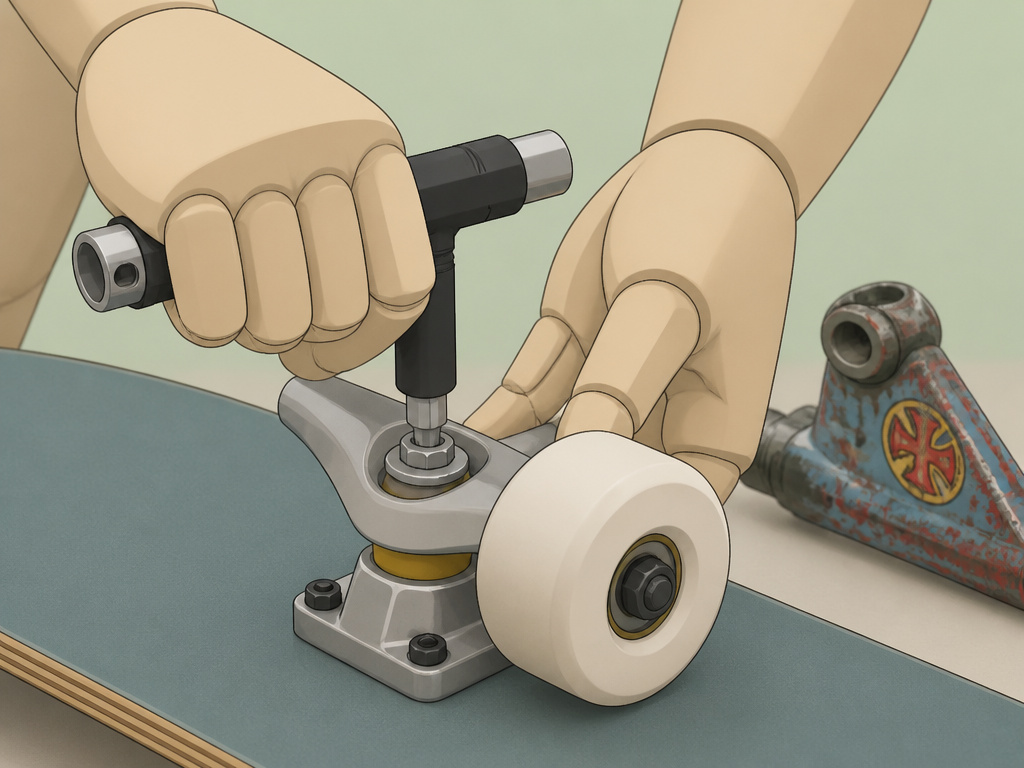
For most skaters, the answer is no. They’re a historical footnote, a cool bit of nostalgia for a retro build. The functional need is gone. Your mental energy is better spent on:
- Dialing your truck tightness: This affects every turn and grind.
- Choosing the right bushings: Softer for easier turning, harder for stability. The Portland Parks skateboard design guide notes softer bushings are often recommended for lighter riders.
- Setting up your board for your terrain: A good park setup with harder wheels prevents wheel bite and slides predictably.
If you’re deeply curious, hunt down some Santa Cruz copers for a fun side project. But understand you’re adding a piece of history, not a performance upgrade. The grinding skills you learn will translate far better. Speaking of which, learning to grind coping on a ramp is a fundamental skill that uses no extra hardware at all.
Where this goes sideways: Making DIY copers from PVC pipe. It seems like a cheap hack, but plastic that isn’t rated for impact can shatter on a bad landing. You’re adding a failure point right at your pivot axis, which is a great way to test your wrist guards.
Maintaining the Grind Surface You Actually Have
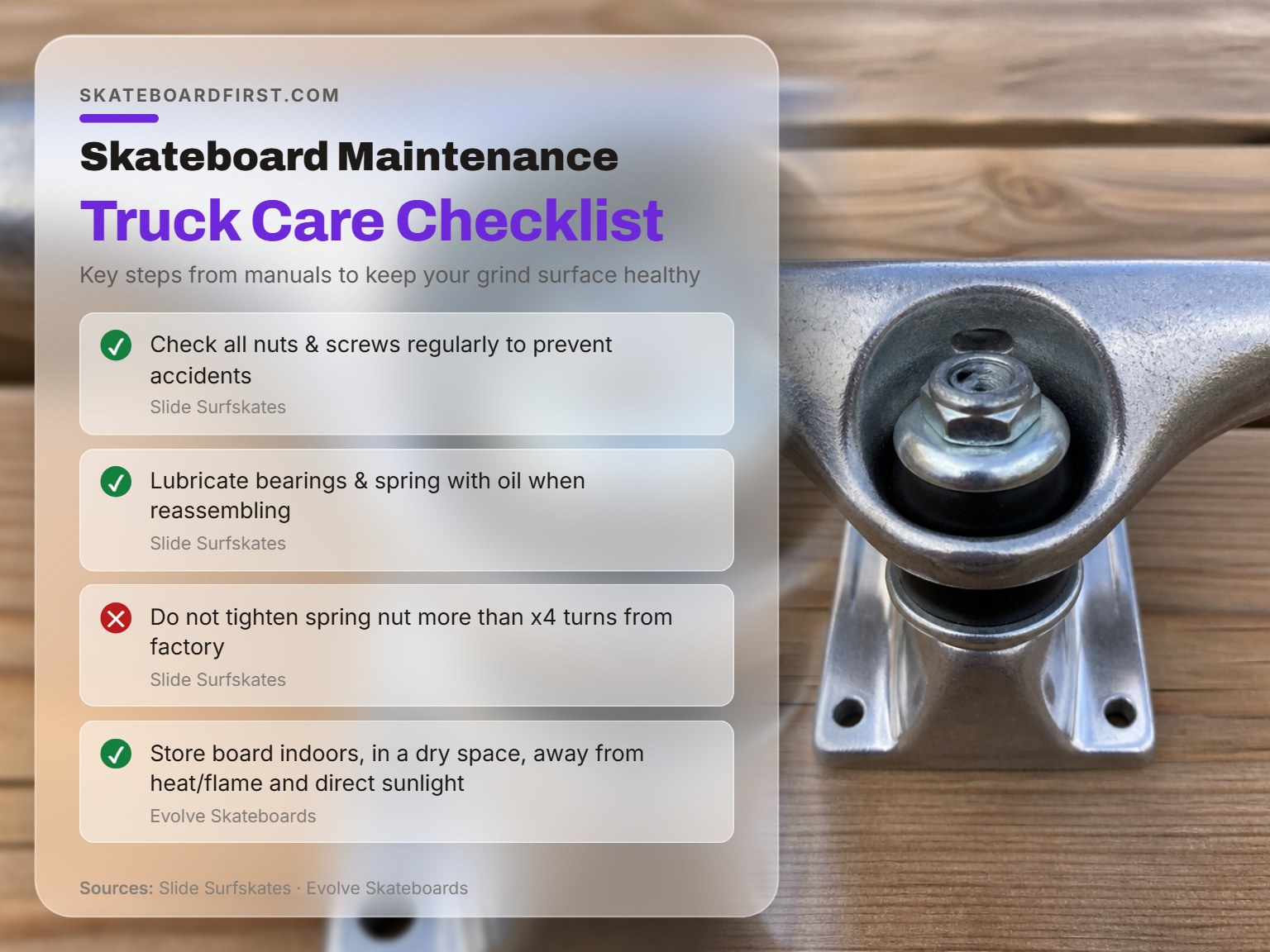
Your truck’s grind surface is the metal hanger. To keep it and the whole truck healthy, follow a simpler checklist than skaters did in the 80s.
- Check nuts and screws regularly. The Slide manual explicitly says this prevents accidents. A quick pre-session rattle-check takes ten seconds.
- Lubricate moving parts. The manual says to use lubricating oil on bearings and springs when reassembling. A drop of lubricating oil in your bearings keeps them rolling fast.
- Don’t overtighten. The Slide manual warns against spring tension overload, saying not to tighten the spring nut more than x4 turns from factory. The same logic applies to kingpin nuts on standard trucks,
- Store your board inside. This comes from multiple manuals. Keep it dry, out of direct sun, and for electric boards, at a 40-50% charge if storing for a month or more.
This maintenance ensures your trucks last, which is the whole point the old coper was trying to solve. A well-maintained truck can handle years of grinds, no plastic armor needed.
Frequently Asked Questions
Do any pros still use copers?
Virtually none. You might see them on a niche retro board for a video part, but no current pro includes them in their regular setup. The modern pro grind is all about the raw truck.
Can copers help me learn to grind?
They might give a slightly more forgiving slide initially, but they also change the feel and can catch. You’re better off learning on the standard equipment you’ll use forever. Focus on the fundamentals of approach and balance instead.
What’s the difference between a coper and a guard?
They’re the same thing. “Coper” is the classic term. “Truck guard” is sometimes used, but it refers to the same plastic or metal sleeve that covers the hanger for grinding.
Are copers bad for your trucks?
Not directly, but the process of installing them often requires disassembling the truck. If you don’t replace critical locking nuts like the 17mm M10 nut on a Slide truck, you can introduce play and a safety risk. The coper itself is just passive plastic.
Where can I buy skateboard copers today?
Your best bet is online marketplaces like eBay or specialty vintage skate shops. Major retailers haven’t stocked them in decades. Santa Cruz brand copers are the most common find.
Before You Go
Skip the copers. Spend that time and money on a skate tool and a set of replacement bushings matched to your weight. Learn how each turn of the kingpin nut changes your ride. That knowledge does more for your skating than any accessory ever could.
If you ride transitions, put the energy into learning how to pump a bowl efficiently. If you’re a street skater, dial in your skateboard wheels for the surfaces you hit most. These choices impact every second of your session. A coper, at best, impacts only the moment your truck hits the ledge. And modern trucks are built for that moment, bare metal and all.
