
Skateboard Games to Play at the Skatepark
This post contains affiliate links. As an Amazon Associate, we earn from qualifying purchases.
Skateboard games to play at the skatepark split into two worlds: physical contests played on real boards and concrete, and video games you can play anywhere. The real-world classics, like SKATE or relay races, build board control and social skills in 10–15 minute bursts. Digital titles like Skateboard Party 3 or Skate Space offer trick practice and global competition when you’re off your board.
That 10–15 minute window is key to the skateboard games to play at the skatepark. It’s the perfect slot to reset a session, mix up skill levels, and turn practice into play without anyone getting bored or tired.
What follows is your playbook. We’ll cover the 20 structured games from the nonprofit Skateistan, the official rules for the oldest game in skateboarding, and the mobile apps that pros actually use. You’ll also get the safety specs that keep these games fun, not risky.
Key Takeaways
- A 10–15 minute game slot can refocus a session and is endorsed by coaching resources like the Goodpush booklet.
- The game of SKATE uses a 5-failure elimination rule, and playing by video with apps like Global SKATE gives players 24 hours to 7 days to match a trick.
- For mixed-ability groups, adapt games like Tag or Obstacle Courses to use specific skatepark features like low rails or banked corners.
- Video games like Skateboard Party 3 feature over 40 tricks and real skaters like Greg Lutzka, but Session is cited by players for its realistic simulation controls.
- Always check a park’s ASTM-standard signage for rules on safety gear and supervision before starting any game.
The 20-Game Playbook: Structured Skatepark Activities
Forget just rolling around. The Goodpush skate games booklet, published by Skateistan, packages 20 specific activities designed to teach control, balance, and spatial awareness. These aren’t vague ideas, they’re timed, measured, and categorized by the skill they build.
The booklet states the skateboard games to play at the skatepark can fill 10–15 minutes of a skate lesson. That’s not a random estimate. It’s the sweet spot between warming up and burning out, long enough to run a few rounds of a relay but short enough to keep everyone engaged.
Games also help new skaters learn to control their board, balance, and keep an eye out for others around them within the skatepark, which helps reduce crashes and injuries in the long run.
The resource describes three game types. Each one targets a different skill and gives you a concrete rule set to start with.
Speed and Teamwork: The Relay Race
This is skateboarding’s version of a classic. Split into two teams, with half of each team lined up on opposite ends of a flat area. A skater pushes to their teammate on the far side, gives a high-five, and that teammate races back. The first team to cycle all members wins. You can layer in skatepark features to complicate things. Instead of a straight line, set a course that requires skaters to tic-tac through cones, roll over a low ramp, or ollie over a stick. This forces skaters to find your line on the fly, linking obstacles under the pressure of a clock.
Balance and Control: Skateboard Limbo
Two people hold a string taut at chest height. The rest of the group lines up about 10 meters away (per the Goodpush guide) and takes turns rolling under the string without touching it. The holders gradually lower the string after each round. The real test isn’t just crouching. Advanced skaters might get into a “coffin” position, lying flat on their backs on the board, to slide under. This game teaches weight distribution and low-speed balance, skills that directly translate to stalling on a ramp or locking into a grind.
Creativity and Imagination: Invent-a-Trick
Divide a group of 3–5 skaters and give them 5–10 minutes. Their task is to invent a new trick or a new line using obstacles within the skatepark. After the time is up, each group demonstrates their creation for the others to try. This is a powerful tool for mixed-level sessions. A beginner might invent a simple “ramp roll-to-tail stall,” while a more experienced skater might link a grind into a kickturn. The goal isn’t to land the impossible, but to look at standard ramps and rails with fresh eyes. It turns the park itself into a game board.
The Rules of SKATE: Skateboarding’s Oldest Game
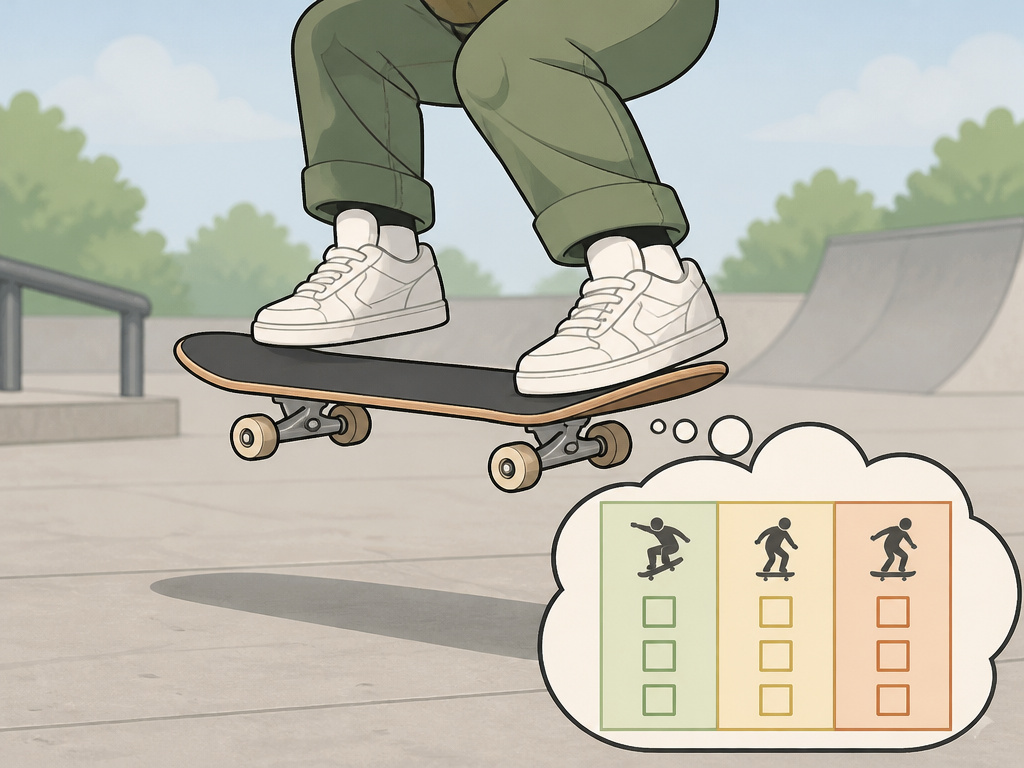
If you only know one skateboard game, it should be SKATE. The Skate Labs playbook calls it the oldest game in skateboarding, and its simplicity is why it’s lasted. One person sets a trick. If they land it, everyone else must match it. Miss the match and you take a letter. Spell S-K-A-T-E and you’re out.
Common mistake: Trying to win with your hardest “sometimes” tricks. You’ll bail, and the turn passes to someone who sets an easy trick you’re too nervous to land.
The playbook advises a smarter strategy: categorize your tricks into three lists. “Locked” tricks you land nine times out of ten, even tired. “Usually” tricks you land more often than not. “Sometimes” tricks you’ve landed but can’t count on. Most games are won on “locked” tricks. They apply pressure with almost no risk. A good weekly goal, per the guide, is to move one trick from “usually” to “locked,” and one from “sometimes” to “usually.” This turns a casual game into a structured practice tool for skate progression.
| Trick Category | Your Goal | Risk in a Game |
|---|---|---|
| Locked | Foundation. Use these to apply pressure. | Low. You’ll likely land it. |
| Usually | Practice target. Move one to “Locked” each week. | Medium. Could go wrong under pressure. |
| Sometimes | Learning target. Move one to “Usually” each week. | High. Setting this is a gamble. |
For playing remotely, the Global SKATE system formalizes the rules. You challenge a friend with a link that expires after 7 days; your friend gets 24 hours, 72 hours (the default), or 7 days to match the trick you film. You film one official take of a trick; your friend gets 24 hours, 72 hours (the default), or 7 days to match it. The game uses a list of 25 flat-ground tricks, and you get one redo on your final letter. It’s a different kind of pressure, no instant match, but no warm-up attempts on camera either.
Adapting Classic Games for the Concrete Playground
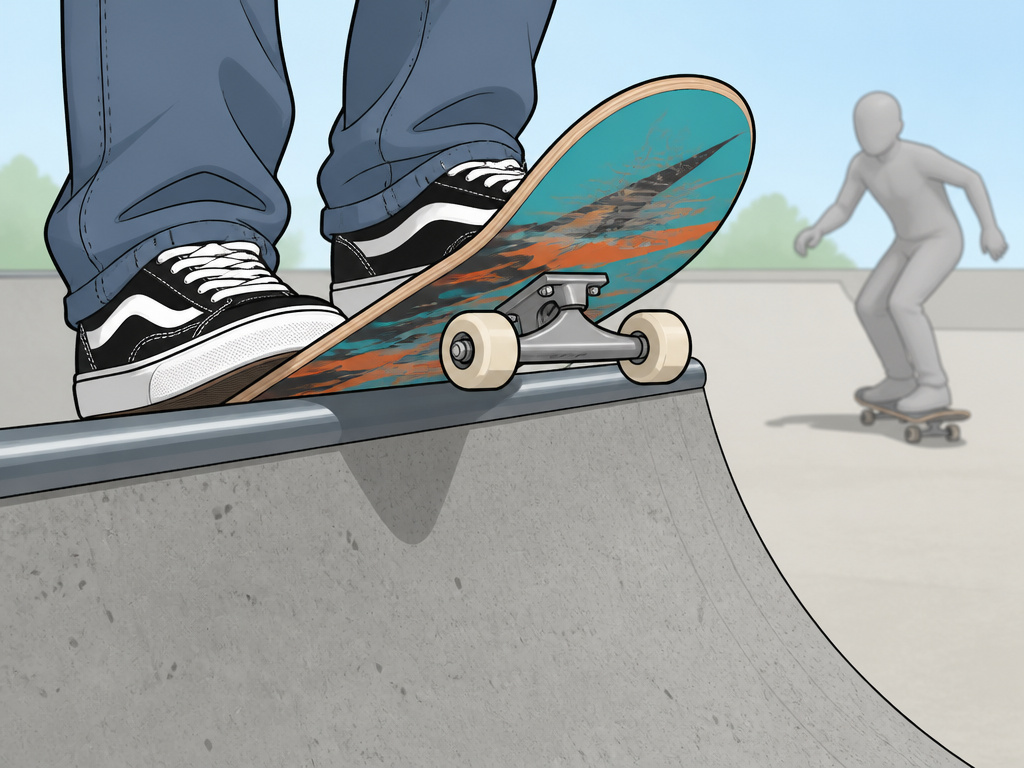
The skatepark is more than a collection of obstacles; it’s a dynamic landscape for adaptation. You don’t need a booklet to have fun, just a classic game and a willingness to reinterpret it.
Take Tag. The basic rule, one “it” person chases others, transforms when everyone’s on a board. Add a “safe zone” rule: you can’t be tagged if you’re in a stall on a coping or balanced on a low rail. This encourages beginners to use the park’s geometry for defense, practicing stalls in a low-pressure way. For more advanced skaters, declare that you can only be tagged after landing a trick, turning the chase into a trick-generating engine.
An Obstacle Course is another blank canvas. Use the existing skatepark features to create a sequence. Start with a push up a bank, then a kickturn on a quarter pipe, a tic-tac through a set of cones you placed, and finish with a manual across a painted line. Time each skater. The course isn’t about difficulty, but about smoothness and flow in a skatepark. It teaches how to read a skatepark’s layout as a connected path, not a series of isolated tricks.
Where this goes sideways: Playing full-speed chase games at a crowded park. You might not crash into a feature, you’ll crash into a person. Always scan the park and choose a skatepark session time with fewer skaters for these games.
These adaptations work because they serve multiple skill levels simultaneously. A beginner focuses on completing the course; an expert focuses on style and speed. Everyone is playing the same game, just at their own pace.
Digital Skate Sessions: Video Games That Complement Real Skating
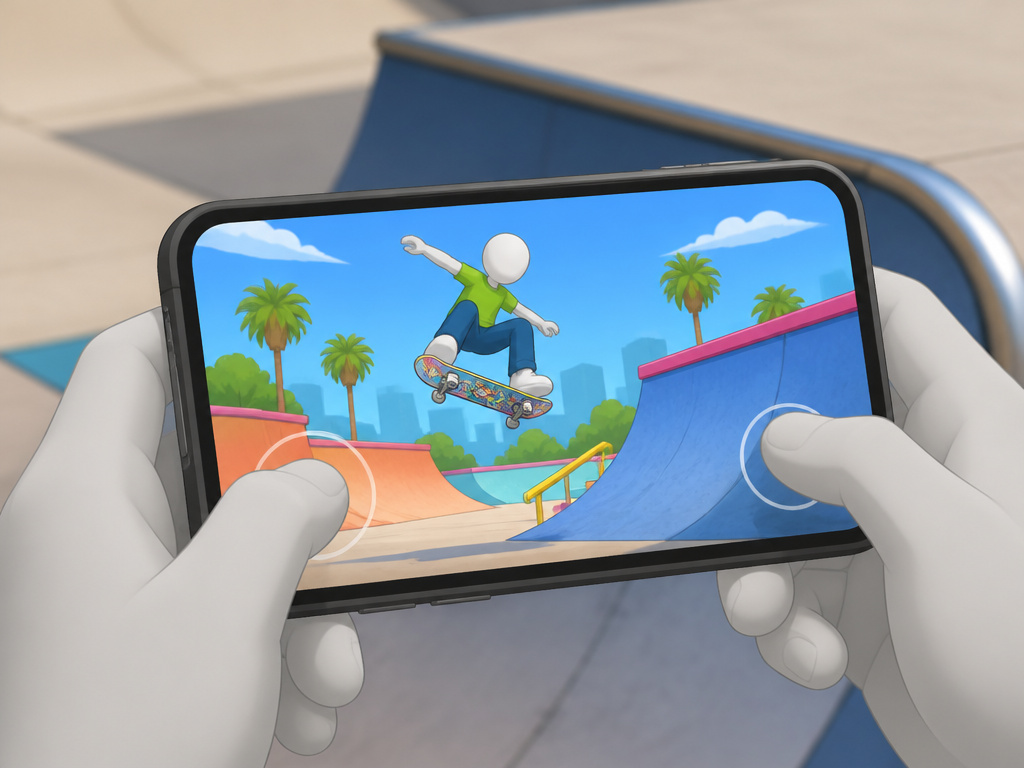
When you’re not at the park, video games can keep the skateboarding mindset alive. They fall into two camps: arcade-style fun and simulation realism. Your choice depends on what you want out of the screen time.
Skateboard Party 3 (Maple Media) is a prime example of the arcade approach. It includes professional skater Greg Lutzka, over 40 unique tricks to learn, and 8 distinct locations. It’s about customization, completing over 70 level objectives and achievements, and the thrill of landing big combos. This is the game you play to feel the fantasy of skateboarding, not to dissect your foot placement.
On the simulation side, Session gets cited by players on forums like r/SkateEA for its control scheme. One user argued, “Session controls with front/back foot settings are the best controls in any skateboarding game for realism/sim.” It’s less about scoring points and more about the meticulous process of setting up and landing a trick. This can actually help your real skating by reinforcing the concept of separate foot control.
For social, digital skateboarding, the Skate Space app offers a different angle. With over 10 million downloads, it focuses on online battles with up to 10 skaters, custom parks, and video parts. It’s less a simulation and more a virtual skate community where you can make friends and compete in trick contests.
| Game | Style | Best For | Key Feature |
|---|---|---|---|
| Skateboard Party 3 | Arcade | Casual fun, trick variety | Over 40 tricks, 8 locations, pro skater Greg Lutzka |
| Session | Simulation | Realistic trick mechanics | Independent front/back foot controls (per player reports) |
| Skate Space | Social/Competitive | Online community play | Battles with up to 10 skaters, custom park editor |
The community is split on the genre’s health. One Reddit user bluntly stated, “skateboarding games are a dead genre all together,” while another countered that “Skate is the most played regardless.” The reality is a niche one. These games won’t replace shooting games in popularity, but for a skater nursing an injury or stuck inside, they’re a vital bridge to the culture.
Safety and Etiquette: The Framework for Fun
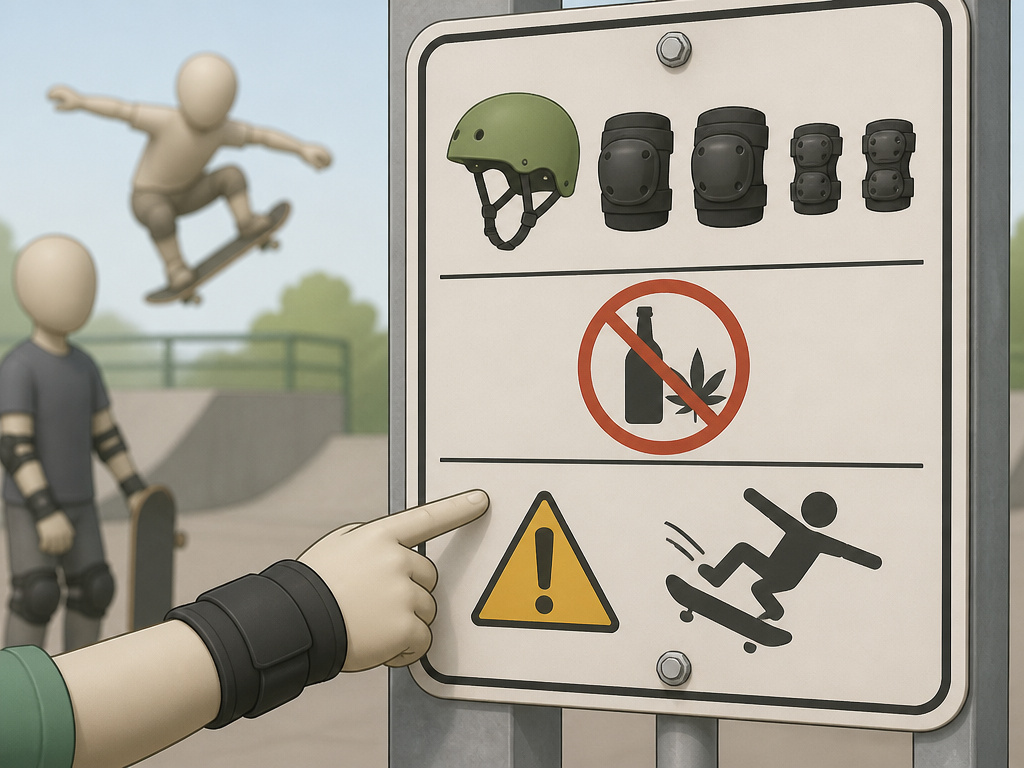
Games fall apart fast if someone gets hurt or pisses off the locals. The fun has a framework, and it’s built from both common sense and published standards.
The ASTM F2334 standard covers above-ground skatepark elements, while ASTM F2480 covers in-ground concrete parks. These are the engineering guides that ensure the ramps won’t crumble under you. More importantly for a visitor, ASTM F2480 mandates specific skatepark signage. This signage must indicate if adult supervision is present, list emergency numbers, state the applicable regulations regarding the use of safety gear, acknowledge the inherent risk of participation, and prohibit anyone under the influence of drugs or alcohol.
Easy to miss: The sign about inherent risk. It’s not just legal boilerplate. It’s a reminder that you are responsible for your own safety and decisions, especially when you’re amped up in a game.
Your skatepark etiquette is the social layer on top of these physical rules. Before starting a game that takes over a section of the park, take a lap. Who’s already skating there? Can your game coexist with their lines, or do you need to wait? A quick “Hey, mind if we run a quick relay across this flat area?” goes a long way. It’s how you make friends, not enemies.
The goal is to plan a skateboarding session that includes games without becoming a hazard. Pick times when the park is less crowded. Keep game boundaries clear. And if someone not playing rolls through your area, yield, they have the right of way. This respect keeps the session fun for everyone and is the core of the unwritten rules of the skatepark.
Frequently Asked Questions
What are some fun games to play at a skating rink?
The same principles apply to a skatepark with a smooth, flat surface. Relay races, SKATE, and a simple game of “Follow the Leader” are perfect. For a rink, classic flat-ground games like relay races, SKATE, and Follow the Leader work well on the smooth, predictable surface. The flat, predictable surface is ideal for technical flat-ground games.
What are some good skate video games?
For mobile, Skateboard Party 3 offers the most content with licensed brands and pro skaters. For PC/console players seeking realism, Session is cited by some players for its simulation controls, while others praise Skater XL for smooth controls or Skate Story for capturing skateboarding’s essence. The Skate Space app provides a free, social experience where you can build parks and battle online.
What should I do my first time at a skatepark?
Play a game. Seriously. After you’ve watched the flow and understood the basic layout, ask a small group if you can join a round of SKATE or a slow game of follow-the-leader. It’s a low-pressure way to get rolling, focuses your mind on a simple task, and is a natural icebreaker for building friendships through skateboarding. It beats standing in a corner alone.
What trick did Tony Hawk invent?
While Tony Hawk landed the first documented 900, he didn’t invent the game of SKATE. That honor is lost to history, though the Skate Labs playbook calls it the oldest game in skateboarding. Hawk’s contribution to games is more about bringing skateboarding to a global video game audience with the Tony Hawk’s Pro Skater series, which popularized the score-attack, combo-driven arcade style.
Before You Go
Think of games not as a distraction from “real” skating, but as its engine. A 10-minute relay forces you to push efficiently. A round of SKATE reveals which tricks you actually own versus which ones you just hope to land. Even a video game session can reframe how you think about linking moves together.
The one rule that changes everything: match the game to the group’s lowest common skill level, then let the more experienced players add style. A beginner can roll through a cone slalom; an expert can do it switch or with a kickturn at the end. That’s the secret to inclusive sessions that help everyone progress faster.
Your next session, don’t just skate. Play something. It’s the fastest way to turn a collection of individuals into a crew, and a patch of concrete into a playground.
