
Skateboarding for Weight Loss Guide: Evidence-Based Steps
This post contains affiliate links. As an Amazon Associate, we earn from qualifying purchases.
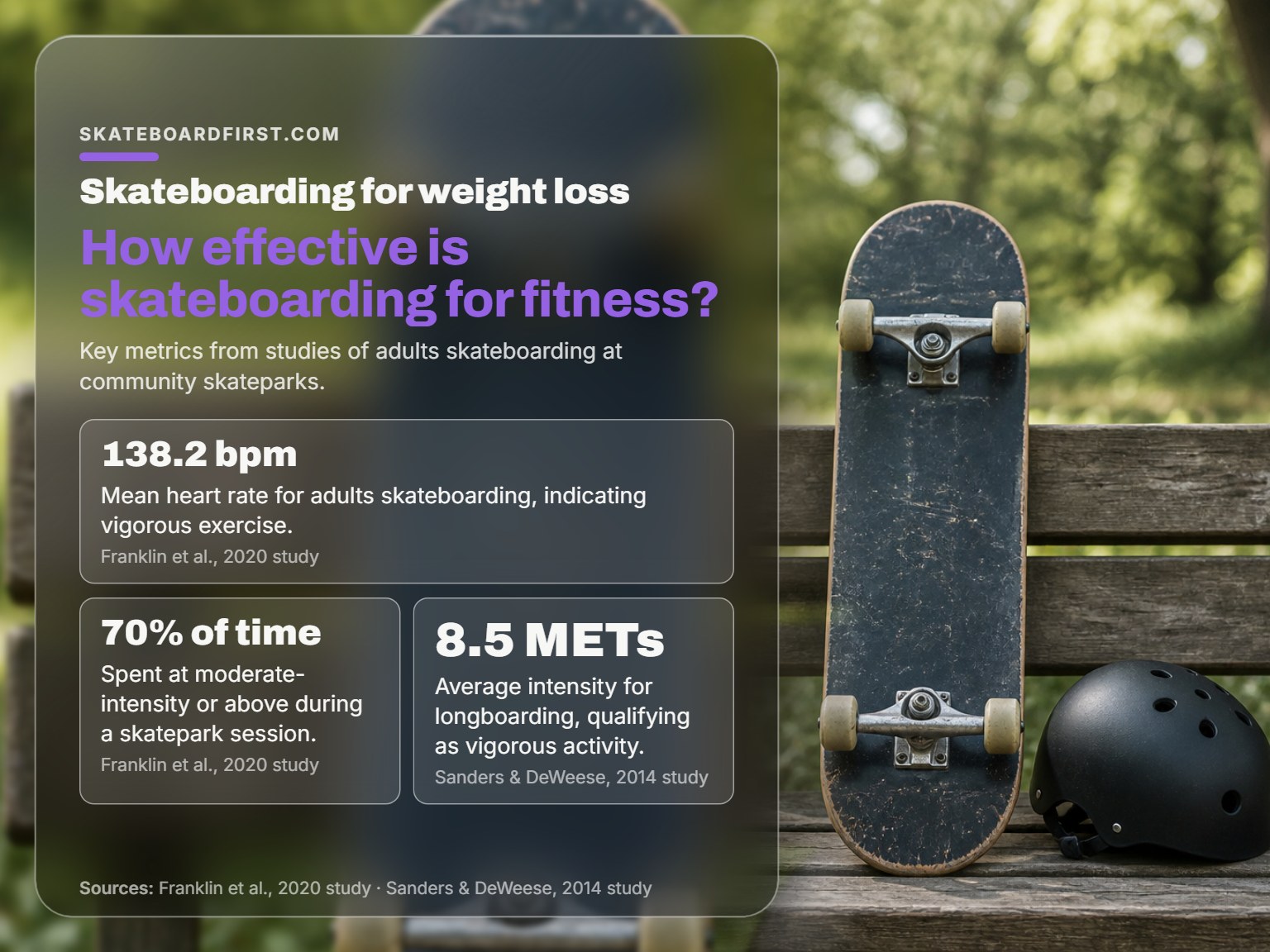
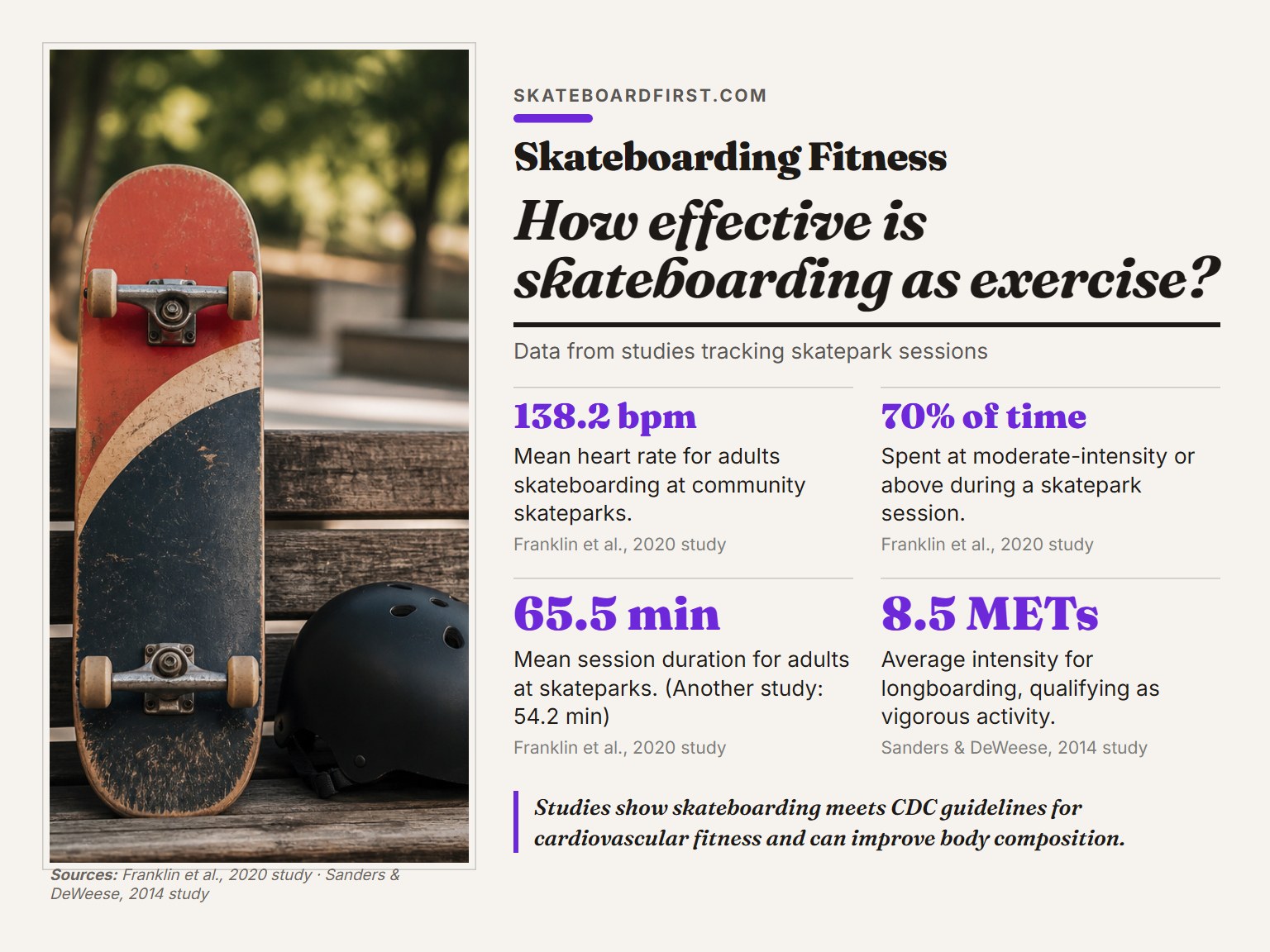
Skateboarding burns calories and builds fitness, but it works for weight loss only when paired with a calorie deficit. A 2020 study found adults skateboarding at community parks averaged a heart rate of 138.2 bpm and sessions lasting 65.5 minutes, spending 70% of that time at moderate-intensity or above, enough to meet CDC cardio guidelines. Structured programs, like an 8-week surf skate regimen, have been shown to significantly decrease body weight and body fat percentage.
That 70% figure is the key. It means most of a typical skate session isn’t lounging; it’s active, sustained effort that pushes your cardiovascular system. The trick to turning that effort into weight loss requires managing the rest of your day so the calories you burn are not immediately replaced. For a structured approach, consult a skateboarding for weight loss guide.
What follows: a breakdown of the science, a direct comparison to other cardio, a sample 8-week plan built from study data, and the essential safety steps that keep you rolling long enough to see results.
Key Takeaways
- Skateboarding meets CDC cardiovascular fitness guidelines, adults in a 2020 study spent 70% of their session at moderate-intensity or above with an average heart rate of 138.2 bpm.
- You cannot out-skate a bad diet; weight loss requires a calorie deficit, which skateboarding helps create but does not guarantee.
- For best results, pair consistent skating (aim for 3+ sessions weekly) with basic dietary awareness, focusing on protein and whole foods to manage hunger.
- Protective gear is essential, especially for beginners; the POSNA states essential equipment includes a CPSC or Snell/ANSI-certified helmet, wrist guards, and elbow/knee pads.
- Board choice matters: a cruiser or longboard promotes longer, steady-state sessions for calorie burn, while a trick board encourages high-intensity bursts.
The Science of Skateboarding as Cardio
The 2020 study published in the International Journal of Exercise Science gives us hard numbers. Researchers instrumented 45 adult skateboarders at community parks and found they skated for an average of 65.5 minutes, traveling 4.56 kilometers. Their mean heart rate was 138.2 beats per minute, which is about 71.7% of their age-predicted maximum. The Franklin et al., 2020 study suggests a mix of intensities, while the Sanders & DeWeese, 2014 and Marshall et al., 2020 studies firmly classify longboarding and powered skateboarding as vigorous-intensity.
This data from the NIH study on skateboarding heart rates shows skateboarding elicits heart rate responses consistent with the CDC’s recommendation of 150 minutes of moderate-intensity aerobic activity per week.
The intensity isn’t just from pushing. Balancing, carving, and attempting tricks engage your core and lower body. Another study in the Research Quarterly for Exercise and Sport concluded skateboarding at a self-selected pace provides sufficient exercise responses to increase aerobic fitness and that its caloric cost is enough to help maintain a healthy body composition.
Where the intensity varies: Not all skateboarding is equal. A 2014 study on longboarding in the Journal of Sports Sciences reported an average intensity of 8.5 METs at typical cruising speeds, classifying it as vigorous activity. Meanwhile, the 2020 data from community parks shows a mix, with participants spending 70% of session time at moderate-intensity or above. Your workout depends on what you do. Pumping transitions in a bowl non-stop is vigorous. Casually pushing down a bike path is moderate.
This is where board choice becomes a workout variable. A surf skate or longboard encourages continuous motion, while a street setup leads to intervals: push, attempt a trick, rest, repeat. Both can work, but they burn calories differently.
Skateboarding vs. Running vs. Cycling for Weight Loss
Here is the blunt comparison. For pure, maximally efficient calorie burn per minute, running wins. It engages more muscle mass against gravity and typically produces a higher heart rate. Cycling allows for longer, sustained sessions.
So why choose skateboarding? Because adherence is the most important factor in any long-term fitness plan. You will not consistently do a workout you hate. Skateboarding provides intrinsic motivation, the joy of rolling, the challenge of a new trick, the social scene at a park. Skateboarding provides intrinsic motivation, the joy of rolling, the challenge of a new trick, and the social scene at a park.
The ERIC metabolic skateboarding study from 2011 wasn’t comparing MET values; it was asking if skateboarding is a viable aerobic activity. The answer was yes. For weight loss, viability, showing up again and again, matters more than marginal differences in caloric efficiency.
| Activity | Typical MET Range | Best For Weight Loss When… |
|---|---|---|
| Running | 8-12+ METs | You prioritize maximum calorie burn in limited time and enjoy high-impact exercise. |
| Cycling | 6-10 METs | You need low-impact, long-duration sessions and can maintain a steady, brisk pace. |
| Skateboarding | 5-10.5 METs | You need an engaging, skill-based workout you’ll stick with long-term, mixing moderate and vigorous efforts. |
The table shows overlap. A vigorous skate session can match a moderate run. The PubMed longboard skateboarding study puts longboarding at ~8.5 METs. A 2020 study on an electrically powered skateboard (Summerboard) found a mean MET value of 10.5, also vigorous. The tool matters, but the effort matters more.
The part nobody mentions: Skateboarding makes you hungry. The combination of cardio, balance, and mental focus is a potent appetite stimulant. If you finish a session and immediately undo the calorie burn with a large meal, you’ll stall. This is the most common failure mode. Plan a protein-rich snack for right after you skate.
Your 8-Week Skateboarding Weight Loss Plan

This plan is adapted from the structure used in a 2024 surf skateboard training study that yielded significant improvements in body composition, serving as a practical skateboarding for weight loss guide. It prioritizes consistency and gradual progression over maximal effort from day one.
Weeks 1-2: Foundation
- Frequency: 3 sessions per week.
- Focus: Comfortable riding. Spend 30-40 minutes per session just pushing, turning, and stopping. Use a bike path or empty parking lot. The goal is to build board control and ankle stability.
- Off-Board: Add two 15-minute sessions of off-board training for skateboarders, focusing on bodyweight squats, calf raises, and planks to prepare your muscles worked by skating.
Weeks 3-4: Introduction of Intensity
- Frequency: 3 sessions per week.
- Focus: Introduce intervals. After a 10-minute warm-up, try this: 2 minutes of brisk, continuous pushing, followed by 2 minutes of relaxed cruising or rest. Repeat 4-5 times per session.
- Skill: Start learning to tic-tack or carve tighter turns to increase energy expenditure.
Weeks 5-6: Skill & Stamina
- Frequency: 3-4 sessions per week.
- Focus: Take your intervals to a skatepark if accessible. Use a pump track or a mellow bowl. Pumping back and forth without pushing builds leg burn and cardio quickly. Aim for 45-minute sessions.
- Tracking: Start noting how you feel. Are sessions getting easier? That’s a sign of improved fitness, even if the scale hasn’t moved yet.
Weeks 7-8: Integration & Challenge
- Frequency: 3-4 sessions per week.
- Focus: Blend skill work with cardio. Structure a session like this: 10-min warm-up, 20-min of working on a new trick (like an ollie or drop-in), 15-min of continuous park laps or distance pushing.
- Mindset: By now, skating should feel like a sustainable part of your routine, not a grueling chore. If it does, you’ve already won.
Common mistake: Jumping straight to week 5 because you’re impatient. The foundational weeks build the joint resilience and muscle memory that prevent overuse injuries. Skipping them often leads to shin splints or a sprained ankle by week 3, which derails everything.
This plan assumes you are also minding your diet. You cannot outwork a poor diet, especially with an appetite-boosting activity like skating. Use a simple calorie-tracking app for the first two weeks just to see where you’re at, no drastic cuts needed.
The Critical Role of Safety Gear

This gear is essential for staying in the game. The Pediatric Orthopaedic Society of North America (POSNA) is unequivocal: essential protective equipment includes a properly fitted helmet, wrist guards, and elbow/knee pads. For adult beginners, especially those carrying extra weight, this advice is the essential foundation of starting safely.
A helmet is your most important piece. The POSNA states it should meet or exceed the safety standards of the CPSC or Snell Memorial Foundation of ANSI. Replace it every five years, or immediately if damaged. Wrist guards are arguably second. The instinct to put your hands out in a fall is strong, and wrists snap easily. Guards distribute that force.
Before you start: A proper fall technique is as important as pads. The CPSC recommends crouching down if you lose balance to reduce fall height, trying to land on fleshy parts of your body, and rolling to dissipate force. Stiff-arming the ground is a one-way ticket to a broken wrist or collarbone.
Your gear impacts your willingness to push limits. If you’re terrified of falling, you’ll skate timidly, barely raising your heart rate. Knowing you’re padded up allows you to commit to pushes, carves, and attempts that actually constitute a workout. It’s the difference between a 20-minute cautious stroll and a 60-minute sweat session.
Nutrition: Fueling the Burn Without Sabotage
Skateboarding will increase your appetite. The key is to feed the recovery, not the hunger pang. Here’s a simple framework:
- Pre-Session (1-2 hours before): A small, balanced meal or snack. Example: a banana with a tablespoon of peanut butter, or a slice of whole-grain toast with avocado. Provides sustained energy without weighing you down.
- Post-Session (within 30-60 minutes): This is the critical window. Your body is primed to repair muscle and replenish glycogen. Aim for a mix of protein and carbs. Example: a Greek yogurt with berries, a protein shake, or chicken with sweet potato.
- General Daily Intake: Don’t make it complicated. Prioritize whole foods, lean proteins, vegetables, fruits, and whole grains. Reduce intake of processed sugars and saturated fats. Drink water consistently throughout the day, not just when you skate.
The goal is to create a modest calorie deficit. You can estimate your skate session’s calorie burn, but don’t treat it as gospel. Use it as a guide, not a license to eat back every calorie.
Where this goes sideways: Using skateboarding as an excuse to eat more. “I skated for an hour, I deserve this pizza.” That pizza can easily contain more calories than you burned. Track honestly for just one week to see the real relationship between your intake and output.
Tracking Progress Beyond the Scale
Weight is a lagging indicator and can be misleading. Muscle is denser than fat. As you skate, you may be building leg and core muscle while losing fat, the scale might not budge, but your body composition is improving. Here are better metrics:
- Session Metrics: Can you skate longer than you could two weeks ago? Is your average heart rate lower for the same effort? This is direct evidence of improved cardio fitness.
- Skill Metrics: Have you learned to push more efficiently? Can you carve or pump now? Skill progression is a fantastic motivator and correlates with increased energy expenditure.
- How You Feel: Do your clothes fit better? Do you have more energy throughout the day? Is your sleep improved? These subjective measures are powerful.
- Body Measurements: Taking waist, hip, and thigh measurements every 4 weeks can show progress where the scale does not.
The heart rate and locomotor activity study on female and BIPOC skateboarders found they met CDC guidelines even with lower average velocities than male skaters. It’s not about being the fastest; it’s about consistent, sustained effort. Use a simple journal or app to note these non-scale victories. They will keep you going when the scale is stubborn.
How to Track Your Skateboarding Weight Loss
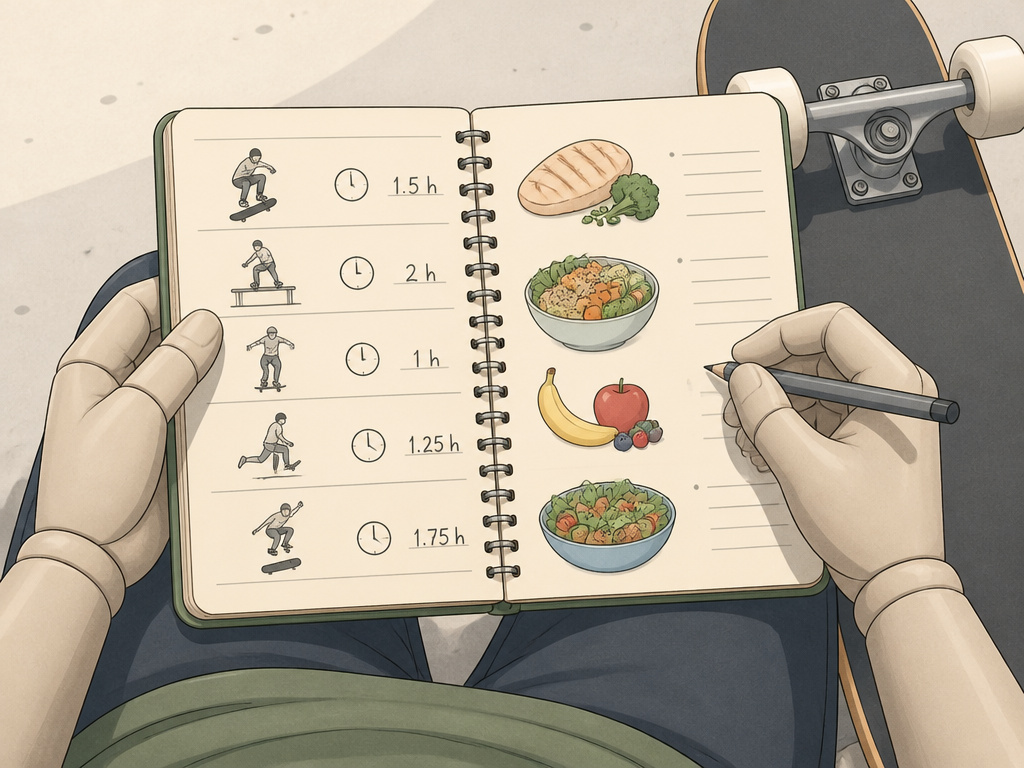
Pairing your skate sessions with a simple weight and food diary creates a powerful feedback loop. Studies show skateboarding provides sufficient exercise to improve body composition, but tracking helps you connect your effort to results, a core tenet of any skateboarding for weight loss guide. Note your skate days and duration, as research indicates sessions often last long enough to meet fitness guidelines. In your food diary, focus on the quality of your meals around your activity. This practice helps you see patterns, stay motivated, and ensure your nutrition supports the vigorous effort you’re putting in on the board.
Frequently Asked Questions
Can I lose weight just by skateboarding?
Yes, but not only by skateboarding. Skateboarding creates the calorie deficit necessary for weight loss, but you must support it with sensible nutrition. If you burn 400 calories in a session but then eat an extra 500 calories because you’re ravenous, you’ll gain weight. The activity is a powerful tool, but the diet handles the fine print.
Is skateboarding better for weight loss than other cardio?
It depends on adherence. Running may burn more calories per minute, but if you hate running and will quit after two weeks, it’s less effective. Skateboarding’s unique blend of skill, fun, and community can lead to better long-term consistency, which is the ultimate driver of weight loss. Some, like anecdotal reports on forums, claim running or cycling are more efficient for weight loss, while peer-reviewed studies show skateboarding provides sufficient exercise for aerobic fitness and can significantly improve body composition.
What is the best type of skateboard for weight loss?
For steady-state sessions, a longboard or cruiser can be ideal. It encourages longer, steady-state sessions focused on distance and speed, keeping your heart rate in a sustainable zone. A surf skate is also excellent, as it mimics pumping and carving motions that heavily engage your legs and core. A standard street skateboard is better for high-intensity interval-style workouts at a skatepark.
How long until I see weight loss results from skateboarding?
With consistent effort (3-4 sessions per week) and a moderate calorie deficit, you might notice changes in how your clothes fit within 4-6 weeks. Measurable scale changes often take 8-12 weeks. The 2024 surf skate study showed significant decreases in body weight, BMI, and body fat percentage after a structured 8-week program. Patience and consistency are required.
I’m overweight. Is it safe to start skateboarding?
Yes, with precautions. Start on smooth, flat ground. Invest in high-quality protective gear, especially a certified helmet, wrist guards, and elbow/knee pads. Listen to your joints; if you feel sharp pain, stop. Consider pairing your skating with low-impact cross-training like swimming or cycling to build foundational fitness. Our guide for beginners with extra weight covers this in detail.
The Bottom Line
Skateboarding is a legitimate, effective path to weight loss when you treat it as part of a system. The peer-reviewed evidence is clear: it provides moderate-to-vigorous cardio that meets health guidelines. Your job is to harness that effort with consistency, smart nutrition, and an unwavering commitment to safety gear.
Start with a board you’re comfortable on, cruiser or longboard, and focus on building a habit of regular sessions. Track your food honestly for two weeks to understand your baseline. And replace your helmet every five years, even if it looks fine.
The weight loss itself is almost a side effect. The real win is gaining a skill, a community, and a sustainable way to move your body that doesn’t feel like punishment. That’s how you build a fitness practice that lasts for decades, not just for a few weeks on the scale. Now go roll.
