
What Does Poser Mean in Skateboarding? A Community Guide
This post contains affiliate links. As an Amazon Associate, we earn from qualifying purchases.
In skateboarding, a “poser” is someone who claims to skate or adopts the culture’s look, wearing specific brands, carrying a board, without actually participating in the activity. It’s about pretending, not about skill level. A beginner who is learning is not a poser; a poser is someone who lies about their abilities or involvement to look cool.
That definition pulls from community sources like Urban Dictionary and Quora, but it’s missing the friction. The label “poser” is a cultural gatekeeper, a word that polices who gets to belong. It’s less about what you do and more about why you’re doing it. A key question for any new skater is: what does poser mean in skateboarding?
What follows: a breakdown of where the term came from, the signs people look for (and why some of them are nonsense), and how to skate without worrying about the label. By the end, you’ll know the difference between a harmless fashion choice and a reputation you don’t want.
Key Takeaways
- A poser lies about skating. Claiming tricks you can’t do or pretending to be a skater when you’re not is the core offense.
- Beginners are not posers. The skateboarding community welcomes new skaters; posing is about intent, not skill.
- Clothing alone doesn’t make you a poser. Wearing a Thrasher shirt because you like it is fine; wearing it to fake a skate identity is the issue.
- The “mall grab” rule is contested. Carrying your board by the trucks is comfortable for some, but others see it as a historic sign of not skating.
- Focus on skating, not the label. The best way to avoid being called a poser is to get on your board and learn.
The Core Definition: What Makes a Skateboarder a Poser?
The clearest line comes from Urban Dictionary: “A Skater Poser is someone who claims they skate, but doesn’t really.” It’s not about being bad. It’s about the lie. Another source puts it bluntly: a poser is “a person that is simply pretending to be something that they are not.” In practice, this looks like the person at the park who talks about all the tricks they can do but never gets on their board, or the one who buys a skateboard just to show off the graphics, afraid to scratch it.
A poser doesn’t know how to hop on his/her board and doesn’t know how to stop/save someone’s. A poser lacks the spirit, resilience or determination to try and land a trick. . Quora user on identifying a poser
This is the crucial distinction from a beginner, which is central to the what does poser mean in skateboarding definition. A beginner might suck, but they’re trying. They fall, they get back up, they ask for tips. A poser lacks that spirit. They have the gear but not the grit. Their “old stuff” is in pristine condition because it never sees concrete. If you’re actually planning to learn, you’re in the clear. This is why the community is generally accepting of newcomers, everyone starts somewhere. The problem is the fraud.
Historical Signs: The Old Rules of Spotting a Poser
The term “poser” didn’t start with skateboarding. It came from punk culture, a label for people who wore the safety pins and band shirts but weren’t “down for the cause.” Skateboarding adopted it, applying it to the what does poser mean in skateboarding context. In the pre-internet era, spotting a poser relied on visual and behavioral cues that broke subcultural codes.
A 2015 Complex article laid out the historic markers: “If you didn’t skate, but you wore an Alien Workshop T-shirt, you were a poser. Skate shoes without ollie holes? Poser. Mall grab your board? Same.” These were tribal shibboleths. Ollie holes, the worn-through spots on the toe of a skate shoe from practicing the trick, were a badge of real effort. Clean shoes meant you weren’t putting in the work. Carrying your board by the trucks, the “mall grab,” was seen as a clumsy, non-skater way to hold it; a real skater would carry it by the deck to avoid the grip tape rubbing on their clothes.
But times change. The rise of social media and the mainstreaming of skate fashion have blurred these lines. Today, someone can be “the most well-informed person in the room” about skate history and still be a poser if they never step on a board. The signs are more about consistency now.
Where the Community Disagrees: Clothing, Carrying, and Skill
Not everyone agrees on what counts as posing. The research shows clear splits on three big questions.
Does wearing skate brands make you a poser?
This is the biggest debate. One side, represented by older media, says yes. Historically, sources like Complex.com considered wearing an Alien Workshop tee without skating a definitive marker, while others like boardandwheels.com argue clothing ‘means nothing’ in determining a poser. The other side argues clothing “means nothing.” A Brazilian skate site points out that brands like Vans and Thrasher benefit from wider wearership, which can lead to more skateparks and events. Their stance: if you like the style, wear it. You only cross into poser territory if you wear it specifically to fake an identity you don’t have.
Is a “mall grab” a sign of a poser?
This is a classic gatekeeping rule, and it’s actively challenged. The Complex article lists it as a historic sign. A Quora user says a mall grab is a sign if done without knowing the grip tape will ruin clothes, while skateboarding.com.br argues against the rule entirely, stating ‘If the skateboard is mine, I’ll hold it in the way I feel comfortable.’
Can a beginner be a poser?
Here, the sources are united: no. Urban Dictionary is explicit: “A Skater Poser is NOT someone who sucks at skateboarding and/or is just beginning.” Another source agrees: “If you actually plan to learn how to skate, then you’re not a poser. A poser is someone who pretends to know how to skate to brag about it.” This is the community’s official line. Your first wobbly push doesn’t make you a poser; claiming you can kickflip when you can’t does.
| Point of Contention | Traditional View (Poser Sign) | Modern / Contradicting View |
|---|---|---|
| Wearing Skate Brands | Wearing brands like Thrasher without skating makes you a poser. | Clothing alone means nothing; intent matters. Wear what you like. |
| The “Mall Grab” | Carrying a board by the trucks is a clear sign of a non-skater. | It’s a comfortable way to carry a board; gatekeeping how someone holds their property is silly. |
| Low Skill Level | Being bad at skating can be a sign of posing. | Beginners are explicitly not posers. Posing is about pretending, not proficiency. |
Modern Posing: Social Media and the New Frauds

The digital age created a new kind of poser. The old model was someone standing at the mall with a clean board. The new model might have thousands of followers. They curate a “skate lifestyle” feed, filtered photos of boards against walls, close-ups of new sneakers, quotes about rebellion, but their actual board time is zero. They know all the history, can name every pro skater, but their own deck has never rolled.
This is why the core definition still holds. It’s not about knowledge or aesthetic; it’s about action. Reddit threads are full of skaters calling out this behavior: “Posers will talk about all the tricks they supposedly have, while beginners know they can’t do a lot yet but put in the effort to learn.” The fraud is in the claiming. The cure is simple: skate. As one Redditor put it, “if u ride a skateboard you are not a poser if u say u can do a trick you can’t you are a poser.”
How to Skate Without Worrying About the Label
If you’re new and feeling insecure, this is for you. The anxiety about being seen as a poser is common, but it’s also a distraction. Here’s how to move past it.
First, be honest about your level. This is the number one rule. If someone asks if you can kickflip and you can’t, say “not yet” or “I’m working on it.” Exaggerating is the fastest track to losing respect. That moment of humility is more respected in skate culture than any boast.
Second, prioritize time on the board over research. It’s easy to fall into a rabbit hole of tutorial videos and gear reviews. Watching for twenty minutes is fine; watching for two hours instead of skating is a form of procrastination. The board needs to be under your feet. You learn to push by pushing, not by watching someone else push.
Third, understand that real skaters care more about your effort than your outfit. They’ll notice if you’re trying. They’ll help you up if you fall. They’ll give you a tip if you’re stuck. What they’ll mock is the attitude of superiority from someone who hasn’t earned it. Show up, skate, and be cool to others. That’s the whole pass.
Common mistake: Buying a board and never riding it because you’re afraid of looking stupid. The only way to look like a skater is to skate. Everyone looks stupid when they’re learning.
Finally, if you’re into the fashion, that’s okay. Just know why you’re buying it. If you like the graphic on a Palace shirt, buy it. If you’re buying it because you think it grants you instant credibility in a skatepark, maybe reconsider. Your energy is better spent learning about the skate culture you’re interested in, not just its uniform.
The Bigger Picture: Gatekeeping vs. Community

The word “poser” is a tool. It can be used to protect a community from people who would dilute or exploit it without contributing. It can also be used to bully newcomers and enforce arbitrary rules. The health of the community depends on which use dominates.
Many seasoned skaters now argue the term is overused and toxic. One Reddit user defined a poser in a surprising way: “To me a poser is someone who judges someone based on the way they enjoy skateboarding. Full stop.” In this view, the person mocking someone for mall-grabbing or wearing pads is the real poser, they’re prioritizing image over the inclusive, DIY spirit of skating.
The data shows skateboarding is growing, with over 11 million Americans having taken up skateboarding. Injuries are a real concern, the U.S. Consumer Product Safety Commission reports approximately 406,000 in-line skating and skateboarding injuries were treated in 2009. In that context, worrying about someone’s t-shirt seems incredibly small. The focus should be on safety and inclusion, not purity tests. The community thrives when it helps people start a skate lifestyle, not when it builds walls.
What are some examples of poser behavior?
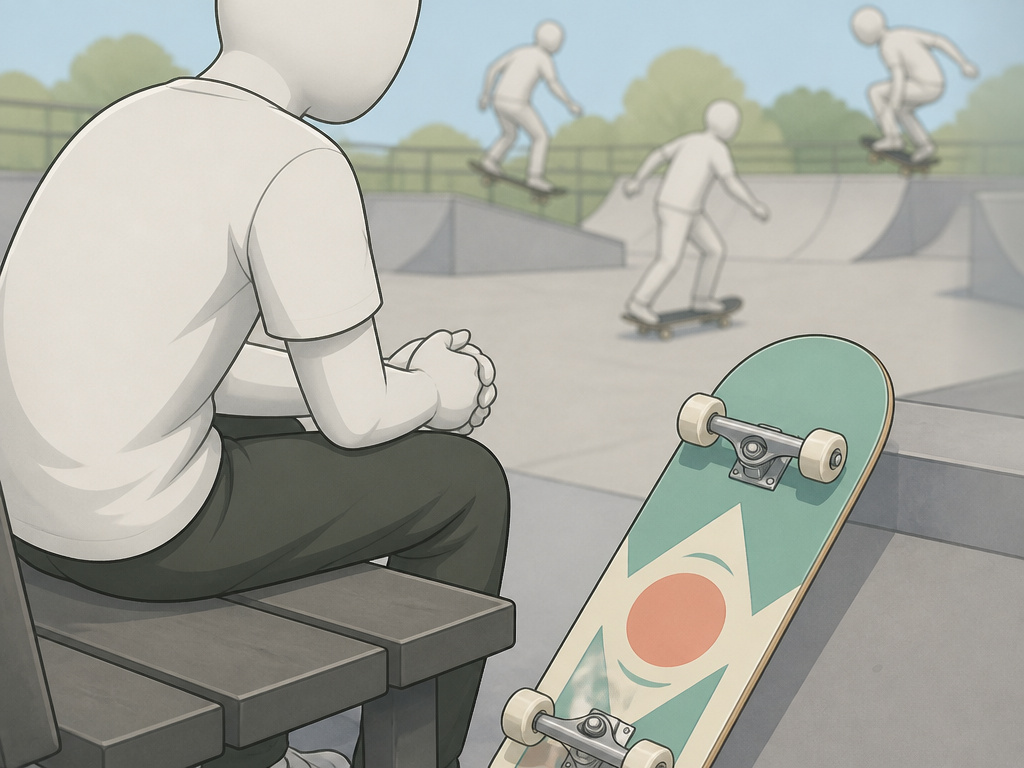
Classic poser behavior centers on the gap between what someone claims and what they actually do. This includes lying about tricks you can’t do, like claiming to boardslide when the bottom of your deck has no scratches. It looks like going to a skatepark just to sit on a bench with your board, never actually riding. It might be buying a skateboard not to ride it, but just to show it off, with all your gear staying in pristine condition. At its core, it’s about pretending to be a skater to look cool, not about being a beginner who is genuinely trying to learn.
Frequently Asked Questions
What exactly does “poser” mean in skateboarding?
It means someone who pretends to be a skateboarder but doesn’t actually skate. The key is the deception, lying about skills, buying gear for show, or adopting the style solely to look cool. It is not a term for beginners.
Is wearing skate brand clothing if you don’t skate being a poser?
Not necessarily. Sources disagree. Some say historically, yes, it was a clear sign. Others argue that wearing clothes you like is fine; you only become a poser if you wear them specifically to falsely claim a skate identity. Intent matters more than the logo.
Why is carrying a skateboard by the trucks called a “mall grab”?
It’s called a mall grab because it’s seen as the way a non-skater in a shopping mall would awkwardly carry a board. Some skaters consider it a sign of a poser because a seasoned skater would carry it by the deck to avoid the grip tape damaging their clothes. However, many now reject this rule as silly gatekeeping.
Can you be a poser if you’re just starting to skate?
No. Every major community source stresses that beginners are not posers. A poser is defined by dishonesty, not lack of skill. If you are genuinely trying to learn, you are a skater, full stop. The community welcomes you.
How can I avoid being seen as a poser?
Skate. Be honest about your abilities. Don’t claim tricks you can’t do. Focus on enjoying the activity rather than curating an image. Spend more time practicing than you do posting about skating. Engage with a skate glossary to learn the real terminology as you go.
Before You Go
The “poser” conversation often misses the point. It fixates on surface details, the grab, the shirt, the scuff on the shoe, when the real issue is always underneath. Are you on the board, or are you just holding it? Are you learning, or are you lying?
Skateboarding’s value isn’t in excluding people; it’s in the act itself. The federal Consumer Product Safety Commission guidelines rightly focus on helmet fit and truck tightness, not tribal markings. Those are the things that actually keep you rolling. So if you’re holding back because you’re worried about some outdated rule on how to carry your board, let it go. Your personal skate style development includes how you hold it.
Grab your board. Go push. That’s the only rule that ever mattered.
