
Skateboarding Culture Explained: Sport vs. Lifestyle
This post contains affiliate links. As an Amazon Associate, we earn from qualifying purchases.
Skateboarding culture is a global community built on self-expression, creativity, and a shared do-it-yourself (DIY) spirit, where 76% of participants cite “to have fun” as a top reason for skating. Its evolution was directly triggered by environmental events like the 1970s California drought and is marked by a tension between public perception as rebellious nuisance and skaters’ own experience of their sounds and urban repairs as joyful, community-focused acts.
Most guides talk about rebellion and baggy jeans. They miss the numbers. A USC survey found that beyond the image, 76% of skateboarders are in it to have fun and 62% skate to get away from stress. That’s the real engine. The culture isn’t just an attitude; it’s a documented set of social practices, from repairing city ledges for the sake of play to finding unique sensory knowledge in the sound of wheels on concrete. This is skateboarding culture explained.
What follows is a breakdown of the values, the unexpected history, and the lived rules that make sense once you’re rolling, serving as our skateboarding culture explained. We’ll cover the data-backed reasons people skate, the drought that created vert skating, the real meaning behind the noise, and what it actually feels like to step into a local skatepark for the first time.
Key Takeaways
- 76% of skaters cite “to have fun” as a top reason, per a USC Pullias Center survey, this prioritization of joy over competition defines the culture’s core.
- The 1976-1977 California drought was a direct environmental trigger for professional vertical skateboarding, creating empty pools that became the first half-pipes.
- Skateboarding sounds are a cultural flashpoint: city planners often hear a noise nuisance justifying skate stoppers, while skaters experience these sounds as a source of inspiration and a unique “texturology” of the city.
- DIY urban repair by skaters has a specific purpose: according to a Wiley Online Library study, it is to “prepare surfaces for playful damage” for fellow skaters, which differs from broader civic improvement or political statements that typically motivate urban repair.
- Finding a local skate crew or shop is the single fastest way to understand unspoken etiquette and build the support network many skaters say they have for advice.
The Core Values That Bind Skaters
Forget the “reckless rebel” trope from 1991’s Video Days. The glue isn’t anarchy. It’s a shared focus on individual progression and community support, backed by hard data. A USC Pullias Center survey quantifies it: 76% of skateboarders say “to have fun” is a top reason they skate, and 62% do it to “get away from stress.” The goal is internal, not external. You’re battling your own fear, your own board, your own last attempt.
The culture is underpinned by documented well-being and social connection.
This creates a unique social contract at the skatepark. If you’re trying a trick, the circle watches. When you slam, someone asks if you’re okay. When you finally land it, you get a collective “Yeah!” or a tap of the tail on the ground. No one is keeping score against you. An ethnographic analysis of skaters in The Sport Journal was conducted by a researcher who participated in the action sports industry for 13 years. The uniform is self-expression, baggy jeans, tight pants, vintage tees, hoodies, but the common thread is clothing that allows for the movement required to try, fail, and try again.
The DIY ethic is essential. It’s not just about building your own ramps. It’s about learning to fix your own board, knowing how truck tightness changes a ride, and understanding why wheel hardness matters. This self-reliance feeds the culture’s deep-seated suspicion of corporate sanitization. It’s why a video part that feels authentic resonates, and a game or ad that feels focus-grouped rings hollow.
The Surprising Environmental Trigger
Most histories start with surfers and sidewalk surfers. They’re not wrong, but they miss the catalyst. Professional vertical skateboarding, the kind that needs a ramp, exists because of a drought.
In 1976-1977, California faced an extreme drought. Authorities ordered drastic domestic water cutbacks. Thousands of newly built backyard swimming pools in Los Angeles were left empty. These smooth, curved bowls became accidental playgrounds. Surfers, looking for that same carving sensation on land, started “dropping in.” This wasn’t a planned evolution; it was a direct environmental adaptation. A PNAS study states it clearly: the drought was “a direct environmental trigger for the development of professional vertical skateboarding.”
That’s the first domino. The second was technology. The industrial production of polyurethane gave us the modern, grippy skateboard wheel, replacing dangerous clay wheels. Then came the media: the advent of digital photography, laser printing, and high-gloss magazines like Skateboarder allowed the style and tricks of these pool riders to be captured and disseminated globally. What was a local L.A. Phenomenon exploded. Empty pools birthed a global subculture and multibillion-dollar industry impacting music, fashion, and lifestyle. The timing and location weren’t random; they were a specific intersection of climate, infrastructure, and human creativity.
Skateboarding as Sport vs. Lifestyle

This is the culture’s eternal tension. Is it a sport with rules, judges, and Olympics, or is it a lifestyle about personal expression and exploring the city?
It’s both, but the lifestyle side is the root system. The competitive world of Street League (SLS) or the Olympics is the visible tree. Big air skaters use a mega-ramp that rises as high as seven stories and can get above the ramp by as much as 15 or 20 feet. Vert skaters master the half-pipe. Street skaters turn public infrastructure into an obstacle course. These athletes are incredible, but they represent a fraction of the community.
For the majority, skateboarding is a form of transport, a creative outlet, and a social lens. It’s the feeling of pushing through a quiet neighborhood at sunset. It’s the challenge of finding a new “spot”, a perfect ledge, a smooth set of stairs. It’s the skateboarding lifestyle of after-session diner hangs and deciphering the latest skate video parts. The activity rewards persistence in a way few others do. You can fail a kickflip 500 times, but attempt 501 is free, and the success is entirely yours. This builds a resilience that skaters carry into other parts of life. The mental health benefits of this kind of focused, incremental achievement are well-documented within the community.
| Aspect | Sport Focus | Lifestyle Focus |
|---|---|---|
| Primary Goal | Winning competitions, scoring points. | Personal progression, fun, creative expression. |
| Setting | Designed skateparks, competition venues. | Streets, plazas, found urban spaces (“spots”). |
| Community Role | Teammates, coaches, rivals. | Skate crew, local shop community, online followers. |
| How Success is Measured | Judges’ scores, medals, rankings. | Landing a personal trick, filming a clip, getting a photo in a zine. |
The two worlds influence each other. Pro skaters often come from the lifestyle side and bring their unique style to competitions. The Olympics introduce new audiences to skating, who then often discover the deeper culture and lifestyle beyond the podium. The key is that the competitive side rarely undermines the core values; the best competitors are still celebrated for their style and creativity, not just their score.
The Sound of Skateboarding: Nuisance or Knowledge?
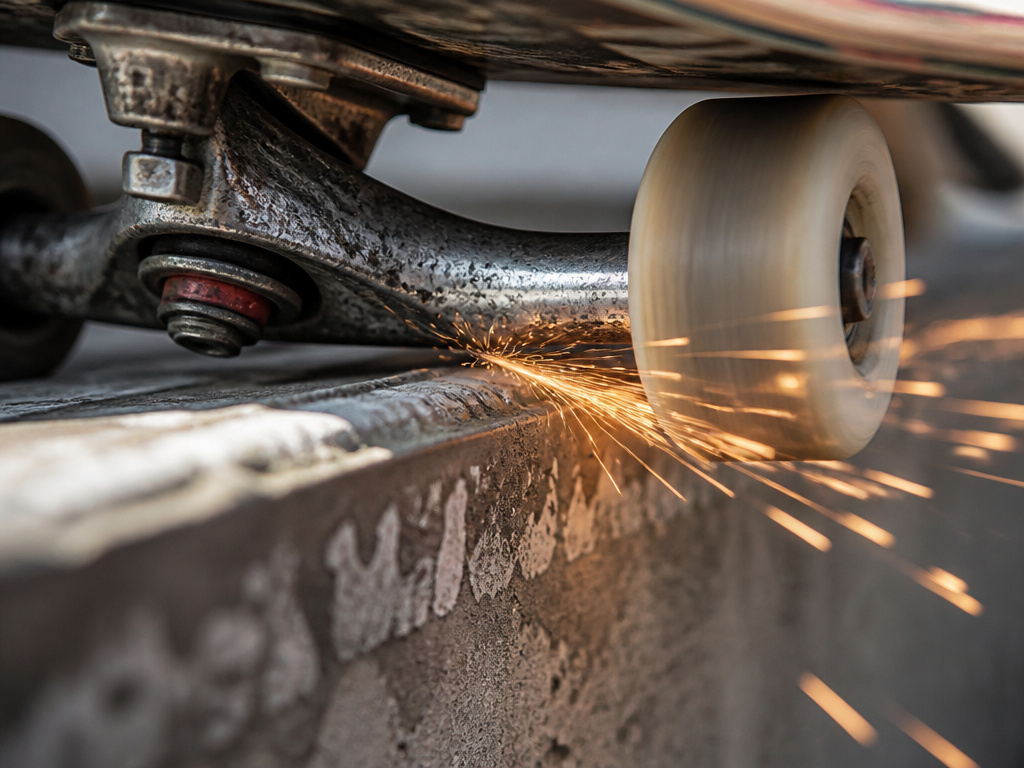
Here is one of the starkest divides between skaters and the public. The sound of polyurethane wheels on concrete, the clack of the board hitting the ground after an ollie, the grind of trucks on a ledge, city planners and some residents often hear a noise nuisance. This perception fuels the installation of skate stoppers (small metal knobs on ledges) and bans in public plazas.
Skaters hear something else entirely. Academic research frames these “skatesounds” as a source of inspiration, joy, and a unique form of sensory knowledge. It’s called “texturology”, “reading” the city through sound and vibration. The rumble over smooth asphalt versus the chatter over brick tells you about the surface before you see it. The pop of your tail is an audio cue for timing. This isn’t just preference; it’s a fundamental part of the embodied experience. The public complaint narrative clashes directly with the skater’s experience of their own soundscape.
Common mistake: Assuming the sound of skateboarding is merely noise pollution. For skaters, it’s an essential feedback system and a joyful part of engaging with urban space, a concept supported by research in leisure studies.
The same clash happens with how skaters interact with the city’s surfaces. A study in Area journal documented that when skaters fill cracks or smooth rough edges on a ledge, their goal is explicitly to “prepare surfaces for playful damage” for fellow skaters, which, according to the study, does not align with common DIY urbanism aimed at improving infrastructure for the common good or tactical urbanism for political statements. This DIY care is generous within the community but often misunderstood outside of it as vandalism or pointless.
Community, Inclusivity, and Changing Faces
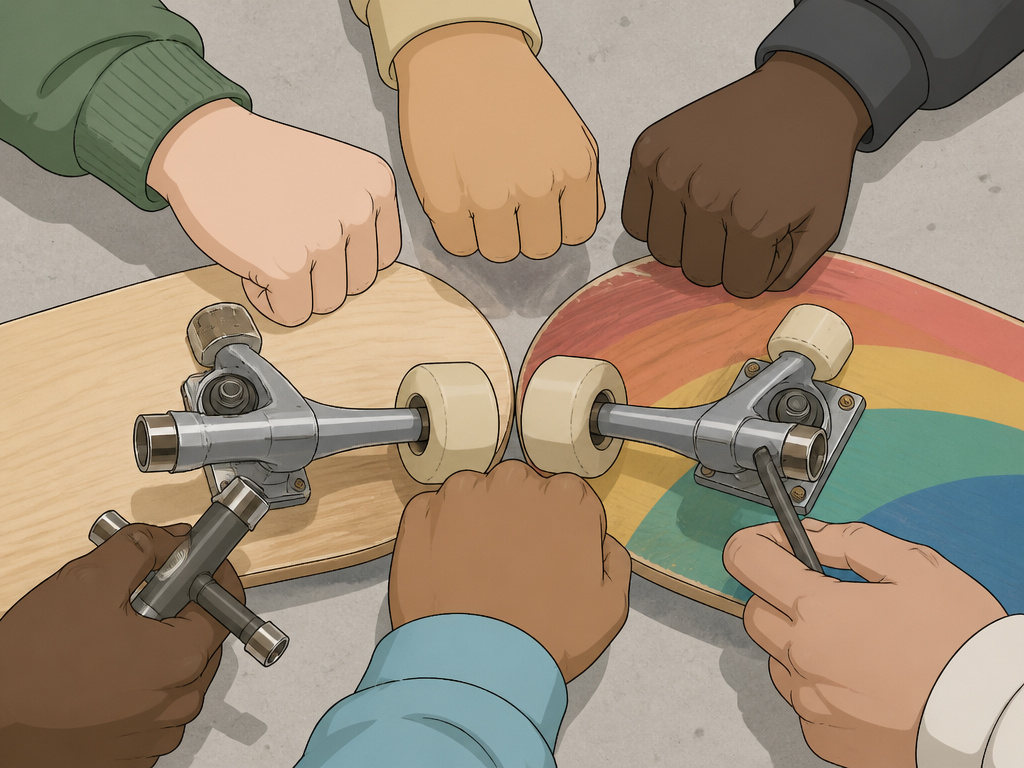
The image of skateboarding has been historically white, male, and young. The culture is actively, and often awkwardly, pushing against that. The community is its most powerful asset and its most challenging frontier.
The USC survey highlights that many skaters feel they have people to turn to for advice, with 36% agreeing and 52% strongly agreeing with that statement. This built-in support network is critical. For new skaters, finding a local skate crew or frequenting a shop that hosts events is the fastest way into this network. These spaces provide the encouragement needed to push past the early, frustrating stages. The etiquette is learned by watching: wait your turn in a bowl, don’t snake someone’s line, give a nod of acknowledgment.
Where this goes sideways: Skating alone out of embarrassment. Progress is slower, motivation dies, and you miss the entire support structure many skaters rely on.
The culture is grappling with inclusivity. Female, LGBTQ+, and skaters of color have always been there, but they’ve often faced exclusion or microaggressions. Now, groups and events specifically for marginalized skaters are creating safer entry points. This tension is healthy, it means the culture’s “accept everyone” ideal is being tested and forced to grow. True inclusivity means more than just allowing everyone to skate; it means actively ensuring everyone feels welcome to skate. This evolution is central to modern skateboarding culture explained.
Global differences are stark, offering a rich regional cultural contrast. In Japan, skateboarding was long associated with delinquency and faced strict regulations, only recently gaining acceptance post-Tokyo 2020 Olympics. In the US, it’s part of the fabric of suburban and urban youth culture. Understanding these differences prevents stereotyping and shows how the core values adapt to local contexts.
Media, Fashion, and the Mainstream

Skateboarding didn’t just create a sport; it became a culture engine for wider trends. Its influence on fashion is undeniable. It started with necessity, Vans sneakers provided the grippy, flat sole needed for board control. Sean Penn’s Jeff Spicoli in Fast Times at Ridgemont High turned the sticky-soled slip-on into an icon. Today, the baggy jeans, graphic tees, and hoodies born from functionality are high-fashion staples. Brands like Supreme and Palace are direct descendants of skate shop culture.
Media works the same way. Early videos like The Bones Brigade Video Show were instructional and inspirational, distributed on VHS. Today, a skate video part is a curated art form, with specific song choices, editing rhythms, and a narrative arc. Video games, from the Tony Hawk series to Skate, introduced millions to the culture’s feel and attitude. This mainstream adoption creates a feedback loop. What’s cool in skating influences the mainstream, and then skating reacts, often moving to something else to maintain its authenticity.
This dance with the mainstream is a constant. When the John F. Kennedy Center for the Performing Arts hosted a skateboarding event in 2015, it was a moment of institutional recognition. It symbolized a shift from “rebel” to “cultural contributor.” Yet, for many core skaters, true culture lives in the independent zines, the shop videos, the skateboard graphics on a fresh deck, and the skateboarding slang that evolves in parking lot sessions. The tension between commercial appeal and subcultural authenticity is the culture’s heartbeat; it never fully sells out, it just finds new edges to explore.
Is skateboarding a valid way to get around?

Using a skateboard for transportation places you directly within a city’s legal framework. A ticket for skateboarding is considered a traffic violation. However, skaters are more commonly cited for related offenses like vandalism or trespassing, which are misdemeanors. These charges can stay on a skater’s record. Common penalties for such misdemeanors include a fine or a sentence of community service, or both. This legal reality shapes how skaters navigate urban spaces, constantly negotiating between efficient movement and the rules governing public property.
How do skateboarders approach safety and risk?
The culture acknowledges risk as a fundamental part of progression. Early skateboarders often rode barefoot, which frequently led to foot injuries. Modern extremes are seen in big air skating, where participants use massive ramps and can launch high above the rim. The approach to safety is personal and communal. While protective gear is a practical choice, the primary safety net is often the shared focus and the people around you. Many skateboarders report having people in their lives they can turn to for advice, creating an informal support system for navigating both physical and mental challenges.
Frequently Asked Questions
What is skateboard culture like?
It’s a community-first culture built on personal progression, DIY creativity, and a shared love for the feeling of riding. While often perceived as rebellious, surveys show the top motivations are fun (76%) and stress relief (62%). It values style over scores and collective support over individual competition.
Are most skaters goofy or regular stance?
There’s no solid data on a precise majority, and it carries no cultural significance. “Regular” (left foot forward) and “goofy” (right foot forward) are simply natural stances, like being left- or right-handed. No one thinks twice about which you use, and no cultural meaning is attached to either.
Why is skateboarding no longer popular?
This premise is flawed. Skateboarding is massively popular, evidenced by its Olympic status, a multibillion-dollar industry, and sustained global participation. It may seem less visibly “counter-cultural” because elements of its fashion and attitude have been absorbed into the mainstream, but the core activity and community are thriving.
How does Japan feel about skateboarding?
Historically, Japan viewed skateboarding with suspicion, associating it with delinquency. Public skating was heavily restricted. The 2020 Tokyo Olympics, where Japanese skaters like Yuto Horigome won gold, dramatically shifted this perception, leading to greater acceptance and the development of more public skateparks.
Is skateboarding a crime?
It can be. While a ticket for skateboarding as transportation is a traffic violation, skaters are more commonly cited for vandalism or trespassing, misdemeanors that can result in a fine or 40 hours of community service. This legal friction stems from the culture’s use of public space for its own creative ends.
Before You Go
The one thing that separates reading about this culture from understanding it is showing up. Find your local skate shop, not a big-box sporting goods store. Go on a weekend morning. Watch. You’ll see the values in action: the kid patiently trying a kickflip for the hundredth time, the older skater offering a subtle tip on foot placement, the shared laugh after a slam.
The data gives us the skeleton: 76% for fun, the drought-made pools, the 88% with a support network. But the culture is the muscle and skin on those bones. It’s the sound of the wheels, the feel of a perfectly maintained spot, the unspoken rule of giving space. It’s resilient because it’s personal. You’re not joining a franchise; you’re learning a language of movement and making it your own. Start by rolling. The rest, the history, the slang, the sense of belonging, catches up with you.
