
What Surfaces Can You Skateboard on: How to Scout and Read
This post contains affiliate links. As an Amazon Associate, we earn from qualifying purchases.
You can skateboard on smooth concrete, rough asphalt, and certain dirt paths, but each surface demands a specific setup and skill level. Smooth concrete skateparks are the gold standard for tricks, while asphalt is better for cruising. Wet, icy, sandy, or debris-covered surfaces are universally unsafe and can damage your board.
That distinction between ideal and dangerous ground is fundamentally about physics. Your wheels need predictable grip, and your trucks need stable terrain. A surface that’s perfect for a kickflip might send you flying if you’re just trying to cruise, which is why skaters often ask what surfaces can you skateboard on.
What follows: a breakdown of every common surface in the what surfaces can you skateboard on question, the wheels that work on them, the risks each one hides, and the manufacturer warnings most riders ignore until they bail.
Key Takeaways
- Skate on smooth, dry concrete for technical tricks; it offers predictable speed and slide.
- Use softer wheels for cruising on rough asphalt, they absorb vibration and grip better.
- Avoid water, sand, and loose debris at all costs; they destroy traction and can permanently damage electric skateboard electronics.
- Inspect every new spot for cracks, pebbles, and drainage grates before you ride, the CPSC lists this as a core safety step.
- Manufacturers disagree on dirt paths; the Evolve Hadean manual allows them, while Razor explicitly prohibits them.
The Gold Standard: Smooth Concrete Skateparks
A poured concrete skatepark, built to standards like ASTM F2480, provides a uniform, predictable surface where expansion joints are placed to avoid wheel interference, allowing for consistent speed and controlled slides.
You push off and the board rolls in near silence. That’s the sound of a concrete skatepark built to ASTM F2480-18r24 standards. It’s quiet, fast, and lets you focus on your feet, not the floor.
This surface is the default for a reason when you compare a what surfaces can you skateboard on list. The Skateboards.com article states it plainly: smooth concrete gives you a predictable ride, keeps your speed consistent, and makes sliding and grinding possible. For technical tricks like kickflips or manuals, that predictability is everything. A tiny rock on asphalt can stop a wheel dead; on finished concrete, that hazard simply doesn’t exist.
The quality isn’t accidental. Standards like the ASTM concrete skatepark design specifications govern public park construction. They specify that control joints must be filled with a rigid material flush with the surface and placed where they’re “least likely to interfere with a skate wheel.” A well-built park feels like one continuous sheet, not a patchwork of traps.
| Concrete Surface Type | Best For | Key Thing to Check |
|---|---|---|
| Poured Skatepark | Technical tricks, vert, bowls | Joint placement & smoothness around coping |
| Parking Garage | Flat-ground practice, cruising | Cleanliness (no gravel, oil spots) |
| Tennis/Basket Court | Learning to push, balance drills | Cracks, net posts, and public hours |
Where this goes sideways: New skaters often find ultra-smooth concrete intimidating because the board rolls too easily. A Reddit user noted their board would “slip so easily” on smooth concrete. The fix involves slightly tighter trucks and practicing weight distribution on that buttery-smooth ground until it feels normal.
Rough Roads & Asphalt: The Cruiser’s Playground
If smooth concrete is a laboratory, asphalt is the real world. It’s gritty, it rumbles, and it’s everywhere. That texture is a trade-off. As the Skateboards.com article explains, asphalt doesn’t have the silky glide of concrete, but it gives you grip and cushion that make longer rides more comfortable.
This is the domain of the cruiser. When your goal is getting across town or enjoying a mellow hill, the vibration-dampening quality of asphalt matters more than perfect slide. The sound changes from a hum to a steady, gritty roar, a sign you’re on a rough roads adventure.
Wheel choice flips here. On concrete, you want hard wheels for slide. On asphalt, you need soft wheels to absorb the bumps. A hard wheel on rough asphalt transmits every pebble and crack directly to your feet and ankles. It’s exhausting. Switching to the best wheels for rough surfaces turns a punishing commute into a manageable cruise.
Navigating the Texture: Cracks and Pebbles
Two main enemies live on asphalt: linear cracks and loose debris.
- Cracks: A thin crack parallel to your path is usually fine. A wide crack or one perpendicular to your roll requires a small hop or weight shift to unload the front trucks. Our guide on handling cracks breaks down the timing.
- Pebbles & Debris: These are tripwires. A pea-sized stone can stop a wheel instantly, pitching you forward. The key is to scan ahead and gently steer around them, not make a last-second swerve. Learning to avoiding pebbles is a fundamental street survival skill.
The CPSC’s general safety advice includes inspecting your riding area for “rocks, and debris.” On asphalt, that’s not a gentle suggestion, it’s how you avoid a faceplant.
Surfaces That Split the Manufacturers: Dirt Paths and Sidewalks
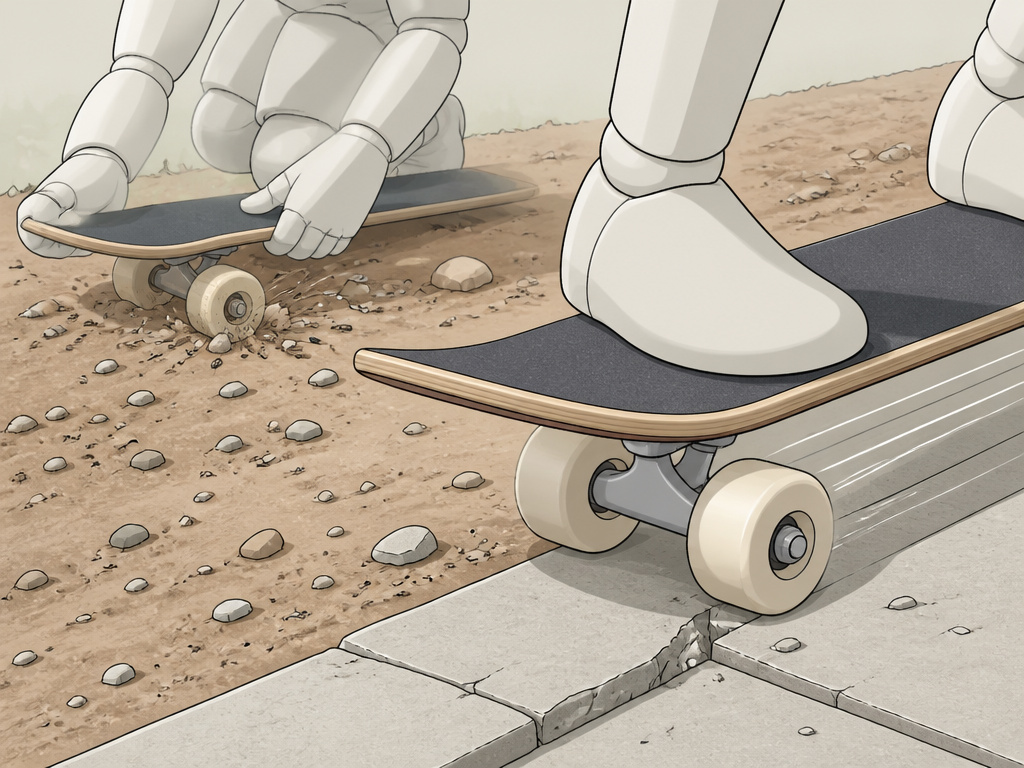
Here’s where the official guidance doesn’t match up. Reading the manuals shows a clear split on what’s acceptable.
The Evolve Hadean manual states its electric board is for “proficient skateboarders riding on paved surfaces or dirt paths where the tyres are always on the ground.” It explicitly includes dirt paths.
Meanwhile, the RazorX Cruiser manual draws a hard line: the board is for “flat, dry surfaces, such as pavement or level ground, without loose debris, such as sand, leaves, rocks or gravel.” It warns that “wet, slick, bumpy, uneven or rough surfaces may impair traction.”
So who’s right? It comes down to board type and risk. A powerful, all-terrain electric board with pneumatic tires might handle a hard-packed dirt path. A standard skateboard or a low-power electric cruiser almost certainly will not. The loose debris on a path, the very thing Razor warns against, is what causes wheels to slip or hang up.
Sidewalks are their own debate. The Evolve manual recommends “not riding on pedestrian use shared lanes or sidewalks.” The CPSC warns riders to “stay clear of moving vehicles” and not ride where you’ll encounter traffic, which often pushes riders toward sidewalks. The reality is, skateboarding on sidewalks is common but fraught with obstacles, cracks, slopes, pedestrians, and driveway dips. It requires constant vigilance and a board setup for quick maneuvering.
Common mistake: Assuming a dirt path is fine because one manufacturer says so. The Razor manual prohibits it for a reason: loose surface material offers zero reliable traction for hard wheels, and hidden ruts can buckle a truck.
The Universal No-Go Zone: Wet, Sandy, and Icy Surfaces
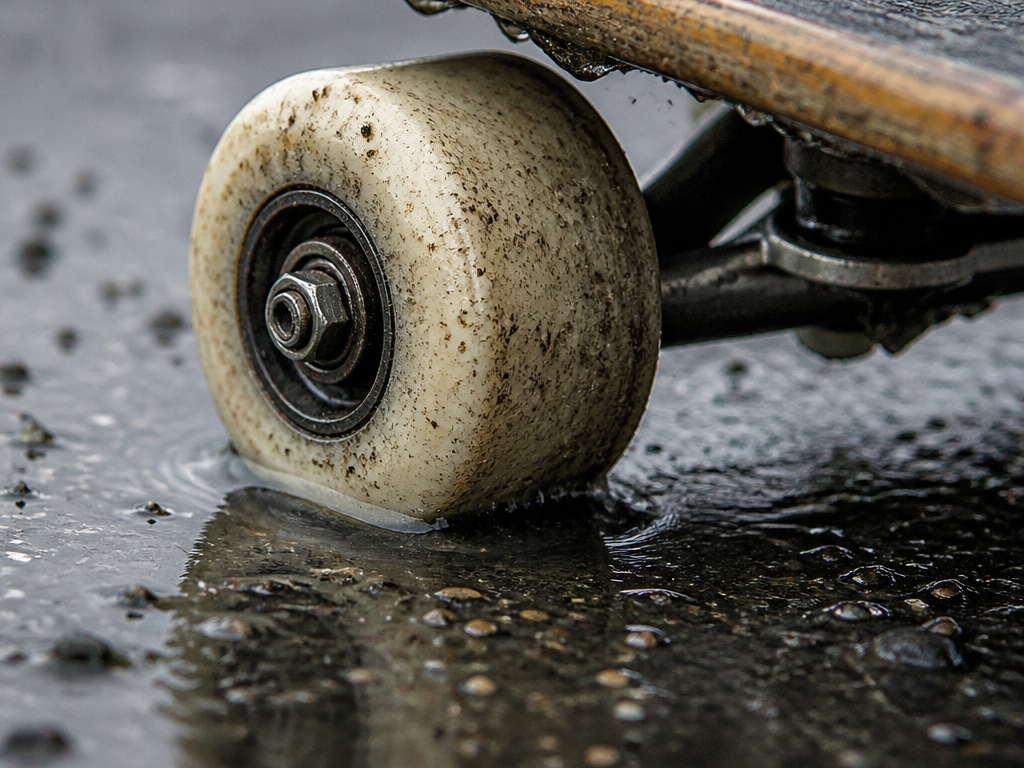
The agreements here are absolute. Every source. OEM manuals, the CPSC, and community wisdom, says the same thing: don’t do it.
- Water/Wet Surfaces: The Evolve manual is blunt: “Riding in wet conditions will significantly reduce grip.” The Razor manual prohibits riding “in mud, ice, puddles or water.” Why? Water acts as a lubricant between your urethane wheels and the ground. Braking distance increases significantly, and any lean can become an uncontrollable slide. For electric boards, skateboarding in wet weather risks corrosion and short-circuiting the electronics.
- Sand, Gravel, Loose Debris: These materials get between your wheel and the pavement, creating a ball-bearing effect. Traction vanishes. They also grind down your bearings and wheels.
- Ice: This is a complete loss of traction. A wheel cannot grip a smooth, hard, wet surface.
The physical consequence isn’t just a fall. For electric boards, moisture can seep into battery compartments or motor controllers, leading to a permanent, non-warranty failure. The sensory tell is a sudden, silent slide where you expected grip, there’s no warning rumble, just instant drift.
Matching Your Wheels to the Ground
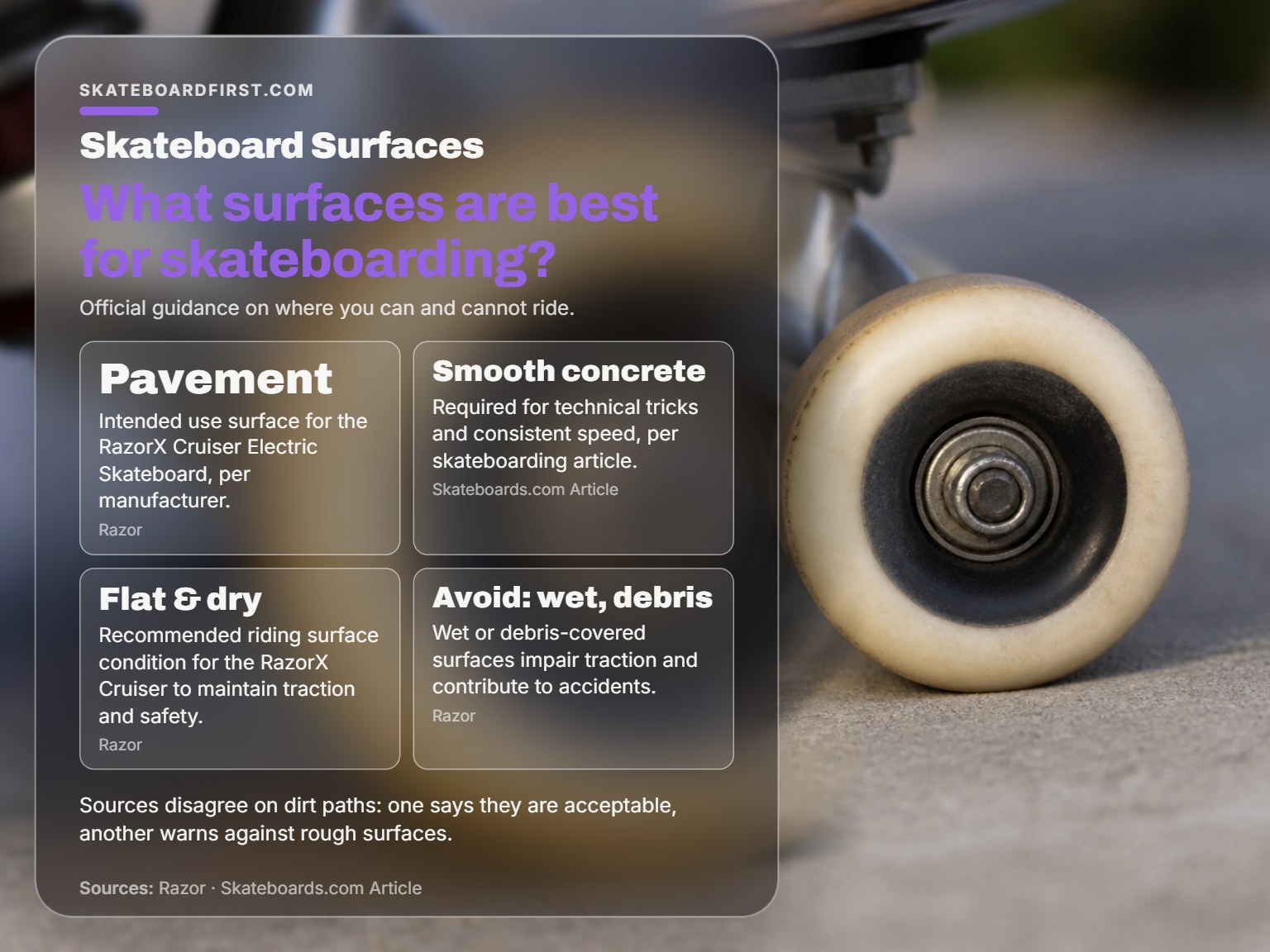
Your board’s contact patch is four small circles of urethane. Their hardness and size determine what surfaces you can comfortably ride.
| Wheel Hardness (Durometer) | Feel | Best Surface Match | Worst Surface Match |
|---|---|---|---|
| Soft Wheels | Cushiony, grippy, quiet | Rough asphalt, brick, bumpy roads | Smooth concrete (grips too much, slows you down) |
| Medium Wheels | Balanced grip & slide | Street skating, slightly rough pavement | Very rough asphalt, very smooth park concrete |
| Hard Wheels | Slick, fast, loud | Smooth skateparks, concrete bowls | Any rough or debris-covered surface |
Soft wheels (78A-87A) absorb vibration. They’re what you want for cruising and commuting. Hard wheels (99A+) provide less friction, letting you slide and grind on smooth concrete. Using hard wheels on rough asphalt is a brutal experience; every crack telegraphs a shock up your legs. Using soft wheels in a skatepark feels sluggish and sticky.
The ASTM skatepark facility standard and public skatepark construction guide are written assuming the use of hard wheels. The prescribed smoothness and joint detailing are designed to work with that low-friction, high-slide interaction.
How to Scout and Read Any Surface
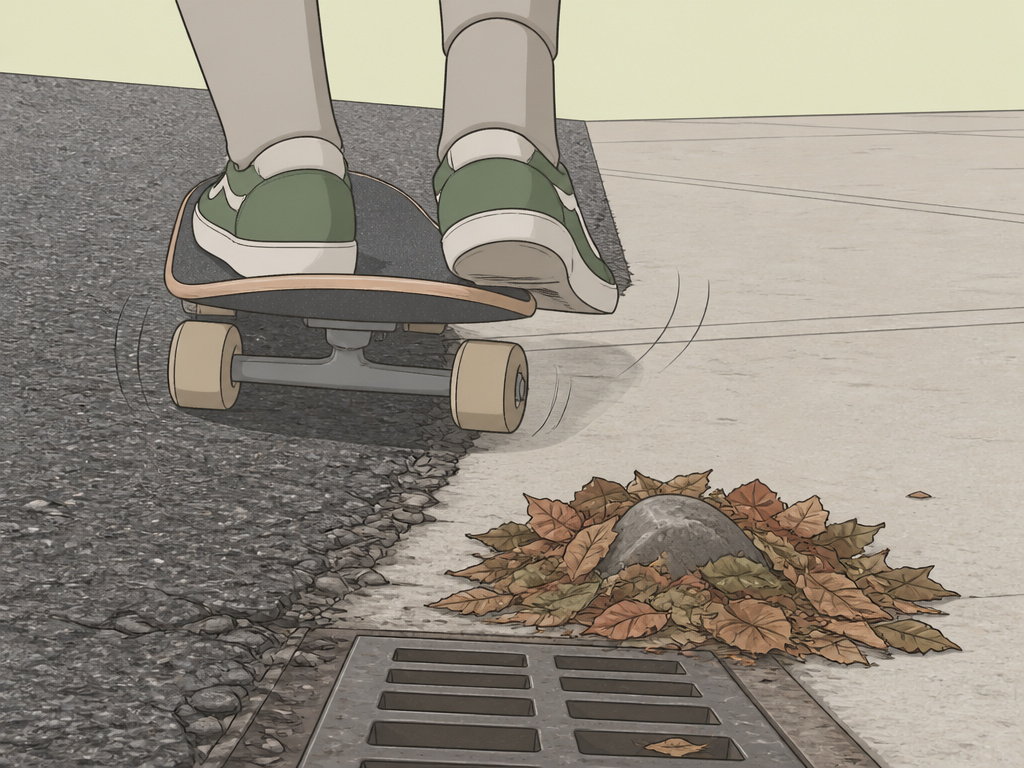
Before you even step on your board, you need to read the ground. This is the skill that separates a safe session from a trip to the dentist.
Start with a visual scan. Walk the line you plan to ride. Inspect the area for holes, bumps, rocks, and debris. Pay special attention to:
- Drainage grates and metal plates: These can be slicker than the surrounding pavement.
- Patchwork repairs: A new asphalt patch may be stickier or have a raised edge.
- Leaf piles: They hide rocks, sticks, and curbs.
- Slope and runoff: Water drains here, which means gravel and silt accumulate.
Next, do a tactile check if you can. Is the concrete dusty or sealed? Is the asphalt new and grippy, or old and polished slick? This process of reading a skate spot is how you find the hidden gems and avoid the deathtraps.
A Reddit user recommended a “freshly done” outdoor basketball court as the best place to learn. That’s a pro tip: a repaved court offers a huge, smooth, controlled area with no traffic. It’s the ideal blank canvas.
Easy to miss: The transition from one surface to another. Rolling from a rough asphalt bike lane onto a smooth concrete bridge deck can momentarily increase your speed as friction drops. Be ready for that change.
What surfaces are best for commuting on a skateboard?
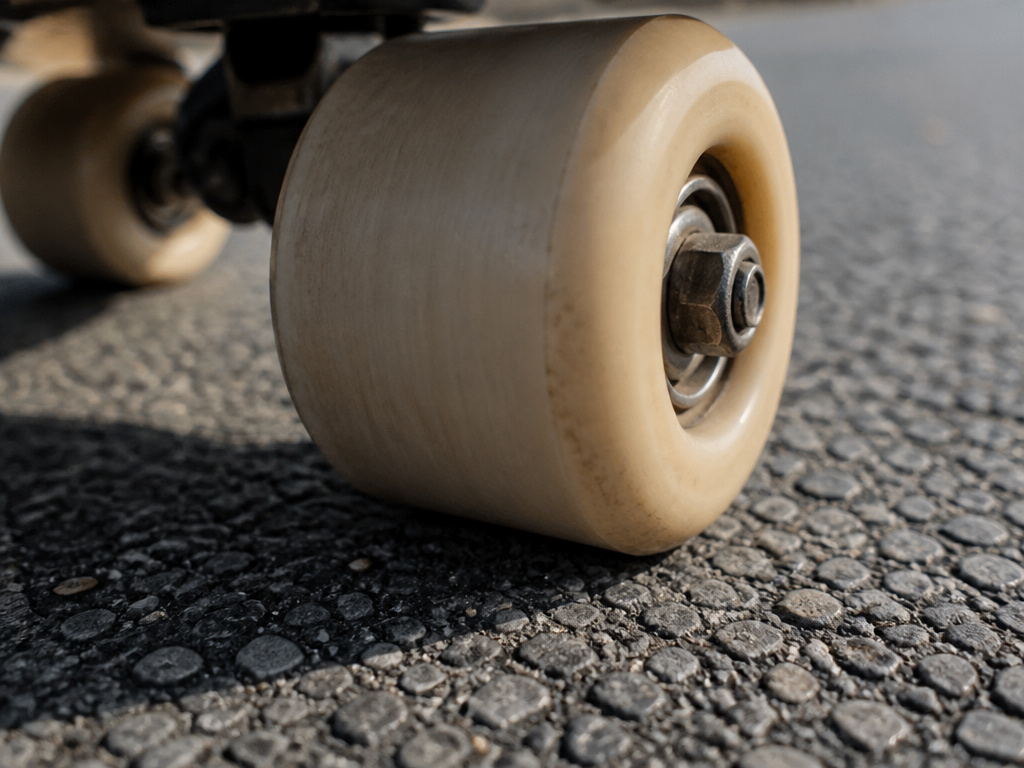
For getting around town, rolling to class, or cruising mellow hills, your surface needs to balance speed and comfort over longer distances. Asphalt is a common choice for this purpose. While it lacks the silky glide of smooth concrete, asphalt provides more grip and cushion, making longer rides more manageable. Always inspect your route for holes, bumps, rocks, and debris before you ride, as these are common on public paths. Stay clear of moving vehicles and avoid riding where you are likely to encounter traffic. For electric skateboards, stick to flat, dry pavement without loose debris, and avoid wet conditions, sharp bumps, and drainage grates.
Frequently Asked Questions
Is it okay to skateboard on wet pavement?
No. Every manufacturer manual and safety guide prohibits it. The Evolve Hadean manual states riding in wet conditions “will significantly reduce grip” and can cause aquaplaning. Water also damages bearings and, on electric boards, can void the warranty. The risk of a crash is dramatically higher.
Can I skateboard on grass?
Not really. Grass is too soft and uneven for skateboard wheels to roll effectively. It’s listed in the “universal no-go” category alongside carpet and ceramic tile by experienced skaters on forums. You might use a short stretch of grass to safely bail out from a path, but you cannot ride on it.
Is it okay to roller skate on concrete?
Yes, concrete is an excellent surface for roller skating. The same smooth, predictable qualities that make it ideal for skateboard tricks also provide a stable, fast surface for roller skates. The concerns about cracks and debris are identical for both sports.
What is the absolute worst surface for a skateboard?
Ice. It provides zero traction for urethane wheels. A close second is any surface covered in fine sand or loose gravel over pavement, as it creates an unstable layer that causes immediate wheel slip. Both scenarios offer no warning before you fall.
Can electric skateboards go on dirt paths?
It depends on the manufacturer’s specifications. The Evolve Hadean manual includes “dirt paths” as an acceptable surface for proficient riders. However, the RazorX Cruiser and many other manuals explicitly forbid it due to the risk of loose debris and impaired traction. Never assume your board is rated for dirt unless your manual says so.
Before You Go
The ground under your wheels is an active participant. Concrete asks for precision, asphalt demands resilience, and both will punish inattention.
One threshold decides your next session: if you see water, sand, or loose stones, stop. The manuals aren’t being overly cautious. That loss of traction is immediate and total. Everything else, the choice between a park and a street, hard wheels and soft, is a matter of matching your gear to your goal.
The official CPSC skateboarding safety fact sheet ends with a simple, heavy line: “Even experienced riders have been injured and killed.” That risk is always there, but it multiplies when you ignore the surface. So pick your ground with your eyes open, match your wheels to the texture, and let the ride be the hard part, not the floor.
