
Skateboard Bearing Shields Explained: How to Choose
This post contains affiliate links. As an Amazon Associate, we earn from qualifying purchases.
Skateboard bearing shields are the metal or rubber covers on the sides of your bearings that keep dirt out and lubricant in. The three main types are ZZ (non-removable metal), ZS (removable metal with a C-ring), and 2RS/RS (removable rubber). Rubber seals offer better contamination protection but create more friction, while metal shields are less protective.
That’s the basic job. But the skateboard bearing shields explained code stamped on your bearing. ZZ, ZS, or 2RS, tells you exactly what you’re working with and what maintenance is even possible. Getting it wrong means either ruining a serviceable shield or leaving a bearing to die because you thought it couldn’t be cleaned.
What follows: a breakdown of the three shield types, the real-world trade-off between speed and longevity, and the step-by-step process for skateboard bearing shields explained removing and replacing the ones you can actually service. By the end, you’ll be able to look at any bearing and know exactly how to care for it.
Key Takeaways
- Identify your shield type by its code: ZZ bearings have non-removable metal shields, ZS shields pop off with a C-ring tool, and 2RS rubber seals pry off carefully with a thumbtack.
- Choose based on conditions: rubber (2RS/RS) for wet or dirty skating, metal (ZS) for dry speed, and avoid ZZ bearings if you plan to maintain them yourself.
- Remove shields only when necessary for deep cleaning; improper removal bends metal and cuts rubber, creating drag.
- Shield orientation matters, if using one shield, the open side should face the inside of the wheel to best protect the balls.
- Clean rubber seals with warm soapy water only; citrus cleaners or solvents can cause the nitrile rubber to blister and swell.
The 3 Shield Types Decoded (and Which You Probably Have)
Manufacturers use a standard code, central to any skateboard bearing shields explained guide, to tell you what’s covering your bearings. It’s not marketing. It’s a service manual stamped on the side.
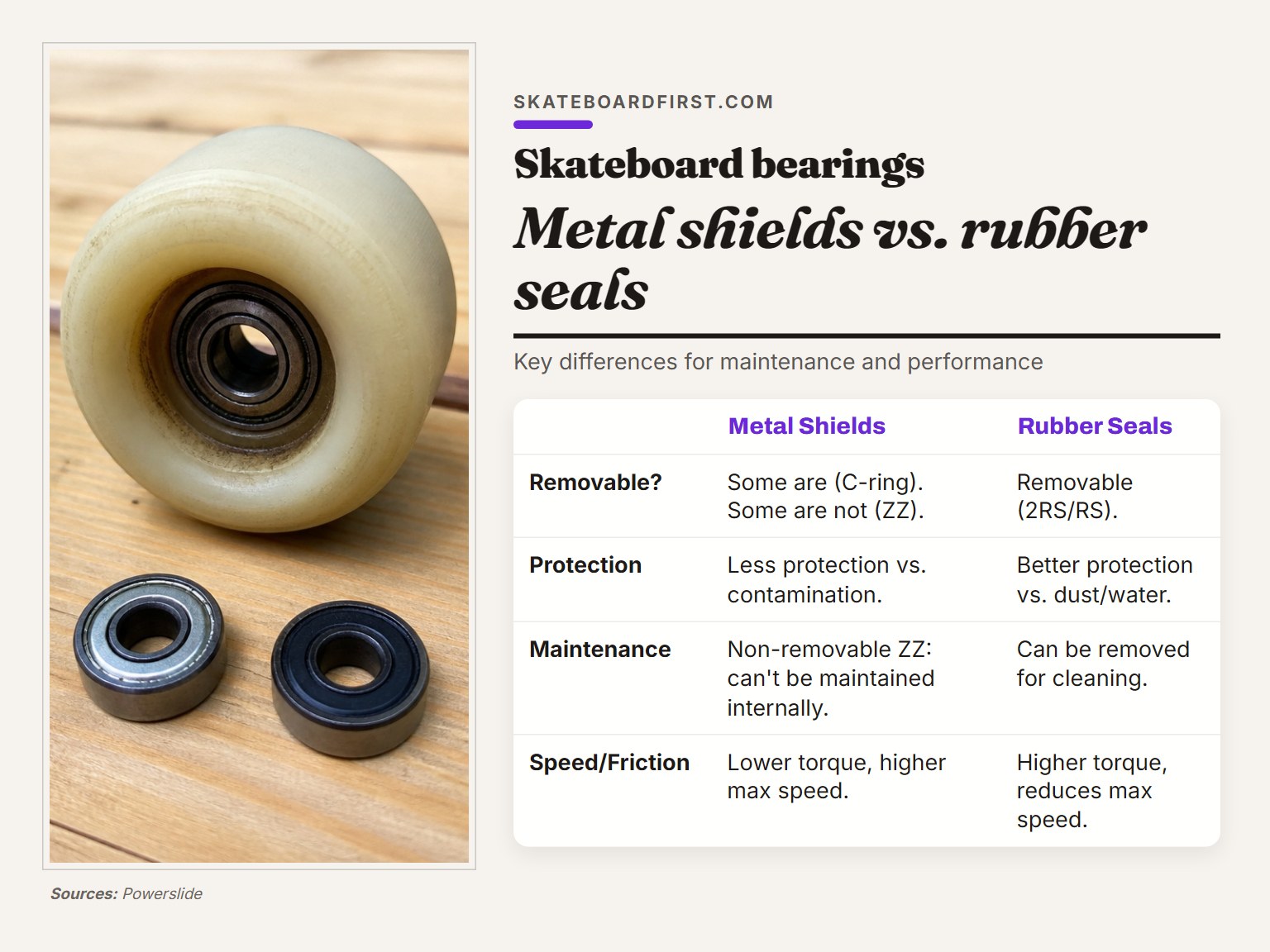
ZZ : Metal shields / non removable These are bearings covered on both sides by non-removable, non-contact metal shields retained in the outer ring via crimping or pressing. This type CANNOT be removed once assembled. This also means that you can´t maintain the bearing, just clean the outside surface, and dry the bearings after skating in the wet to avoid rust and corrosion on the outside surface. . Powerslide BEARING GUIDE
If your bearing says ZZ, that’s it. The shields are crimped on. You can spin the wheel, maybe wipe the outside, but you can’t pop them open to clean or re-lube the insides. These are common on lower-priced completes. They’re a “set and forget” part, which is fine if you’re okay replacing bearings more often.
ZZS / ZS : C-ring / Metal shields removable
This is the sweet spot for most skaters who want to do their own maintenance. The metal shields are held by a tiny snap wire, a C-ring, seated in a groove. No glue, no crimping. You can remove the C-ring with a pointed tool to take off the shield. According to the Powerslide guide, these are non-contact metal shields. The code for a single shield is ZS.
2RS / RS : Rubber shields removable
The “R” indicates a rubber seal. These are molded nitrile rubber (NBR) seals fixed into a groove. They can be removed, but you have to be careful not to bend or cut the seal lip. Here’s the key trade-off: the rubber actually contacts the inner ring. That contact gives better protection against dust and water than a metal shield, but it also results in higher torque and reduces the maximum speed capability.
The table below breaks it down.
| Shield Type | Material | Removable? | Best For | Maintenance Limitation |
|---|---|---|---|---|
| ZZ | Metal | No | Low-cost, dry conditions | External wipe only; cannot relube |
| ZS / ZZS | Metal | Yes, with C-ring | DIY maintenance, speed focus | C-ring can be fiddly; less debris protection |
| 2RS / RS | Nitrile Rubber | Yes, with care | Wet/dirty environments, longevity | Higher friction; cleaners can damage rubber |
I learned the hard way that assuming all metal shields are the same wastes bearings. A set of cheap ZZ bearings seized up after a few rainy commutes. I tried to pry them open, mangled the crimped edge, and just made them rougher. Now I check the code first.
Shield On vs. Shield Off: The Real Speed Trade-Off
You’ll hear park legends that ripping your shields off gives you free speed. The physics says maybe, but the practical cost is real.
Metal shields (ZS type) are non-contact. They float just above the inner race. Removing them might reduce a small amount of weight and drag. Is it noticeable? On a perfect, clean surface, maybe to a pro. On a street littered with sand and concrete dust, you’ll be cleaning your bearings every other session. The grit that gets in creates more friction than the shield ever did.
Rubber seals (2RS) are a different story. They’re designed to touch. That contact creates deliberate drag for protection. Taking them off absolutely reduces rolling resistance, but it also turns the bearing into an open invitation for every piece of grit on the road. The trade-off is severe: a small speed gain for a huge increase in wear.
Where this goes sideways: Running a bearing completely shieldless in anything but a clean skatepark. Fine concrete dust works into the raceway quickly, and the balls start grinding instead of rolling. You’ll hear a gritty rasp on every push, and the bearing life drops significantly.
So, should you ever skate without shields? For most people, no. The one exception is dedicated park skaters who run their bearings dry (no lube) and clean them obsessively. Even then, it’s a niche choice for a specific feel, not a universal speed hack.
How to Remove and Replace Shields
This only applies to serviceable bearings: ZS (metal with C-ring) and 2RS (rubber). According to Powerslide, ZZ shields are non-removable and attempting removal will damage them. However, some sources suggest certain metal-shielded bearings with similar codes might be serviceable.
For ZS (Metal C-ring) Shields:
- Find the C-ring. Look at the shield’s inner edge for a thin metal wire seated in a groove.
- Insert a pointed tool. Use a sharp pick, a fine flathead screwdriver, or a dedicated C-ring tool. Slide the tip under the wire.
- Pop it out. Gently lever the C-ring up and out of its groove. Work your way around until it’s free. Set it aside, it’s tiny and easy to lose.
- Lift the shield. Once the C-ring is out, the metal shield should lift off easily.
For 2RS (Rubber) Shields:
The method from Eastern Skating Supply is the safest:
- Use a thumbtack or pin. Insert the point into the gap between the rubber seal and the inner ring.
- Pry gently around the ring. Don’t lift from one spot. Work the point around the circumference, gently prying the seal up evenly.
- The shield will release. Once it’s loose, lift it off. Forcing it bends the lip, and a bent seal will drag when you put it back.
I won’t recommend prying rubber seals with a knife blade. The first time I tried, I sliced clean through the nitrile lip. The seal still snapped back in place, but it had a permanent drag spot that made the wheel sound like it had sand in it forever.
Replacing Shields:
The process is the same for metal and rubber.
- Set the bearing on a flat surface. A table or bench works.
- Align the shield. Place the shield flat on the bearing, centering it.
- Press firmly. Use your thumbs to press down evenly around the shield’s edge. You’ll feel or hear a soft click as it snaps into its groove.
- Spin and check. Spin the bearing. If you feel any resistance or hear a rubbing sound, the shield isn’t seated evenly. Press around the high spot until it spins freely.
For ZS types, don’t forget to seat the C-ring back in its groove after the shield is on.
One Shield or Two? Orientation and Purpose
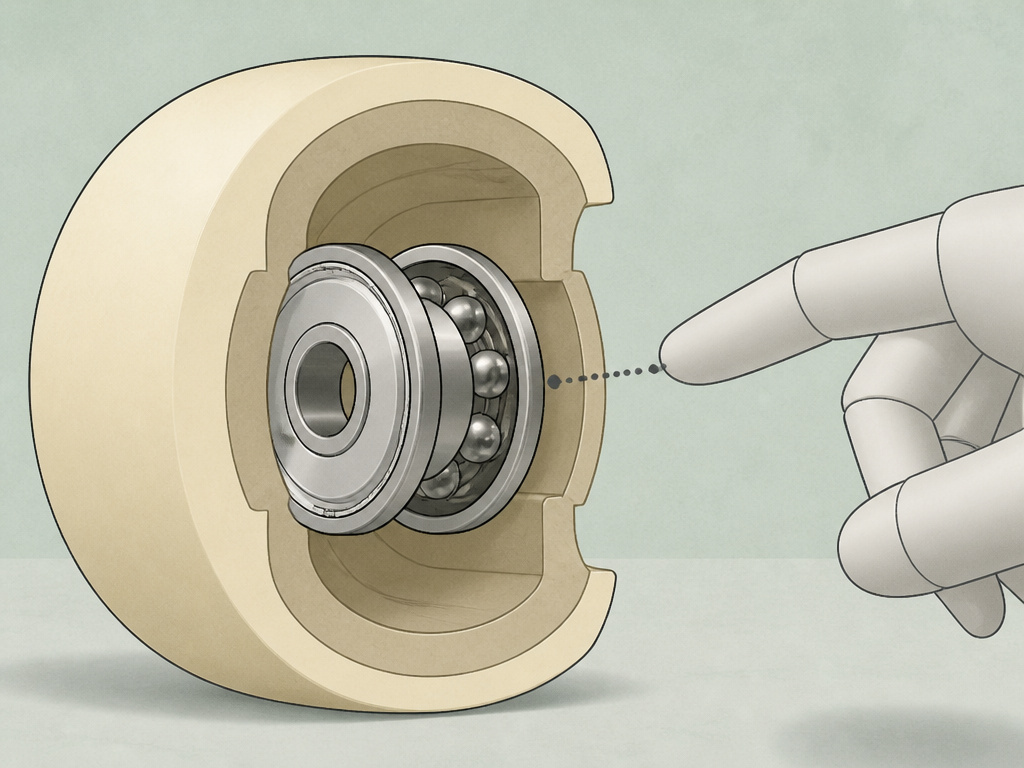
Most bearings come with one shield pre-installed. The other side is open. This is a design choice, not a mistake.
The open side should face the inside of the wheel. This positions the shield on the outside, acting as a first line of defense against road debris. The internal cavity of the wheel offers some protection to the open side. This is the standard for a reason, it makes cleaning bearings and lubricating bearings much faster because you only have to deal with one shield.
You can add a second shield. Eastern Skating Supply notes that two shields lock in the oil and keep out debris more effectively. But it also makes servicing a two-shield job every time. It’s a trade-off between maximum protection and convenience.
If you’re adding a second shield or replacing colored ones, remember a skateboard has 8 bearings.
Cleaning and Maintenance: What Your Shields Allow
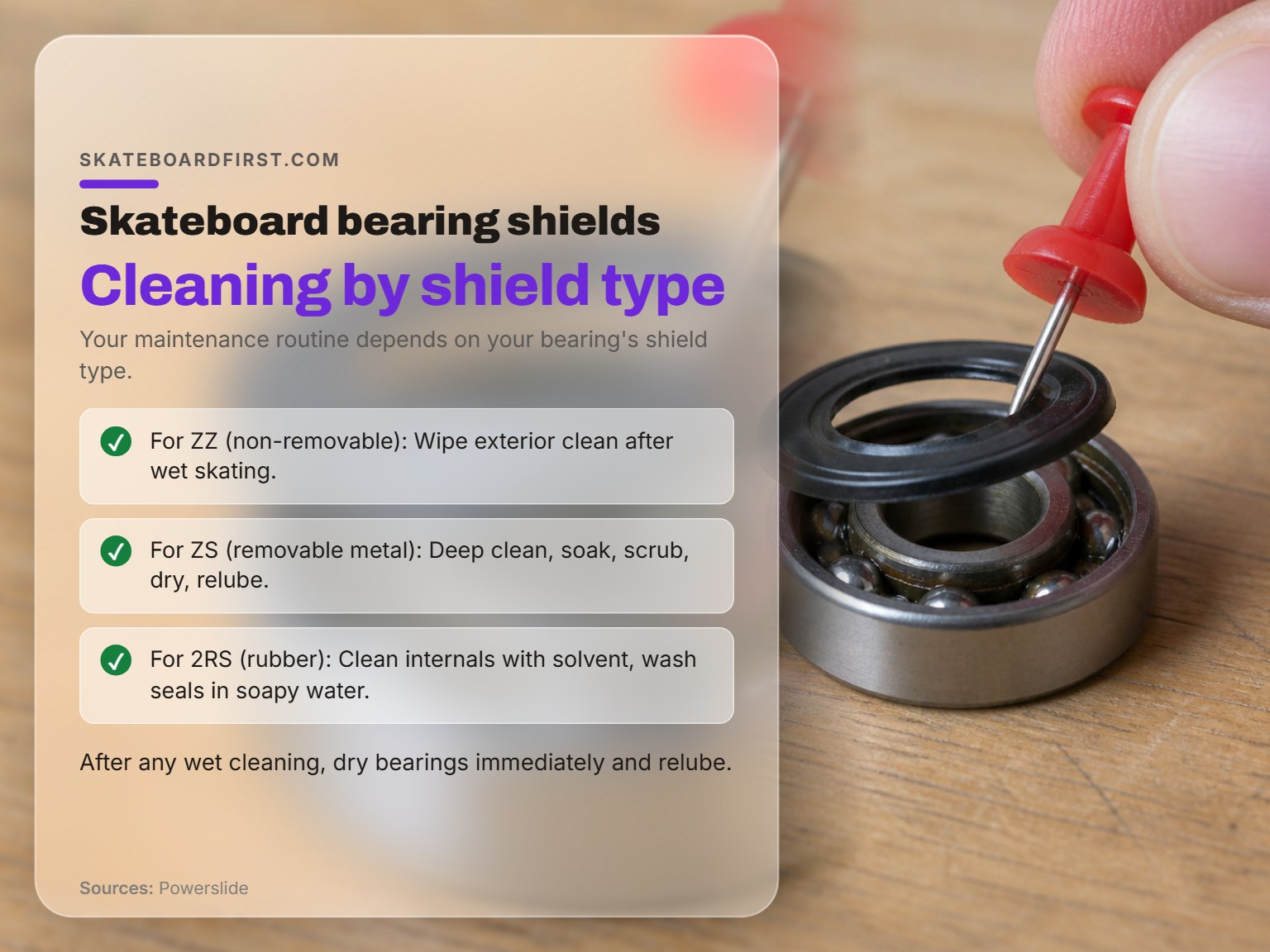
Your shield type dictates your entire maintenance routine.
For ZZ Bearings (Non-Removable):
Your maintenance is surface-level. Wipe the exterior clean with a dry cloth after skating, especially if it’s wet. You can’t relube them. When they get slow or noisy, replacement is the only option.
For ZS Bearings (Removable Metal):
This is the full deep-clean territory. Remove the C-ring and shield, soak the bearing in a citrus-based cleaner, scrub, dry thoroughly, relube, and reassemble. The metal shields themselves can be cleaned in the same solution.
For 2RS Bearings (Removable Rubber):
Here’s a critical source conflict you need to know about. The Powerslide guide suggests citrus cleaner. However, some manufacturers, like Bones Bearings, warn against using solvents on rubber seals, recommending warm soapy water instead, while other guides suggest citrus cleaners.
If you have expensive rubber-shielded bearings like Bones Swiss, follow the manufacturer’s warning. The safe play is to remove the rubber seals, clean the bearing internals with your chosen solvent, but hand-wash the rubber seals separately in warm, soapy water.
Common mistake: Soaking rubber-shielded bearings in strong solvent without removing the seals first. The rubber can swell, distort, and never fit correctly again, ruining the bearing’s seal.
After any wet cleaning, dry bearings immediately with compressed air and a lint-free cloth. Then apply a drop or two of skate-specific lubricant before reassembly. Proper bearing installation with bearing spacers ensures the load is even and the shields don’t get pinched.
Does the ABEC rating matter for skateboarding?
For skateboarding, the ABEC rating is largely irrelevant. This industrial grading system measures a bearing’s precision at high rotational speeds, like those in machinery. Skateboarding involves impacts, lateral forces, and varied terrains that the ABEC scale doesn’t account for. A higher ABEC number doesn’t mean a bearing will last longer, handle grime better, or survive a hard landing. Your focus should be on the bearing’s construction, specifically the type of shields it uses and whether they are serviceable for cleaning, as these factors have a direct impact on real-world performance and maintenance.
Frequently Asked Questions
How do I know if my bearing shields are removable?
Look for a C-ring (a thin metal wire) on the inner edge of a metal shield, or check the bearing code. “ZZ” means non-removable. “ZS” or “ZZS” means removable metal with a C-ring. “RS” or “2RS” means removable rubber.
Can I skate with no shields at all?
You can, but it’s not advisable for street skating. The bearings will clog with debris very quickly, increasing wear and friction. It’s a practice mostly reserved for controlled environments like clean skateparks by skaters who clean their bearings extremely frequently.
What’s the difference between “shielded” and “sealed” bearings?
In common skate parlance, “shielded” often refers to metal covers (ZZ, ZS), while “sealed” refers to rubber (2RS/RS). Technically, “sealed” implies a tighter, contacting seal, which is what the rubber provides. The SkateFAQ notes that true sealed bearings, like Rollerblade Max Trainers, use a grease-packed rubber lip seal for maximum protection.
Do I need a special tool to remove shields?
For C-ring metal shields (ZS), a pointed pick or a fine flathead screwdriver works. For rubber seals (2RS), a thumbtack or safety pin is ideal. Dedicated bearing tools exist, but aren’t necessary for occasional use.
Why does one of my bearing shields have a different color?
Colored shields, like those sold by Eastern Skating Supply, are aftermarket parts for customization. They function identically to standard metal shields. The color has no effect on performance.
Should the shield logo face in or out?
The shield itself has no “right side out.” What matters is orientation: if you’re running one shield, the shielded side should face outward, with the open side facing the inside of the wheel. The logo is just decoration.
The Bottom Line
Skateboard bearing shields aren’t a mystery. The code tells you everything. ZZ means hands-off. ZS means you can service it with a simple tool. 2RS means better protection with a friction trade-off and careful cleaning.
Chasing the last 1% of speed by removing shields isn’t worth it for 99% of skaters. A clean, well-lubricated bearing with its shields intact will roll faster and longer than a gritty, shieldless one. Spend your maintenance time on proper cleaning and lubricating bearings rather than debating shield removal. And when it’s finally time to swap them out, knowing how to properly remove skateboard bearings without damaging your wheels is the next skill to master.
Your next session: don’t touch your shields. Just listen. A healthy, shielded bearing has a quiet, metallic whirr. A gritty one rasps. If you hear the rasp, it’s time for a clean, and now you know exactly what kind of bearing you’re dealing with.
