
How to Remove Rust From Skateboard Hardware: Step-by-Step
This post contains affiliate links. As an Amazon Associate, we earn from qualifying purchases.
To remove rust from skateboard hardware, you need to match the method to the rust’s severity. For surface rust, scrub with a wire brush or steel wool. For deeper rust, soak the hardware in white vinegar or a citric acid solution. The goal is to clean without damaging the underlying metal, which means avoiding harsh abrasives on thin bolts and steering clear of chemicals that can weaken the metal over time.
That surface-or-deep distinction decides your next hour. Wire brushing a seized bolt just polishes the rust you can see while the threads fuse together. Soaking a lightly spotted nut in acid overnight can etch the metal. Knowing how to remove rust from skateboard hardware correctly is key. You get the method wrong, and you either waste effort or create a new problem.
What follows is a breakdown of the tools that work, the chemicals that are safe for skateboard metals when you compare a how to remove rust from skateboard hardware method, and the one habit that stops rust from starting in the first place. By the end, you’ll know whether to scrub, soak, or simply replace a ten-cent bolt.
Key Takeaways
- Scrub surface rust with a wire brush or steel wool, these tools remove orange spots without removing significant metal, which is critical for maintaining bolt strength.
- Soak deeply rusted hardware in white vinegar; citric acid works faster but requires more precise mixing and rinsing.
- Never use WD-40 as a lubricant for bearings, the Concrete Waves handbook confirms it’s a solvent that dries out components and attracts more dirt.
- Dry all hardware thoroughly after cleaning or riding in damp conditions; leftover moisture is the single biggest cause of recurring rust.
- Replace any bolt where threads are severely corroded or rounded; a loose bolt is a safety hazard, and new hardware is cheaper than a hospital visit.
The Wire Brush vs. Steel Wool vs. Sandpaper Trade-Off
Your hardware is speckled with orange. You need to remove it without weakening the bolt, which is the core challenge of how to remove rust from skateboard hardware. This is where tool choice matters more than people admit.
A stiff wire brush is the default for a reason. It scours off surface rust and grime from flat spots and bolt heads. The bristles conform to curves, so you can work around the truck’s kingpin without scratching the surrounding finish. The downside is it struggles with rust deep in the threads or inside socket heads.
Steel wool (grade 0 or 00) is gentler. It polishes as it cleans, which is perfect for the polished finish on many truck axles. It can get into tighter spaces than a brush. The trade-off is that it falls apart when wet and leaves behind tiny metal fibers that can accelerate rust if not wiped away completely.
Sandpaper is the last resort. It removes metal along with the rust. On a thin bolt neck or a finely threaded section, you can sand away enough material to compromise its strength. I reserve it for cleaning rust from a truck’s flat mounting surface, where a little material loss doesn’t affect function. Even then, I use nothing coarser than 220-grit.
Common mistake: Reaching for coarse sandpaper first. You’ll turn surface rust into a weak spot, and the fresh, rough surface you create will rust again faster.
| Tool | Best For | Risk If Used Wrong |
|---|---|---|
| Wire Brush | Flat surfaces, bolt heads, general surface rust | Can scratch polished finishes if brushed too aggressively. |
| Steel Wool | Curved surfaces, tight spaces, polished axles | Leaves metal fibers that promote new rust if not fully removed. |
| Sandpaper (Fine Grit) | Stubborn rust on non-critical, flat areas | Removes base metal, weakening the part. Creates a rough surface prone to faster re-rusting. |
The Vinegar Soak Method, Step-by-Step
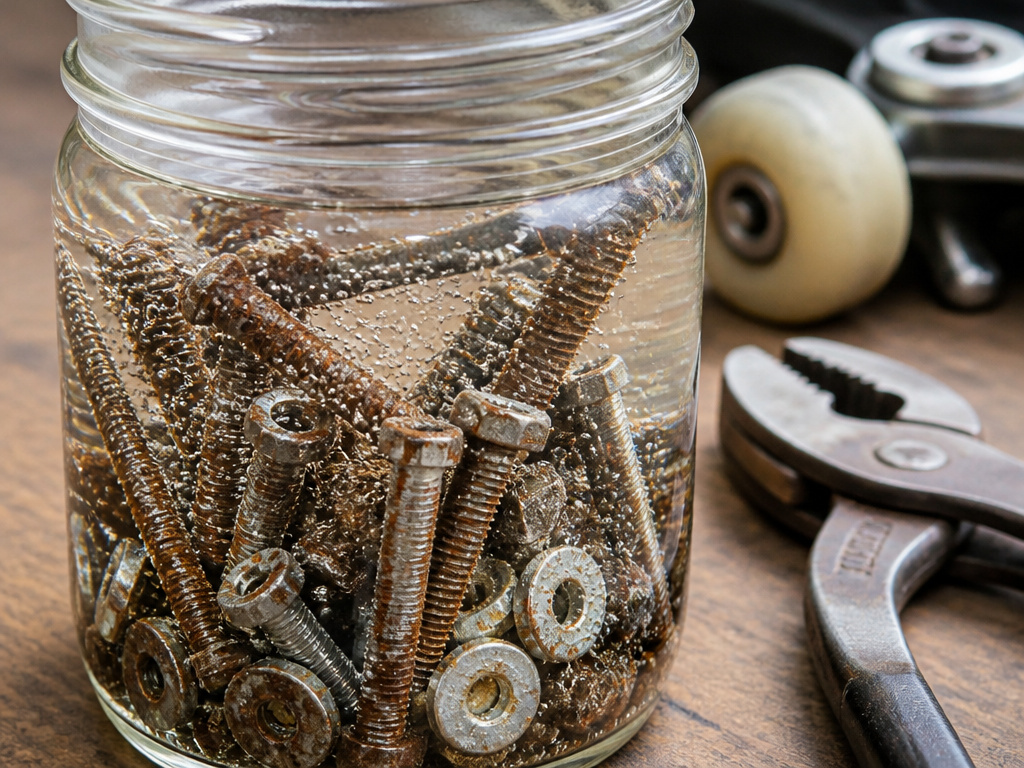
When rust has taken hold in threads or under bolt heads, scrubbing won’t reach it. You need chemistry. Plain white vinegar, the kind in your kitchen, is a mild acid that dissolves iron oxide without attacking the underlying steel aggressively.
First, remove the hardware from your board. If a bolt is seized, don’t force it yet. That will be addressed later. Drop the nuts, bolts, and washers into a glass jar or plastic container. Pour in enough vinegar to submerge them completely. You don’t need a specific ratio; just cover them.
The reaction starts immediately. You’ll see tiny bubbles forming on the metal within minutes. Leave it for at least 12 hours. For heavy rust, 24 hours is better. I set a reminder on my phone because forgetting hardware in vinegar for days can start to dull the metal’s finish.
After soaking, pull the pieces out with pliers. The rust should wipe off with a cloth or a light brush stroke. Rinse each piece under running water to neutralize the acid, then dry it immediately and thoroughly. A hairdryer on a cool setting works, or just use a towel and let them sit in a warm, dry spot.
I skipped the thorough drying step once. I reassembled my board with hardware that felt dry to the touch. Two days later, every bolt had a fresh, faint orange haze. Moisture hides in threads.
When to Use a Chemical Rust Remover (And When to Avoid It)
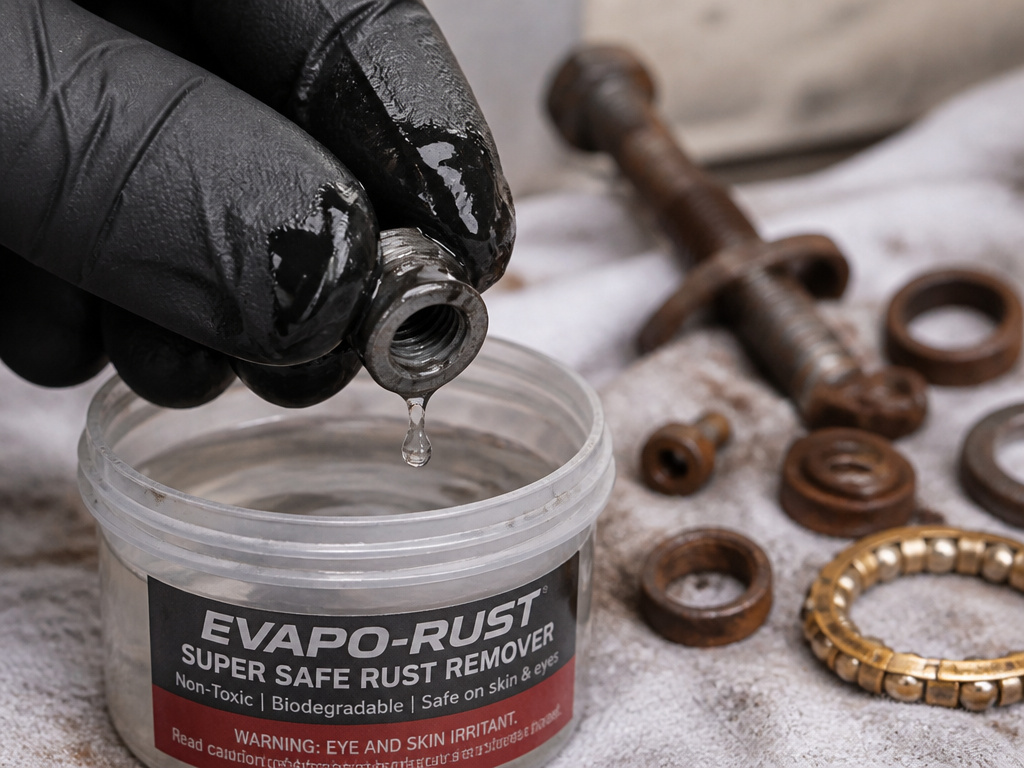
For hardware that’s too far gone for vinegar, or for a faster process, you can use a dedicated rust remover. These are typically citric or phosphoric acid based. The National Bureau of Standards has a specific formula for heavily rusted iron and steel that uses citric acid and ammonia, heated to 150–160°F.
Here is the critical warning from that same NBS document: this ammonia-citric acid procedure is for iron and steel only, as “ammonia will cause stress corrosion of brass.” If your hardware includes any brass components, like certain speed rings or older truck parts, this chemical combo can actually cause hidden cracks.
Commercial rust removers are easier and safer for home use. They work on the same principle but are formulated to be less aggressive to surrounding materials. The trade-off is they can still damage painted or varnished surfaces and may require you to reapply protective coatings.
The rule is simple: if you go chemical, know your metals. Read the product’s safety data sheet. And never use a chemical rust remover on your board while the trucks are still attached, you’ll damage the deck’s wood and grip tape.
Does Rust Weaken Skateboard Hardware?
A little orange dust looks bad, but is it dangerous? For surface rust, the answer is usually no. CORE recommends removing surface rust with a sharp kitchen sponge and stainless steel cleaner.
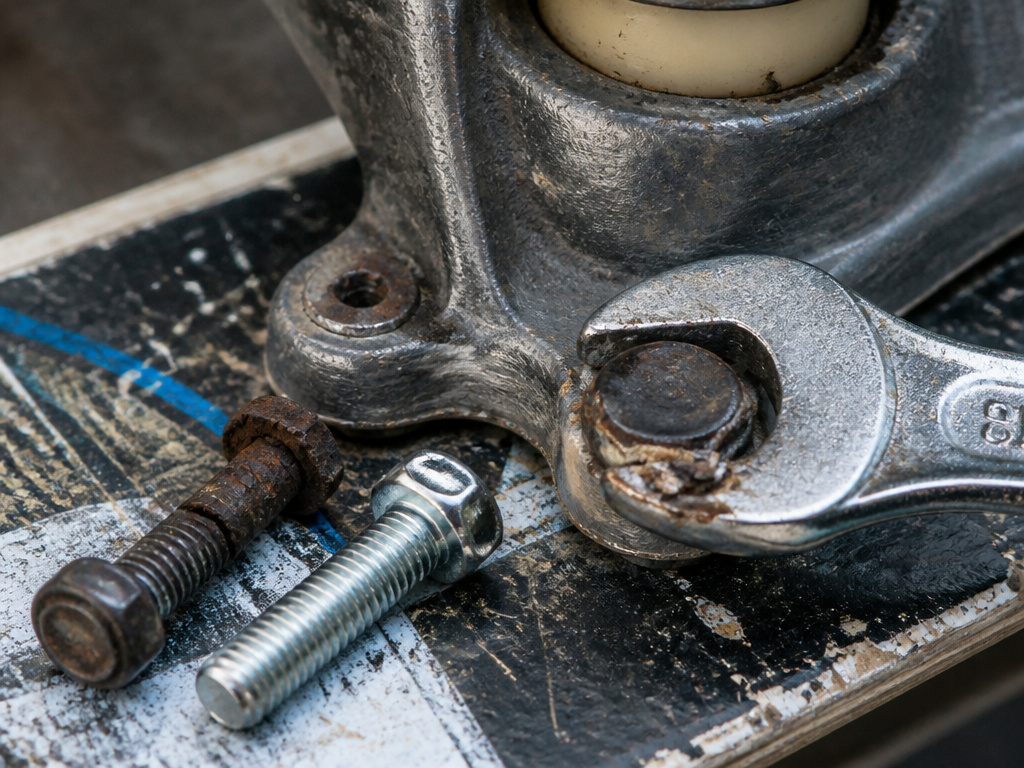
The problem starts when rust moves from cosmetic to structural. Threads are the weak point. Rust acts like a glue, seizing nuts onto bolts. When you try to force them, you can round off the bolt head or strip the threads inside the truck. A bolt with corroded threads has less “bite,” so it can’t hold torque as well. That’s how a truck loosens mid-session.
More critically, rust creates stress corrosion cracking. The National Bureau of Standards document lists specific metal-environment combos that are vulnerable. For skateboarders, the relevant one is stainless steel with salt water. The National Bureau of Standards states stainless steel is vulnerable to stress corrosion with salt water, while CORE uses stainless steel (V4A) and titanium for their screws to minimize rust formation. It’s rare, but it’s the reason you replace any bolt that looks deeply pitted or cracked.
How to Clean Hardware Without Taking Your Board Apart
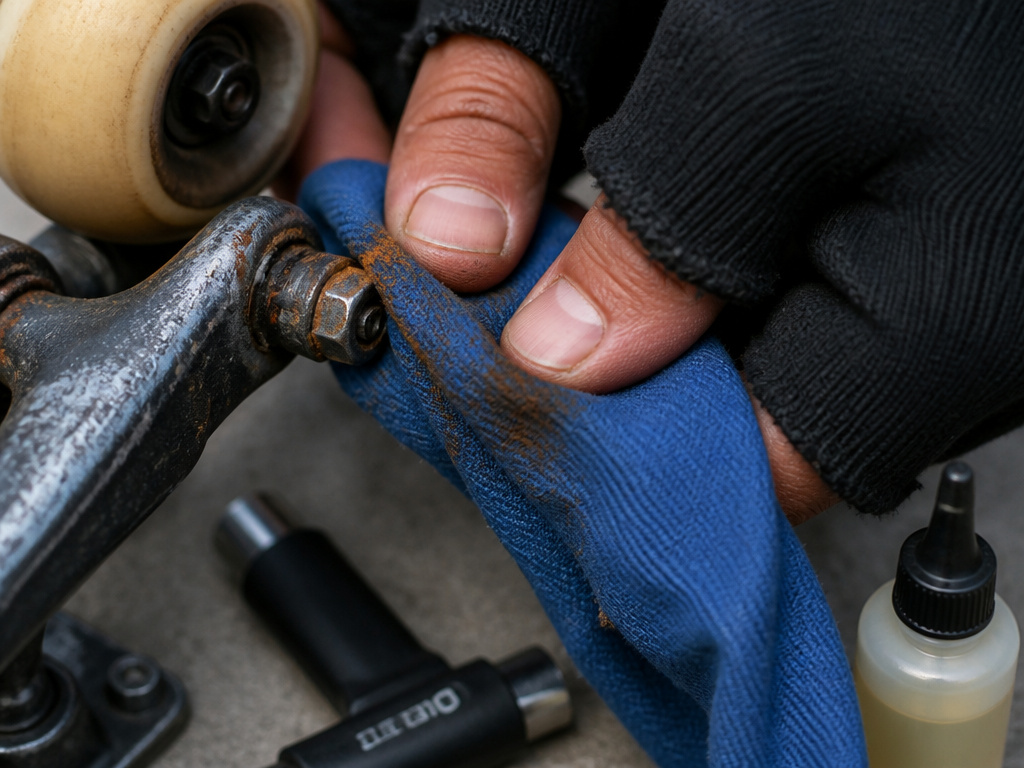
You don’t always have time for a full teardown. Maybe you got caught in a drizzle and just want to prevent rust from starting. Here’s the field-cleaning method.
Wipe everything down with a dry towel first. Get the bulk of the water off. Focus on the hardware: bolt heads, the axle nut, and the truck’s kingpin area. Use a skate tool or a wrench to give each axle nut a quarter-turn check. If it spins easily, it was loose; tighten it back to snug.
For surface spots that have already appeared, a drop of light oil on a rag can wipe them away. Rub the bolt head or nut until the orange transfers to the rag. This doesn’t remove the rust so much as displace and hide it, but it buys you time until your next proper cleaning.
This is the habit from my story bank: I check my hardware before every session by giving each bolt a quick shake and a twist. It takes about a minute. It has caught a loose nut more than once, and it remains one of the best habits I have for catching early rust.
Dealing with Seized or Rounded Bolts
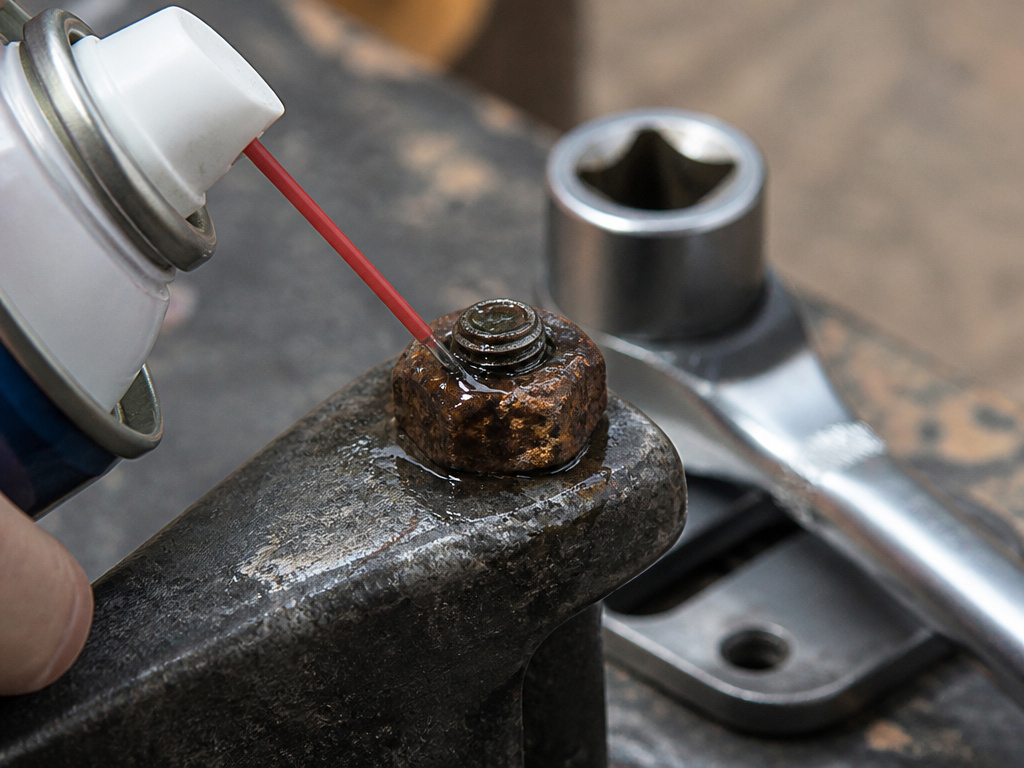
You went to change your wheels and the axle nut won’t budge. Force turns a stuck nut into a rounded one. Stop.
First, apply a penetrating oil or even a drop of household vinegar to the seam between the nut and bolt. Let it sit for ten minutes. It needs time to wick into the rust.
If the nut still won’t turn, use the correct-sized socket wrench, not an adjustable wrench, for maximum grip. Apply steady, increasing pressure. If it starts to round, stop immediately. The next step is to cut the nut off with a Dremel tool or a hacksaw, which is a job that requires care to avoid damaging the axle threads.
For a rounded bolt head on your truck mounting bolts, a screw extractor kit is your best bet. You drill a small pilot hole into the center of the bolt, then tap the extractor in. It bites as you turn it counter-clockwise, hopefully pulling the bolt out. If this fails, the last resort is drilling the entire bolt out, which risks damaging the truck’s baseplate. At that point, many skaters decide it’s easier to just install new hardware.
Prevention: How to Stop Rust Before It Starts
Cleaning rust is reactive. Stopping it is proactive, and it’s simpler than the removal process.
The number one rule is keep it dry. After any session where your board gets damp, from rain, wet grass, or even morning dew, dry it. The Impala Skate guide is adamant: “Avoid using water, this will rust the bearings.” The same logic applies to hardware. Wipe it down and store the board in a dry place, not a damp garage or basement.
If you skate in coastal areas, saltwater is your hardware’s nemesis. CORE recommends rinsing screws with freshwater and thoroughly drying them after each session. The freshwater rinse dissolves the salt, and the drying stops the corrosion cycle.
Finally, consider your hardware options. Investing in quality hardware made from V4A stainless steel (like CORE uses) or titanium dramatically increases resistance. It costs more upfront but saves you from constant cleaning and replacement. Make sure you get the right hardware size for your setup.
Frequently Asked Questions
Does WD-40 really remove rust?
WD-40 can displace moisture and loosen surface rust, making it easier to scrub off. However, it is not a true rust remover. More importantly, the Concrete Waves handbook explicitly warns, “Do not use WD 40 on bearings. It’s a solvent, not a lubricant.” For hardware, it’s a temporary aid, not a solution.
What removes rust immediately?
No safe method removes rust immediately without damaging the metal. Commercial acid-based removers work in minutes to hours, but they require careful handling and thorough rinsing. For a quick fix on surface rust, a wire brush or steel wool provides the fastest physical removal.
Is WD-40 good for cleaning skateboard bearings?
No. Official maintenance guides contradict this common practice. The Concrete Waves handbook states WD-40 is a solvent that will dry bearings out and attract more dirt. For bearing cleaning, they recommend mineral spirits or citrus cleaner, followed by a proper lubricant like Bones Speed Cream.
How to clean rust off hardware without removing it?
You can spot-clean hardware still on the board with a wire brush or steel wool. Apply light oil to a rag and polish the bolt heads and nuts. This is only for cosmetic surface rust; for deep rust or seized parts, you must remove the trucks and hardware for proper treatment.
Can rusty hardware be dangerous?
Surface rust is primarily a cosmetic issue. However, rust that corrodes bolt threads reduces clamping force, which can lead to a loose truck. Severely rusted hardware can also develop stress corrosion cracks, leading to sudden failure. When in doubt, replace cheap bolts for peace of mind.
Before You Go
Rust management on a skateboard isn’t about achieving showroom shine. It’s about maintaining function and safety with the least amount of fuss.
If you take one action from this guide, make it the post-session dry-off. Wiping down your trucks and checking hardware tightness takes two minutes and prevents ninety percent of rust problems. For the rest, keep a wire brush and some white vinegar on hand.
And remember, hardware is consumable. If a bolt fights you every time you try to remove it, or if the threads look eaten away, just replace it. A fresh set of bolts is inexpensive and guarantees your next session starts smooth. Your board should feel solid under your feet, not like a chemistry project you’re constantly battling.
