
Skateboard Hardware Size Guide: How to Install Correctly
This post contains affiliate links. As an Amazon Associate, we earn from qualifying purchases.
Skateboard hardware is 10-32 thread, and the correct length is your deck thickness plus your truck baseplate thickness plus the nut, roughly 1 inch plus your riser pad size. For a standard 7-ply deck with no risers, 7/8″ hardware is the recommended size.
That gap between flush and sticking out is where the setup stays safe or starts to fail. A bolt that’s too short won’t engage the lock nut fully, and vibration will shake it loose. One that’s too long can bend on impact and catch on curbs. Consult a skateboard hardware size guide to get it right.
What follows: the exact thread specs you need to know, two sizing charts that show where sources disagree, and the five-step rule that picks your length every time.
Key Takeaways
- Standard bolt and baseplate nut thread is 10-32, referencing the ANSI B1 sizing standard.
- Use the 1-inch + riser pad rule for a quick estimate, but always verify with a quick measure.
- For 90% of skaters, zinc-plated hardware with nyloc nuts is the best balance of cost and corrosion resistance.
- Never loosen the kingpin nut so far that it’s barely threaded; keep it fully engaged or it can work off while riding.
- A 3/8 inch wrench and a Phillips or Allen driver are the right tools; a skate tool combines both.
Skateboard Hardware Specs You Can’t Guess
You cannot eyeball thread pitch. The three nuts on your board each have a different, standardized size, and mixing them up means parts won’t fit or won’t stay tight.
The bolt and baseplate nut thread is 10-32. The “10” refers to the ANSI B1 sizing standard, and “32” is the thread count—32 threads per inch. This is the specification cited by the Concrete Waves Skate Setup Handbook. Wheel nuts are 5/16”- 24 thread. Kingpin nuts are 3/8”- 24 thread.
Before you start: Mixing different metals (like steel and aluminum) can cause galvanic corrosion, locking your hardware permanently. Stick with one material, and always use a tool on both the bolt head and the nut when tightening—spinning the hardware without holding the other side strips threads.
Why do these numbers matter? If you ever need to replace a lost nut from a hardware store, you must ask for these exact sizes, as detailed in any skateboard hardware size guide. A standard 5/16” nut from the bin won’t fit your kingpin. Getting it wrong means a wobbly truck or a wheel that won’t spin freely.
The 5-Step Rule for Choosing Skateboard Hardware Length
Forget complicated formulas. Choosing the right bolt length is about one thing: making sure the threads fully engage the nylon lock inside the nut.
Here is the process that works every time.
- Identify your deck ply. Most street decks are 7-ply maple, about 1/2″ thick. Longboard or cruiser decks are often 8 or 9-ply, which require longer hardware.
- Add your truck baseplate. Truck baseplates add roughly 1/8″ of thickness.
- Account for the nut. The nyloc nut itself needs about 1/4″ of bolt to thread onto properly.
- Add your riser pad. If you use a shock pad or riser, add its exact thickness (1/8″, 1/4″, 1/2″).
- Round up and verify. The Concrete Waves Handbook notes the average 7-ply setup (deck + baseplate + nut) is 7/8″ thick. They suggest rounding up to 1 inch as a rule of thumb: 1″ + your riser pad size.
The goal is for the bolt to pass completely through the deck and baseplate, with enough thread exposed so the nut can screw on and the nylon ring locks. If the bolt is too short, the nut won’t reach the locking collar. You’ll feel it spin freely without tightening. Too long, and excess bolt sticks out. A quarter-inch or less of extra length is acceptable.
Skateboard Hardware Sizing Charts: Where Guides Disagree
Two charts dominate the conversation. One is simpler; the other adds wheel size into the mix, which is where the recommendations start to split.
The first chart is based purely on deck ply and riser size, from the Concrete Waves Handbook.
| Deck Ply | No Riser | 1/8″ Riser | 1/4″ Riser | 1/2″ Riser |
|---|---|---|---|---|
| 7-Ply | 7/8″ | 1 1/8″ | 1 1/4″ | 1 1/2″ |
| 8-Ply | 1 1/8″ | 1 1/4″ | 1 1/2″ | 2″ |
The second chart, from SkateboardersHQ, incorporates wheel size. This is where a specific conflict appears for common setups.
| Wheel Size | Riser | 7-Ply Hardware | 8/9-Ply Hardware |
|---|---|---|---|
| 49mm – 54mm | None | 7/8″ | 1 1/8″ |
| 55mm – 56mm | None | 7/8″ | 1 1/8″ |
| 55mm – 56mm | 1/8″ | 1 1/8″ – 1 1/4″ | 1 1/4″ – 1 1/2″ |
| 57mm – 58mm | 1/8″ | 1 1/8″ – 1 1/4″ | 1 1/4″ – 1 1/2″ |
Where sources disagree: For 55-57mm wheels with a 1/8″ riser on a 7-ply deck, the Element brand and Tactics recommend 1″ hardware. SkateboardersHQ recommends 1 1/8″ – 1 1/4″. The difference comes from truck baseplate thickness and riding style. If your trucks have a thicker baseplate or you ride very loose, err toward the longer recommendation.
The lesson here is that charts in a skateboard hardware size guide are guides, not absolute rules. Your specific truck brand and how tight you crank your kingpin affect clearance. When in doubt, use the 5-step rule and measure your own stack.
Allen vs Phillips, Zinc vs Steel: What Actually Matters
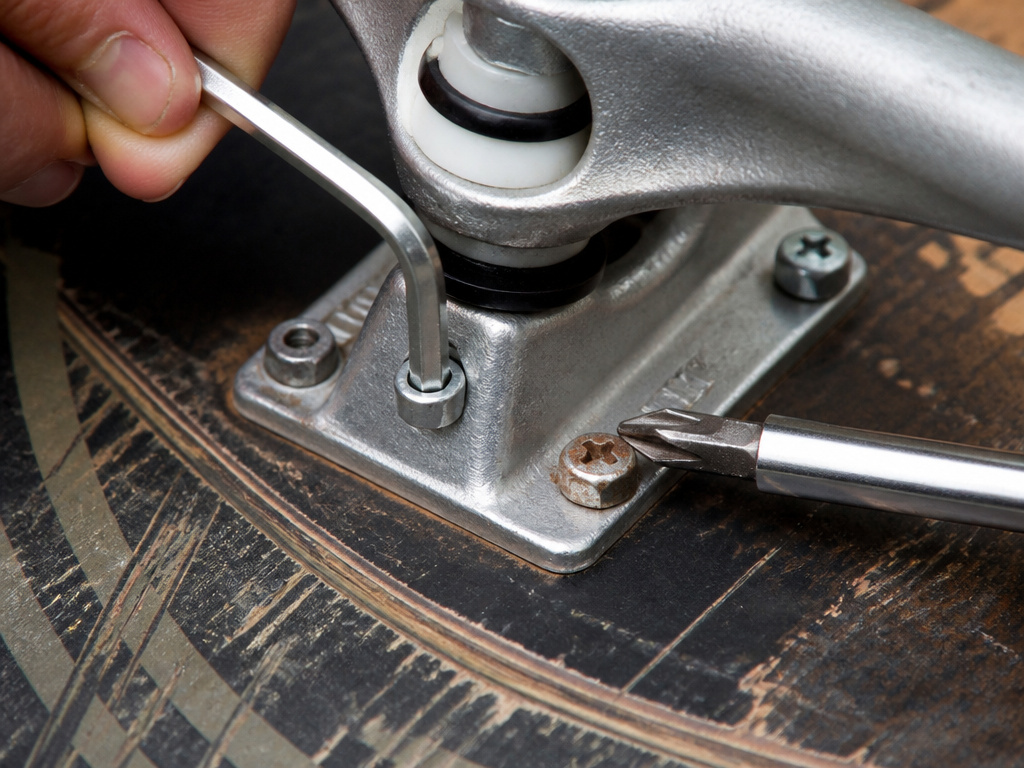
Drive type and material are about maintenance and environment, not performance. A bolt holds the truck on; how you tighten it and how long it lasts are the real variables.
Allen (Socket) vs Phillips Head
- Allen bolts require a hex key (often included). The socket head is less likely to strip under high torque, making them better for frequent truck removal or if you tend to overtighten.
- Phillips head bolts are ubiquitous and any skate tool or screwdriver fits them. They can cam out and strip if you force them, especially with a worn driver bit.
I prefer Allen bolts for my own boards because I’m constantly swapping parts.
Hardware Material
- Zinc-plated steel is the standard, cost-effective choice for most skaters. It offers decent rust resistance for everyday use.
- Stainless steel provides superior corrosion protection, crucial if you skate in wet conditions or live near the coast. It’s more expensive but won’t rust and seize.
The Concrete Waves blog states that for 90% of skaters, zinc-plated hardware is fine. If you need extra protection against rust, go for stainless. Just don’t mix the two on the same board, as the YouTube guide from Concrete Waves warns that dissimilar metals can corrode and lock together.
Common Hardware Mistakes and How to Fix Them
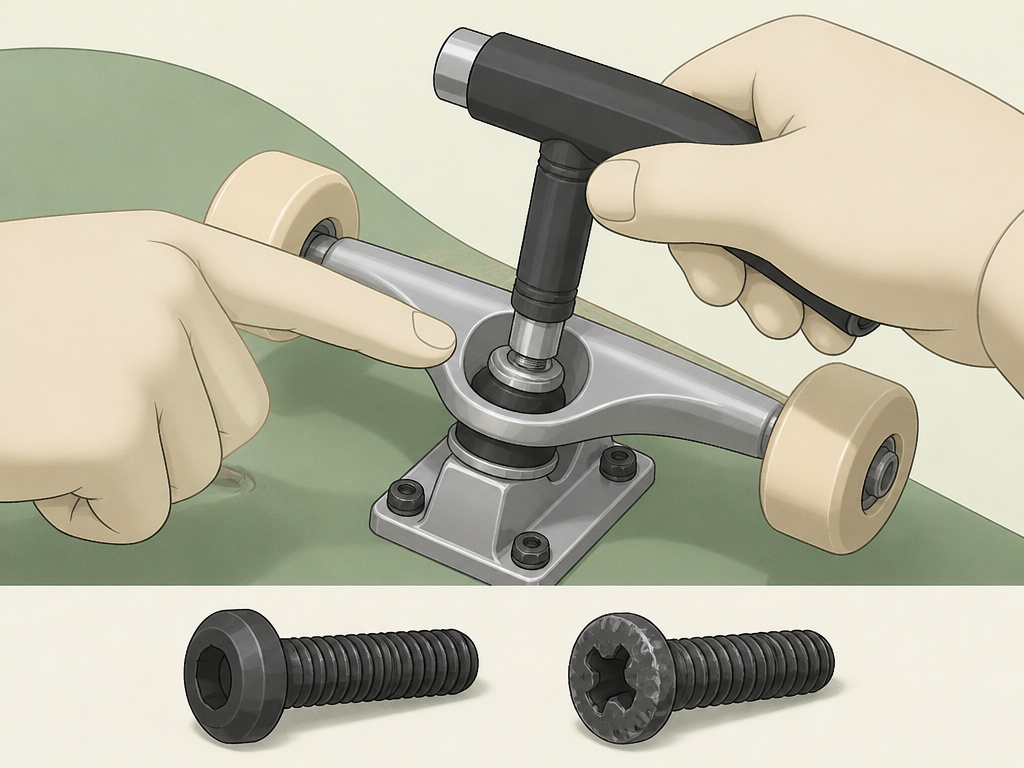
Most hardware problems are simple to spot and fix. They come from using the wrong length, the wrong tools, or skipping a basic safety check.
Mistake 1: Bolts That Are Too Long or Too Short
- The sign: Bolts protrude more than 1/4″ past the nut, or the nut spins on without engaging the nylon lock.
- The fix: Replace with the correct length. For a quick check, tighten a bolt. If you see bare threads between the nut and the bolt head, it’s too short. If you have significant excess length, it’s too long.
Mistake 2: Stripped Bolt Heads
- The sign: Your screwdriver or Allen key spins without gripping, leaving a rounded-out star or hex shape.
- The fix: This is why a good skate tool matters. For a stripped Phillips head, try pressing down extremely hard while turning, or use a screw extractor kit. Often, it’s easier to cut the bolt off with a hacksaw and replace it.
Mistake 3: Loose Hardware
- The sign: You hear a rattling sound, or the truck feels slightly shifty underfoot.
- The fix: Tighten it before your next session. This is where a quick pre-ride hardware tightness check pays off. Use your skate tool to snug all eight nuts. Don’t crank them so hard you sink the bolt head into the deck wood.
Mistake 4: Ignoring the Kingpin Nut
- The sign: Your trucks feel uncontrollably loose, or you see the kingpin nut is barely threaded onto the pin.
- The fix: Tighten it immediately. The Skate Labs Field Guide includes a critical safety warning: never loosen the kingpin nut so far that it barely hangs on. Keep the nut fully threaded, or it can vibrate off while you ride, causing a sudden, dangerous loss of truck function.
How to Install Skateboard Hardware Correctly
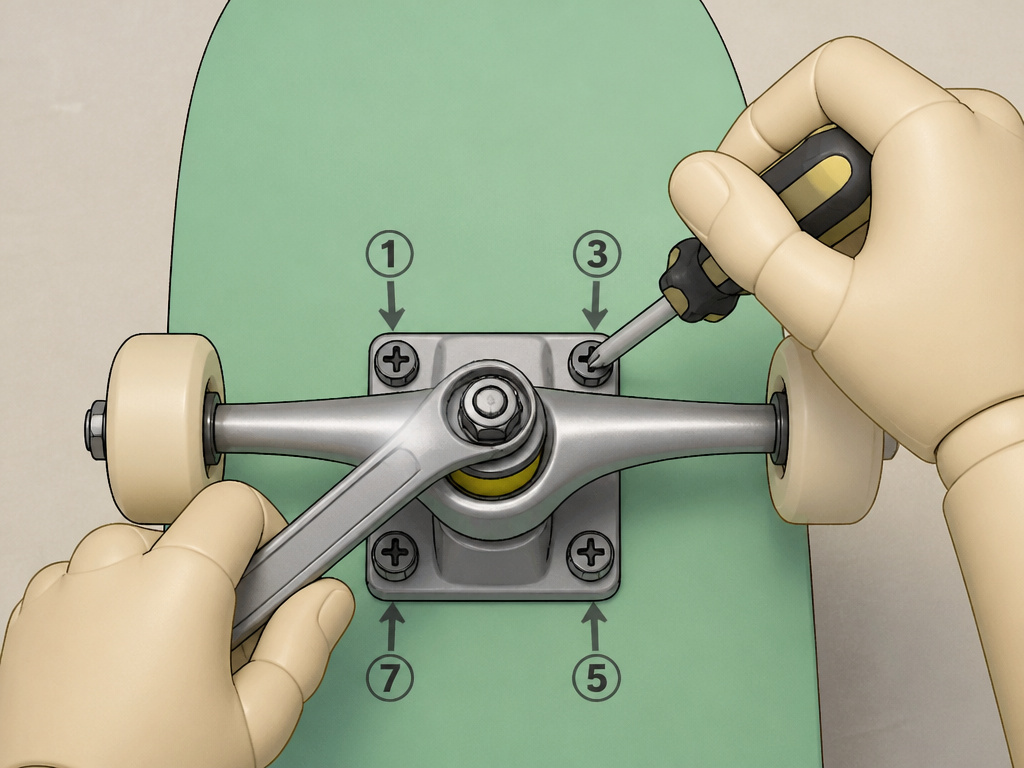
You need two tools: something to hold the bolt head (Phillips screwdriver or Allen key) and a 3/8 inch wrench for the nut. A skate tool combines both.
- Place your deck grip-side down on a stable surface.
- Insert all eight bolts through the deck holes from the top.
- Position your truck, aligning the baseplate holes with the bolts.
- While holding each bolt head to prevent spinning, hand-tighten a nut onto each one.
- Using your wrench and driver, tighten each nut incrementally in a cross pattern (like tightening a car tire) until the truck is flush with the deck. The bolt head should be just flush with the grip tape—not sunk below it.
Easy to miss: If you’re adding riser pads, remember they go between the deck and the truck baseplate. Their thickness is what pushes you into longer bolt size territory.
A proper guide to installing skateboard trucks covers this in more detail, but the key is even pressure. Overtightening one bolt can warp the baseplate or strip the wood.
Countersink vs. Button or Pan Head Hardware
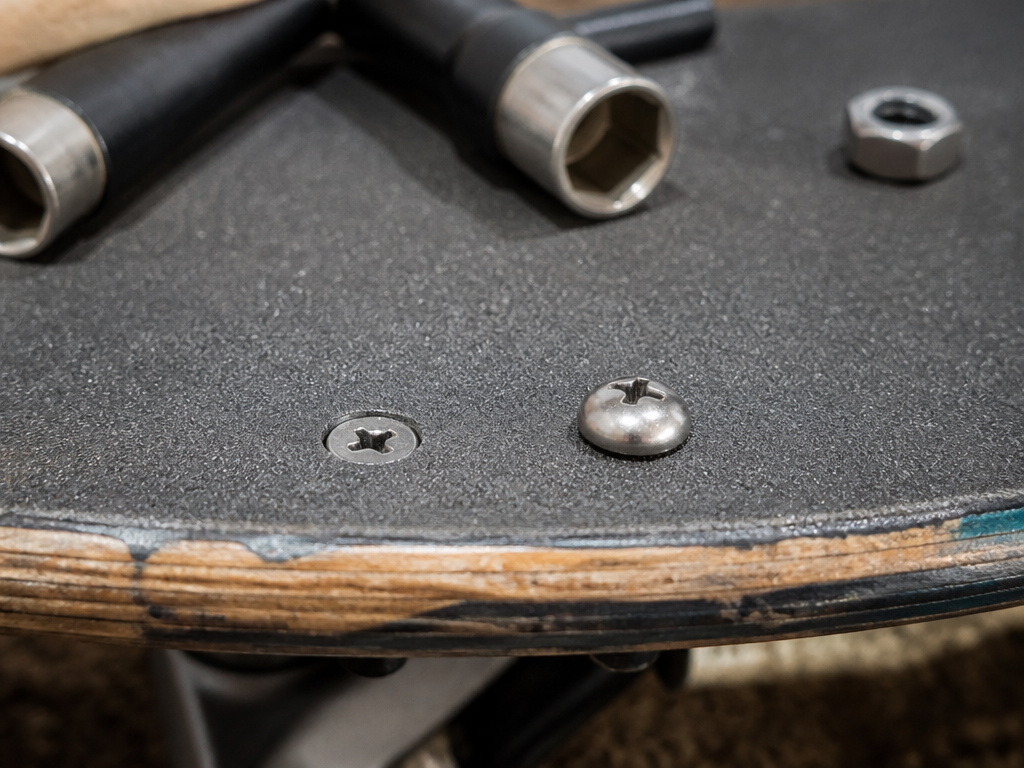
Skateboard hardware comes with different head shapes. Countersunk heads are designed to sit flush with the top of your deck, sinking into a pre-drilled recess. This creates a smooth surface for your grip tape and shoes. Button or pan heads have a rounded, dome shape that sits above the deck surface. For most standard skateboards, countersunk hardware is the typical choice. Dome-shaped hardware is generally recommended only for longboard setups. The key is that your bolts must be long enough to go completely through your deck and truck baseplate, with enough thread for the lock nut to secure properly.
Frequently Asked Questions
What size hardware should I get for my skateboard?
For a standard 7-ply street deck with no riser pads, 7/8 inch hardware is the most common size. If you add a 1/8″ riser, sources disagree on the ideal length: Element brand and Tactics recommend 1″ hardware, while SkateboardersHQ recommends 1 1/8″ – 1 1/4″.
What size hardware for an 8.25 deck?
Deck width (like 8.0, 8.25, 8.5) does not affect hardware length. The thickness (ply count) and your riser choice are what matter. An 8.25″ wide deck is almost certainly a 7-ply deck, so use the 7-ply recommendations.
Are all skateboard hardware bolts the same thread?
Yes, the bolt thread for attaching trucks is standardized as 10-32. The nuts for wheels (5/16”-24) and kingpins (3/8”-24) are different. Always ensure you’re using the correct nut for each part.
Can I use regular bolts from a hardware store?
It’s not recommended. As the Tactics guide notes, regular hardware store bolts are often made from weaker metal alloys not designed for the lateral stress and vibration of skateboarding. They are more likely to bend or shear. Skate-specific hardware is a cheap upgrade for a critical safety component.
How tight should skateboard hardware be?
Tighten until the bolt head is flush with the top of the grip tape. You should not be able to wiggle the truck by hand. Avoid sinking the bolt head into the deck, as this can weaken the mounting area. A quick check of hardware tightness before each session takes seconds and prevents problems.
Before You Go
The one rule most guides skip: if your kingpin nut is so loose you can see more than a few threads above it, tighten it before you push. That’s not a tuning preference—it’s a mechanical failure point waiting to happen. The official World Skate competition rulebook doesn’t limit hardware specs, but their safety protocols exist for a reason. Your setup is only as solid as its smallest bolt.
For your next session, spend thirty seconds with your skate tool. Snug each of the eight baseplate nuts, then check the four axle nuts. That’s it. You’ve just addressed the most common, overlooked cause of a sketchy-feeling board.
