
How to Remove Stickers From a Skateboard: A Clean Removal
This post contains affiliate links. As an Amazon Associate, we earn from qualifying purchases.
To remove stickers from a skateboard, apply heat with a hair dryer to soften the adhesive, slowly peel the sticker from one corner, and clean any leftover residue with a solvent like Goo Gone or rubbing alcohol. The key is matching the method to the adhesive type, low-tack peels easily, hi-tack needs heat, and avoiding harsh chemicals that eat into the deck’s resin.
That difference between low-tack and hi-tack adhesive changes your entire approach. One is designed to come off clean; the other is a permanent bond that will fight you. Most stickers on a board are the permanent kind, baked on by sun and time, which is why knowing how to remove stickers from a skateboard is crucial.
What follows: a method that works for any sticker when you compare a how to remove stickers from a skateboard, the right solvents for the stubborn glue left behind, and how to handle the tricky case of stickers stuck under your grip tape. By the end, you’ll know how to strip a deck clean without taking the graphic with it.
Key Takeaways
- Apply heat first with a hair dryer to soften the adhesive, making peeling easier and reducing the risk of tearing the sticker or pulling up paint.
- Peel slowly from one edge; rushing this step is how stickers tear and leave the most residue behind.
- Reach for Goo Gone or rubbing alcohol to clean adhesive residue; avoid Goof Off or acetone, which can damage the deck’s finish and resin.
- Old boards are fragile, heat and solvents can lift vintage graphics, so proceed with extra caution on aged decks.
- Sources disagree on handling residue: Tactics states leftover residue ‘isn’t a problem’ for new grip tape, while others recommend cleaning it with solvents and abrasives.
The Step-by-Step Method That Works Every Time
This isn’t a guess. It’s the sequence confirmed by manufacturer guides and years of skater trial. You need a hair dryer, a plastic card or your fingernail, and about fifteen minutes.
Start by warming the sticker with your hair dryer on a medium setting. Hold it a few inches away and move it around until the sticker is warm to the touch. You want the sticker warm to the touch, not hot enough to burn your fingers. The heat makes the adhesive underneath turn gummy and release its grip.
Heat, sunlight and age make adhesive harder to remove cleanly. A hairdryer reverses that by softening the bond before you pull.
Once it’s warm, pick at one corner with your fingernail or the edge of a plastic gift card. While some sources advise against metal blades to avoid scratches, others like Tactics recommend using a blade to pry up grip tape and scrape residue. Pull the sticker back slowly, angling it close to the deck’s surface. If you feel strong resistance, stop and apply more heat directly to that spot. The goal is a steady, even peel.
If the sticker tears, don’t panic. Reheat the torn edge and start again from a new corner. Older grip tape and stickers are more difficult to remove, so patience here saves your deck’s surface. The sound of a clean peel is a soft, consistent tearing; a ripping sound means you’re going too fast.
After the sticker is off, you’ll likely have a patch of sticky residue. That’s your next problem.
Choosing Your Solvent: Goo Gone vs. Rubbing Alcohol vs. Household Hacks
Not all sticky stuff is the same, and neither are the chemicals that dissolve it. Your choice here decides whether your deck stays pristine or gets damaged.
Goo Gone is the community favorite for a reason in any discussion of how to remove stickers from a skateboard. Goo Gone is a solvent that breaks down adhesive without being overly aggressive. Apply a small amount to a rag or paper towel, rub it onto the residue, and let it sit for 15 to 30 seconds before scrubbing.
Rubbing alcohol (isopropyl alcohol) is an alternative for dissolving adhesive. Use a non-abrasive scrubber, like a microfiber cloth, and some elbow grease. It works well for fresh residue but can struggle with glue that’s been baked on for years.
| Solvent | Best For | Risk If Used Wrong |
|---|---|---|
| Goo Gone | General adhesive residue, grip tape goo | Can soften paint if left to soak >30 seconds |
| Rubbing Alcohol | Fresh sticker residue, quick cleanup | Less effective on aged, hardened glue |
| Household Oil (e.g., peanut butter) | Low-budget option, safe on graphics | Leaves an oily film that requires soapy water cleanup |
| Goof Off / Acetone | Not recommended | Eats through clear coat, attacks deck resin |
Common mistake: Reaching for Goof Off or acetone because it’s “stronger.” These solvents are too aggressive. As noted on a community forum, Goof Off “will eat through everything” and can remove the board’s clear coat. Acetone attacks the resin of the board itself.
Household hacks like peanut butter or cooking oil work on the principle that oil dissolves adhesive. Smear a little on the residue, wait, and wipe. It’s messy and you’ll need to clean the oily slick afterward with soapy water, but it’s harmless to the graphic. A Reddit user summed it up: “Goo Gone works great but really any oil should be able to take the sticky remains off.”
The bottom line: Goo Gone for most jobs, rubbing alcohol for quick cleanups, and skip the hardware-store heavy hitters entirely.
What If the Sticker Is Under the Grip Tape?
This is the trickiest scenario. That sticker isn’t coming off unless the grip tape does first. You have two paths: destroy the grip to save the sticker, or accept that both are coming off together.
Use a sharp razor blade and lightly score the grip in a square slightly larger than the sticker. Peel that small section of grip tape up slowly. You now have access to the sticker and can use the standard heat-and-peel method on it. Afterwards, you’ll have a hole in your grip. You can either replace the whole sheet or, if the cut is clean, apply a new small piece of grip over the spot.
More often, the simpler move is a full grip tape removal. This allows you to clean the whole deck surface, take off the old sticker, and put on new grip. The process is the same as removing a sticker, heat, peel slow, clean residue, just on a larger, more abrasive scale.
Why Age and Adhesive Type Change Everything
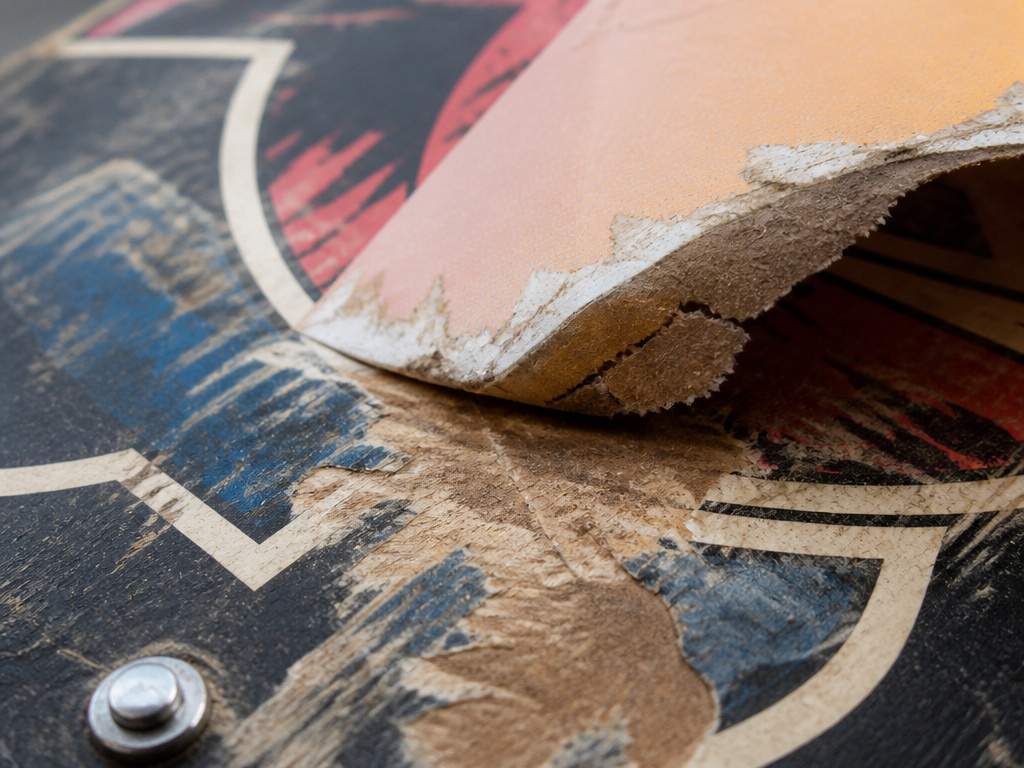
A brand-new vinyl sticker from a shop and a five-year-old decal from a contest are different beasts. The older the adhesive, the more it has cured and bonded with the deck’s surface.
Low-tack adhesive is designed to peel off without residue. You’ll find it on “removable” stickers. Hi-tack adhesive is the strongest, used for permanent applications. StickerApp, a manufacturer, states hi-tack is “the hardest to remove and more likely to leave residue.” Heat, sunlight, and time turn any adhesive into a hi-tack nightmare.
Where this goes sideways: Assuming all stickers come off the same way. An old, sun-baked hi-tack sticker peeled cold will take chunks of the printed graphic with it. The paint bonds with the glue over time.
This is especially critical on older boards or those with collectible graphics. Anecdotal advice from Art of Skateboarding warns, “Typically the older the board, the more likely some of the paint from the graphic will come with it.” If you’re dealing with a vintage deck, consider whether removing the sticker is worth potentially damaging the graphic. Sometimes, the patina is part of the story.
For modern decks, this means moderating your heat and solvent use. Less is more. If you’re planning a remove graphics project later, a clean sticker removal now is good practice.
Cleaning Up and Moving On
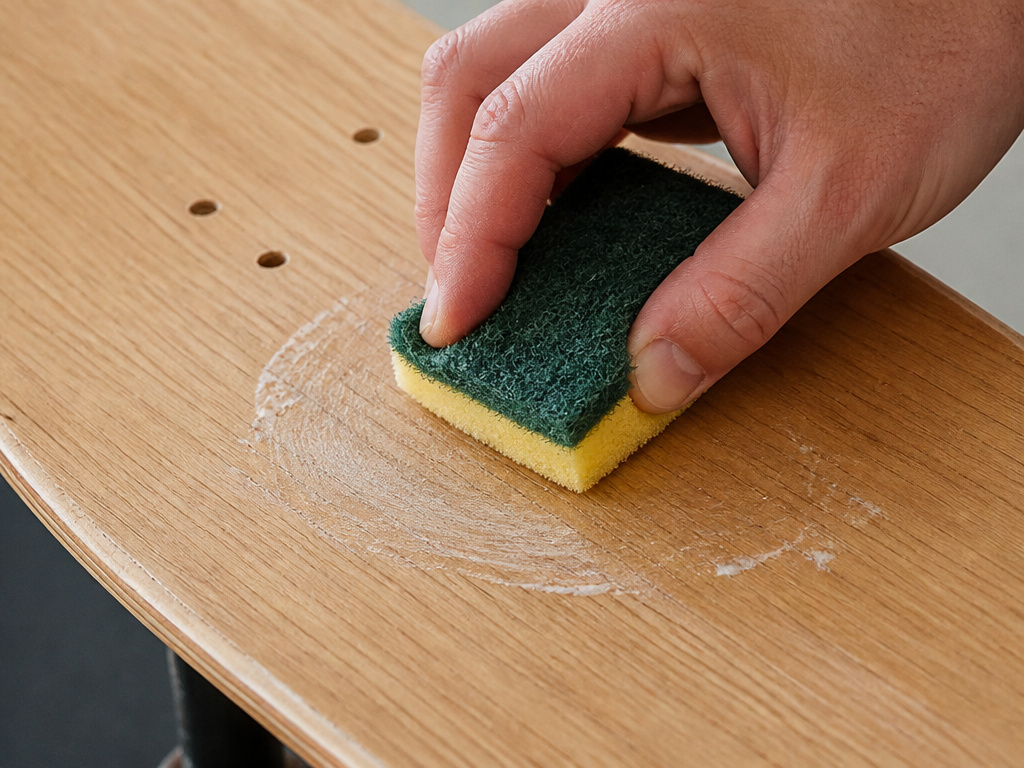
Once the sticker and its glue are gone, you’re left with a clean patch on your deck. If you want a perfectly clean bare deck, you have a bit more work.
For final cleaning, use the green abrasive side of a green-and-yellow kitchen scrub sponge. It’s just rough enough to scrub off the last bits of gunk without scratching the wood. Dampen it slightly with water or a little of your solvent. Scrub in small circles until the surface feels smooth and looks clean.
If you used an oily solvent like Goo Gone or peanut butter, you need to remove the oil slick. Wipe the area down with a rag dampened with soapy water or rubbing alcohol. Let the deck dry completely before applying new stickers, grip, or taking it for a ride. A damp deck can warp and will ruin new grip tape adhesion.
This is also the perfect time for general deck cleaning or to address any other imperfections like removing wax or repairing scratches.
Frequently Asked Questions
Does WD-40 remove stickers from a skateboard?
WD-40 can work to dissolve adhesive residue, but it’s not the best choice. It’s a petroleum-based lubricant and penetrant that can leave an oily film and potentially soften the deck’s resin over time. Community advice is split, with some users warning it might affect the board’s glue. Safer, dedicated options like Goo Gone or isopropyl alcohol are preferred.
How do you remove stickers without ruining them?
To preserve a sticker for reapplication, you need to be meticulous. Apply even, low heat with a hair dryer to soften the adhesive completely. Start peeling from one corner, pulling back slowly and at a very low angle, almost parallel to the deck. The goal is to stretch the adhesive away from the board rather than shear it. This is much easier with newer, low-tack stickers.
Can I use a razor blade to scrape off stickers?
You can, but you risk severe scratches. A plastic scraper, an old credit card, or your fingernail is safer for the initial lift. If you must use a blade, reserve it only for scraping off the thin layer of leftover adhesive after the sticker is gone, and keep the blade nearly flat against the deck’s surface.
What removes sticker residue from a skateboard without chemicals?
Household oils like peanut butter, coconut oil, or olive oil can break down adhesive. Apply a dab, let it sit, then rub with a cloth. The oil dissolves the glue, but you’ll need to clean the oily residue afterward with dish soap and water.
The Bottom Line
The one rule most guides skip: if your sticker is on a board more than a few years old, test your heat and solvent on a small, hidden edge first. A vintage graphic can be worth more than a clean deck.
For a modern board you skate daily, the formula is straightforward. Heat, slow peel, Goo Gone, scrub. It takes ten minutes and leaves no trace.
Everything above assumes you want the sticker gone. If you’re on the fence about a collectible deck, sometimes the smarter move is to leave it alone and let the next owner decide. Otherwise, grab the hair dryer and get to work. Your board will look fresh by the time it cools down.
