
How Much Does It Cost to Start Skateboarding?
This post contains affiliate links. As an Amazon Associate, we earn from qualifying purchases.
Starting skateboarding requires a beginner setup including a complete skateboard and essential protective gear. The board itself can range widely in price, with gear adding a significant additional cost. Spending less than $100 total almost guarantees a board that makes learning harder and gets abandoned.
That number comes from comparing what actually works against what just gets sold. The gap between a $25 board and a $110 board isn’t just marketing; it’s the difference between a toy that quits on you and a tool that lets you progress. A common first question for newcomers is: How much does it cost to start skateboarding?
What follows is a line-by-line breakdown of where your money goes, why certain price points are traps, and how to walk into a skate shop (or browse online) without getting overwhelmed or overcharged by the how much does it cost to start skateboarding question. By the end, you’ll know the exact specs to look for and the one upgrade worth splurging on from day one.
Key Takeaways
- Budget $150 to $250 for your total starter setup — a reliable complete skateboard and non-negotiable protective gear.
- Sources disagree on the price of a beginner complete. ScooterMcGoo advises budgeting at least $100–$120, while Braille Skateboarding offers a complete at $79.99–$109.99, and Madd Gear and Krown offer completes at $24.99 and $44.95 respectively.
- Protective gear (helmet, wrist guards, knee pads) adds $70 to $100 to your initial cost and is essential, with wrist injuries being the most common beginner mishap.
- For your first board, buy a pre-built complete, not a custom build; building custom is for later when you know what specific parts you want to change.
- The U.S. Skateboard Education Association (USSEA) offers a structured “Skateboard Basic” membership for $50 the first year, which includes ‘Learn to Skate,’ ‘SkateSafe,’ and an ‘Introductory course to teaching skateboarding,’ representing a smart investment in foundational skills.
The Core Cost Drivers: What You’re Actually Paying For
A skateboard is a simple machine: a deck, two trucks, four wheels, eight bearings, and some hardware. The price variance comes from the materials, construction, and brand reputation behind each part. A peer-reviewed study in the IOP Conference Series set performance benchmarks, stating a deck should have a fracture toughness of 5 MPa/m² and a minimum lifetime of 10,000 cycles. That’s the engineering standard your board should quietly meet.
Cheap boards often use inferior materials that affect performance. The deck feels dead underfoot, the trucks wobble without turning predictably, and the wheels sound gritty on pavement. You fight the board more than you ride it. A complete that uses 100% hard rock Canadian maple (like the Braille Skateboarding deck) and proper urethane wheels is a quality one. The difference isn’t subtle. It’s the difference between wanting to practice and wanting to quit.
Where this goes sideways: Buying a board based on graphic alone. A cool graphic printed on a 7-ply sheet of low-grade wood delaminates after a few hard sessions, leaving you with a broken deck and a lighter wallet within a month.
The $80 Floor and What Happens Below It
Testing teams like ScooterMcGoo draw a hard line: “Budget at least $100–$120 for a complete from a real skate brand.” They note boards under $80 typically use components that make learning harder. This isn’t elitism; it’s physics. Soft plastic trucks don’t pivot correctly, dead bearings create drag, and thin decks lack pop.
I learned this the pricey way. My first board was a department store special. The bearings were so slow I had to push constantly just to maintain a crawl. I thought I was terrible at balancing. After two frustrating weeks, I took it to a local shop. The employee spun a wheel—it made a dry, grinding noise and stopped in two seconds. “These aren’t broken,” he said. “They were never alive.” A set of bearings that work properly cost less than the board I’d already wasted money on.
The Beginner Board Price Battle: $25 vs $45 vs $110
The market for “beginner completes” is all over the map. We compare three real options, with specs pulled directly from their product pages. This shows exactly what you get (and give up) at each price.
| Brand & Model | Price | Key Specs | Who It’s For |
|---|---|---|---|
| Madd Gear 31″ Learn to Ride | $24.99 | 31″ x 7.5″ 9-ply maple deck, 5″ composite trucks, 50mm PVC wheels, ABEC-5 bearings. | Very young children (ages 5-8) doing light riding on smooth surfaces. Not for teens or adults. |
| Krown Rookie Checker | $44.95 | Maple 7-Ply Deck, Aluminum Trucks, Urethane Wheels, Precision Bearings. | Marketed as a beginner board, but Amazon reviews highlight major flaws (see below). |
| Braille Skateboarding Best Beginner Complete | $79.99–$109.99 | 31.5″ deck, 100% hard rock Canadian maple, medium concave, 8.0″ width recommended. | The default choice for most new skaters (kids, teens, adults) wanting a reliable learning tool. |
The Madd Gear board uses composite trucks and PVC wheels, which are less durable than the components on more expensive completes. It’s fine for a small child rolling on a driveway, but its components won’t withstand the demands of learning tricks or skating on rough pavement.
The Krown board sits in a dangerous middle ground. Its Amazon listing claims “Pro Style Quality,” but a top reviewer with 1991 ratings counters: “It’s also a terrible board to learn on… The trucks are kind of garbage… It doesn’t roll very well.” This is the trap: a board that looks right on paper but fails in practice, wasting your $45 and potentially your motivation.
The Braille complete, while more expensive, lists verifiable specs. The hard rock Canadian maple and medium concave are industry-standard terms for durable, predictable decks. Braille Skateboarding recommends an 8.0″ width as a “perfect middle-ground,” while Warehouse Skateboards sells much smaller completes for young children, indicating size should be matched to the rider.
Protective Gear: The Non-Negotiable Line Item
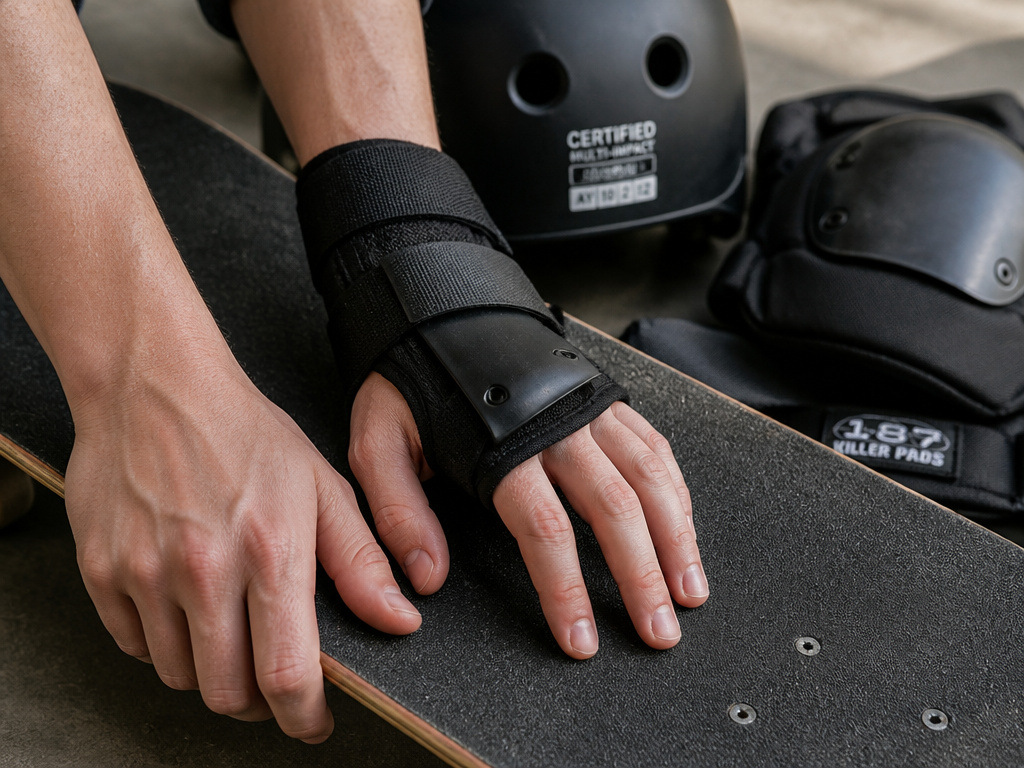
If the board is your vehicle, the gear is your seatbelt. Skipping it to save money is a false economy. ScooterMcGoo’s testing team advises factoring it in from the start: helmet ($25–$50), wrist guards ($15–$25), knee pads ($20–$35). They note that wrist injuries from forward falls are the most common beginner skateboarding injury.
A Reddit user in the NewSkaters forum put it bluntly: “Helmets are 50-60 if you get certified.” It means the helmet has passed impact tests. A $20 uncertified helmet is a plastic shell with no verified protection.
Before you start: Wrist guards prevent scaphoid fractures, which are notoriously slow to heal. A helmet prevents traumatic brain injury from a backward fall. Knee pads prevent bursitis and deep abrasions that can sideline you for weeks. Gear isn’t about looking cool; it’s about staying in the game.
Your first fall is a question of “when,” not “if.” Wearing gear transforms that moment from a session-ender into a brief pause. You get up, dust off, and keep rolling. Without gear, a simple fall can mean a trip to urgent care, which costs far more than any pad.
The “I Don’t Need Gear” Myth
Another Reddit user argued, “150 flat you don’t need safety equipment unless your doing big things.” ScooterMcGoo advises factoring in protective gear from the start, citing wrist injuries as the most common beginner mishap. However, some beginners, like a cited Reddit user, believe safety equipment isn’t needed “unless your doing big things.”
Here’s a quick checklist for your essential protective gear kit:
- Certified Skate Helmet: Check for a CPSC sticker inside. Fit is critical; it shouldn’t rock side-to-side.
- Wrist Guards: These have a plastic splint on the palm side. They’re the single most important pad for beginners.
- Knee Pads: Get ones with a hard plastic cap. They should stay in place when you bend your knee.
- Optional but Recommended: Elbow pads. Your instinct is to put your arms out, and elbows take a beating.
Investing in this kit means your $150 setup for a beginner skateboard actually gets used, not stored in a closet after one scary fall.
Complete vs. Custom: The First-Board Decision
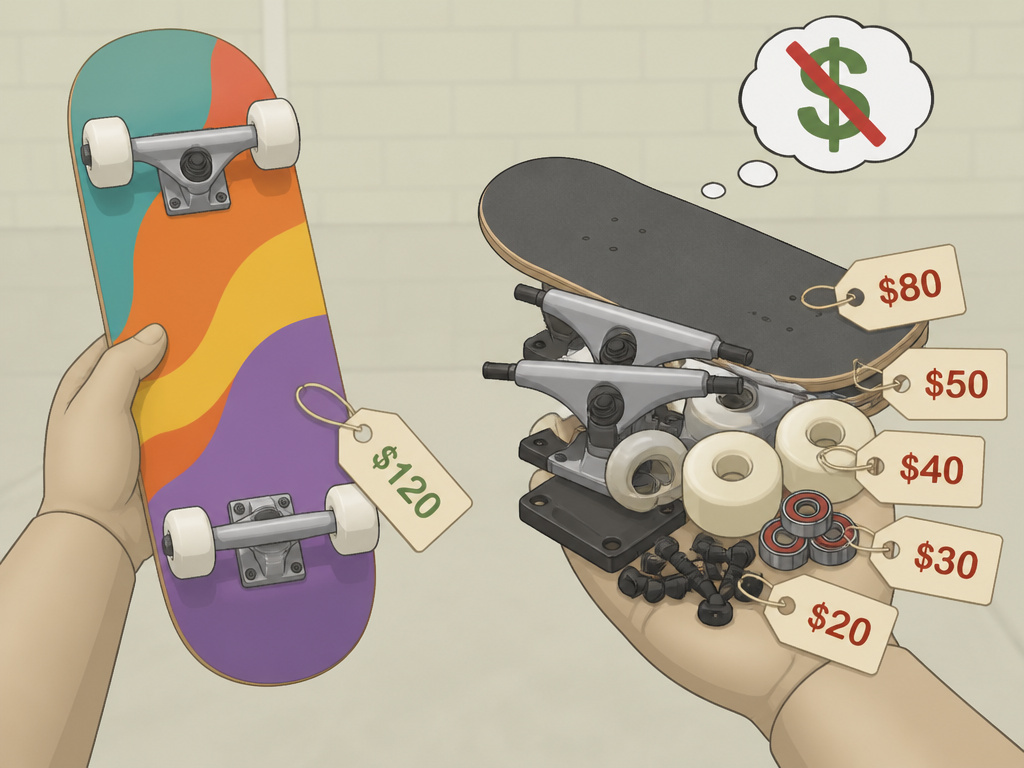
For your very first board, the answer is simple: buy a complete. A complete skateboard is a pre-assembled package where the brand has matched all the components for balanced performance. As ScooterMcGoo advises, beginners should ‘Buy a complete,’ not a custom build.
The right time to build a custom board is after you’ve worn out parts or developed specific preferences. Maybe you want harder wheels for park skating, or softer bushings for looser trucks. Then, you swap parts one at a time. Starting with a custom build is like learning to cook by inventing a complex recipe—you’ll likely get the proportions wrong and waste ingredients.
Common mistake: Building a custom board to “save money.” By the time you buy a deck, trucks, wheels, bearings, grip tape, and hardware separately, you’ll likely exceed the cost of a comparable complete. The bundled pricing of a complete is a genuine advantage for beginners.
Warehouse Skateboards sells beginner completes, indicating they are suitable for newcomers. They’re built from quality parts and save you the headache of assembly. The goal of your first month is to learn to push, turn, and stop. Any complete from a real skate brand will handle that perfectly.
Hidden and Ongoing Costs (The First Year)
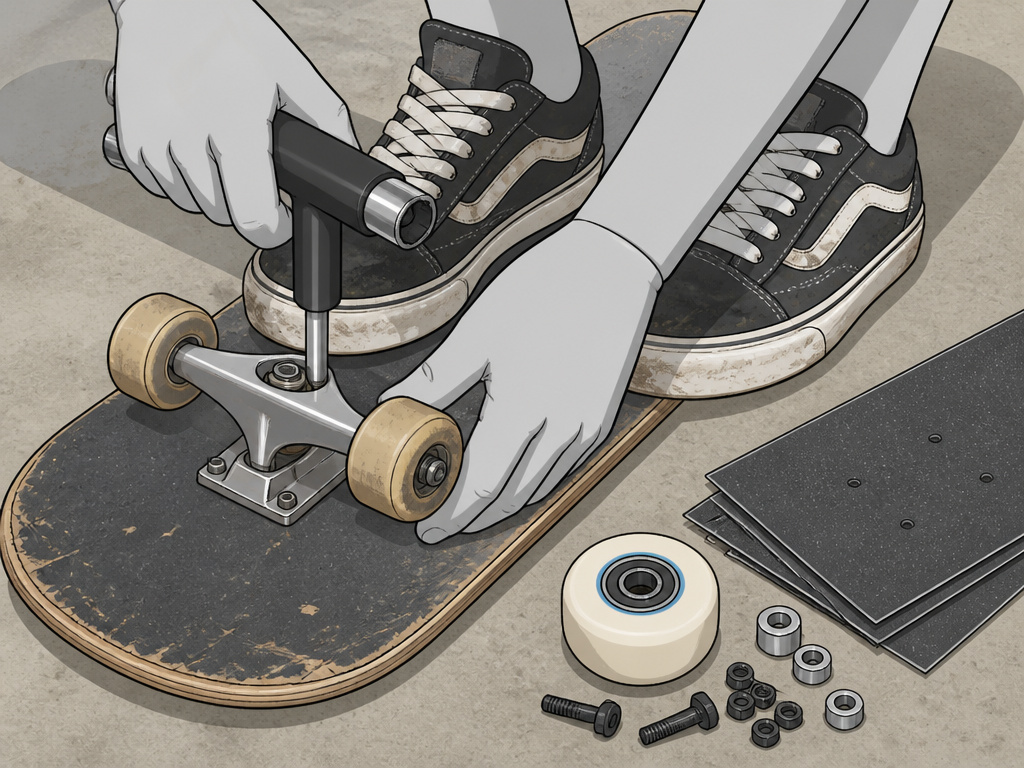
Your initial outlay gets you rolling, but skateboarding, like any hobby, has running costs. Planning for them prevents surprise expenses from stalling your progress.
- Shoes: Skateboard grip tape is coarse sandpaper. It will shred the soles of regular sneakers within a few sessions. A dedicated pair of skate shoes will last much longer than regular sneakers. It’s not a vanity purchase; it’s a performance and durability upgrade.
- Maintenance: Your board needs basic care. A skate tool lets you tighten loose trucks and hardware. Bearing cleaning kits are also useful for maintenance. Wheels and grip tape wear down and will need replacing, but likely not in your first year.
- Park Fees: Many public skateparks are free, but some indoor or premier facilities charge a session fee ($5-$15) or require a membership.
- Replacement Parts: The first part to wear out is usually the grip tape, which gets dirty and less grippy. Grip tape will need replacing over time. Wheels cone over time from power slides, and decks lose their pop after hundreds of landings. These are signs of progress, not failure.
A Reddit user’s experience highlights the reality: “I spent $50 on a board, and then $100 on everything else for the board (wheels, bearings, trucks, etc).” They likely bought a cheap complete, then immediately had to upgrade its subpar components. Starting with a better-quality complete avoids this double-spend.
How to Shop Smart: Local Shop vs. Online
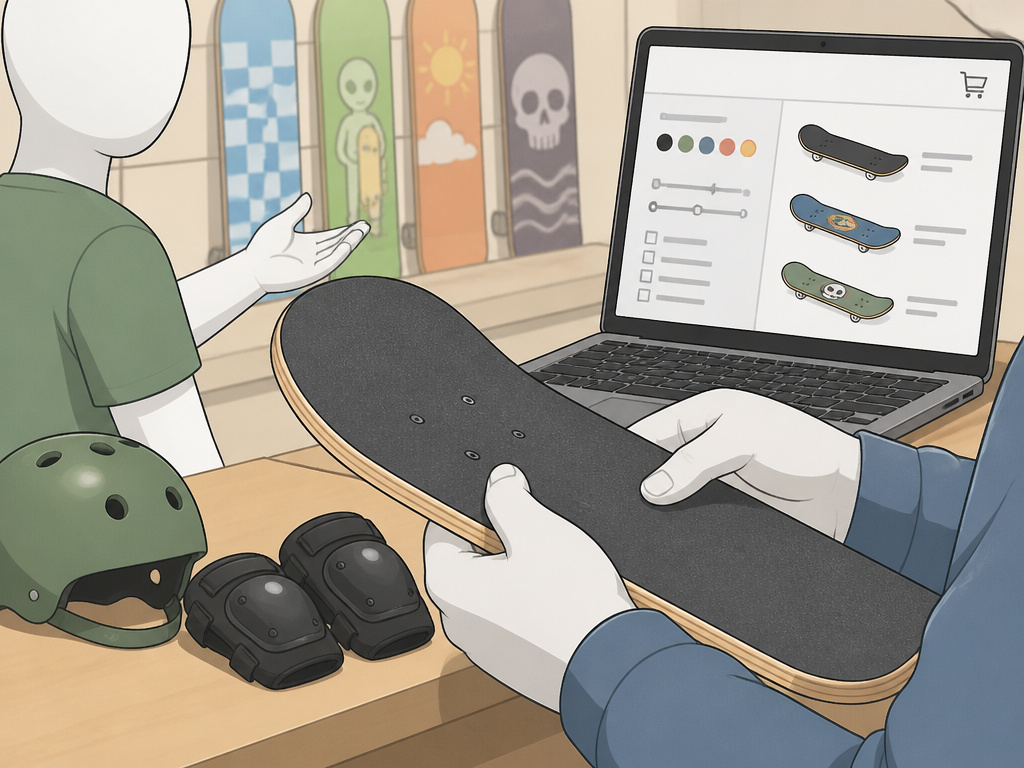
Where you buy impacts price, service, and what you actually get.
Local Skate Shop:
- Pros: Expert advice, you can stand on decks to feel concave, they often assemble and tune the board for free, you support the local scene.
- Cons: Prices may be slightly higher than online sales, selection can be limited.
- The Smart Move: Go in with a budget ($150-$250 all-in) and ask for their recommended beginner complete. Let them know if you’re an adult—skateboarding for adults can benefit from slightly different setups. A shop that follows this advice will set you up with the right board and gear without upselling you.
Online Retailer (e.g., Warehouse Skateboards, SkatePro):
- Pros: Wider selection, often competitive prices, detailed filtering by size and specs, customer reviews.
- Cons: No personalized advice, you can’t physically test the board, assembly is DIY.
- The Smart Move: Use the size charts. SkatePro advises selecting skateboard size based on your shoe size for beginners. Filter for “complete skateboards” from reputable brands and read the spec lists carefully. Check for the terms we’ve highlighted: hard rock maple, aluminum trucks, urethane wheels.
Expert tip from a shop employee (paraphrased): “If someone comes in with a tight budget, I’d rather sell them a great $100 complete and a $50 helmet than a $150 board with no gear. The first customer comes back. The second one might not.”
Age & Size: How They Shift the Budget
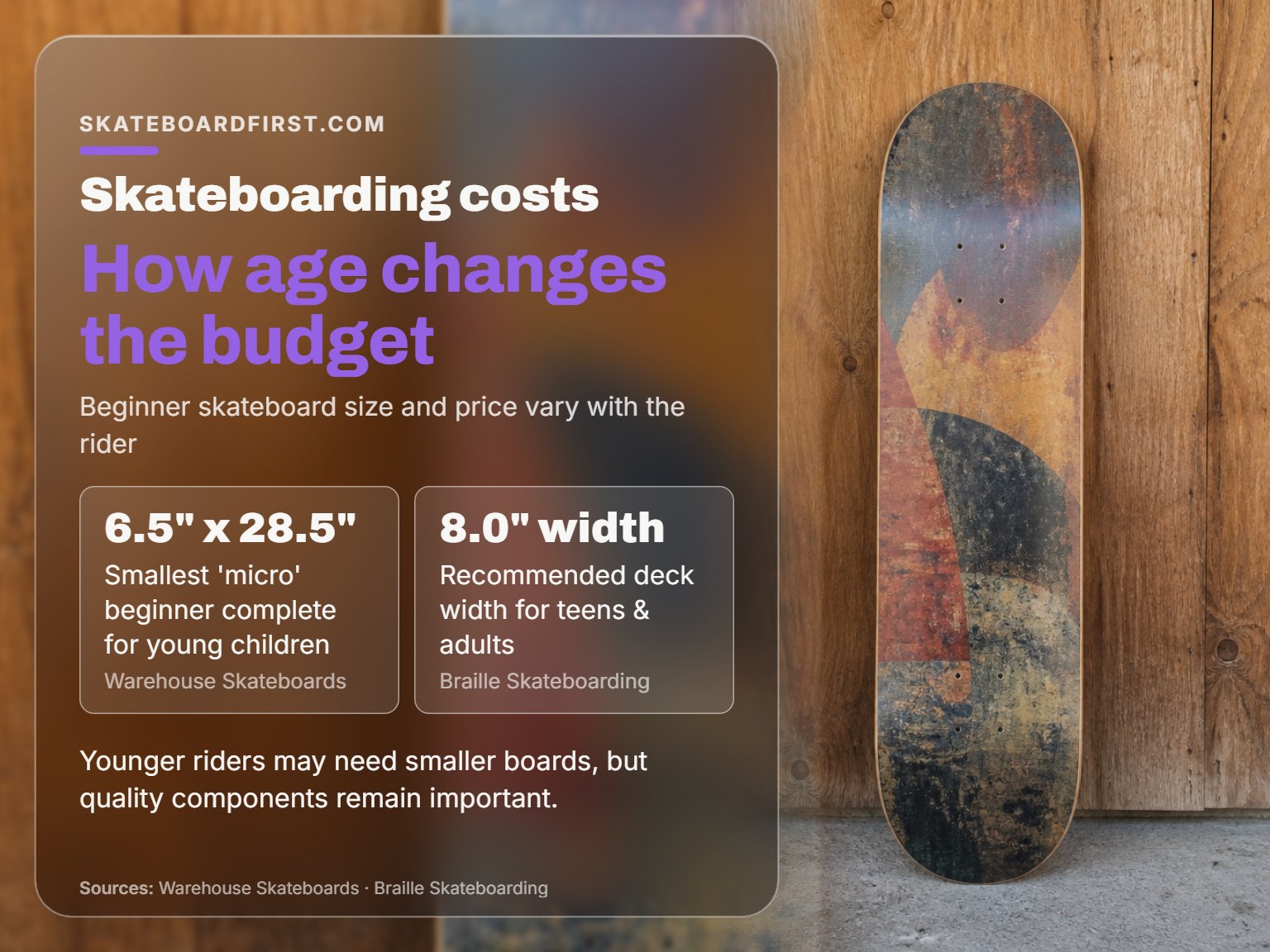
The “perfect” beginner cost isn’t one-size-fits-all. Your age and shoe size change the equation.
- Young Children (Ages 5-9): Smaller, “micro” completes are appropriate. Warehouse Skateboards sells them as small as 6.5″ x 28.5″. A board like the Madd Gear 31″ might work here, but expect to upgrade as they grow and their skills advance. The budget can be lower ($80-$120 all-in), but quality components are still important.
- Teens & Adults: This guide has been aimed at you. The 8.0″ deck width is your sweet spot. Your budget needs to account for a sturdier board and larger-sized protective gear.
- The “Older Beginner” Concern: A frequent “People Also Ask” question is about starting late (Is 27/26 too late?). The answer is no, but your budget should prioritize comfort and stability. Consider a slightly wider deck and softer wheels to make the learning curve less punishing.
Investing in Knowledge: The USSEA Membership
Beyond hardware, consider investing in structured learning. The U.S. Skateboard Education Association (USSEA), a 501(c)(3) non-profit, offers a “Skateboard Basic” membership. For $50 the first year (renewing at $25/year), it includes “Learn to Skate,” “SkateSafe,” and an “Introductory course to teaching skateboarding.”
This is a unique, non-commodity option. For the price of a helmet, you get a curriculum-based approach to the fundamentals, including safety protocols. It won’t replace practice, but it can fast-track your early progress and instill good habits from day one, making your investment in learning to skateboard more efficient.
How much do different types of skateboards cost?
The type of board you choose changes the starting price. A traditional street skateboard, designed for tricks, is the most common starting point. ScooterMcGoo advises budgeting at least $100–$120 for a complete from a real skate brand and defines the ‘sweet spot’ as $100–$150. Cruiser boards, designed for comfortable riding, follow a similar pricing structure for quality completes. Longboards, being larger, often cost more due to more material. Electric skateboards incorporate motors and batteries, placing them in a significantly higher price category altogether. Regardless of type, boards priced under $80 typically use components that can make learning harder.
Does the brand of skateboard affect the price?
Brand reputation has a direct impact on what you pay. A complete beginner board from a generic or toy brand can be found for prices as low as $25 to $45. In contrast, completes from established skate brands are typically priced between $80 and $110. The advice from experienced skaters is to buy from a real skate brand, not a generic listing, as the higher cost reflects better materials and construction that meet performance benchmarks. These brands use materials like hard rock maple for decks, which contributes to a board’s durability and proper feel, making the learning process smoother and safer.
Frequently Asked Questions
How much does a beginner skateboard cost by itself?
Beginner skateboard prices from various brands range widely, from $24.99 to over $150. The Braille Skateboarding “Best Beginner Complete” is priced at $79.99–$109.99. Prices below $80 often indicate compromised components that make learning more difficult and less enjoyable.
Is a $50 skateboard good for beginners?
It’s a significant risk. At the $50 price point, you encounter boards like the Krown Rookie Checker, which has conflicting reviews. While some are marketed to beginners, expert testers and user reports frequently note poor truck performance and slow bearings. This can lead to a frustrating experience that you blame on yourself, not the equipment.
What is the most important protective gear for a beginner?
Certified helmet and wrist guards are the most important. Wrist injuries are the most common injury for beginners learning to fall. A helmet protects against the most severe consequences of a backward fall. These two items should be considered mandatory, not optional.
Should I buy a complete or build my first skateboard?
Buy a complete. Building a custom board requires knowledge of component compatibility (truck width to deck width, wheel size to avoid bite) and almost always costs more for equivalent quality. A pre-assembled complete from a real brand is the most cost-effective and hassle-free way to start.
I’m an adult beginner. Does that change what I should buy?
Yes, slightly. Adults may benefit from a slightly wider deck for more stability and softer wheels for a smoother ride. Your protective gear is essential, as adult bodies heal more slowly. Check out a dedicated guide for adult beginners for more tailored advice.
The Bottom Line
Your total cost to start skateboarding the right way, answering how much does it cost to start skateboarding, is $150 to $250. That gets you a reliable complete skateboard ($80-$150) and essential protective gear ($70-$100). This budget is the difference between a hobby that sticks and a discarded toy.
Commit to this: walk into a local skate shop or an online store with that number in mind. Ask for a beginner complete from a core brand and a certified helmet and wrist guards. It feels like a bigger step than buying a $50 Amazon special, but it’s actually the smaller step—because it’s the one that leads to a second, third, and hundredth push down the road. Start with gear that works with you, not against you, and the only limit is your practice time.
