
Skateboarding for Beginners Guide: Step-by-Step
This post contains affiliate links. As an Amazon Associate, we earn from qualifying purchases.
To start skateboarding, you need a board, a certified helmet, and protective pads. Practice pushing, balancing, and foot-drag stopping on a smooth, flat, traffic-free surface before attempting tricks.
That first-week injury stat from the American Academy of Pediatrics isn’t a scare tactic. It’s the predictable outcome when enthusiasm meets a wobbly toy board and a rough parking lot.
What follows is the gear checklist every official source agrees on, the foundational skills that matter more than an ollie, and a realistic practice sequence for your first month. This cuts through the noise of what looks cool and lands on what keeps you rolling.
Key Takeaways
- Buy a professional complete skateboard from a skate shop, not a toy store; cheap boards have plastic wheels and loose trucks that make learning harder.
- A skateboarding-specific helmet is mandatory, look for Snell B-95 certification or MIPS technology, and ensure it fits snugly with the chin strap fastened.
- Master foot-drag stopping before you try to go fast; this is the skill that prevents collisions and builds real control.
- Start on a smooth, flat, rubberized surface like a playground or empty tennis court, away from traffic, hills, and debris.
- One-third of injuries happen in week one, this is why close supervision for kids and a no-stunts rule for your first sessions matters.
Essential Gear for Beginners
You need five things: a skateboard, a helmet, wrist guards, knee pads, and elbow pads. That list comes straight from a USSEA-certified educator cited by Nike in a skateboarding for beginners guide. This isn’t a suggestion. It’s the minimum viable kit for learning without a trip to urgent care.
First, we’ll examine the board. The CDC says pre-assembled completes are best for beginners. Skateboard GB and Portland Parks & Recreation recommend buying a professional board from a skate retailer and warn against toy boards, but do not specifically endorse pre-assembled completes. Toy boards are made with inferior materials, plastic wheels, weak decks, and will actively fight you as you learn. A shop complete from a brand like Santa Cruz, Element, or Powell Peralta uses proper components: a 7-ply Canadian Maple deck, urethane wheels, and metal trucks. That fifty-dollar difference isn’t about logos; it’s about a board that responds predictably when you shift your weight.
A skateboard helmet should fit snugly all around, with no spaces between the foam or padding and the skateboarder’s head. The front rim should align with the eyebrows, the side straps should form a ‘V’ under the ears, and the chin strap should be tight enough that only one or two fingers fit between it and the chin. Once fastened, the helmet should not move in any direction. . CDC Heads Up Skateboard Helmet Fact Sheet
Helmet certification is where sources offer two good paths. The CDC specifically names the Snell B-95 standard as best for skateboarding. The USSEA, via Nike, often recommends helmets with MIPS (Multi-directional Impact Protection System) technology. Both are valid. The critical point is choosing a skateboarding-specific, hard-shell helmet. High-airflow bicycle helmets do not protect the back of the head and are not suitable.
For pads, wrist guards are singled out as especially important by the CPSC. A fall onto an outstretched hand is the most common reflex, and wrist guards disperse that impact. Knee and elbow pads round out the set. Don’t skip them because they look bulky. A skinned knee at mile one is a great way to end practice for the week.
Basic Skills: Pushing, Turning, Stopping
Forget kickflips. Your only goals for the first several sessions are to move, steer, and stop under control. These are the skills that let you navigate a sidewalk or a park safely. Everything else builds on this foundation.
First, find your stance. Stand with your feet shoulder-width apart and have a friend gently push you from behind. The foot you step forward with to catch your balance is likely your front foot. That’s “regular” (left foot forward) or “goofy” (right foot forward). There’s no right or wrong, only what feels natural. Start with that foot on the board, covering the front two inner bolts.
Where this goes sideways: Trying to push with your front foot. You’ll wobble and lose momentum instantly. Your front foot stays on the board to steer; your back foot does the pushing.
Here’s the sequence for a basic push:
- Place your front foot on the board, angled slightly forward (around 30 degrees).
- Lean your weight onto that front foot and bend your knee.
- Use your back foot to push against the ground, think of taking a walking step.
- After the push, lift your back foot and place it on the tail of the board, perpendicular to the deck.
- Roll. To push again, pivot your back foot off the tail and repeat.
Turning comes from shifting your weight, not twisting your torso. To make a gentle carve, lean slightly onto your toes or heels. For a sharper kick-turn, you’ll need to lift the front wheels by pressing down on the tail, but save that for after you’re comfortable rolling.
Stopping is the most important skill you’ll learn. The safest method for beginners is the foot drag.
- As you roll slowly, shift your weight to your front foot.
- Carefully lower your back foot to the ground, letting the sole of your shoe drag lightly on the pavement.
- Increase pressure gradually to slow down. Don’t stomp down; that’s how you trip.
I spent my first week trying to ollie and bailed about thirty times. The skill that actually kept me upright was foot-drag stopping, which I only practiced after a scary roll toward a parking lot curb. A useful drill is to push to a slow speed, then practice the foot drag to stop.
Where and How to Practice
Your environment is your first safety gear. The CPSC says to inspect your terrain for holes, bumps, rocks, and debris. A Nike guide, citing an educator, recommends starting on a playground with a rubber surface near grass because it’s level, slow, and more forgiving than concrete. That’s the ideal: a smooth, flat, rubberized area away from traffic, slopes, and pedestrians.
| Practice Surface | Best For | Risk If Skipped |
|---|---|---|
| Empty Tennis/Basketball Court | Smooth, predictable, enclosed space. | Debris on asphalt can stick wheels and cause forward falls. |
| School Playground (Rubber) | Forgiving on falls, often level. | May be crowded; avoid times with lots of kids. |
| Parking Lot (Freshly Paved) | Large, open area for long pushes. | Watch for curbs, traffic, and loose gravel. |
| Driveway (Slight Incline) | Learning to control speed. | Can accelerate too quickly for a true beginner. |
Never skate alone, per the CPSC. Bring a friend, or if you’re a child, ensure an adult is closely supervising. Children under 5 should not ride skateboards at all, and those aged 6 to 10 need direct adult oversight. This isn’t helicopter parenting; it’s because accidents happen, and having someone there to call for help is basic risk management.
A structured beginner skateboarding practice routine beats random sessions. Your first five outings should follow a simple pattern: 5 minutes of just standing on the board on grass to find balance, 15 minutes of pushing and foot-drag stopping in a straight line, and 5 minutes of practicing stepping off safely. That’s it. Incremental, repeatable progress builds the muscle memory and confidence you can’t rush.
Choosing Your First Skateboard Setup
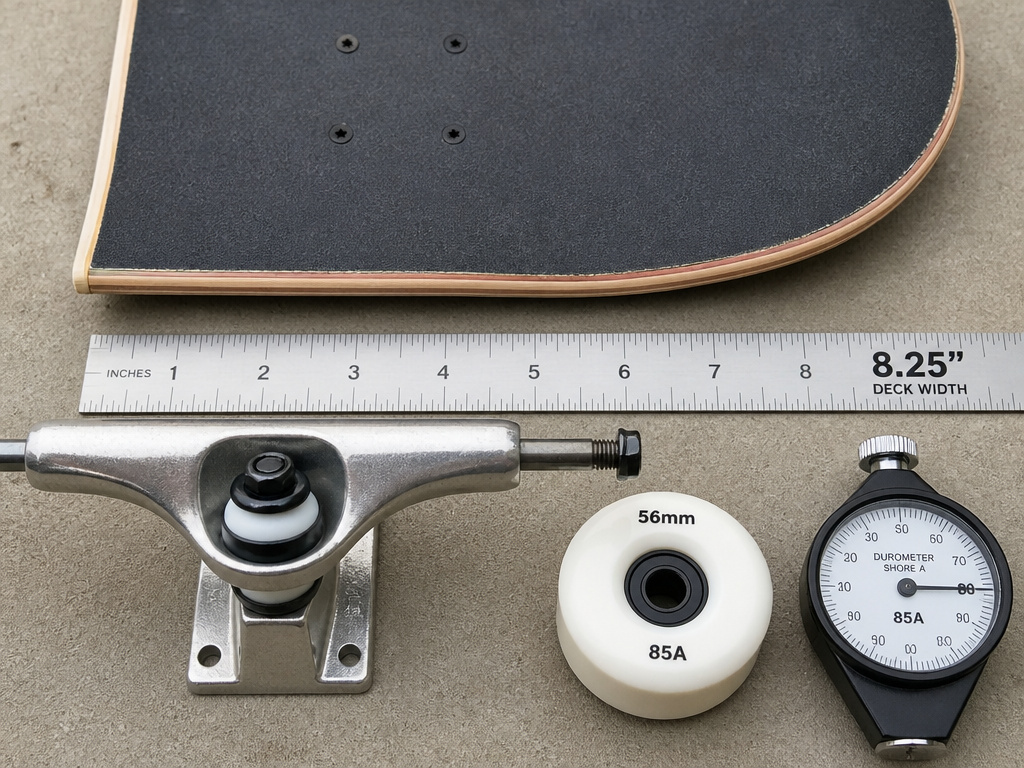
We’ve covered why a shop complete is the best first board. Next, we’ll review the specs that make a board good for beginners, so you can talk to a shop employee or understand an online product page.
Sources disagree on the typical width range: SkateboardGB states 7.5″ to 9.5″, while evo states 7.5″ to 8.5″ for standard decks. A wider deck (over 8.0″) offers more stability for cruising; a narrower deck (under 8.0″) is lighter and easier to flip for tricks later on. A wider deck offers more stability, which can be helpful for beginners. The right deck depends on your goals; stability is key for beginners.
Trucks are the metal axles. For beginners, low trucks are recommended because they lower the board’s center of gravity, making it feel more stable and less tippy. They also pair well with smaller wheels to prevent “wheel bite” (when the wheel touches the deck during a turn, throwing you off).
Wheels are measured in millimeters (mm) and hardness (durometer, rated on the ‘A’ scale). Beginners should look for wheels in the 54-58 mm range. This is a versatile size that handles minor pavement cracks but isn’t too heavy. For hardness, softer wheels (under 88a) are great for rough surfaces and provide a smoother ride. Softer wheels absorb vibrations from rough ground, making for a smoother, more comfortable ride while you learn to balance. Save harder wheels designed for smooth skate parks and tricks for later.
| Component | Beginner-Friendly Spec | Why It Works |
|---|---|---|
| Deck Width | 8.0″ – 8.5″ | Balances stability for learning with room for future trick progression. |
| Truck Height | Low | Lowers center of gravity, increases stability, reduces wheel bite risk. |
| Wheel Diameter | 54-58 mm | Rolls over cracks easily, versatile for street or park later. |
| Wheel Hardness | 78a – 87a (Soft) | Absorbs vibrations from rough pavement, provides a smoother, more controlled ride. |
| Bearings | ABEC 3-5 or “Shop” brand | Reliable speed without the high-maintenance or cost of racing bearings. |
Bearings (two per wheel, eight total) keep things spinning. You don’t need the fastest, most expensive bearings; a reliable mid-range set is perfectly fine. The Portland Parks guide stresses keeping bearings clean and dry, dirty or rusty bearings won’t roll properly and will make pushing feel like dragging an anchor.
When you’re choosing your first skateboard, these specs give you a concrete checklist. Walk into a shop and ask for a complete with a deck width in the stable middle range, low trucks, and medium-sized soft wheels.
Safety Rules Beyond the Gear
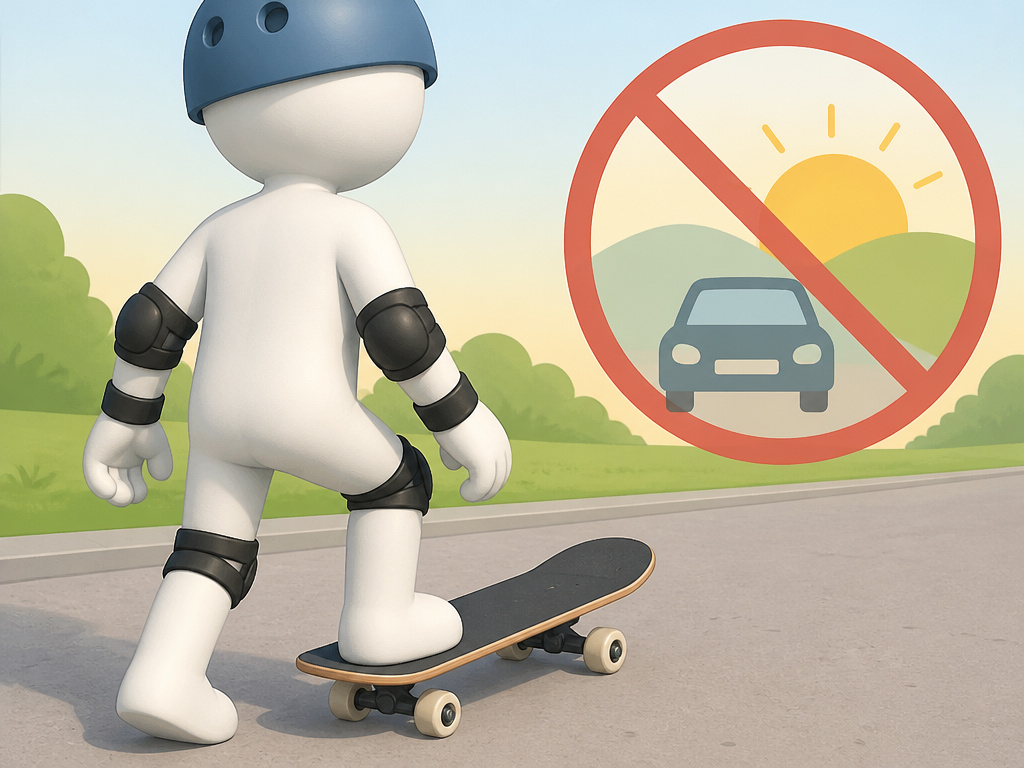
Gear is your last line of defense. Your first line is your behavior. The CPSC skateboarding safety fact sheet lays out essential rules that prevent the most severe accidents.
First, stay clear of traffic. Never skate in the street or a driveway where cars might be moving. Never hitch a ride on a moving vehicle (“skitching”). These collisions are among the most common and severe.
Second, control your speed. Don’t ride faster than you can handle. You can lose control at any speed. If you feel unstable, step off and walk it out. The CPSC also warns against lying down on a moving skateboard, it’s a surefire way to lose control and get hurt.
Third, ride during the day. Avoid dusk, dawn, or night skating where you can’t see obstacles or be seen by others. Your vision and reaction time are simply worse in low light.
Fourth, no substances. Don’t drink and ride. Alcohol and drugs drastically reduce your ability to control the board and react to surprises. This should be obvious, but it’s stated for a reason.
Finally, know the unique danger of electric skateboards. In September 2023, all models of Onewheel electric skateboards were recalled after four deaths. The cause: the boards could stop balancing the rider if their operational limits were exceeded. This is a catastrophic failure mode traditional skateboards don’t have. If you’re considering an electric board, this recall is a critical part of your electric skateboard safety research.
Common Beginner Mistakes and Fixes
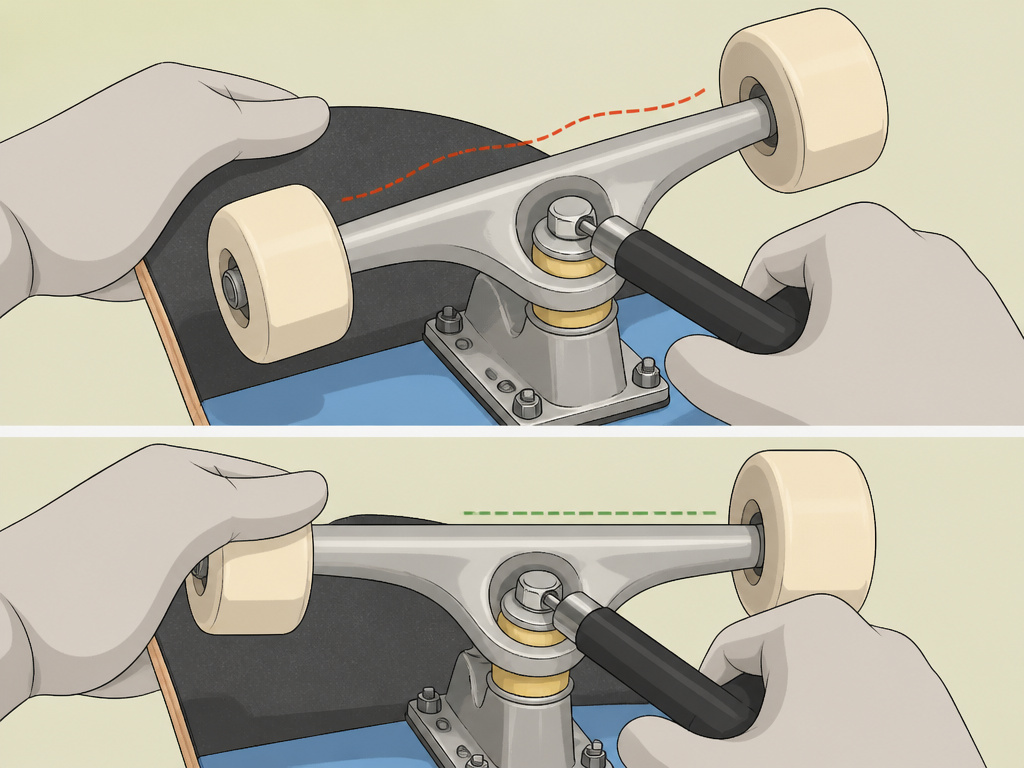
Everyone makes mistakes. Knowing the common ones helps you avoid weeks of frustration. Here are the big three I see all the time, and how to fix them today.
Mistake 1: Loose Trucks. New boards often come with trucks too loose from the factory. This makes the board feel uncontrollably wobbly.
- Fix: Tighten the kingpin nut (the large nut in the center of the truck) until there’s slight resistance when you lean the board with your hands. It should turn, but not flop over easily. The CPSC notes that keeping trucks tightened properly improves stability at higher speeds.
Mistake 2: Wrong Foot Placement. Riders put their front foot straight across the board or too far back, killing their ability to steer or push effectively.
- Fix: Your front foot should be near the front bolts, angled at about 30-45 degrees. This gives you a stable platform to push from and pivot on. Your back foot, when pushing, should be placed squarely on the ground, not angled.
Mistake 3: Trying to Progress Too Fast. The urge to ollie or hit a ramp before you can stop confidently is strong. This is how most first-week injuries happen.
- Fix: Adopt a “mastery before movement” rule. Don’t attempt a hill until you can foot-drag stop consistently on flat ground. Don’t try an ollie until you can ride comfortably and make basic kick-turns. This structured approach is the core of successfully teaching yourself skateboarding.
The part nobody mentions: A brand-new, high-quality board can feel slippery and unpredictable for the first few rides. The glossy finish on the grip tape needs to be worn in a bit. Don’t assume you’ve made a bad purchase after one shaky session. Give it a few hours of practice.
Maintaining Your First Board
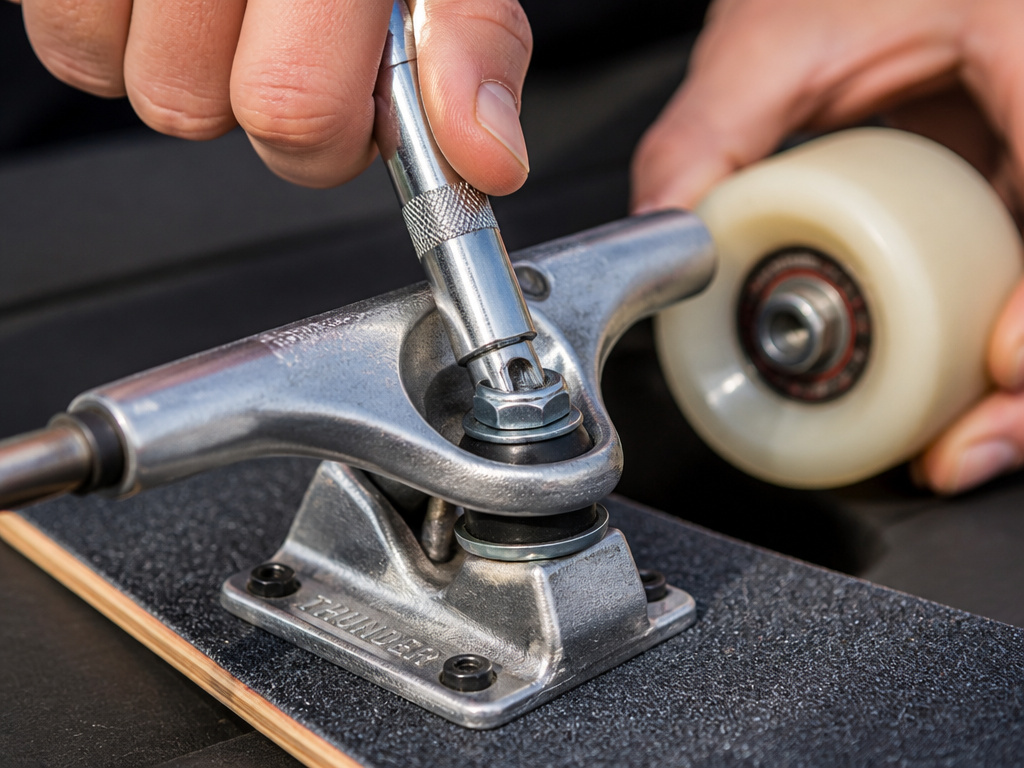
A skateboard is a simple machine, but it needs basic care. The Portland Parks guide warns that skateboards, made of wood, can warp or delaminate if stored in damp conditions or direct sunlight. Keep it inside, in a dry place.
Before every session, do a quick pre-ride check, as the CDC recommends:
- Trucks: Make sure they are tightened and not rattling.
- Wheels: Spin each one. They should spin freely for a few seconds. If a wheel stops almost immediately, the axle nut might be too tight, or the bearings might be dirty.
- Hardware: Check the eight bolts that hold the trucks to the deck. Give them a twist with a skate tool to ensure none are loose.
Cleaning your bearings every few months if you skate regularly will keep your rolls smooth. Pop the bearings out of the wheels, wipe off grit with a dry cloth, and add a drop of skate-specific bearing lubricant. Avoid getting them soaked in water. This simple skateboard maintenance will extend the life of your setup dramatically.
First tricks or maneuvers (e.g., manual, hippy jump)
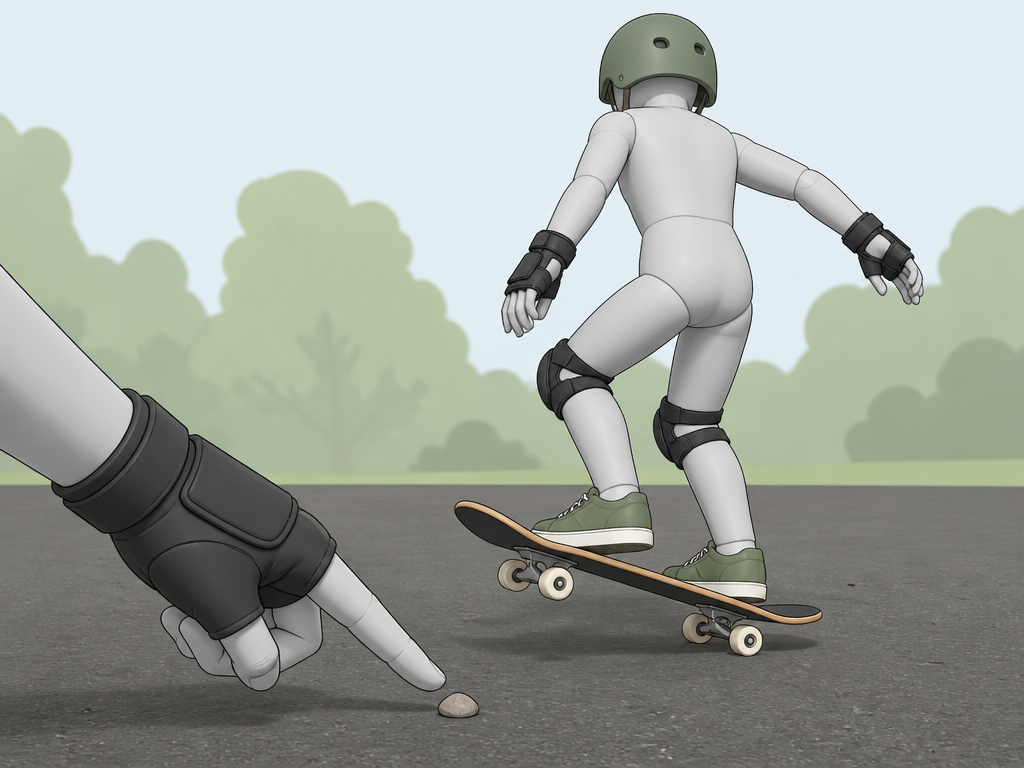
Before attempting any tricks, you must be completely comfortable riding, pushing, and turning. A certified coach or skateboard professional is considered a new boarder’s best bet for learning safely. Start on a smooth, flat surface and inspect the terrain for holes, bumps, rocks, and debris. Always wear your full protective gear, as one-third of skateboard injuries happen in the first week.
Frequently Asked Questions
What is the best way to learn skateboarding for beginners?
The best way is to start with proper gear, find a smooth, flat, traffic-free practice area, and focus exclusively on pushing, balancing, turning, and stopping. Enlisting a certified coach is ideal, but self-teaching is viable if you follow a structured, patient approach that prioritizes safety and control over tricks.
What do I need as a beginner skateboarder?
You need five essential items: a complete skateboard from a skate shop, a certified skateboarding helmet (Snell B-95 or MIPS), wrist guards, knee pads, and elbow pads. This kit, recommended by the USSEA and CPSC, addresses the most common injury points for new skaters.
Is 27 too late to start skateboarding?
No, 27 is not too late. Adults often learn faster due to better focus and patience. The key is to manage expectations, your body may be less resilient to falls, so wearing full protective gear and progressing slowly is even more critical. The fundamentals of balance and coordination can be learned at any age.
Can I learn skateboarding by myself?
Yes, you can learn by yourself with the right resources and discipline. Success depends on choosing the right beginner-friendly gear, finding a safe practice spot, and following a progressive plan that masters basic riding and stopping before introducing any tricks or complex maneuvers. Many skaters are self-taught.
How hard is skateboarding to learn?
Skateboarding has a steep initial learning curve. The skateboarding learning curve is steepest in the first 10-15 hours as you develop the unique balance and muscle memory for pushing and riding. After that initial hump, consistent practice leads to noticeable improvement. It’s more challenging than riding a bike but follows the same principle of gradual, consistent exposure.
The Bottom Line
Start with a real board from a real skate shop. Strap on every piece of protective gear, especially the helmet. Find an empty, smooth lot and spend your first five sessions doing nothing but pushing, rolling, and stopping. The moment your foot-drag brings you to a halt without a panic jump is the moment you’ve gained real control.
That control is what makes everything else possible. It’s what allows you to later decide between skatepark or street skating with confidence. It’s what turns a scary fear of skateboarding into a manageable challenge. And it’s built one slow, deliberate push at a time. Keep rolling.
