
How to Cross Step on a Longboard: From Setup to Combos
This post contains affiliate links. As an Amazon Associate, we earn from qualifying purchases.
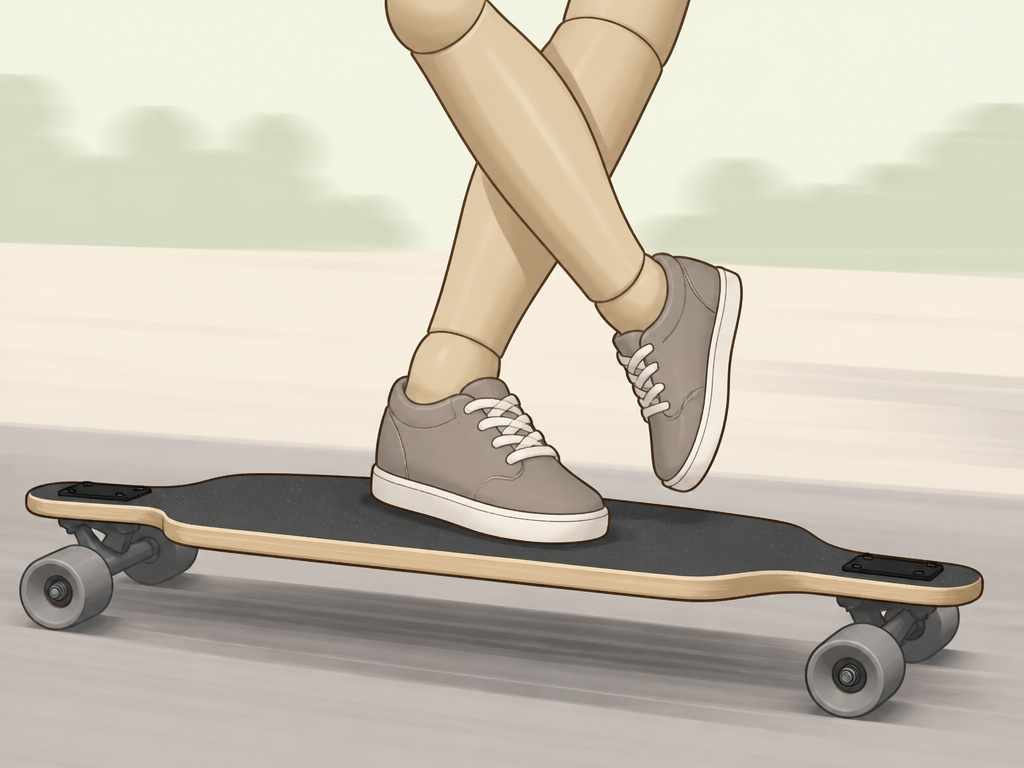
To cross step on a longboard, you shift your weight to your back foot, step your front foot across and in front of it, transfer your weight forward, and then bring your rear foot up to a normal stance. The key is smooth weight transfer and maintaining momentum, practicing at a speed a little more than walking pace aids stability.
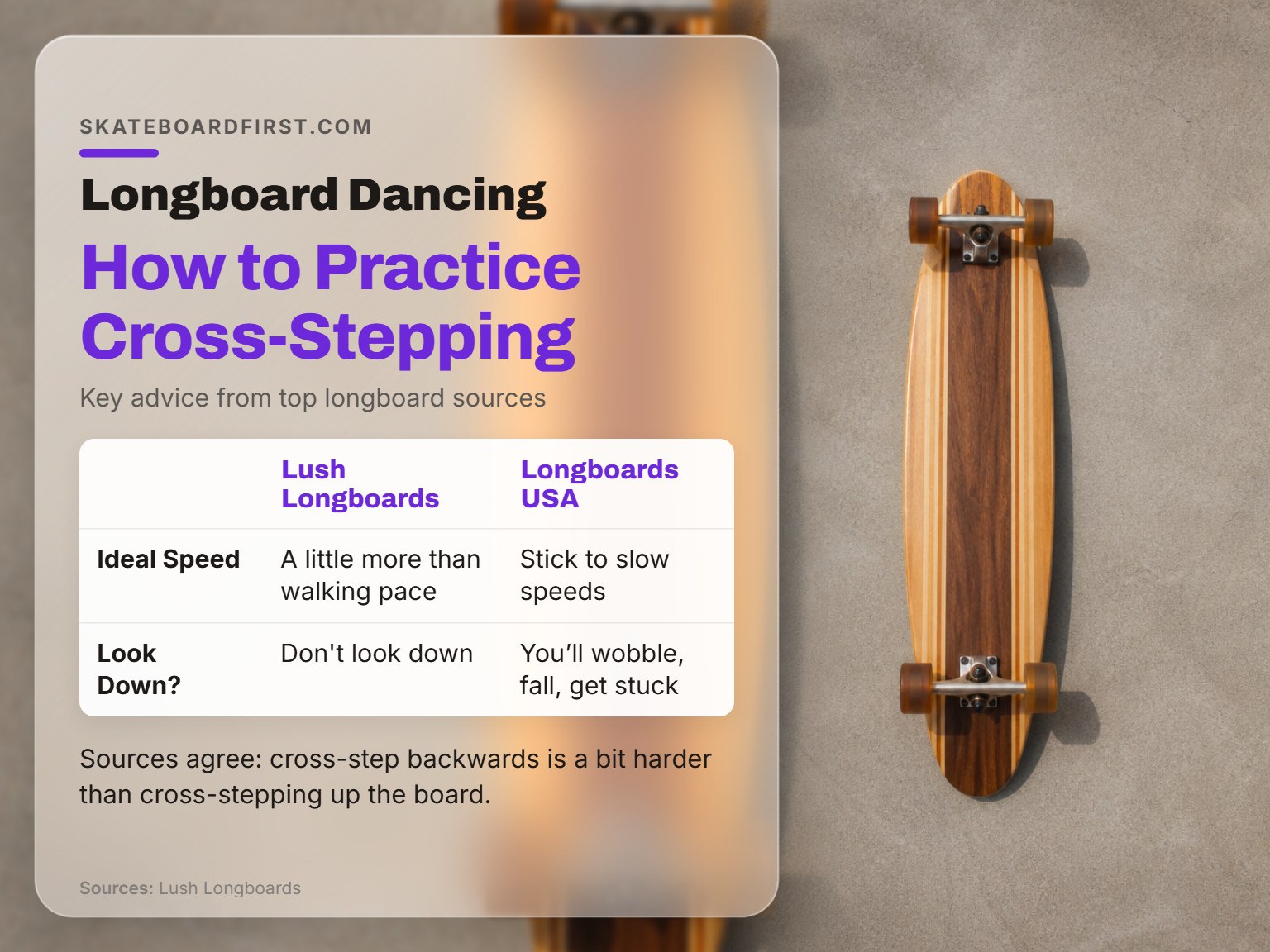
The mechanics are simple, but the feel is everything. That smooth transfer is what separates a controlled walk up the board from a wobbly stumble that kills your speed. Learning how to cross step on a longboard is key. Lush Longboards advises practicing at a speed a little more than walking pace, while Longboards USA recommends sticking to slow speeds until balancing feels natural.
What follows is a walkthrough of the four-step sequence, the gear that makes it click, and the two most common speed debates you’ll hear at the park. By the end, you’ll know how to practice it, what to do when it feels wrong, and how to link it into a full longboard dancing routine.
Key Takeaways
- Practice at a speed a little more than walking pace; too slow can be harder to balance on.
- Transfer weight smoothly before moving your foot, stepping with your weight in the wrong place guarantees a wobble.
- Mongo pushers struggle with the first step because they’re less comfortable balancing on their front foot; extra practice there is essential.
- Use a flexible dancing longboard with soft wheels (78A durometer or softer); a stiff cruiser or a short board makes the footwork needlessly hard.
- Looking down at your feet throws off your balance; train yourself to feel the board under you instead.
What Cross-Stepping Actually Is (And Why You’d Bother)
Cross-stepping is the foundational footwork for longboard dancing. It’s the controlled walk up and down the length of your board while it’s rolling. Unlike shuffling, where you slide your feet without crossing, the cross-step has you step one foot directly in front of the other, which looks smoother and, when done right, maintains your speed and trim better.
Why learn it? First, it’s the gateway to every other dance move. You can’t do a Peter Pan or link steps into a combo without a solid cross-step. Second, it trains balance on each foot independently, which is the real secret to board control. Skating comfortably and confidently on either foot is the key to a lot of longboard footwork. If you only feel solid on your pushing foot, your trick vocabulary hits a ceiling early.
The cross-step isn’t just walking. It’s a continuous, fluid weight transfer that keeps the board stable under you. If you do it right, the board doesn’t wobble or slow down; it just carries you forward.
The Prerequisites: What You Need Before Your First Step
You wouldn’t learn to cook on a broken stove. Don’t learn to cross-step on the wrong board.
Your Board: You need a dancing longboard. According to Longboards USA, these are longer, flexier, and have kicktails. A stiff pintail or a short cruiser doesn’t have the real estate or give for comfortable footwork. For beginners, the Dusters Wanderlust 47“ is often recommended as a stable, flexible option. If you’re choosing a dancing longboard, length and flex matter more than graphics.
Your Skills: Be utterly bored with the basics. You must be able to push, cruise, and carve without thinking about it. Longboards USA advises getting used to pushing and carving before cross-stepping. If you’re still working on how to ride a longboard, master that first. Balancing on a moving board needs to feel natural before you complicate it.
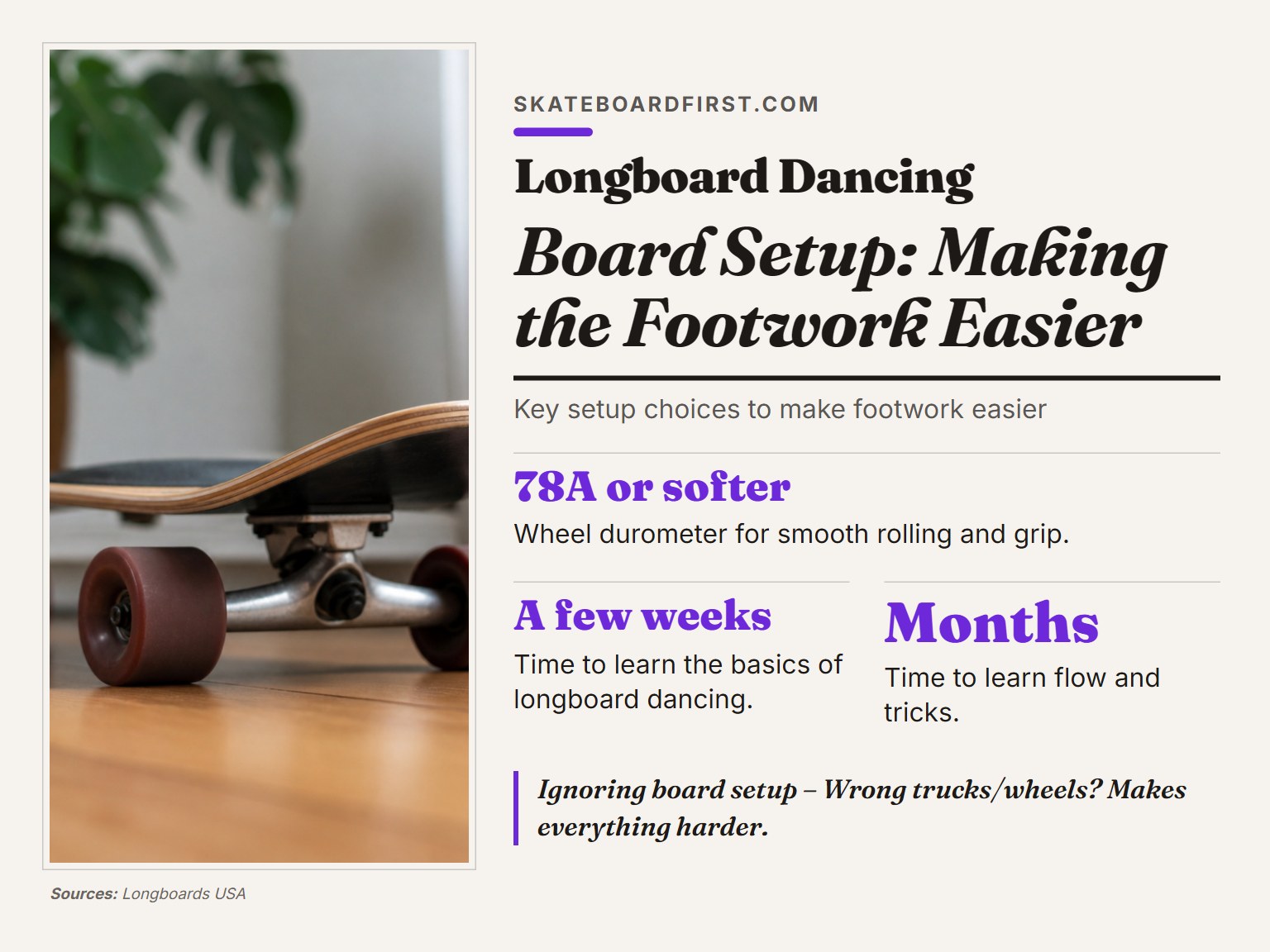
Your Setup: This isn’t optional. Soft wheels (78A durometer or softer) provide the smooth, quiet roll you need. Loose trucks, like those from Paris Trucks, allow for deeper, more responsive carving, which is part of the dance flow. Ignoring board setup makes everything harder.
The Cross-Step Sequence: A 4-Step Breakdown
Here’s the move, broken down. Practice this sequence on a smooth, flat surface with a gentle roll.
Step 1: Set Your Stance and Shift Weight.
Start in your normal cruising stance, feet shoulder-width apart. Gently shift most of your weight onto your back foot. You should feel the board stabilize under that foot. This is the preparation, the board isn’t turning, and you’re not leaning.
Step 2: Cross Your Front Foot Over.
Lift your now-unweighted front foot and step it across your body, placing it down in front of your back foot. Your legs will be crossed. The goal is to put that foot down gently on the board’s centerline. Lush Longboards advises training yourself not to look down, while Longboards USA warns that looking down causes wobbles and falls. This is the “cross” in cross-step.
Step 3: Transfer Weight and Uncross.
This is the critical moment. Smoothly transfer your weight from your back foot onto the new front foot (which is now in front). As you feel that foot take the load, lift your now-unweighted back foot and bring it forward, uncrossing your legs and placing it into a normal, comfortable stance ahead of the other foot. You’ve now “walked” one step up the board.
Step 4: Repeat or Reset.
You’re in a new stance, but your leading foot has changed. To take another step, you’ll repeat the process: weight on the new back foot, cross the new front foot over, transfer, and uncross. To walk back down (backpedaling), you reverse the sequence.
| Step | Key Action | What Happens If You Skip It |
|---|---|---|
| 1. Weight Shift | Move weight to back foot before stepping. | Stepping with weight evenly distributed makes the board wobble violently as you lift a loaded foot. |
| 2. Cross Step | Place front foot across and in front of back foot. | You’ll just be shuffling your feet side-to-side, which looks choppy and kills momentum. |
| 3. Weight Transfer | Shift weight to the new front foot before lifting the back foot. | You’ll try to move both feet at once and likely step off the board or fall. |
| 4. Uncross & Step | Bring back foot forward to a normal stance. | You’ll be stuck in a crossed-leg position, unstable and unable to take the next step. |
The Speed Debate: Slow Roll vs. Walking Pace
You’ll find two schools of thought, and both are technically right for different reasons.
Lush Longboards advises a speed a little more than walking pace. Their reasoning: cross-stepping can actually be harder at very low speeds. A bit of momentum in the board aids stability, just like riding a bicycle. The board wants to stay upright when it’s rolling.
Longboards USA and other guides say to stick to slow speeds until balancing on a moving board feels natural. This is the safe, foundational approach. It minimizes the consequence of a fall while you’re building the muscle memory.
So, which do you follow? Start with the Longboards USA method. Get the motion down at a slow crawl in a parking lot. Once you can do three cross-steps without stopping or wobbling, gently increase your push. You’ll likely feel what Lush describes, the board feels more planted, and the weight transfer becomes easier with a little momentum. Let your comfort be the guide, not a strict speedometer.
Common Cross-Step Mistakes (And How to Fix Them)
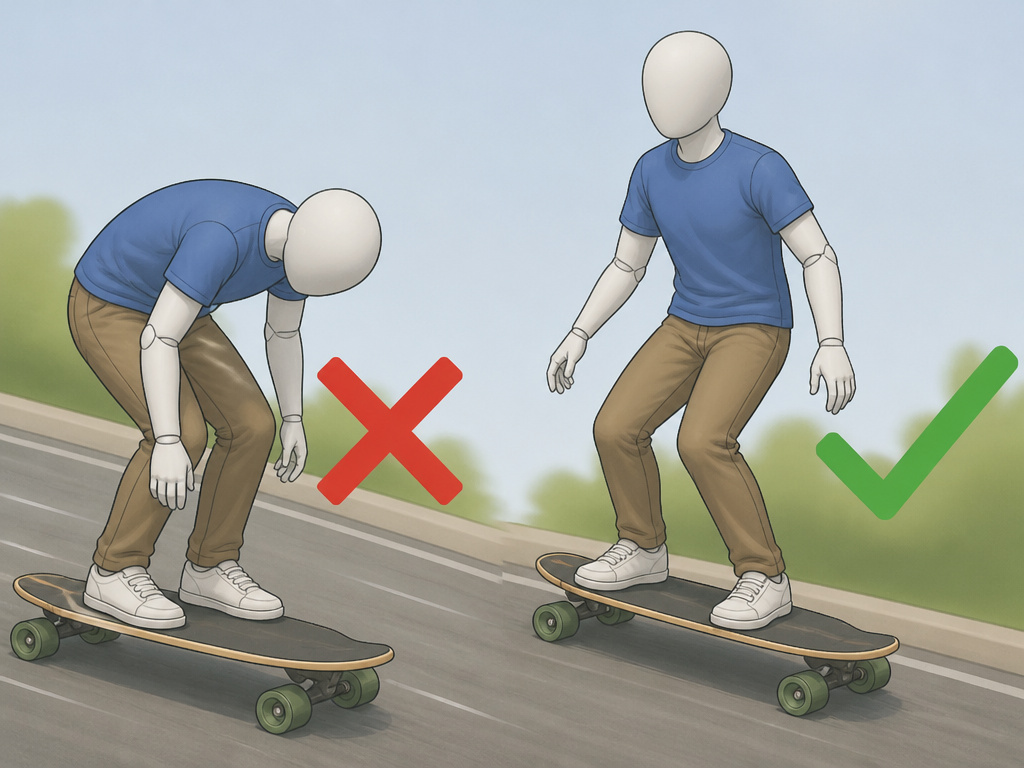
Where this goes sideways: Looking down at your feet. Your head goes down, your shoulders hunch, and your center of gravity shifts. You’ll wobble, fall, and get stuck.
Mistake 1: Stepping Too Fast.
You rush the footwork before the weight transfer is complete. The board bucks because you’re fighting it.
- Fix: Footwork is about smoothness, not speed. Say “shift, step, transfer, step” out loud as you do it. Force a slow rhythm.
Mistake 2: The Mongo-Pusher Hurdle.
If you push mongo (with your front foot), the first part of the cross-step is your nemesis. That initial weight shift requires balancing on your less-confident front foot.
- Fix: Isolate the problem. Practice just rolling on your front foot. Then practice shifting weight onto it and holding it. Don’t even step until that feels solid.
Mistake 3: Stiff Ankles and Hips.
You look like a robot trying to dance. This comes from fear of falling, which tenses up your whole body.
- Fix: Bend your knees more than you think you need to. Loose joints absorb the board’s micro-movements. Stay relaxed from the hips down.
From Cross-Step to Combo: Linking Moves
A single cross-step is a victory. A linked series is where the dance begins.
Backpedaling: Once you can walk up the board, you need to walk back. Cross-step backwards is a bit harder than cross-stepping up the board. It’s the same sequence in reverse: weight on front foot, cross back foot behind, transfer weight back, bring front foot back. It feels awkward because you’re moving against your direction of travel.
The Ghost Ride: This is a fantastic next-step combo. After a few cross-steps toward the nose, simply jump off the board to the side, let it roll forward for a second, and then step back onto the tail. It looks slick and teaches you board awareness.
Peter Pan: The goal. This is cross-stepping continuously without resetting your feet to a neutral stance. You become a walking metronome, ticking up and down the deck. You’re not ready for this until you can do multiple clean forward cross-steps and backpedals without thinking.
Board Setup: Making the Footwork Easier
You can fight your board, or you can let it help you. For dancing, you want help.
| Component | Ideal Spec for Dancing | Why It Matters for Cross-Stepping |
|---|---|---|
| Deck Length | 44″ and up | Provides the physical space to walk multiple steps. A dancing longboard is defined by this. |
| Deck Flex | Medium to Soft | Absorbs impact and provides a lively, responsive feel underfoot, aiding fluid motion. |
| Wheel Durometer | 78A or softer (e.g., Shark Wheels) | Softer wheels grip better and roll smoothly over pavement cracks, preventing stutters that break your flow. |
| Truck Tightness | Loose (e.g., Paris Trucks) | Loose trucks enable deeper, more fluid carves, which you use to maintain speed and rhythm between steps. |
If your board is a stiff, narrow cruiser, you’re trying to waltz in work boots. The right gear removes a major point of friction.
When to Cross-Step on a Longboard
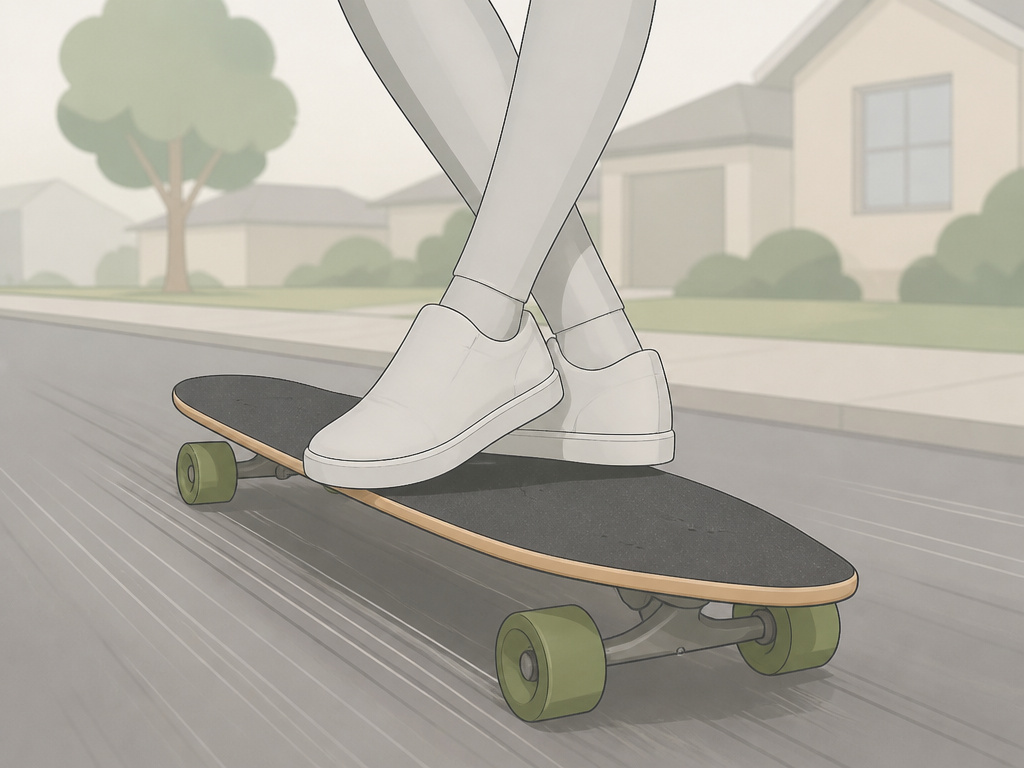
You need a bit of momentum to execute how to cross step on a longboard smoothly. Begin practicing at a speed a little more than walking pace, as cross-stepping can be harder at very low speeds. That small amount of forward motion aids your stability, making it easier to shift your weight and step. Before you even attempt the steps, get used to pushing and carving on your board. Stick to slower speeds until simply balancing on the moving deck feels completely natural. Once you can ride comfortably without thinking, you’ll have the stable platform needed to start walking.
Frequently Asked Questions
How long does it take to learn to cross-step?
The basics take a few weeks of consistent practice. Getting a smooth, linked flow where you’re not thinking about each step takes months. Don’t rush the timeline. The muscle memory for balance is slow to build but lasts.
Can I learn to cross-step on a regular skateboard?
Technically yes, but it’s harder. Longboards give you more space. A standard skateboard deck is so short that you have almost no margin for error in foot placement. You’ll spend most of your time trying not to step off, which isn’t the point.
I keep nosediving when I step forward. What am I doing wrong?
You’re putting your weight too far forward, too fast. You’re probably also stepping too far toward the nose. Focus on the weight transfer over the foot, not in front of it. Practice the weight shift while stationary, feeling the board tip slightly but not slam down.
What’s the difference between cross-stepping and shuffling?
Shuffling is sliding your feet up and down the board without crossing them. It’s functional but choppy, and it often causes a slight bounce that can slow you down. Cross-stepping is smoother, looks better, and, when mastered, is more stable because you always have one foot planted in a stable stance.
Do I need special shoes?
Not really. Any flat-soled skate shoe works. The bigger factor is board traction. If your deck is too slick, add grip tape. If it’s too grippy (like soft foam), it can catch your shoe during the cross. A standard sandpaper grip is the safe starting point.
The Bottom Line
The one rule most guides skip: if you can’t hold your weight on one foot while rolling, you’re not ready to cross-step. That single-leg balance is the entire foundation.
Before you head out, set your board up right, loose trucks, soft wheels, a deck long enough to walk on. Then, in an empty lot, spend your first session just pushing to a slow roll and shifting your weight from foot to foot. Don’t even try to step across. When that feels boring and easy, the cross-step will be waiting for you, and it’ll feel like the next natural step, not a magic trick.
Your first move after mastering the basic cross-step? Link it with a simple carve. Push, get a little speed, initiate a gentle turn on a longboard, and as you come out of the turn, take that first cross-step. That’s where the dance really begins.
