
How to Rock to Fakie on a Skateboard: Step-by-Step
This post contains affiliate links. As an Amazon Associate, we earn from qualifying purchases.
To rock to fakie on a skateboard, ride straight up a transition with enough speed to clear the coping, let your front truck roll over and the deck rest on it, pause with your weight centered, then press the tail to lift the nose back over the coping and roll down the ramp backward (fakie). The front truck must clear the coping on both the way up and the way down to avoid a dangerous “hang-up.”
That hang-up is the trick’s real test. It’s the sound of plastic grinding on metal, the board stopping dead, and you pitching forward down the ramp. The difference between a clean rock and a slam comes down to three things: speed, board placement, and when you decide to come back in. Mastering these elements is the key to learning how to rock to fakie on a skateboard.
What follows is the full breakdown, the step-by-step sequence drawn from coach manuals, the specific drills that build muscle memory without the ramp, and a clear look at the two ways experts disagree on how you should lean. By the end, you’ll know how to practice safely, spot the mistakes before they happen, and have a clear path from your first tentative touch to mastering how to rock to fakie on a skateboard.
Key Takeaways
- Approach straight up the ramp, not at an angle, to keep the board square over the coping.
- Sources disagree on how the board should contact the coping: Skate Labs says to set the middle of your board on the coping, while LandTheTrick says to let the front truck roll over and the deck rest on it.
- Press the tail clearly to lift the front truck back over; hesitating here causes a hang-up.
- Trick Dojo recommends learning on a small mini ramp with round, smooth coping, as metal coping that sticks out far or is chipped will catch your trucks.
- Wear a helmet, and knee pads are a great idea while you learn. Learn the knee slide bail; most falls send you forward onto the transition.
The Step-by-Step Rock to Fakie Sequence
Follow these steps in order. Skipping ahead to get the “rock” feeling is how people get hung up.
The Technical Sequence: Ride straight up the transition with enough speed to clear the coping. As your front wheels reach the top, lift them slightly and set the middle of your board on the coping. Pause for a moment with your weight centered. Lift your front wheels back up over the coping by pressing the tail slightly. Ride back down fakie with your weight centered and your knees soft.
Step 1: Generate Speed and Approach Straight On. You need enough momentum to carry your front truck completely over the coping. A weak approach means the truck won’t clear it, and the deck can’t rock properly. Pump a few times on a small mini ramp to build speed. Your approach should be perpendicular to the coping, straight up the wall. This keeps the board aligned for a clean rock and sets you up for a straight roll back down.
Step 2: Lift the Front Truck and Set the Rock. As your front wheels meet the coping, lift them just enough for the truck to roll over. Let the deck rest on the coping itself. Your back wheels should stay on the curved transition, not touch the coping. This is the “rock” position: the middle of your board is balanced on the metal lip.
Step 3: Pause and Settle Your Weight. This is the moment most beginners rush. Let the board settle. Your weight should be centered directly over the board, knees bent, shoulders square to the ramp. This pause is control. It’s where you feel the balance point before committing to the return.
Step 4: Press the Tail to Return. To come back in, press down on the tail. This lifts the front truck back up and over the coping. The cue is “nose up early.” You must initiate this lift before gravity starts pulling you back down. If you wait until you’re already moving backward, the front truck will catch.
Step 5: Roll Down Fakie. Once the front truck is clear, let the board roll back down the transition. Keep your weight centered, look down the ramp where you’re going, and bend your knees to absorb the curve. You are now riding fakie. Pump into the opposite wall to keep your flow.
Gear Up and Choose Your Battlefield
A rock to fakie is a partnership between you, your board, and the ramp. Getting the gear and terrain right removes variables.
Essential Safety Gear. Wear a helmet. Knee pads are a great idea while you learn. When a rock to fakie goes wrong, you usually fall forward onto the ramp. Knee pads let you slide down instead of landing hard on your knees. Learn the knee slide bail: if you feel the hang-up, drop to your knee pads and slide down the transition. It beats a face-full of plywood.
The Right Ramp to Learn On. Start on a small mini ramp with round, smooth coping. The Skate Labs field guide and Trick Dojo both stress this. Metal coping that sticks out far or is chipped will catch your trucks. A quarter pipe with no coping is also a terrible teacher, you can’t learn the hang-up consequence. Find a well-maintained park with a small mini ramp.
Board Setup Considerations. While any skateboard can rock to fakie, a stable deck width offers a stable platform. Make sure your trucks are tight enough that you don’t get wheel-bite when the deck angles on the coping, but not so tight you can’t steer your approach. This isn’t about buying new gear; it’s about checking your current setup isn’t working against you.
Common Mistakes and How to Fix Them
Everyone makes these errors. Recognizing these feelings allows you to adjust while you’re still trying.
| Mistake | What Happens | The Fix |
|---|---|---|
| Insufficient speed | The front truck doesn’t clear the coping, preventing a clean rock. | Pump more before the approach. Carry enough speed that the front truck clears the coping on its own. |
| Approaching at an angle | The board rocks sideways, twisting your shoulders and making the roll-away unstable. | Go straight up the ramp so the board rocks square over the coping. |
| Looking down at your feet | Your shoulders hunch forward, shifting your weight off the board and causing a slip-out. | Look back down the ramp so your shoulders stay over the board. |
| Late nose lift on the return | The front truck catches the coping (the “hang-up”), stopping the board and throwing you forward. | Press the tail clearly and wait until the truck is free. Think “nose up early.” |
| Leaning back away from the ramp | As you roll down fakie, leaning back makes the board shoot out from under you. | Lean into the ramp on the way back down, not away from it. |
Where this goes sideways: Rushing the pause at the top. If you don’t let the board settle on the coping, your weight won’t be centered when you need to press the tail. The result is a wobbly, panicked return that often ends in a hang-up. Take the moment.
The panic during the roll-away backwards is real. If that’s your sticking point, you need to get comfortable with the fakie stance itself. Practice rolling fakie on flat ground and low on the ramp first. The roll-away is the trick; the rock is just the gate.
Practice Drills: From Imagination to Asphalt
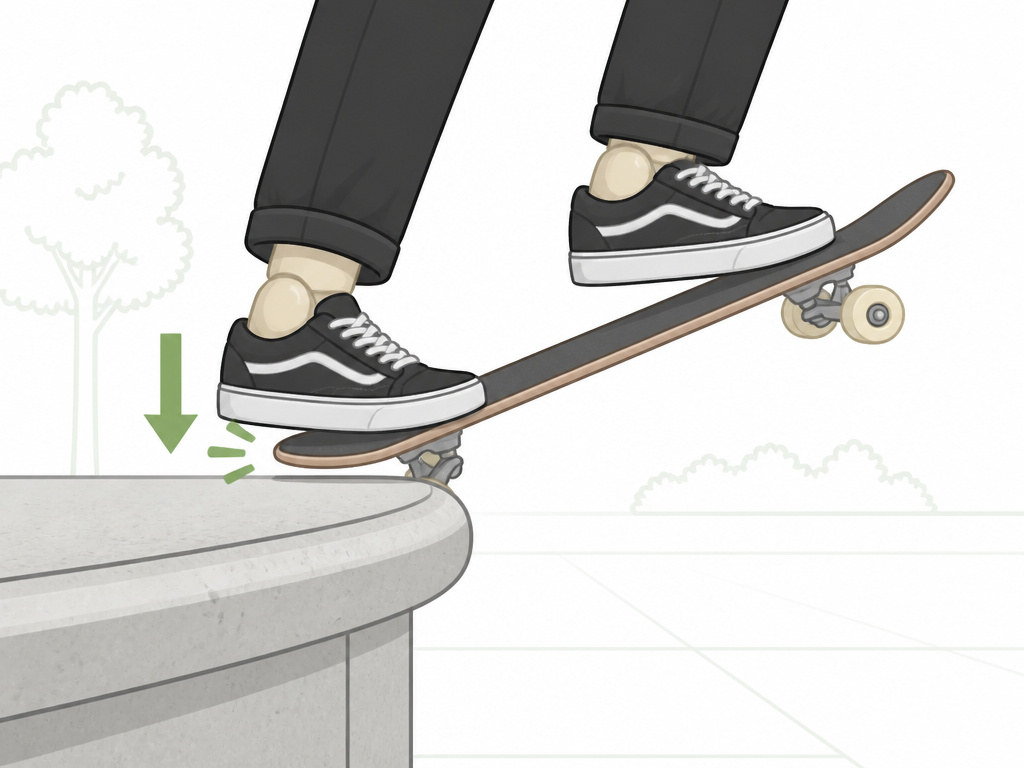
You don’t need to risk the full trick on day one. These drills build the muscle memory separately.
1. Stationary Rocks. Find a bench or a low ledge with a rounded edge. Place your board in the rock position, deck on the edge, back wheels on the ground. Step on, feel the balance, and press the tail to lift the front truck back and forth. This teaches you the tail-press motion without any speed.
2. Tape-Drill Progression (From YouTube Transcripts). If you’re nervous about the coping, put a strip of tape on the ramp wall a foot below the actual coping. Practice your approach, lifting the front truck over the tape and setting it down above the line. Then, practice the “double tap”: touch above the tape on the way up, and again on the way down. This builds the in-and-out timing without the metal consequence.
3. Touches. On your mini ramp, ride up and let only your front wheels tap the coping, then roll back fakie. Get closer each time until the truck passes over. This bridges the gap between a kickturn and the full rock, building commitment in tiny increments.
4. The Manual Prerequisite. Trick Dojo notes that a comfortable manual is helpful for the rock to fakie. They’re right, both require balancing on the back truck and controlling the nose height. If you can’t manual a few feet on flat, spend time there. It’s the same skill set for lifting the front truck.
The Body-Lean Disagreement (And Why It Matters)
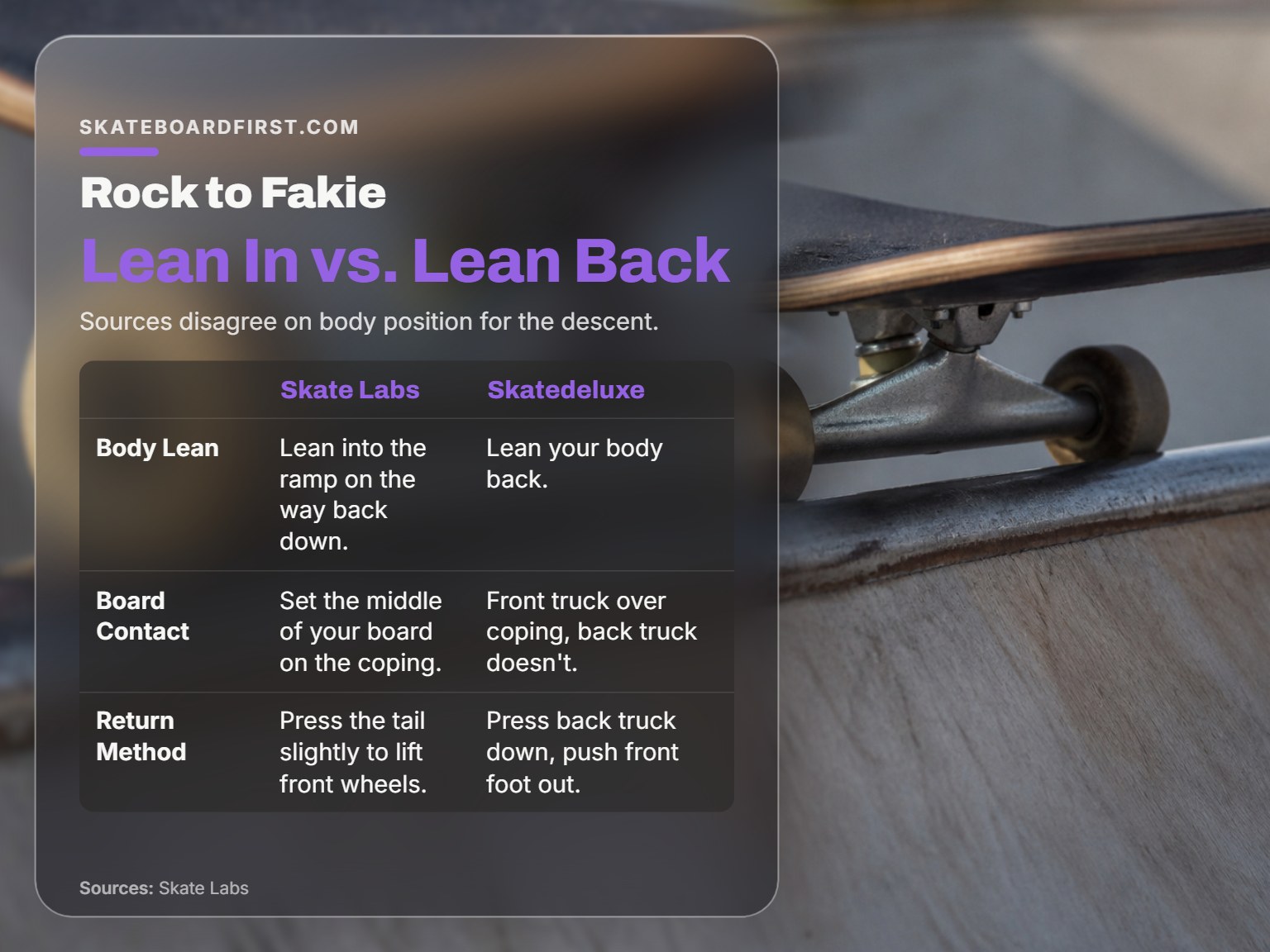
Here’s where sources from your research disagree, and you need to know both sides.
The “Lean In” Camp (Skate Labs). The Skate Labs field guide instructs: “Lean into the ramp on the way back down, not away from it.” The logic is physical: leaning your weight into the transition keeps your center of gravity over the board, promoting a stable fakie descent. This matches the principle you learn when you master a drop in, commit forward.
Which Should You Follow? For learning on a small ramp, follow the “Lean In” method. It’s safer and builds the fundamental habit of staying over your board. The “Lean Back” method might be for a more stylized, extended rock on a larger quarter pipe. As a beginner, err on the side of keeping your weight centered and into the transition. This is also the stance that supports a smooth kickturn as you regain momentum.
Rock to Fakie vs. Rock and Roll
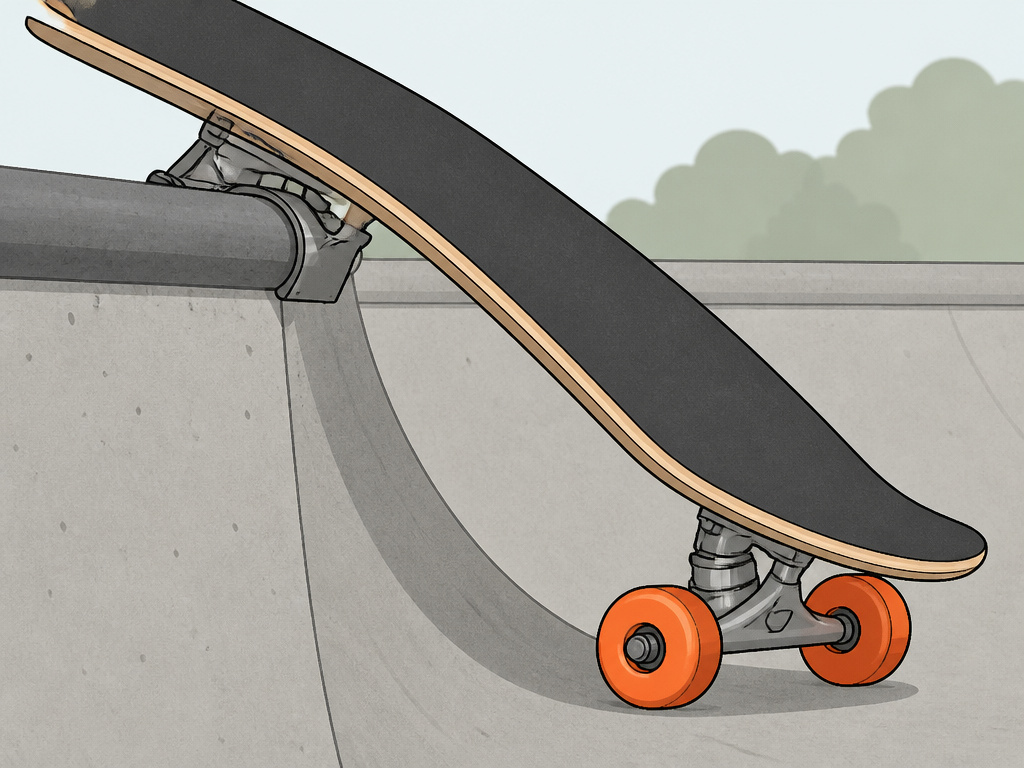
Don’t confuse these two foundation tricks. They feel different and set you up for different trick families.
Learning how to rock to fakie on a skateboard is your first foray onto the coping. You go up, rock the deck, and come straight back down the same wall fakie. It’s a back-and-forth motion. The rock and roll, however, is a turn. You rock onto the coping, then perform a 180-degree kickturn on the deck to come back down forwards. The rock to fakie teaches you commitment and the hang-up consequence. The rock and roll teaches you control and rotation on the coping. Learn the rock to fakie first.
Prerequisites and Next Steps
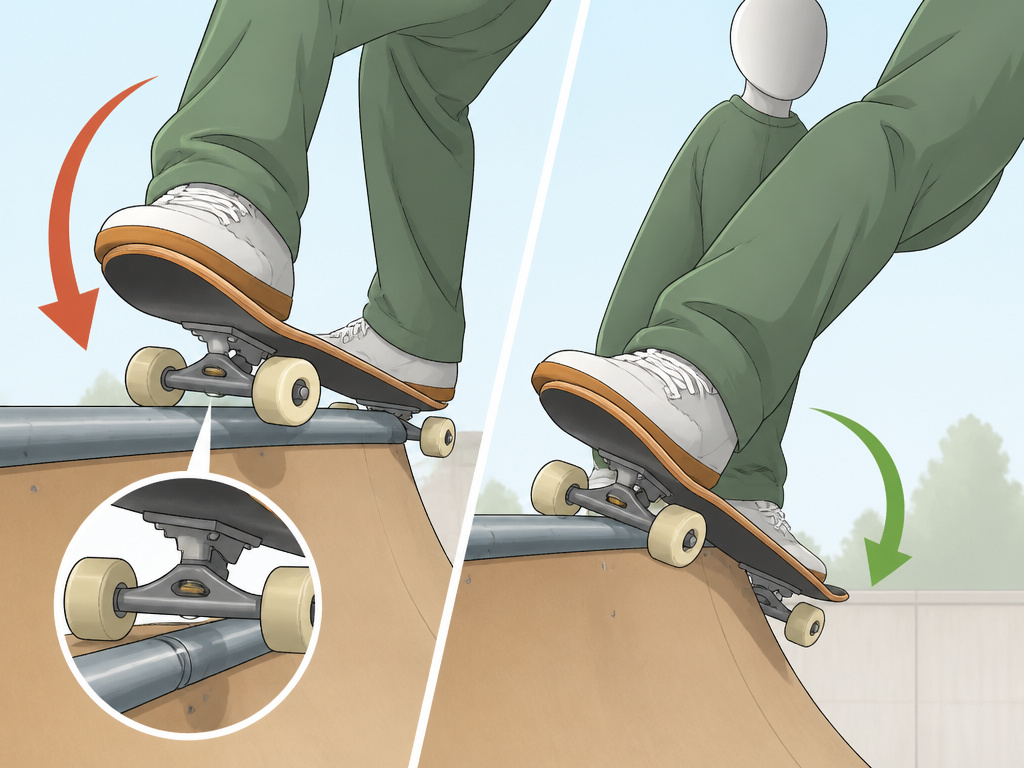
You shouldn’t attempt this trick from zero.
What You Need First. Be comfortable pumping on a mini ramp, rolling up and down fakie, and doing basic kickturns. You should also be able to drop in consistently on the same ramp. If you can’t drop in, the commitment required for the rock will feel overwhelming. A comfortable manual, as mentioned, is a helpful plus.
What the Rock to Fakie Unlocks. This trick is a direct gateway. Once it’s solid, you can work on stalling the position longer, which leads to axle stalls and 50-50 grinds. The balance and weight shift also directly apply to learning a tail stall. The controlled fakie roll-away is essential for more advanced tricks like a blunt to fakie.
Mastery Threshold. Per Trick Dojo, the rock to fakie is yours when you can ride up, rock, and come back in fakie without hanging up, seven out of ten times, on the same ramp. Don’t call it learned after one lucky make. Consistency is the goal.
Frequently Asked Questions
How hard is rock to fakie?
It’s an easy-level transition trick, but “easy” is relative. It’s often the first trick where you deliberately put your board on the coping, which introduces a real mental barrier. The physical motions are simple; the commitment is the hard part. It’s easier than a fakie ollie but requires more ramp confidence than flat-ground tricks.
What is the most common cause of hanging up?
Lifting the front truck too late on the return. If you wait until gravity is already pulling you backward, the front truck slams down onto the coping instead of clearing it. The fix is to initiate the tail press during the pause at the top, before you start moving backwards.
Should I learn it with or without a stall?
Learn it with a deliberate stall first. Getting comfortable balancing with the deck on the coping builds control. Some skaters perform the trick without a pause, but beginners often benefit from a deliberate stall. Master the stall, then speed it up.
I’m scared of rolling away backwards. What should I do?
This is the most common mental block. Isolate the skill: spend a session just pumping up a few inches and rolling back down fakie. Then, practice the tape drills mentioned earlier. The fear dissipates with repetition in a low-stakes environment. You’re scared because it’s unfamiliar, not because it’s hard.
Is it normal to find this trick scary?
Absolutely. It feels strange to roll backwards down a wall you just went up. Every skater has a memory of their first sketchy rock to fakie. Many skaters consider it a foundational trick that requires practice to master. It’s a rite of passage.
Before You Go
The one rule most guides skip: if you try this trick ten times in a session and hang up on more than half, stop. You’re ingraining a mistake. Go back to the tape drills or stationary rocks and rebuild the correct motion. A clean rock to fakie isn’t about courage; it’s about precision. Get the speed, place the deck, pause, and lift the nose with purpose. The sound you want is a soft click-click of the trucks clearing the coping, not the grinding shriek of a hang-up. Start small, pad up, and make that clean repetition your goal. Your next session, just work on touches.
