
How to Fakie Ollie on a Skateboard: Step-by-Step
This post contains affiliate links. As an Amazon Associate, we earn from qualifying purchases.
A fakie ollie is an ollie performed while rolling backwards. The foot motions, snapping the tail and sliding the front foot, are identical to a regular ollie, but the sensation of rolling blind and the board’s tendency to shoot forward change the timing. Roll at a comfortable pace, look over your leading shoulder, and land on the bolts.
The board shooting forward is the main difference. That forward kick happens because your momentum is backwards when you pop the tail, so the board wants to correct its direction. Controlling that kick is the whole trick, which is the core of how to fakie ollie on a skateboard.
What follows: the exact foot placements from primary sources, a four-step breakdown of the motion, a table of common errors with fixes, and the drills that bridge the gap between a stationary ollie and a rolling fakie ollie over a curb.
Key Takeaways
- A fakie ollie uses the same pop-and-slide as a regular ollie, but you are rolling backwards.
- Roll at a comfortable pace; going too slow lets the board wander and kills your pop.
- Look over your leading shoulder at your landing spot, not down at the board.
- The most common mistake is pulling the front foot up instead of sliding it forward.
- Practice the motion stationary first, then add slow fakie rolls before trying over objects.
What Is a Fakie Ollie (And What Isn’t It)?
First, we should clear up the terminology, because sources disagree and it causes confusion. A fakie is defined as riding backwards with the tail facing your direction of travel. An ollie done in this stance is a fakie ollie.
Now, here’s where it gets tricky. Some sources, like SkateboardHere.com, state that rolling backwards is “also called switchstance or switch.” Others, like FISE.fr, draw a sharper distinction: switch is riding in your opposite stance (goofy if you’re regular) and making it look normal, while fakie is specifically riding backwards in your natural stance. LandTheTrick.com defines a fakie ollie simply as ‘an ollie while rolling backwards.’ For this trick, you are in your normal stance but moving backwards, that’s fakie.
Where this goes sideways: Confusing a fakie ollie with a nollie. A nollie is popping off the nose while riding forward. A fakie ollie is popping off the tail while riding backwards. They feel completely different.
If you try a fakie ollie before you’re utterly comfortable with a basic rolling ollie, you’re making the process of learning how to fakie ollie on a skateboard harder on yourself. The ollie while moving is the essential prerequisite.
Getting Comfortable in Fakie Stance
You cannot ollie in a stance that feels unstable. Your first few sessions should have nothing to do with the ollie motion.
Start by simply pushing, then turning your head and shoulders to ride fakie for a few feet. Get used to the sensation of moving backwards without looking directly behind you. Your peripheral vision and feeling the board under your feet are key. A drill is to push, ride fakie, and do a simple kickturn back to regular. Repeat until the transition feels smooth, not scary.
A mistake I made early on was trying to ollie at a crawl. It feels safer, but it’s a trap. As LandTheTrick.com notes, “a slow fakie lets the board wander before the pop.” You need enough momentum to keep the board tracking straight. Find a smooth, flat stretch of pavement and build up to a comfortable pace before you even think about popping for a how to fakie ollie on a skateboard attempt.
The Fakie Ollie Motion: Pop, Slide, Level, Land
The mechanics are the same as your regular ollie, but the cues shift because your perspective is backwards. Break it into four parts.
1. The Setup and Pop
Your foot placement is identical to a standard ollie. Your foot placement is identical to a standard ollie. Your foot placement is identical to a standard ollie. Your foot placement is identical to a standard ollie. As you roll fakie at that comfortable pace, bend your knees. Snap the tail and slide the front foot exactly as you do forwards.
2. The Front-Foot Slide
This is the make-or-break moment. Snap the tail and slide the front foot exactly as you do forwards. The common error is to pull the foot up vertically, which leaves the board behind and kills the leveling. It’s the same sliding motion you’ve practiced forwards.
3. Leveling Out
Here’s the adjustment. In a regular ollie, you focus on lifting your back foot to match the front. In a fakie ollie, because the board wants to rocket forward, you need to actively “lift the back knee after the pop so the tail stops scraping,” as LandTheTrick.com puts it. Think about bringing your knees toward your chest to give the board space to level under you.
4. The Landing
Aim to land with both feet over the bolts, knees bent to absorb the impact. Your weight should be centered. Stay in your fakie stance and keep rolling backwards; coming down and immediately bailing out of fakie is a habit that will block progression.
Snap the tail and slide the front foot exactly as you do forwards. Shoulders over the board. Lift the back knee after the pop so the tail stops scraping. Land on the bolts and keep rolling fakie with soft knees.
Most struggles come from one of these four issues. Use this table to diagnose your own attempts.
| What’s Happening | Likely Cause | The Fix |
|---|---|---|
| Board shoots out in front | Popping at an angle or not jumping straight up; shoulders not squared. | Focus on a vertical pop. Keep your shoulders parallel to the board. Think “up,” not “back.” |
| No pop, tail drags | Not snapping the tail hard enough; going too slow. | Commit to a sharper pop with your toes. Increase your rolling speed to generate more board reaction. |
| Board rockets (nose high) | Not sliding the front foot forward; lifting the back foot too late. | Concentrate on the front-foot slide up and toward the nose. Actively lift the back knee after the pop. |
| Landing off-balance, feet miss bolts | Looking down at your feet during the trick. | Pick a spot on the ground where you want to land and look over your leading shoulder at it the whole time. |
The “board shooting out” problem is the classic fakie ollie headache. It often means you’re leaning back as you pop, which directs the board’s energy forward. Keep your weight centered.
Fakie Ollie Drills and Progression
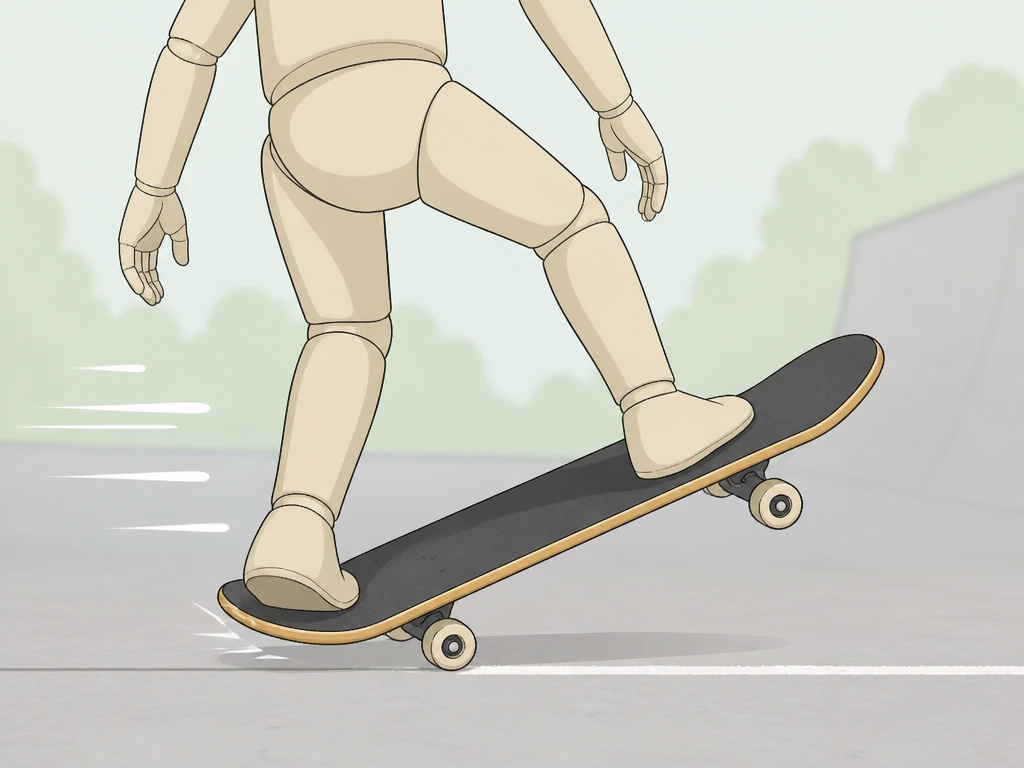
You wouldn’t learn a kickflip before an ollie. Don’t try a fakie ollie off a curb before you own it on flat. Here’s a progression path.
Stationary Fakie Pop
Find some grass or carpet. Place your board with the tail against a crack or small object so it doesn’t roll. Stand in your ollie stance, but facing the “nose” (which is behind you when rolling fakie). Practice the pop and slide motion without the roll. This builds the muscle memory without the fear of falling.
Slow Fakie Roll and Pop
On smooth pavement, push gently and ride fakie. Don’t try to ollie yet. Just get low and pop the tail lightly, letting the board snap and then land back on all wheels. Get used to the sound and feel of the pop while moving backwards.
Fakie Ollie Over a Line
Once you’re popping with control, place a stick or draw a chalk line. Your goal is to ollie over it while rolling fakie. This gives you a visual target and teaches you to time your pop relative to an object, a crucial skill for ollieing up curbs later.
The Next Step: Fakie Ollie Up a Curb
When you can consistently clear a line, find a low curb. The Reddit community emphasizes two things: more speed than you think and popping earlier. You need enough momentum to carry you up and over, and you must pop before your front wheels reach the edge. This is where understanding fakie vs nollie matters, the approach is different from a nollie up a curb.
How to Get More Height and Add Style
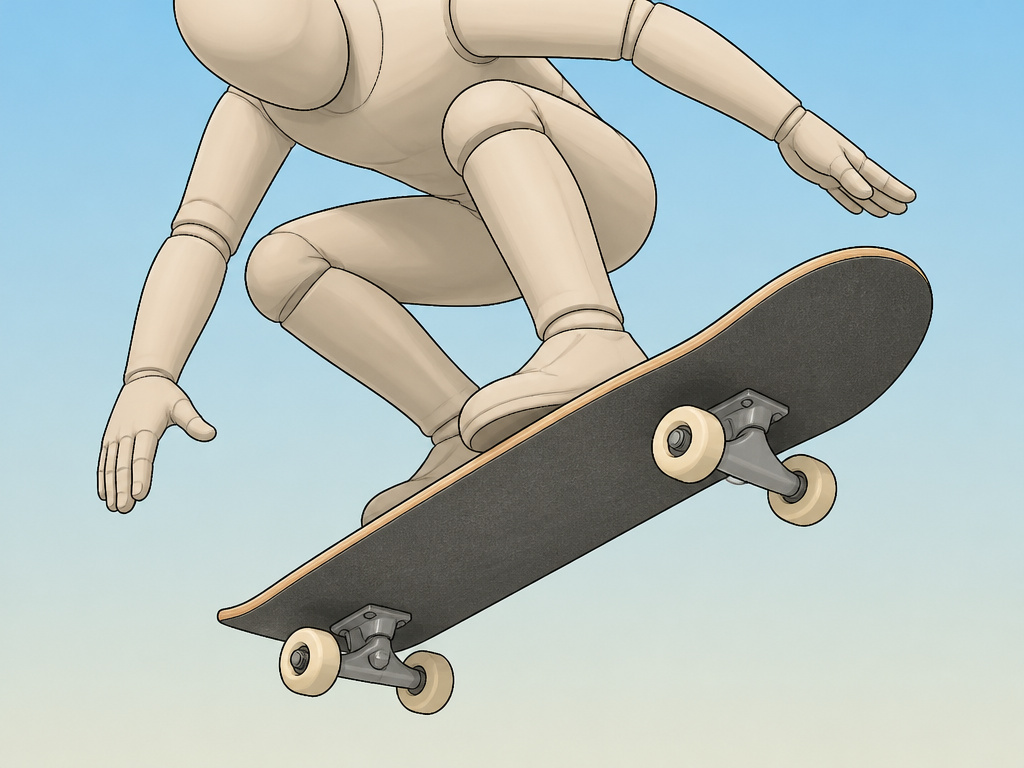
Once the basic fakie ollie is on lock, you can start building height. The principles are the same as a regular ollie: a sharper pop, a more aggressive front-foot slide to catch and lift the nose, and really pulling your knees up.
For style, a clean pivot after landing looks slick. As you land, use your back foot to press down on the tail and pivot the board 90 or 180 degrees back to your regular stance. This “revert” is what the FISE.fr source refers to when it says people add “to fakie” at the end of a trick name.
If you’re working on ollie higher in general, those exercises, like popping over progressively taller objects, apply directly to your fakie ollie as well.
Common Fakie Ollie Mistakes and Fixes
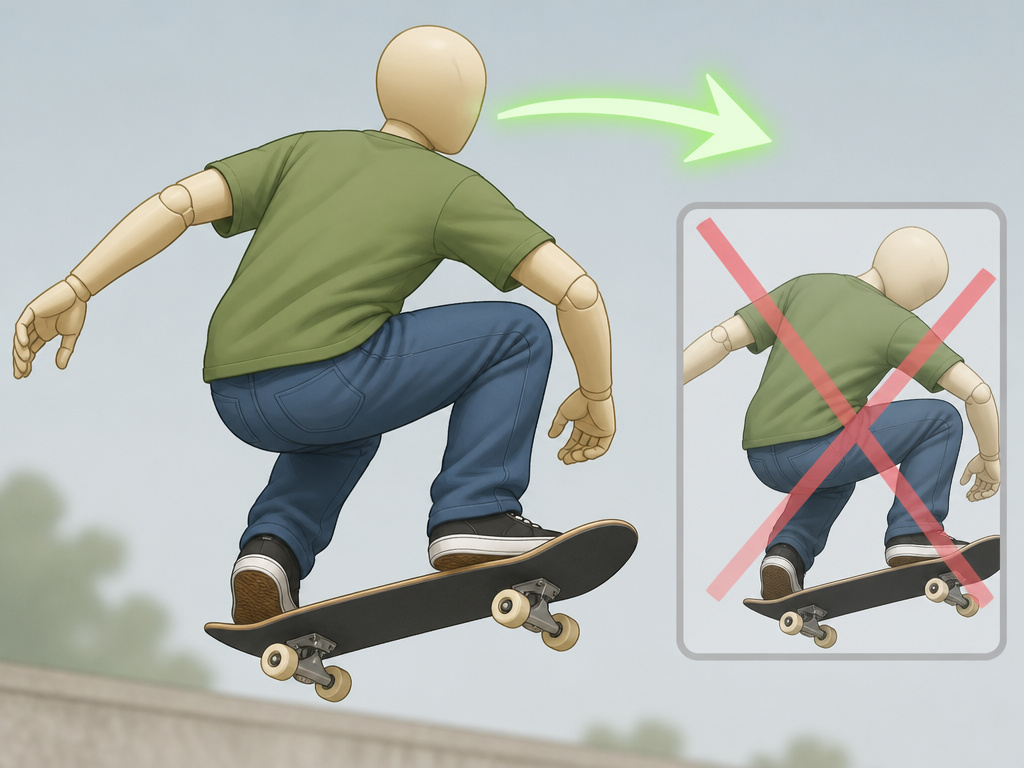
A frequent mistake is looking down at the tail instead of looking over your leading shoulder at the landing. This throws your shoulders off and makes the board wander. Fix it by forcing yourself to look where you want to land. Another common error is pulling the front foot up early instead of letting it slide forward as it does in a regular ollie. Remember, the foot motion is the same. If your tail scrapes on the landing, you likely aren’t lifting your back knee after the pop to level the board out. Finally, popping while rolling too slowly lets the board wander; use a comfortable, steady pace for a stable platform.
Frequently Asked Questions
Is a fakie ollie the same as a switch ollie?
No. A fakie ollie is done in your natural stance while rolling backwards. A switch ollie is done in your opposite stance (switch stance) while rolling forward. They require different balances and feel unrelated.
Why does my board always turn when I try a fakie ollie?
Your shoulders are turning. In a fakie ollie, you must fight the urge to look directly behind you, which rotates your shoulders and hips. Keep your shoulders squared over the board and look sideways over your leading shoulder.
Is it easier to nollie or fakie ollie over things?
It depends on the skater, but many find a nollie easier for clearing obstacles because you are facing your direction of travel. Fakie ollies require more trust since you’re going backwards. However, fakie ollies can feel more natural for some because you’re popping with your dominant foot.
How long does it take to learn a fakie ollie?
If you have a solid moving ollie, you can learn the basic motion with practice. Mastering it consistently, especially over objects, requires dedicated practice. The limiting factor is usually comfort in the fakie stance itself.
What’s the best surface to practice on?
Smooth, flat asphalt or concrete is ideal. Avoid rough pavement or surfaces with pebbles, as they disrupt your roll and can catch your wheels. Smooth, flat ground is ideal.
Before You Go
The fakie ollie isn’t a separate trick to learn from scratch. It’s your existing ollie applied in a new direction. The hurdle is almost entirely mental, getting comfortable with the backwards roll and trusting your muscle memory.
If you’re struggling, go back a step. Spend a whole session just riding fakie, popping the tail without trying to ollie. The next session, add the slide. Small wins count.
One rule most guides skip: if you find yourself getting frustrated and attempting the same mistake over and over, put the fakie ollie aside for the day. Work on something else, like improving your ollie height or manuals. Come back to it fresh next time. Your brain needs time to process the new movement pattern. The board will be there tomorrow.
