How to Return to Skateboarding After an Injury
This post contains affiliate links. As an Amazon Associate, we earn from qualifying purchases.
Returning to skateboarding after an injury requires a phased, criteria-based approach, not just waiting until the pain stops. The process is a continuum through recovery, guided by functional strength tests, psychological readiness, and sport-specific agility drills.
The standard “listen to your body” advice isn’t wrong, but it’s incomplete. Your body will often feel ready before your ligaments, tendons, and muscle memory have caught up. That gap is where most re-injuries happen, setting recovery back weeks or months. This guide pulls from official sports medicine frameworks and skate-specific conditioning tools to give you a real roadmap for how to return to skateboarding after an injury, not just hopeful encouragement.
What follows is a breakdown of the return continuum, the exact physical tests used to gauge readiness, how to rebuild your skate fitness off the board, and the critical mental work needed to overcome fear. You’ll also find a clear comparison of recovery timelines for common injuries, from ankle sprains to ACL tears, so you can set realistic expectations from day one.
Key Takeaways
- Follow the three-stage return continuum (participation → sport → performance) outlined in the IFSPT return to sport consensus to structure your comeback safely.
- Use the Skateboard Strength App‘s 4-level test system for ankles, knees, and upper body to objectively assess if you’re ready to cruise, try familiar tricks, or go for something new.
- Rebuild confidence off the board first with low-impact off-board training and a solid warm-up routine before you step back on.
- Understand that recovery timelines vary wildly, from weeks for a mild sprain to 9–12 months for a severe multi-ligament knee injury, as cited in Nyjah Huston’s case.
- Psychological readiness is as important as physical healing; tools like the ACL-Return to Sport after Injury scale are recommended by sports clinicians to gauge fear and confidence.
The 3-Stage Return Continuum: Participation, Sport, Performance
Forget about jumping back in at 100%. Modern sports medicine frames recovery as a continuum. The 2016 consensus statement from the First World Congress in Sports Physical Therapy defines three distinct phases: return to participation, return to sport, and return to performance. Each has a different goal and acceptable level of risk.
Return to sport should be viewed as a continuum through recovery with the aim of returning to peak performance. The individual must be able to complete a progression of categorical components of rehabilitation before being considered ready to return to their respective sport.
Return to participation is the “testing the waters” phase. You’re back on the board, but with significant modifications. The aim is low-intensity, low-risk activity that reconnects you with the feeling of skating without stressing the healing tissue. Think pushing around a smooth parking lot, gentle carving on a mellow incline, or stationary balance drills. Pain is your absolute guide here, any sharp or increasing pain means you stop immediately. This phase is where most people rush, tempted by a day without pain. I’ve been there, rolling my ankle again because a parking lot session felt so easy I decided to “just try a shuv-it.”
You’re landing the tricks you had on lock, skating your usual spots, and handling the typical impacts. Crucially, you’re not just physically capable; you’re also psychologically ready. You aren’t hesitating because of fear, which can alter your mechanics and cause new injuries. Reaching this stage requires passing objective tests, detailed in the next section.
Return to performance is the final step, where you return potentially better. Your skating might be more efficient, your trick selection smarter, or your confidence higher. This is where advanced off-board conditioning for skaters pays off, translating gym work into higher ollies and more consistent landings. Few guides mention this stage, but it’s what separates a full recovery from just being cleared to skate.
| Stage | Goal | Example Skateboarding Activity | Risk Level |
|---|---|---|---|
| Participation | Re-establish movement patterns, confidence | Pushing, gentle carving, stationary manuals | Very Low |
| Sport | Resume pre-injury skating level | Landing consistent tricks, skating familiar parks, handling normal impact | Moderate, Managed |
| Performance | Exceed pre-injury ability or efficiency | Learning new tricks, competing, skating at peak capacity | Sport-Normal |
Testing Your Readiness with the 4-Level System
How do you know which stage you’re in? Guessing leads to trouble. A resource like the Skateboard Strength App provides a concrete framework. It offers a series of exercises developed for three categories of injuries: ankles, knees, and upper extremities (wrist, elbow, shoulder). The idea is to give you a test you can perform to assess whether you are ready to return, or to what intensity you should return.
The system has four levels to clear for each body area, providing a framework for how to return to skateboarding after an injury. Each level corresponds to a higher degree of loading and complexity.
Where this goes sideways: Skipping ahead because Level 1 feels “too easy.” If you can’t clear the first exercise pain-free this is a huge red flag that you should not carry on or return to skating. Pain means inflammation or instability is still present, and loading it will delay healing.
Level 1 is basic mobility and isometric strength. For an ankle, this might be tracing the alphabet with your toes or holding a single-leg balance on flat ground for 30 seconds. Clearing this stage signals a return to skating with major restrictions: cruising only, no trick attempts, and a firm time limit.
Level 2 introduces light dynamic load. Think a single-leg calf raise off a step for an ankle, or a bodyweight squat for a knee. Passing here means you can return to the power, speed, and level of tricks you are used to, but it’s still advised not to attempt anything new where the potential for falling is greater. Your session planning should be intentional.
Levels 3 and 4 ramp up to plyometrics and sport-specific motions, like hopping laterally or catching a weighted ball. Clearing all four exercises is an indication that you are ready to return to normal skating and could handle the potential impacts of missing or bailing new tricks. This system aims to put assessment in the skater’s hands, addressing a perceived lack of sport-specific understanding from some medical practitioners, though the 2016 consensus statement emphasizes shared decision-making and notes clinicians may have legal authority to act to protect athlete health.
Rebuilding Your Skate-Specific Fitness
Your body forgets. After weeks off, the muscles that stabilize your ankles during a landing or the core that keeps you upright over a bank have deconditioned. Jumping back into full sessions is a shortcut to fatigue-induced injury. Your injury prevention exercises now become your pre-return foundation for how to return to skateboarding after an injury.
Start with low-impact, off-board work. Focus on restoring full range of motion first. If your injury was knee-related, can you squat to where your thighs are parallel to the floor without pain or compensation? The peer-reviewed systematic rehabilitation approach study emphasizes that rehabilitation must be holistic, addressing mobility, strength, and neuromuscular control before sport-specific load.
Next, rebuild strength symmetrically. A major risk factor for re-injury is a strength imbalance between your injured limb and your healthy one. The goal is to achieve symmetrical strength between limbs. But what if your other limb has a previous injury too? The research notes that when the contralateral limb cannot be used as a control, normative values for the specific joint or muscle involved may be considered. In plain terms, you might need to compare your strength to average population benchmarks instead.
Finally, reintroduce plyometrics and agility. Skateboarding isn’t just jumping; it’s jumping sideways, landing off-kilter, and instantly adjusting. Simple drills like lateral hops over a line, box jumps, and single-leg balances on a wobble cushion rebuild the reactive strength you need. This phase directly supports the consensus statement’s recommendation to incorporate direction changes and reactive agility tests into return-to-sport criteria.
Navigating Common Injury Timelines and Setbacks
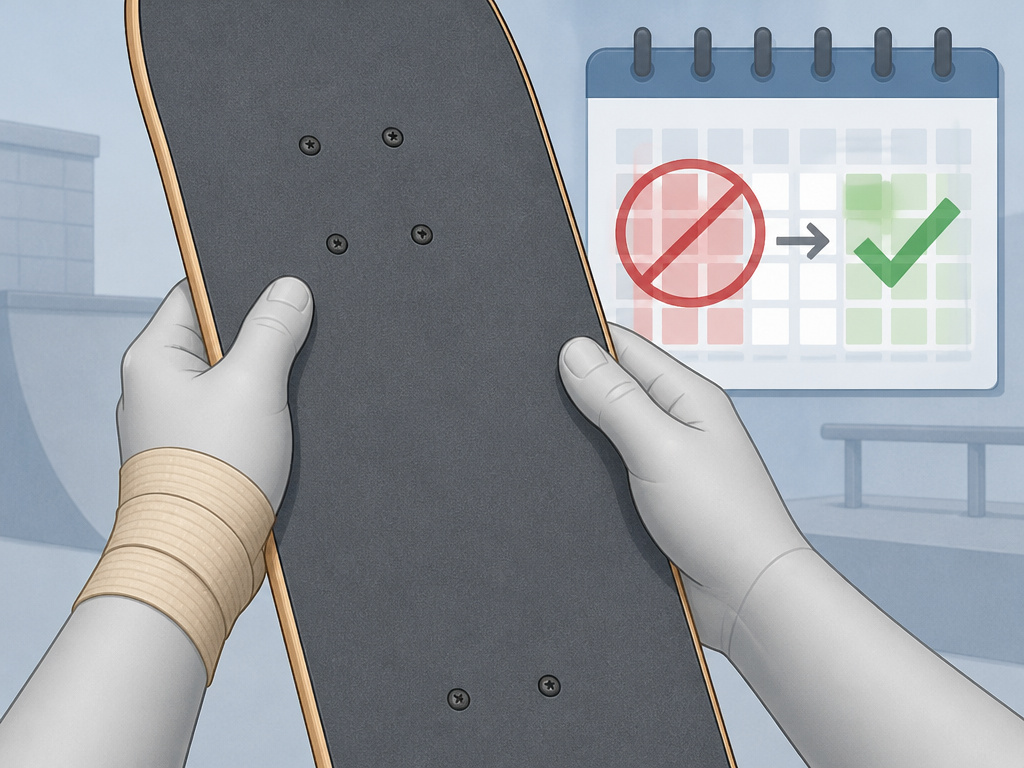
“When can I skate again?” The answer isn’t the same for a sprained wrist and a torn ACL. Setting realistic expectations prevents frustration and dangerous rushing. Here’s what the data says about common skate injuries.
For ankle sprains, the return timeline varies based on severity and functional recovery. The key is restored proprioception, your brain’s sense of where your joint is in space.
ACL injuries are a different beast. The 2016 consensus statement notes that only a minority of athletes have returned to their preinjury level 1 year after surgical reconstruction. However, an article citing pro skater Nyjah Huston’s multi-ligament knee injury states the average person takes nine-to-12 months to recover. This highlights a key point: professional athletes, with access to daily rehab, often beat average timelines. For the rest of us, planning for a year is prudent.
Wrist and elbow injuries from falls often involve fractures or tendonitis. The return hinge is on bone healing and then rebuilding grip strength. A weak grip will fail you when you need to catch your weight in a fall, leading to a re-injury.
Common mistake: Comparing your timeline to a pro skater’s viral recovery video. Their “back in 6 months” story involves a team of physiotherapists and hours of daily rehab. Your journey will look different, and that’s normal.
Setbacks happen. A day of swelling after your first real session doesn’t mean you’re back to square one. It means you likely did too much, too soon. Dial it back to the previous stage for a few days. This isn’t failure; it’s load management.
The Mental Game: Overcoming Fear and Rebuilding Confidence
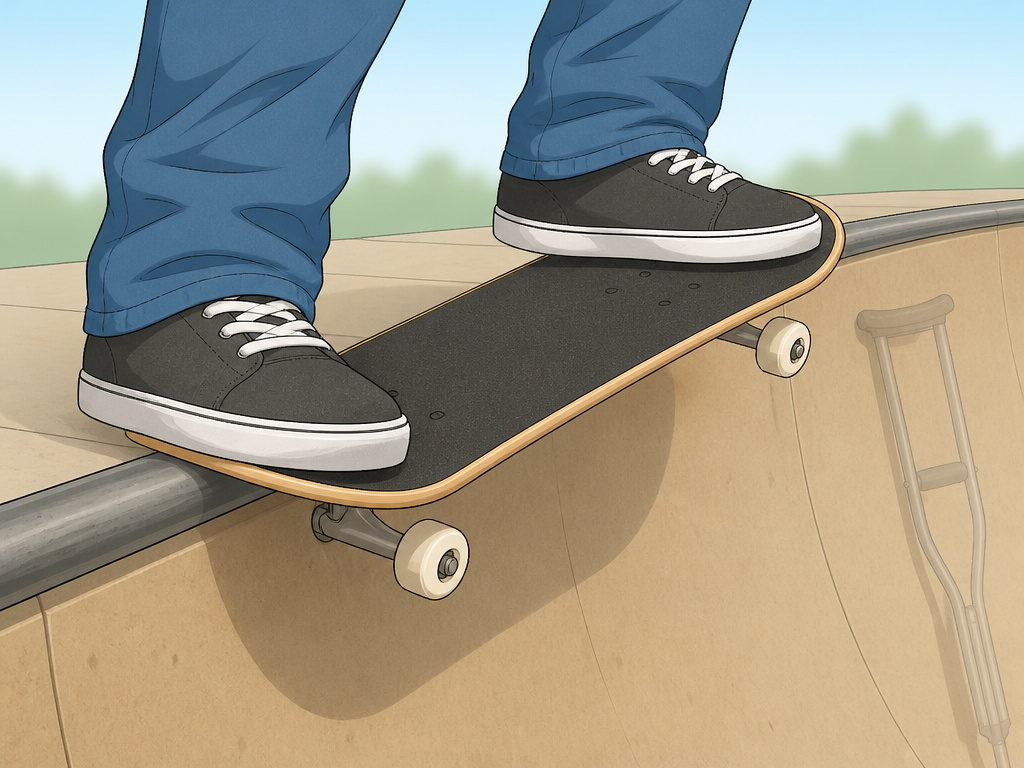
Your brain remembers the fall. Even when your ankle is strong, the fear of re-injury can cause you to bail awkwardly or hesitate on take-off, creating new risks. Psychological readiness is a measurable part of a safe return. The 2016 consensus statement explicitly recommends assessing psychological readiness using an instrument like the ACL-Return to Sport after Injury scale.
Start by normalizing the fear. It’s a protective instinct. Talk about it. In online forums, skaters constantly discuss the mental hurdle. One Reddit user shared how after a bad ankle break, they had to consciously work back from just pushing to trusting their foot placement again. That process took longer than the bone healing.
Use systematic desensitization. If dropping in again is scary, break it down. Start by just standing on the coping. Then, practice the rocking motion without dropping. Then, have a friend hold your hands for the first few attempts. The goal is to create a series of small wins that rebuild evidence for your brain that you can do this safely.
Your skating confidence is also rebuilt off the board. Visualize yourself landing tricks successfully. Watch clips of yourself skating before the injury. This mental rehearsal primes your neural pathways. Also, lean on your community. A supportive crew that knows you’re coming back from injury can provide the right amount of encouragement without peer pressure.
Gear and Environment Adjustments for a Safer Return
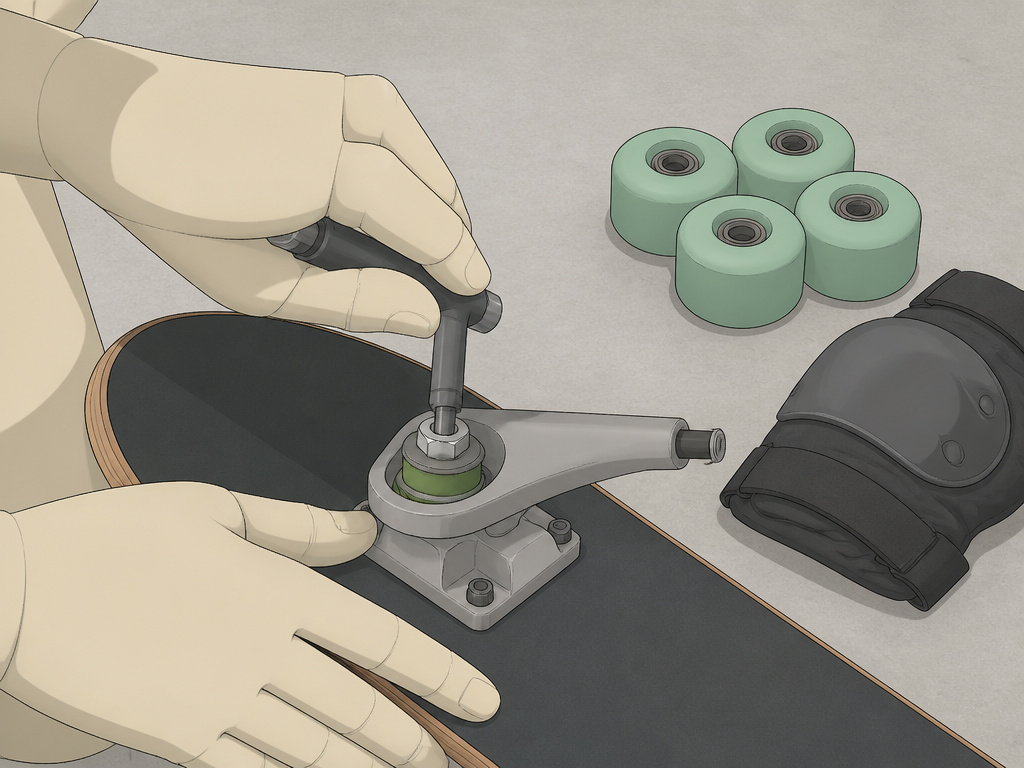
Your first sessions back aren’t the time for a slick new park or hard wheels. You control the variables to stack the odds in your favor. Smart adjustments reduce unnecessary risk.
Protective gear is essential. If you weren’t wearing it before, start now. For joint injuries, consider a brace over the injured area, but only after consulting with a physio, as some braces can hinder proper muscle activation if used too long. World Skate rules make helmets mandatory for all park athletes and for street athletes under 18 during practice and competition.
Modify your setup. Softer wheels will absorb more vibration from rough pavement, which is easier on healing joints. Slightly looser trucks can make turning and adjusting mid-roll feel less jarring than a super-tight, rigid setup. Keep your board in good repair, fresh grip and tight hardware prevent slips and equipment failures.
Choose your terrain wisely. Seek out smooth, flat ground initially. Empty tennis courts, fresh asphalt, and finished skatepark bowls with mellow transitions are your friends. Avoid crowded parks where you might get bumped or feel pressured to skate faster than you’re ready. A structured, low-pressure session planning approach is crucial here.
How long should my first skate session be?
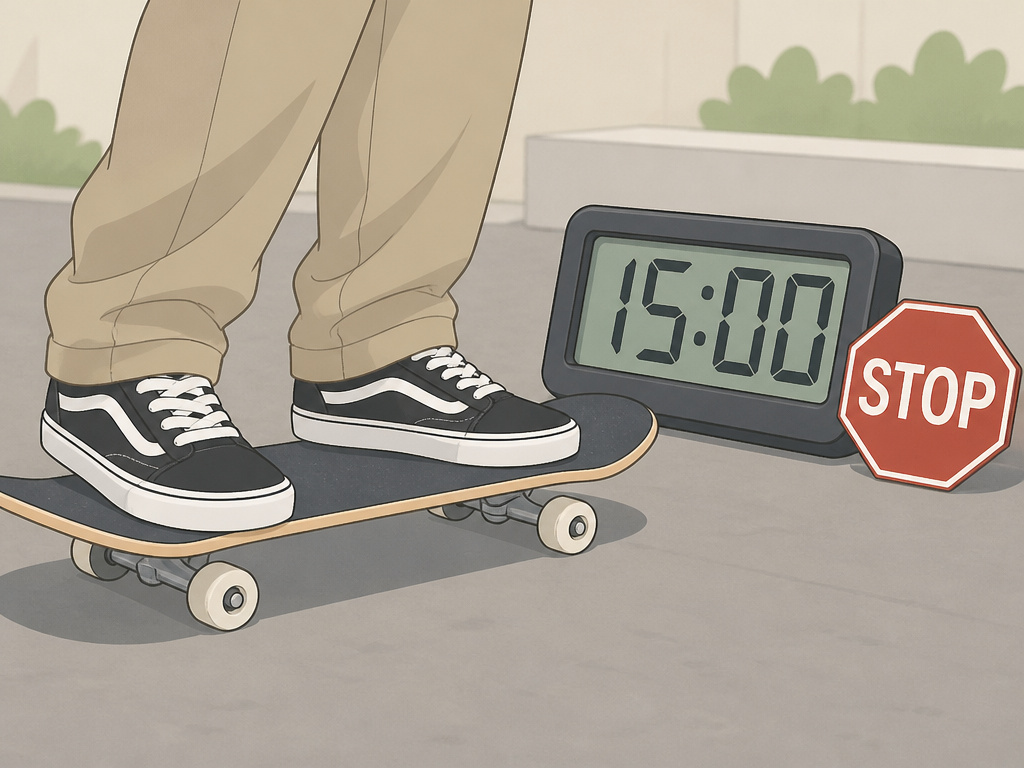
Your first session back is a test, not a mission. Think of it as a short, controlled experiment. The goal is to see how your body responds to the basic movements of pushing and cruising, not to land tricks. If you experience any pain during simple activities, that’s a clear signal to stop immediately. This cautious approach aligns with viewing your comeback as a continuum, where you must successfully complete a progression of rehabilitation components before advancing. The session ends when the timer goes off, regardless of how good you feel, to prevent overloading tissues that are still re-adapting to load.
How do I enjoy skating again after an injury?
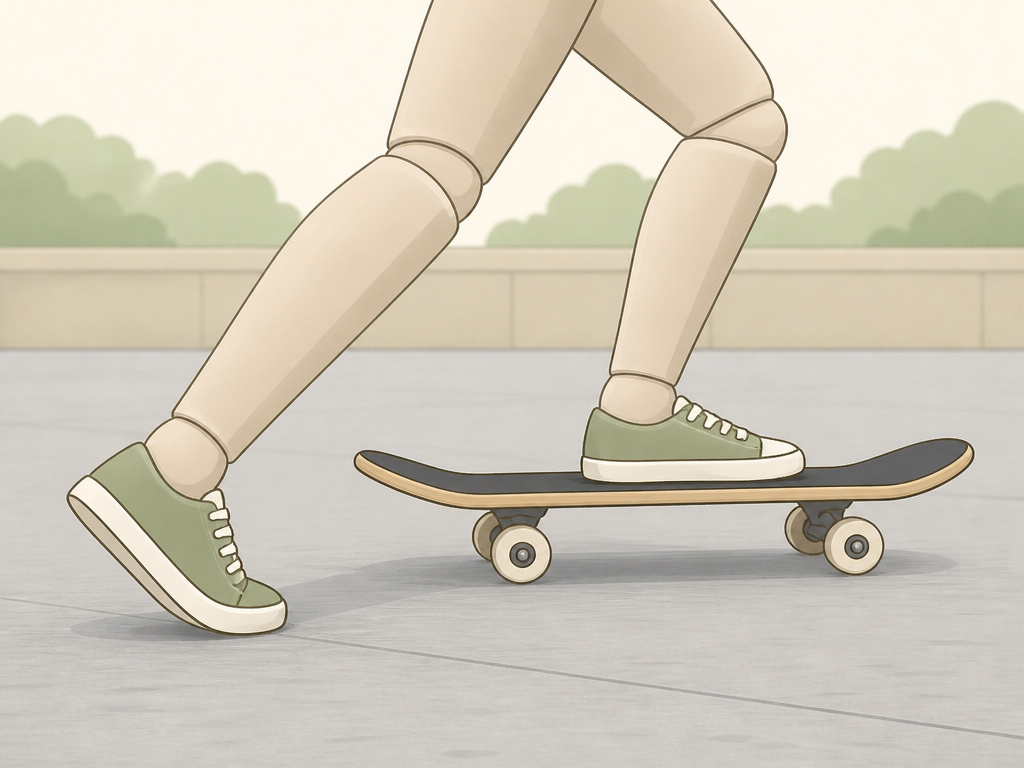
Reconnecting with the simple joy of skating is a crucial part of your return. Your initial sessions should focus solely on the fundamentals: feeling the roll of the wheels, the balance on the board, and the flow of movement. Avoid any pressure to perform or progress. Cruise familiar ground, carve gentle turns, and remember why you started skating in the first place. This mindset supports psychological readiness, a known factor for a successful return to sport. Keeping it fun and low-pressure helps rebuild confidence without the risk of re-injury from attempting maneuvers you’re not yet ready for. Enjoying the act of skating again is its own victory.
Frequently Asked Questions
How long after an ankle sprain can I skate?
You can typically begin the “return to participation” phase (gentle pushing on smooth ground) 1-2 weeks after a mild Grade I sprain, once walking is pain-free. Full return to sport (impact tricks) usually requires 4-6 weeks and depends on passing functional tests like single-leg balance and calf strength. Don’t use pain alone as your guide; strength and stability are the real benchmarks.
Can I skate with a wrist brace?
Yes, but with major caveats. A brace can provide support during the early return-to-participation phase for a healing sprain or minor fracture. However, it will limit your range of motion and can affect your ability to catch yourself in a fall. Use it only for cruising sessions, not for trick attempts. Consult your doctor or physio, as prolonged brace use can lead to muscle atrophy around the joint.
What is the hardest skateboarding injury to recover from?
Severe multi-ligament knee injuries (like an ACL/PCL/LCL/MCL combination) are among the most challenging due to the extended timeline (9-12 months on average) and the complex rehabilitation required to restore stability. Psychological recovery from a traumatic high-impact fall can also be profoundly difficult, regardless of the physical injury.
How do I know if I’m pushing too hard during my comeback?
Your body gives clear signals. Sharp or increasing pain during or after skating is the biggest red flag. Swelling that returns to the injured area, pain that changes your natural movement pattern (a limp, a flinch), or a significant increase in stiffness the next morning all indicate you’ve exceeded your current tissue tolerance. When in doubt, do less. A planned step back is better than a forced weeks-long stop.
Before You Go
Returning from an injury is a cycle of testing, adapting, and patiently building. The official frameworks and skate-specific tests give you something better than guesswork: a clear map.
The one rule that overrides all others? The decision to return is a shared one. While resources like the Skateboard Strength App aim to empower skaters, the 2016 consensus statement notes that in some jurisdictions, clinicians are legally required to act on their own initiative to protect an athlete’s health. Your desire to skate collides with a medical professional’s duty to prevent harm. Listen to that dialogue.
Start your first session back with a deliberate warm-up routine and a 15-minute time limit. Your only goal is to leave feeling exactly the same as when you arrived, no new pain, no fresh swelling. That’s a win. Everything else, the tricks and the speed, comes from stacking those small wins over time.
