
How to Teach Kids to Fall Safely: Step-by-Step
This post contains affiliate links. As an Amazon Associate, we earn from qualifying purchases.
To teach kids to fall safely, focus on five specific physical reactions: tucking the chin, bending the knees and hips, avoiding stiff arms, landing on fleshy body parts, and rolling to disperse force. The peer-reviewed Safe Fall program structures this into a 1-hour theory lesson, a 50-minute practical session, and 10 minutes of daily exercises for 10 days to automate the movements.
That kind of structured practice turns a panicked, stiff reaction into a relaxed, protective one. The goal is to control how the body hits the ground so the impact spreads across a larger area and over more time. This cuts the risk of a single bone taking the full force. A key part of this is learning how to teach kids to fall safely.
What follows: the exact five-step sequence from the research, how to adapt it for a toddler versus a ten-year-old, the one home-safety rule that prevents the worst falls, and how to turn drills into games so kids actually want to practice.
Key Takeaways
- Falls cause 50 percent of traumatic brain injuries in children ages 0 to 14, and over 80% of fall-related injuries among children ages 4 and under happen at home, teaching safe falling is a physical skill, not just a warning.
- The INFOSECA observation scale defines five safe reactions: neck flexion, no arm bracing, rolling, hip flexion, and knee flexion, drill these in order on soft ground.
- For toddlers, focus on “falling on your bum” and tucking the chin during play; for kids over 5, introduce the full Safe Fall program sequence with games.
- Never rely on window screens for safety; install window guards on all windows above the first floor, as recommended by the Children’s Hospital of Philadelphia.
- Turn practice into short, fun games like “Log Roll” or “Turtle Tuck” for 10 minutes a day; consistency over weeks builds muscle memory more than one long session.
Why Teaching Kids to Fall is Non-Negotiable
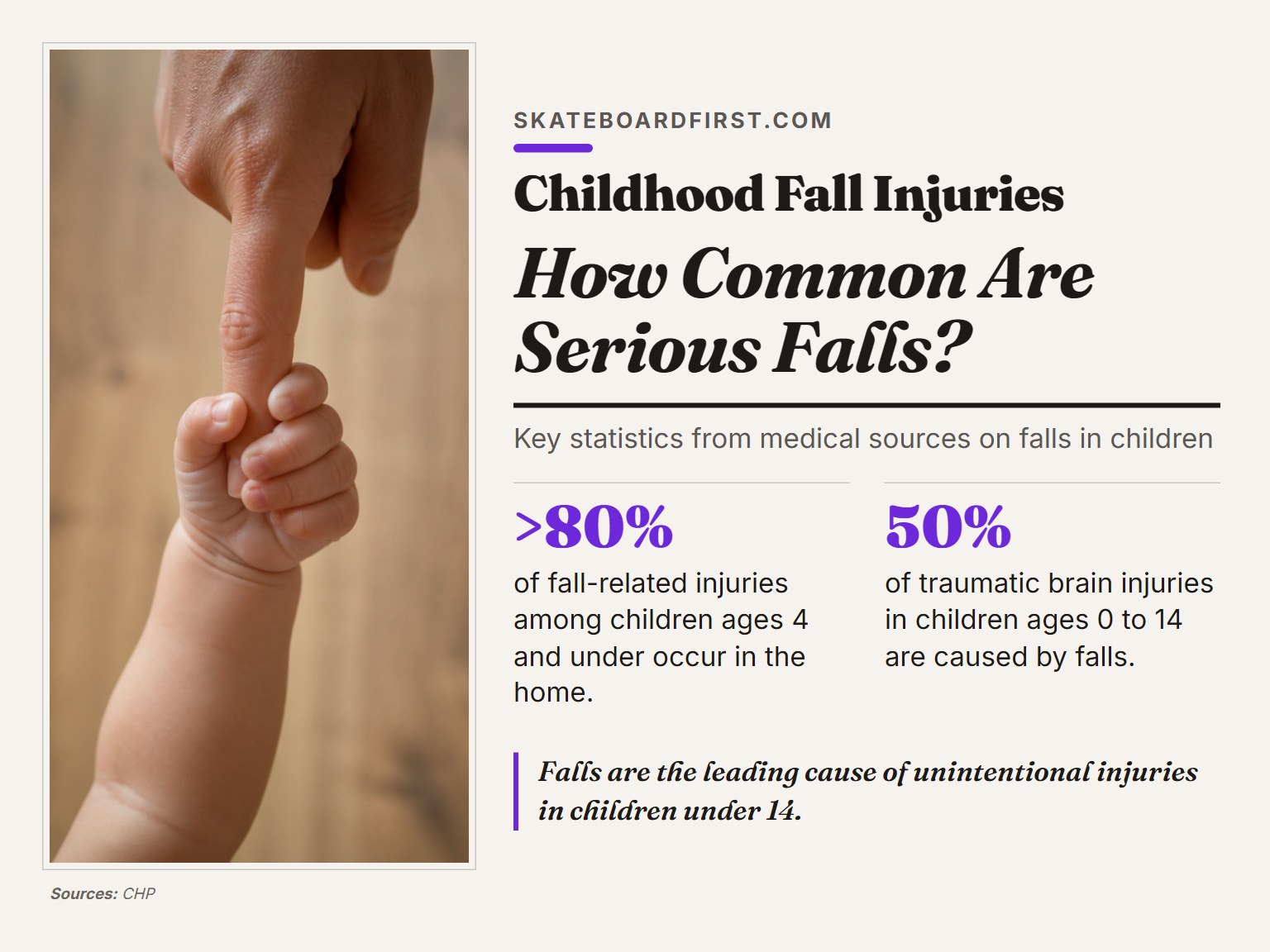
A number that changes the conversation is this: falls cause 50 percent of traumatic brain injuries in children ages 0 to 14. That’s from the Children’s Hospital of Philadelphia’s Injury Prevention Program. It’s not a minor bump. It’s the leading cause of unintentional injuries for kids under 14.
A scoping review identified 26 studies on educational technologies for fall prevention and found that falls accounted for 81% of childhood accidents registered in health services, and 81% of those accidents happened at home. Educational technologies, like posters, videos, and guided practice, were effective in increasing knowledge and changing behavior.
Most parents’ instinct is to bubble-wrap the world. We gate the stairs, lock the windows, and spot them on the playground. That’s the “prevent the fall” strategy, and it’s crucial. But the data shows it’s not enough. Over 80% of fall-related injuries among children ages 4 and under happen in the home, according to that same CHOP data. Kids climb, jump, and trip. The second strategy, the one most guides miss, is “survive the fall,” which is the core of how to teach kids to fall safely. It’s a physical skill, like learning to swim. You hope they never need it, but if they do, the muscle memory has to be there.
The good news is we have a blueprint. Researchers have already built a curriculum that works, called the Safe Fall program. It’s not guesswork.
The 5-Step Safe Fall Program for Schools (and Home)
The Safe Fall program comes from two peer-reviewed studies published in MDPI journals. It was designed for school phys-ed classes but the structure translates perfectly to the driveway or park. The program automates movements so kids protect themselves without thinking, which is the ultimate goal of how to teach kids to fall safely.
Here’s the breakdown from the research:
- 1-hour theory lesson. Explain why falling safely matters. Use simple physics: “If you hit the ground like a stick, you might break. If you hit like a rolling ball, the ground doesn’t win.” For young kids, skip the lecture and use a raw egg versus a hard-boiled egg demo.
- Pre-test. See what their natural reaction is. Have them fall backward onto a soft mat from a kneeling position. Just watch. Don’t correct yet.
- 50-minute practical lesson. This is where you teach the five reactions measured by the INFOSECA ad-hoc observation scale. Work on one at a time.
| Safe Reaction | What It Looks Like | Kid-Friendly Cue |
|---|---|---|
| Neck Flexion | Tucking the chin to chest. | “Turtle! Hide your head in your shell!” |
| No Arm Bracing | Keeping hands in, not reaching out to stop the fall. | “Hands are huggers, not catchers!” |
| Rolling | Shoulder touches first, then a smooth roll across the back. | “Log roll down the hill!” |
| Hip Flexion | Bending at the waist, curling the torso. | “Make yourself into a tiny ball.” |
| Knee Flexion | Bending the knees to absorb the final impact. | “Soft knees, like springs.” |
- 10 minutes of daily exercises for 10 sessions. This is the magic. The studies had kids do specific Safe Fall exercises during their warm-up for ten days in a row. At home, this is your after-school or before-dinner game time.
- Post-test. Repeat the kneeling fall. The change is usually obvious, they’re softer, quieter, and more controlled.
The program’s power is in the repetition. Ten minutes a day for ten days beats a one-hour workshop every time. Muscle memory lives in consistency.
How Falling Changes With Age: Toddlers vs. Big Kids
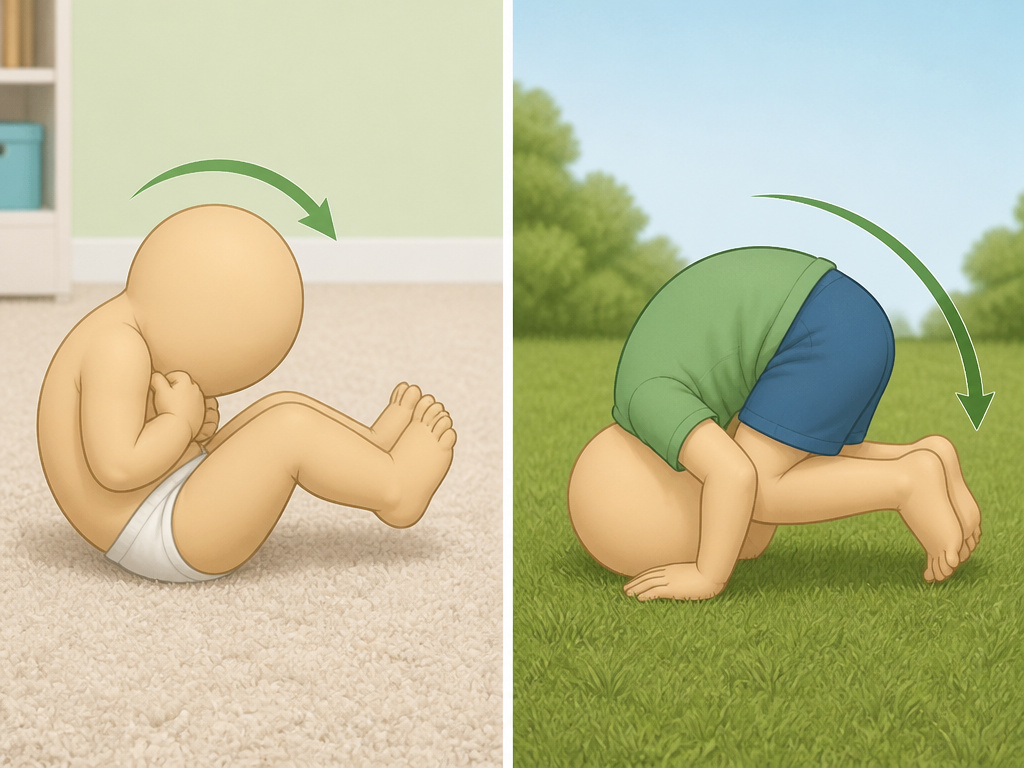
A nine-month-old learning to walk doesn’t fall like a ten-year-old running through a park. The Children’s Hospital of Philadelphia points out that infants tend to fall from furniture, toddlers from windows, and older kids from playground equipment. Your teaching should match their development.
Where this goes sideways: Trying to teach a two-year-old the full five-step backward roll. Their motor planning isn’t there yet, and you’ll both end up frustrated. Meet them where they are.
For toddlers, the goal is injury prevention through environment and two simple skills.
- Skill 1: “Fall on Your Bum.” When they lose balance, encourage them to sit down hard. Practice on a soft carpet. Make it a game: “Can you sit down bonk?” This protects the head and gets them used to the idea of a controlled descent.
- Skill 2: “Turtle Chin.” Teach them to tuck their chin if they’re tipping backward. Use a stuffed animal to demonstrate. This one instinct prevents the back of the head from smacking the ground.
For young children, you can introduce the core Safe Fall concepts.
- Focus on knee bending (“be a spring”) and rolling. Practice forward rolls on a mat or grass. The forward roll is the gateway to all other fall safety, it teaches them to redirect momentum.
- Turn drills into games. “Try to fall from your knees as quietly as you can.” The sound is a great feedback tool. A loud thump means stiff joints; a soft whump means they absorbed the impact.
For older children, you can teach the full Safe Fall program. They have the coordination for backward shoulder rolls and the cognitive ability to understand why stiff arms are dangerous.
- This is the age where overcoming the fear of falling becomes key. After a bad spill, their confidence shatters. Acknowledge the fear, then break the skill down into even smaller parts. Start on a thick gym mat, then a thinner one, then grass.
| Age Group | Primary Risk | Focus Skill | Practice Environment |
|---|---|---|---|
| Toddler (1-3) | Falling backward from standing, head impact. | “Sit down” & “Turtle Chin.” | Carpeted living room, during play. |
| Young Child (4-7) | Playground falls, tripping while running. | Forward roll, knee bending. | Grass, play mats, during park visits. |
| Older Child (8+) | Sports, skateboarding, higher-impact falls. | Full Safe Fall sequence, backward roll. | Gym mats, soft grass, structured practice. |
The Home-Safety Foundation You Can’t Skip
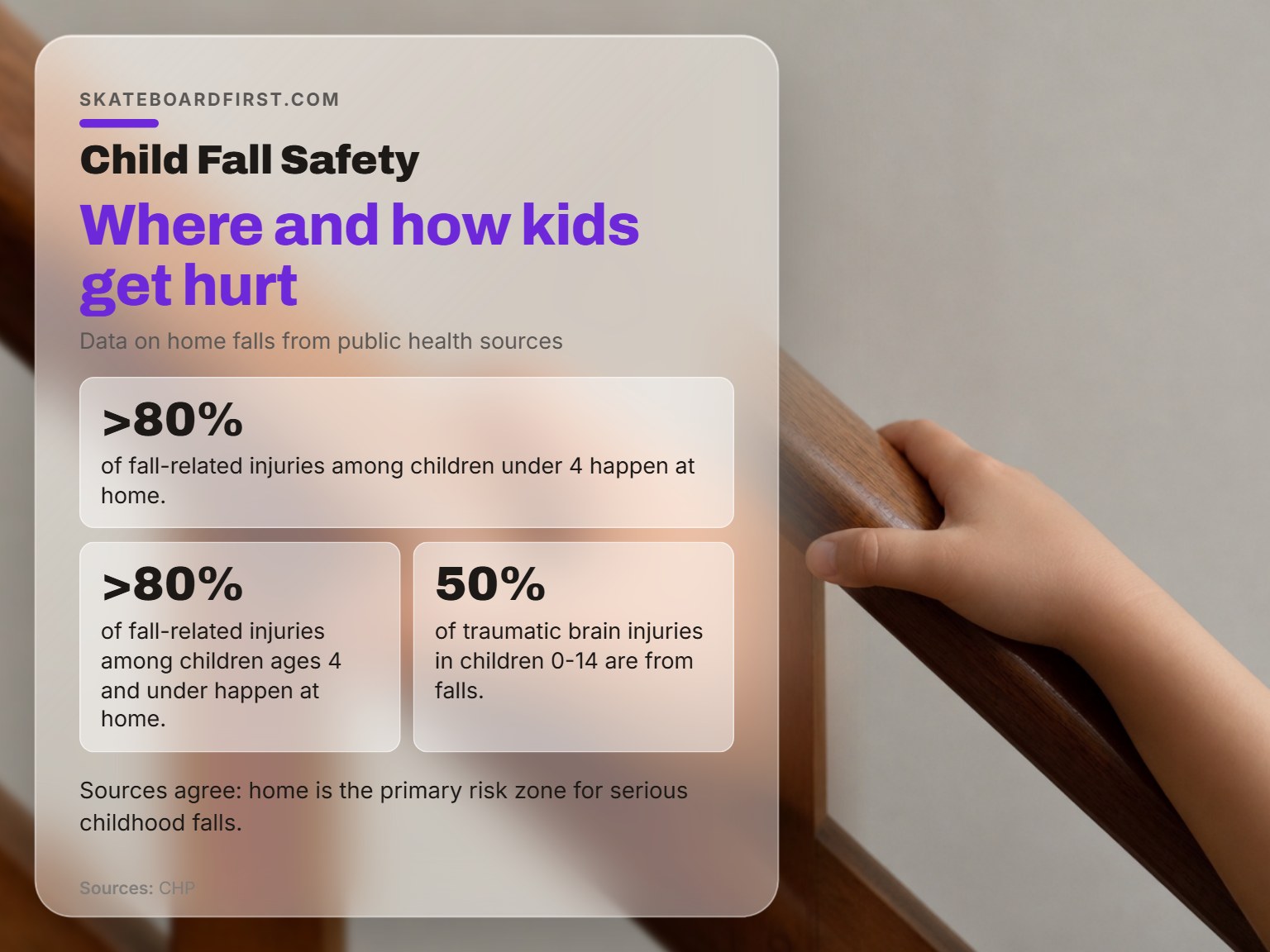
You can teach perfect falling technique, but a three-story drop onto concrete is a different problem. The Children’s Hospital of Philadelphia fall safety guide and the Rhode Island Department of Health guide agree: your first job is to prevent the most dangerous falls.
Before you start: Window falls are among the most severe. Every year, over 3,000 children are injured and about 8 die after falling out of open windows. Insect screens are designed to keep bugs out, not kids in, they offer zero protection.
Here are the non-negotiable rules, straight from the public health sources:
- Install window guards on all windows above the first floor. Ensure they have a quick-release mechanism for fire safety. This is a physical barrier that works.
- Use stair gates correctly. The Rhode Island Department of Health guide advises, “When possible, use gates that are mounted to the wall or banister, rather than tension gates.” They also warn against accordion-style gates where a child’s head can get trapped. Hardware-mounted gates at the top of stairs are a must.
- Move climbable furniture away from windows. A toddler on a dresser is two steps from an open window.
- Supervise on the stairs. Hold a toddler’s hand and teach them to use the handrail. The Rhode Island guide advises teaching crawlers to go down stairs backwards, it’s slower and safer.
This is about managing the risks we can control so the skills we teach are used for the inevitable slips and trips, not the preventable disasters.
Turning Drills Into Games (So They Actually Practice)
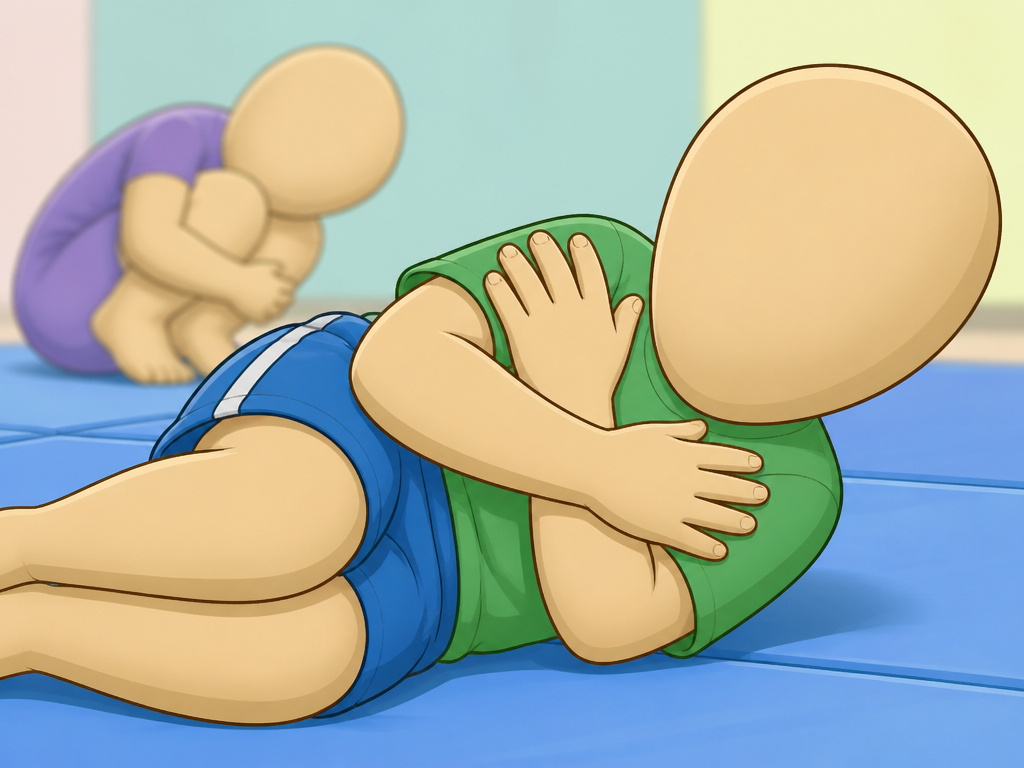
Kids don’t want a “falling lesson.” They want to play. The trick is to embed the skill inside a game. The scoping review on educational technologies found that videos and interactive tools were highly effective for engagement. You don’t need a fancy app, just a little creativity.
Here are three games that teach the INFOSECA reactions without feeling like drills:
- Log Roll Race: (Teaches rolling) Have kids lie on their backs on a soft slope or mat with arms crossed over their chests. On “go,” they roll sideways like a log to a finish line. The first to cross wins. It gets them comfortable with the rolling motion in a fun, competitive way.
- Turtle Tuck Tag: (Teaches neck flexion and hip flexion) Play a gentle game of tag. When the chaser is about to tag them, the runner yells “Turtle!” and drops into a tight ball, tucking their chin to their chest. The chaser has to find a new target. It makes tucking an automatic, fast reaction.
- Quiet Mouse: (Teaches knee/hip flexion and soft landing) Have kids jump off a low, stable surface (like a curb or a single stair step). The goal isn’t to jump far, but to land with the softest sound possible. “The quieter the mouse, the better the landing!” This teaches them to bend their knees and absorb force.
The key is to keep sessions short, 10 minutes, max, and stop while they’re still having fun. You want them asking to play again tomorrow. That’s how you get the ten sessions the Safe Fall program calls for.
How to Spot a Bad Fall (And When to See a Doctor)
You’re teaching safe falling to reduce injury, not eliminate it. Sometimes, a fall needs a doctor. The line between “shake it off” and “get it checked” can be thin.
Here are the signs, drawn from common medical guidance, that mean stop playing and consider a call or visit:
- Loss of consciousness, even for a second.
- Vomiting after a head impact.
- A headache that gets worse over time, not better.
- Confusion, dizziness, or unusual sleepiness that wasn’t there before the fall.
- Clear fluid or blood draining from the nose or ears.
- A limb that looks deformed or they refuse to use it (possible fracture).
- A neck or back injury, don’t move them, call for emergency help.
For a standard tumble, your job is to help them recover from a fall calmly. Don’t rush over with a panicked face. Take a breath, then ask, “Are you okay?” Let them assess themselves. Often, the shock is worse than the bump. If they’re crying, comfort them, but avoid dramatic gasps that teach them falling is a crisis. Check for scrapes, apply a bandage if needed, and then, if they’re able, encourage them to get back up and try a gentle version of whatever they were doing. That last step, getting back up, is how you build resilience.
How to fall forward safely
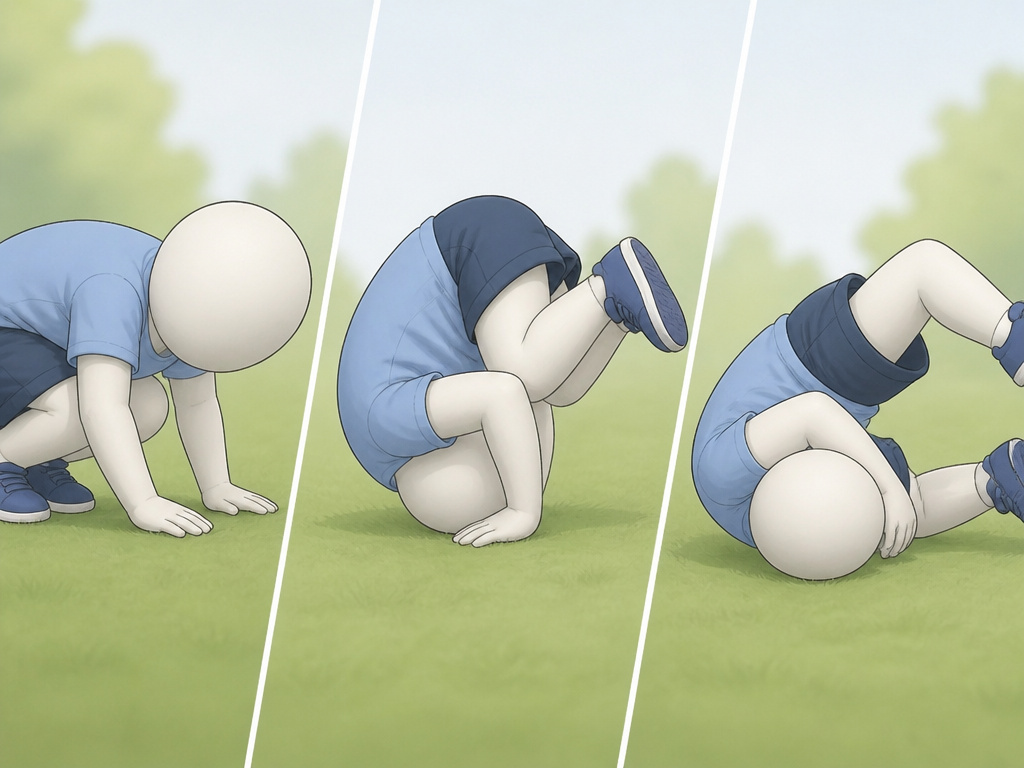
Teach kids to turn a forward trip into a controlled roll. The goal is to spread the impact across the body instead of letting wrists or head take the full force. Show them to bend their elbows and knees as they go down, tuck their chin to their chest, and try to roll onto their shoulder. Practice on a soft surface like a grassy hill or a gym mat. For younger children, frame it as ‘rolling like a log’ or ‘tumbling like a superhero.’ The key is building the muscle memory so the reaction becomes automatic during a real stumble.
Reducing the force of a fall
The basic idea is to spread out the impact over a longer time and a larger area. When a child stiffens up and braces with outstretched arms, the sudden stop concentrates force on small bones and joints. Teaching them to crumple and roll allows the body to absorb the energy more gradually. Bending joints like knees and hips lowers the center of gravity and shortens the distance to the ground. The principle is simple: a softer, more distributed landing does less damage than a hard, focused one.
Crouching to shorten a fall
If a child feels themselves losing balance, the safest move is to get low immediately. Teach them to drop into a crouch, bending their knees and hips. This simple action dramatically reduces the distance their body has to travel before hitting the ground, which directly lessens the impact. Think of it as turning a standing fall into a seated one. Practice this ‘quick drop’ on command during play, making it a game of who can get closest to the floor the fastest without using their hands.
Frequently Asked Questions
What is the 3-3-3 rule for children?
The 3-3-3 rule isn’t a standard medical or safety guideline from the sources reviewed. It may be a mnemonic from other parenting advice. For fall safety, a more relevant rule of thumb is the three-point reaction: Tuck (chin), Bend (knees/hips), Roll (shoulder). That captures the core of the Safe Fall program.
What are 6 tips to prevent falls?
Based on the Children’s Hospital of Philadelphia and Rhode Island Department of Health guides:
- Install window guards on upper-floor windows.
- Use hardware-mounted safety gates at the top of stairs.
- Keep stairs well-lit and clutter-free.
- Move chairs, cribs, and other climbable furniture away from windows.
- Always strap children into high chairs, strollers, and shopping carts.
- Actively supervise toddlers on stairs, holding their hand.
What is the 3 6 9 12 rule for kids?
This rule typically refers to screen time or media exposure guidelines (e.g., no screens before 3, etc.). It is not a fall prevention or safety rule from the authoritative health sources referenced here.
How to teach kids about fall?
Start with the environment (“These are our window guards, they keep us safe”), then move to skills. Use the age-based table here to pick the appropriate age-based focus. For all ages, the best teaching is modeling and play. Let them see you practice a safe roll on the grass. Make the skills a game, not a lecture. Consistency in short, fun practice sessions builds the muscle memory that works when it counts.
The Bottom Line
Teaching a kid to fall safely involves weaving five specific reactions, tuck, bend, don’t brace, roll, absorb, into ten minutes of play, every day for about two weeks. The research-backed Safe Fall program gives you the structure; your job is to supply the soft ground and the patience.
The most dangerous falls are the preventable ones. So before you practice a single roll, walk your home using the official checklists from the Children’s Hospital of Philadelphia and your state’s health department. Gate the stairs, guard the windows, and move that dresser. That’s your first and most important move.
After that, it’s all about repetition in disguise. A game of Turtle Tuck Tag today, a Log Roll race tomorrow. The goal is that when the sidewalk rises up to meet them, their body already knows what to do.
