
How to Clean Skate Shoes: Step-by-Step (Without Damage)
This post contains affiliate links. As an Amazon Associate, we earn from qualifying purchases.
To clean skate shoes without damaging them, match the cleaning method to the upper material and never use a washing machine. For suede, use a dry brush first; then, based on your shoe’s brand, decide whether to use a damp cloth (as éS recommends) or avoid moisture entirely (as PUMA and DC Shoes advise). For canvas and leather, use a soft cloth with mild soap and cold water. Always air dry at room temperature away from direct heat.
That’s a common baseline, but brands disagree on specifics like whether to wet suede. Where they differ is in the specifics, some say never get suede wet, others say a damp cloth is fine. Your shoes’ lifespan depends on which rule you follow for your specific pair. The best method depends on learning how to clean skate shoes correctly.
What follows is a breakdown of the official care advice from Viking, PUMA, DC Shoes, Salomon, GORE-TEX, and éS Skateboarding, plus the common mistakes that warp soles and ruin glue. By the end, you’ll know exactly how to handle mud, sweat, and that mysterious skatepark grime using the right how to clean skate shoes method.
Key Takeaways
- Never machine-wash or machine-dry skate shoes. The heat and agitation break down glue bonds and deform midsoles, a failure éS Skateboarding specifically warns against.
- Dry shoes at room temperature away from radiators, dryers, or direct sun. PUMA, Salomon, and Viking all state extreme heat damages materials.
- Clean suede with a dry brush first, then decide on moisture based on your shoe’s brand advice. PUMA and DC Shoes say avoid wetting it, while éS recommends a damp cloth with mild soap.
- Remove insoles and laces for separate cleaning. DC Shoes notes laces can be machine-washed (but not dried), and removable insoles are likely machine-washable.
- Use colorless shoe polish on dry leather only, as Viking advises. Never use waxes or greases on GORE-TEX footwear, as they clog breathability.
The 4-Step Cleaning Process for Most Skate Shoes
Start here if your shoes are canvas, synthetic leather, or basic suede. This is the commodity method, but skipping one step has consequences.
Before you start: Never use bleach, harsh detergents, or chemical solvents. Viking explicitly warns against them for leather, and they can strip protective coatings from other materials. Work in a ventilated space.
Step 1: Remove laces and insoles. This gives you access to the entire shoe and allows you to clean components separately. DC Shoes states laces can go in the washing machine (air dry them), and removable insoles are likely machine-washable too. If your insoles are glued in, leave them be.
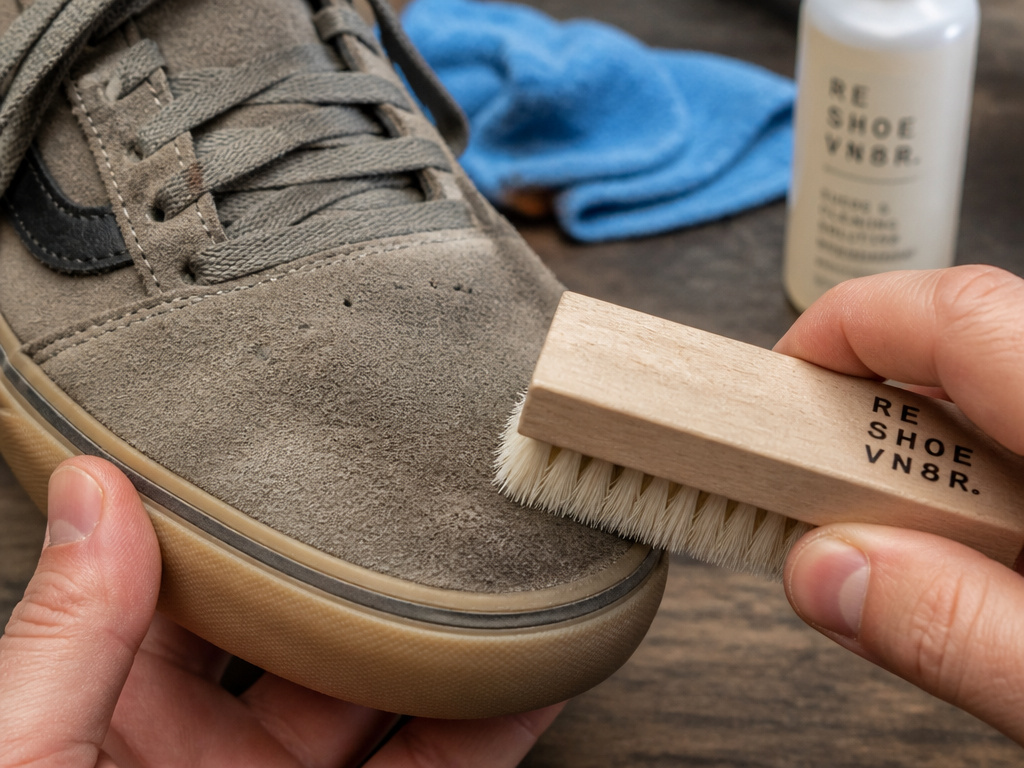
Step 2: Brush off dry dirt. Use a soft-bristle brush or a dry towel to knock off loose mud and grit. For suede, this is the most important step, brushing restores the nap and prevents you from grinding dirt deeper later. PUMA’s guide for suede and nubuck starts with a dry brush specifically designed for the material.
Step 3: Apply a mild cleaning solution. Mix mild liquid detergent or soap with cold water. Dampen a soft cloth, microfiber works well, and gently scrub the upper. For canvas, gently scrub with a soft cloth, mild soap, and cold water, as PUMA advises. For leather, Viking says to use a wet cloth or mild soap only. For suede, consult the disagreement table below before adding moisture.
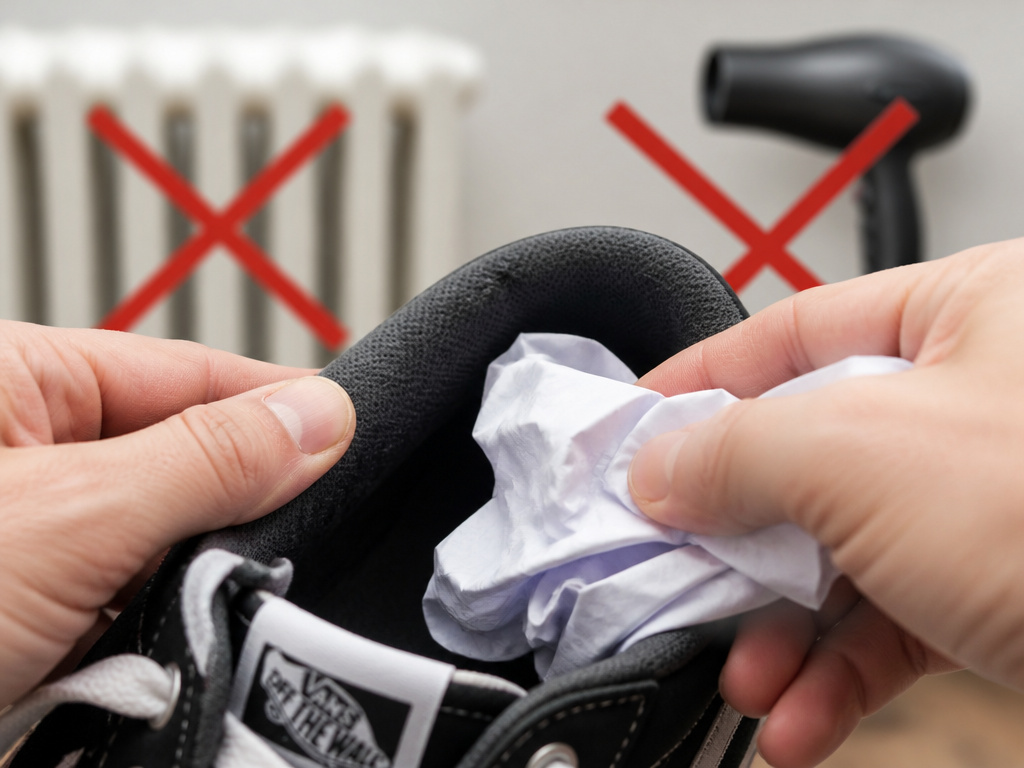
Step 4: Air dry properly. Stuff the shoes with crumpled paper or newspaper. PUMA recommends this to retain shape, and Viking says it absorbs moisture faster. Place them in a well-ventilated area at room temperature. Salomon’s care page is firm: dry “without the aid of an external heat source including the sun.” A fan helps.
Where the Brands Disagree: Suede, Machines, and Polish
Here’s where the standard advice splinters. Manufacturers have specific, sometimes conflicting, instructions based on their materials and construction. Following the wrong one can shorten your shoe’s life.
| Point of Disagreement | Brand A Position | Brand B Position | What This Means For You |
|---|---|---|---|
| Cleaning Suede with Liquid | PUMA & DC Shoes: Avoid getting suede wet. Use a dry brush. | éS Skateboarding: Use a damp microfiber cloth. Apply mild soap if needed. | Check your shoe’s brand. If unknown, start dry; introduce minimal moisture only for stubborn stains. |
| Machine-Washing Components | PUMA, Salomon, GORE-TEX: Never machine-wash shoes. | DC Shoes: Laces and likely insoles can be machine-washed. | Never wash the shoe itself in a machine. Laces and removable insoles are generally safe, but air dry them. |
| Leather Treatment | Viking: Use colorless shoe polish on dry shoes. | GORE-TEX: Don’t use waterproofing waxes or greases on GORE-TEX footwear. | For standard leather skate shoes, polish is fine. For shoes with GORE-TEX or similar membranes, use a water-based restorative spray. |
The éS warning about machine washing is the most specific: it “weaken[s] glue bonds and deform[s] midsoles.” That’s a physical outcome, not a vague caution. The glue holding your shoe together can be weakened by hot water and agitation.
Where this goes sideways: Using a washing machine on suede shoes. The glue fails, the midsole warps, and the upper can shrink or stiffen. The damage is often irreversible after one cycle.
Cleaning by Material: Suede, Canvas, Leather, and GORE-TEX
Your shoes are built from one of these. Pick your section and follow the branded advice.
How Do You Clean Suede Skate Shoes Without Ruining Them?
The nap matters. Suede looks good because thousands of tiny fibers stand up. Grinding dirt in flattens them permanently.
Start with a suede brush or a soft dry toothbrush. Scrub in one direction to lift the pile. For mud, let it dry completely into dirt, then brush it out. DC Shoes recommends this. If a stain remains, you face the choice: add moisture or not?
PUMA says don’t. éS says a damp microfiber cloth with mild soap is okay. In my experience, a barely-damp cloth dabbed (not rubbed) on the stain works if you’re careful. Immediately brush the area once it’s dry to reactivate the nap. Never soak suede.
I learned this the hard way with a pair of Vans Sk8-Hi. A “quick rinse” left dark water stains that no brush could lift. The shoes were never the same.
The Right Way to Clean Canvas and Nylon Uppers
Canvas is forgiving. It’s woven fabric, so detergents can work through the threads without harming them much.
PUMA’s method for nylon and canvas is straightforward: gently scrub with a soft cloth, mild soap, and cold water. Allow to air dry. You can be more thorough here than with suede. A soft bristle brush helps with textured canvas.
For stubborn stains on white canvas, a paste of baking soda and water applied with a toothbrush can help. Let it sit for a while, then wipe away with a damp cloth. Always test on an inside seam first.
Leather and Synthetic Leather Care
Leather needs to breathe. Viking’s care FAQ emphasizes this: “Do not use too much shoe polish as the leather can get clogged and lose the ability to breathe.”
Clean first. Use a wet cloth or one dampened with mild soap, per Viking. Dry thoroughly with a towel, then stuff with paper to hold shape as they air dry. Only apply colorless shoe polish when the leather is completely dry. Never polish wet shoes, the wax seals in moisture and leads to cracking.
For synthetic leather, PUMA advises the same soft cloth and mild soap method. It’s less porous than real leather, so drying time is shorter.
Special Care for GORE-TEX and Waterproof Shoes
These shoes have a membrane that needs maintenance. The Durable Water Repellency (DWR) coating on the outer fabric isn’t permanent.
GORE-TEX provides a test: drop water on the shoe. If it beads and runs off, the DWR is good. If it soaks in, it’s time to reapply. Use a water-based restorative pump spray. GORE-TEX specifies this. Never use waxes or greases; they clog the membrane and kill breathability.
Clean these shoes by hand in lukewarm water with a small amount of liquid detergent, as per the GORE-TEX PDF guide. Dry naturally at moderate temperatures. Avoid direct heat.
Drying and Deodorizing: Why Heat is the Enemy
This is the step everyone rushes. Impatience ruins shoes faster than dirt.
Never use a radiator, hair dryer, or clothes dryer. PUMA, Viking, and Salomon all list extreme heat as a direct threat. Heat shrinks materials, warps glue, and can crack midsoles. It also makes leather brittle.
Stuff them right. Crumpled newspaper or plain printer paper absorbs moisture from the inside. PUMA recommends this to retain shape. Change the paper after a few hours if the shoes are very wet.
Fight odor at the source. After skating, remove the insoles. éS Skateboarding advises this to let the shoe air out fully. Sprinkle baking soda inside overnight, then vacuum it out in the morning. For a deeper clean, DC Shoes says removable insoles can often go in the washing machine.
Common mistake: Throwing wet shoes in a dark closet. Viking says store them in a ventilated space. Trapped moisture leads to mildew and a smell that never leaves.
Extending Shoe Life: Repairs and Rotation
Cleaning is maintenance. These habits are prevention.
Rotate between two pairs. éS Skateboarding suggests this. It gives each pair time to fully dry and recover its shape.
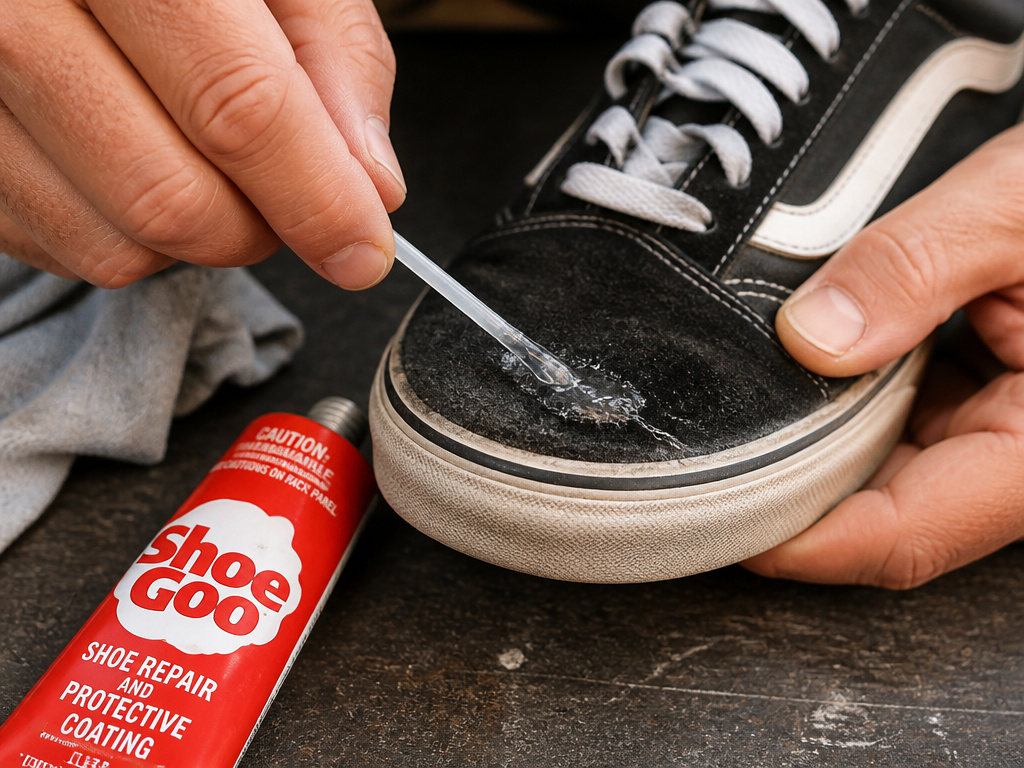
Reinforce early. At the first sign of wear at the ollie spot, apply a skate-specific repair adhesive like Shoe Goo. éS notes early reinforcement can double a shoe’s lifespan. Clean the area first, let it dry, then apply thin layers.
Know when to stop. A hole through the suede or a smooth, hard sole means grip is gone. No amount of cleaning will restore a shoe that is worn out to safe skating condition. Learning to choose skate shoes for durability is the next step.
How to Clean White Skate Shoes
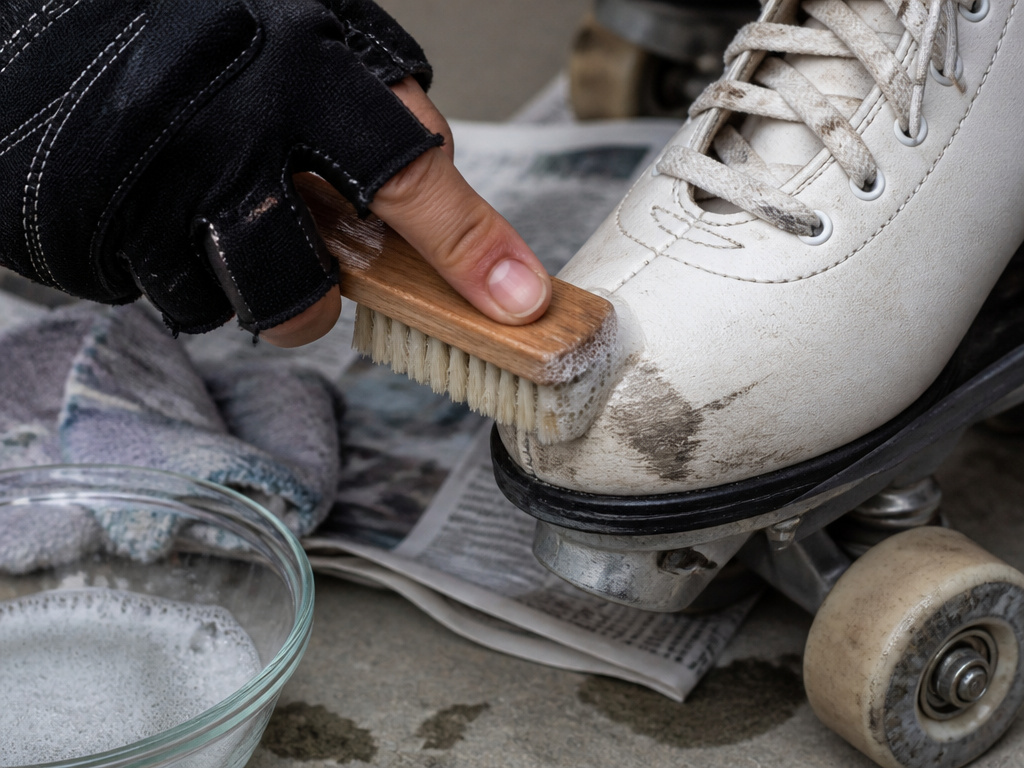
White shoes show every scuff and stain. For a general clean, follow the method for your shoe’s material. For leather, Viking advises using a wet cloth or mild soap only and warns against detergent or chemical solvents. Work on one section at a time with a soft cloth or soft bristle brush. For leather or synthetic leather uppers, hand wash using a soft cloth dampened with mild soap and cold water; do not immerse or soak them. For nylon or canvas, gently scrub with mild soap and cold water. Always allow white shoes to air dry fully at room temperature, away from direct heat sources like radiators or the sun, as heat can cause yellowing. To help them retain their shape and dry faster, pack them with crumpled paper or newspaper after cleaning.
Frequently Asked Questions
Can I use a washing machine on skate shoes?
No. PUMA, Salomon, GORE-TEX, and éS Skateboarding all explicitly say not to machine-wash shoes. The agitation and heat break down glue and deform materials. DC Shoes only allows machine washing for removable laces and insoles.
What household cleaner is safe for skate shoes?
Stick to mild liquid dish soap or a small amount of laundry detergent (without fabric softener). Avoid bleach, Windex, rubbing alcohol, or any chemical solvent unless the manufacturer specifically approves it. Always do a test patch on an inconspicuous area.
How do you clean thrifted skate shoes?
Sanitize the inside thoroughly before wearing. Reddit users in the NewSkaters forum emphasize the risk of fungus. Use an antifungal spray or wipe recommended for athletic gear on the interior, including under the insole. Clean the exterior according to its material using the methods above.
How can I make my skate shoes last longer?
Rotate between two pairs, clean them regularly with the correct method, dry them properly away from heat, and apply repair adhesive like Shoe Goo at the first sign of abrasion. Also, ensure a proper break-in period to avoid stress points that can lead to premature tearing.
Why shouldn’t I dry shoes in the sun or on a radiator?
Direct heat, whether from the sun or a radiator, dries materials unevenly and too quickly. This causes leather to crack, glue to become brittle, and synthetic materials to warp. All cited brands recommend room-temperature, ventilated air drying.
Before You Go
One final rule that overrides all others: always check the manufacturer’s care label or website first. The GORE-TEX guide puts it best: “As deviations of requirements might occur depending on the product, please always check your manufacturer’s care instructions first.”
If you’ve just cleaned your shoes and they’re drying, use the time to lace them for better board feel or learn how to prevent blisters for your next session. And if a hole does appear, know that a timely repair is almost always cheaper than a new pair.
Go push down the block once today.
