
Skateboarding in Hot Weather Guide
This post contains affiliate links. As an Amazon Associate, we earn from qualifying purchases.
Skateboarding in hot weather requires matching three things: hydration, session management, and gear care. Dehydration starts hurting performance after a 2% bodyweight loss in sweat, which can happen in under an hour. Sessions longer than 45 minutes at moderate-high intensity put you at risk of heat exhaustion, and heat can warp your board’s wood, melt grip tape adhesive, and trigger electric skateboard thermal throttling.
That 45-minute threshold marks the point where, without water, your core temperature starts climbing into a danger zone that drops your pop and endurance.
What follows: the exact fluid math from sports science, the gear failures heat causes that most guides miss, and the manufacturer-specific rules for electric boards that override your riding plans.
Key Takeaways
- Dehydration hurts performance at a 2% bodyweight loss in sweat, which can happen in under an hour of skating in heat.
- For sessions longer than 45 minutes, plan to drink 200-300ml (6-10oz) of fluid every 15 minutes and include electrolytes.
- Electric skateboard software can throttle power when overheating (Evolve Hadean shows a “HEAT” icon), and manuals mandate a 30-minute cooldown before charging.
- Heat warps wooden decks and weakens grip tape adhesive; store your board indoors and away from heaters or hot cars.
- Acclimatize to heat over 12 days with 60-90 minutes of lower-intensity skating, progressively increasing intensity.
Why Heat Changes Everything About Your Session
Your body turns about 75% of the energy from skating into heat. On a cool day, your sweat system carries that heat away. But in high temperatures, especially with humidity, that system gets overwhelmed. You sweat more, losing water and electrolytes faster. The result is a direct hit to your coordination, pop, and mental focus.
The turning point is well-documented in a skateboarding in hot weather guide: once you’ve lost 2% of your bodyweight in sweat, your physiology and skate performance start dropping. For a 160-pound rider, that’s just over 3 pounds of sweat. In hot conditions, you can lose more than 2 liters of sweat per hour. That means you can hit that performance-sapping threshold in a single, intense hour-long session.
Before you start: Heat illness is a leading cause of death in athletes. The keys to identifying heat stroke are a body temperature greater than 40°C (104°F) and mental symptoms like confusion or disorientation. If you or a friend show these signs, stop skating immediately, cool down, and seek medical help.
This is why session planning is essential in the heat, as noted in any skateboarding in hot weather guide, and serves as your first line of defense.
The 45-Minute Rule and Your Fluid Plan
Think of 45 minutes as your safety horizon. Research cited by The Daily Push shows that any moderate to high intensity sessions longer than 45 mins can put us at risk of dehydrating or overheating.
For sessions under that mark, staying hydrated throughout the day and drinking water is often enough. Cross that line, and you need a protocol.
| Session Length | Hydration Focus | What to Drink/Eat |
|---|---|---|
| Under 45 min | Pre-session hydration | Water throughout the day; 500ml (~16oz) 1 hour before skating. |
| 45-90 min | Mid-session fluid & electrolytes | 200-300ml (6-10oz) every 15 mins. Add a banana and salted nuts, or a sports drink. |
| Over 90 min | Aggressive replacement | Aim for 1L (32oz) water + 500ml (16oz) sports drink per hour. Weigh yourself after to guide post-session rehydration. |
The math is straightforward, but the common mistake is bringing too little water. A two-hour session could need as much as 3 liters of fluid. Bring a large bottle and leave it right at the run-up where you spend most of your time, accessibility beats willpower every time.
Post-session, the goal is to replace what you lost. A rough guideline is to drink 0.5-1L (16-32oz) of water as soon as your session ends. For a more precise approach, weigh yourself before and after. Then drink 1.5-2 times the amount you lost in weight, in water.
Here’s a simple hourly intake target to remember:
About 1L (32oz) water + 500ml (16oz) sports drink, OR About 1.5L (50oz) water plus carbs and salt (like a banana and salted trail mix).
Don’t forget the salt. You’re sweating out electrolytes. A guideline is about 1/4 to 1/2 teaspoon of salt per hour for most people. More if you’re a heavy sweater or notice salt stains on your clothes.
Acclimatization: Your 12-Day Heat Adjustment Period
You can train your body to handle heat better. It’s called acclimatization, and it takes about 12 days of progressive exercise in the heat.
The process involves smart, gradual exposure.
- Days 1-4: Go for 60-90 minutes of lower-intensity skating. Cruise, work on stationary tricks, focus on balance. Keep your heart rate manageable.
- Days 5-8: Gradually increase the intensity. Add in some short, paced lines or more dynamic flatground tricks. Pay close attention to your hydration.
- Days 9-12: You can start to incorporate more of your normal session intensity. Your body will be producing more plasma, sweating sooner and more efficiently, and managing its core temperature better.
This staged approach triggers physiological adaptations that reduce overheating and increase performance. Rushing it just leads to burnout or heat illness. If you’re already an active skater, you might adapt faster. If you’re newer, take the full time.
Gear and Board Care When the Sun is Out
Heat doesn’t just hit you; it attacks your gear. This is the part most skating guides gloss over, but it’s where sessions get cut short by equipment failure.
Your Deck and Grip Tape
Wood and glue hate heat. The Skate Labs Field Guide is blunt: store your board indoors, out of hot cars and away from heaters, since heat and damp warp wood. A deck left in a hot trunk can develop a permanent warp or a soggy, dead feel in a single afternoon. Grip tape adhesive can soften and ooze, leading to bubbles or peeling at the edges.
Keep it dry. Skip puddles and rain. If it gets wet, wipe it down and let it dry at room temperature.
Make a habit of checking your hardware, too. Metal expands and contracts with heat, which can loosen truck bolts. The guide advises to check your bolts every few sessions. A quick twist with a skate tool before you start can prevent a wheel flying off mid-line.
Electric Skateboard Specifics
If you ride an e-board, the manufacturer’s manual is your heat bible. Their rules exist because the lithium-ion batteries and motors have strict thermal limits.
- Evolve Hadean: The manual states the software reduces power and performance upon detecting elevated temperatures, triggering a ‘HEAT’ icon on the remote. It also mandates a 30-minute cooldown period before charging after use.
- Pushing it hard on a 95°F day means you’re riding at the edge of its designed capacity.
- E-Glide Powerboard: Their manual recommends a 15-minute battery cooldown after riding before charging and warns that heat (e.g., a hot car trunk) reduces range.
The manuals disagree on the cooldown time: Evolve Hadean mandates 30 minutes, while E-Glide Powerboard recommends 15 minutes, so follow your specific board’s instructions.
Clothing and Footwear
Your choice of skateboarding outfit needs to work for cooling, not just style. Breathable, light-colored fabrics are a start. I’ve found that the best materials for hot-weather skate clothing are lightweight synthetics or thin, loose-fitting cotton that wicks sweat away from your skin.
Footwear makes the biggest difference. Sweaty feet in thick, non-breathable shoes lead to blisters and a loss of board feel. A ventilated skate shoe beats a bulky cupsole every time in the heat. The debate between shorts and pants for skating is easy here: shorts win for airflow. If you’re worried about knee scrapes, consider lightweight knee pads instead of long pants.
Planning Your Session and Managing Intensity
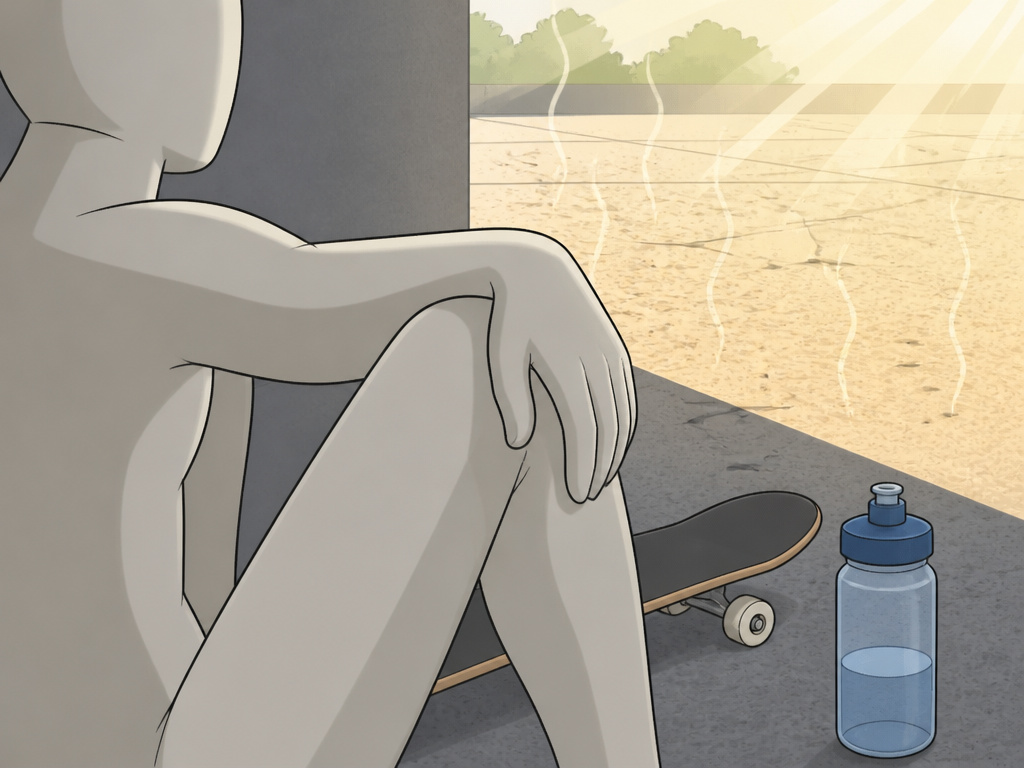
Planning a successful skateboarding session in hot weather starts the night before. Hydration is a all-day process, not a pre-game chug. Drink water consistently. Then, perform a thorough but conservative warm-up routine; your muscles will be warmer to start with, so dynamic stretches focus more on mobility than generating heat.
Once you’re skating, manage your internal heat stress. This means tweaking your session structure:
- Favor spots with shade. Concrete radiates heat. A shaded spot can be significantly cooler.
- Take more frequent, shorter breaks. Sit in the shade for five minutes every 20-30 minutes of skating.
- Adjust your trick selection. This isn’t the day for endless run-ups to a high-impact gap. Work on technical flatground, manuals, or low-impact ledge tricks. The goal is to reduce the total amount of high-effort movement.
- Skate with a buddy. The CPSC skateboarding safety fact sheet includes “never ride alone” as a core safety tip for a reason. In the heat, a friend can spot the early signs of heat exhaustion you might ignore.
Listen to the official advice. A helmet is essential.
Frequently Asked Questions
What’s the best thing to drink while skateboarding in hot weather?
For sessions under 45 minutes, cold water is perfect. For longer or more intense sessions, you need electrolytes. A sports drink or a DIY mix of water with a pinch of salt and a squeeze of citrus works. The key is drinking 200-300ml (6-10oz) every 15 minutes, not waiting until you’re thirsty.
Can heat ruin my skateboard?
Yes, directly. Prolonged exposure to high heat (like inside a car on a sunny day) can warp the wooden deck, making it brittle or causing it to lose pop. It can also soften the adhesive under your grip tape, leading to bubbles and peeling. Always store your board indoors in a climate-controlled space.
How do I know if I’m getting heat exhaustion?
Heat exhaustion usually occurs during 45min+ moderate-high intensity exercise in the heat. Common symptoms are extreme fatigue, dizziness, nausea, vomiting, fainting, and a weak but rapid pulse. If you feel these, stop immediately. Get to a cool, shaded area, remove excess clothing, sip cool fluids, and lie down with your legs elevated. If symptoms don’t improve quickly, seek medical help.
Should I avoid skating in the middle of the day?
Absolutely. The sun’s intensity peaks between 10am and 4pm. Skating in the early morning or evening is dramatically cooler and safer. If you must skate midday, seek shaded spots relentlessly and double your water intake.
Do electric skateboards overheat in hot weather?
They can, and many have built-in protections. The Evolve Hadean, for example, will reduce power and show a “HEAT” icon on the remote if internal temperatures get too high. Pushing an e-board hard on a steep hill in hot weather is a surefire way to trigger this thermal throttling, cutting your speed and torque.
How can I skate every day in the summer without burning out?
The secret is varying intensity and respecting the heat. Don’t try to film your hardest part at 2 PM every day. Mix long, low-intensity cruise days with shorter, focused trick sessions in the cooler hours. Prioritize recovery hydration and sleep. A sustainable routine that avoids burnout is built on listening to your body more than your ambition on the hottest days.
Before You Go
One rule cuts through all the advice: if you start feeling off, your session is over. No trick is worth a trip to the hospital. The goal is to adapt your skating so you can keep enjoying it all summer long, not to prove you can endure the most extreme conditions.
Your first step this week shouldn’t be a marathon session. Weigh yourself before and after one hour of your normal skating. That number, the weight you lost in sweat, is your personal hydration target for every future hot hour. Knowing your own body’s math beats any generic guideline.
Now go push. Just take the water bottle with you.
